
The little Ranger SL sighting compass from Silva includes a sun clock that is simple to use.
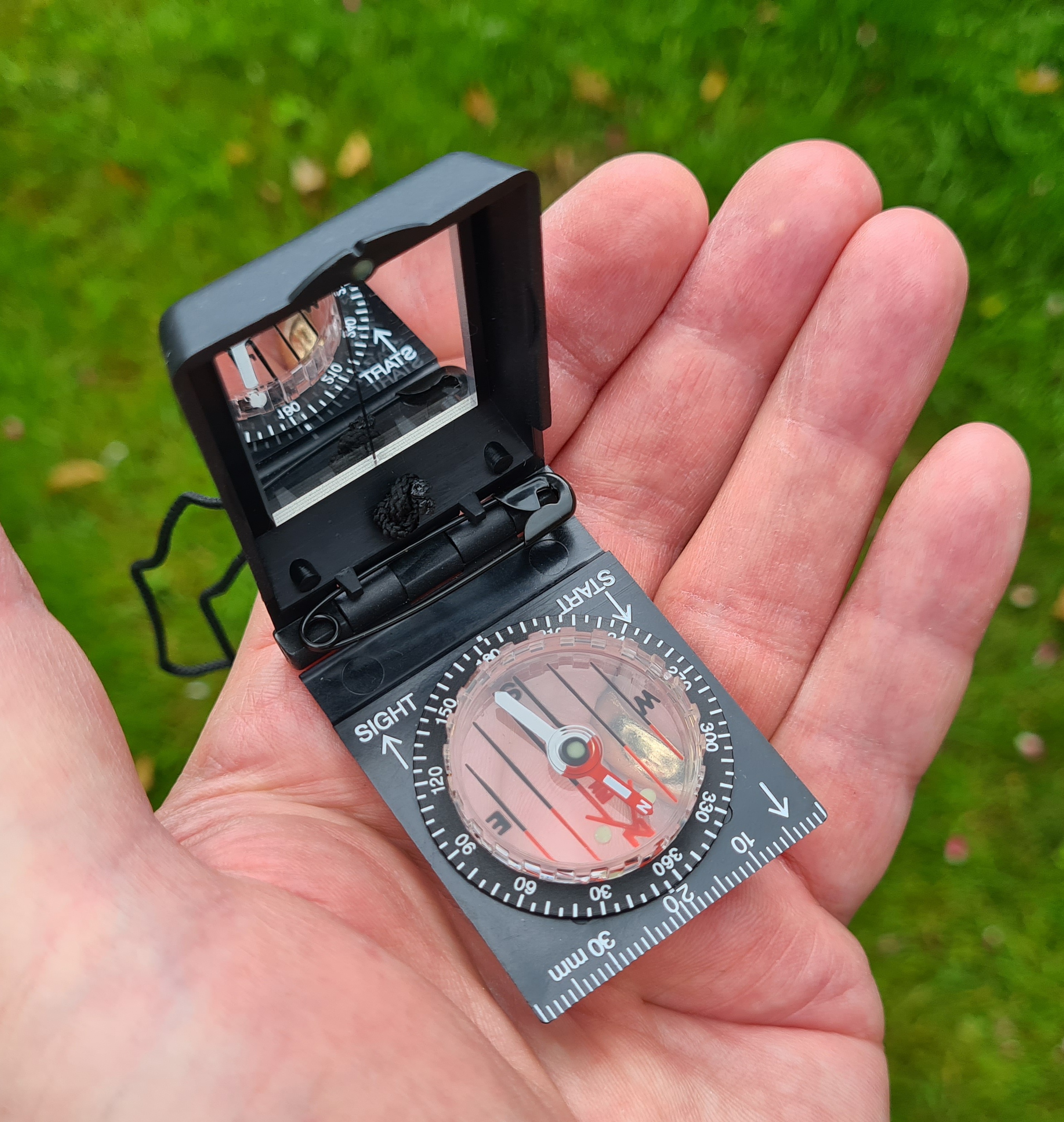
The Silva Ranger SL (previously the Ranger 27) is a sweet little sighting compass weighing just 23 grams. Made almost entirely from plastic, the only metal parts are a brass hinge pin, the compass needle, a copper retainer for the compass housing and a safety pin, with which the opened compass can be pinned to the front of a jacket for quick direction checking glances. Closed, the compass measures 57mm x 40mm x 14mm. It can make an ideal lightweight backup compass, though is relied on by some as a primary compass. Accuracy is never going to be spot on with this little compass as bezel graduations are five degrees, though extrapolation can be achieved. For a primary compass, two degrees is the ideal. The 33mm x 28mm glass sighting mirror is also handy for first aid purposes and tick checks.

A sundial, in it’s narrowest and truest meaning, incorporates a gnomon, that casts a shadow on a dial. This is not how the Silva sun clock operates, despite being described by Silva as a sundial. Silva have included a simple sun clock on the bottom of this little compass though it seems few have any idea on how to use it.
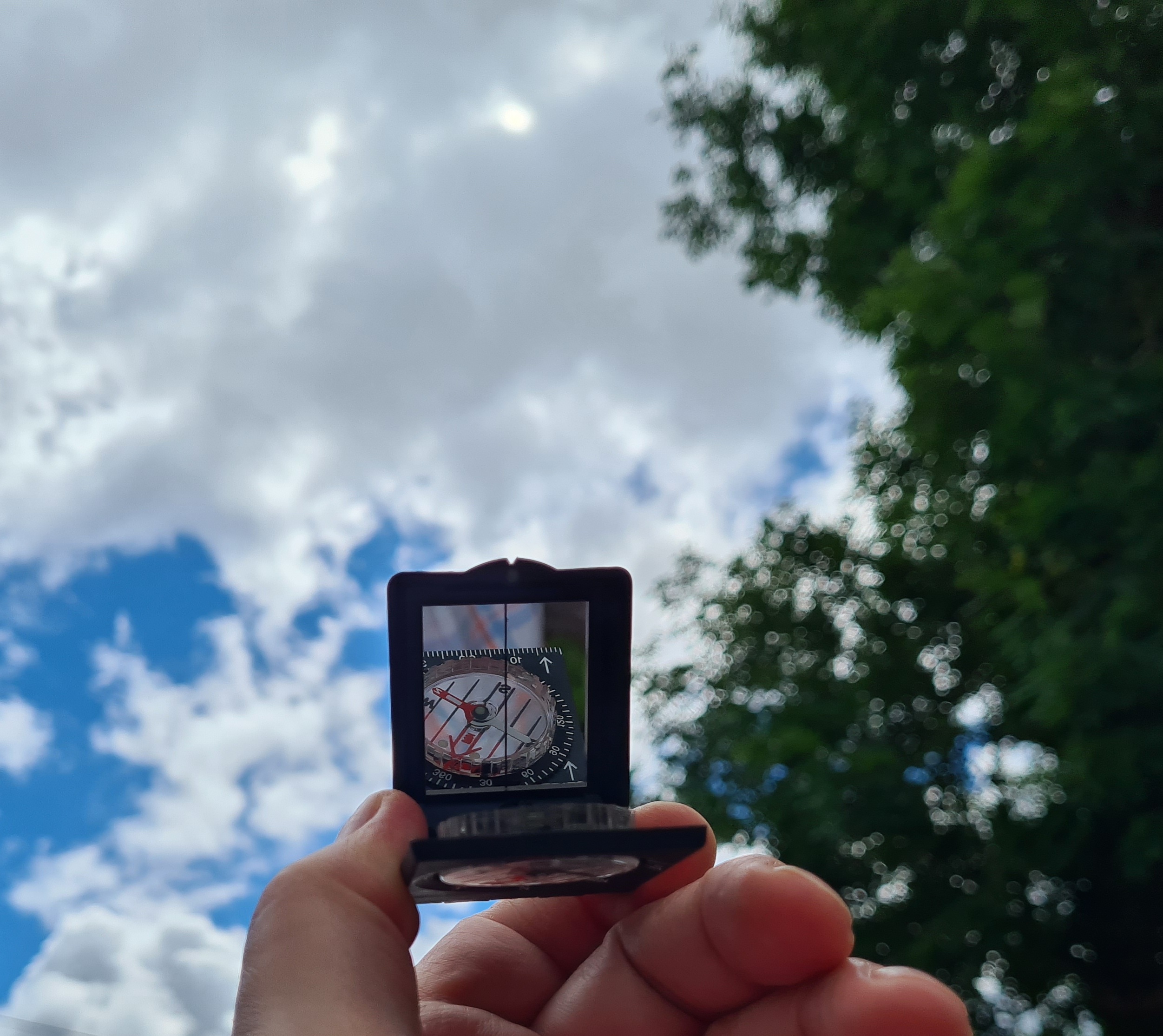
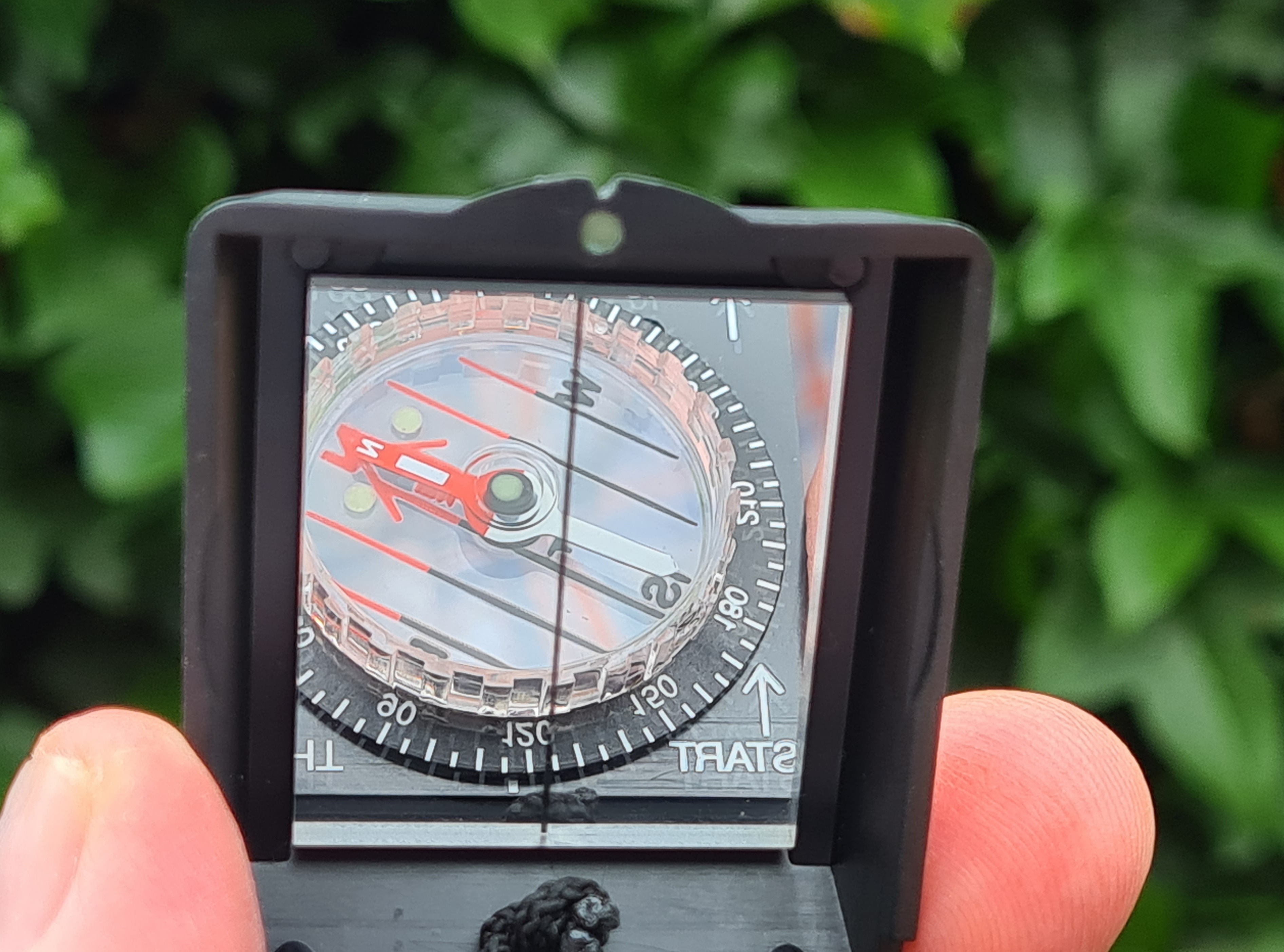
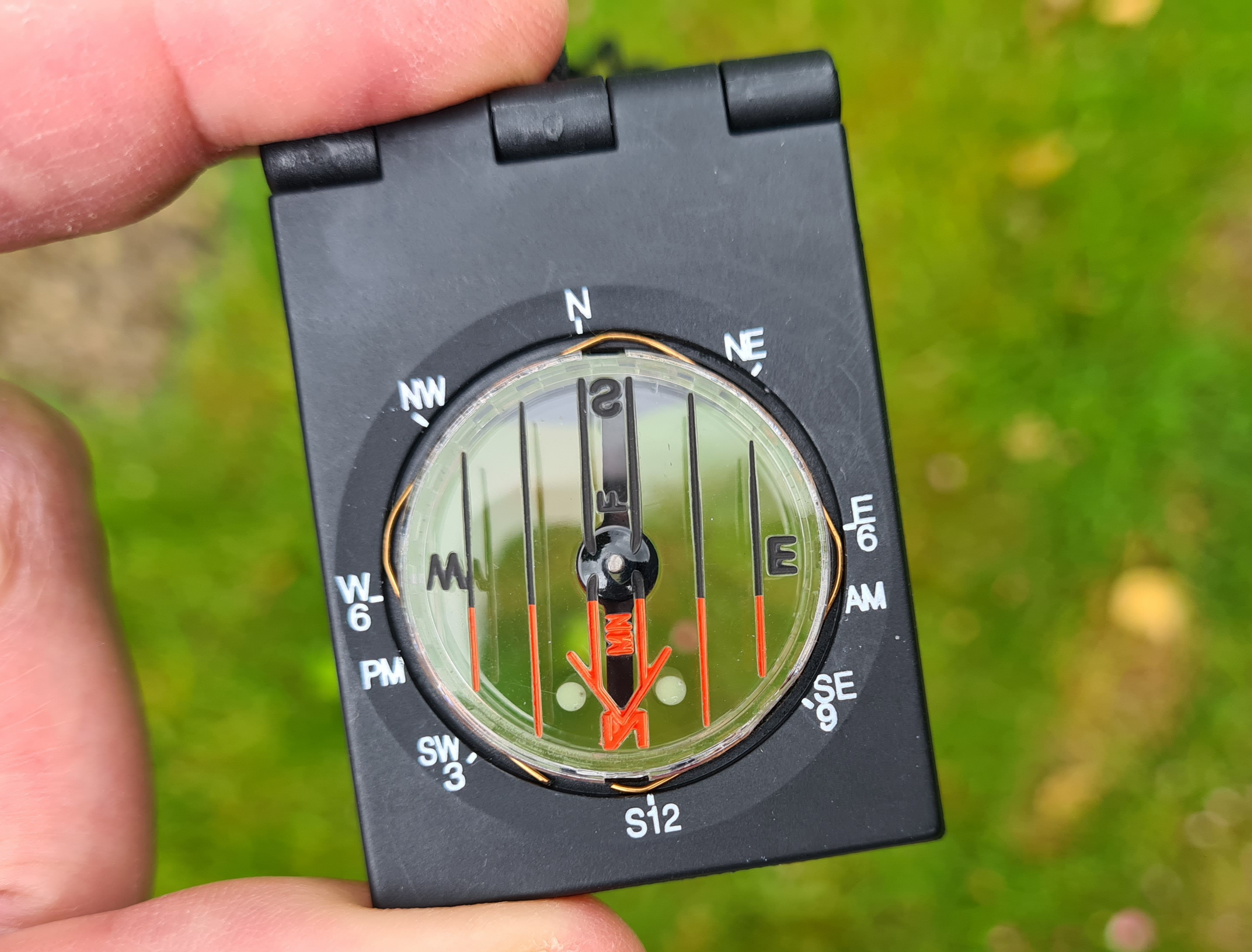
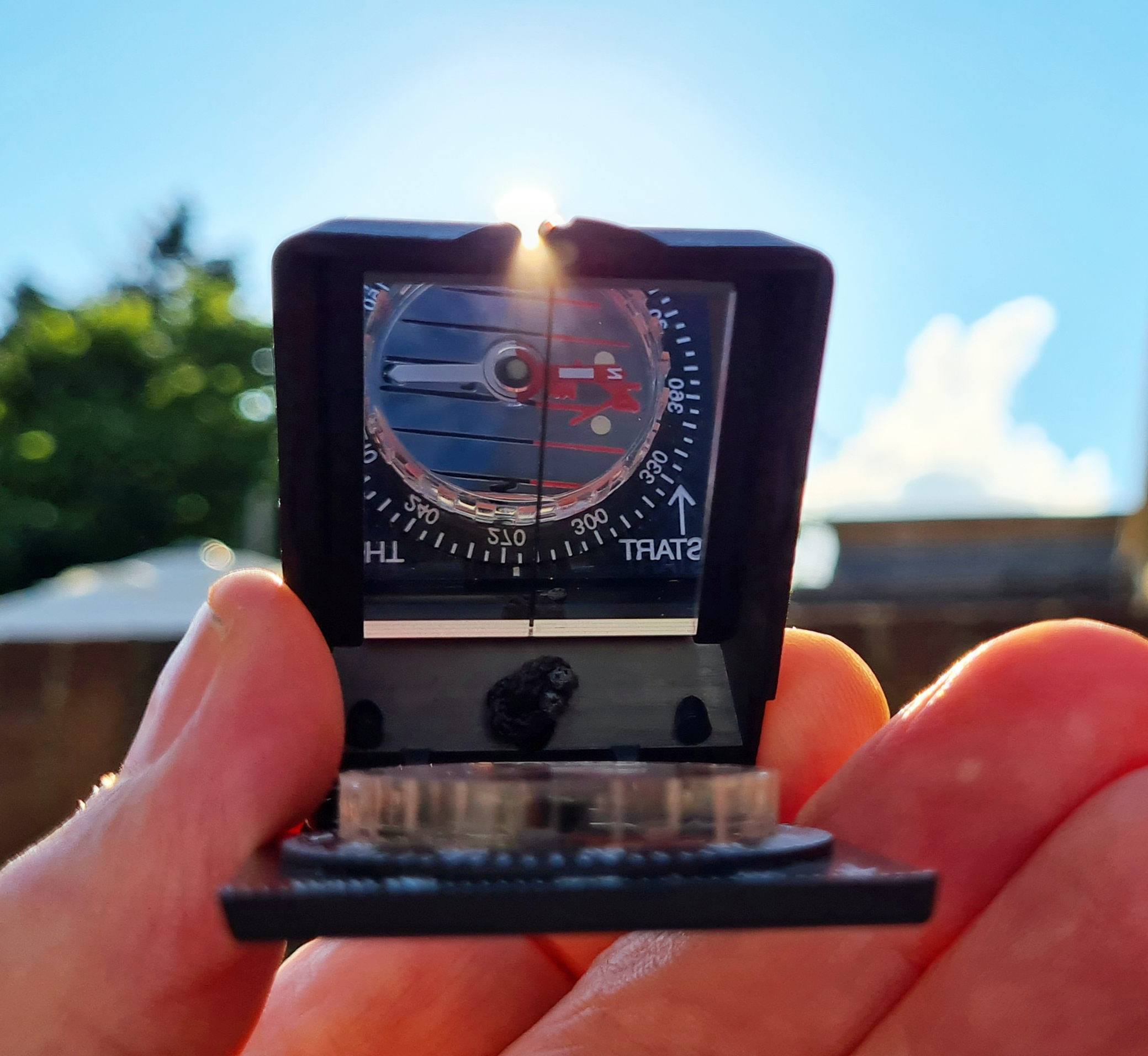
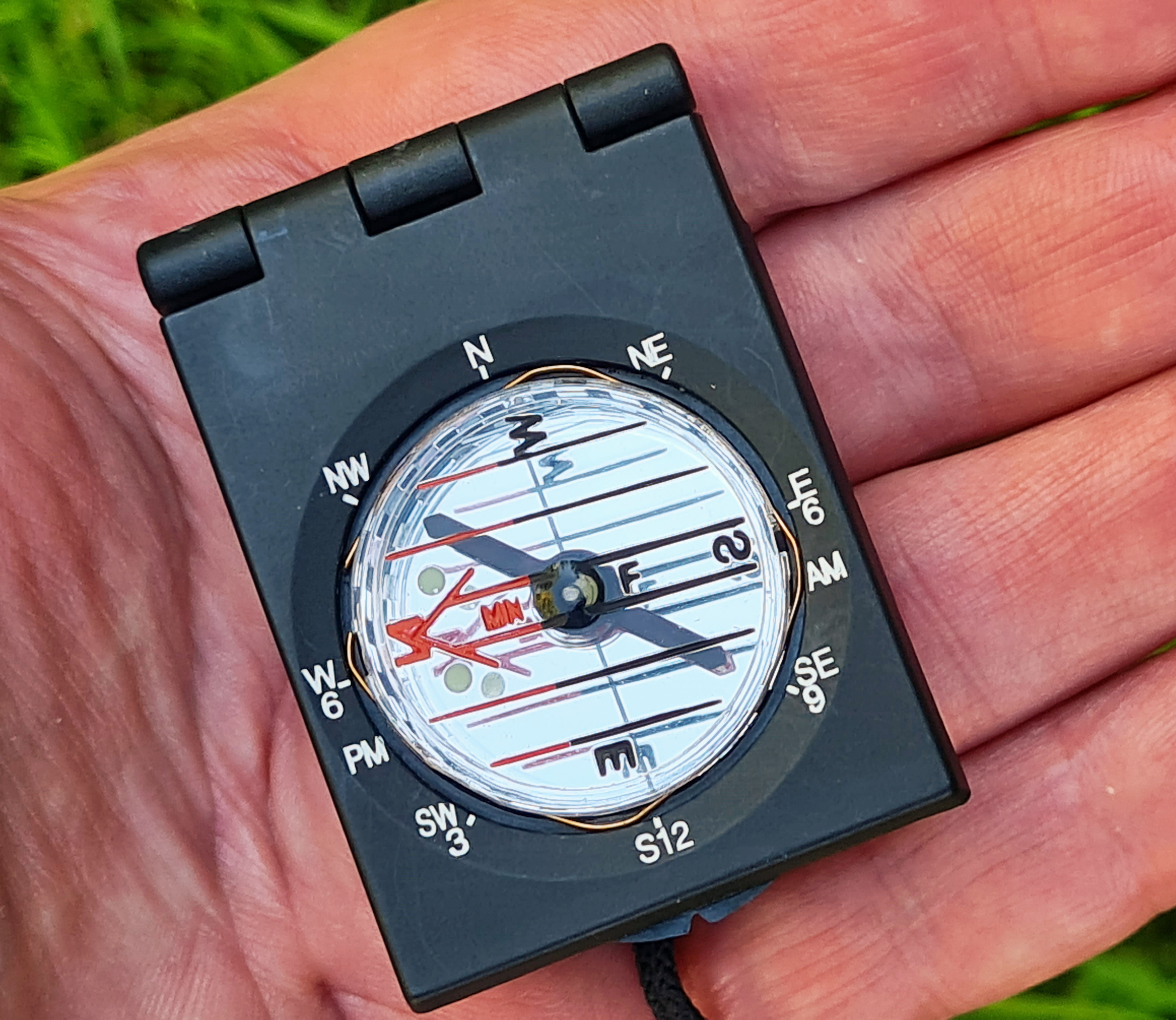
Note that daylight saving time is not taken into consideration and the time may have to be amended by an hour as a consequence.
Or look at your watch…

 Three Points of the Compass
thank you for your site, your articles are very interesting.
It is well known that at 6 o’clock the sun points east, at midday south and at 6 o’clock west. All you have to do is make a few proportions to find the other ‘azimuth – hours’ relationships. You can also use this principle to find north with your watch and the sun.
With this toolbox in mind, you don’t need to worry about this sundial gadget when choosing your compass.
Greetings from France.
LikeLike
Thanks for commenting. Not that well known I would argue! Though it once was. For many years I used a wrist watch for determining rough compass direction with its hour hand and ’12’. However I haven’t worn a watch on my wrist for the past six years. And of course, watches with ‘hands’, seem to be on the way out anyway, generically replaced by phones. It is, as you say, pretty easy to determine a rough direction from the sun, but not so much determining the time from the sun. All that said, the little Silva IS a lovely little compass, if not quite accurate enough for my preference
LikeLike