Swedish manufacturer Trangia is usually associated with their large series 25 and 27 stormcookers, but they produced a lighter option that owes more than a passing nod to a US rival. Three Points of the Compass has a glance at the Trangia Triangle.

Trangia’s first camping cook set was the Trangia 24 though that had no burner or burner support. Most people will associate the Swedish manufacturer with their robust and well-made cook sets that include a spirit burner. These are the Trangia 25 (from 1951) and Trangia 27 (from late 1950s) and they have gone on to produce many other outdoor products. Three Points of the Compass has had a closer look at some of these previously, links below.
- Trangia Micro Original, 100500- review
- Trangia Micro Light, 100530- review
- Trangia Mini Camping Stove, (Trangia 28-T) 1000285- review
- Trangia 624-23, BF162423
Trangia first produced a ‘sort-of’ lightweight fold-up triangular shaped stove in 1953, when they combined a new design of stove with their equally as short-lived aluminium spirit burner as part of the Trangia 26. However it appears that their modern Trangia Triangle takes much of it’s design inspiration from the US made stainless steel or titanium Clikstand, from Ursa Design and aluminium Westwind Stove, from Liberty Mountain (since discontinued).
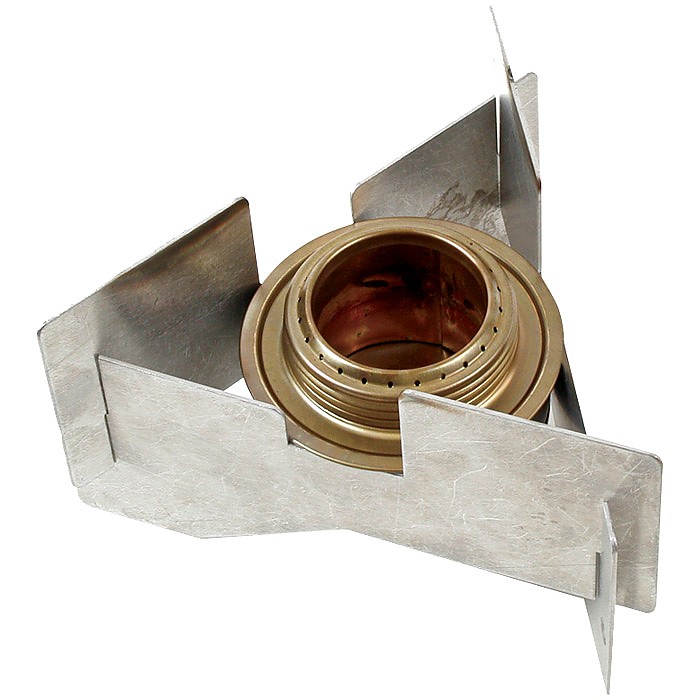
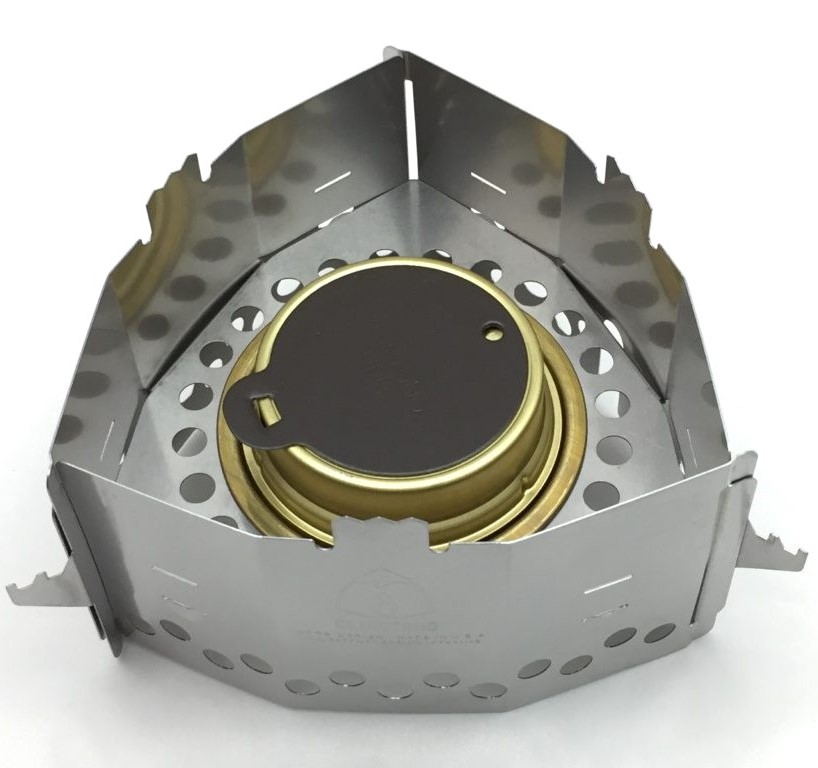
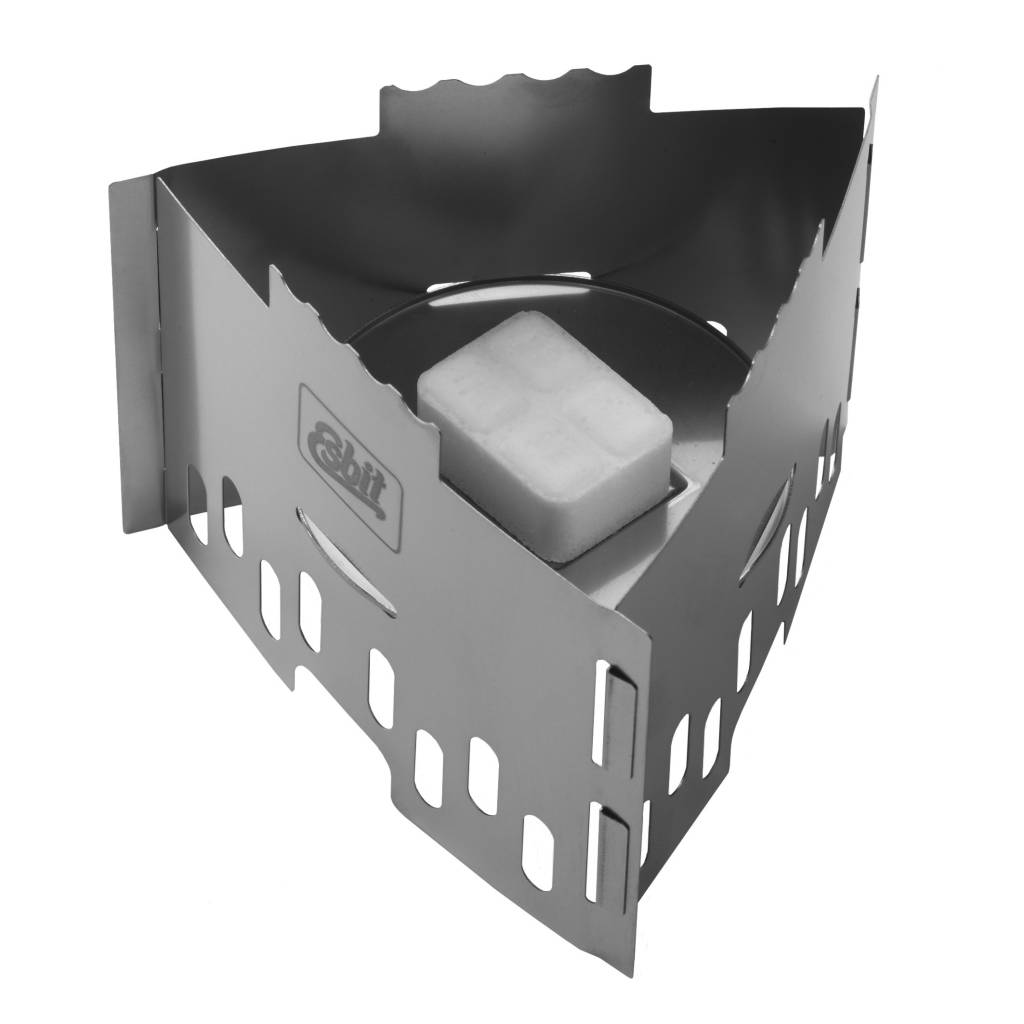
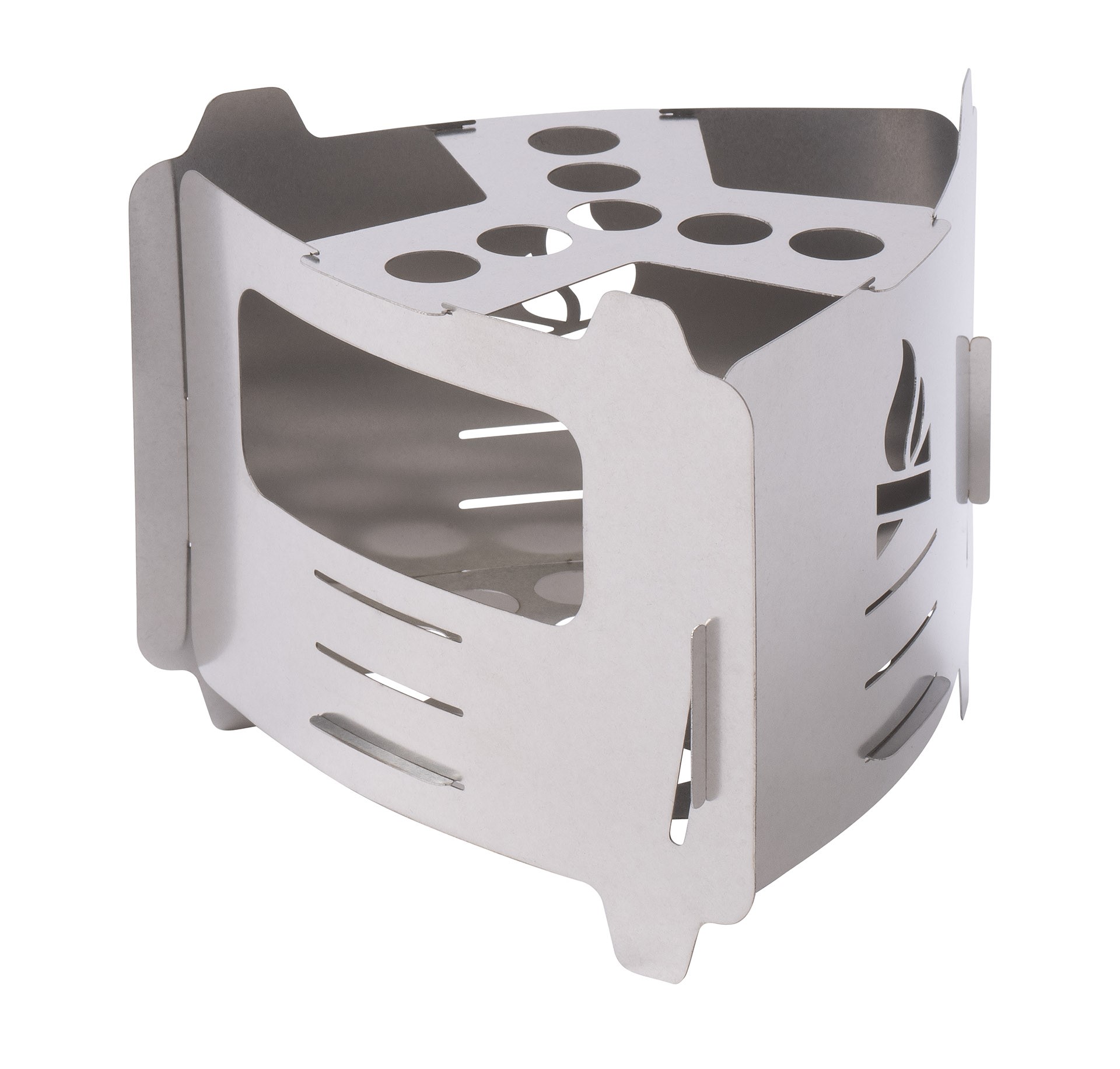
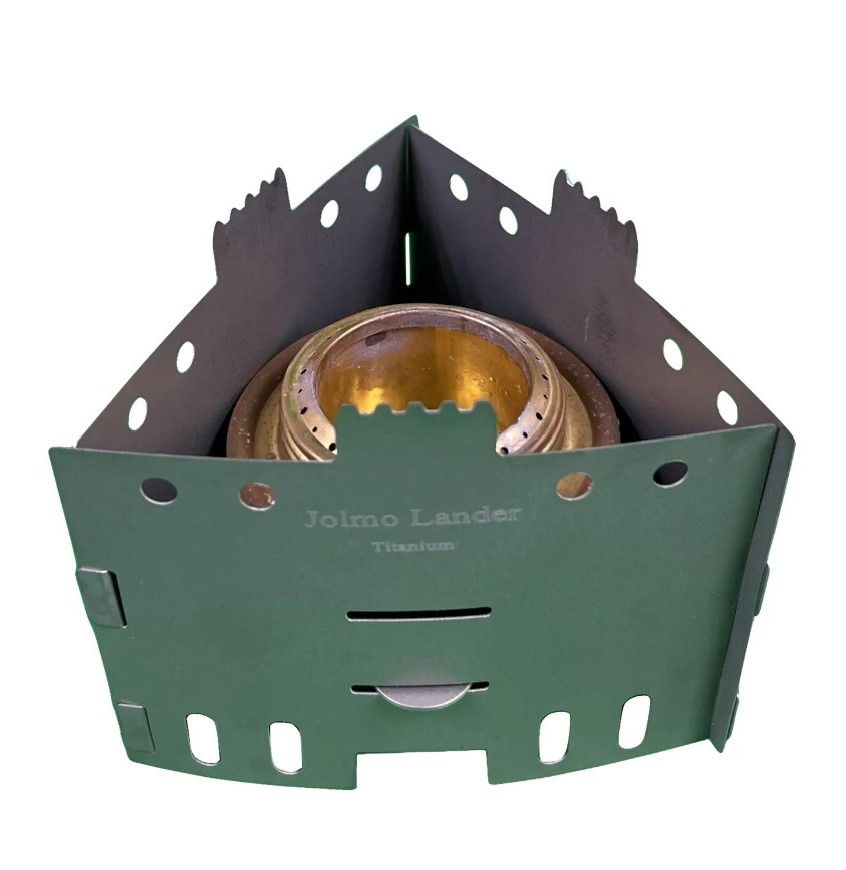
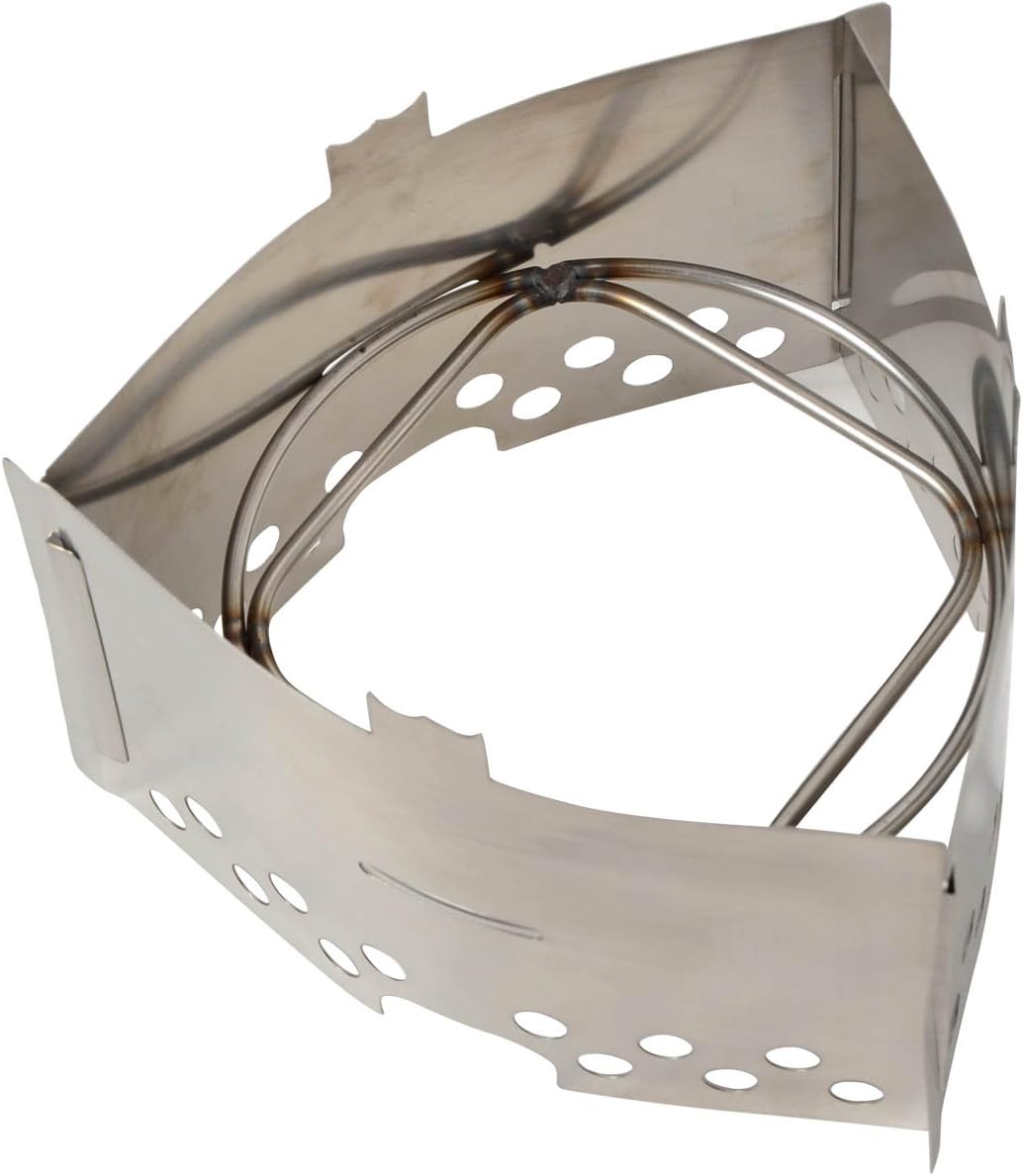
The Trangia Triangle (art.no. 400333) was introduced in 2010 and was updated and changed slightly in design in 2022. It is primarily the support for the Trangia Spirit Burner, that fits inside the three-sided pot support, that was altered.
It is the second version of Trangia Triangle that I have. This has the much changed support that I find (though apparently not everyone does) easy to insert in to the side cut-outs of the three sided support once it has been assembled. This change in design also reduced the weight slightly on the original design, win win!
There are now quite a few alternative ‘triangles’ available from other, often Chinese, manufacturers. Some of these have used titanium for their construction, which reduces their overall weight. Some might even be the same product, just rebranded. I have also seen an advert for a Triangle, model TR-P302, coming out of Japan, that purports to be a Trangia product that substantially reduces the weight of the more frequently seen Triangle. But due to it’s pared down sides it also reduces any effectiveness as a windshield. This doesn’t seem to be the easiest of products to order from the UK, so at least for those outside the US, there really isn’t much need to look beyond the Trangia Triangle.

The Trangia Triangle is made from stainless steel and rather than being a true stand-alone stove, works as a pot support and also a windshield to a burner supported inside, unlike the aluminium pot stand and windshield included with the Trangia Mini and Micro cook sets that do little to dissuade any errant breezes. While an extra windshield for the Triangle is not necessarily a requirement, using an additional windshield will go a long way to improving performance. However I have found that the Triangle by itself, and positioning a pack or sit pad, or using natural barriers; rocks etc., has always been sufficient.
The internal wire support keeps an alcohol/spirit burner suspended and isolated above potentially cold ground though Trangia’s pre-heater (BF602101) for their burner could be used in colder conditions if desired. The height that the Trangia Spirit Burner is held also provides the optimum gap between burner jets and pot.
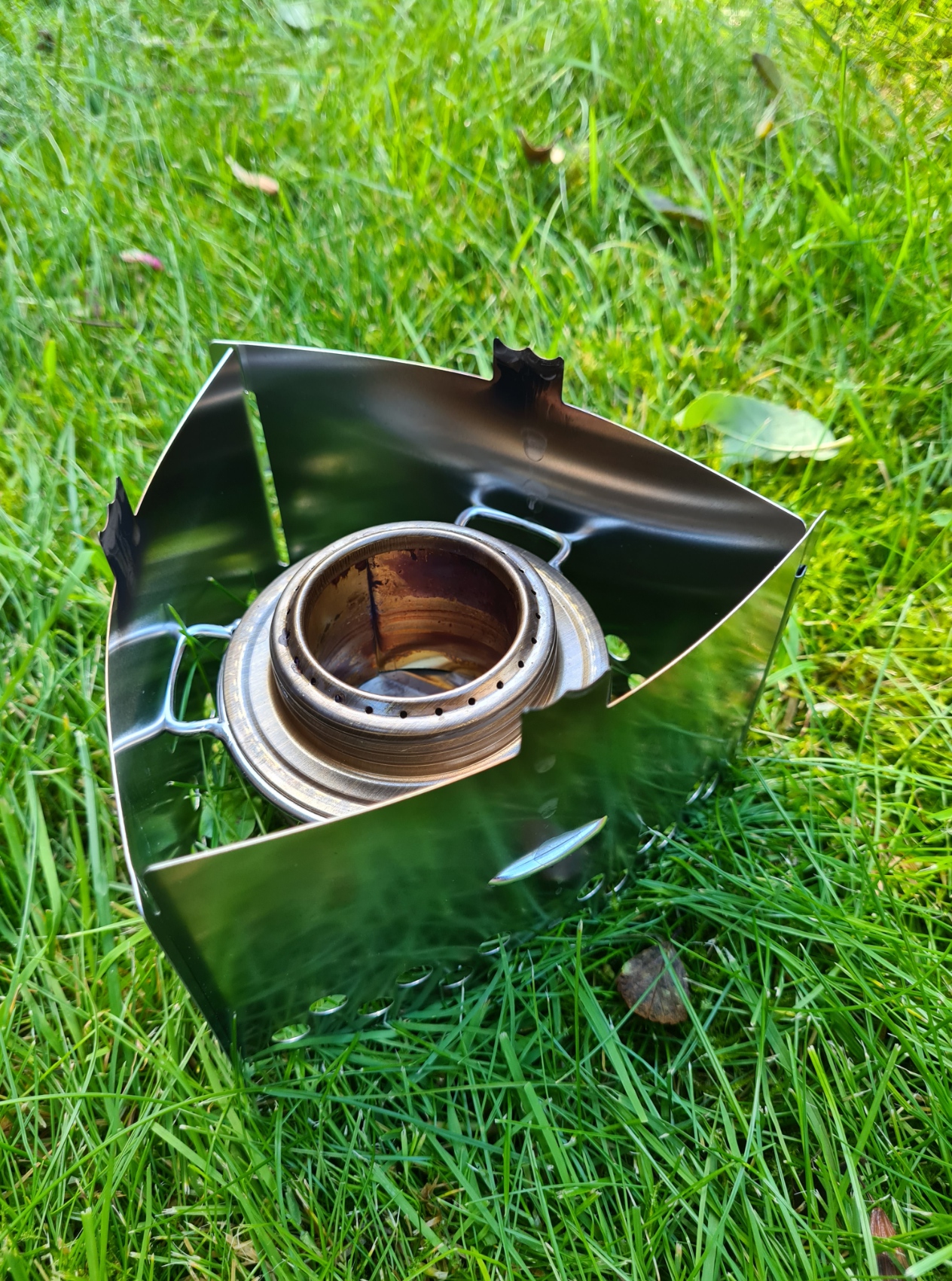
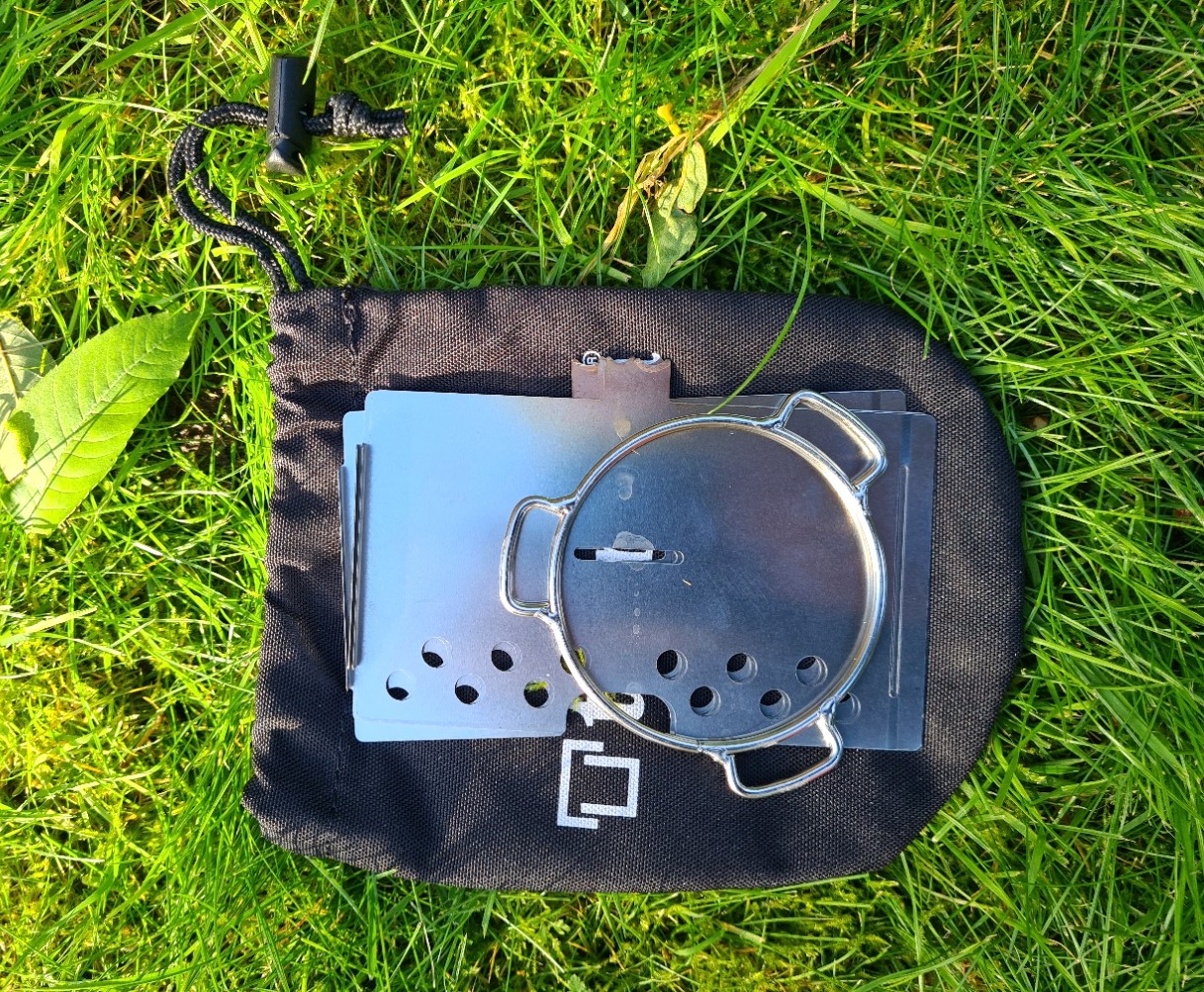
When constructed, my Trangia Triangle has a maximum width of around 123mm. Dismantled, it measures 131mm x 87mm (maximum) and the pieces will stack almost flat. The Triangle takes up very little room when dismantled and will fit inside the base of Trangia’s small mess tins for transit. Frustratingly, the rectangular shape when dismantled doesn’t lend itself to lying flat in a pot at all well. It will not lie flat within my favoured 900ml Evernew pan for example. It will almost certainly be necessary to pack this along as a separate piece of gear and not stored within a pot, as most prefer to do with a cook set. The internally mounted circular stainless steel burner support has an external diameter of 77mm with three protruding loops that slot into the sides of the triangle. It is 3mm deep. This shape does lend itself to lying in the bottom of a sufficiently large pot or pan.
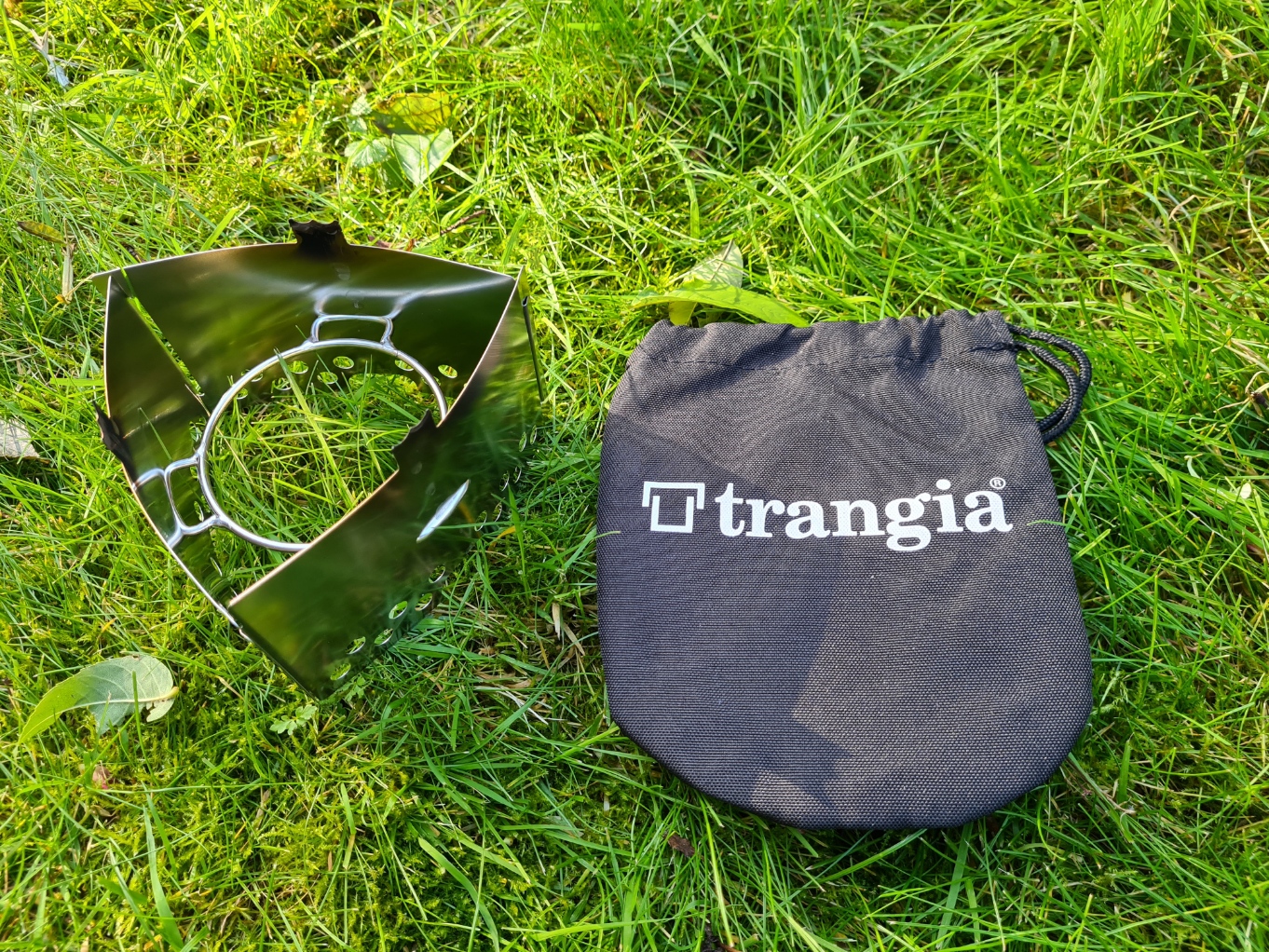
The three sides of the triangle are just 0.3mm thick and while all the edges have been rounded, it still has pointy bits and could still cut fabrics, perhaps even puncture an inflatable mat or pierce a tent floor if care is not shown, hence the thick drawcord cordura pouch it is supplied with.
The Triangle is listed as weighing 115g. I can only presume that this refers to the earlier model as on my scales, the four piece windshield/support comes in at 88g. Even including the supplied cordura pouch raises this to just 107g. Obviously the Triangle also requires a spirit burner to operate as a stove. With the Trangia offering, this then totals 220g for everything. The weight of fuel has to be added to this.
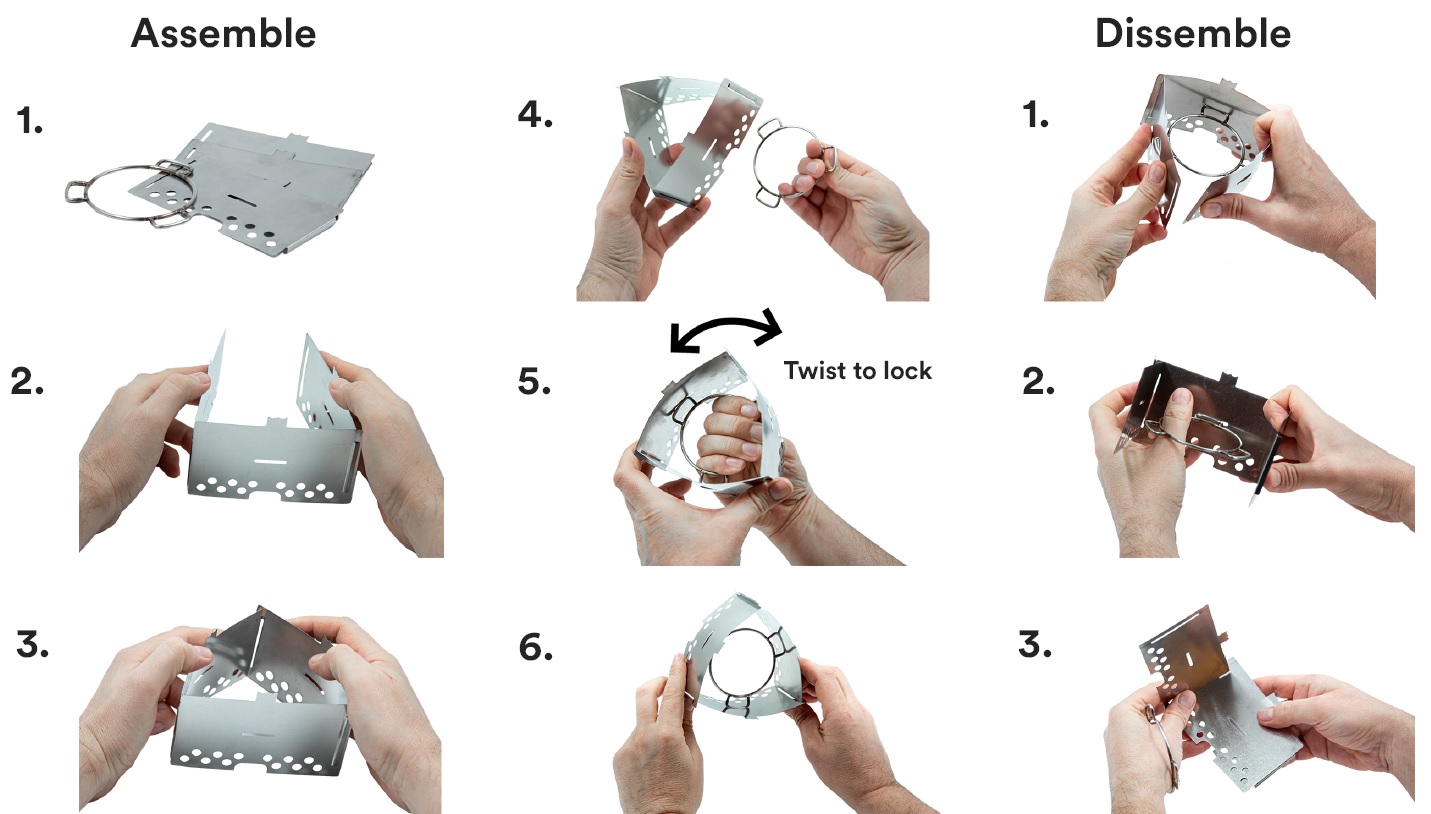
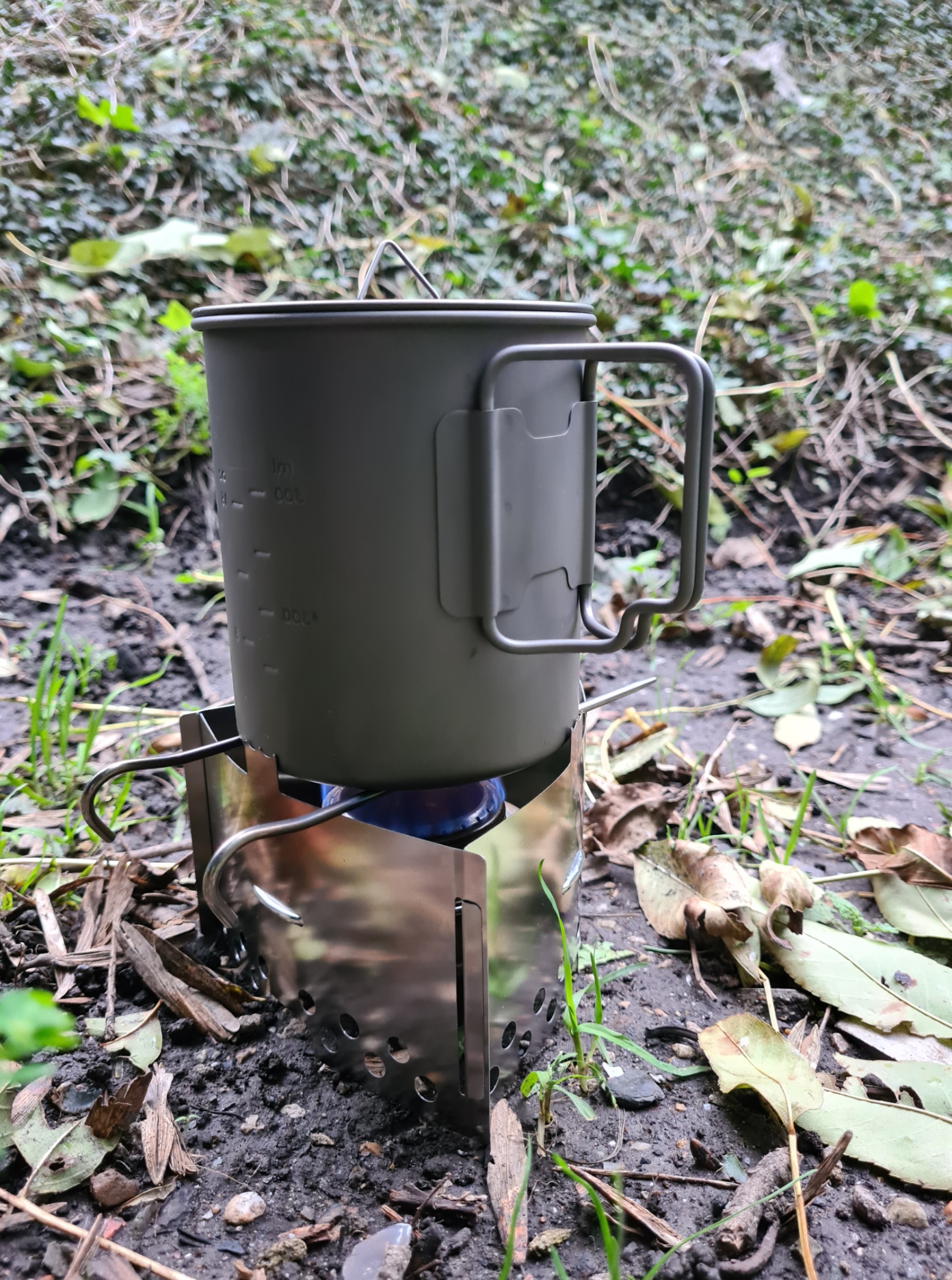
The Triangle is obviously not a complete cook set. It is simply a windshield and burner/pot support that can be combined with other pots, pans or cook sets from the Trangia range. Equally as obvious, users are not confined solely to the Trangia products. The Triangle has quite a wide top when assembled and pots narrower than 100mm will not normally be supported as it stands.
Pots wider than 100mm, or something like the Trangia T-Cup, that has an indented lip around its base, will rest on the three uppermost tabs on the Triangle but narrower third party pots will require a couple of pegs/stakes to be placed across the top as a support. If you want to secure the pegs better, invert the Triangle and run the pegs through the air holes. This will also affect the gap between burner and pot, possibly adversely affecting an optimum space. I have never felt the need to flip the Triangle over, if pegs are rolling off then the stove set up as a whole is probably unsafe.
The reliable Trangia Spirit Burner will be the choice for most users, but Trangia’s Gel Burner also slots straight in to the burner support, this burner can alternatively be used with solid fuel tabs. This is the lightest and smallest stove option.
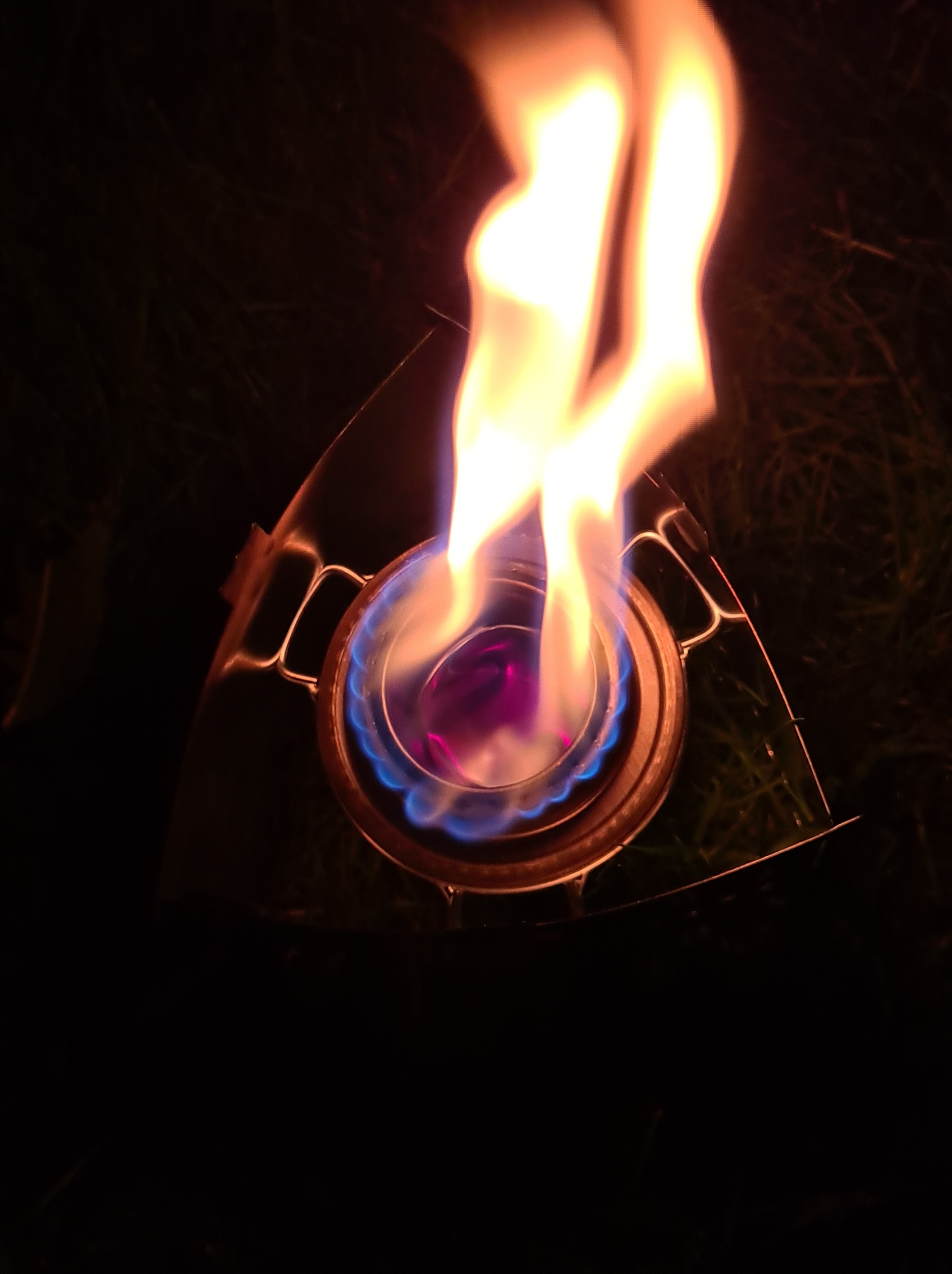
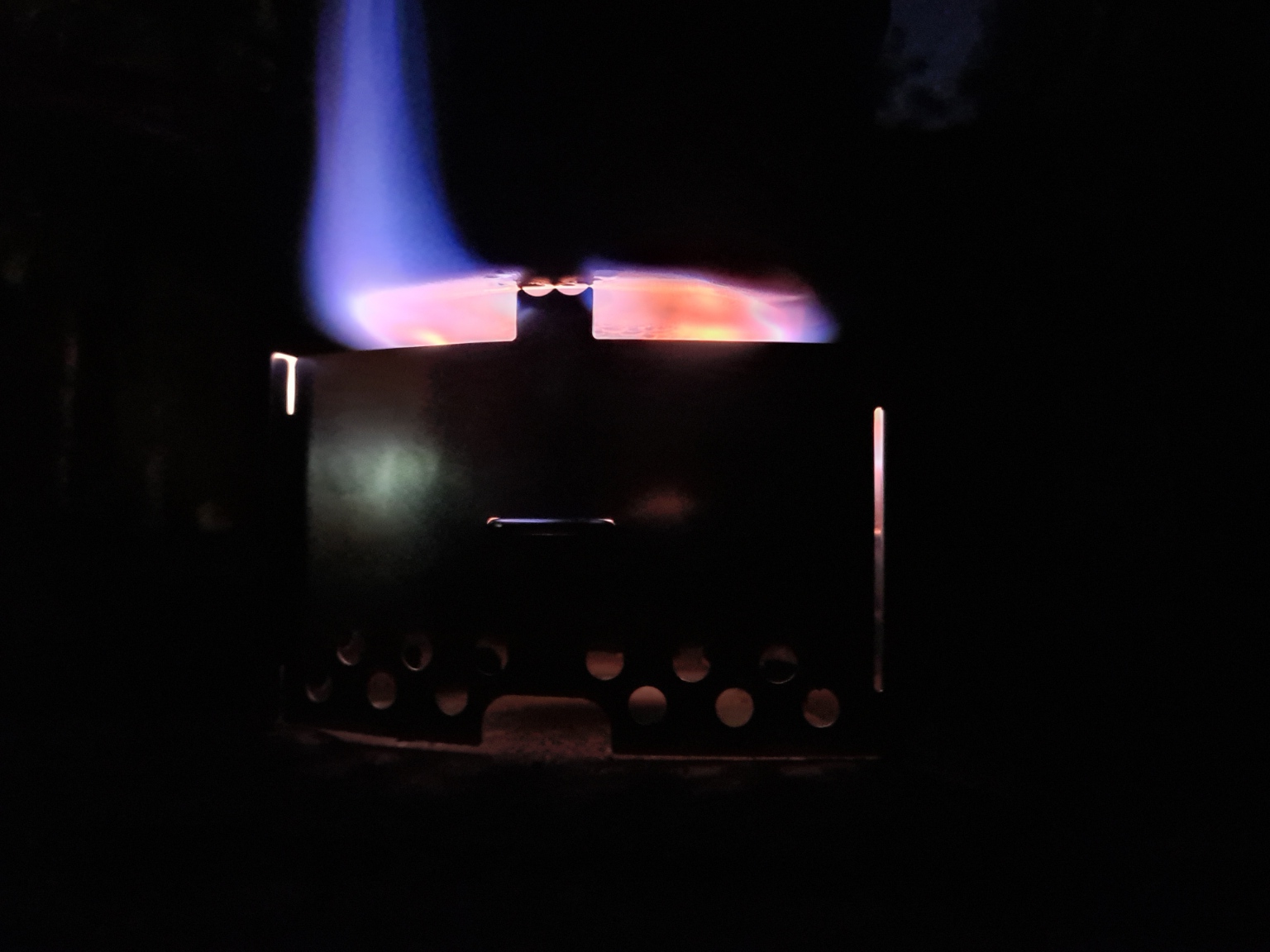
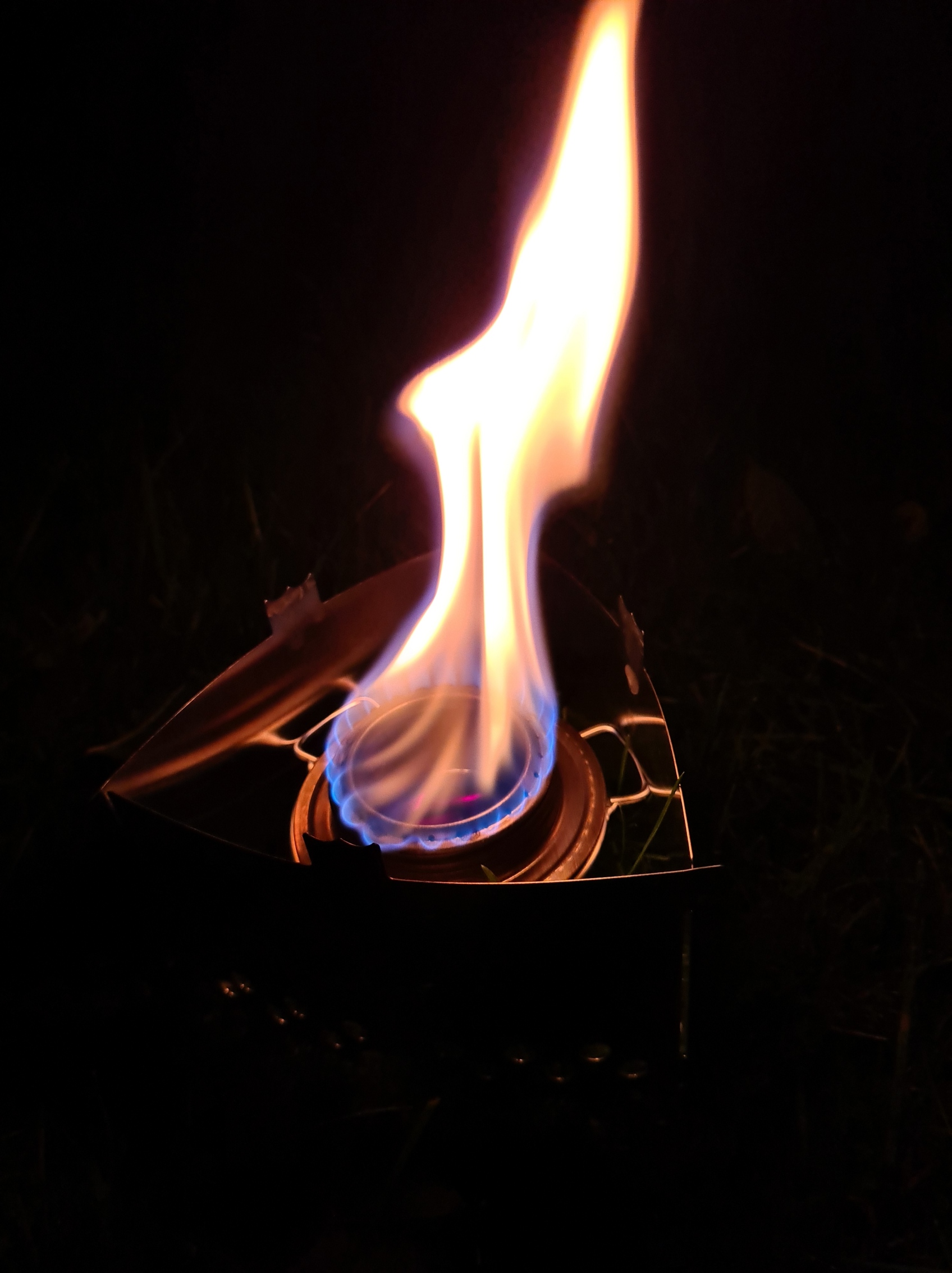
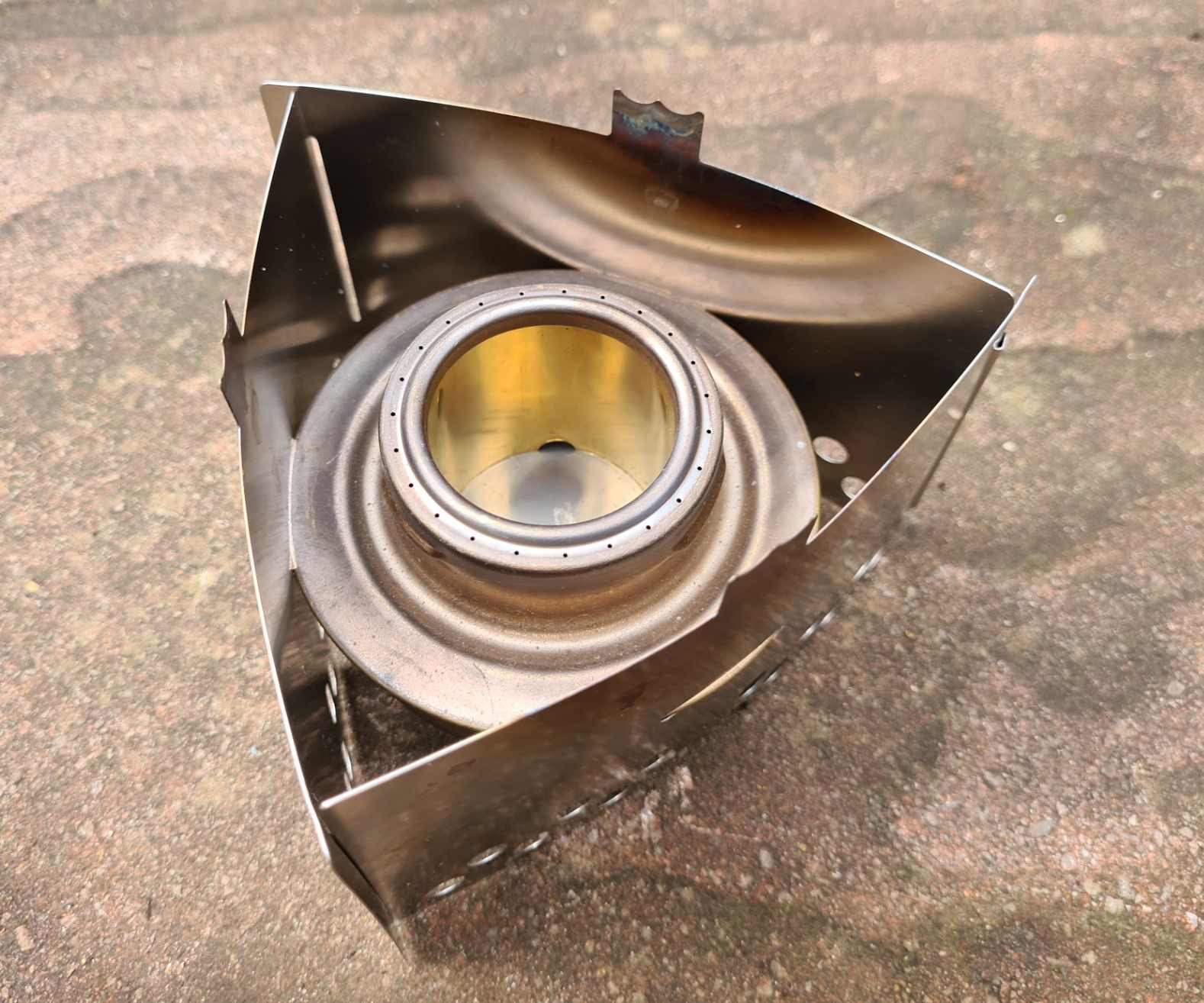
Trangia supplied the Swedish military with a much larger version of their spirit burner from 1964- 1976. These are still available on the second hand market though condition unsurprisingly varies for a product over fifty years old. Leaving out the Triangle’s burner support, the large 169g military burner slots straight into the remaining three sides as though it were made for it. This provides a large fuel capacity and very long burn capability.
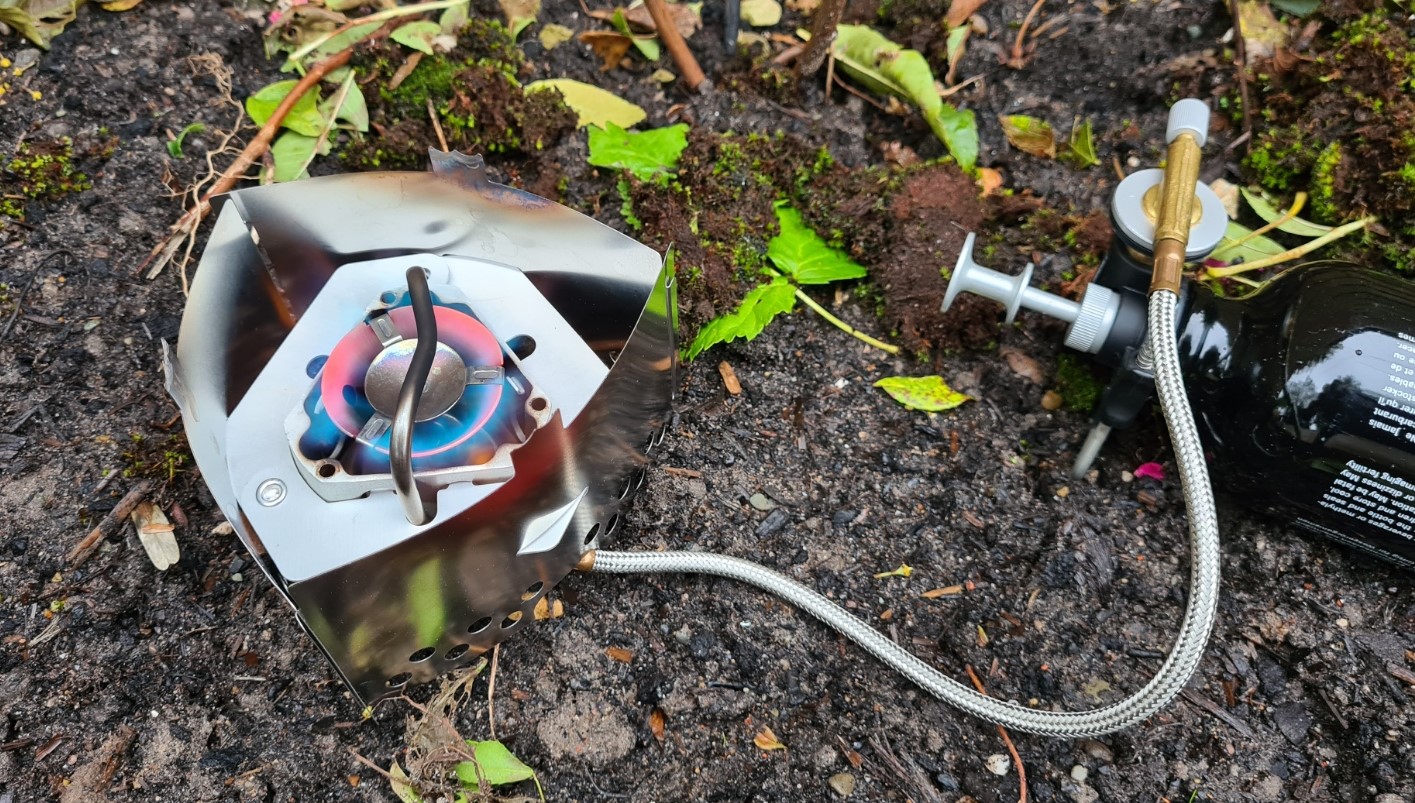
Many remote feed burners will also fit, with their fuel hose exiting from a gap at the base of the stove. My multi-fuel Edelrid Hexon makes for a very good pairing with the Triangle. Various other burners could be used with the Triangle, provided they fit the 71.45mm internal diameter of the central support, though not all burners will. My 71mm diameter Evernew Titanium stove is too narrow and slips through. Alternatively, you can leave out the burner support from the Triangle and stand a burner on the ground in the middle, using the three-sided remainder as a simple windshield.
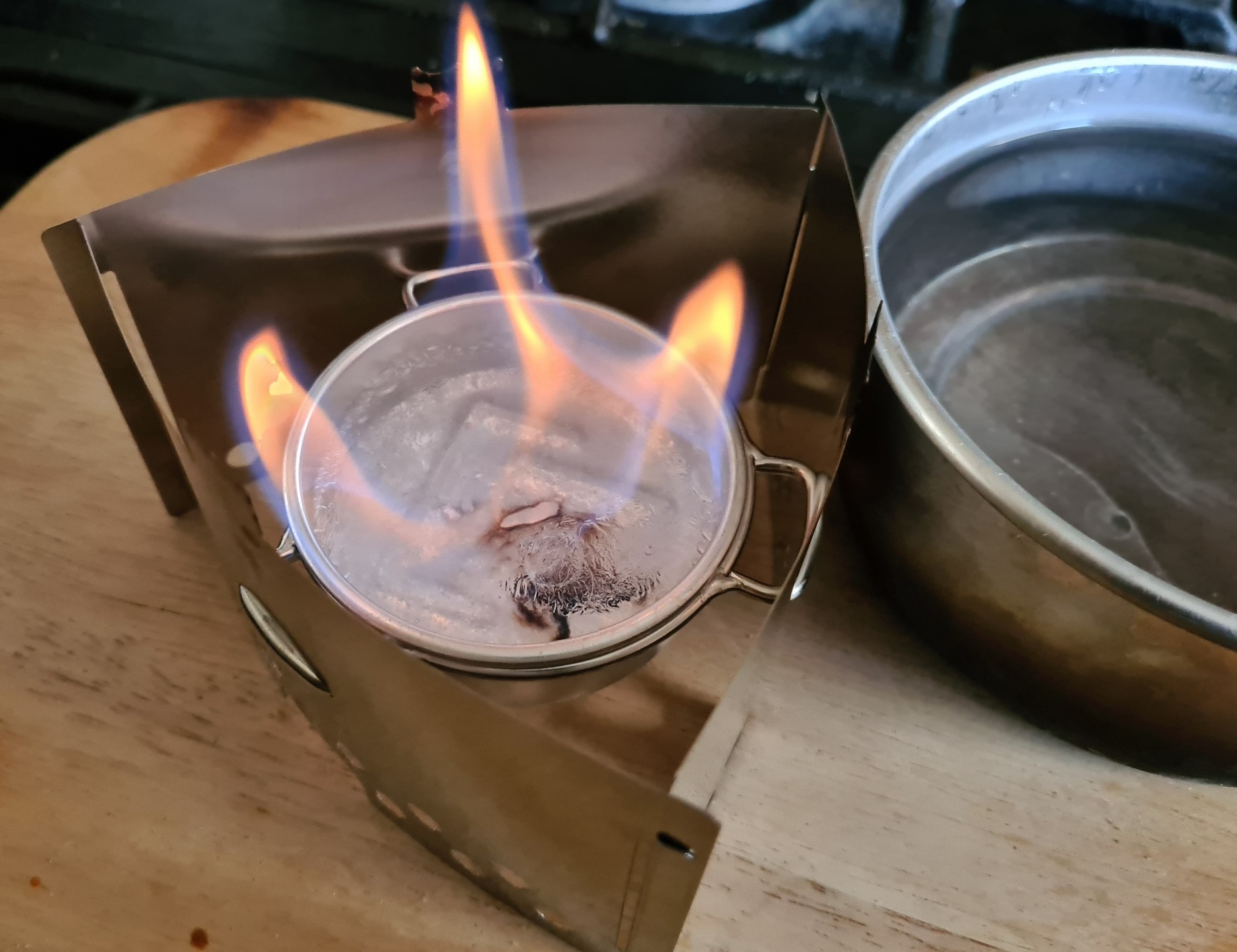
There is a very wide choice of stoves, burners, burner supports and windshields available to the lightweight backpacker these days. The Trangia Triangle isn’t the lightest available, nor is it the cheapest, but it is a good product and does what it does pretty well. It could be worth experimenting with to see if it answers the call. The Triangle is priced by Trangia at £26.64, or £35.64 with a Trangia Spirit Burner, when it is then called the Trangia Triangle Stove, but is advertised elsewhere at a wide range of prices.
Three Points of the Compass occasionally takes a glance at items of gear, including a handful of other stoves. Some fairly new, many now quite old. These reviews get added to occasionally as I get round to it. Links can be found here.
2025 update:
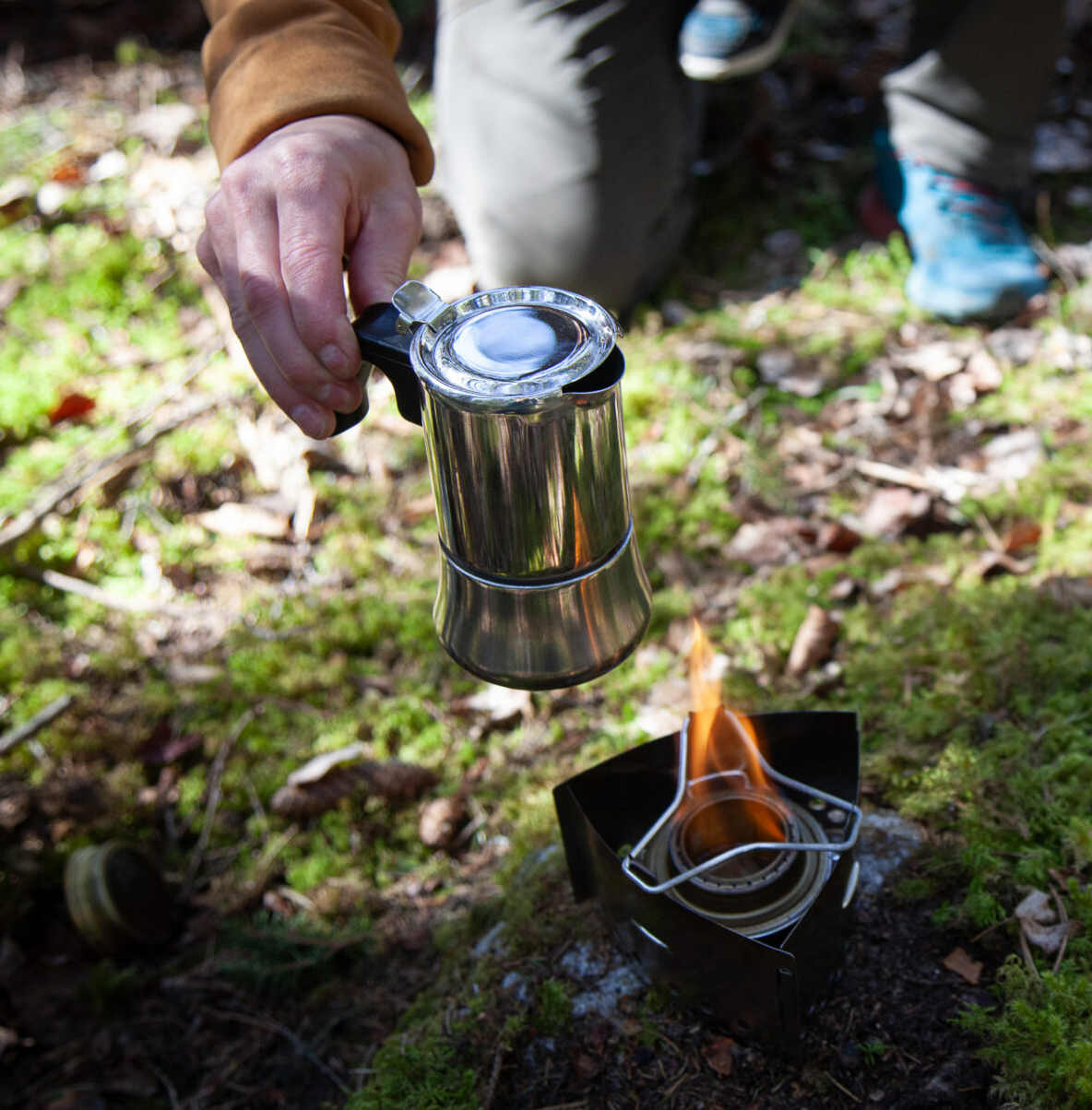
In 2025 Trangia released the Pan stand Triangle (art. no. BF400330). Costing £8.28, this little 11g stainless steel pot has extreme measurements of 130mm x 2.5mm. It clips over the three lugs at the top of the stand and allows narrow pots of 60mm to 90mm diameter to be supported above the burner.

 Three Points of the Compass
Do you think it is possible to fill the Trangia gel burner with carbon felt and use with regular spirits? Or would such a burner be far too big and cause the flames to go up the side of an average sized pot?
LikeLike
I think it could very easily be done. Would certainly partially remove the ‘flip over and send burning alcohol flying everywhere ‘ risk, to a degree. Obs a way to reduce the flame size would be either to choke down the opening, or just stand a smaller cup (with felt) inside the larger Trangia
LikeLike
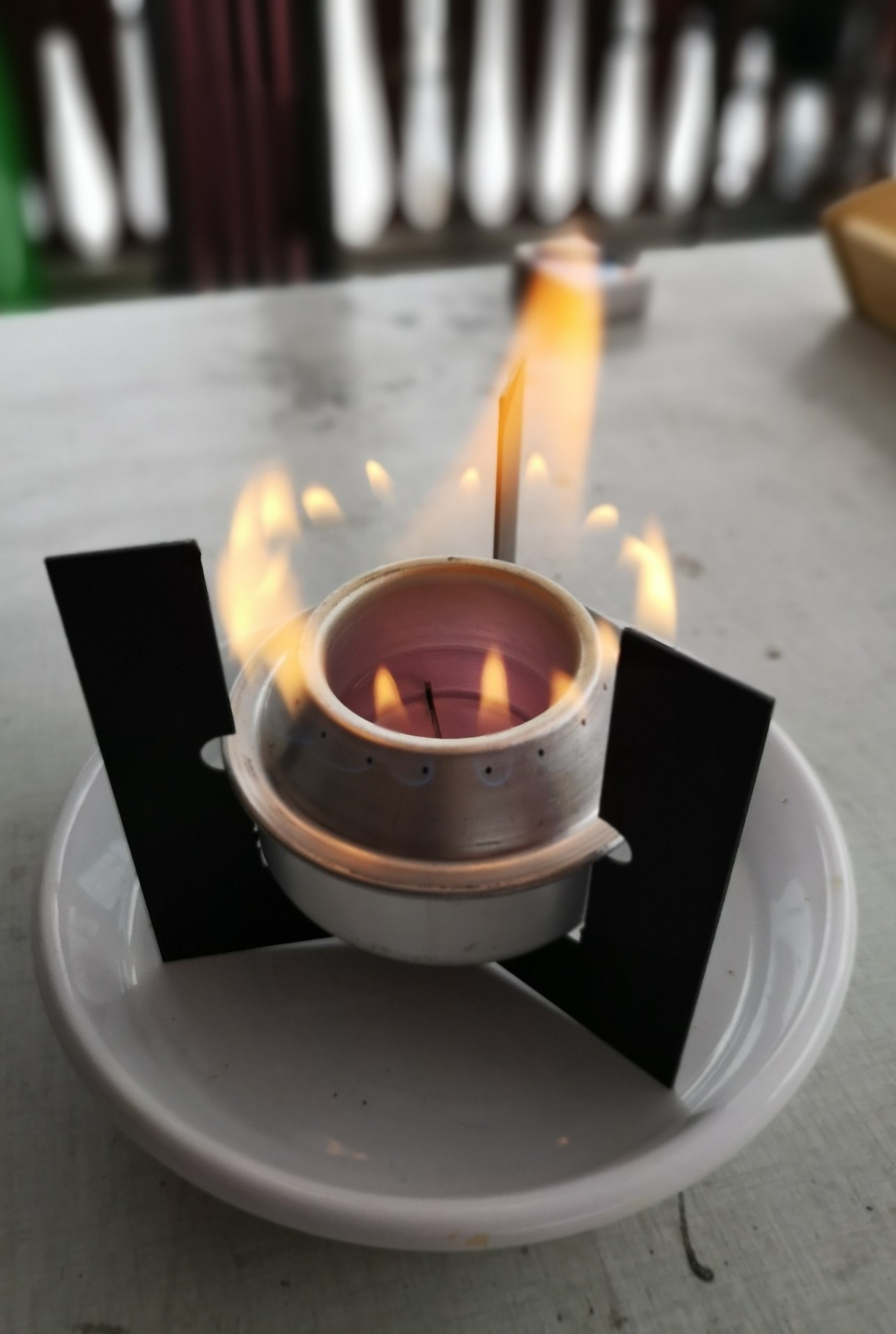
I have done this with a gel burner that got a bit damaged in the post. It works like any other kojin style stove.
I also got round the small pot problem by buying a spare wire burner ring from Trangias. It is a perfect size to clip in the Triangle pot support lugs.
i have videos of both on my YT channel.
LikeLiked by 1 person
Thanks Ewen
LikeLike
I use a Trangia gel burner lined with ‘fire rope’ purchased from Canadian Tire. This easy and inexpensive DIY modification is shown on several YouTube videos, and is used by many British bushcrafters in the cooker unit for the Crusader cup.
LikeLiked by 1 person
Thanks for this Jamie
LikeLike
Awesome article, thanks for sharing all of this information! The article on the Trangia Mini and Micro(s) is also great.
The Triangle does fit flat into the pots of the 25 set. You can lay the Triangle (in its bag) into the inner pot of the 25 and slap the frypan from the 27 on top to create a (somewhat-) lightweight cook set. You only need a way to keep the kit together, such as a couple of rubber bands and perhaps the bag for the 27. I’ve also cut a circle from a thin flexible cutting board in lieu of the heavier multidisc. I hope someone finds this idea useful! Cheers =)
LikeLiked by 1 person
Thanks for this Paul. I really must post a closer look at my Trangia 25 and 27 cooksets sometime. I know everyone else has, so why not me!
LikeLike