Fire Maple’s Petrel cook pot was specifically designed to work with their Hornet II stove. However it is not confined to just that stove. Three Points of the Compass has a glance at this heat exchanger pot and dives into his gear locker to see what else might suit.
The Fire Maple Petrel is a 600ml capacity pot with three slots in it’s heat exchanger (HX) base. This pot has been specifically designed to work with Fire Maple’s Hornet II canister top gas stove, that has three pot support arms. The pot can also be used with other stoves that have three pot supports, however not all, as the support arms have to be correctly aligned and angled. The three slots on the Petrel are at 120° to each other and are quite narrow. The Hornet II stove is quite good but not the best and some other stoves actually work better with the Petrel pot. Not least Fire Maple’s own Polaris gas stove, that has the added advantages of a built in windshield offering some protection from side breezes, and is additionally a pressure regulated stove. Many gas stoves have four pot supports and the Petrel could potentially sit on these, but there is a risk of one stove support arm aligning with a cut out on the heat exchanger base of the pot and being unstable or tipping as a result.
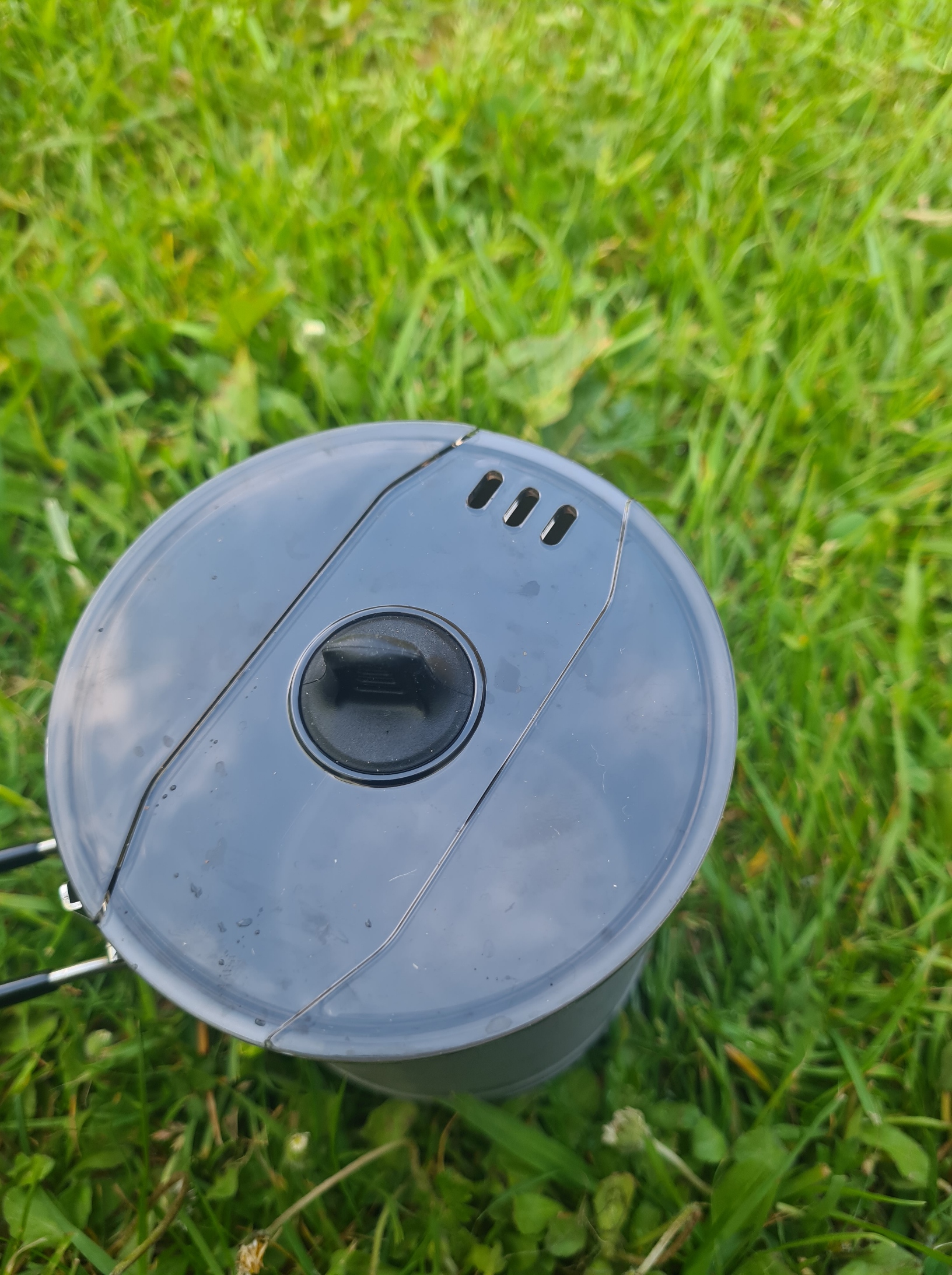
The Petrel heat exchanger pot comes in a simple branded card box and is comprised of an aluminium alloy pot with heat exchanger fins with surrounding protective guard on the base. There is no pour spout. It has a Tritan lid with three pour/steam vents and a silicone handle. This is held firmly in place when stowed by the fold up and over stainless steel handle. The handle has a PVC covering to protect the fingers from heat, and the handle locks in to place when folded down or up. It is released from either open or closed position by squeezing together the sides of the handle. The pot has fill marks on the inside for 8oz and 16oz, and 300ml and 500ml, each with inter-increments. There is also a max fill mark at the 600ml mark (20.3 US oz) A further 150ml will squeeze in above this but is not recommended.
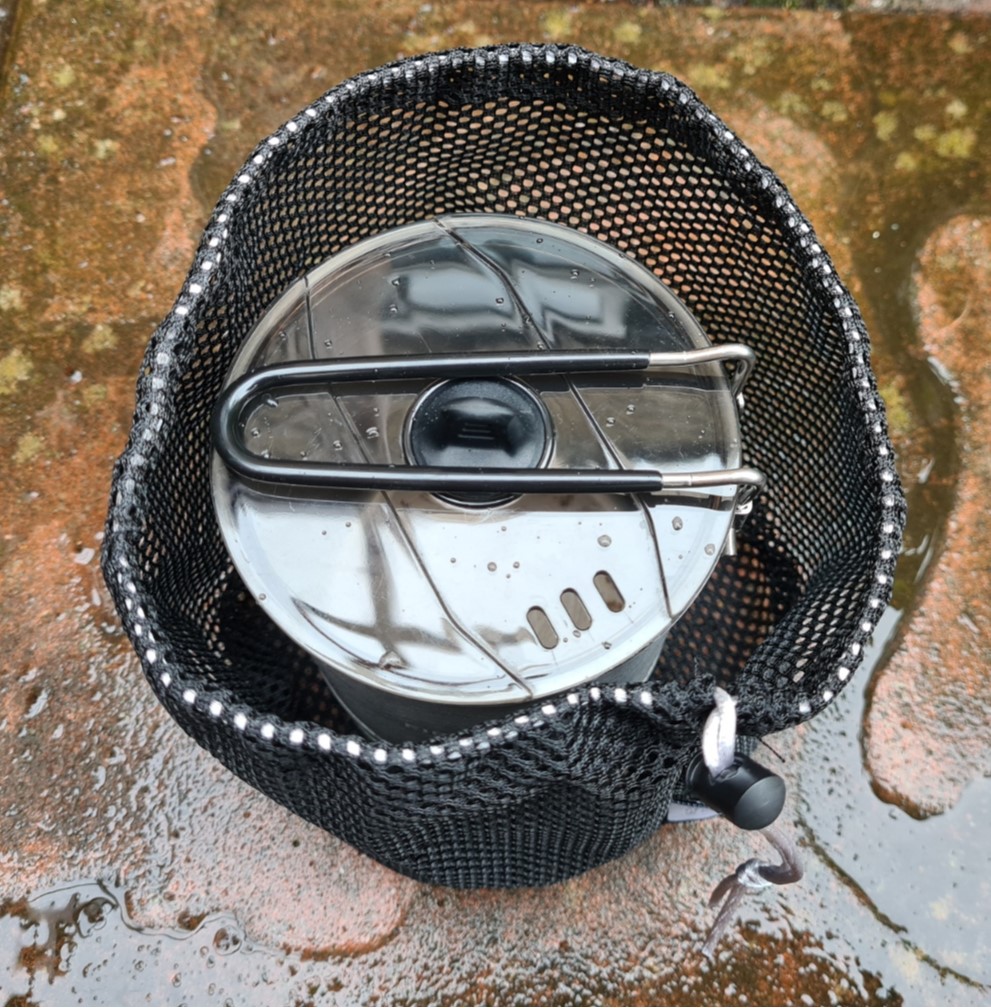
The pot comes with an over large mesh bag, with draw cord closure, weighing 20.2g/0.7oz. The storage bag isn’t required to keep the lid on the pot as the handle locks this down very effectively. I don’t understand the provision of this far too large mesh bag at all and it simply looks like something was just pulled off the stores shelves in the factory. Something like the neat and tight fitting orange mesh bags supplied with many Toaks pots would have been preferable.
While the advertised weight of the Petrel is 161.6g/5.7oz with lid, mine tips an accurate digital scale at 164g/5.79oz with the lid, or 136.5g/4.81oz without lid. Measurements are 149mm x 106mm x 102mm folded and 149mm x 223mm x 102mm with the handle unfolded.
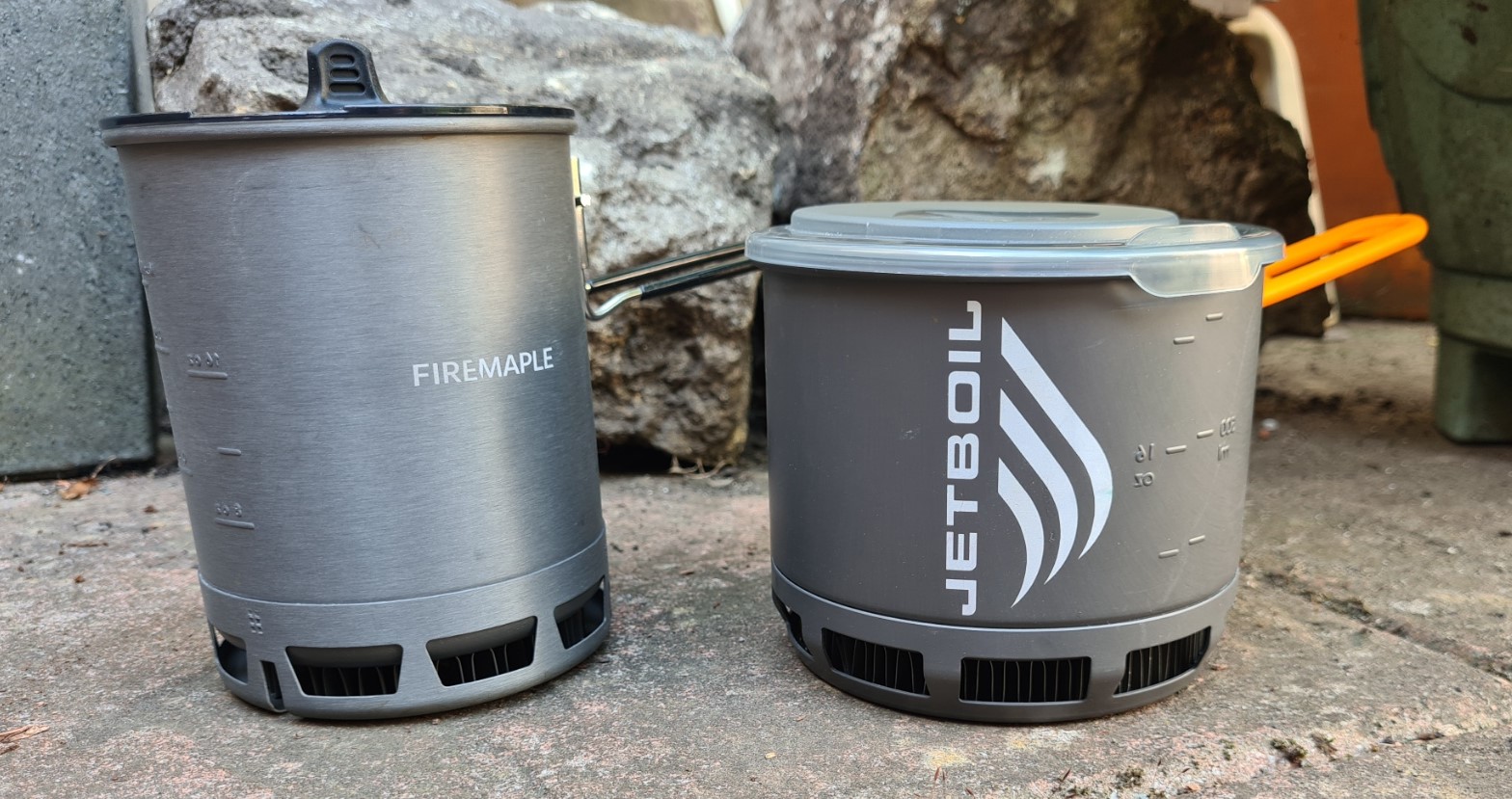
The Petrel is a welcome addition to the very small range of lightweight small capacity heat exchanger pots available. By way of comparison, there is the 800ml 143g Jetboil Stash pot with lid (127g pot), the 800ml 268g Wildsea Heat Exchange pot with smaller pot/lid (169g pot), and the now discontinued 550ml 176g Sterno Inferno pot with lid (121g pot). I have previously looked at these and others in a dedicated post. As a stand alone pot, without lid, it is only the much more expensive 127g Stash and the now difficult to find 121g Sterno pot that are lighter than the 136.5g Petrel.
The Fire Maple Petrel differs from all these other heat exchanger pots by virtue of it’s unique three cut-outs in the heat exchanger fins. Some people seeking a similar tight-nesting solution have taken a grinder to their pot’s fins, usually resulting in a bit of a mangled mess in the process. The Petrel is a much improved and neater product by way of it’s intentional design.
The protective cover over the base heat exchanger fins work quite well in reducing side breeze affect on burner flame and could negate the requirement of any additional windshield but a windshield will further reduce gas consumption to a minor degree.


The handle is very good, well made and well designed. It is a ‘proper’ handle that locks firmly into place when either closed or open and is released by pinching in the sides. It does protrude quite far (108mm) when open and for the unwary, is easy to knock with a hand. While titanium would have made for a slightly lighter in weight material, using that would have considerably bumped up the cost.
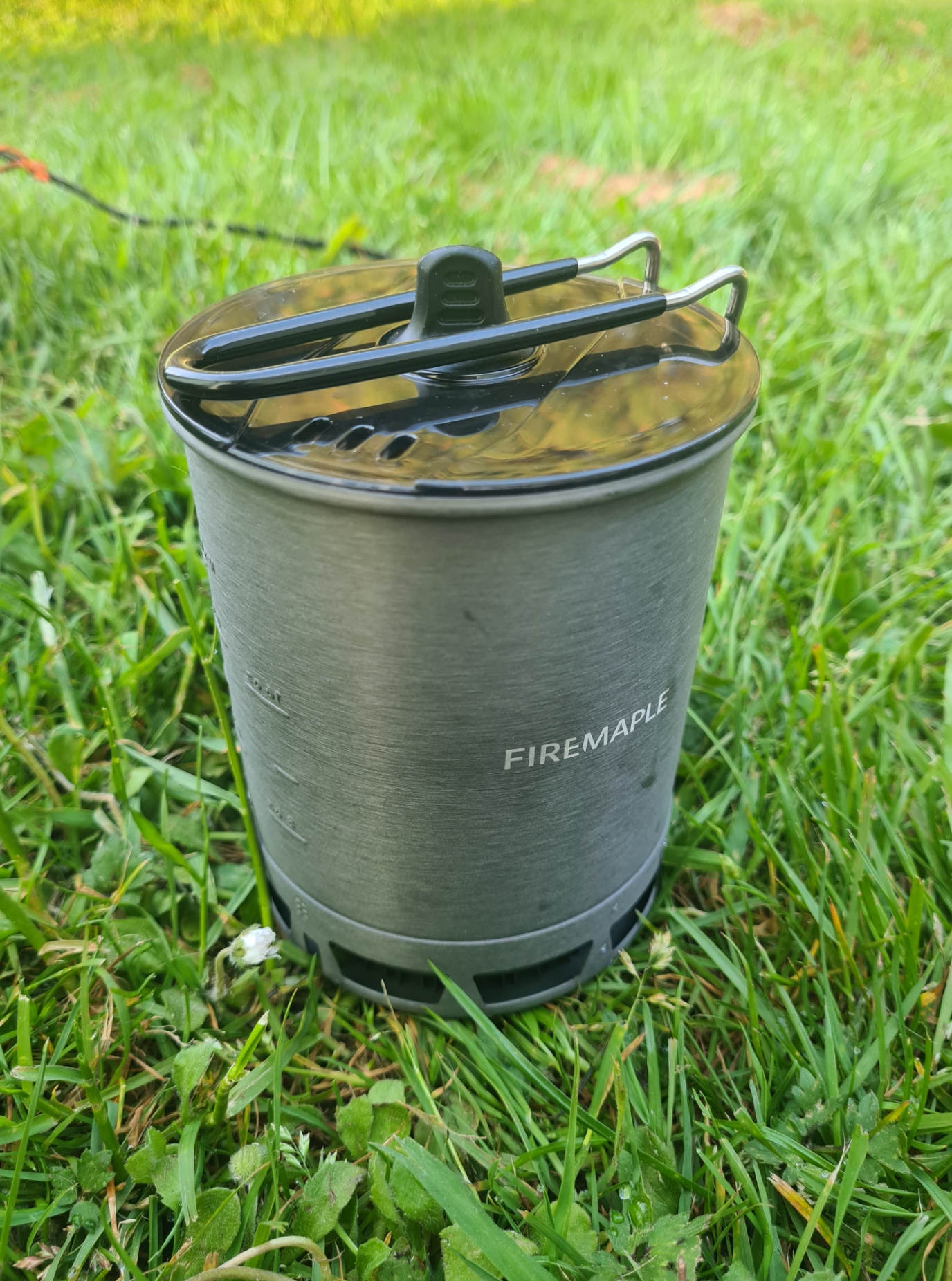
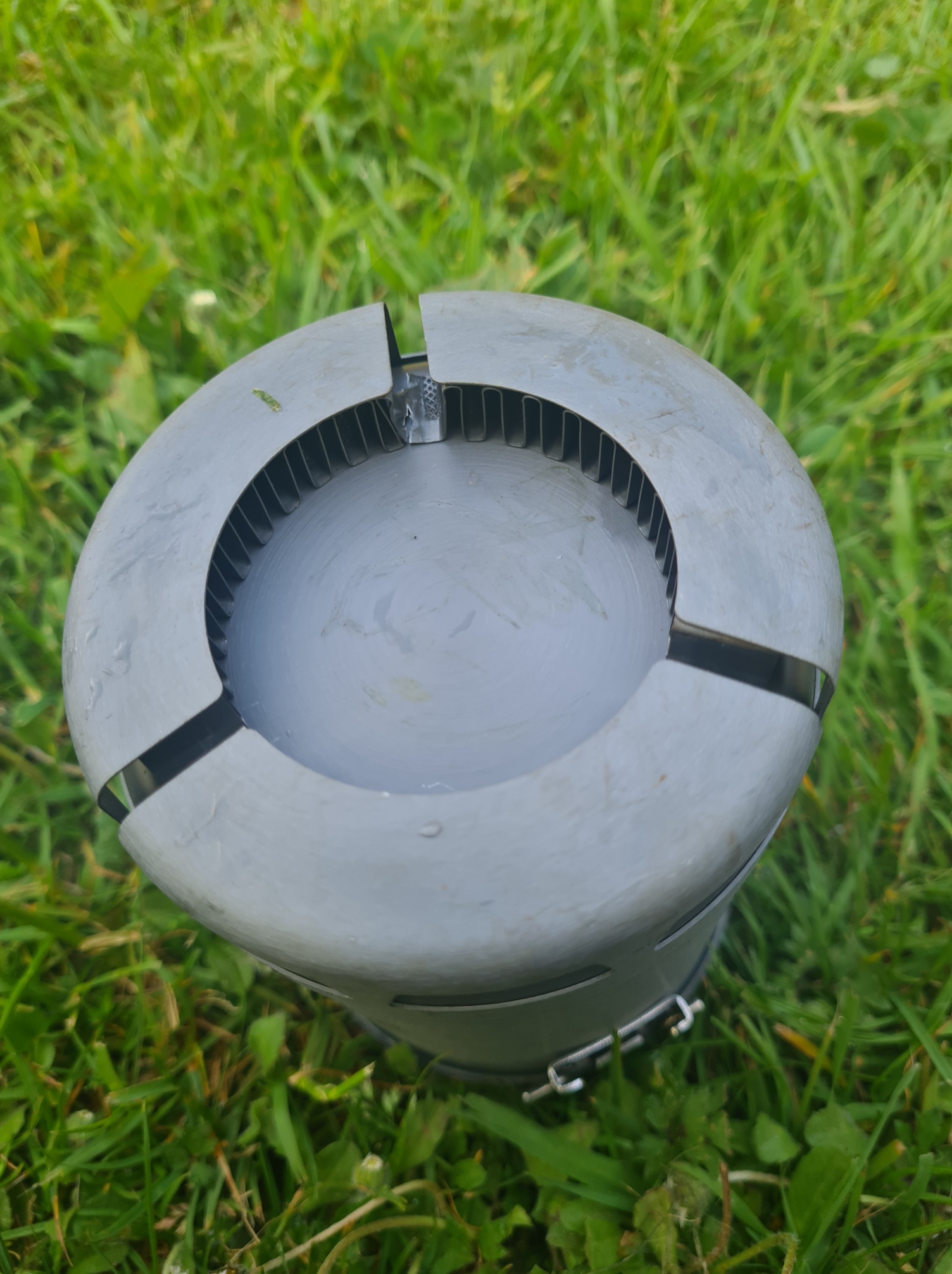
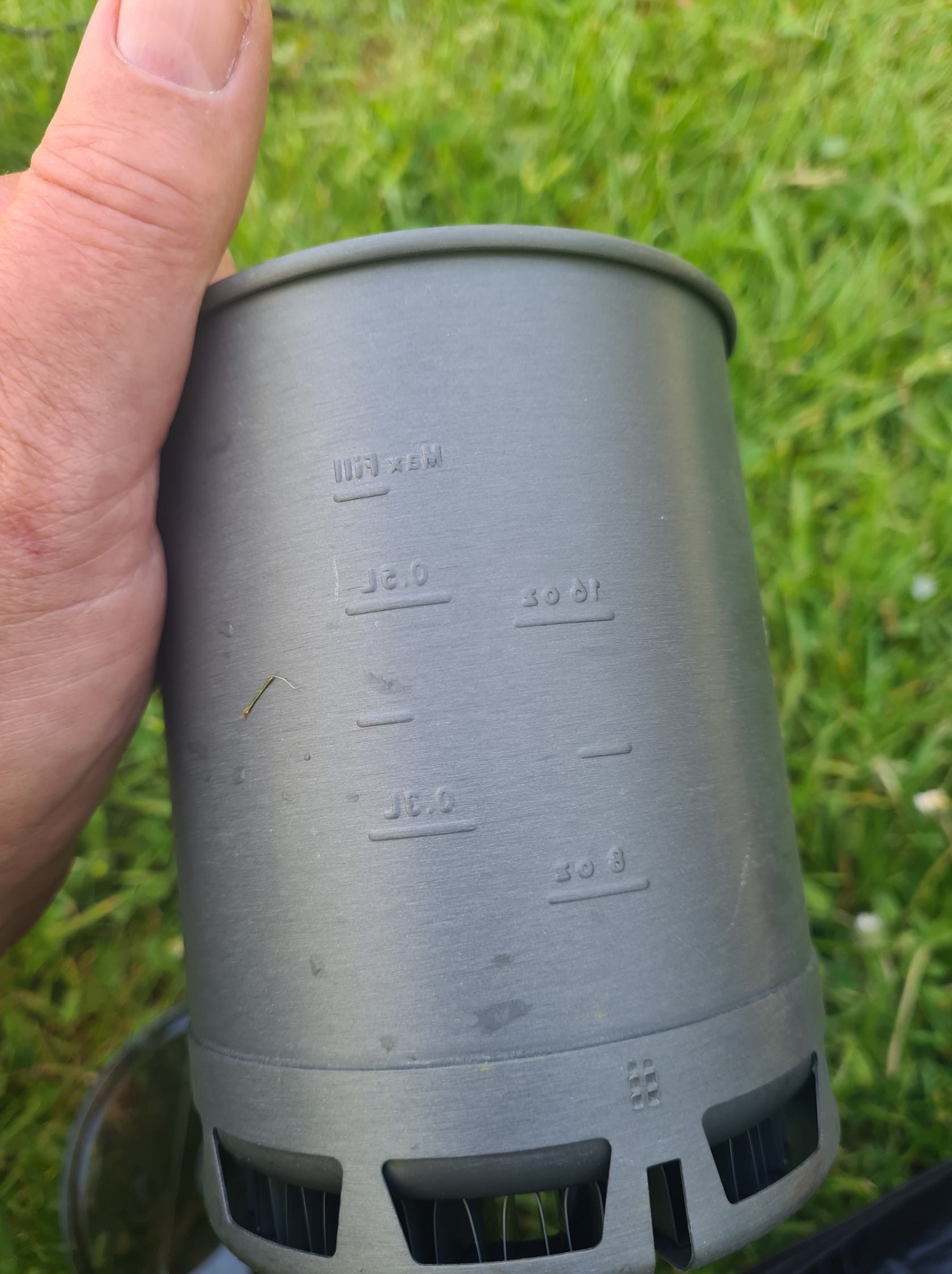
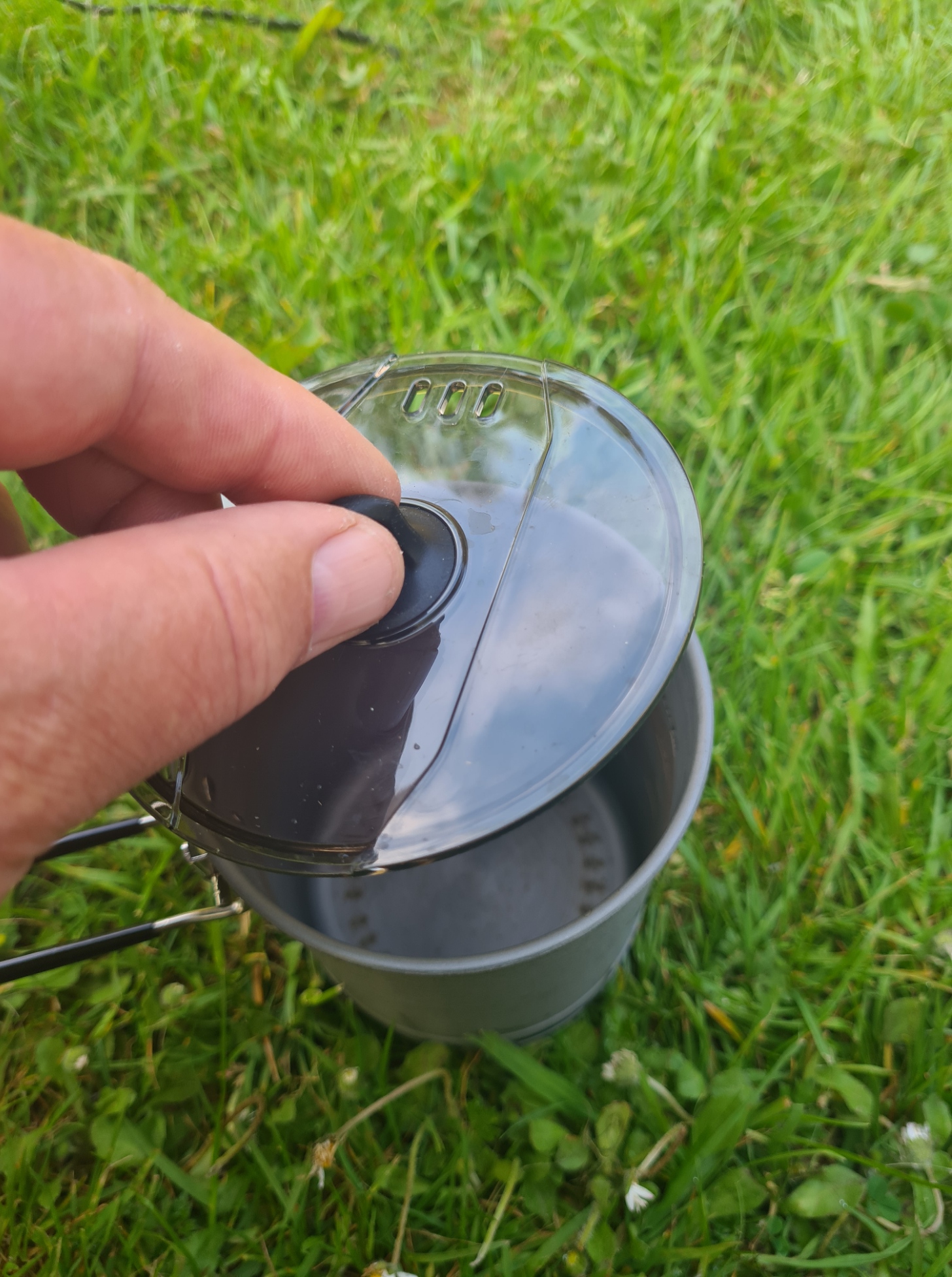
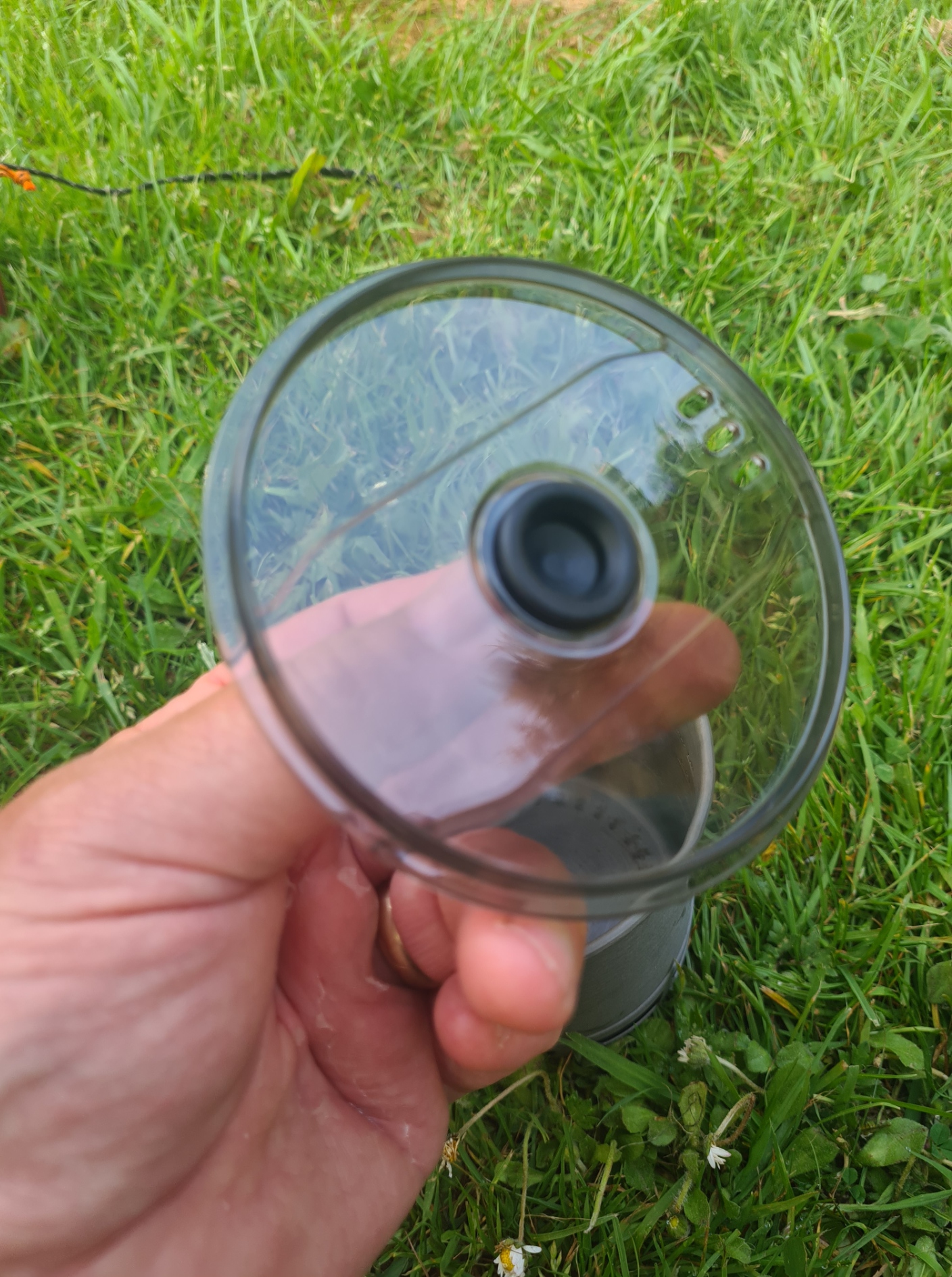
The Tritan lid is well designed and made and weighs 27.5g by itself. There are three steam/drain vents in the lid and the silicone grab handle could be easily removed if required. Using a lid is an integral part of efficient use of this heat exchanger pot. It has a firm, but not tight, fit when placed on the pot and doesn’t expand when hot to jam on the pot. The darkened grey-brown lid colour does mean that it is not the clearest to see through and it isn’t immediately obvious when the water is boiling by sight alone, however the change in sound, steam being pushed from the lid vents and gentle rocking of the pot introduced with a rolling boil are more than sufficient indicators though the gas should ideally be turned off slightly prior to this, reducing unnecessary consumption. A lighter lid would be possible and I can see some users opting for a third party titanium replacement or simple piece of foil instead. I also suspect this lid could potentially crack under any form of stress that a metal lid would shrug off, but that is a fairly unlikely scenario for most users.
The Petrel is one of the cheapest heat exchange pots available so can make for a degree of experimentation from those interested. I paid £19.96, plus a further £3.99 postage. I have seen it offered cheaper but not when I went to buy it. So do look around. The Chinese made pot is likely to be most expensive when purchased from the likes of Amazon but can sometimes be found cheaper via different online retailers.
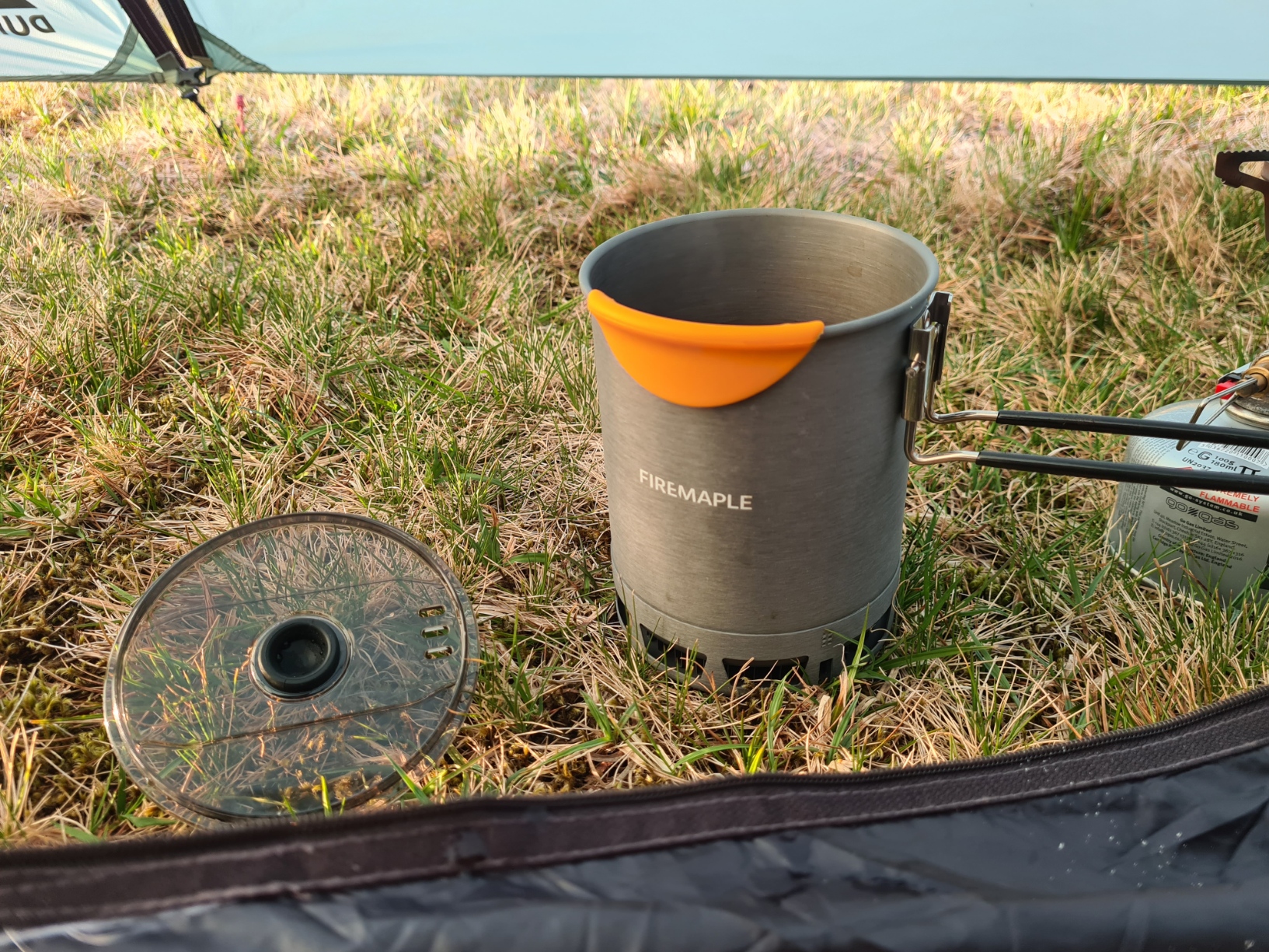
Despite the slightly awkward orientation of the fold out handle, I have used mine as a mug to drink from. However the metal is too hot to use it in this manner and I simply fitted Snow Peak silicone HotLips when drinking from it.
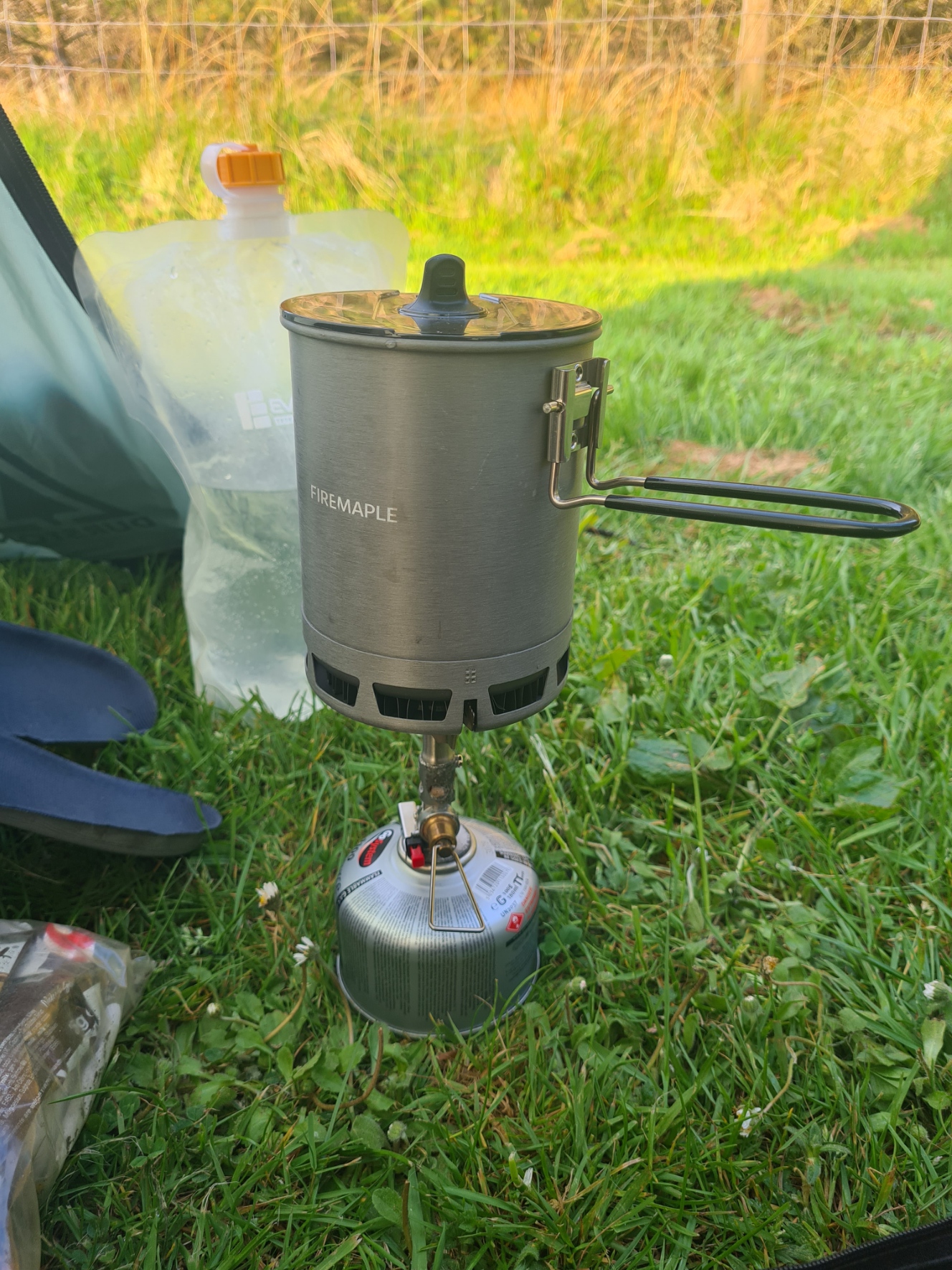
As to the shape of the pot itself. I would have preferred a wider pan design over the narrower and taller profile of the Petrel pot and live in hope that Fire Maple (or some other manufacturer) might yet produce an equally as lightweight but wider, squatter alternative that also has those handy three slots in the heat exchanger. The tall and narrow Petrel makes for a high centre of gravity, especially when combined with a tall stove such as the Soto Windmaster. I have had a stove and pot tip over on a soft grass underlay, fortunately no harm done other than precious water lost. When combined with a remote canister stove, it is a far more stable and safer combination.
Jetboil’s Stash heat exchanger pot has a squatter profile that provides a safer lower centre of gravity. However the Stash pot can currently only be purchased as part of an Ultralight Camping and Backpacking Stove Cooking System, As I write this (May 2024), Amazon UK is offering this cook set for £115.10 (RRP £139.99). The Petrel G3 pot is currently available as either an ‘Ultralight Cooking System‘, with pot, lid, Hornet II stove, ferro rod striker, folding titanium spoon and drawstring baggie for £49.95, or as just pot, lid and drawstring baggie, now priced at £23.95. This is a significant cost difference between the two little pots. If only we could have a pot like the Stash that also has the three cut outs in the heat exchanger.
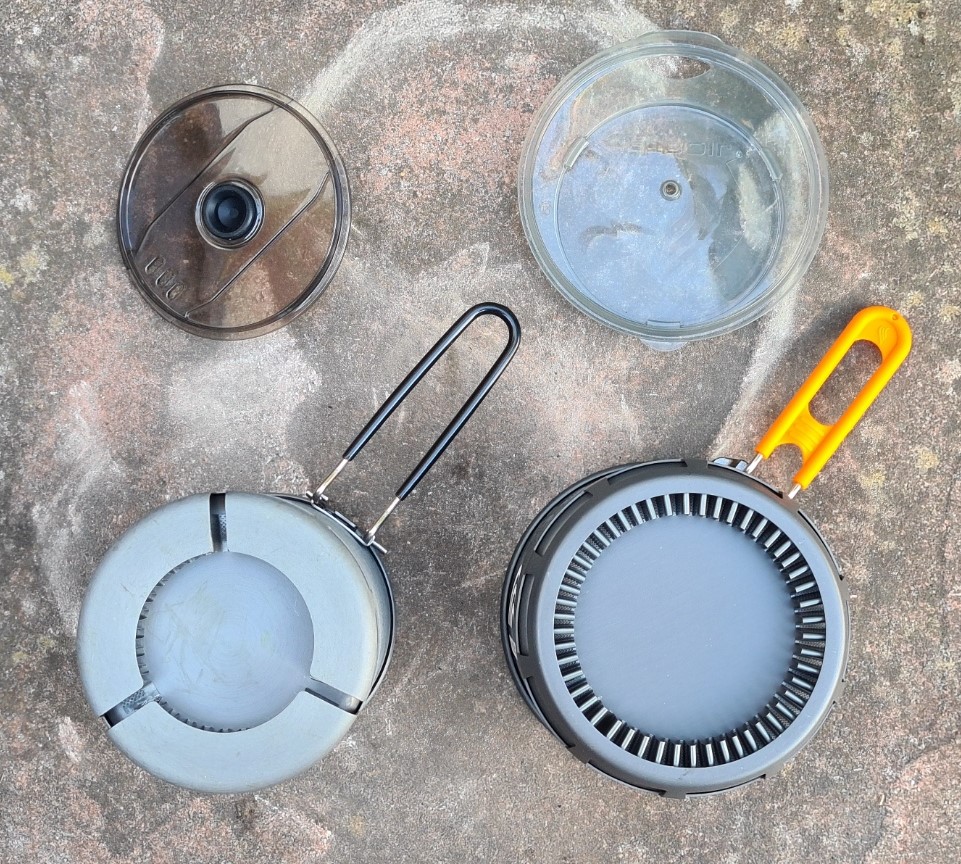
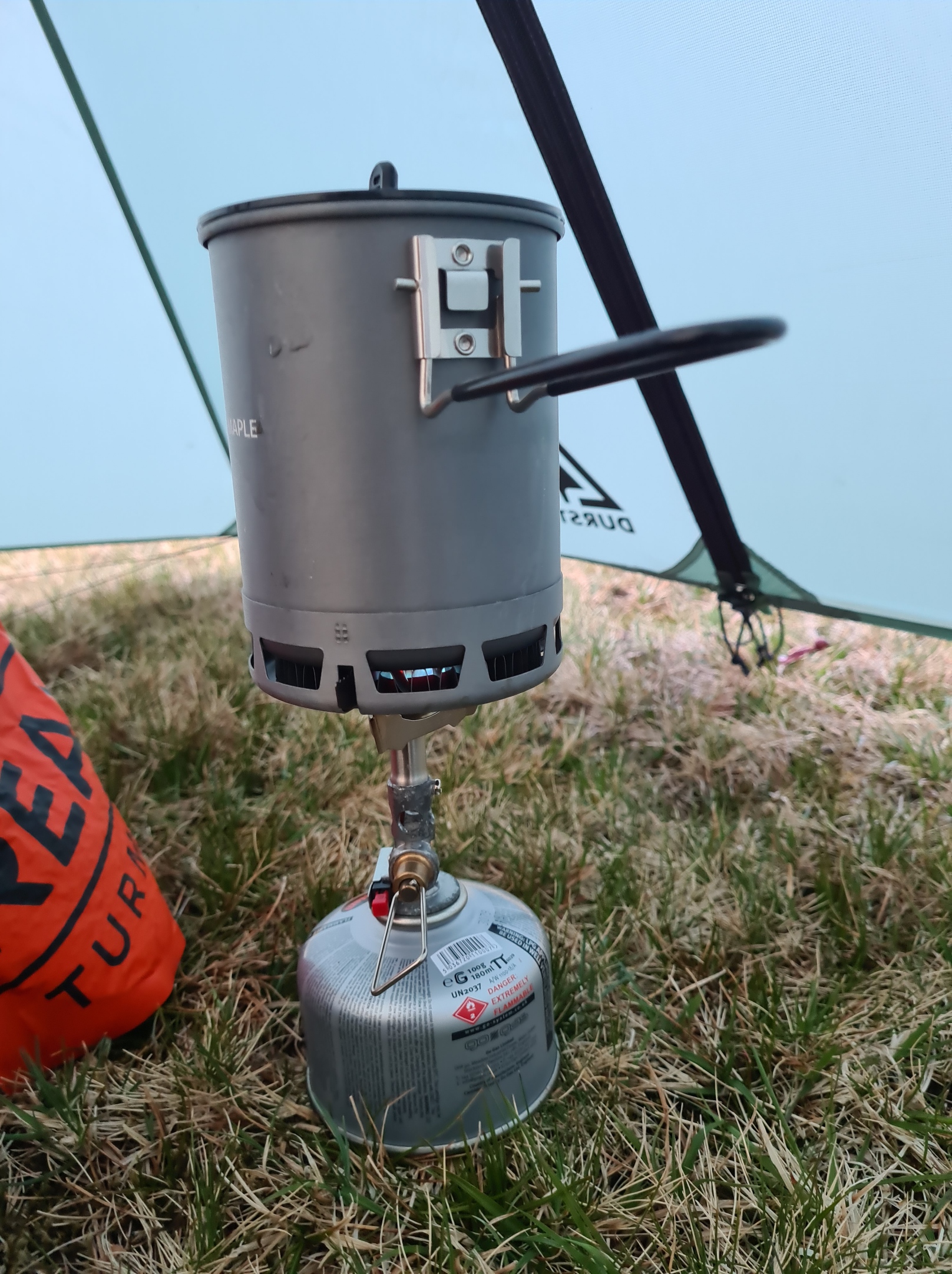
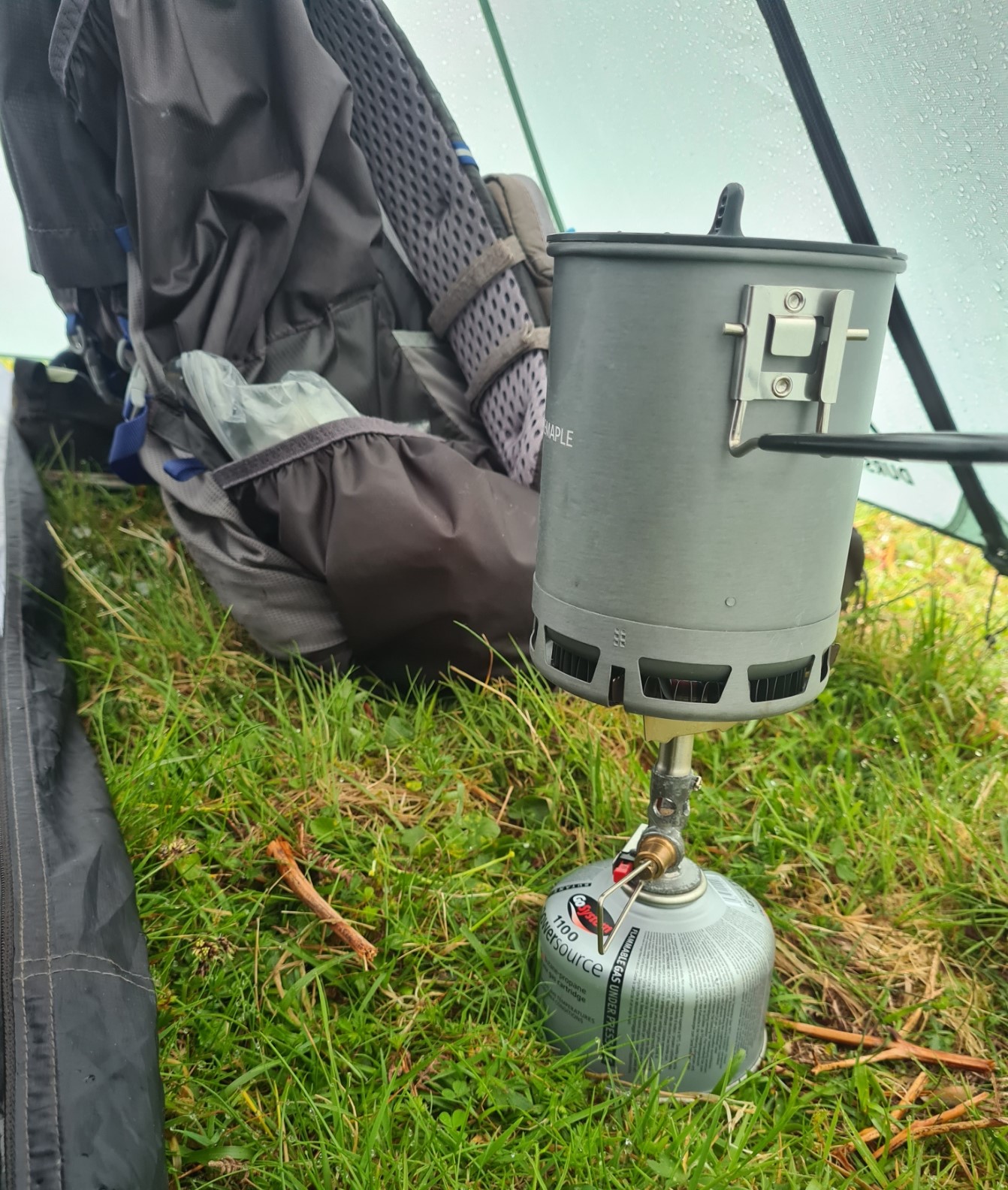
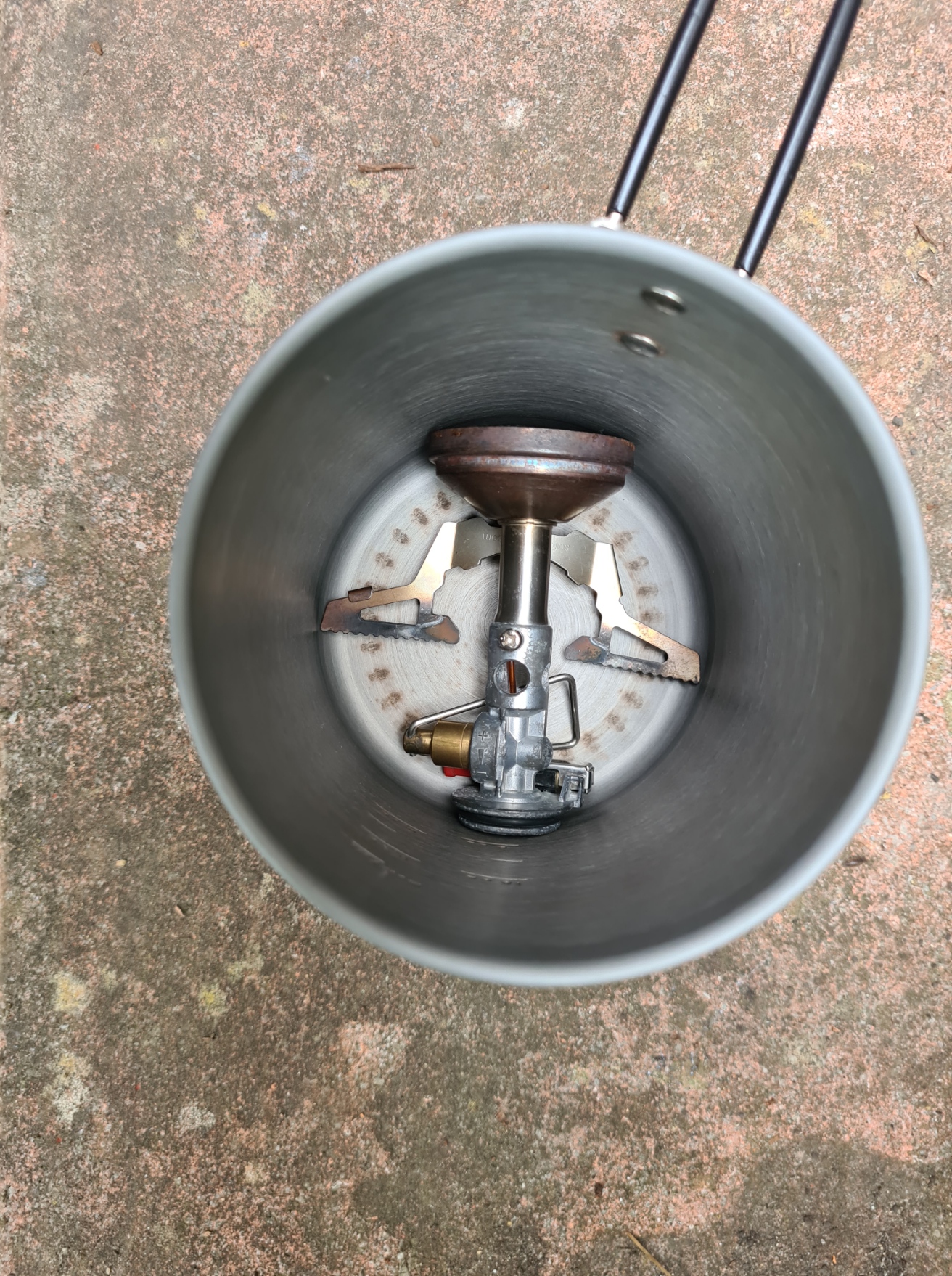
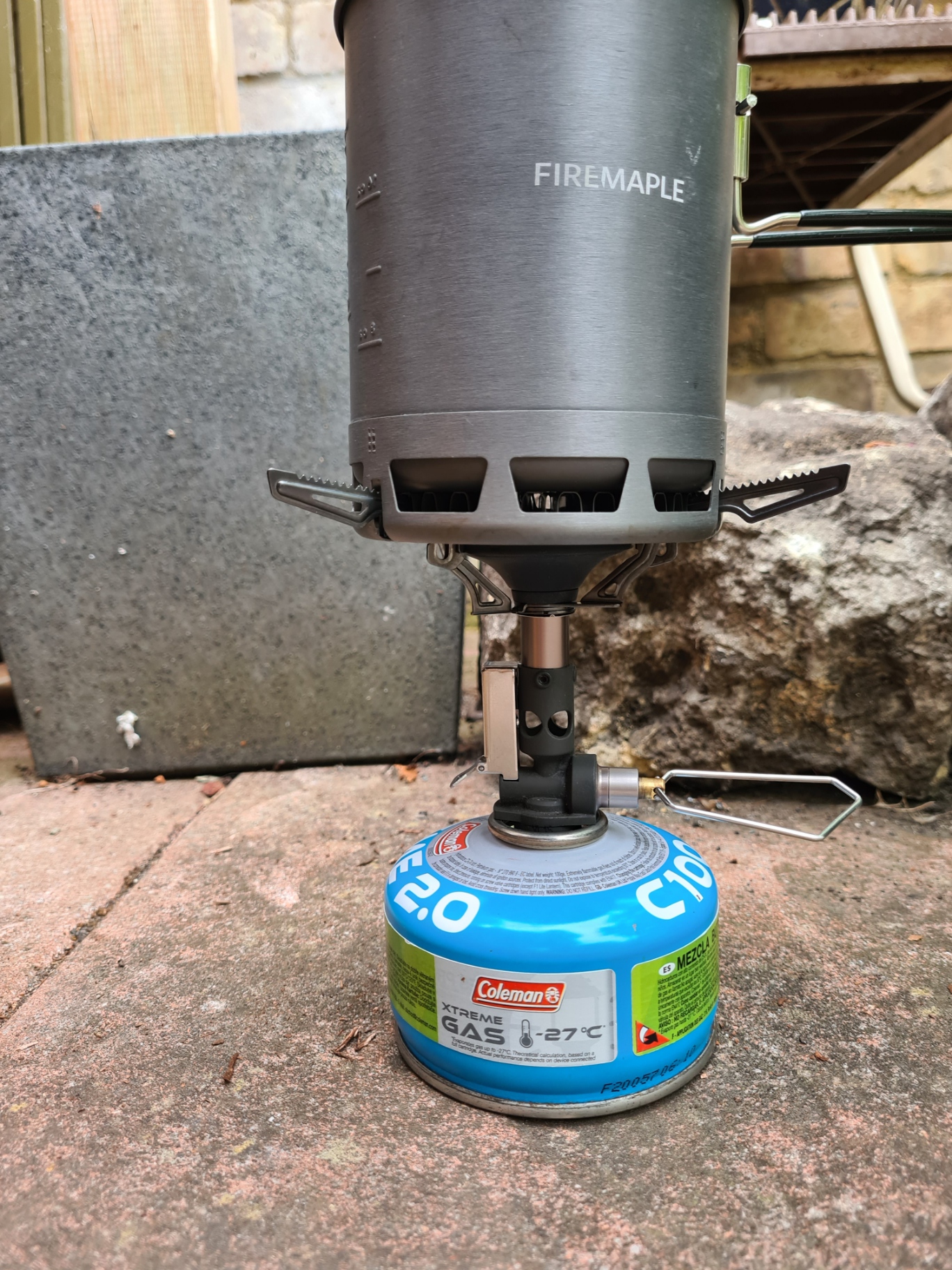
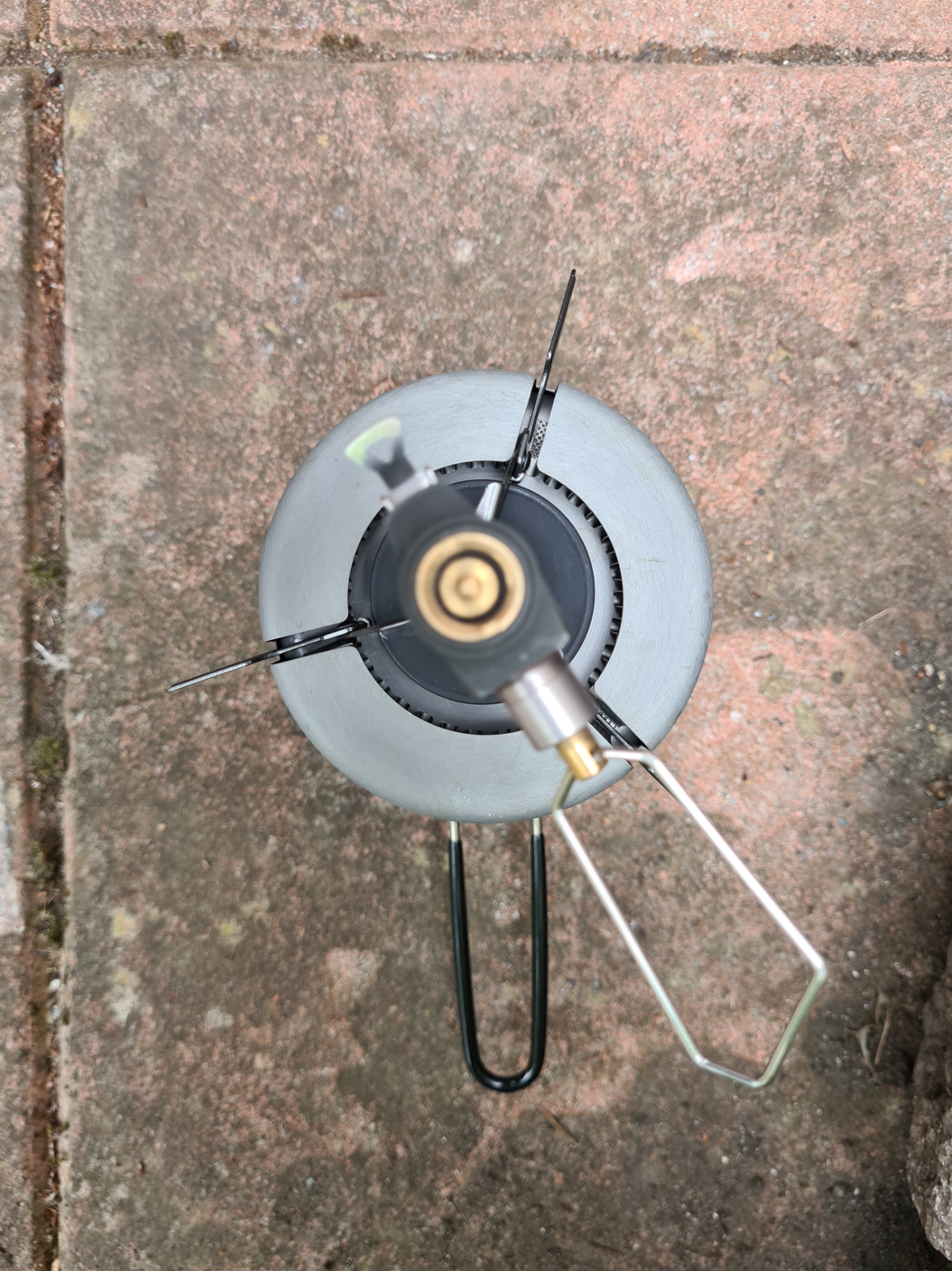
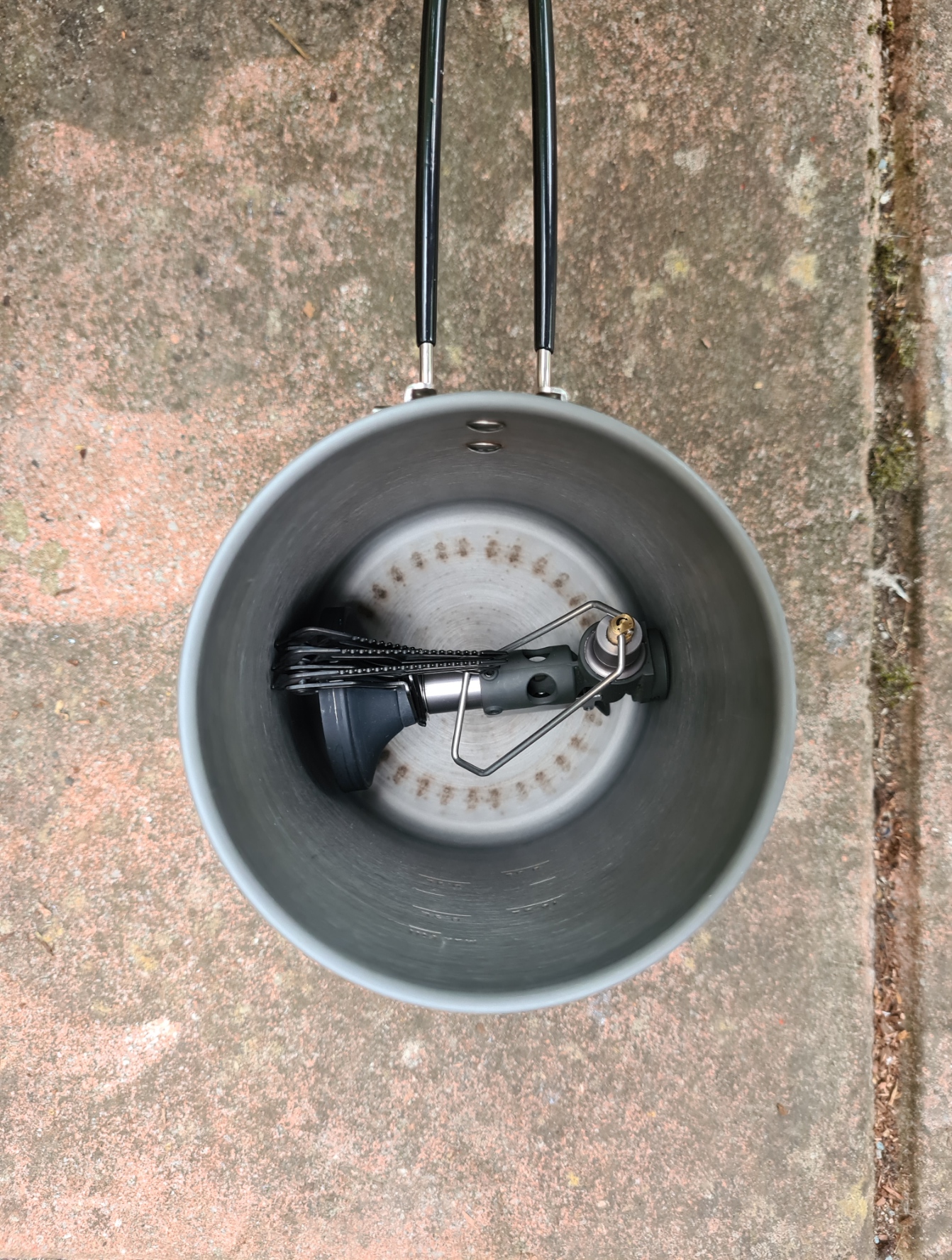
I have a few stoves that have three pot supports and dug out a large handful to simply nest with the Petrel (or attempt to) and images are included here to show how the two components might work together. There are a great deal more stoves out there than the small selection looked at here, but these might offer an idea as to suitability.
Many other gas stoves made by Fire Maple/Deer Maple will not work with the Petrel pot without forcing stove pot supports into the cut outs in the heat exchanger fins, or after major alteration of pot support arms. These include their Polaris remote canister stove, FMS-116, FMS-116T Heat Core, FMS-117T Blade, FMS-118 Volcano, FMS-118A Volcano, FMS-117H Blade 2 stoves. Many of these have been rebranded by other outdoor gear suppliers so those versions will also not work with the Petrel. Those stoves include: Alpkit Koro, Eifel Outdoor Equipment (EOE) Cobaltum, EOE Palladium, OEX Vulcan, LACD Patkhor, Robens Firebug, Vango Ultralite stove, Eifel Outdoor Equipment Titanium, Olicamp Xcelerator, Olicamp Kinetic Ultra Titanium Stove, GoSysytems Fly, Monatauk Gnat, Karrimor X Lite Titanium Stove and Hi Gear Blaze. There are others in addition to these.
Canister top gas stoves:
The tiny 25g BRS 300-T titanium gas stove will not fit the Petrel pot due to the angle of the pot supports though these could potentially be bent to make it fit. The BRS has been problematic for some users when the pot supports have got too hot and have softened and bent as a result. It is possibly that due to increased heat build up with a heat exchanger pot that this problem could again manifest itself, so I suggest that it not be adapted for use with the Petrel.
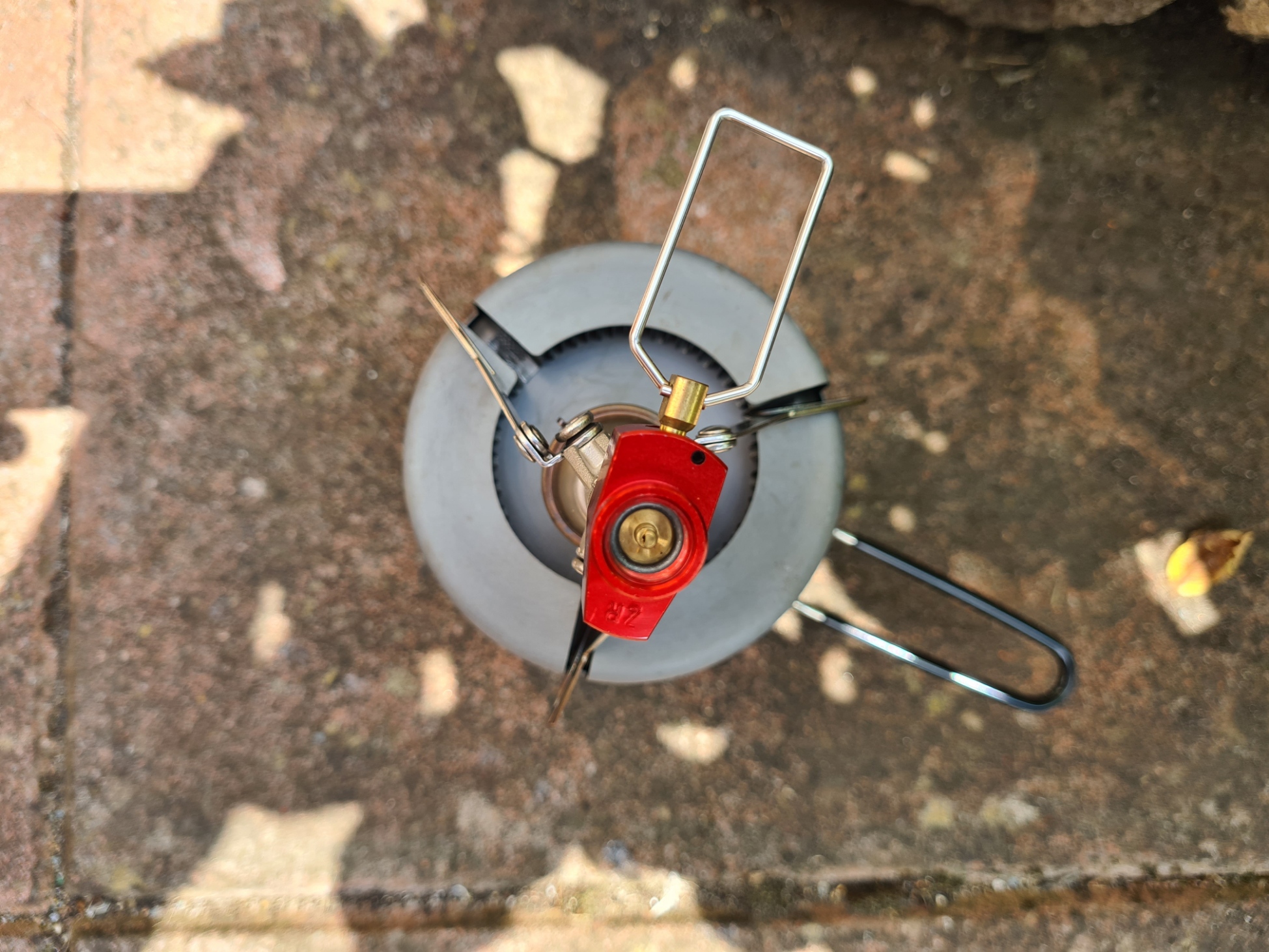
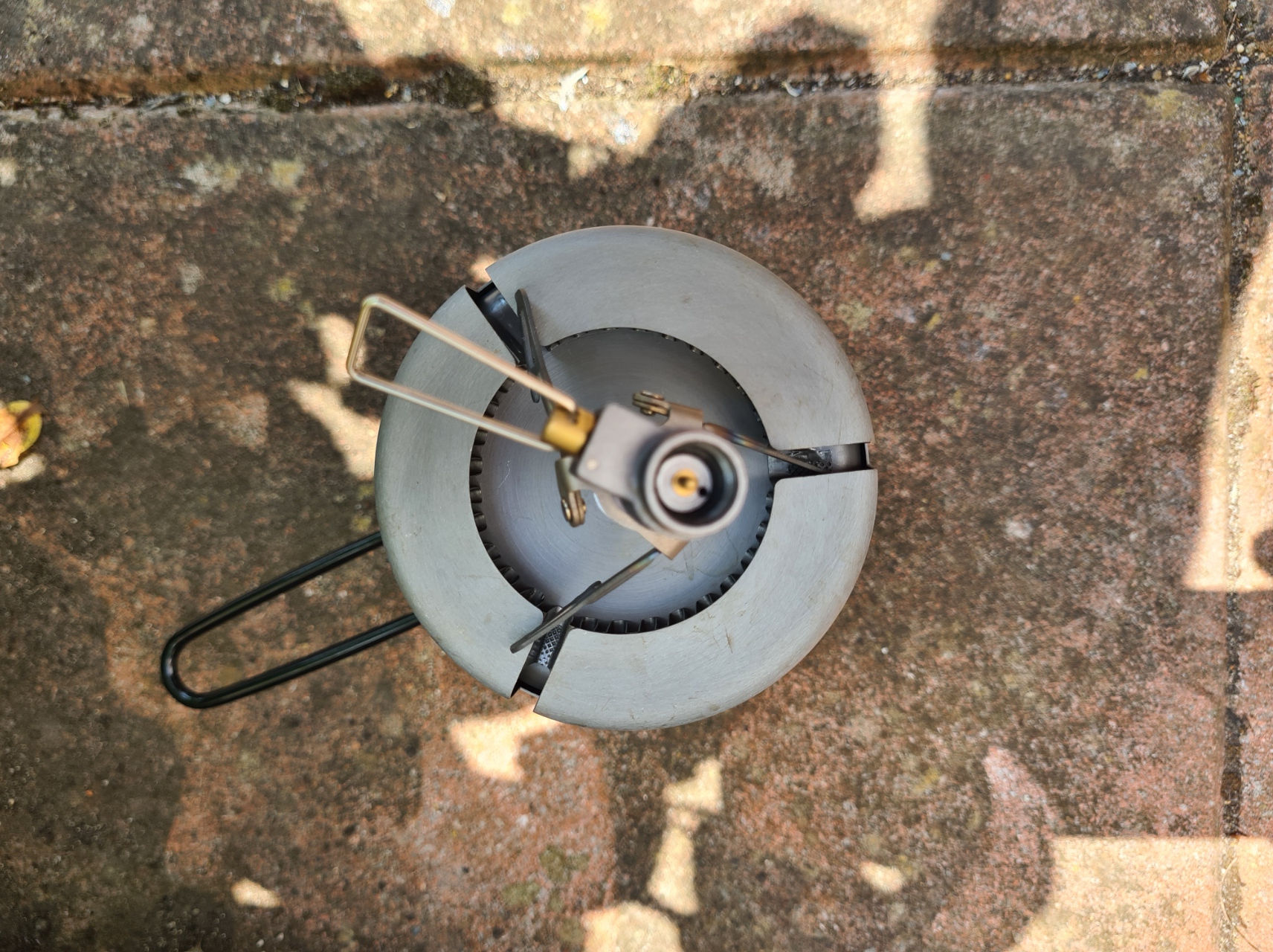
The equally as diminutive 43g Fire Maple FMS-300T Hornet (not the Hornet II) doesn’t fit the Petrel either While an attempt could be made to gently bend supports to fit better, it’s design really doesn’t lend itself to that. This is something I am not interested in doing as there are only slightly heaver stoves that fit better out of the box, without alteration.
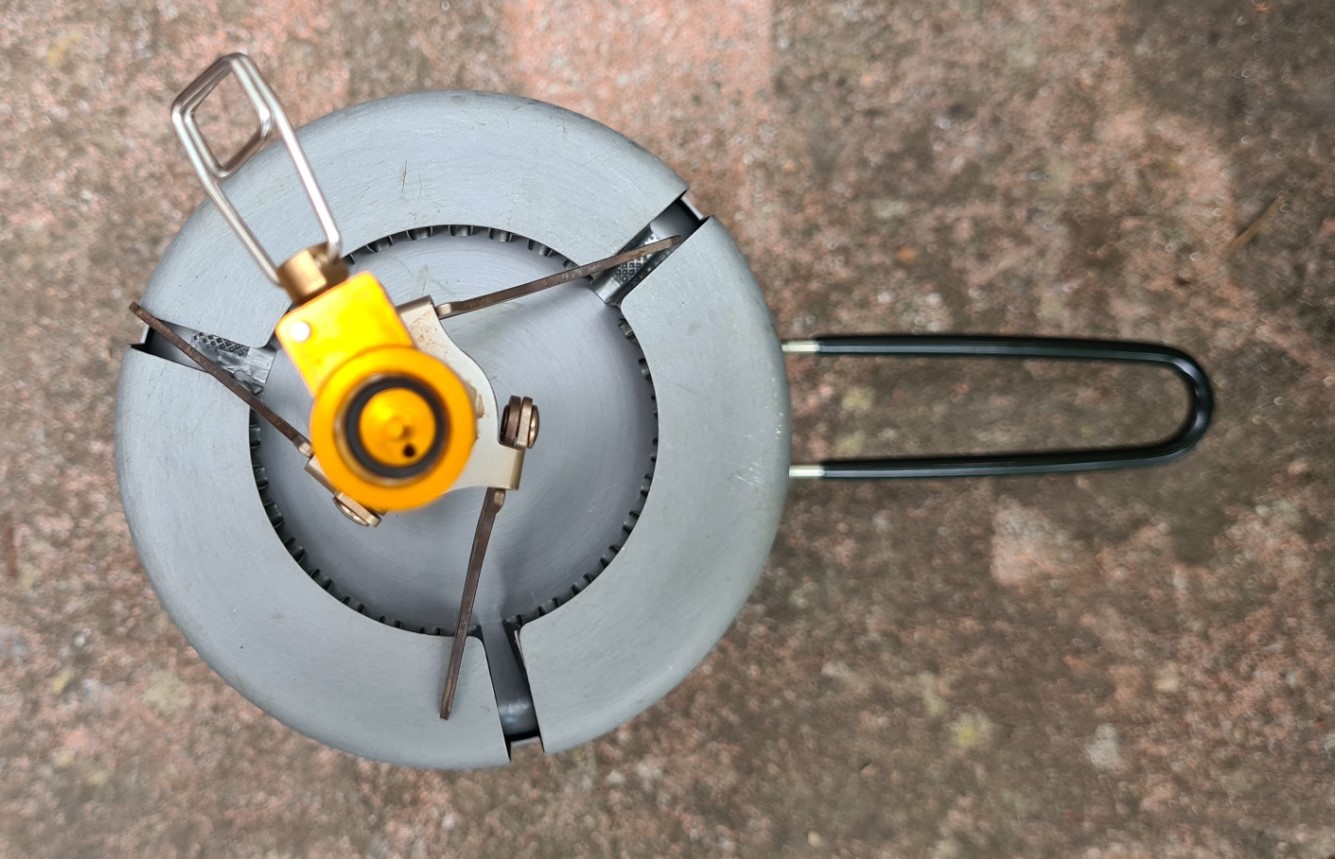
The angled pot supports on both MSR’s Pocket Rocket II and Pocket Rocket Deluxe won’t fit the Petrel pot either. The generic wide burner head used on many of Fire Maple’s stoves, both canister top and remote, fits nicely inside the heat exchanger on the Petrel and it looks as though these could make for an effective combination, however the fold out pot supports on these stoves each have a centrally placed pivot rivet that fouls the slots, so none of these stoves work well with the Petrel.
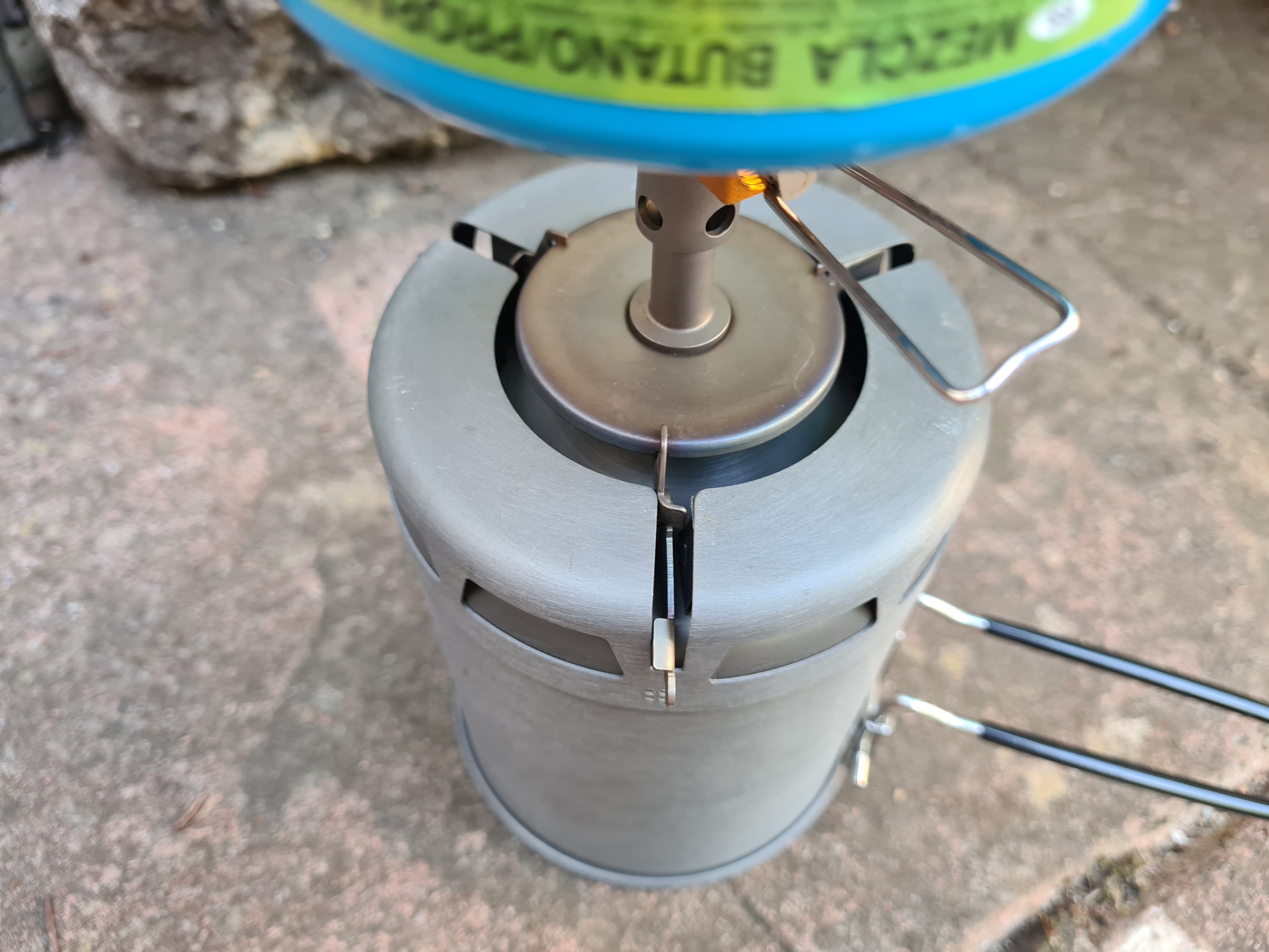
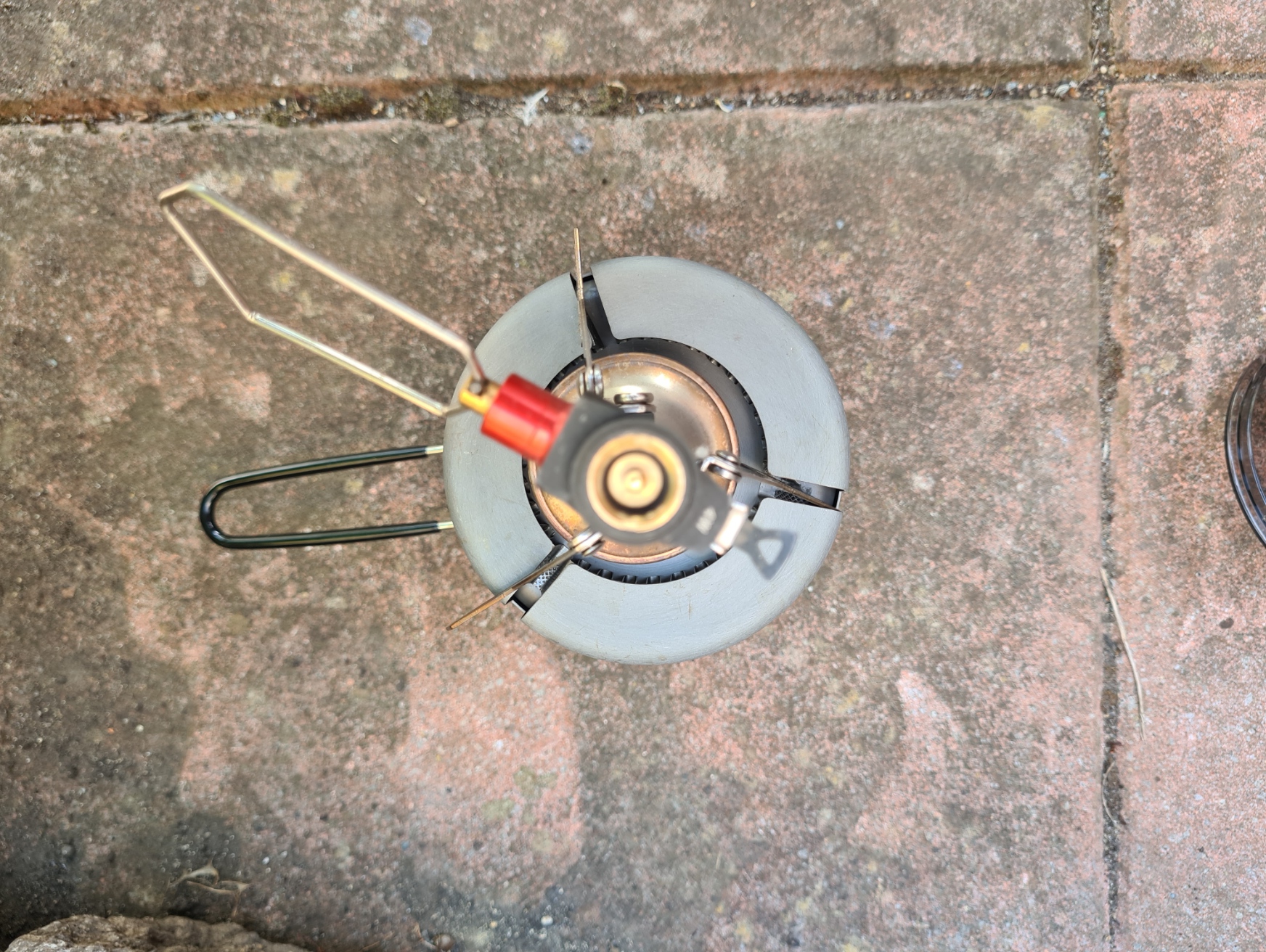
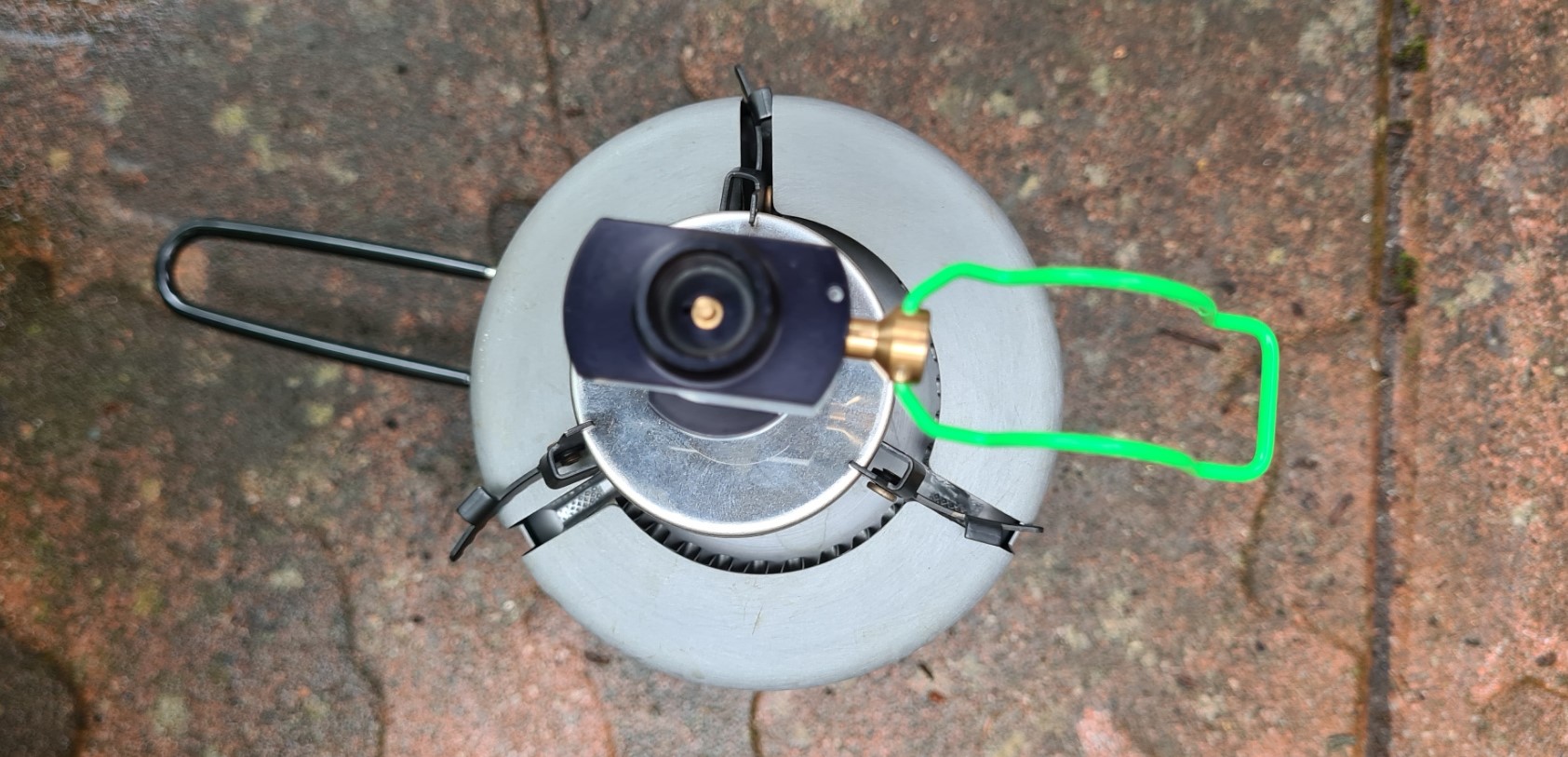
So, enough of canister top stoves that won’t work with the Petrel pot. Which stoves, from my small arsenal, will nest comfortably into the three cut out slots on the Petrel pot? Fortunately, in addition to Fire Maple’s Hornet II stove, there are other options. Indeed, some alternatives are better than the Hornet II, which actually doesn’t fit the Petrel pot as well as it should and also has a burner head positioned low beneath the pot, where the flame is severely affected by any sort of side breeze.
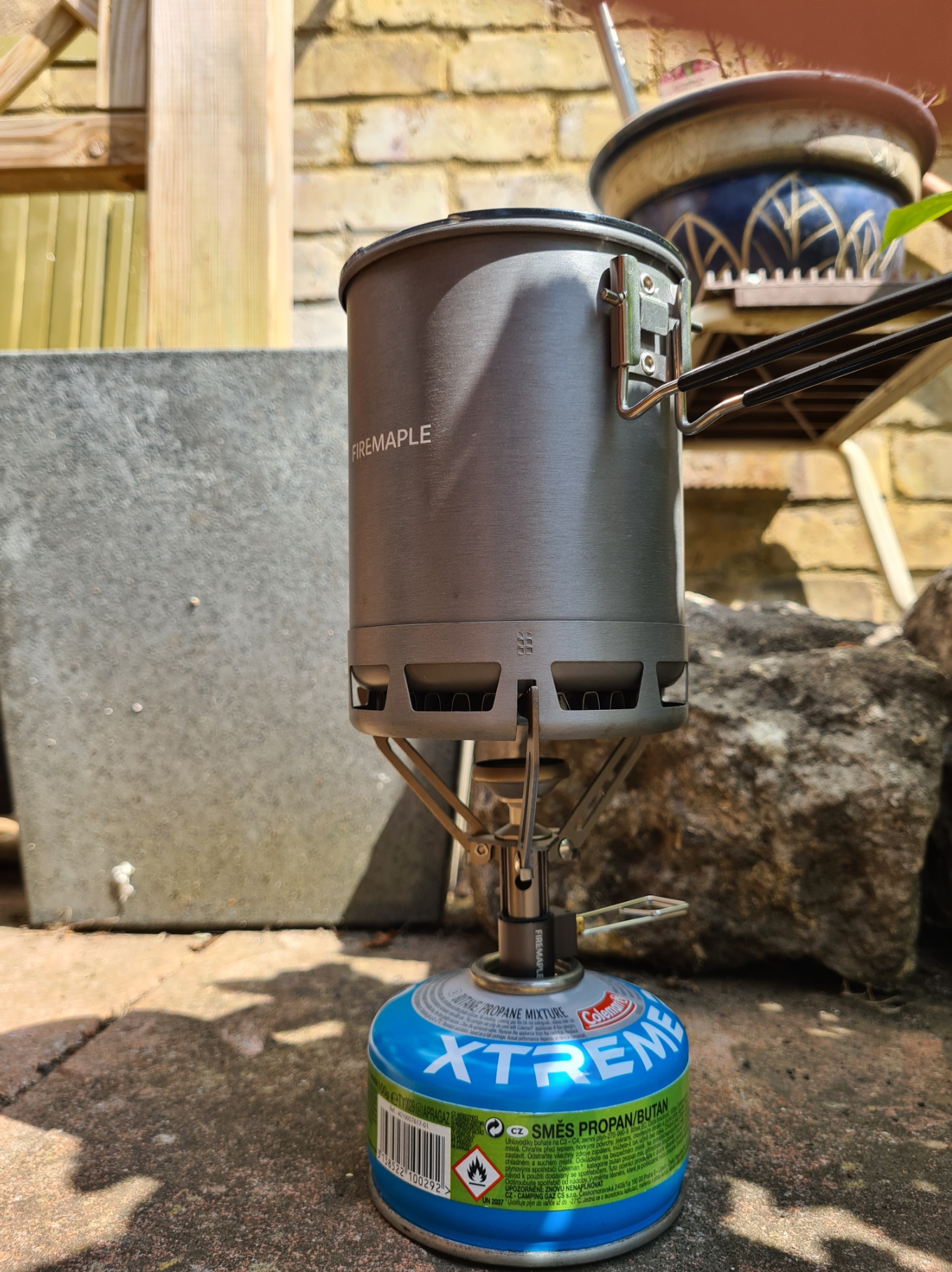
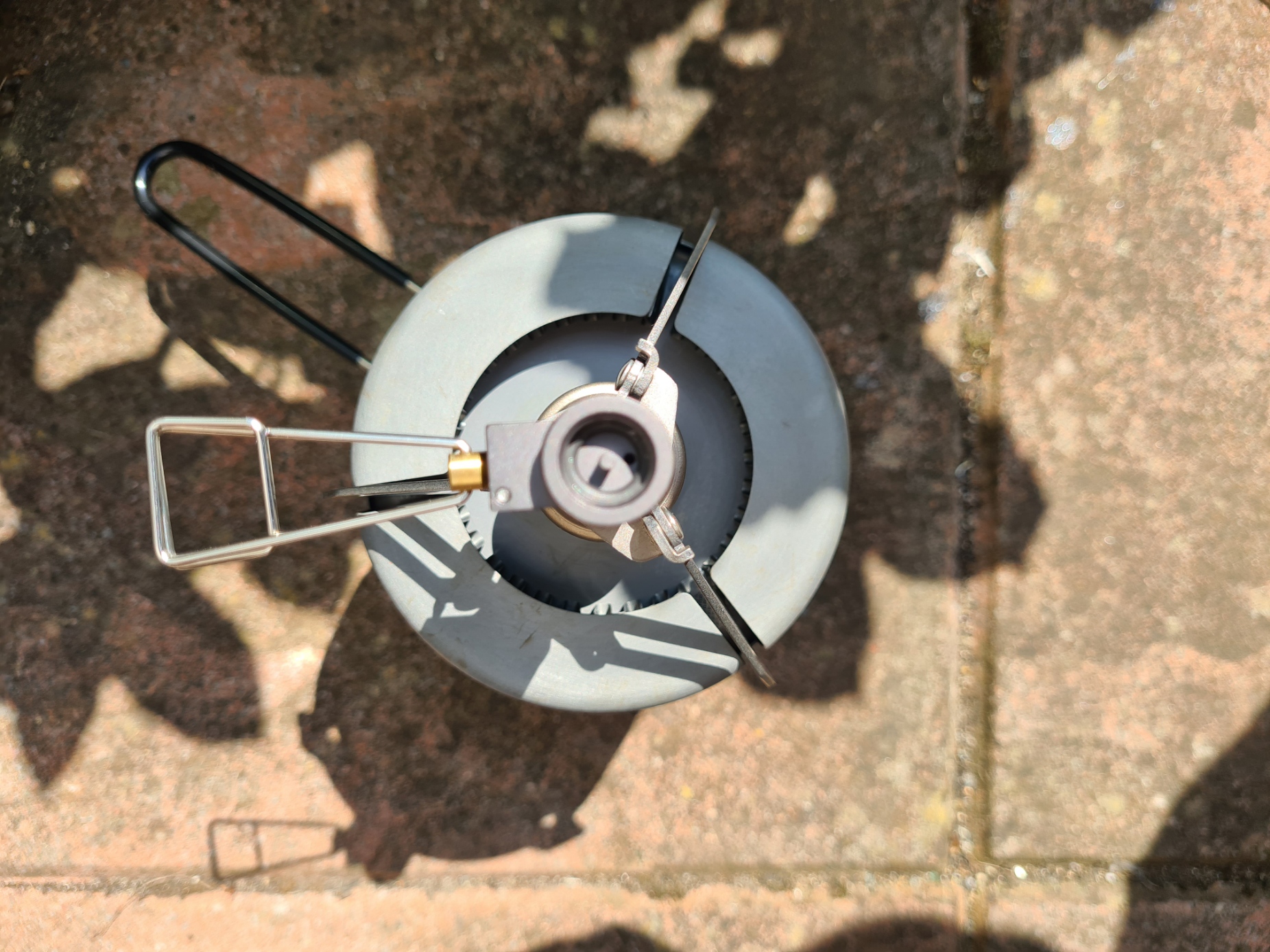
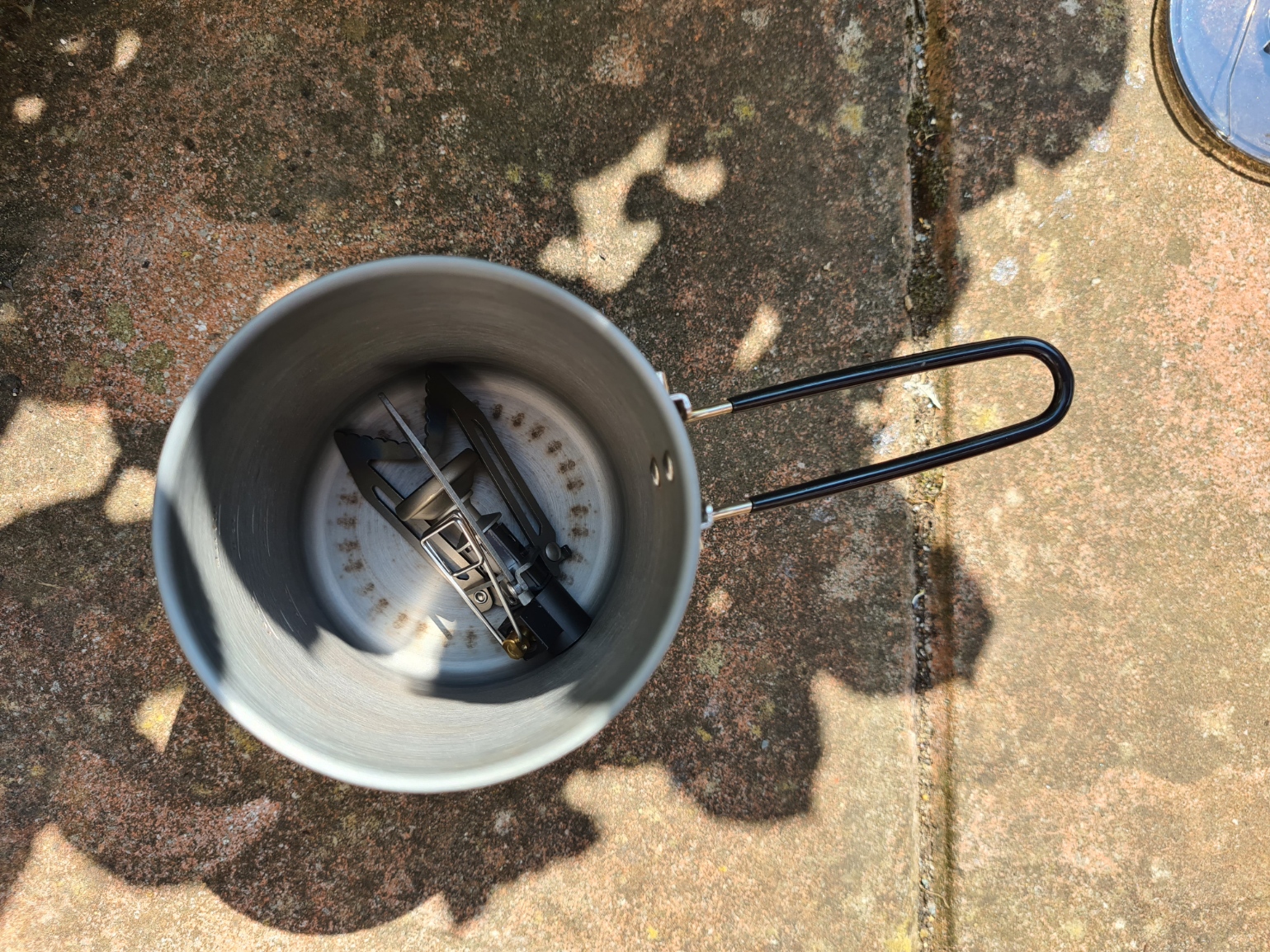
The best fitting gas stove I have is also one of my largest, heaviest and cheapest. This is the Primus Essential Trail Stove. But at 111g most lightweight hikers will discount this as there are lighter options. It is a good stove however, and makes for one of the lowest and most stable profiles with this tall pot.
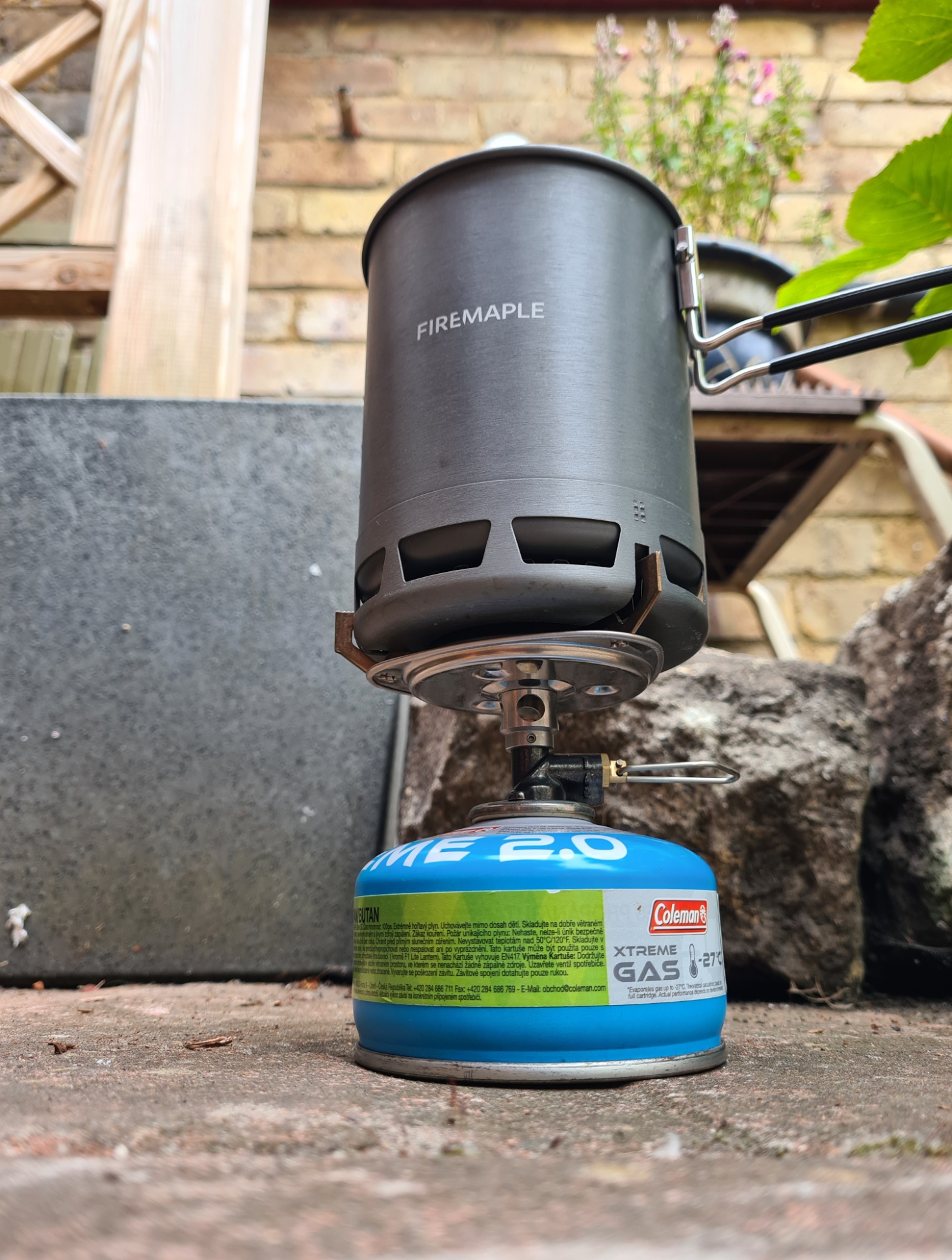
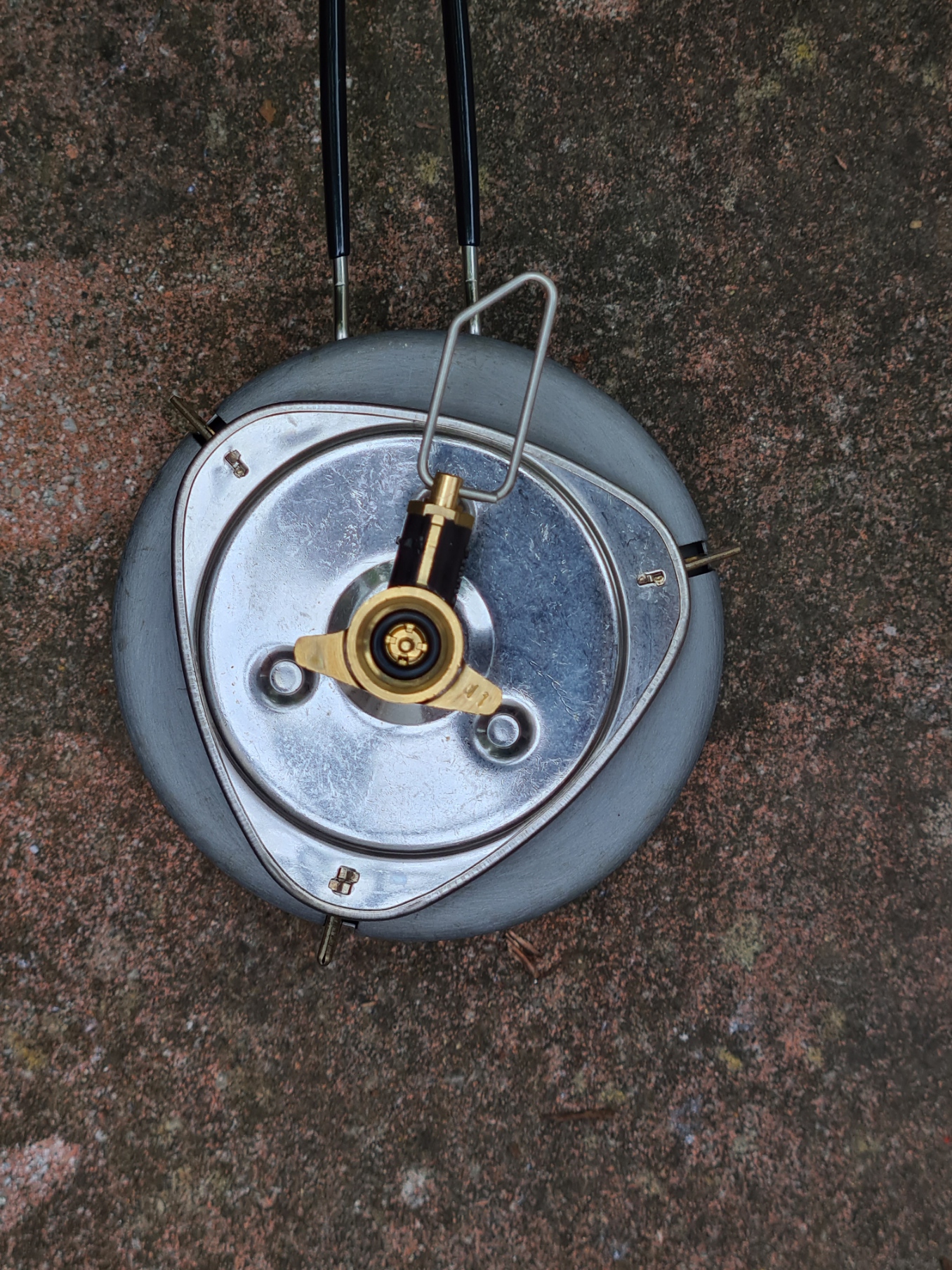
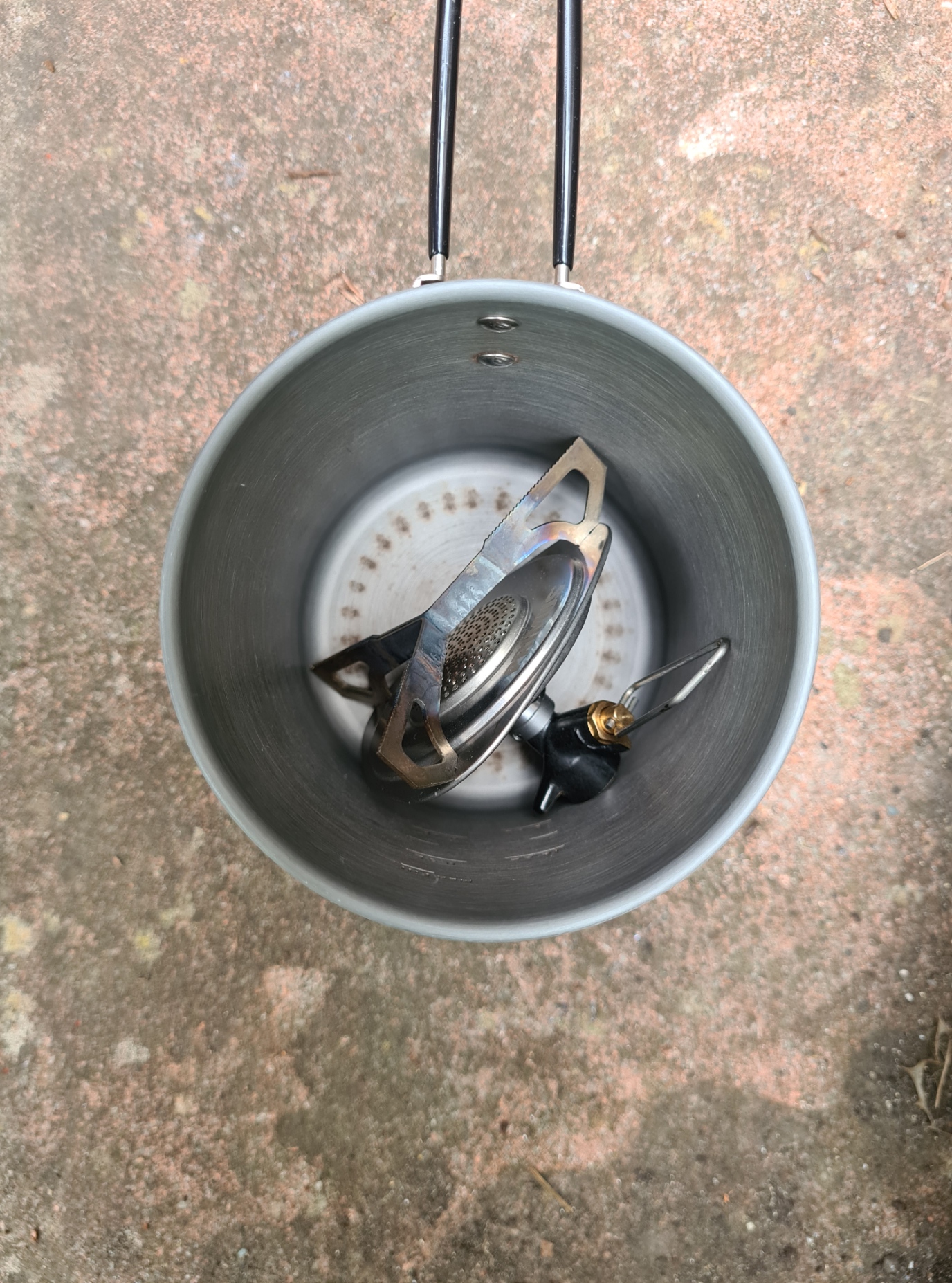
For those travelling internationally, where the type of gas canister valve is an uncertainty, Primus Duo stoves are a handy resource, capable of connecting to either EN714 lindal screw on valves or Easy Clic Plus canisters. I have tried both 86g Micron Trail and 127g Micron Trail Duo with the Petrel, both work fine with it.
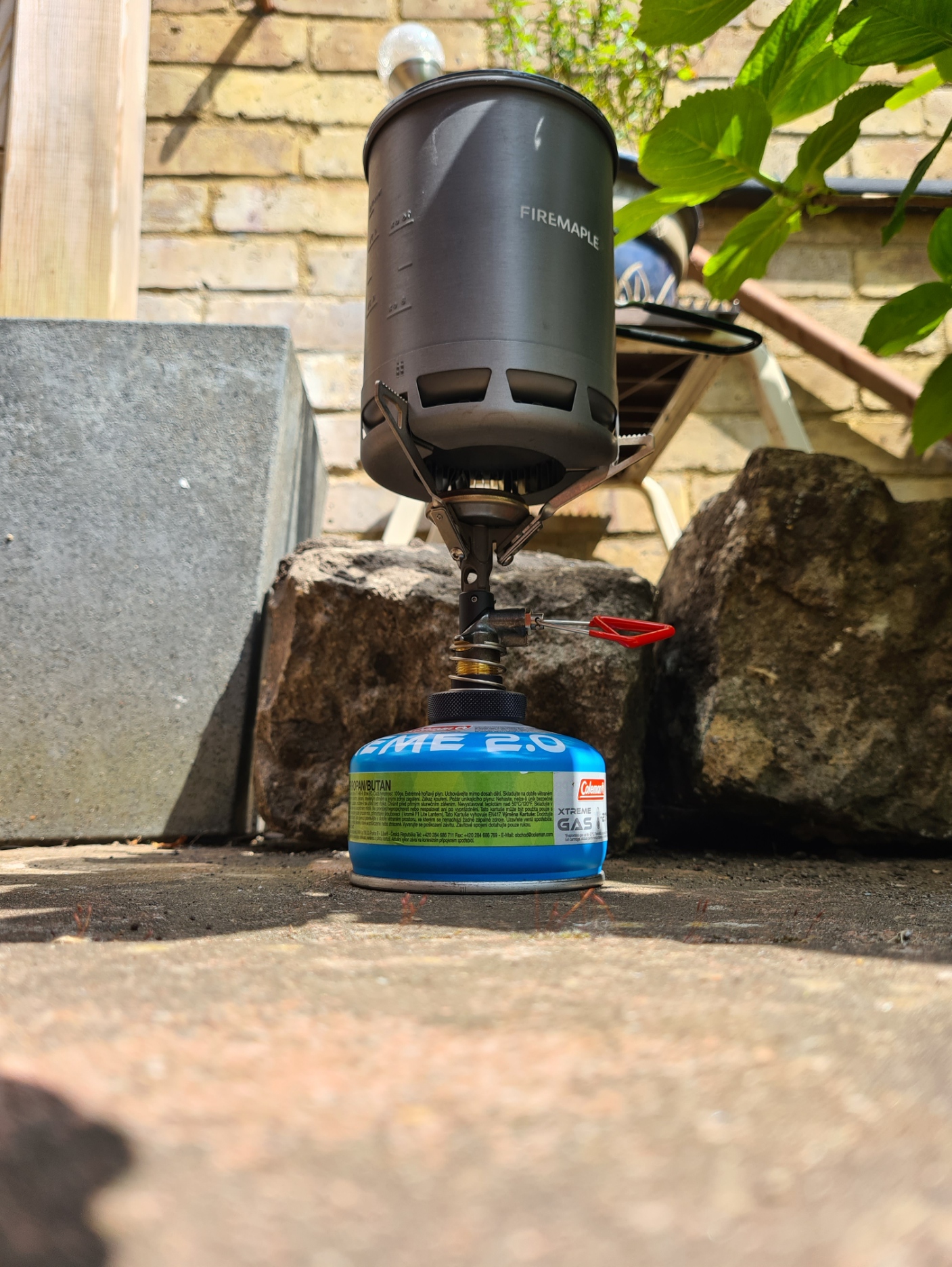
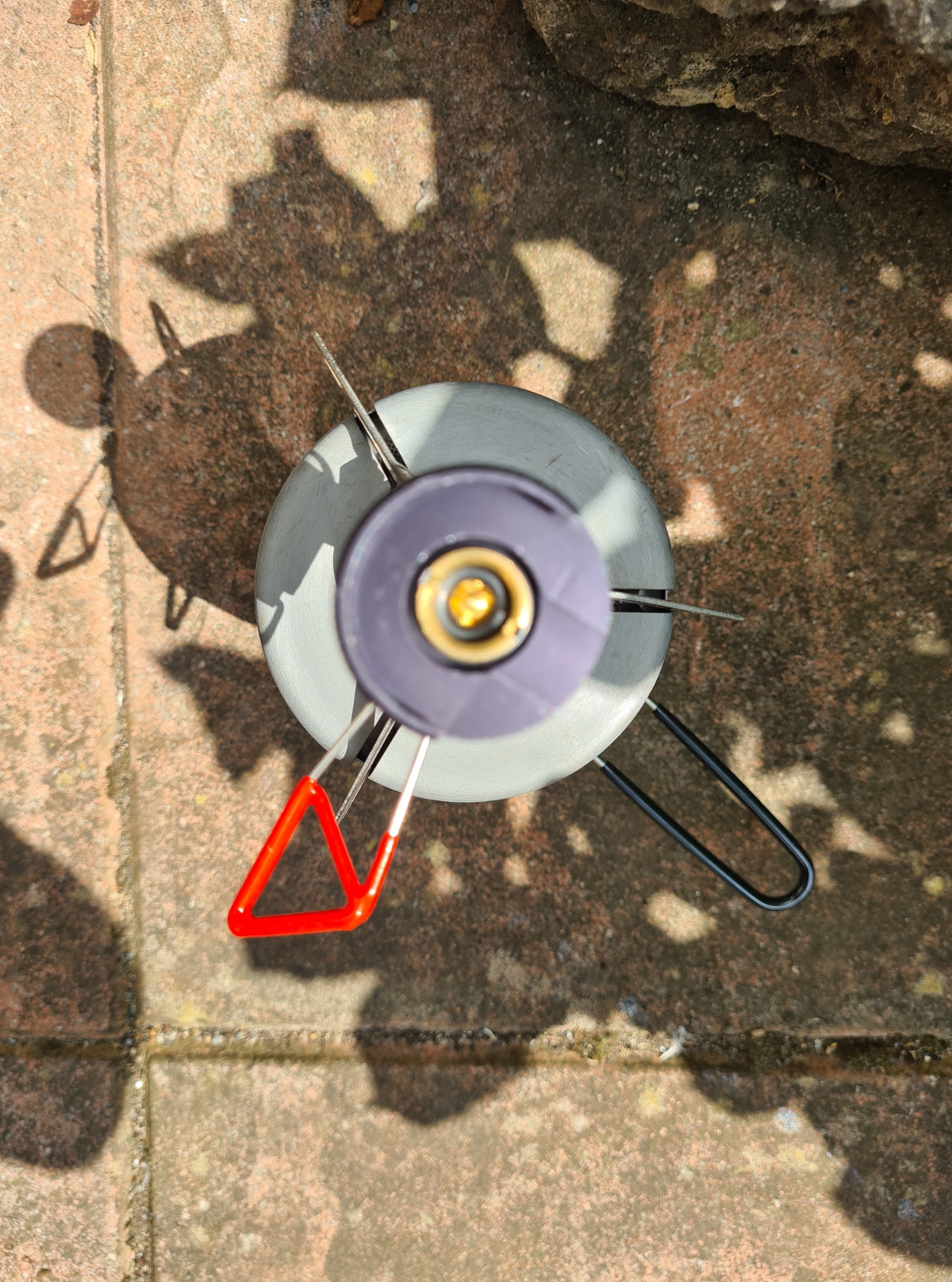
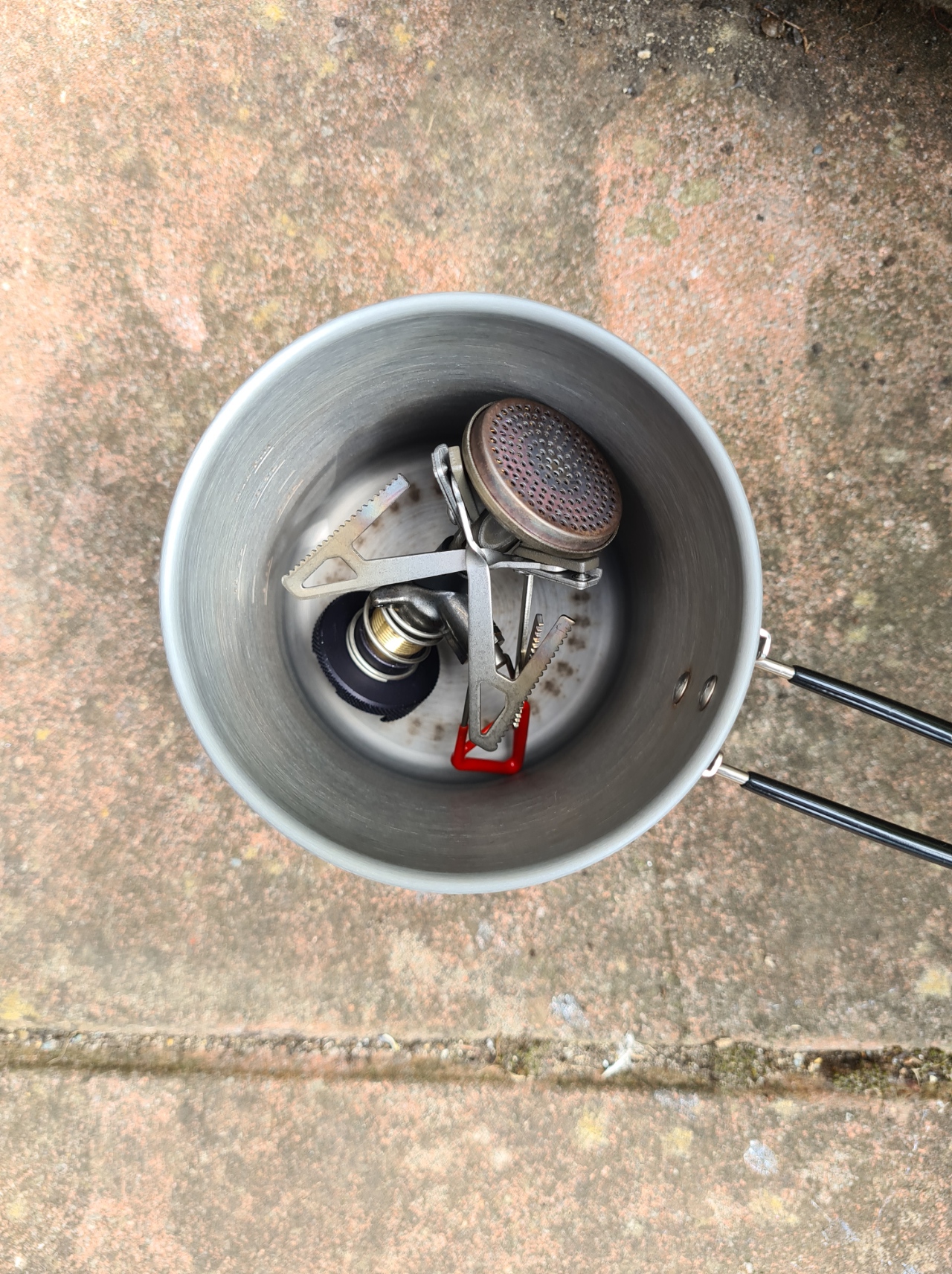
Fire Maple’s Polaris Pressure Regulator Gas Stove is a better option than their suggested Hornet II. While slightly heavier, it has the advantage of the pressure regulator and a built in windshield around the wider burner head. I like that this burner is also placed higher up into the pot base than the Hornet II. The Petrel pot also nests well with Fire Maple’s FMS-119 Green Peak and Buzz canister top stoves.
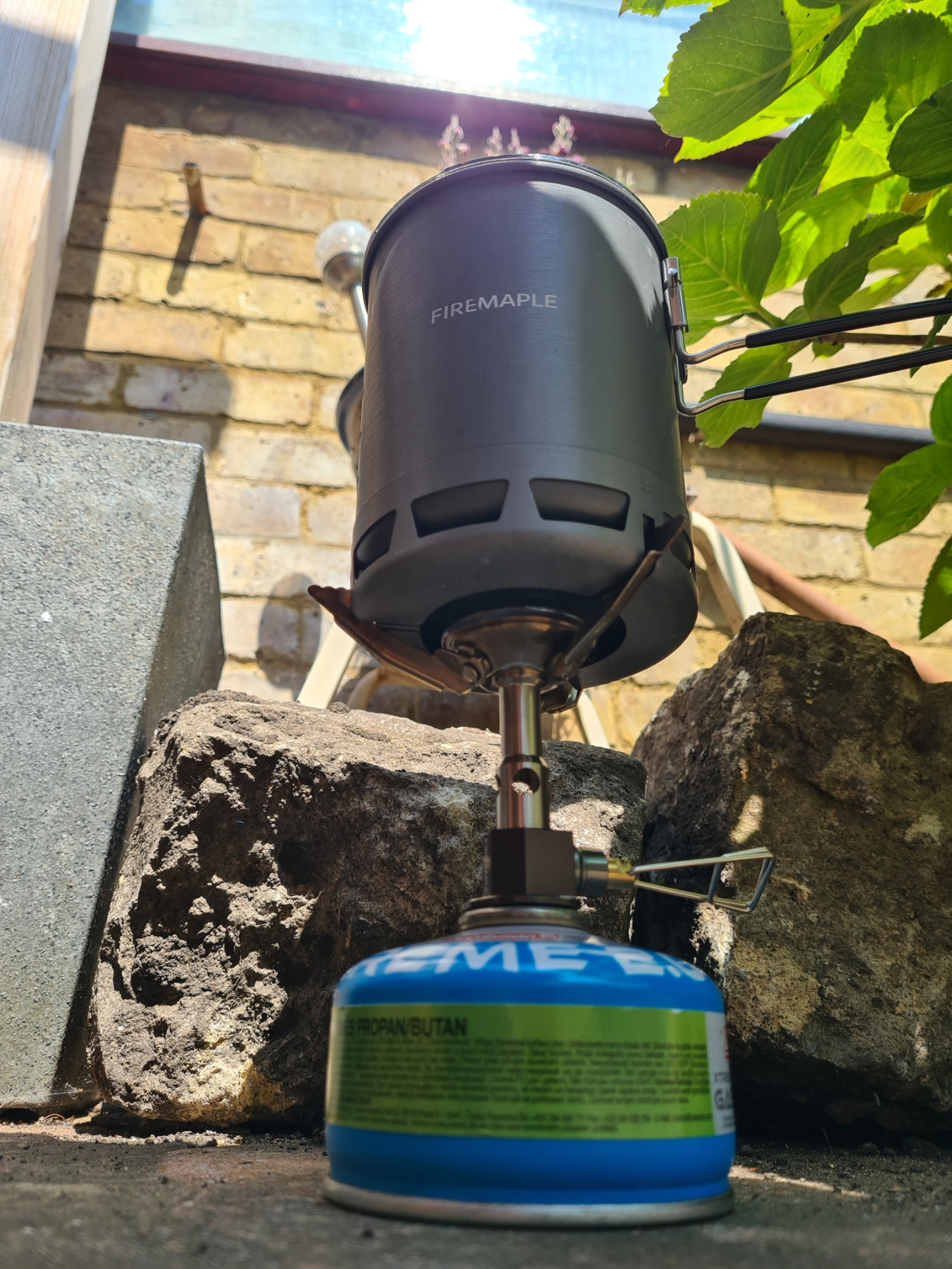
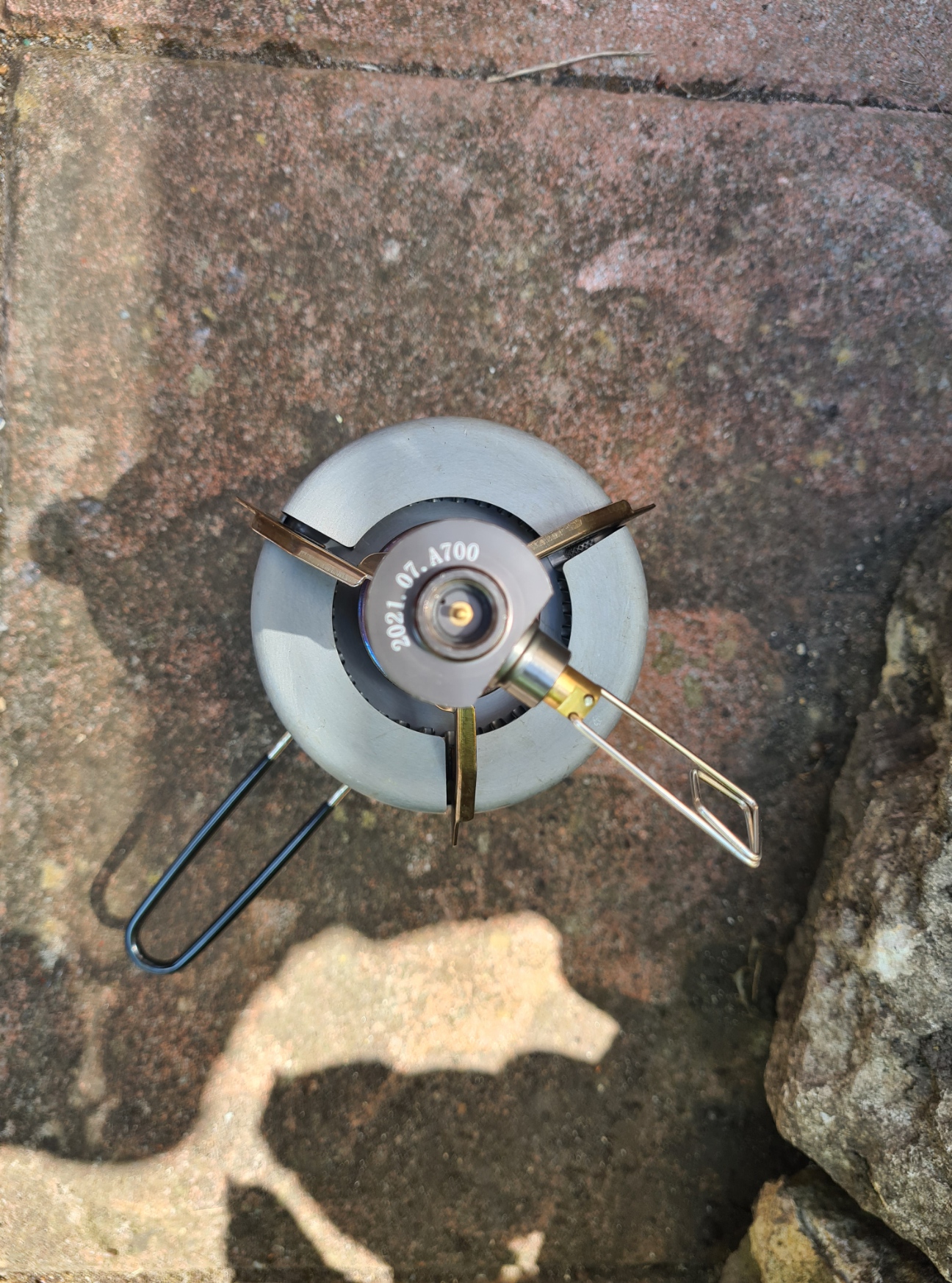
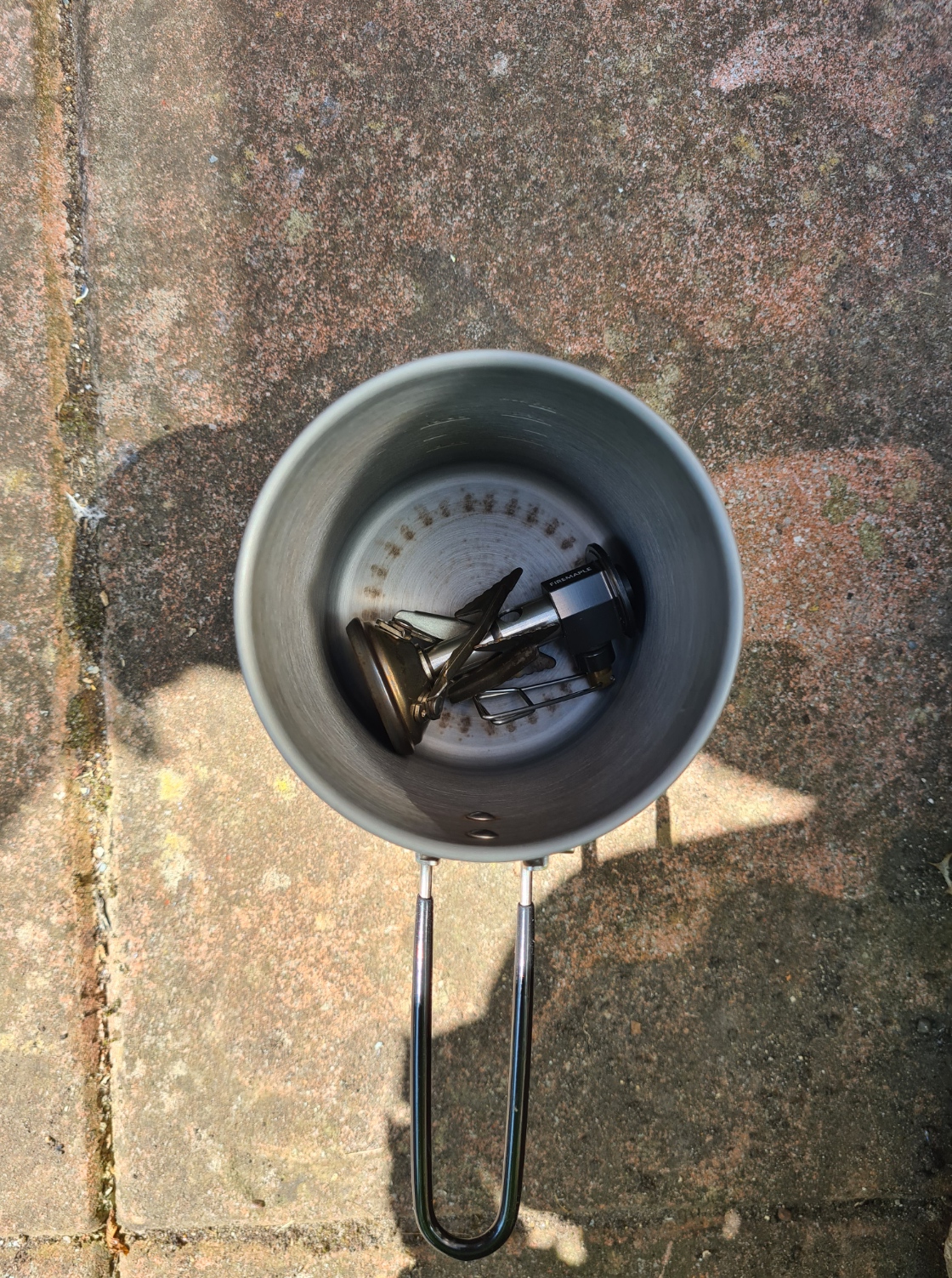
For those on a budget, Fire Maple (and others) have produced a number of cheaper stove options. Their 106g FMS-103 is a simple canister top stove with three pot supports that fit well with the slots on the Petrel pot. This stove also has a built in three-winged windshield on the burner head, à la MSR Pocket Rocket II. It is not the smallest of stoves however and while it will stow inside the pot, it is at an angle. Not all backpacking gear has to be expensive, this stove cost me just £5, with another £3 for shipping.
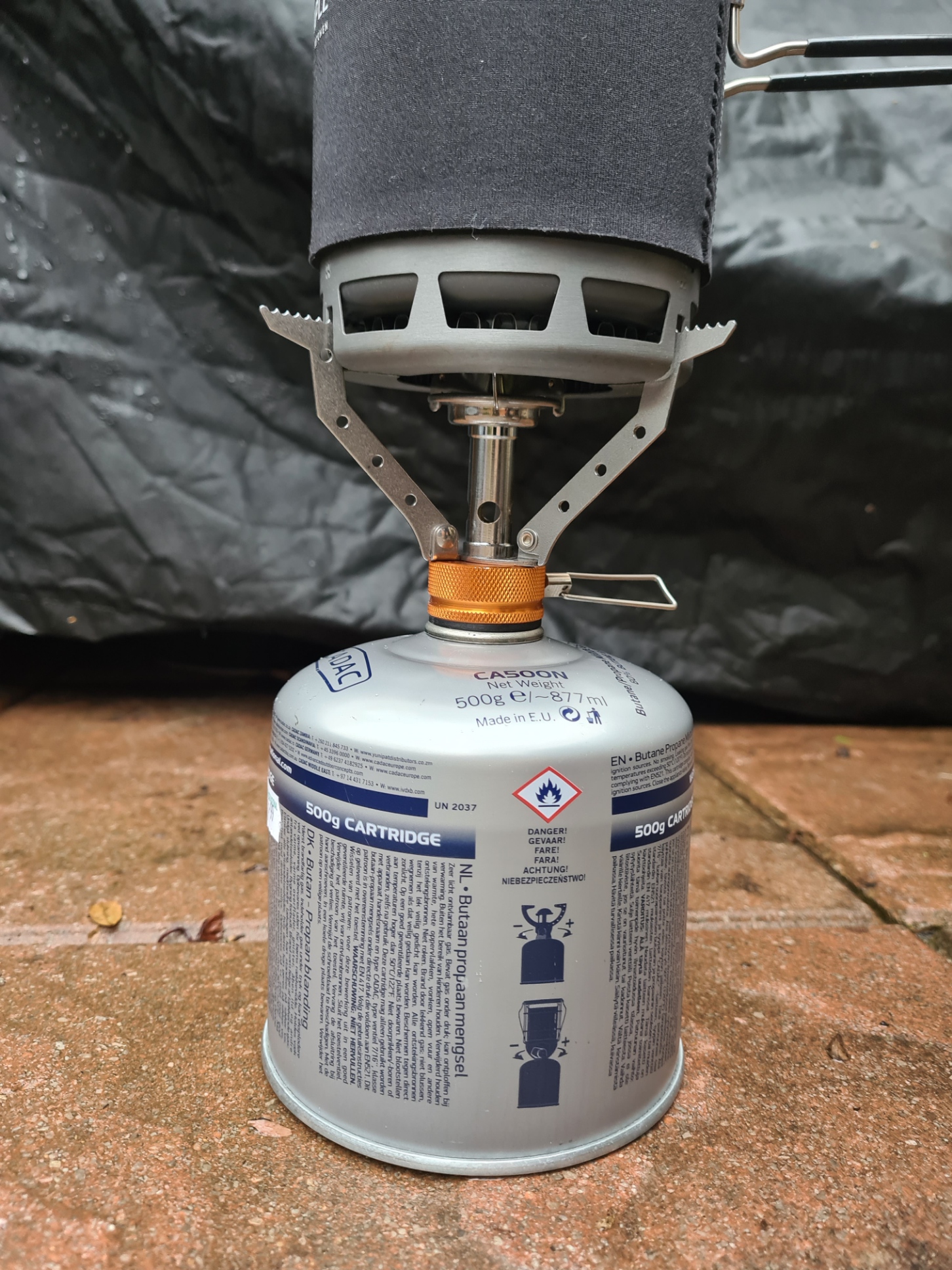
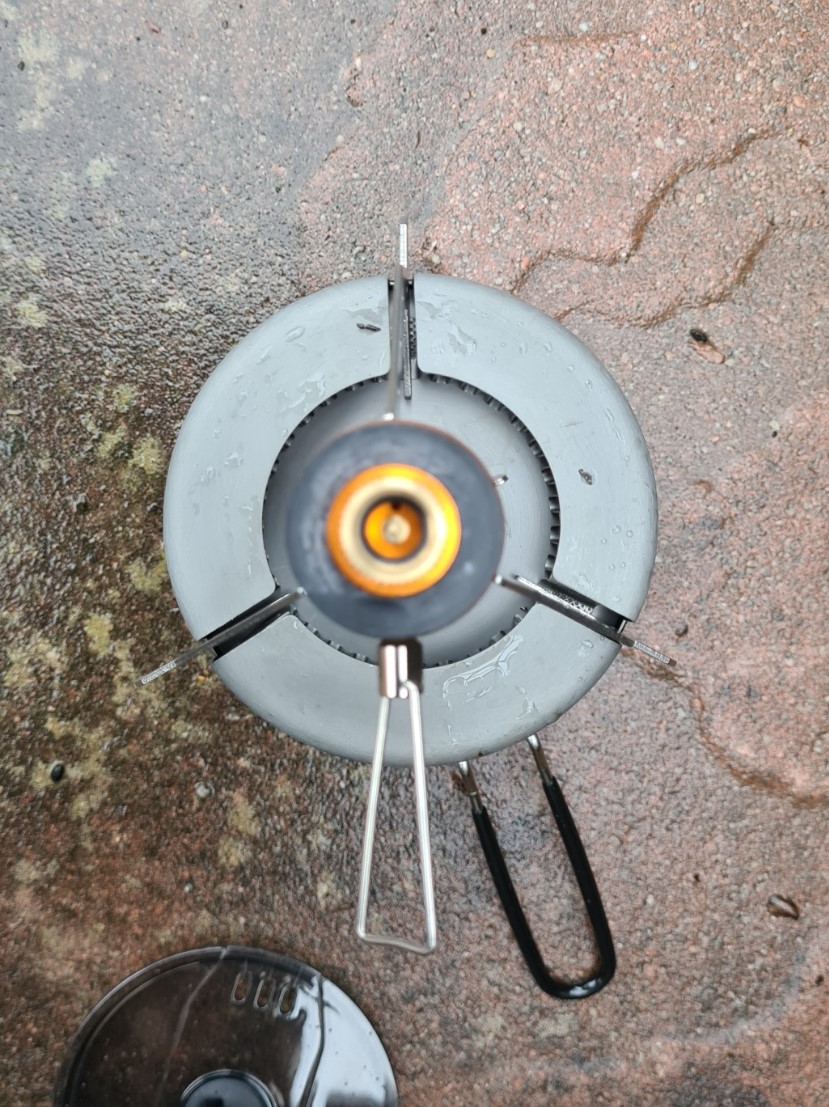
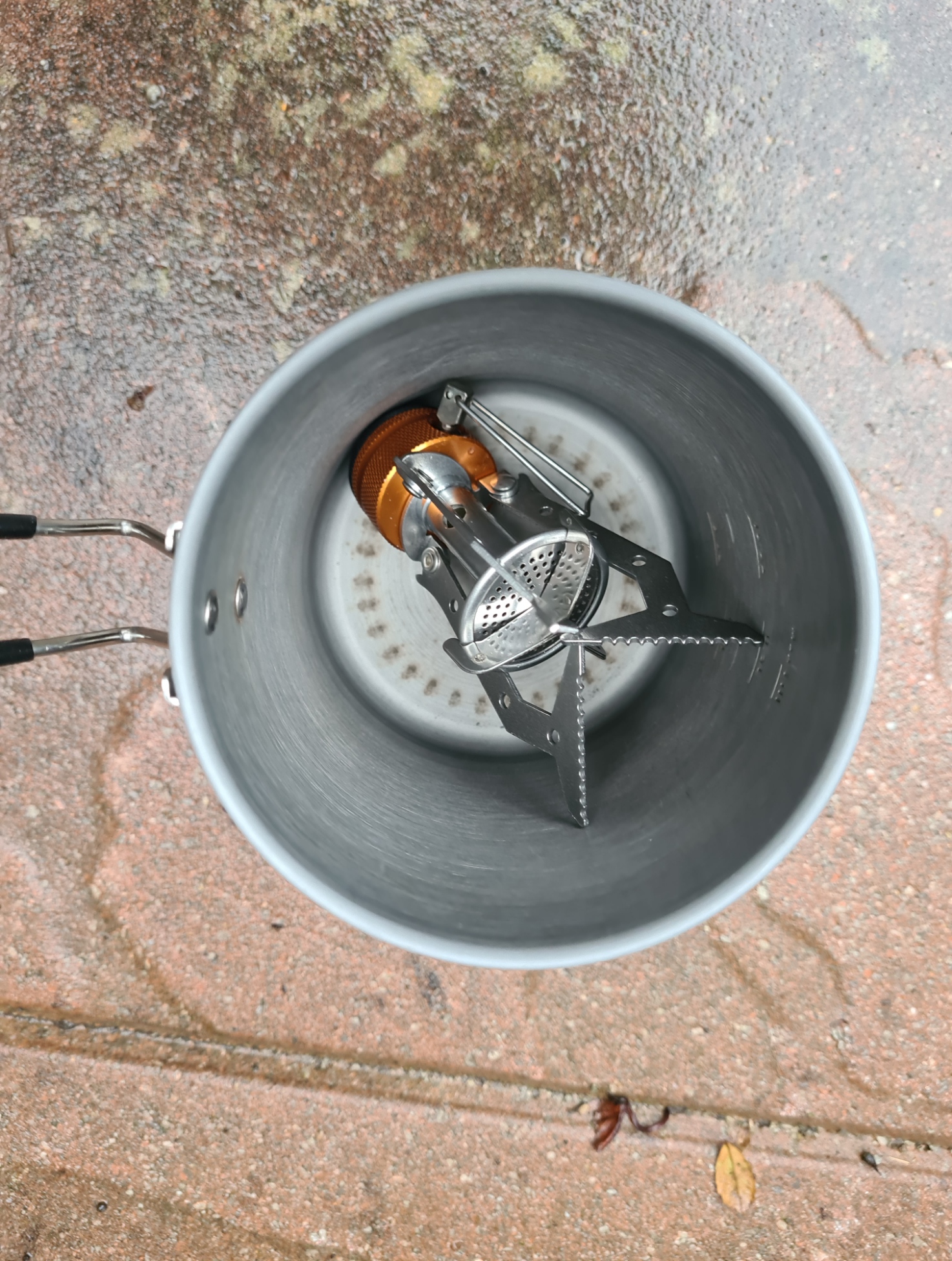
What many users have found is the almost perfect combination is the Fire Maple Petrel with the Soto Windmaster stove and this is the set up I used while hiking the Skye Trail recently. The bare stem of the stove weighs 60g and has to be used with the alternative clip-on 7g Triflex pot support, that has three rather than four supports, making a total for the stove of 67g. The wide burner head of the Windmaster sits very close to the base of the pot which can adversely affect its actual relation to the heat exchanger fins, more on that below. Gas builds up in the enclosed base of the pot when tweaking the control valve and if lighting via the piezo, can make for a slightly alarming explosive pop when it ignites.
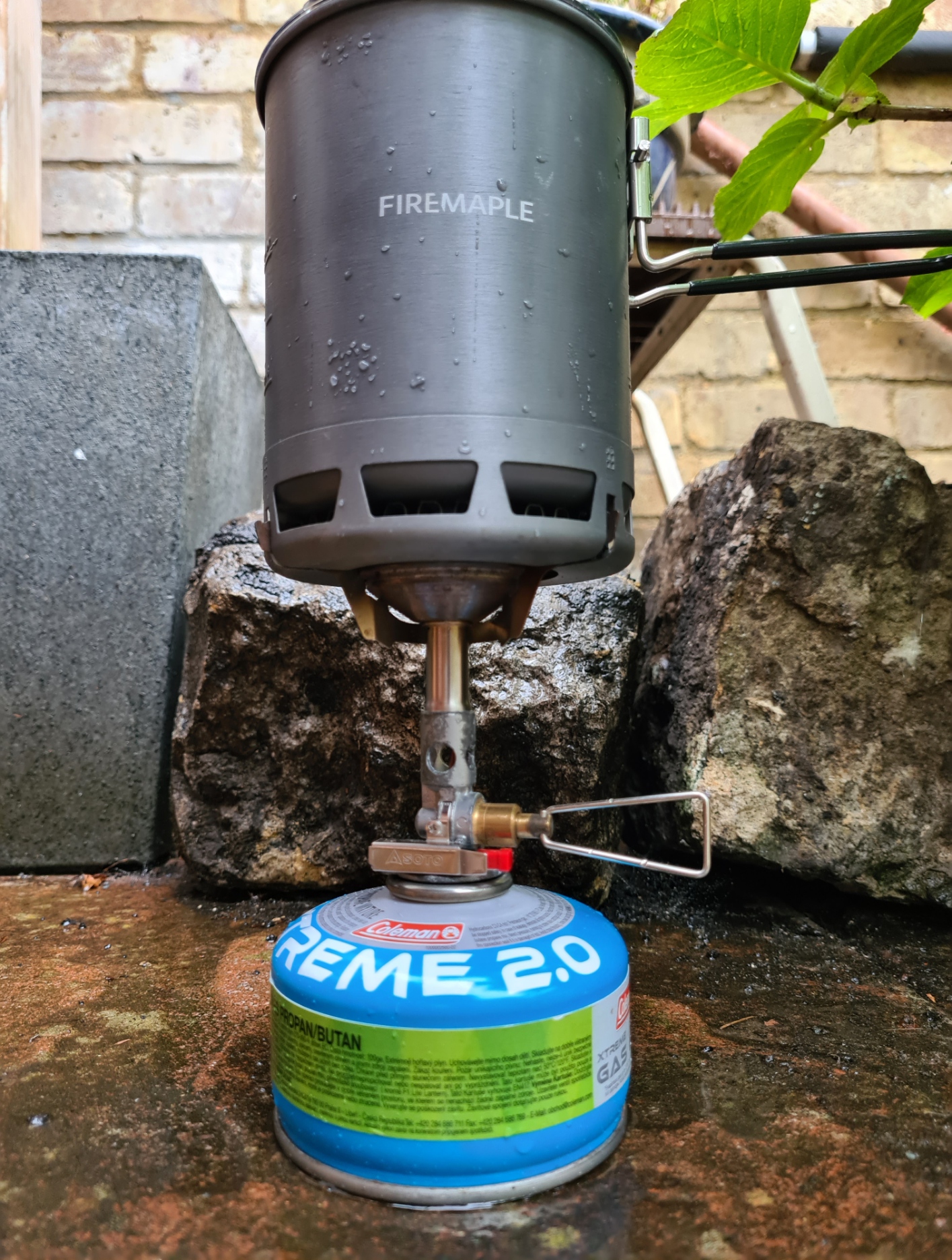
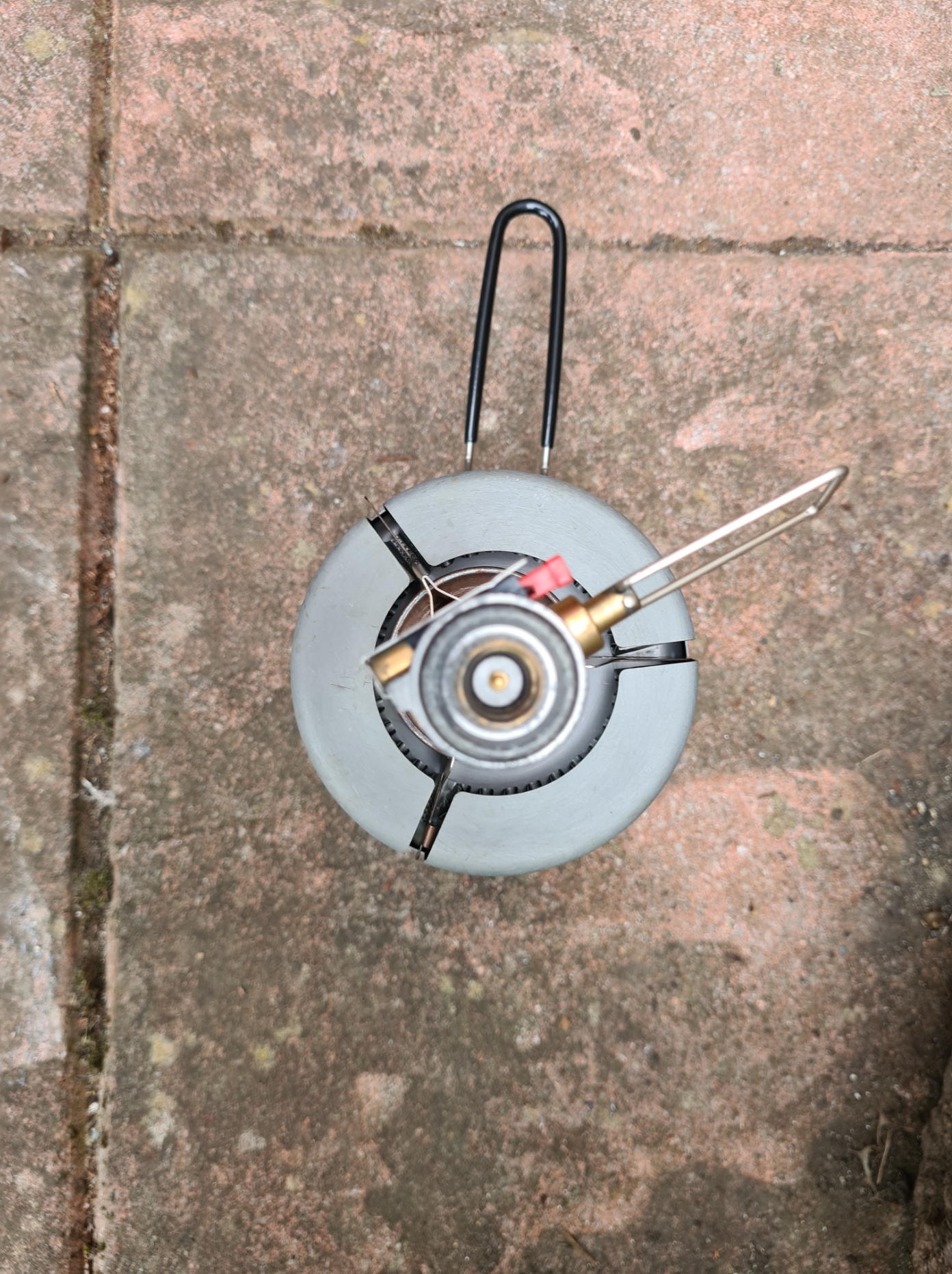
Jon, from Flat Cat Gear did some testing with the Petrel and regulated Soto Windmaster stove that revealed some interesting results. When compared to the unregulated Fire Maple Green Peak stove, that has a very different burner head shape, the Soto Windmaster delivered a consistent rate of fuel consumption whereas the Green Peak burnt slightly less fuel compared to the Windmaster when run at less than full bore. So, if time is most important, the Windmaster is the stove of choice, but if you are happy to wait a little longer for water to boil, perhaps as much as seven minutes, then the Green Peak will use less fuel. So, turn it down and show some patience.
I have another stove, similar to both Soto Windmaster and MSR’s Pocket Rocket Deluxe, that pre-dates the MSR in release date. Like those two stoves, it has a built in windshield surrounding the wide burner head and features a pressure regulator. However the Kovea V1, model KGB-1607, is a seldom seen stove in the UK, or wider Europe and the US. Possibly due to licencing and distribution issues. Despite being 2g heavier than the Polaris and 13g heavier than the Windmaster, the V1 is possibly the best overall fitting, performing and lightest gas stove option I have for this pot. The only adverse characteristic is that, in common with the Windmaster, this tall stove makes for a high centre of gravity.
Remote canister gas stoves:
A remote canister stove will lower the centre of gravity when used with the Petrel pot. However I found that I had few lightweight options. I wish the various titanium options from Fire Maple had worked, but they don’t. Which also discounts the rebadged versions from other suppliers.
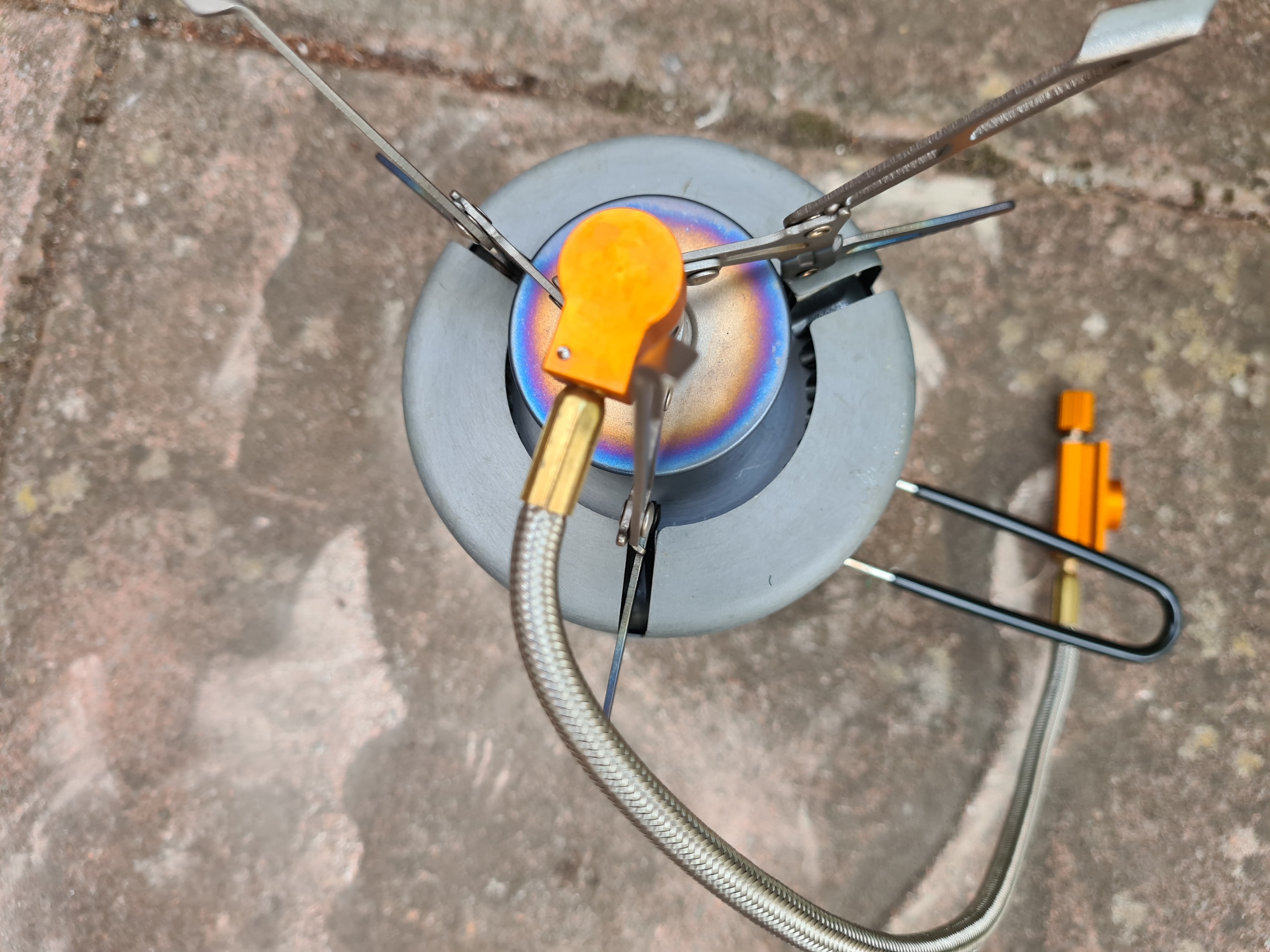
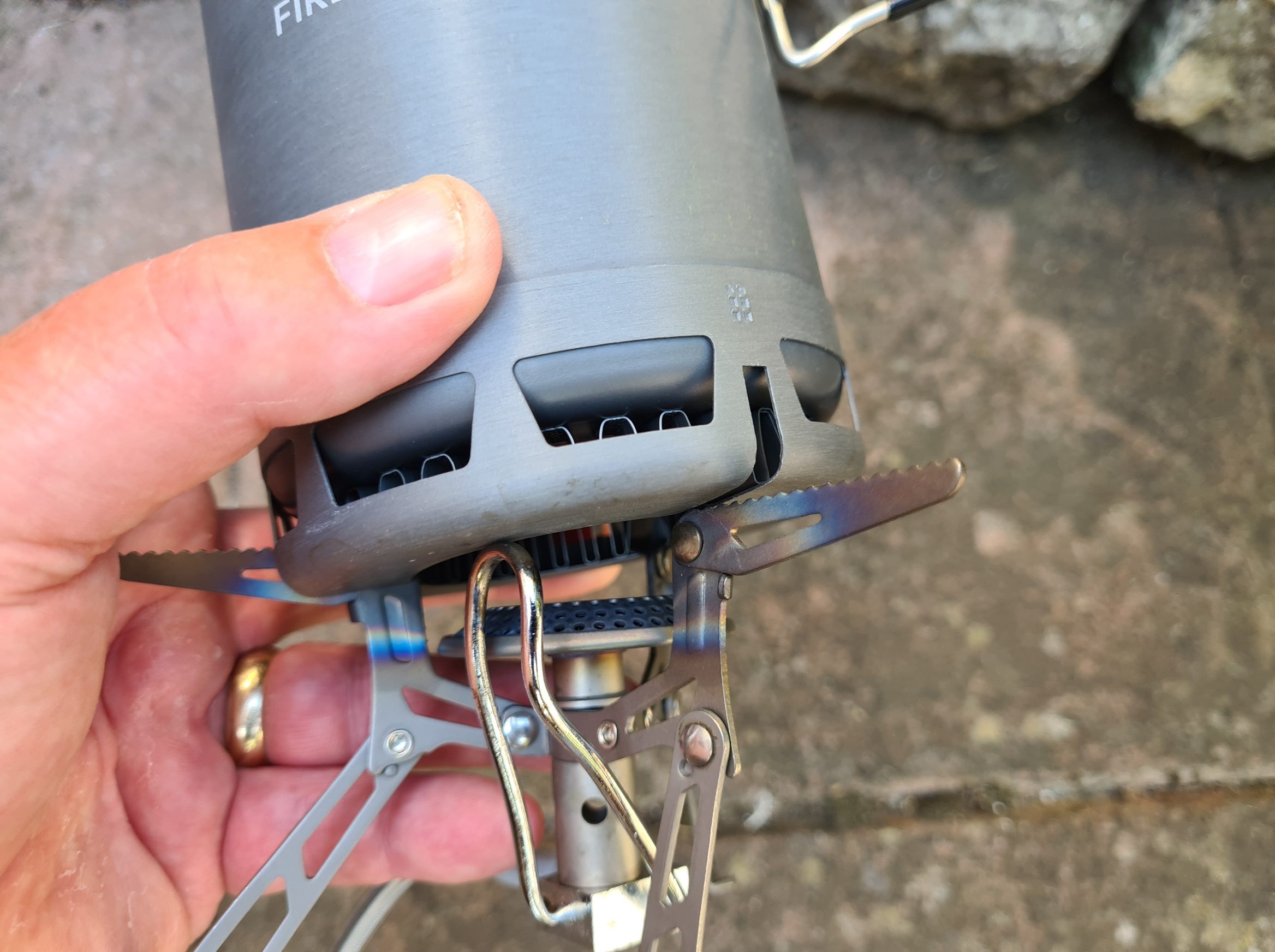
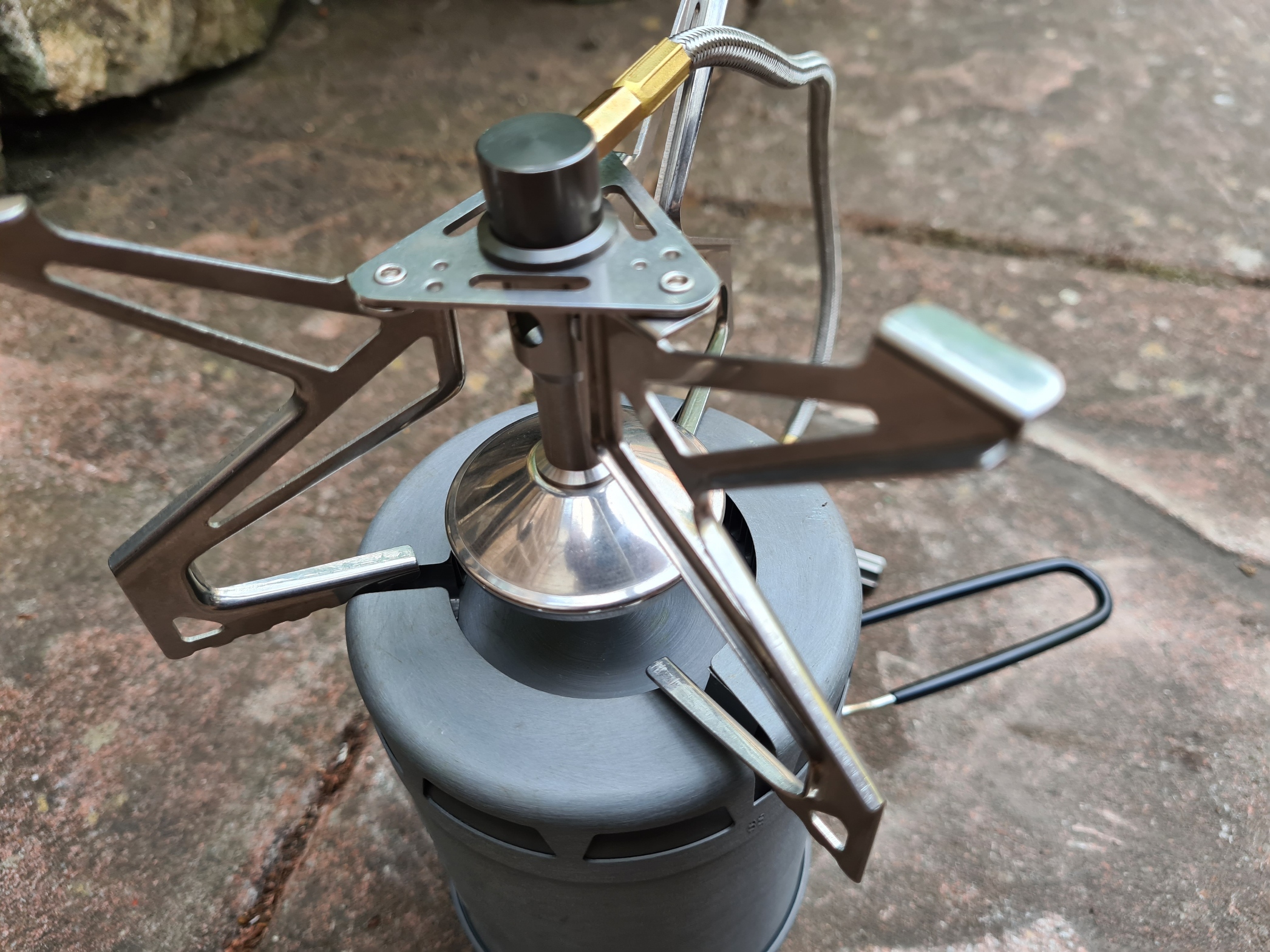
The Kovea Spider fits the pot well however it does then have a slightly exposed narrow burner head and the flame is easily susceptible to being pushed sideways by any breeze. A windshield will go a long way to improving efficiency.
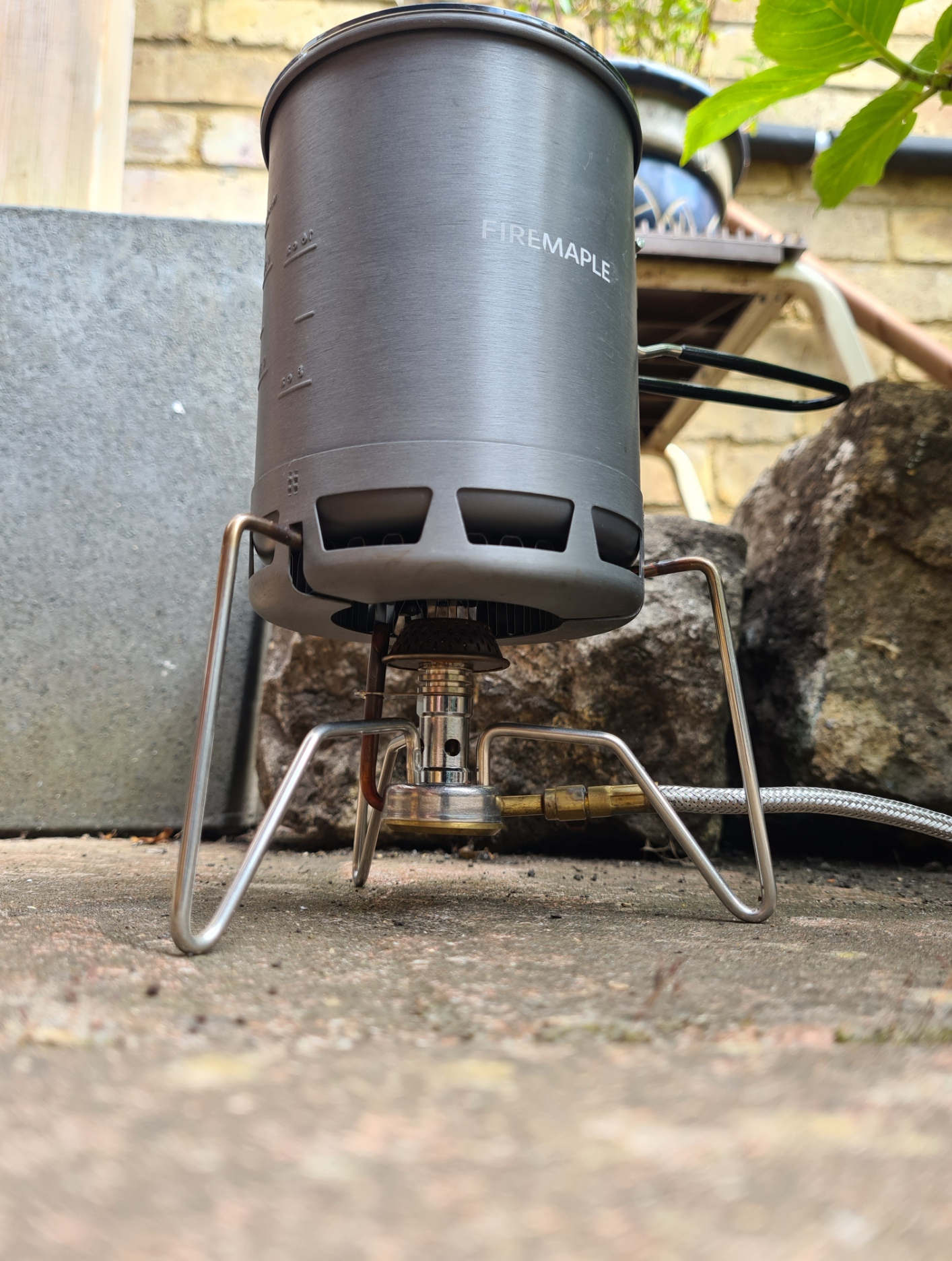
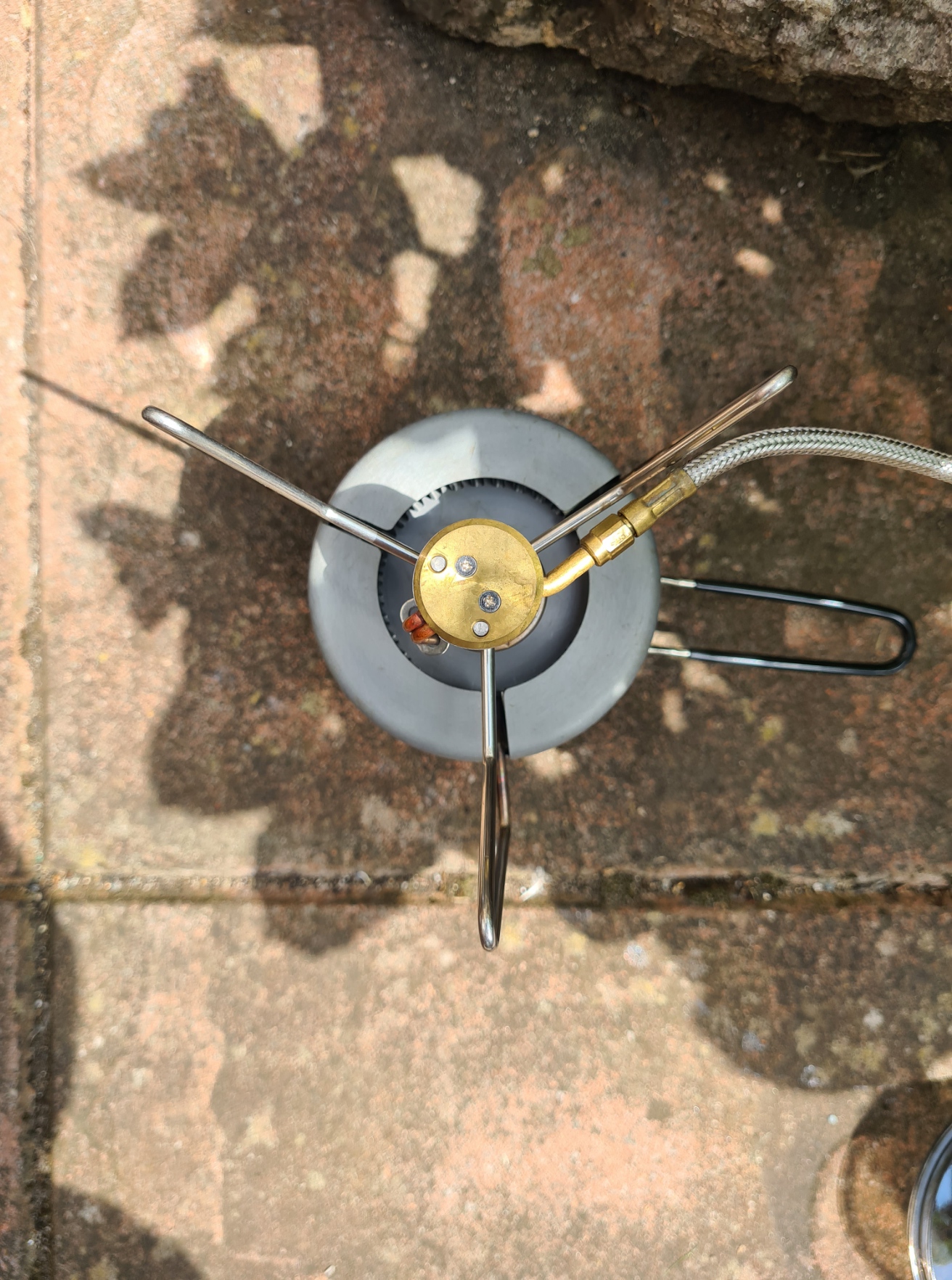
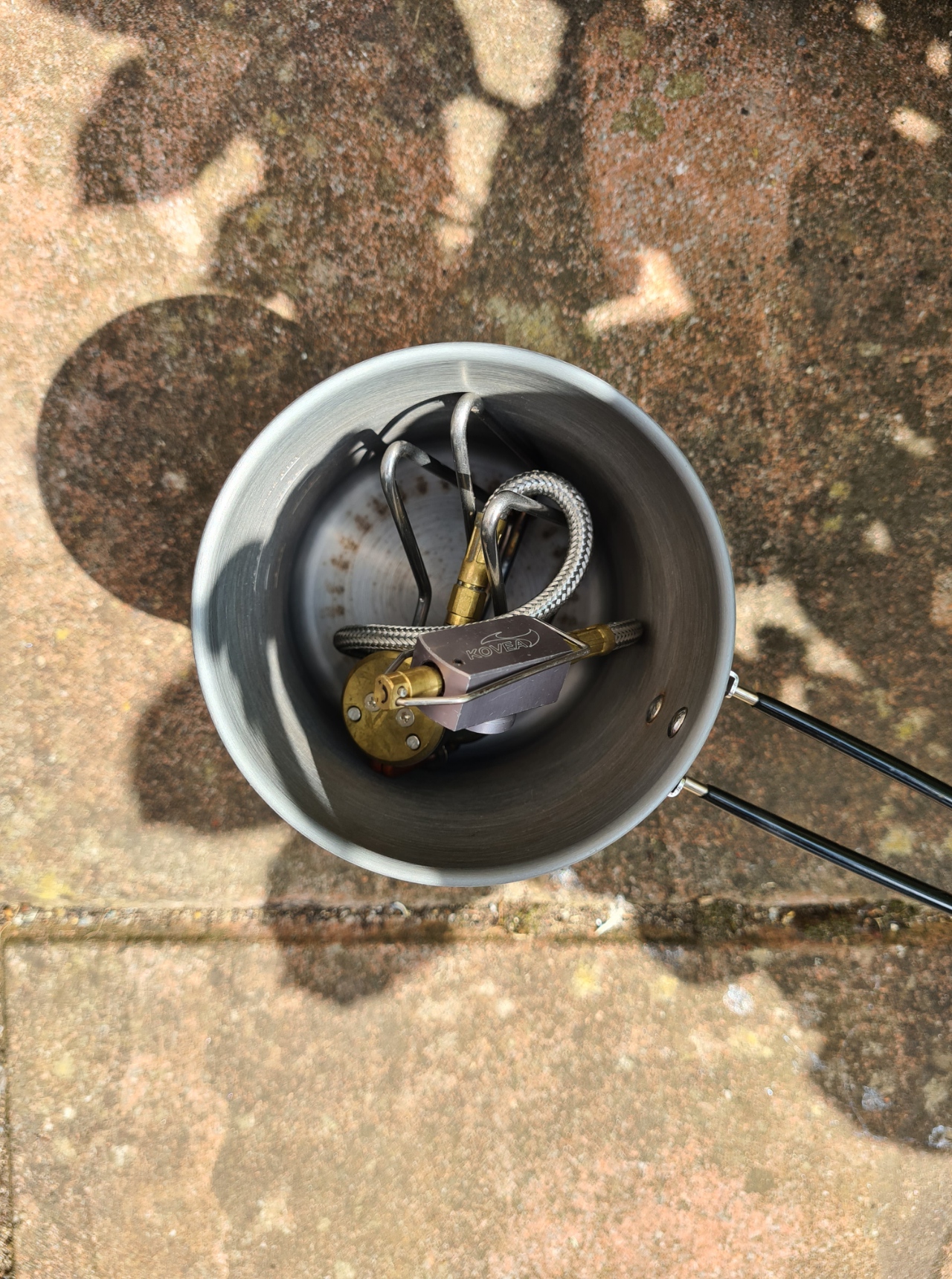
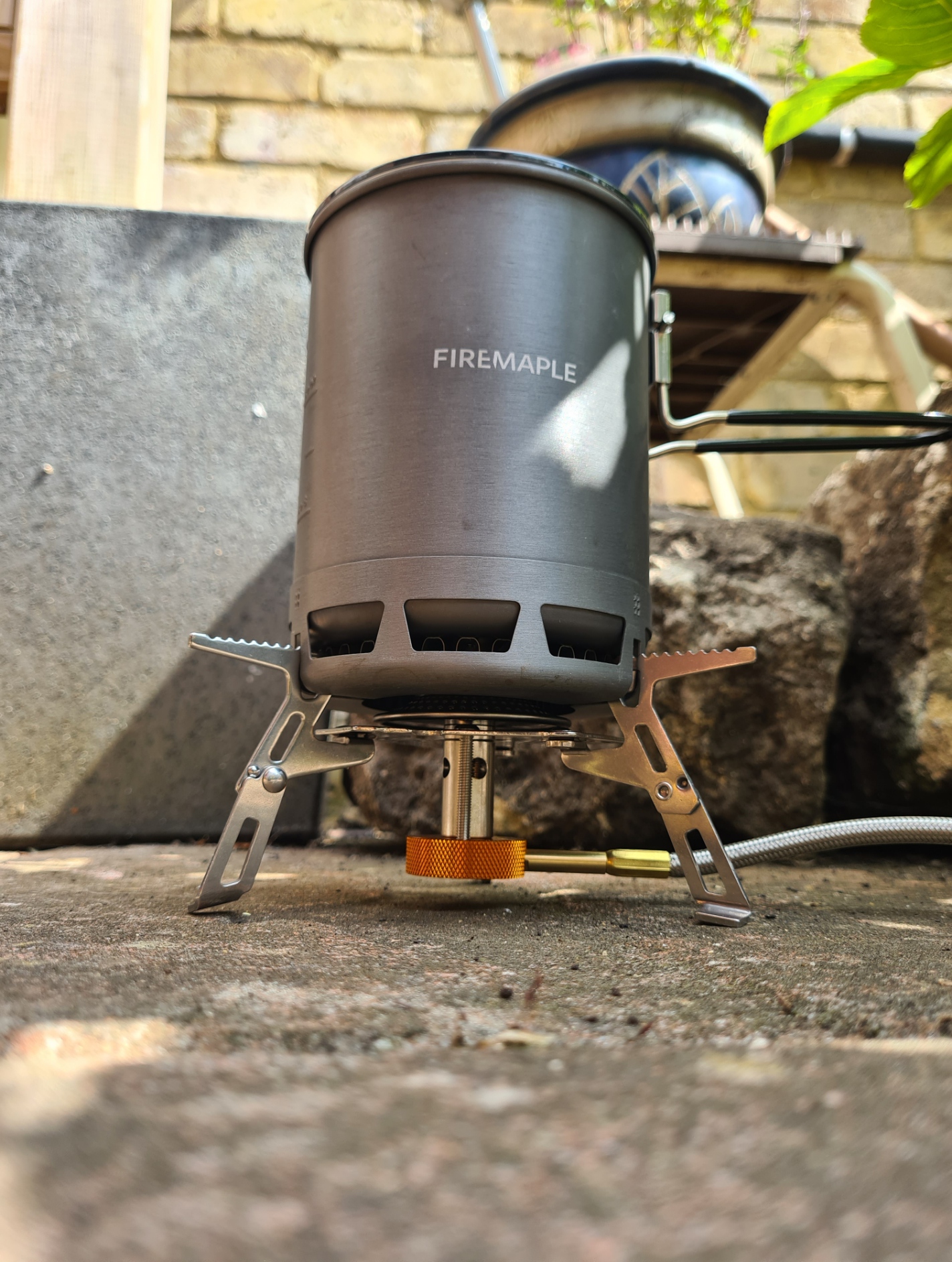
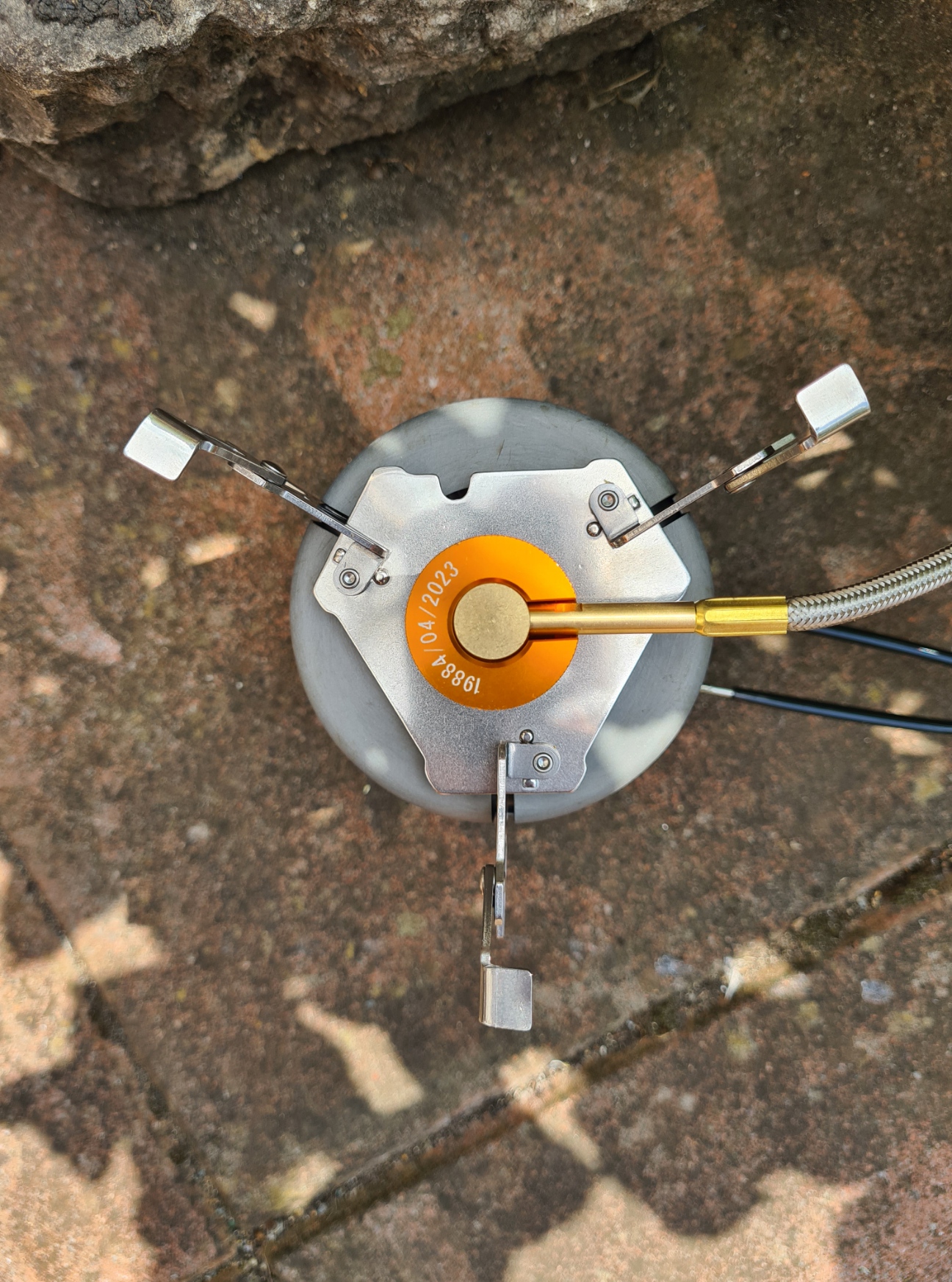
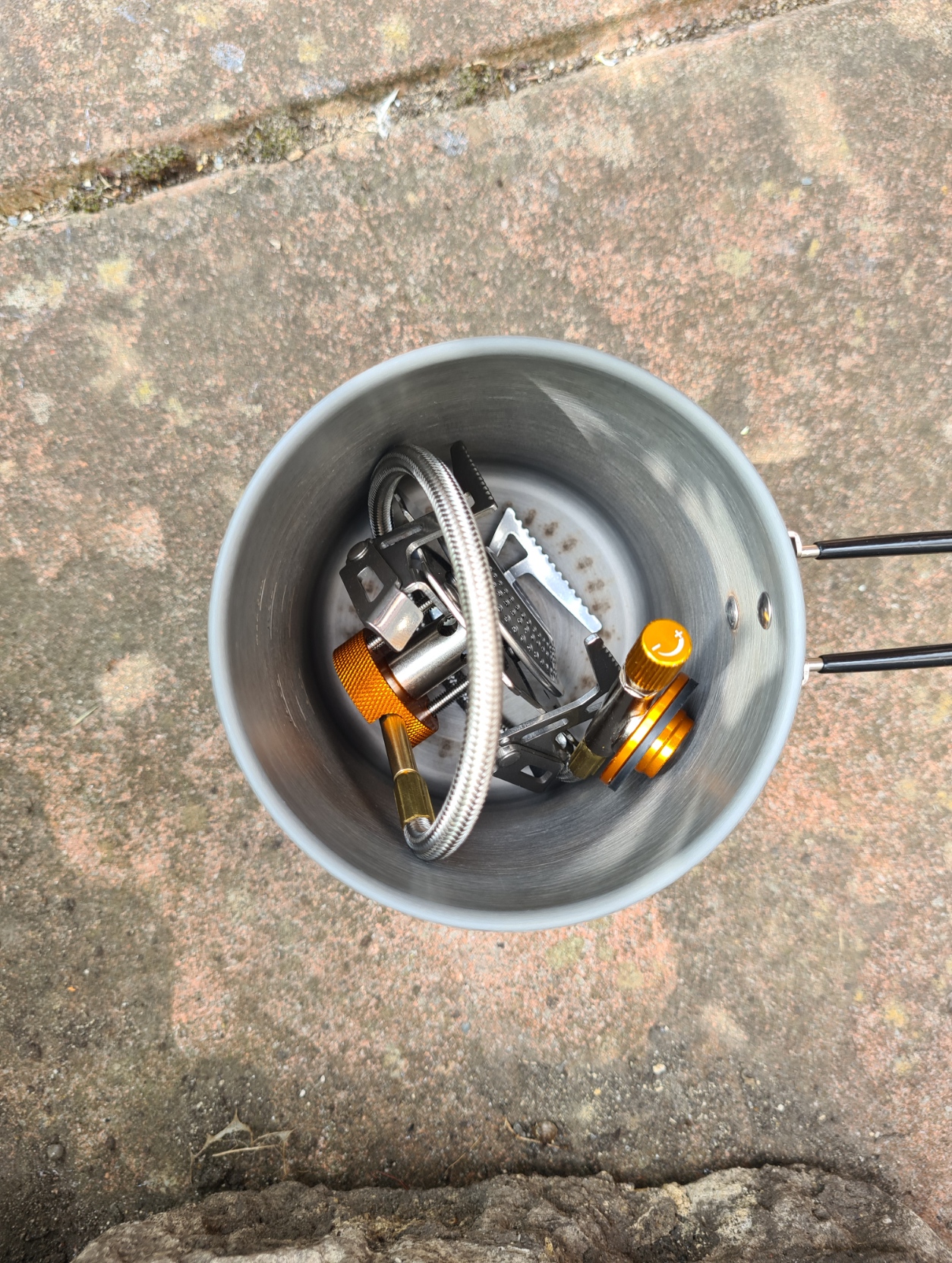
The Vango Folding Gas stove (a rebranded Fire Maple product) fits well but at 221g is far removed from being a lightweight option. But the wide burner head is well placed for interacting well with the heat exchanger fins on the pot. A very slightly lighter option is the 191g MSR Windpro II that produces a good burn. None of my remote canister stoves that fit the Petrel make for a particularly lightweight combination.
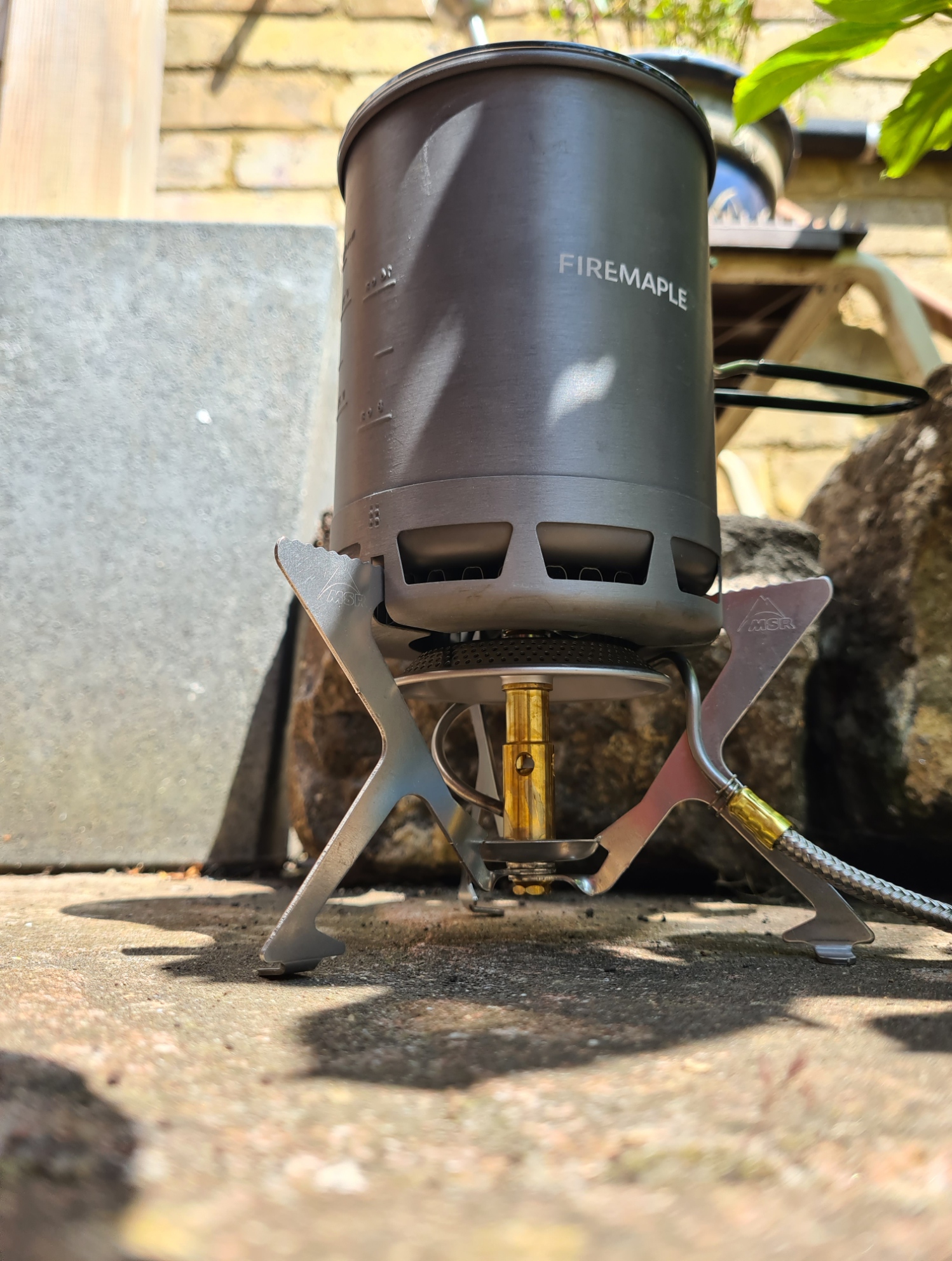
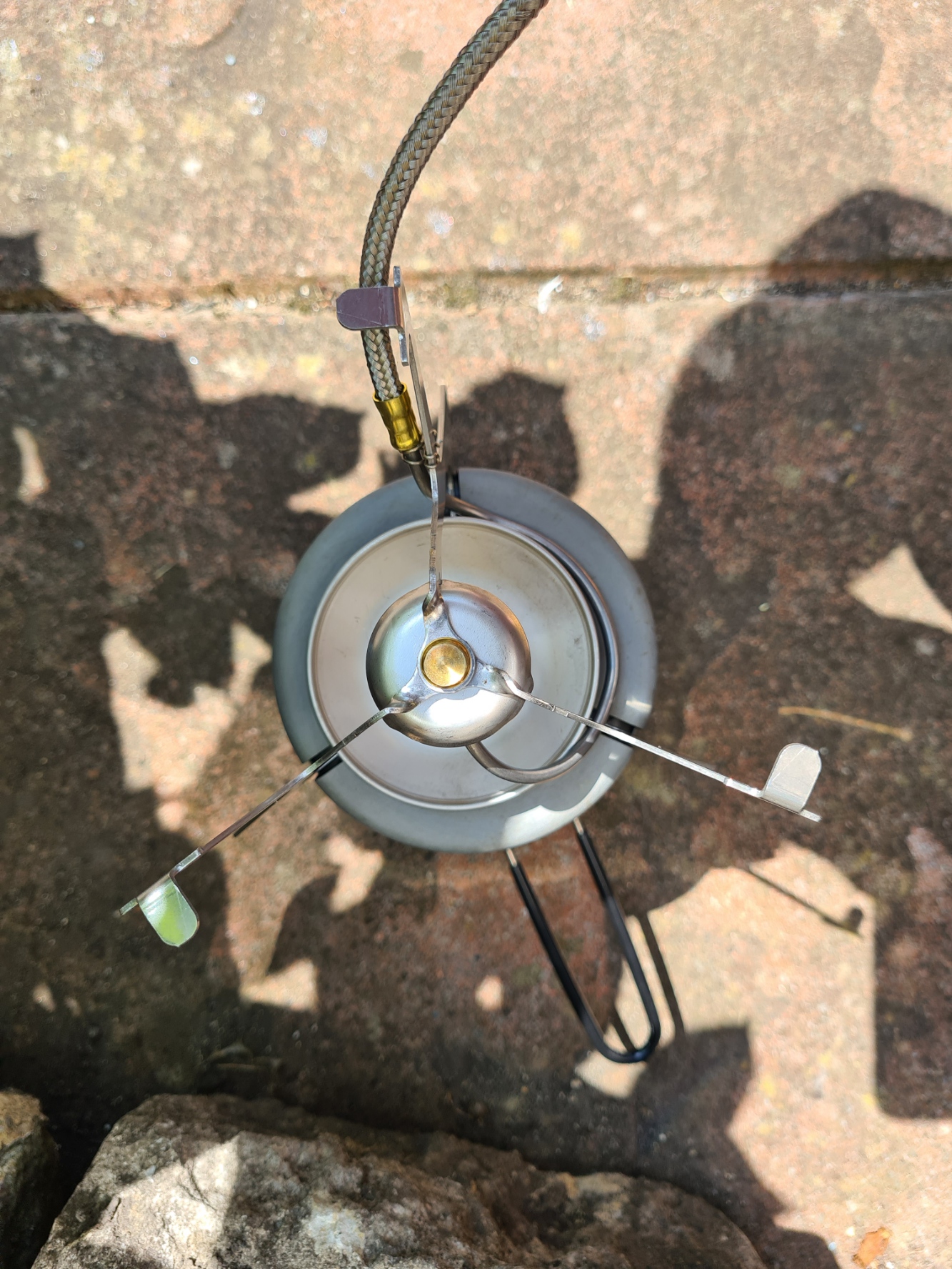
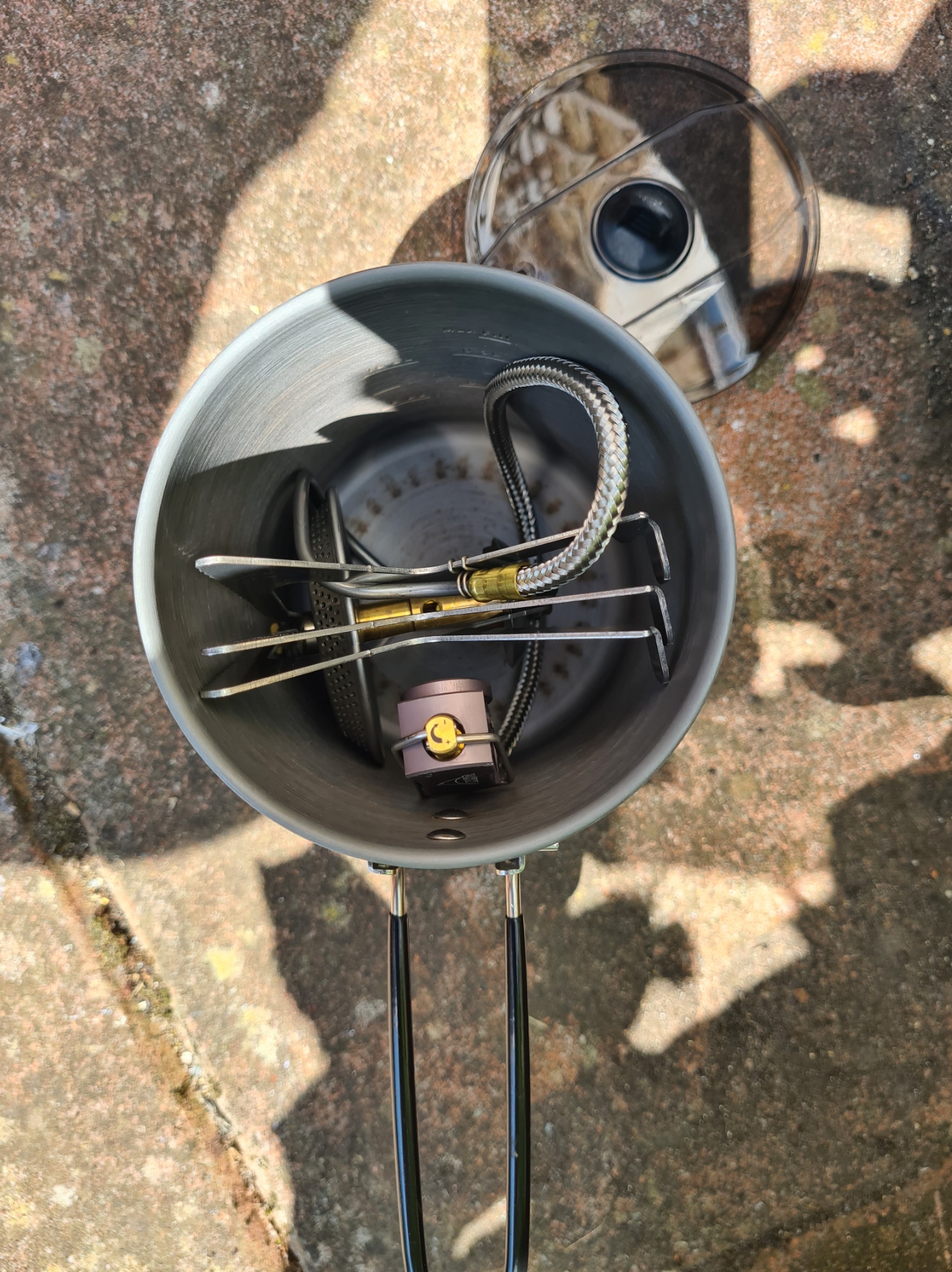
All this counts for nothing if the heat exchanger pot doesn’t actually work. It has to offer some form of improvement over a simpler, less bulky and lighter pot without heat exchanger fins, or there is no point in using it. Advantage takes the form of three main points of reference- improved protection from wind, quicker boiling, less gas used. This then is the crux of the matter and where my post fails to deliver. There are simply too many variables. Each stove will differ in flame pattern and its interaction with the pot and heat exchanger. Distance between burner head and pot base differ too.
A stove such as the Soto Windmaster is designed to put the burner head close to the base of the pot and while less affected by side breezes, it is still affected to a degree. However this also means that the burner flame may interact less with the fins themselves in zero wind. It is very likely that there will only be an advantage in using the Windmaster as side breezes increase in strength, pushing the flame onto the fins. In all scenarios however, the Soto must be used with a reduced flame otherwise the flame is simply pushed out the side and gas wasted. The primary advantage of the Petrel pot would appear to be reduced gas usage rather than any dramatic increase in speed of boiling. Which suits me.
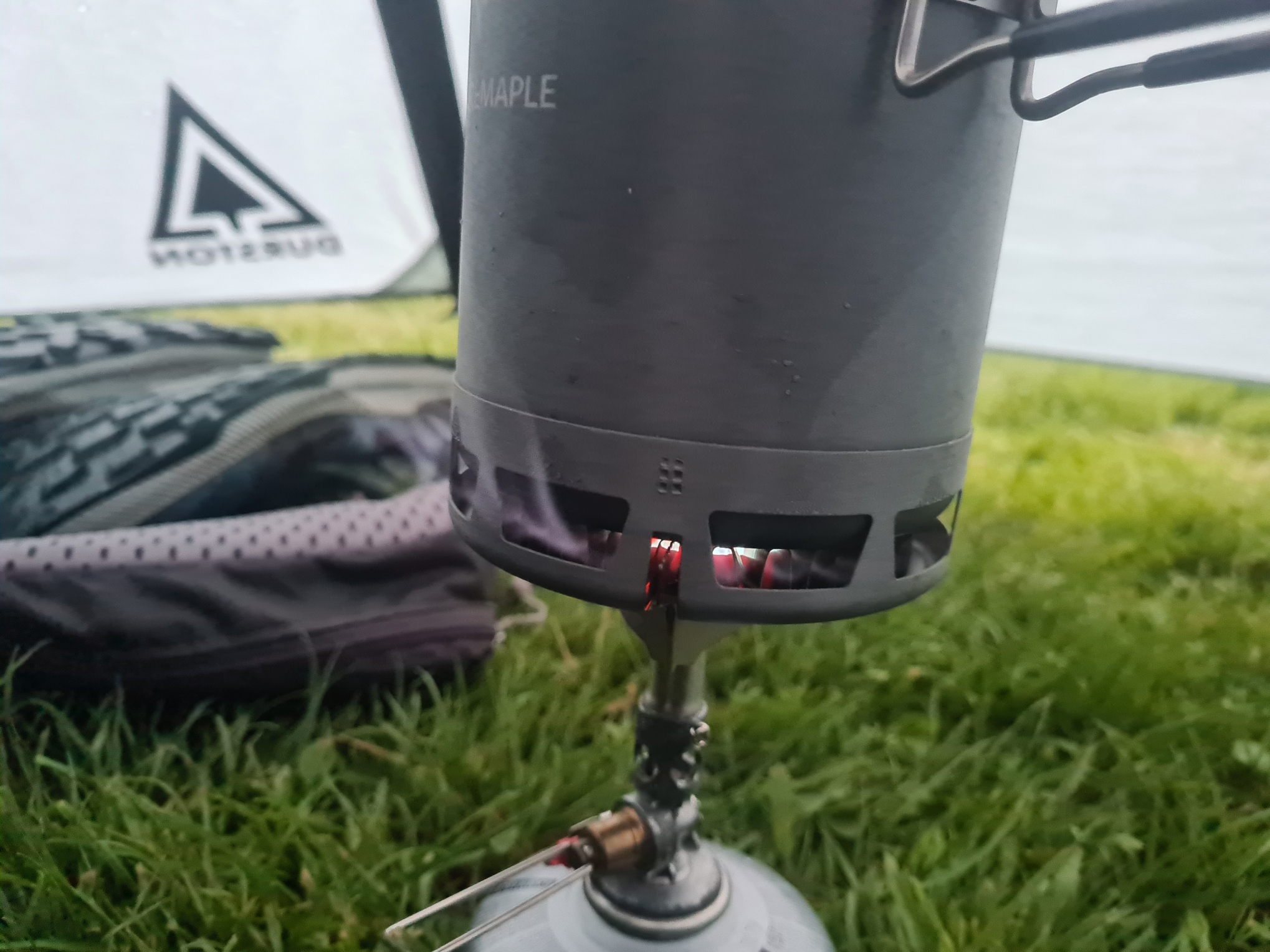
The main factor for any stove used with this pot is likely to be wind/side breezes. No amount of kitchen or garage based testing is going to accurately replicate what happens in a tent vestibule or on a breezy hill top. It will be considerable actual in-the-field usage in differing conditions that is going to reveal any advantage or Achilles heel in this particular pot design. For this, over to those of you reading this, who are prepared to carry this out with your preferred stove, and hopefully report back. In the meantime, I am still holding out hope for a Stash type pot with Petrel type cut outs in the heat exchanger. I might have a long wait.
2024 update:
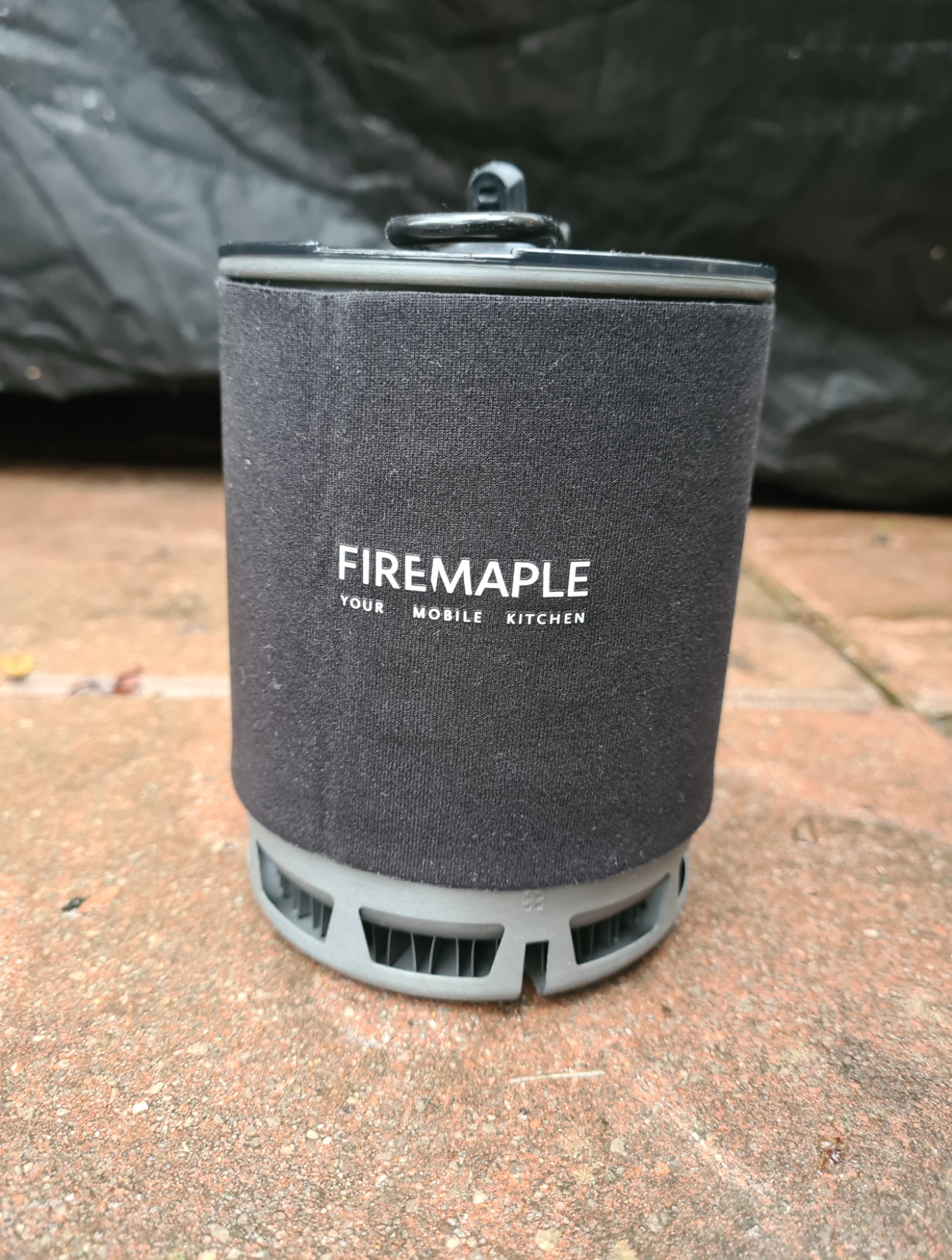
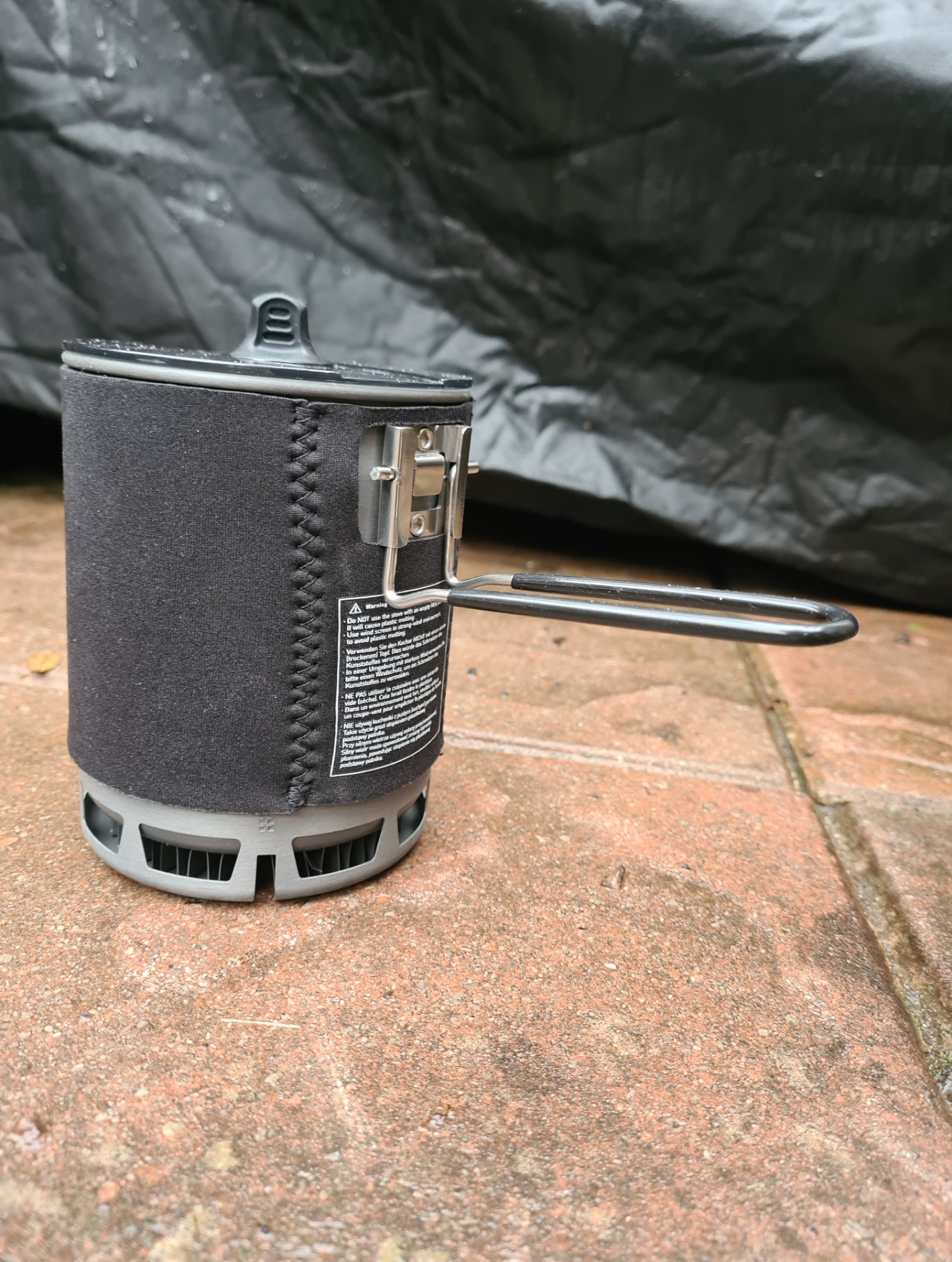
No doubt in response to customer feedback, Fire Maple introduced a slip on neoprene sleeve for the Petrel pot. This weighs just half a gram more than the advertised 17g. I purchased one for £7.85, including tax and shipping.

 Three Points of the Compass
I cut slots in a Jetboil Stash pot with a Dremel and use it with a Soto Windmaster. It works great. What I really want is a 1L version of the Stash pot…
LikeLiked by 1 person
Glad it worked Daniel. It would have been a very expensive experiment otherwise!
LikeLike
I bought a standard FM Polaris and the remote version, with a view to seeing if I could match them with my Petrel. Your right, the remote Polaris won’t fit out of the box but there is a way to modify the pan supports using only a few hand tools. First, use long nose pliers to get the angles correct on the pot supports..they’re only a few degrees away from a genuine 120 degree to centre. Next use a hand file to take some excess metal off the horizontal portion of the pot support (again, they are just a shade too wide to permit easy mating with the pot cut-outs). Finish off with some wet/dry sandpaper. Twenty minutes effort, works brilliantly with Petrel, and still perfect for standard cookware too. The standard Polaris will be returned for a refund. Can send photos if you like. Regards. Paul
LikeLiked by 1 person
Good to hear it worked out for you Paul. I have heard of a few managing to mod either pot or stove supports to widen the usage. Please do send images, but only if you don’t mind me posting them (no guarantees, though). Won’t be for a while, though, as I am off to the Coast to Coast today
LikeLike
<
div dir=’auto’>Hi Jools. Thanks for your reply. I’ll dr
LikeLike
Hi, thanks for the article. I see Campingmoon makes a copy of the Soto Windmaster but says they’re not compatible with ‘cookers withe heat exchangers ‘. Any idea why?
LikeLike
Hi Dave, I have the Camping Moon XD-2-NE and SD-2F gas stoves (with and without piezo) but have been holding off any sort of review of them until I have sufficient actual usage of both. Glancing at the included ‘user’s manual’ I see no mention of incompatibility with heat exchanger pots, but there is the following- “do not use in a sealed environment, ensure that the ambient air is circulating during use, so that fuel is fully burned, and avoid dangerous events caused by incomplete combustion of the fuel and formation of harmful gas accumulation”. What they are referring to is the production of carbon monoxide. Not what any of us want and a possibility in the more closed environment of the base of a heat exchanger pot. If used outside, in the open, I doubt there would be much of an issue, but certainly one to bear in mind. I do note that the Amazon sales site does mention “The CAMPINGMOON gas stove products are not compatible with cookers equipped with heat exchangers, so please do not use them under any circumstances”. certainly a dire final sentence! Do also be aware that the Camping Moon stoves come with a four arm support, that doesn’t nest within the three slots of the Petrel. But the three arm support (Triflex) of the Soto, that can be purchased as a stand alone product, does fit the burner head of the Camping Moon stove
LikeLike
The original MSR pocket rocket stove does fit the gaps in the heat exchanger. Also the lid of the Toaks 550 pot fits as an alternative as I understand the provided lid can stick when pot is hot.
LikeLiked by 1 person
Instead of buying a new stove for the Petrel Ramen pot I thought i would do some careful bending on my Firemaple Blade 2 legs and arms. After bending the fit is great, the preheat tube just clears the bottom of the pot and the arms protrude just a little past the pot edge. The arms no longer sit nicely flat when the stove is folded, no big deal but it does bug me a little!
LikeLiked by 1 person
Thanks Pete. It seems like there are a few stoves that don’t fit ‘out of the box’ but can be modified to work. Which is a bonus for those unprepared, or unwilling, to leave their otherwise perfectly functional stove, and buy another
LikeLike