
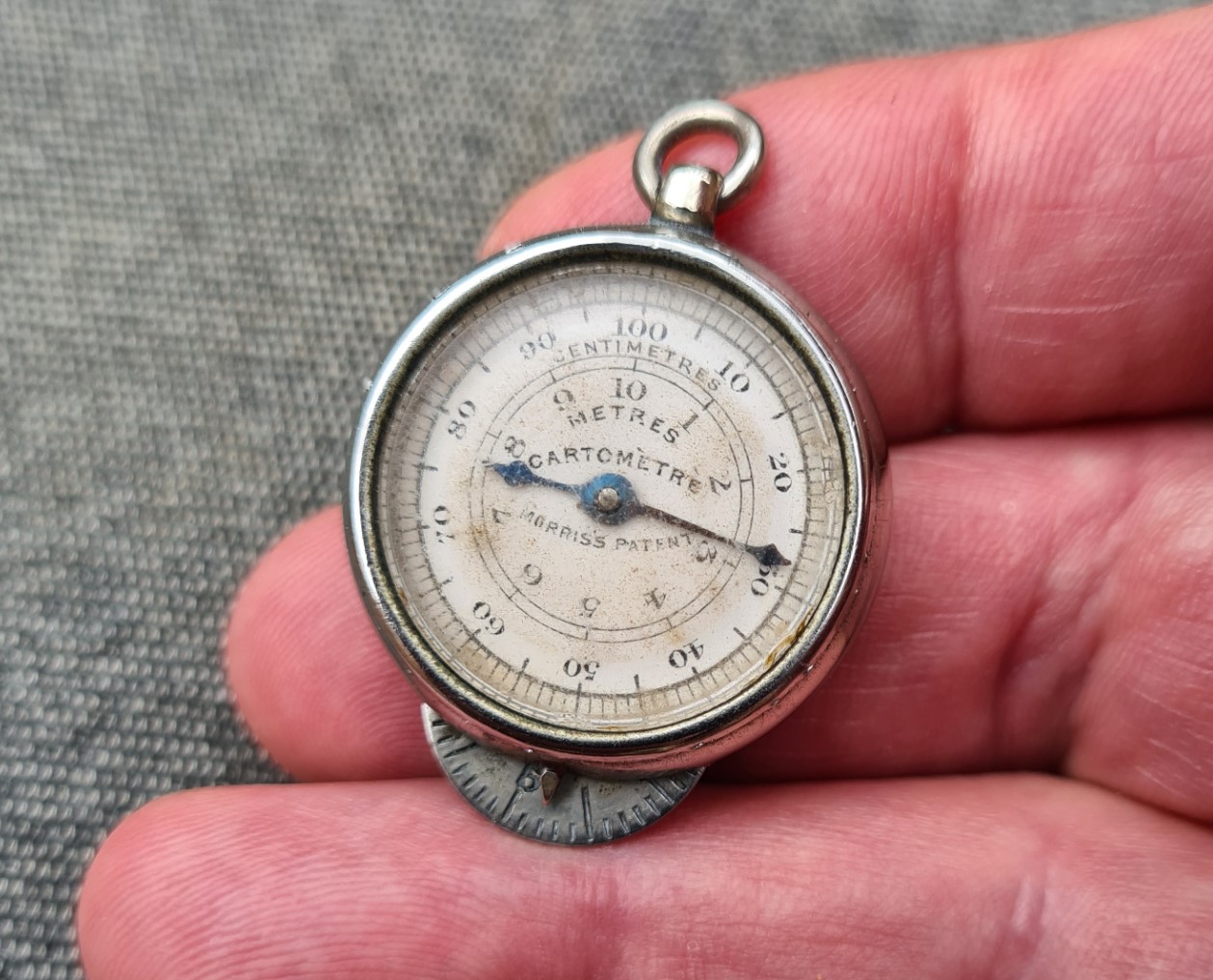
The Cartomètrè is a miniaturised metric version of the innovative mechanical measures invented by Englishman Edward Morris. Despite its modest dimensions, it had remarkable capability for its time.
The Cartomètrè is a metric version of the Wealemefna, invented by Edward Russell Morris, of Morris Patents Engineering Works, 50 High Street Birmingham, UK. It was advertised by Morris as “superseding the old fashioned foot rule“. Morris had already produced other analogue measures, though they were mostly a good deal larger and clunkier than the little Cartomètrè.

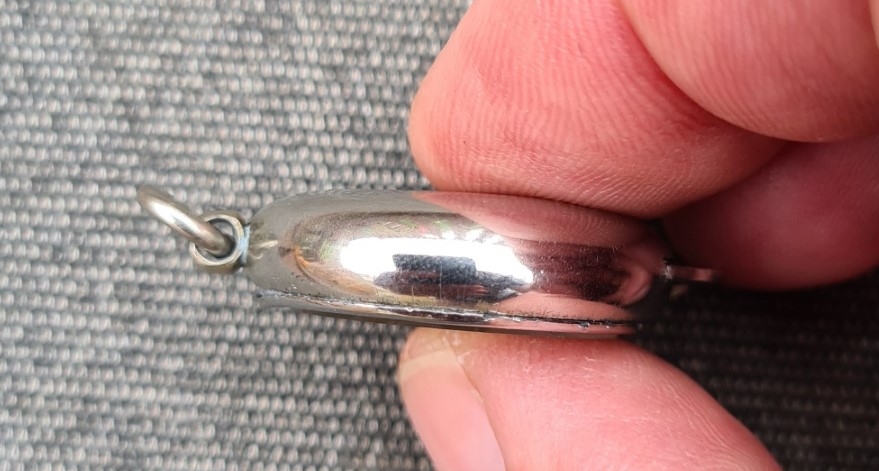
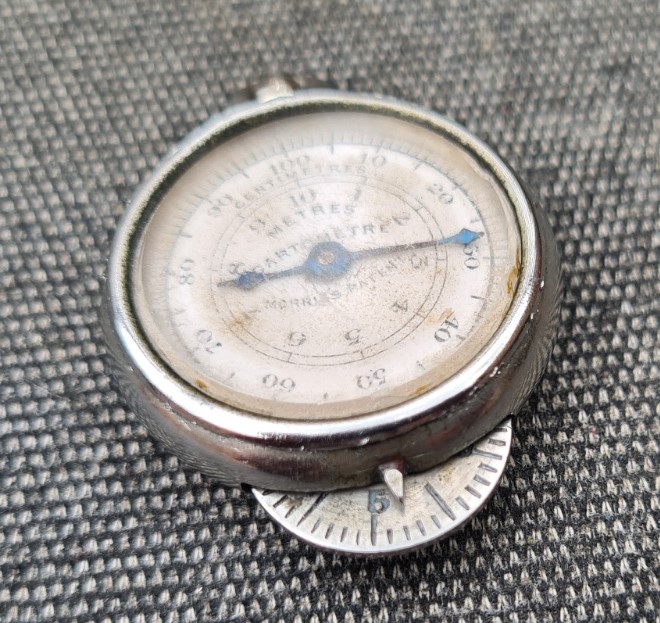
This late nineteenth century instrument could be purchased with a variety of finishes- gilt, nickel, silver plated or gold plated. The instrument case is simple and lacks any decoration. It has a small ring hanger at the top and small pointer over the front of the tracking wheel. When purchased, it came with a small velvet lined, leather-covered wooden snap case, but was intended to accompany its owner, hung from a watch chain, fitting inside a gentleman’s waistcoat pocket. It is lack of protection that has caused the example shown here to suffer so many scratches to the flat surface of the flat crystal.
Morris was a member of the Institute of Civil Engineers from 1880 and invented, designed and manufactured map measurers in a range of sizes. Many similar measures from other manufacturers copied his designs. The metric Cartomètre and imperial Wealemefna were the smallest and lightest of the measures produced by Morris. The Cartomètrè weighs 18g and has a case width of 28mm, very slightly larger than the smaller Wealemefna.
Note that Morris used the letters ‘e‘ with grave accent when naming his instrument, as in ‘è‘. This is strictly used to indicate that an ‘e‘ is not silent. It is perhaps not a correct use in this context, particularly as he felt no need to repeat it’s use for the metre increments shown on the dial.
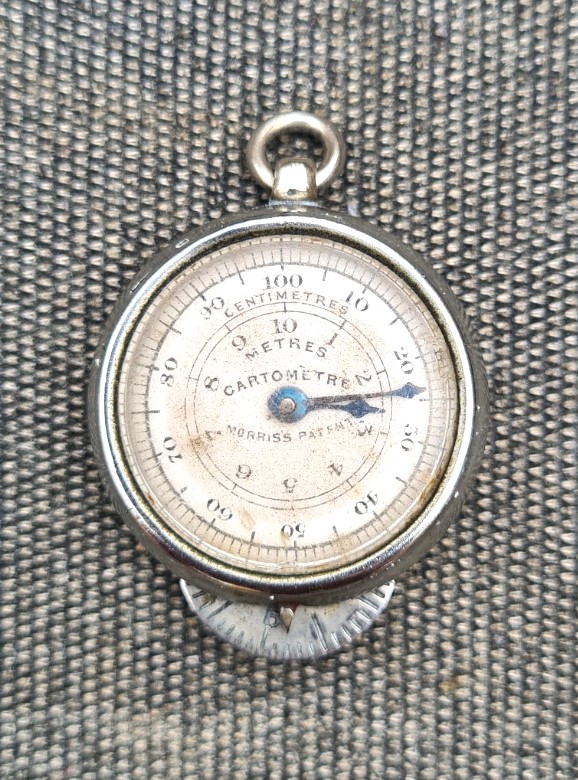
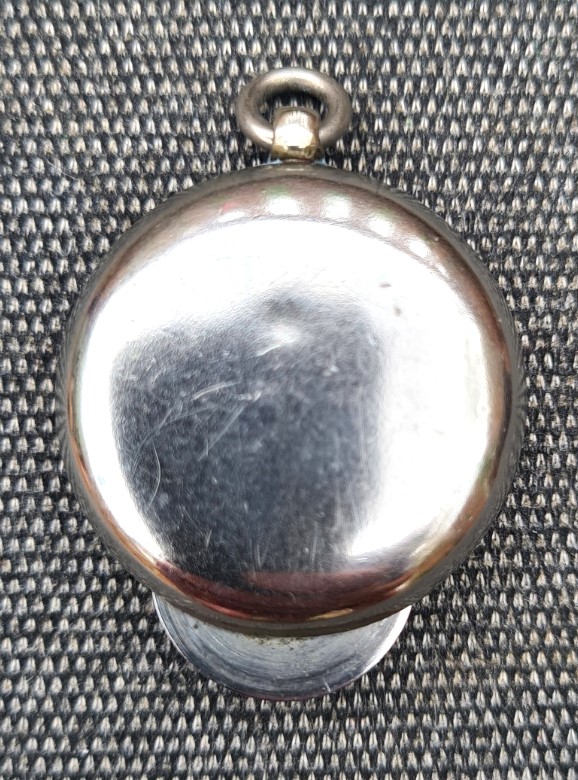
The measure has a plain back and no external markings, The maker and model name are shown on the paper dial, along with the two scales and increments: 1-10 are on the inner dial and 10-100 on the outer dial.
This small instrument will measure lines on maps or anything else, by holding it in the right hand, facing toward you, then wheeling forward. Or in the left hand, facing toward you and wheeling it backward. Despite it’s ‘bijou’ dimensions, it will measure long lines. One complete rotation of the dial by the large hand indicates up to 100 centimetres (one metre) measured, in one centimetre increments. One rotation of the dial advances the small hand to the ‘1’ position on the inner dial. This can indicate up to 10 metres measured. This is a remarkable distance for such a small measure., i.e. one centimetre increments up to 10 metres measured. It is even possible to measure single millimetres with this instrument as the tracking wheel has millimetre increments included. Perhaps unsurprisingly, these tiny increments do not appear on the imperial version of this measure.
Advertisements for the imperial Wealemefna and metric Cartomètrè were placed in various newspapers and these both date our measure and give some indication on what the target audience was- Illustrated Sporting & Dramatic News in 1877, Naval & Military Gazette and Weekly Chronicle of the United Service in 1878 and 1879, Field in 1879, Sporting Gazette in 1879 and 1881, Times of India in 1883, Civil & Military Gazette (Lahore) in 1887 and 1900. When advertised in the English publications Truth and The Graphic in 1882, Morris simply described the Cartomètrè as a “Wealemefna adapted to the metric system” however seeing them side by side reveals the Cartomètrè to be slightly larger and more refined, as mentioned earlier, the tiny graduations on the tracking wheel are absent on the smaller Wealemefna.
The Cartomètrè is an uncommon survivor. Whether this is due to faulty mechanism or poor sales I don’t know. The example shown here works faultlessly and is surprisingly accurate.
Three Points of the Compass has looked at a few more Map Measurers in detail. Links to these can be found here.

 Three Points of the Compass