
This is a simple and easy to use little instrument capable of just one thing- measuring a line. But who made it?
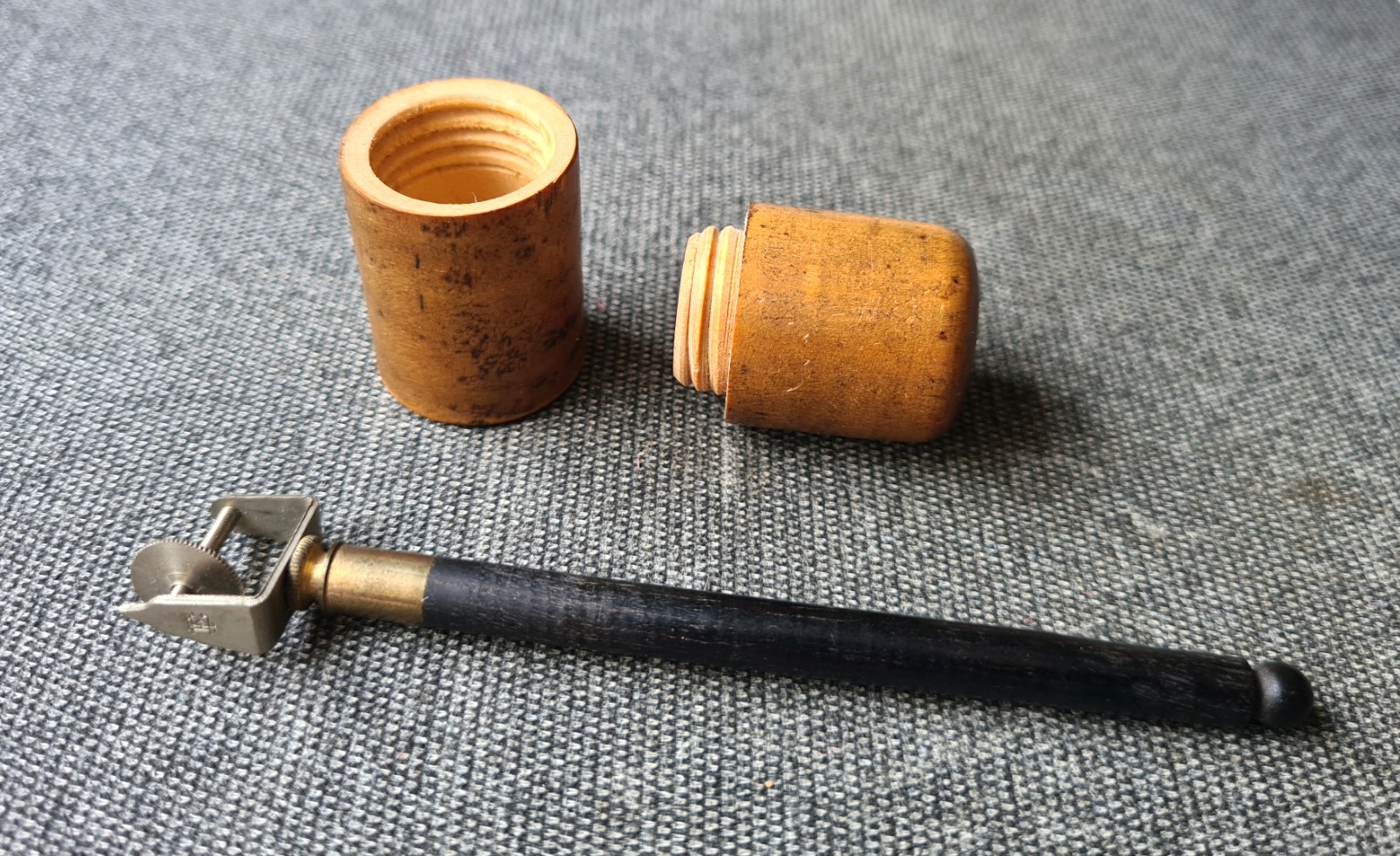
When I purchased this, the seller had little information but described it as a “Treen curvimeter opisometer / map wheel measure case”. Thereby covering just about any likely search term. It is certainly an opisometer, and could be used as a map measure, and I have shown this type of measure before, but there are a lot of things that I don’t know about this little instrument.
- Map measure of the month: Elliott Brothers opisometer
- Map measurer of the month- Stanford’s opisometer
‘Treen’, meaning literally ‘of a tree’, refers to small functional items made entirely of wood, and made by hand. I would argue therefore that the opisometer is not treen due to the metal component. Though I suppose the case could be, but having been turned on a lathe, perhaps not strictly ‘by hand’.
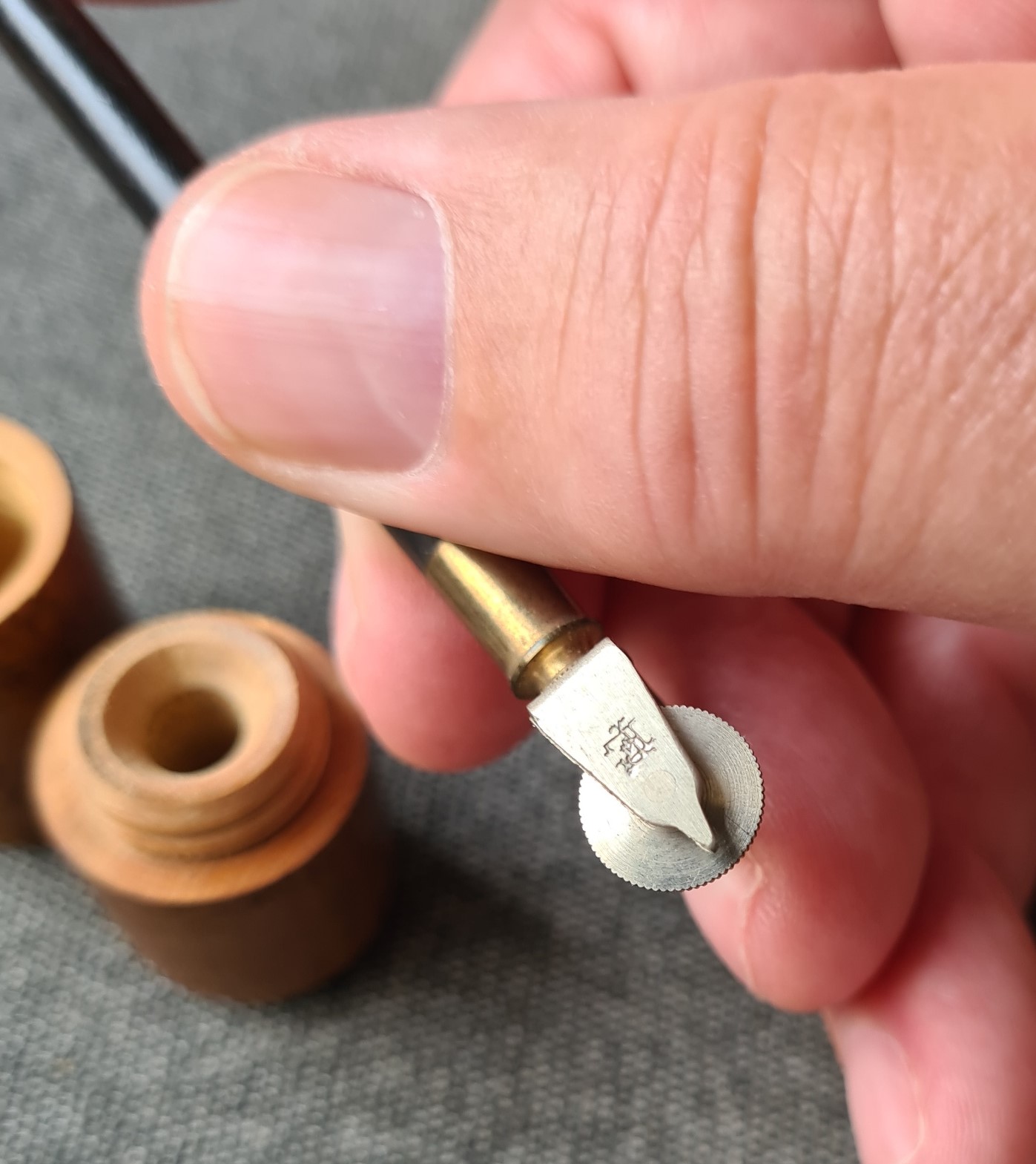
The measure itself is comprised of a small milled wheel with fine serrations that provide grip on a paper map. This tracking wheel turns easily on its fine-threaded supporting spindle. There is also a small metal pointer to aid in locating start and end point of whatever it is that is being measured. There is a mark impressed on the side of the steel hanger. I do not know what this indicates but would presume it is a makers mark. Can anyone identify this?
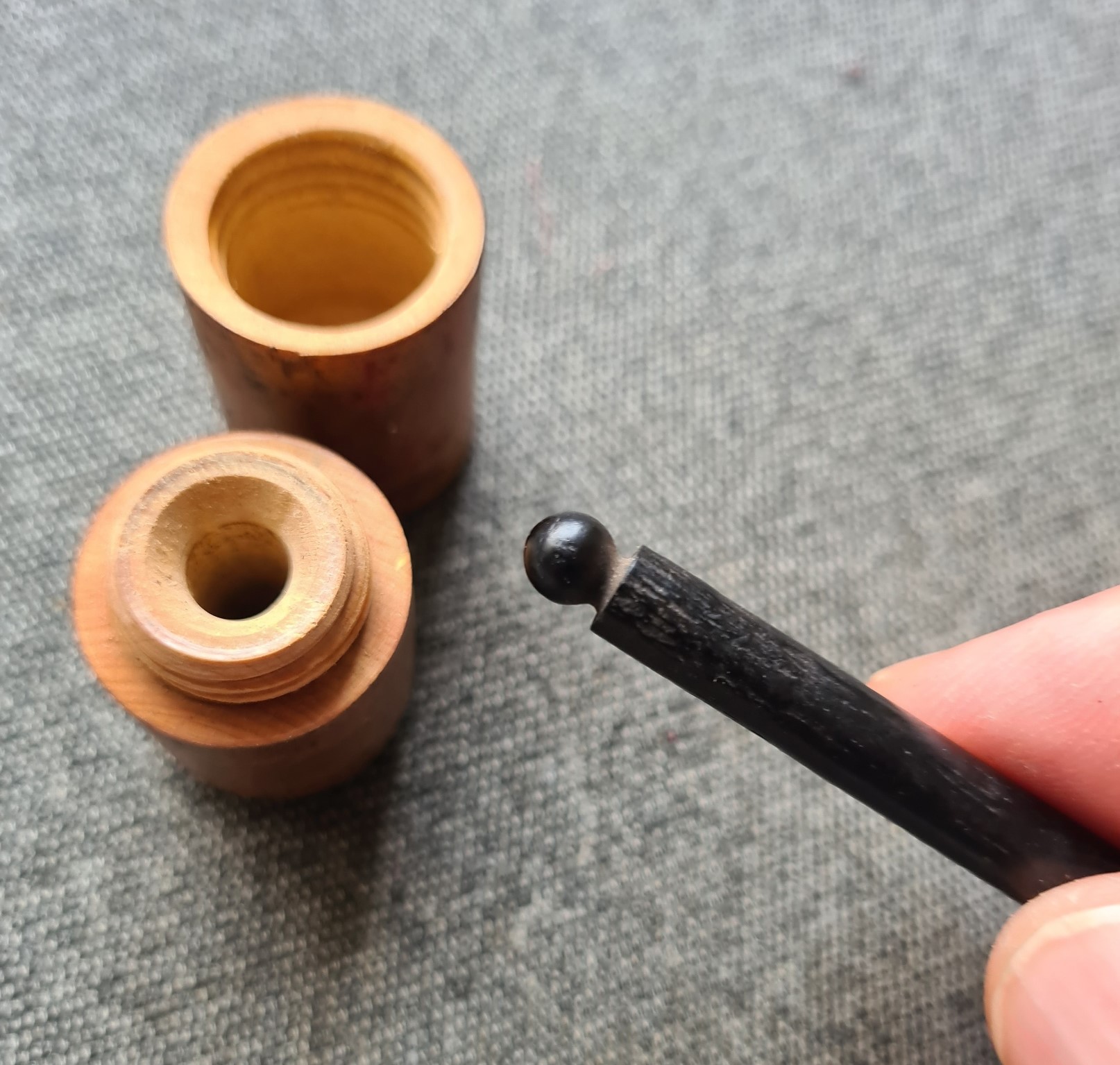
The handle on opisometers can be made from a variety of materials, such as metal, ivory, bone, horn or wood. The handle on this example appears to be made of wood. Black in colour, this may be it’s natural form, possibly even African blackwood, I am sure it is not ebony. But, positively, I don’t know, it may even be black horn. The handle has a simple ball finial at one end. This positively indicates that it is not English in origin and may have originated from France, or possibly Switzerland, or even elsewhere! You can see the English style of finial on the measures linked above. The handle screws into a brass holder, which in turn is screwed onto the steel ‘business’ end of the opisometer.
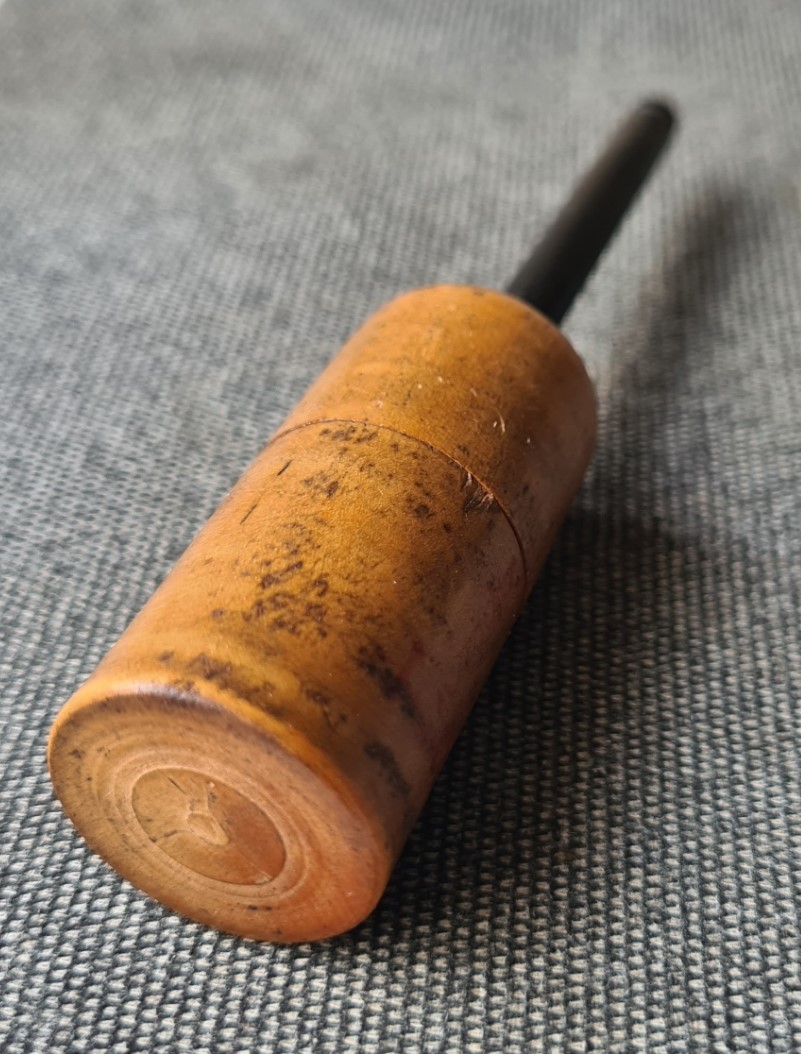
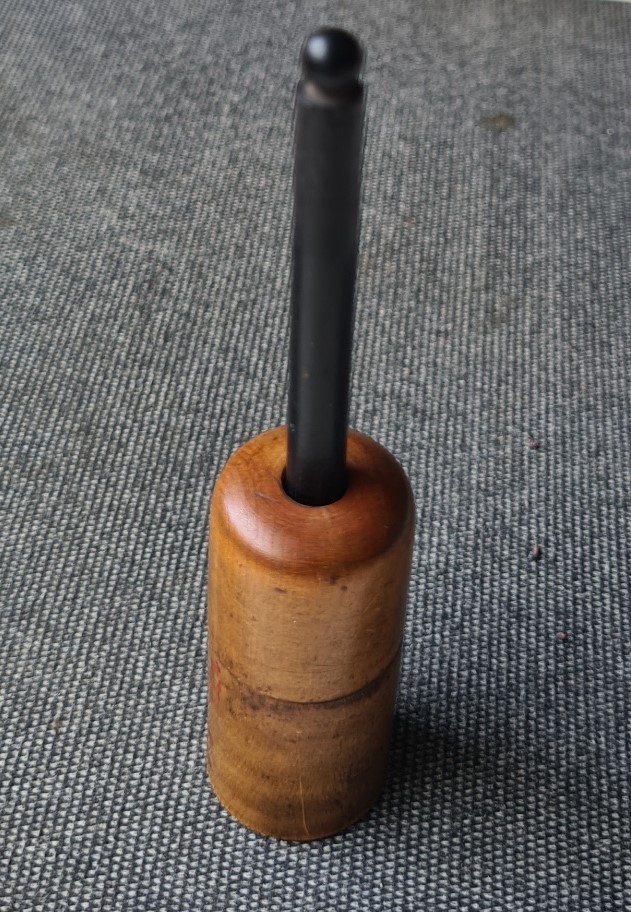
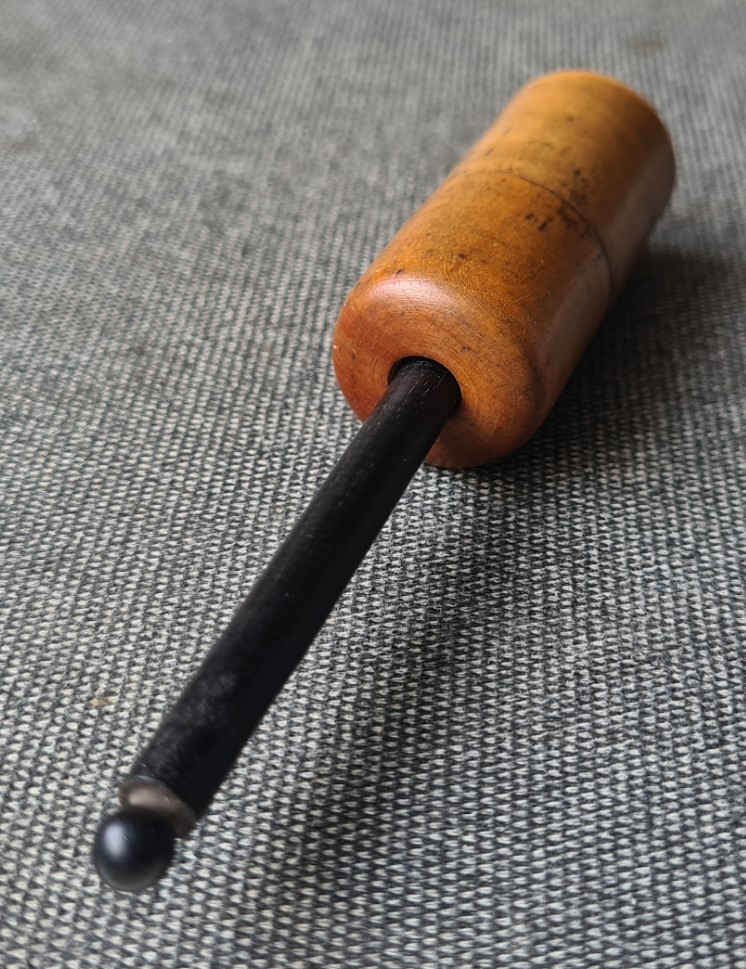
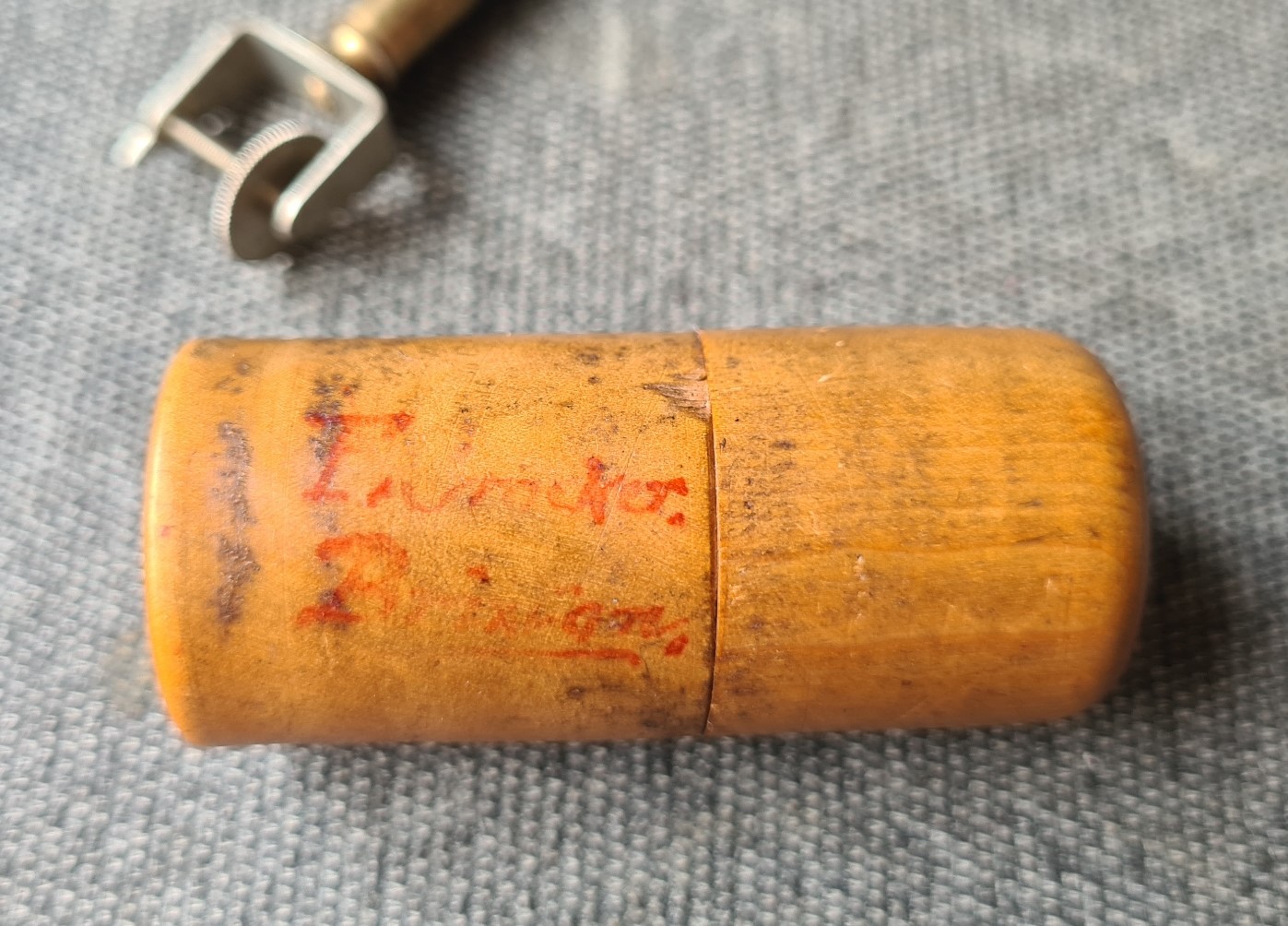
To protect the tracking wheel and spindle from both damage and picking up debris, it comes with a two-piece case. This is all wood, of another as yet unidentified type. The two parts screw together, with the wooden handle of the opisometer protruding from a central hole in the top part of the case. The bottom part of the case has what appears to be a two word inscription on its side. It may be an owners name, though there does appear to be a full stop (period) after each word and each word appears to begin with a capital letter, likely ‘F’ and ‘B’ or ‘R’. I can not decipher the whole. Any suggestions?
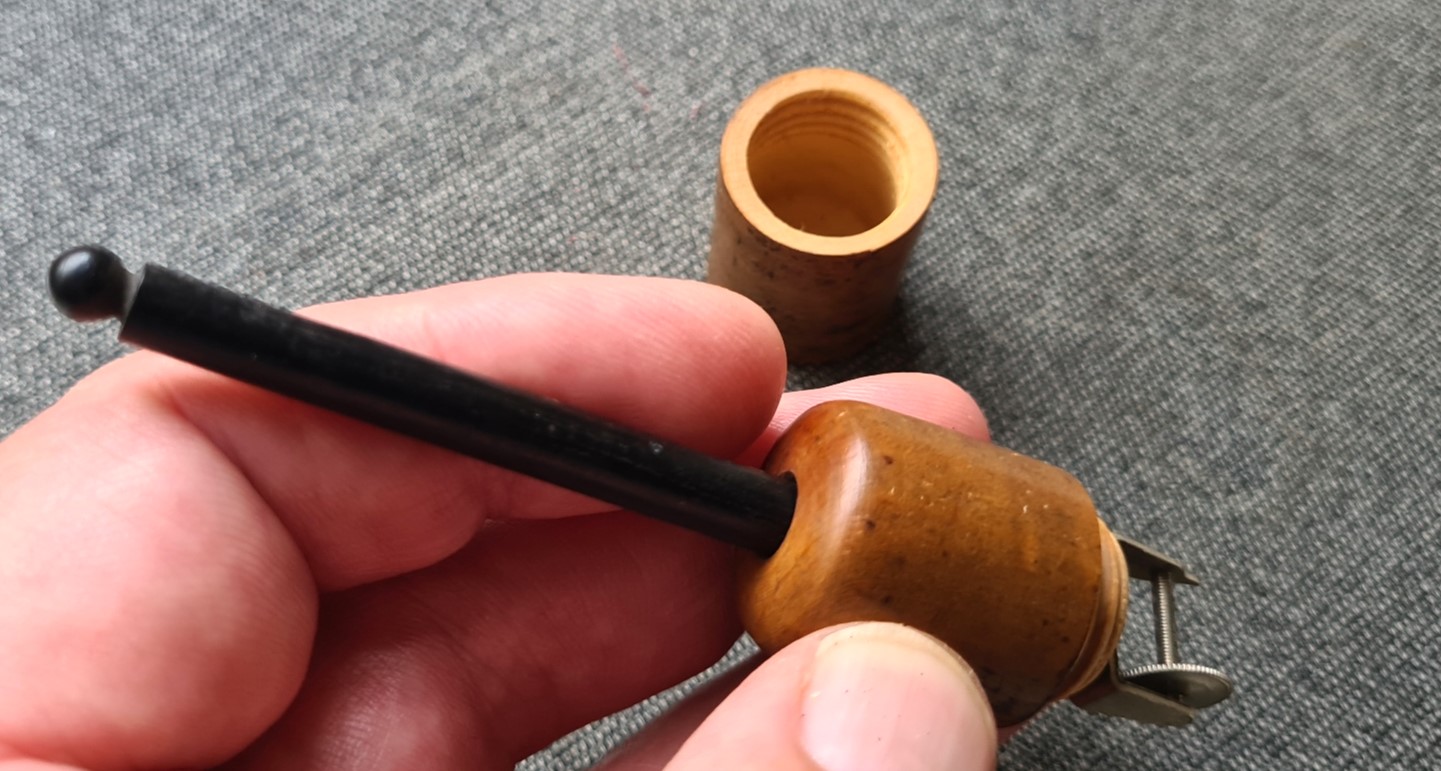
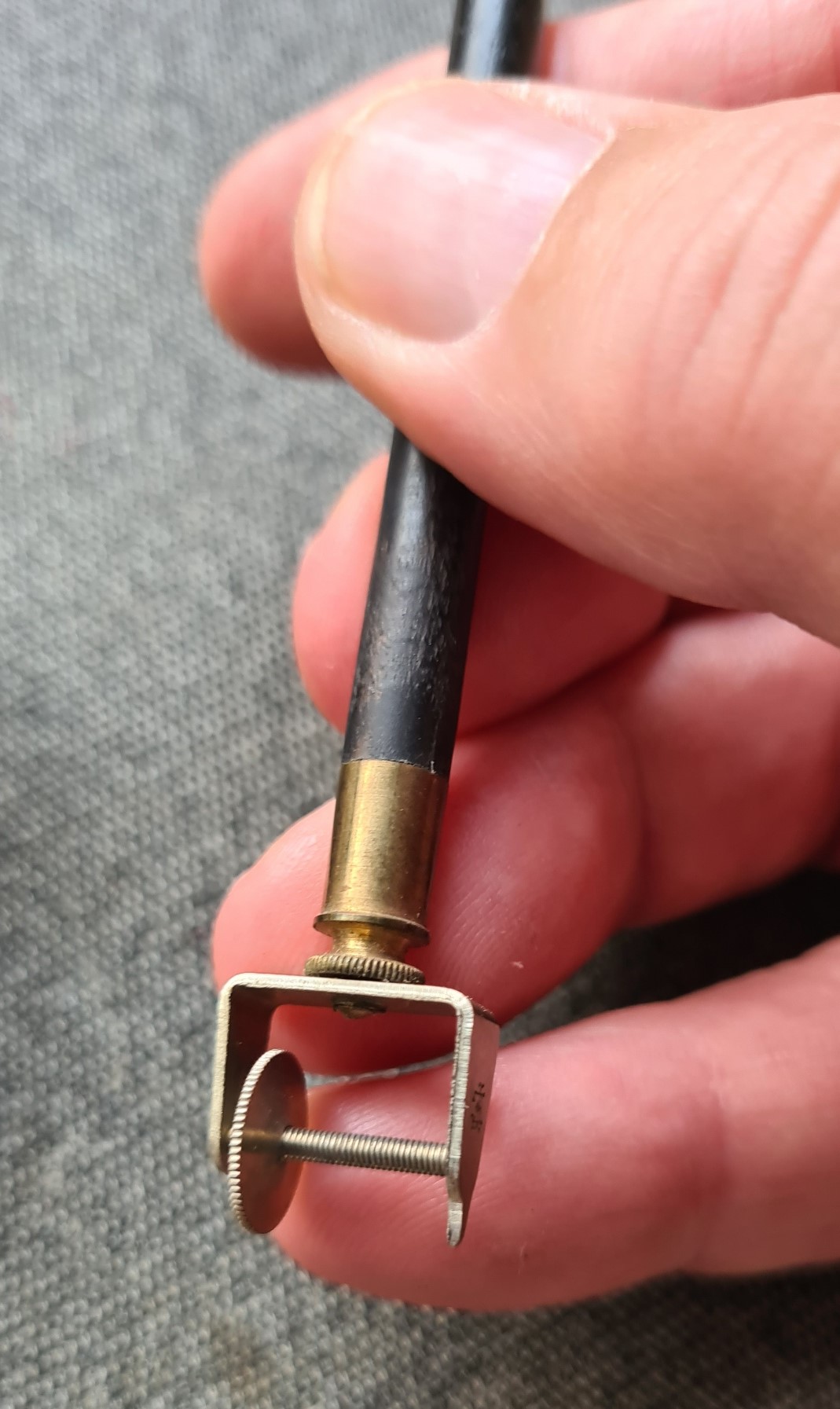
It is a small instrument, just 102mm in length, of which the handle is 88mm. It weighs 6.75g and the case a further 13.45g. It is easy to operate. The tracking wheel is wound to one end of the threaded axle, then it is wheeled along a line on a map, or along any distance you are measuring, then turn the tracking wheel backwards against a known scale. Changing to a contemporary imperial scale for a while, the tracking wheel on this particular measure can track up to forty-two and a half inches. Which is quite impressive for such a small instrument. Simple to use and effective, opisometers are still made today but seldom for use with maps.
I would guess that this instrument most likely dates from the mid to late nineteenth century, possibly into the twentieth century though an all metal construction was favoured from the turn of the century. As you can see, there is much I do not know about this measure and any informed opinion is welcome.
Three Points of the Compass has had a closer look at many other measures and links for those can be found here.

 Three Points of the Compass