
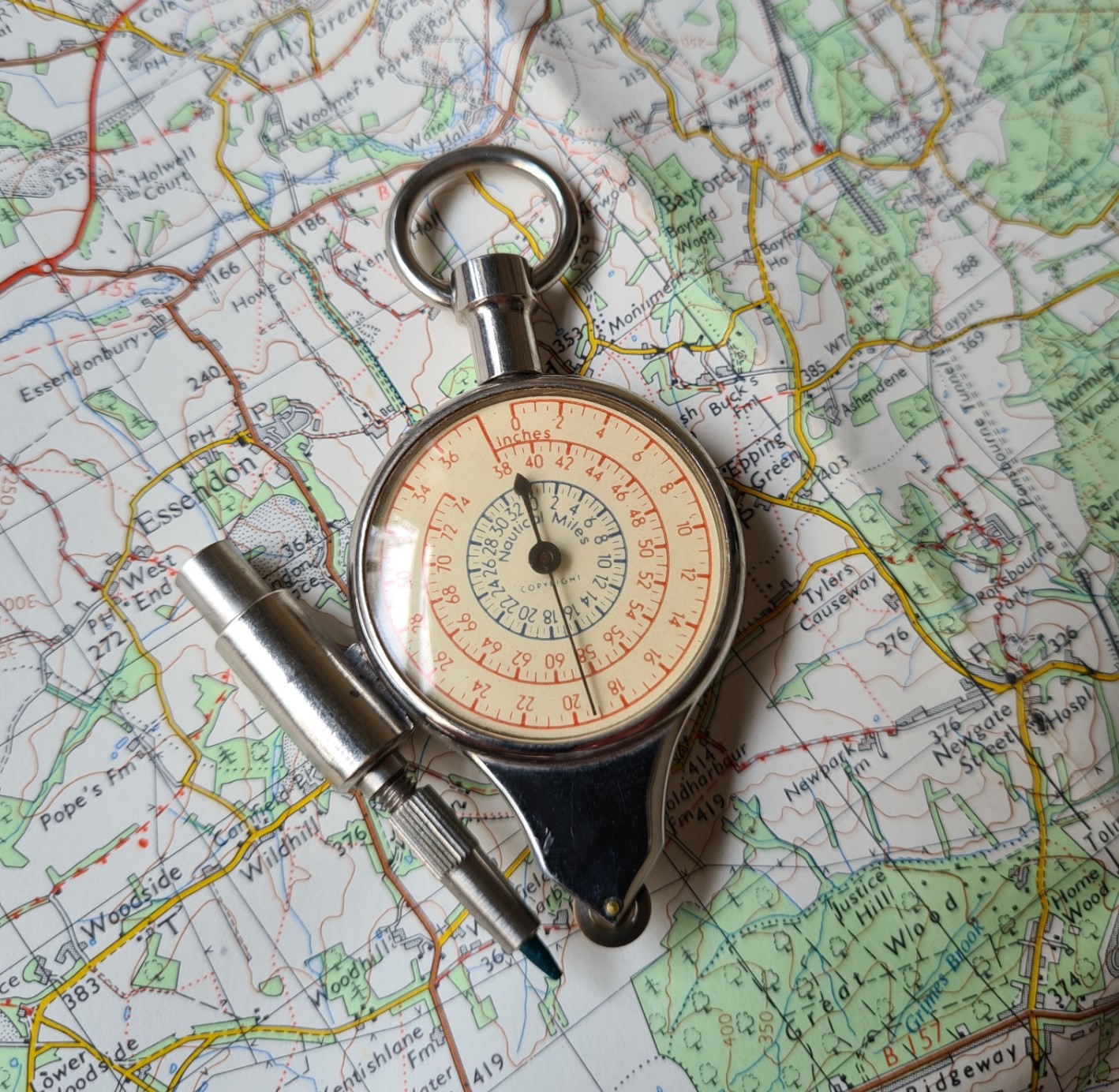
This months map measure is an uncommon combination instrument that brings together various functions, but ultimately fails as a collective.
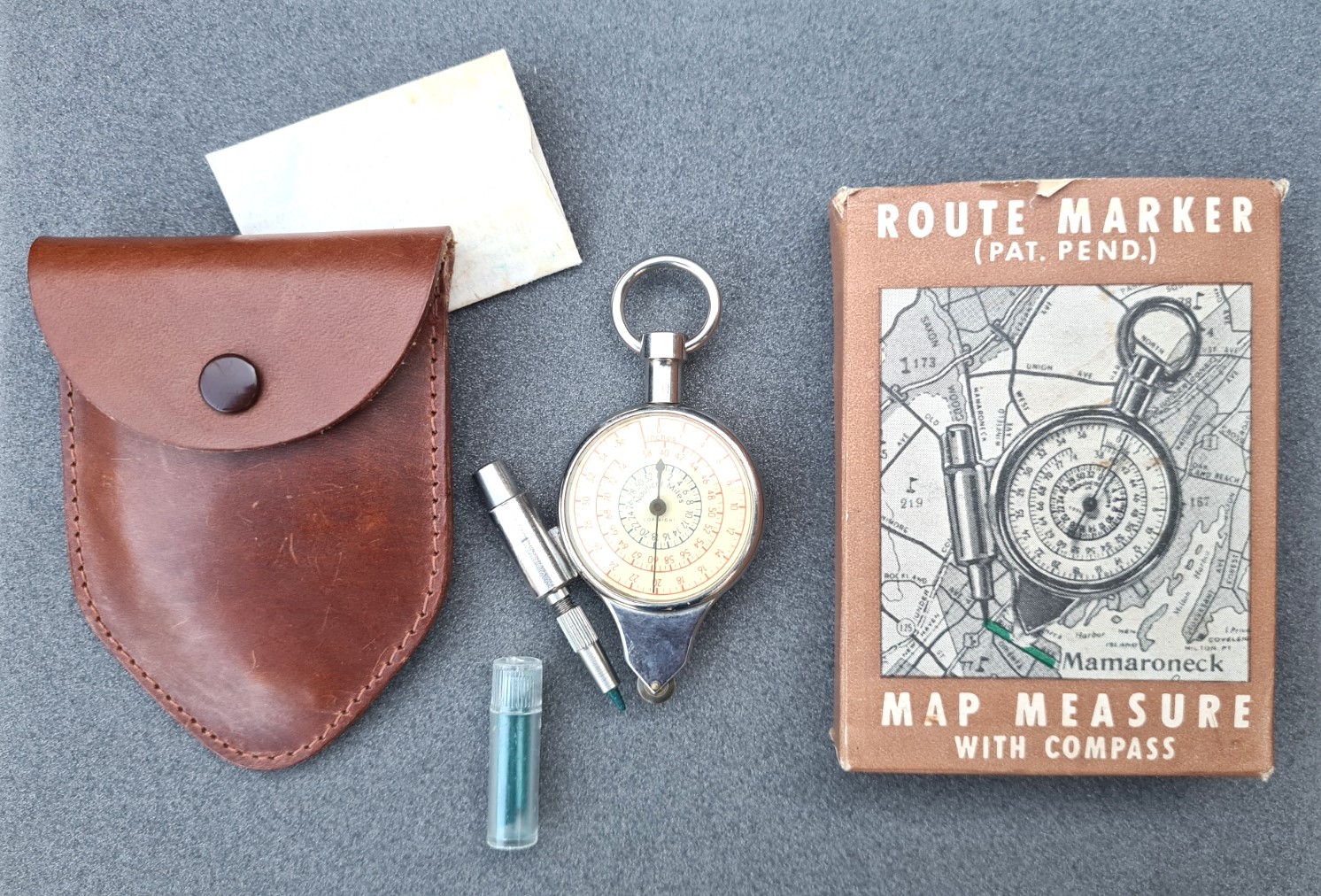
This is a small measure, with a route marker fixed to the side of the case. This type of combining functions is not an unusual practice amongst the manufacturers of map measures, but despite manufacturer wishes, rarely do they excite the buying public. A map measure combined with a compass is a very common combination, but a map measure also having a lead holder positioned other than in it’s handle is a very rare find, and with very good reason.
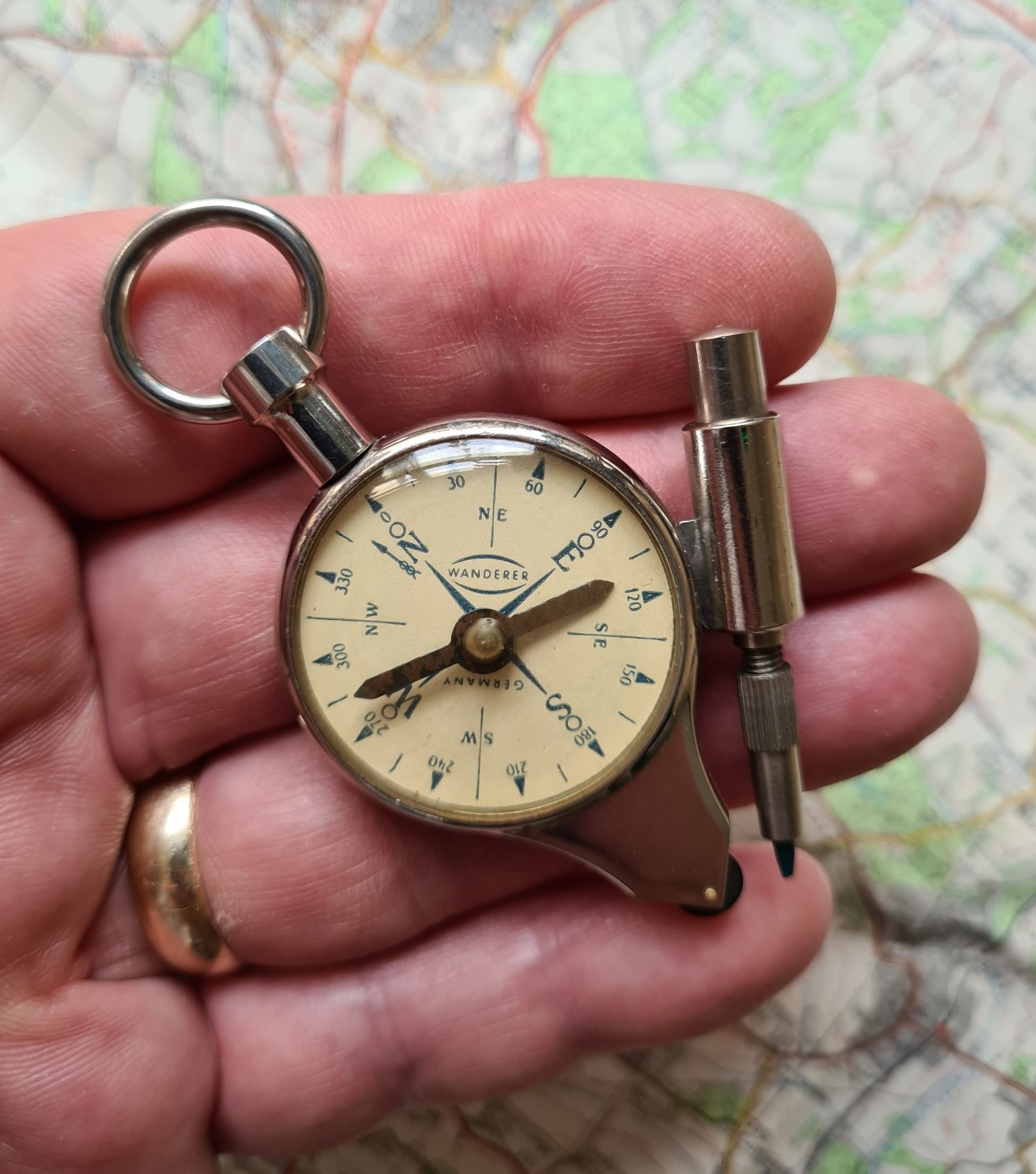
The metal bodied measure has two faces-a front and a back. A map measure is on one side and a simple magnetic compass on the reverse. The compass is not liquid filled and the needle fluctuates wildly before settling. However, it works, of a sort. Cardinal and ordinal points are shown, incorporating 30° intervals, indicated with figures, around the circumference. And that is about it. I wouldn’t like to rely on the compass as a primary navigational aid but ‘back in the day’ it might have been of some small use. The country of origin and model name: “WANDERER” are also shown on the compass dial.
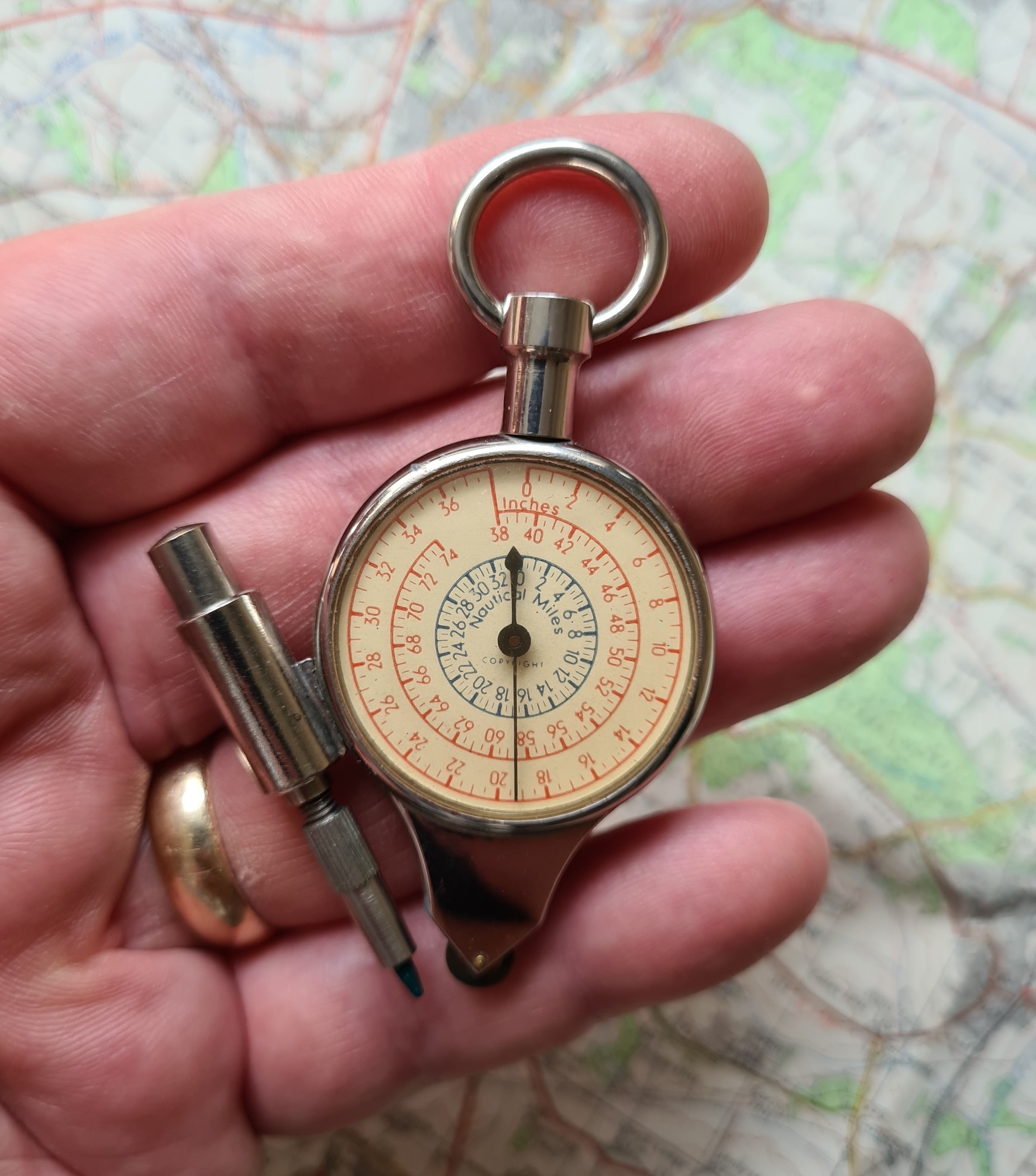
The measuring dial fave has two scales: An inner blue dial indicating nautical miles, from 0 to 32, showing even numbers, with marked inter-increments, and an outer red dial, indicating inches. This measures 0-38 inches on the outside ring, then steps into a concentric inner ring that continues the count 38-74 inches. Perhaps surprisingly, for such an analogue instrument, it is very close to being accurate when measuring 74 inches, just a couple of inches short.
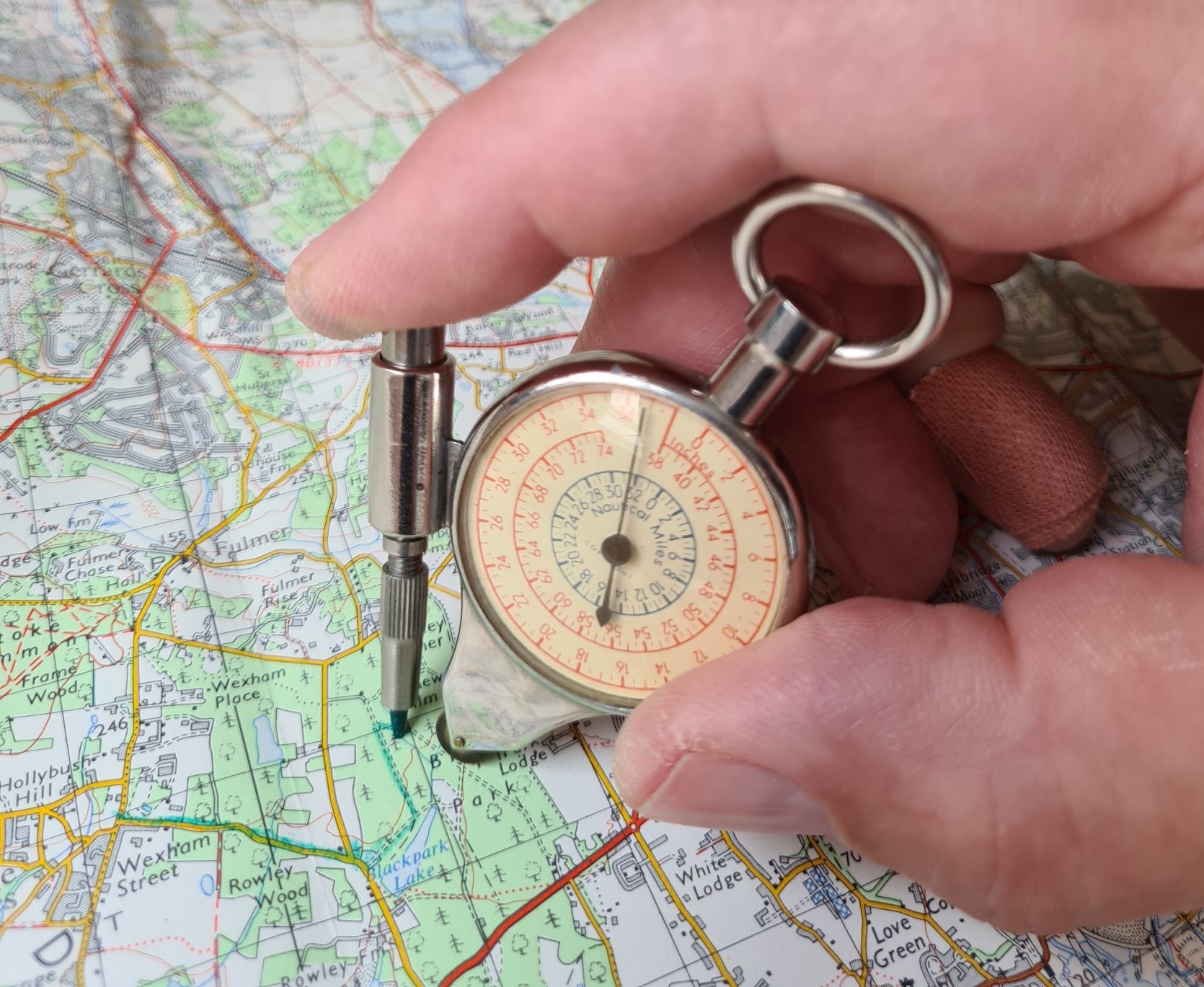
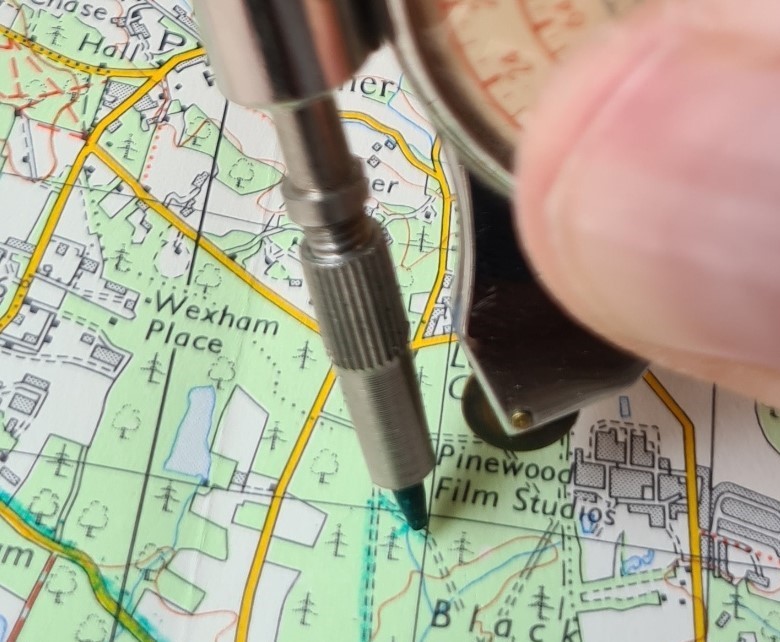
It is not an easy instrument with which to mark a line on a map. The coloured ‘lead’ has to be depressed while tracking a line on a map. This is a very awkward action, especially when trying to mark a wandering footpath on a map. It is best to give up on trying to attempt to do both functions well, and simply do one well, followed by the other. So you may as well use a coloured pencil.
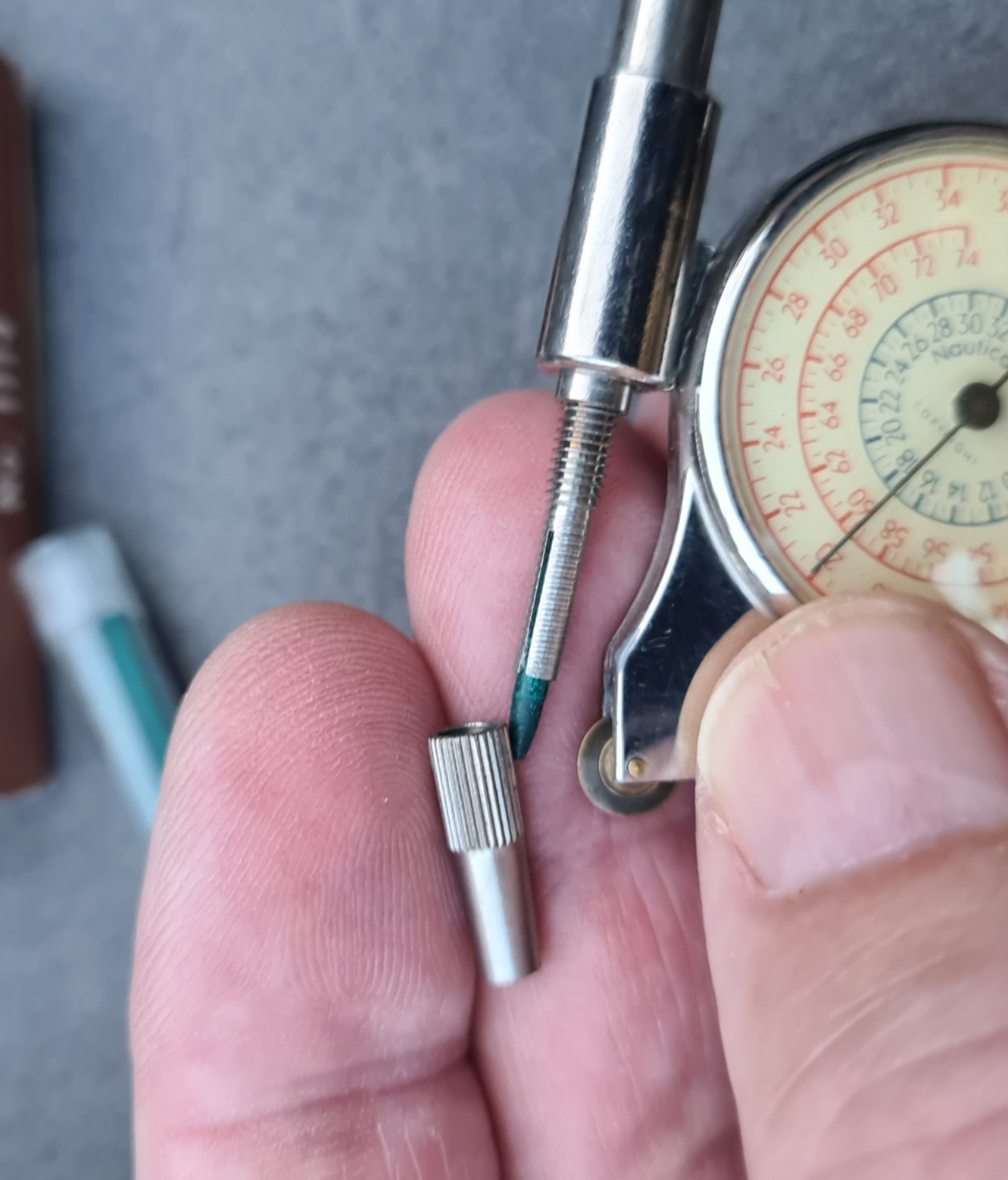
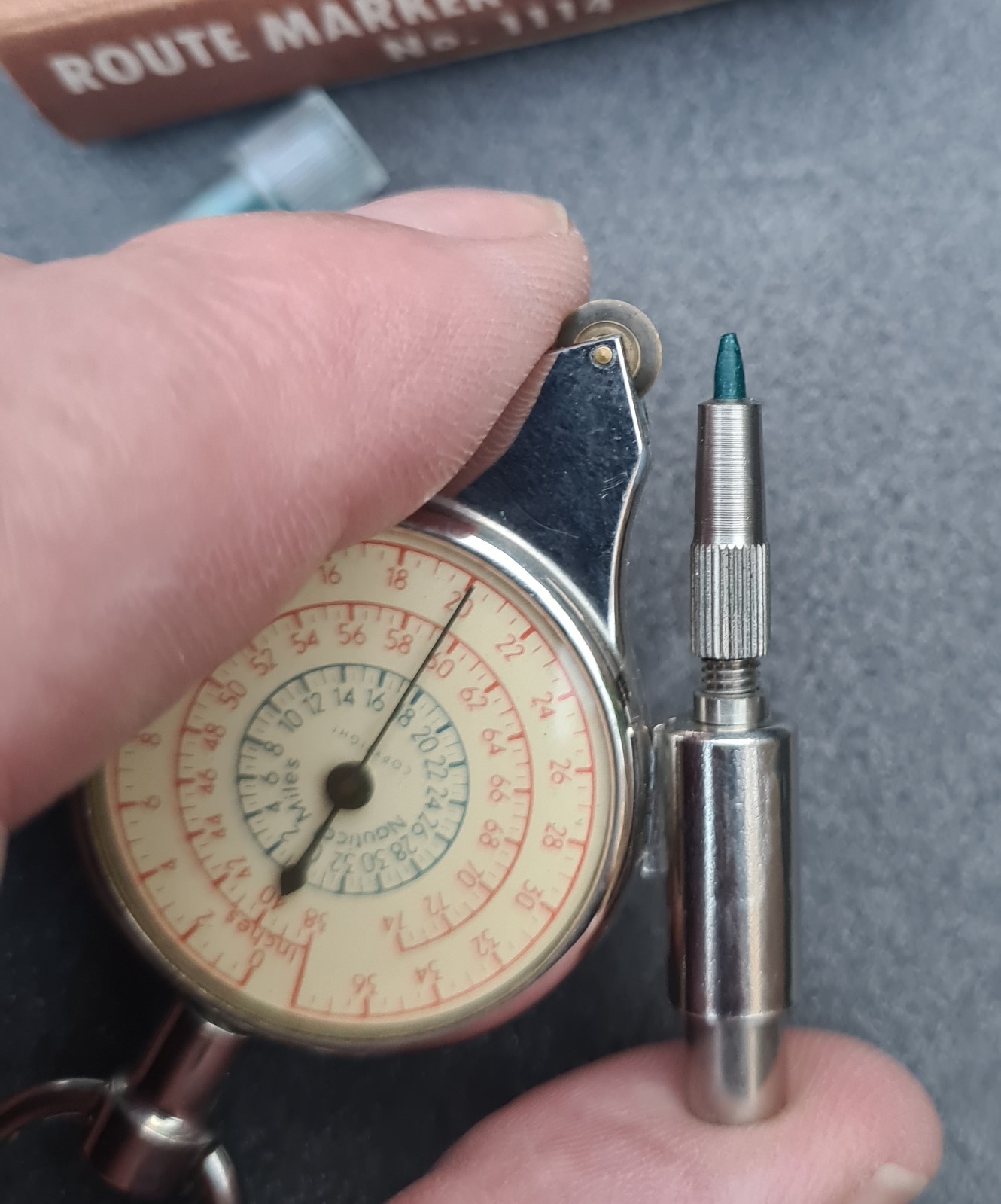
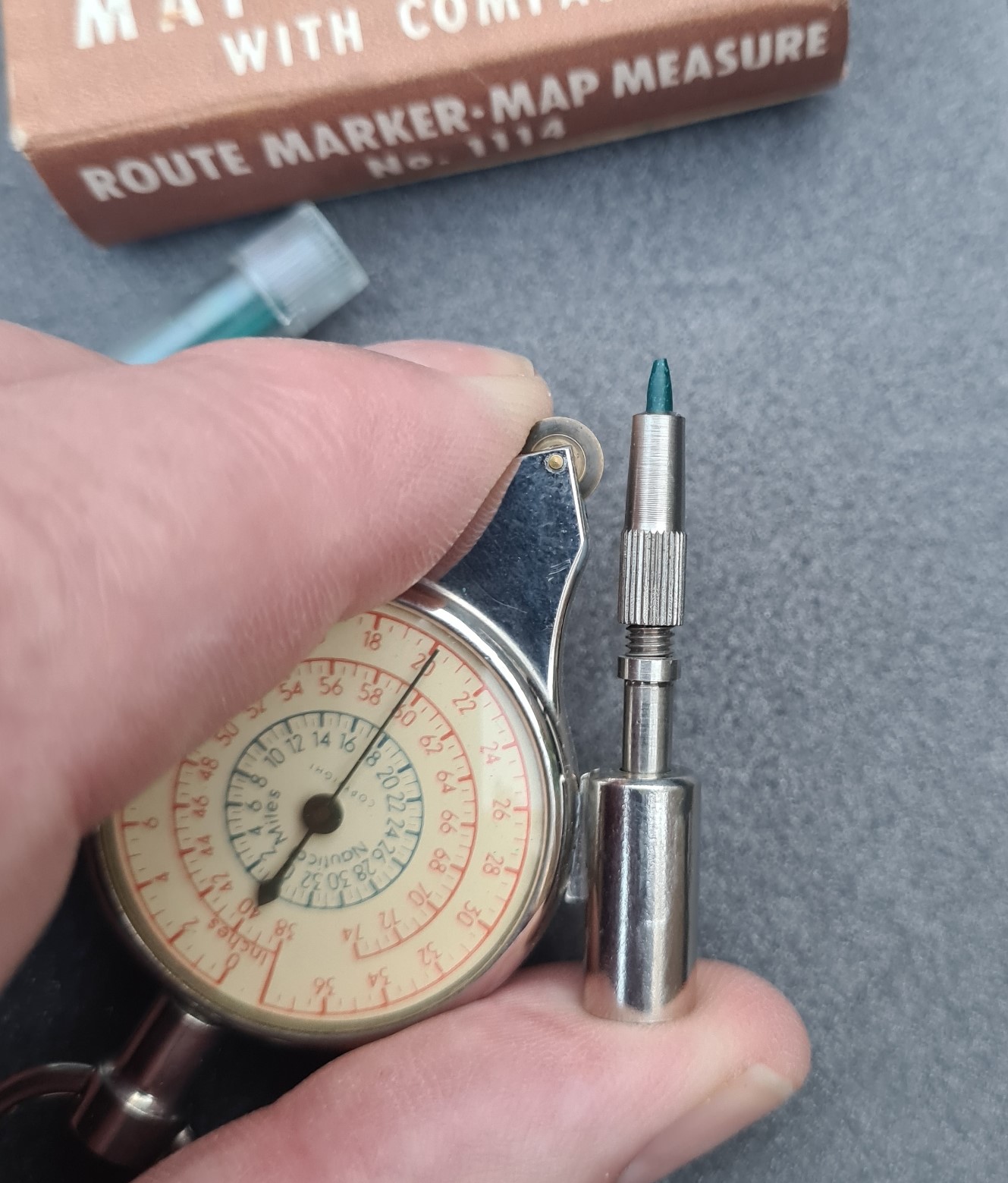
With a lead loaded, the instrument weighs 36g. Overall length, from tip of tracking wheel to the top of the ring, is 74mm. The dial case has a diameter of 34.75mm and it is 11.75mm across the apex of each domed crystal. The hanging ring actually forms no useful purpose as it is very unlikely to be hung from a lanyard.
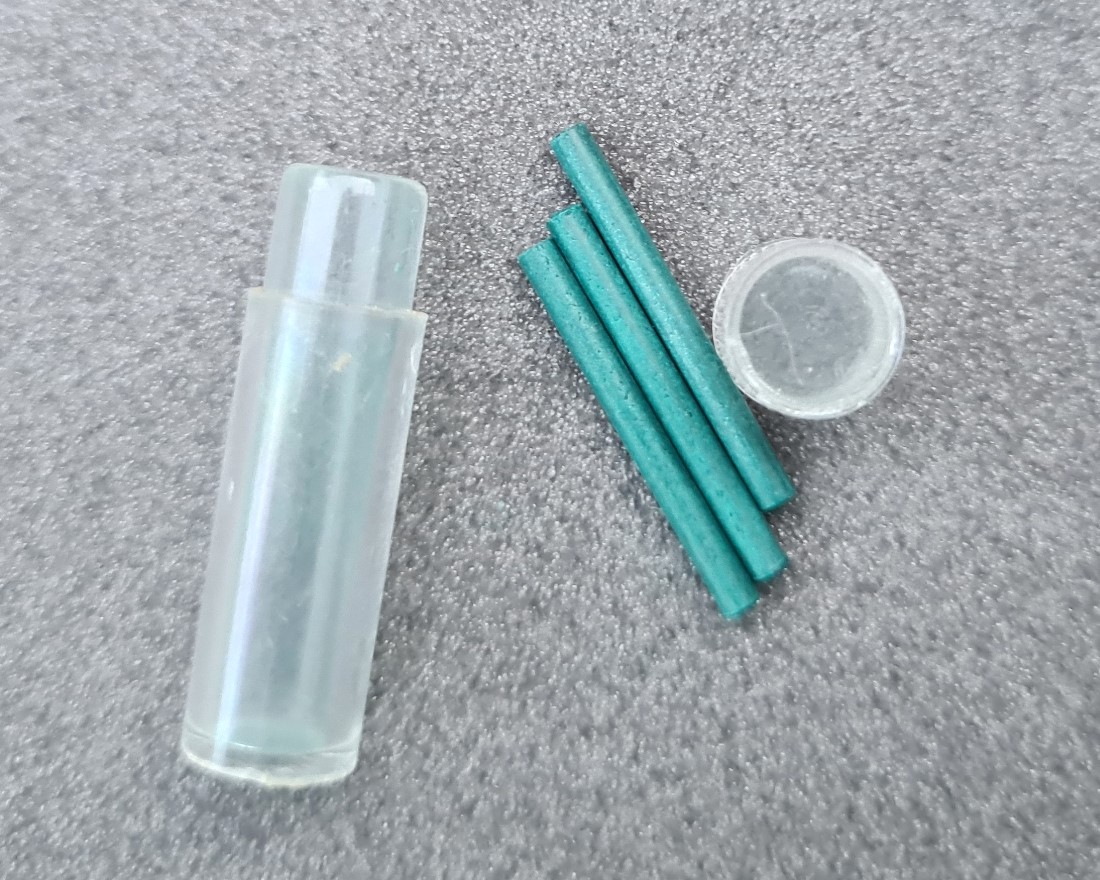
It comes with a tiny two-part plastic case that holds spare ‘leads’, I have three blue 20mm x 2mm sticks in mine. I don’t know how many it would have contained as new. The base of the holder has the country of manufacture on it. Obviously any 2mm lead of any colour could be used as a replacement in this instrument.
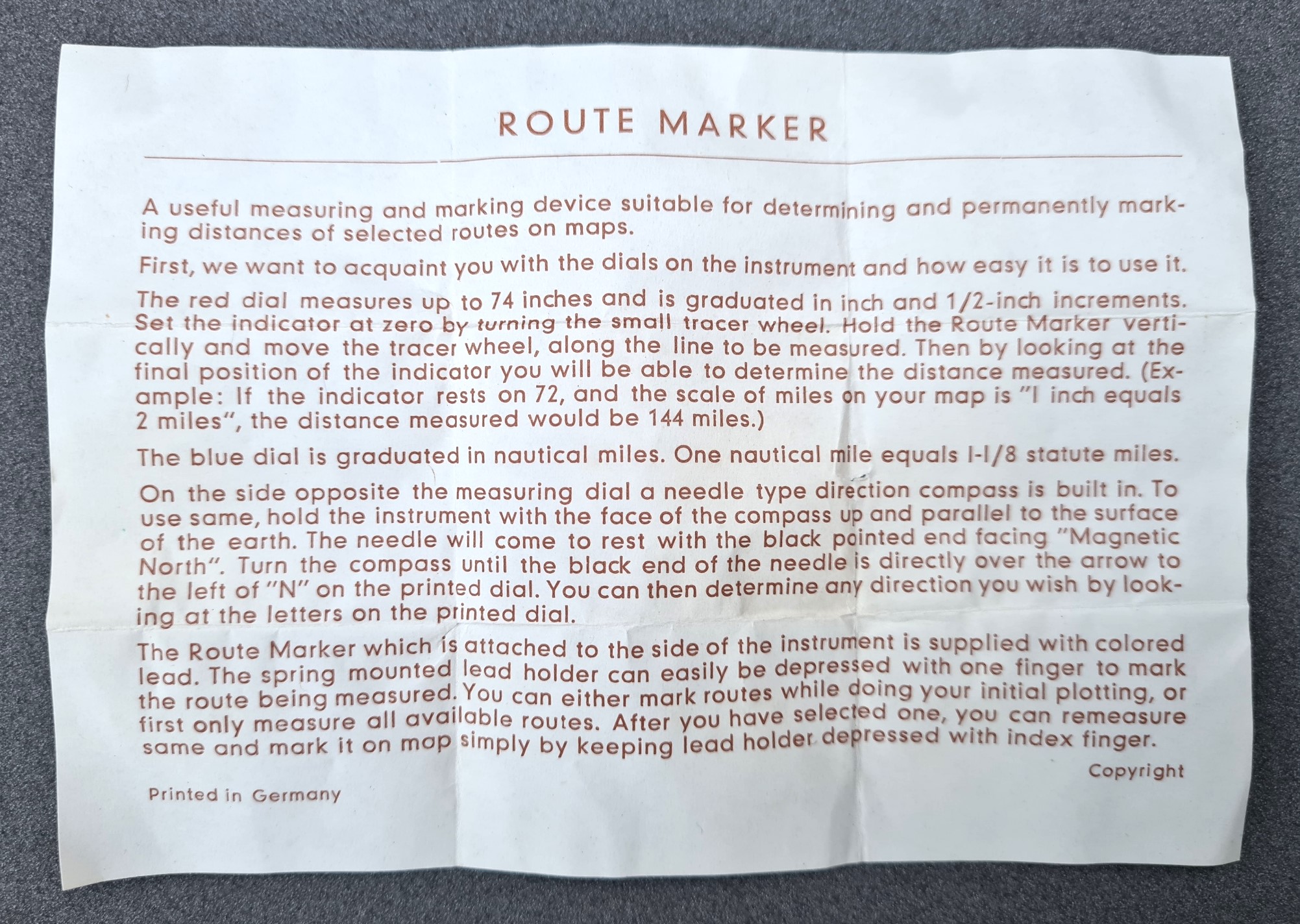
The sheet of instructions is clear to read and provides all the necessary information to operate the measure. The only part I might take issue with is “the spring mounted lead holder can easily be depressed with one finger to mark the route being measured”, as mentioned, this is not easy to achieve.
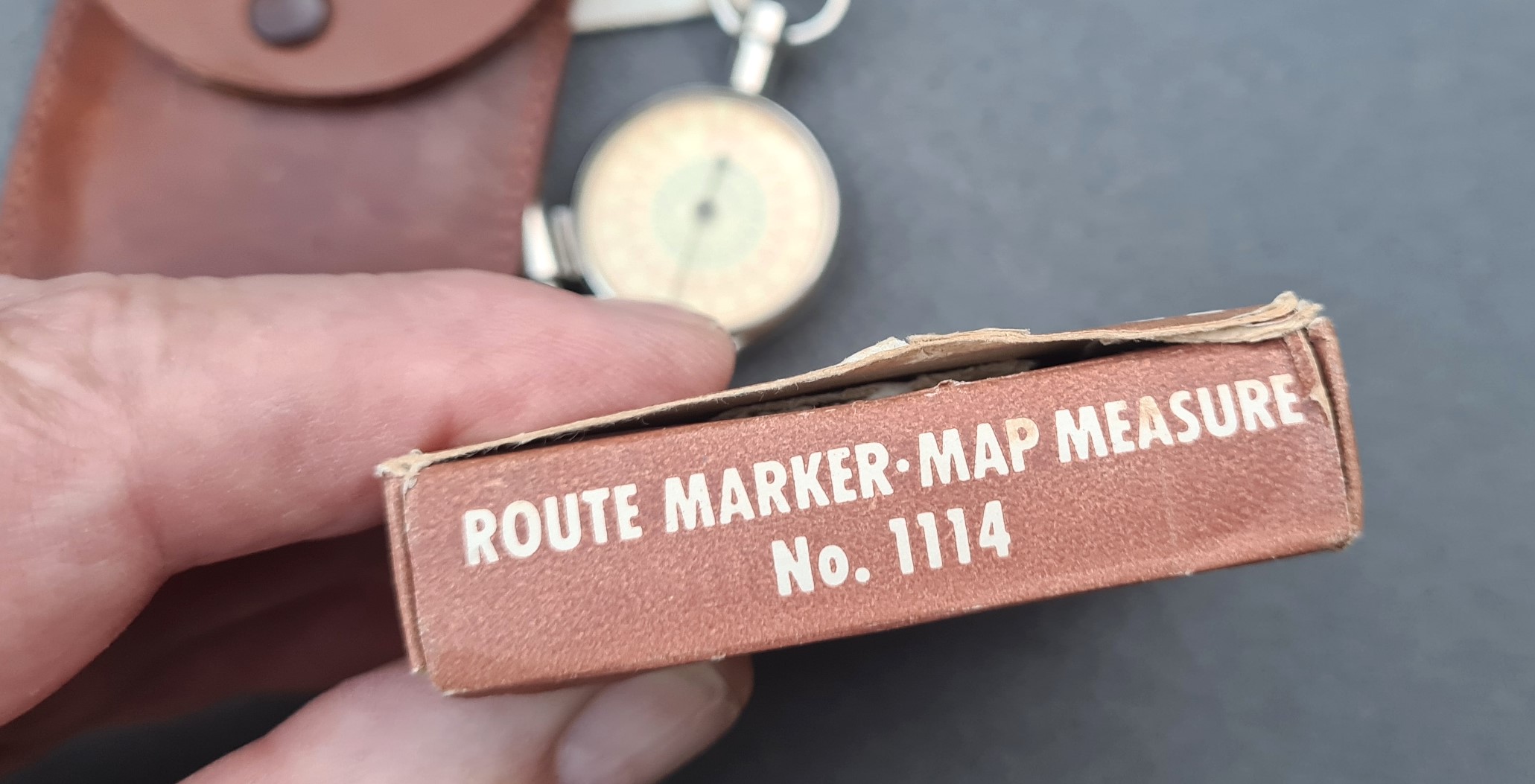
The end of the box is the only place where the model number is shown- “No. 1114”
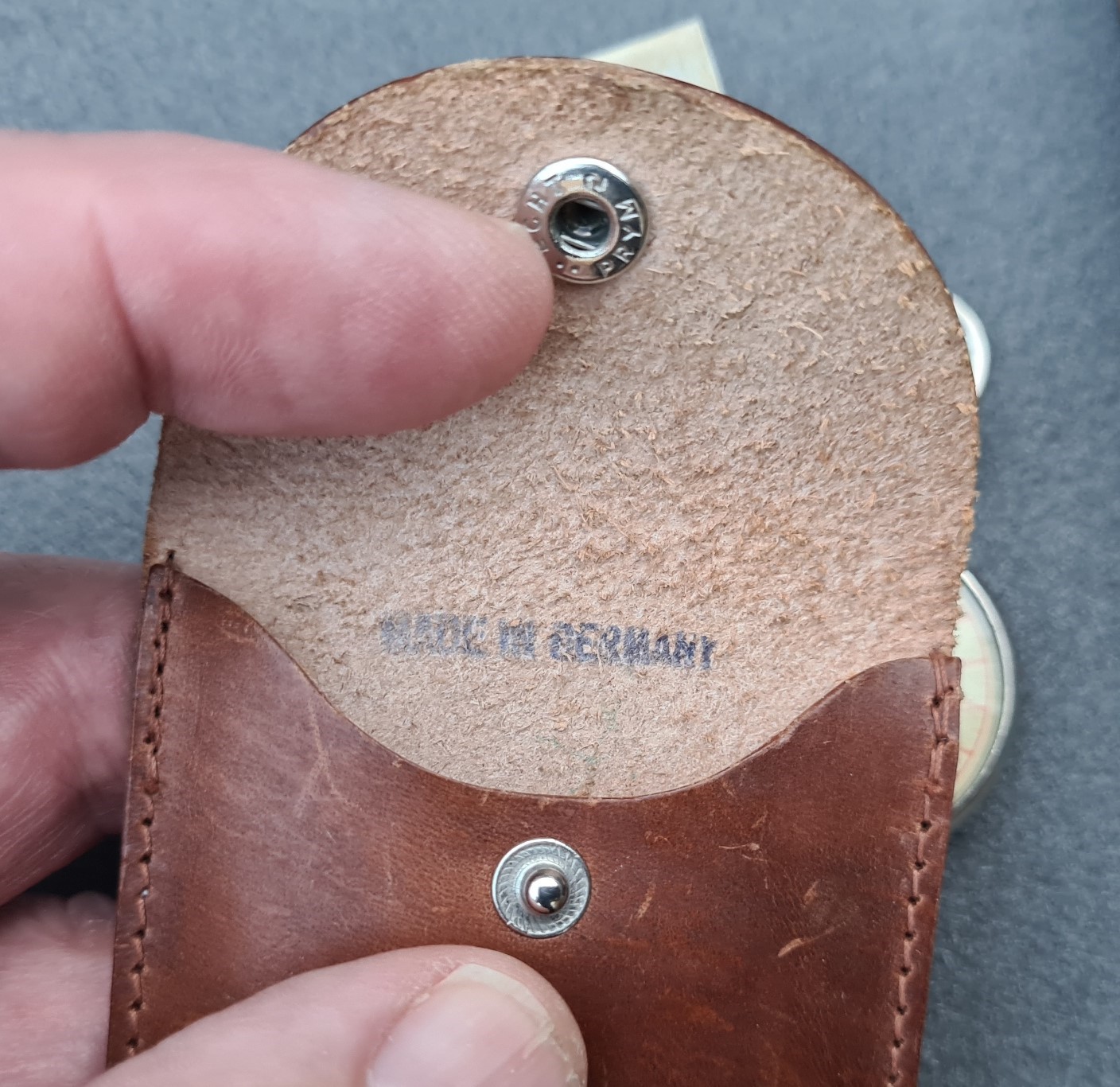
The country of origin is found in various formats on the parts that are purchased. “GERMANY” on the face of the compass, “Printed in Germany” on the instruction sheet, “GERMANY” on the spare leads holder, “MADE IN GERMANY” inside the leather case. Another example in my collection has these words embossed on to the rear of the leather pouch instead.
This is not amongst the finest of map measures to be found, nor is it the most useful. Nonetheless, it is an interesting variant. Three Points of the Compass has looked at a few more Map Measurers in detail, some of which are a great deal more practical and accurate. Links to these can be found here.

 Three Points of the Compass