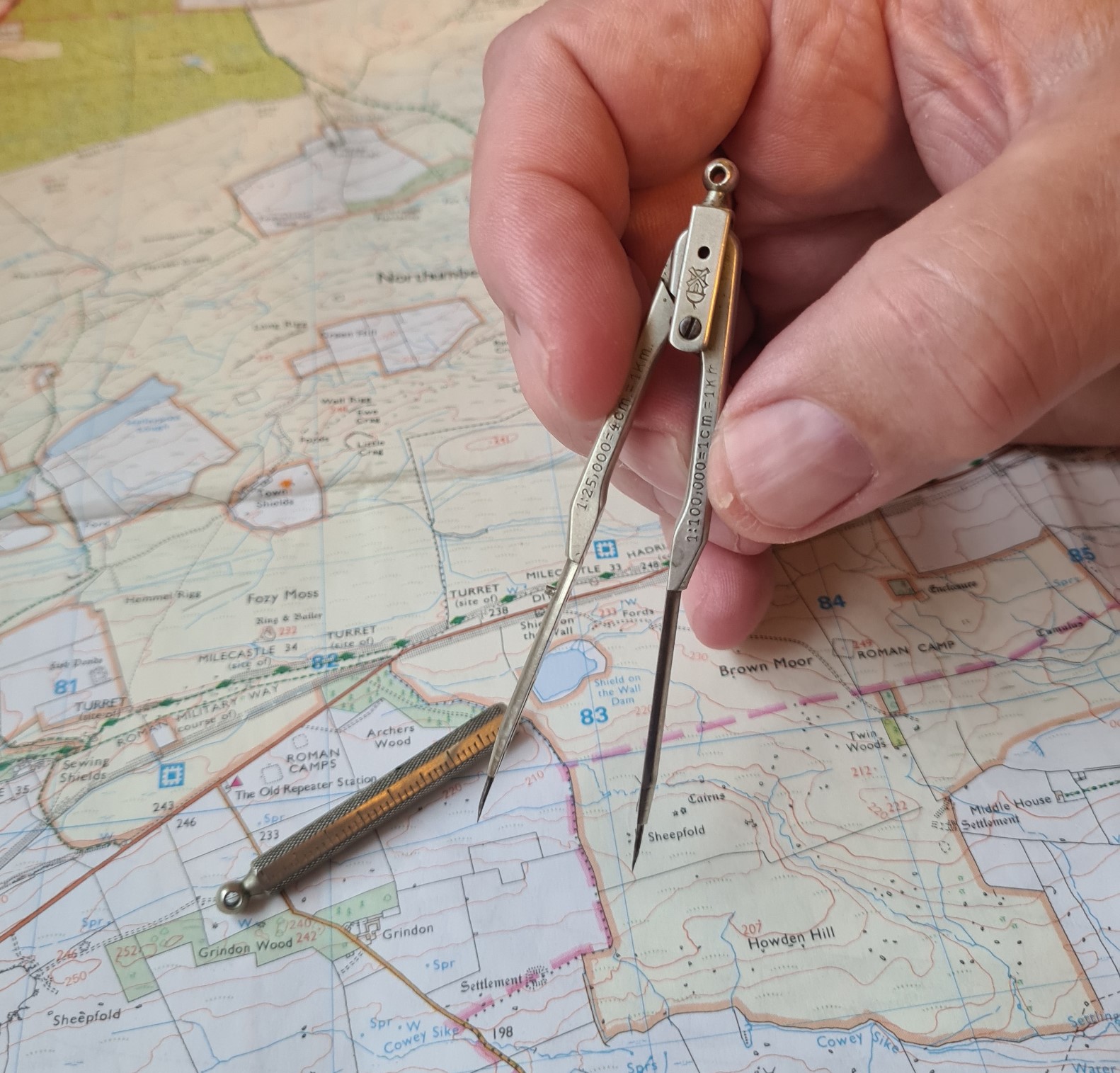
This month’s map measure is from a German firm that manufactured almost exclusively for one of the largest US importers of drawing and surveying instruments.
The firm advertised these as their “präzisions-taschenzirkel”, or precision pocket compass. “taschenzirkel” roughly translates as ‘pocket circle’, in other words, a compass. However this is perhaps a poor translation. This type of instrument is often referred to as a ‘compass’, but strictly speaking, a compass is normally used for drawing circles or arcs and has one pointed leg and a drawing leg. A divider is used for measuring, and transferring those measurements, and has two pointed legs. Our instrument has two pointed legs and is a divider. A primary but not sole use for dividers is in map reading and navigation. Navigation dividers have previously featured as map measure of the month.
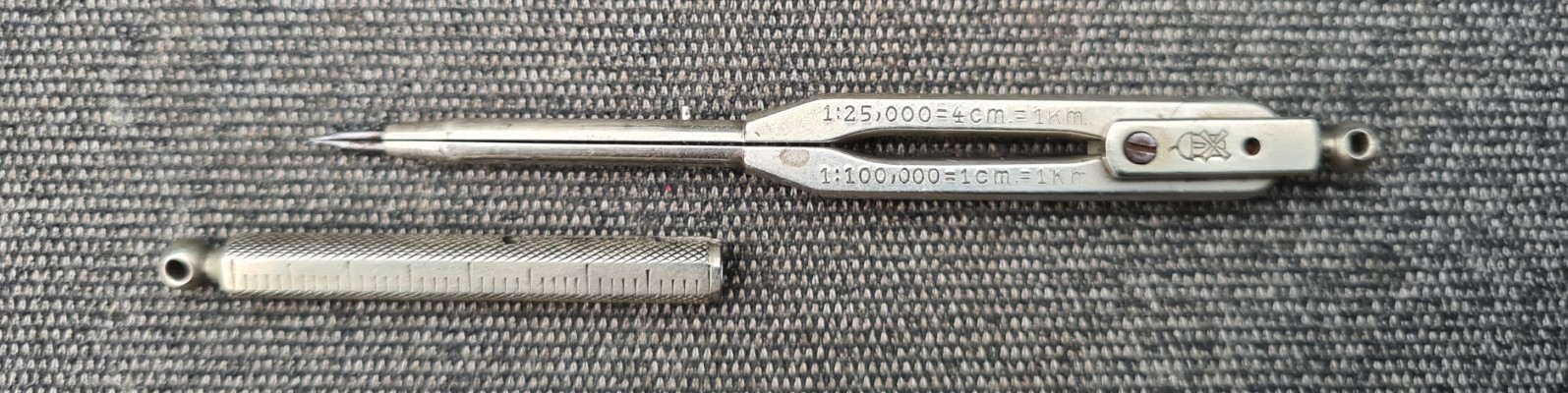
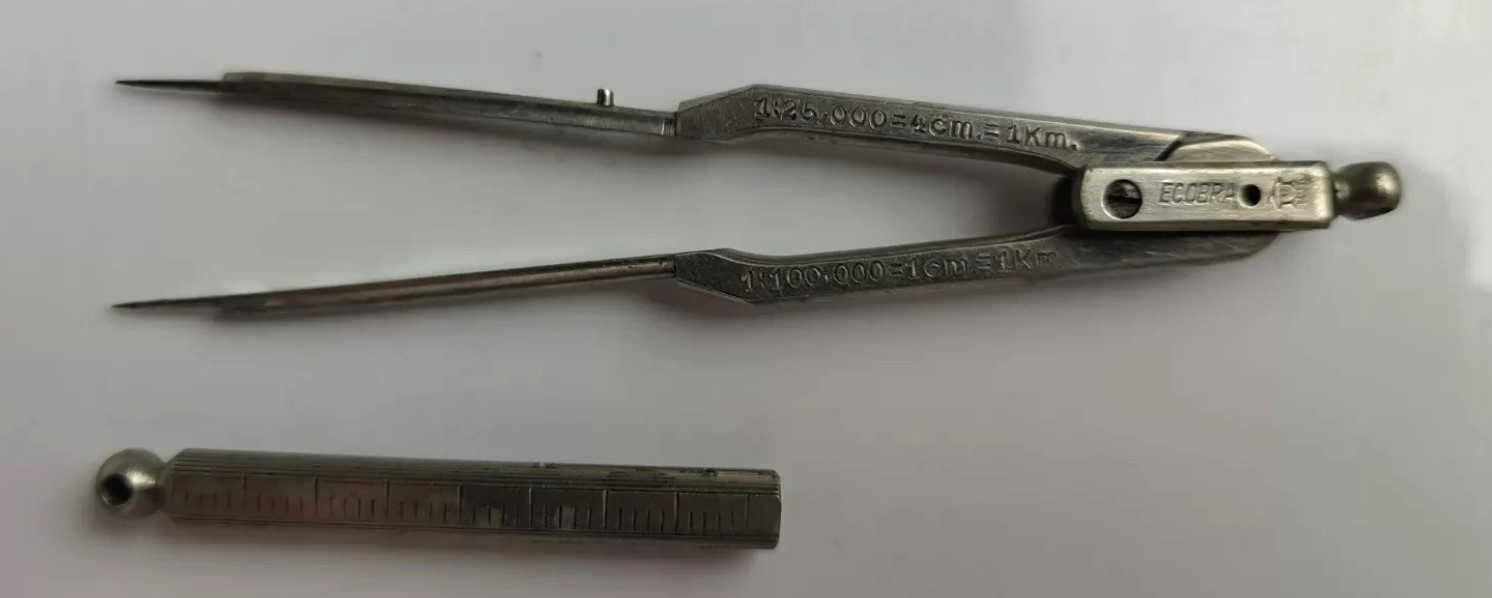
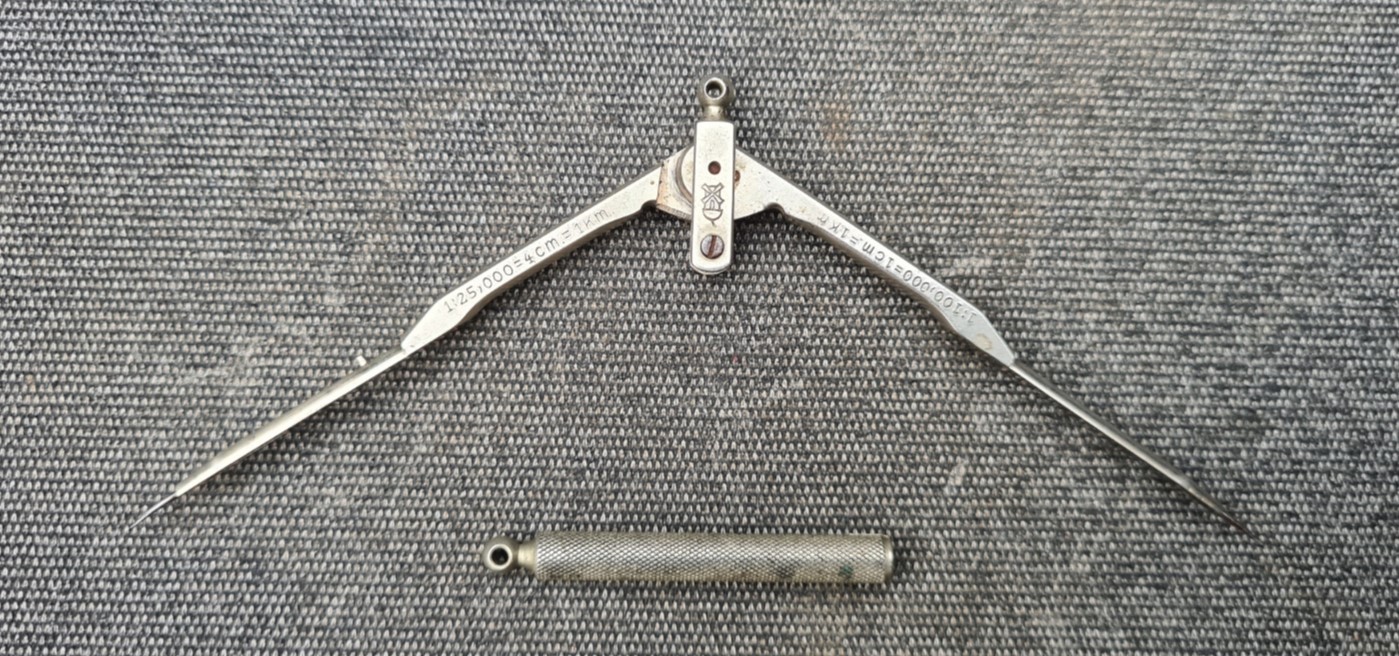
The all metal Ecobra dividers come in two parts. As the main dividers, and with a removable protective metal sheath, or cover, that both protects the points from damage (or the person using them) and has a short rule on the side. This clicks firmly into place when slid over the points and legs of the dividers. The steel points on the dividers could be replaced if damaged, but this would have been a factory job.
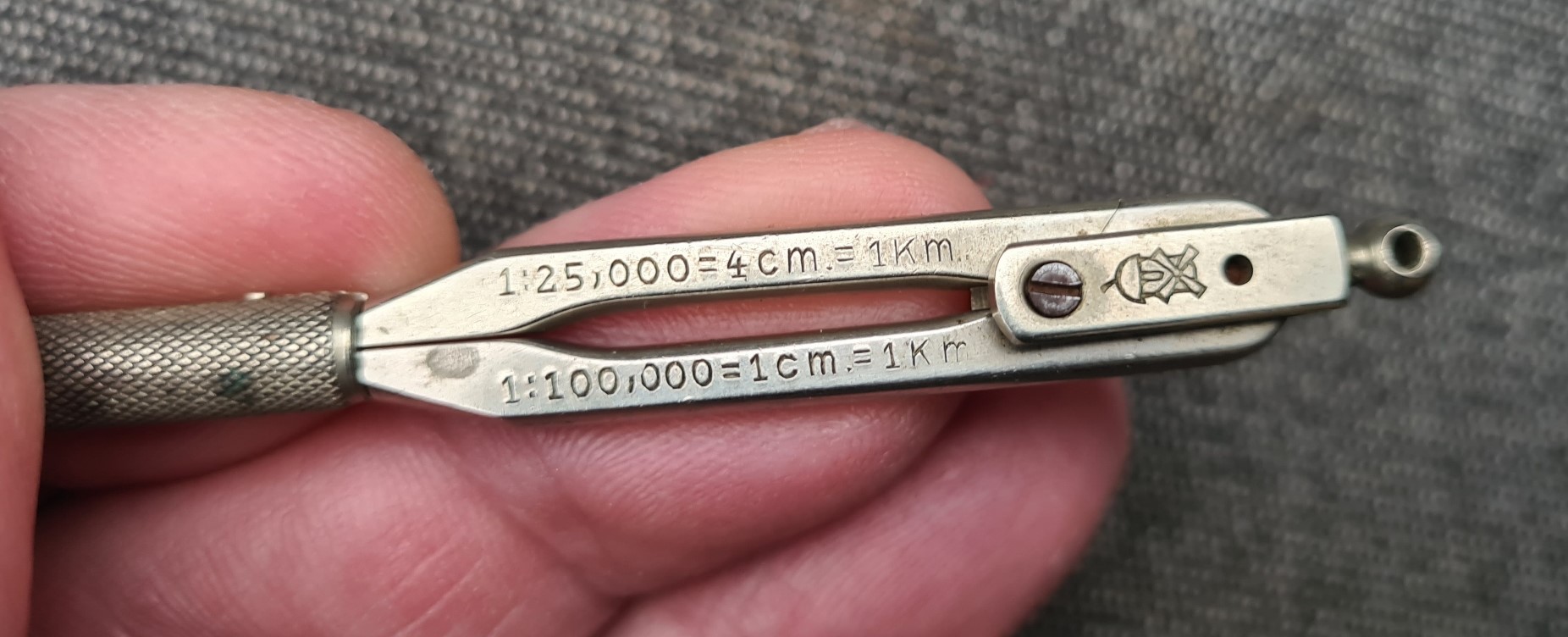
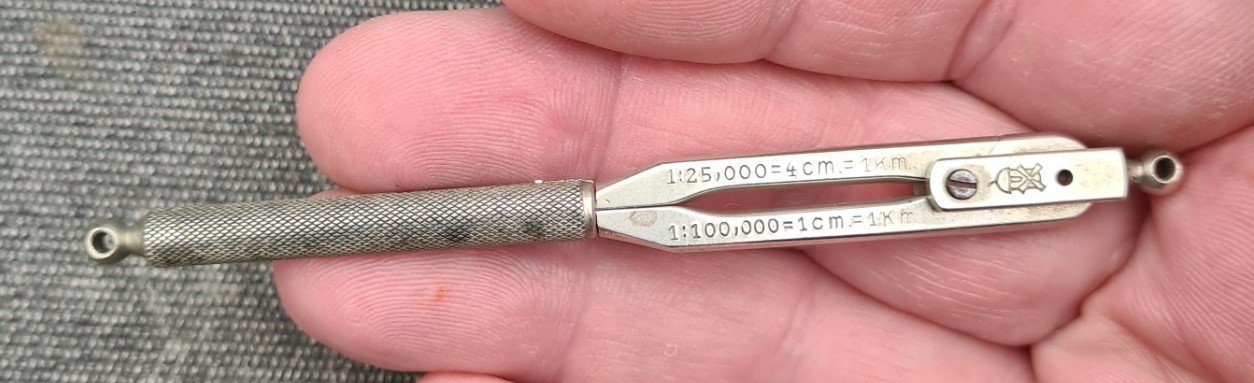
The knurled protective sheath has a 4 centimetre rule marked on one flattened side. If working to 1:25 000 scale, this would make a measured 4 centimetres equivalent to one kilometre. The rule also has 0.5 centimetre increments, which would be equal to 500 metres. Finally, each centimetre is divided into inter-increments, enabling 100 metre distances to be measured at 1:25 000 scale. Two common map scales are included on the side of the dividers. These read: “1:25,000=4cm.=1Km.” and “1:100,000=1cm.=1Km.” While there is sufficient friction to keep the dividers at a required degree of opening, the dividers can be locked by tightening the screw in the clamp socket.
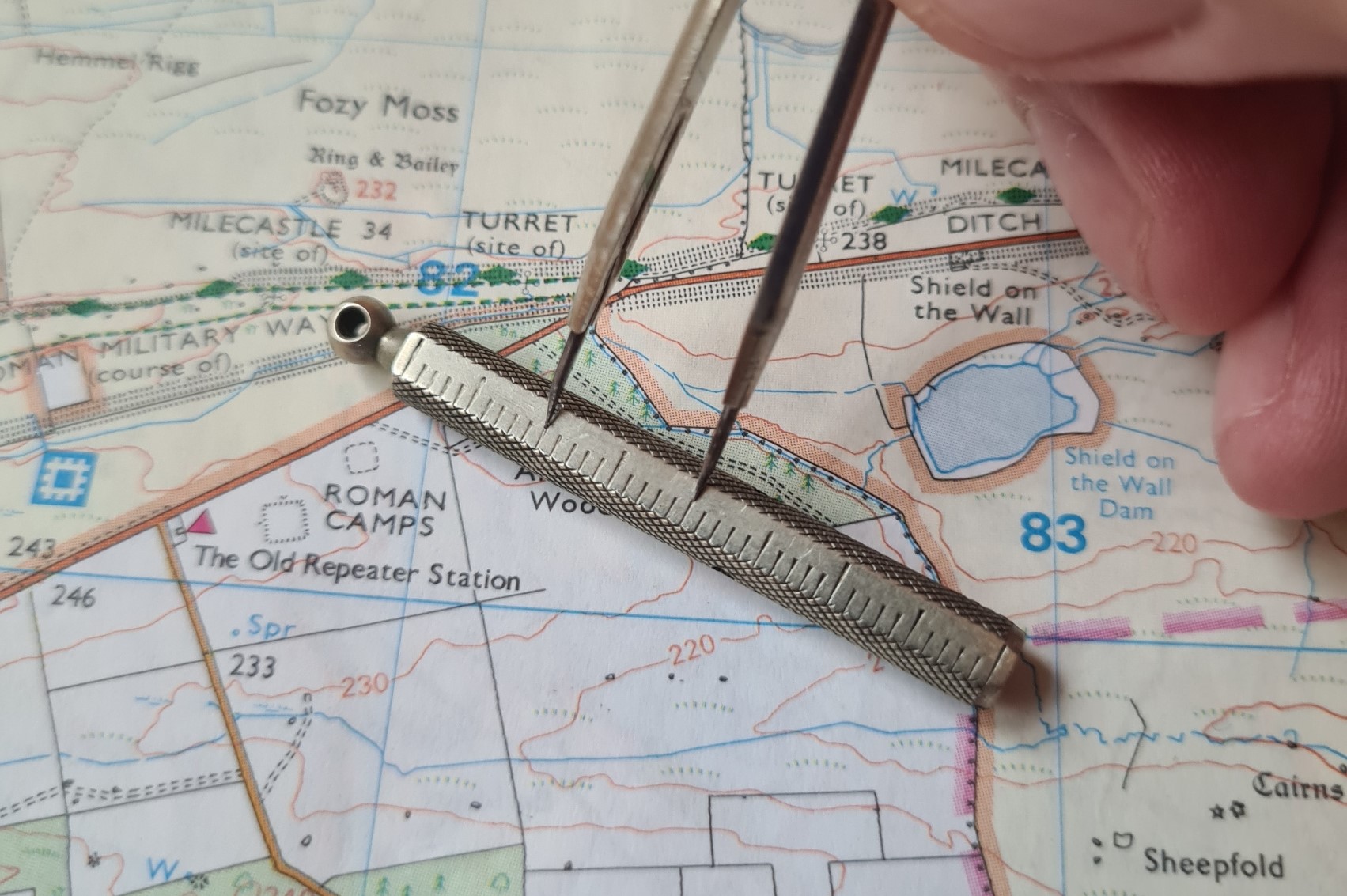
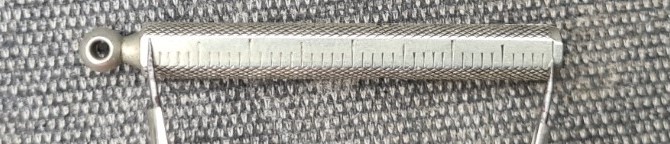
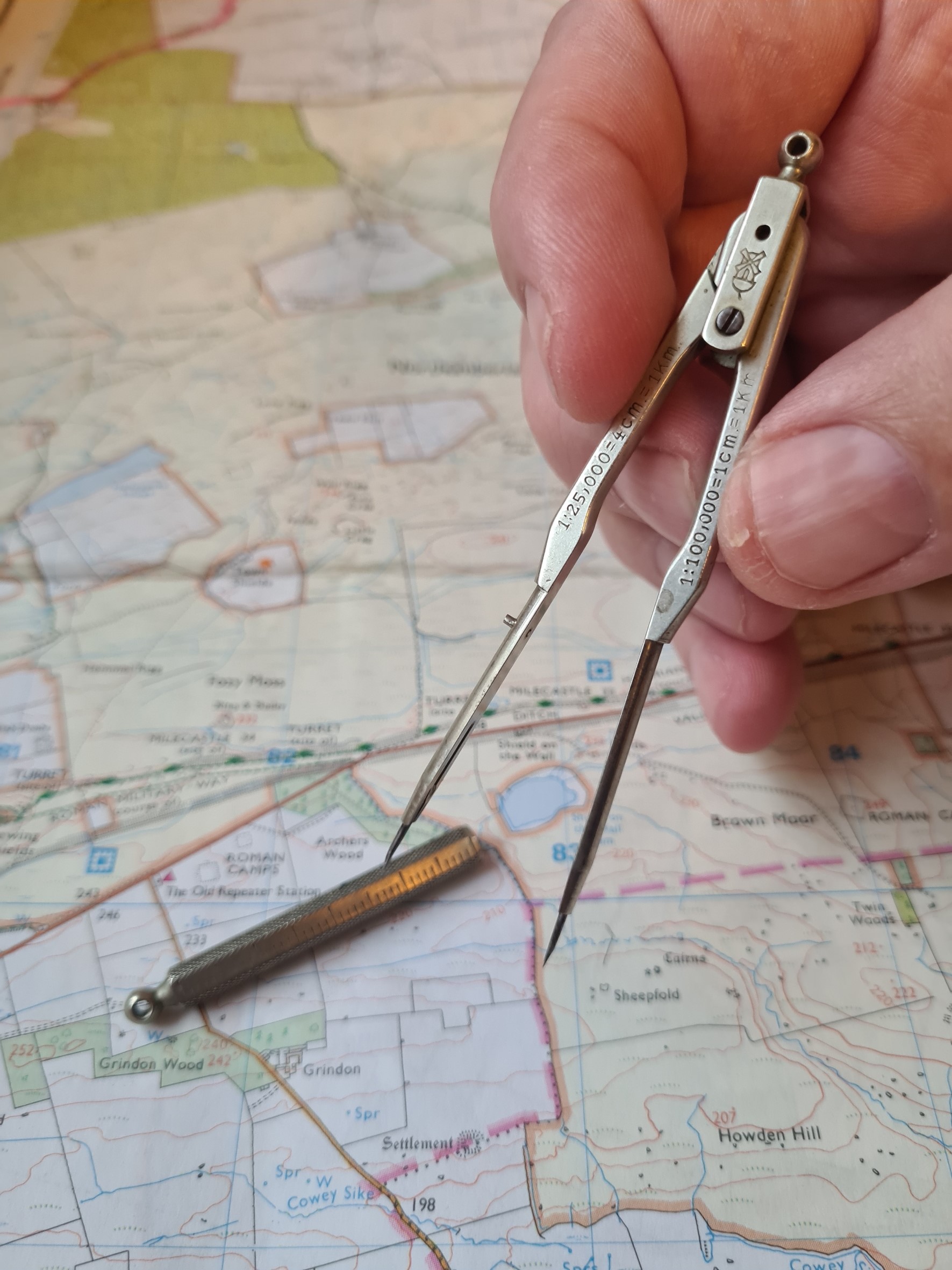
Both of the scales shown on the dividers would suit use with the most modern of maps from the Ordnance Survey, such as their Landranger (1:50 000) and Explorer (1:25 000) sheets. But many other scales could be easily interpolated. While some map scales might not directly lend themself to the metric system, the instrument can still be used as a simple set of dividers, set to a distance on a map, then used against the scale of the map, for example one inch to the mile.
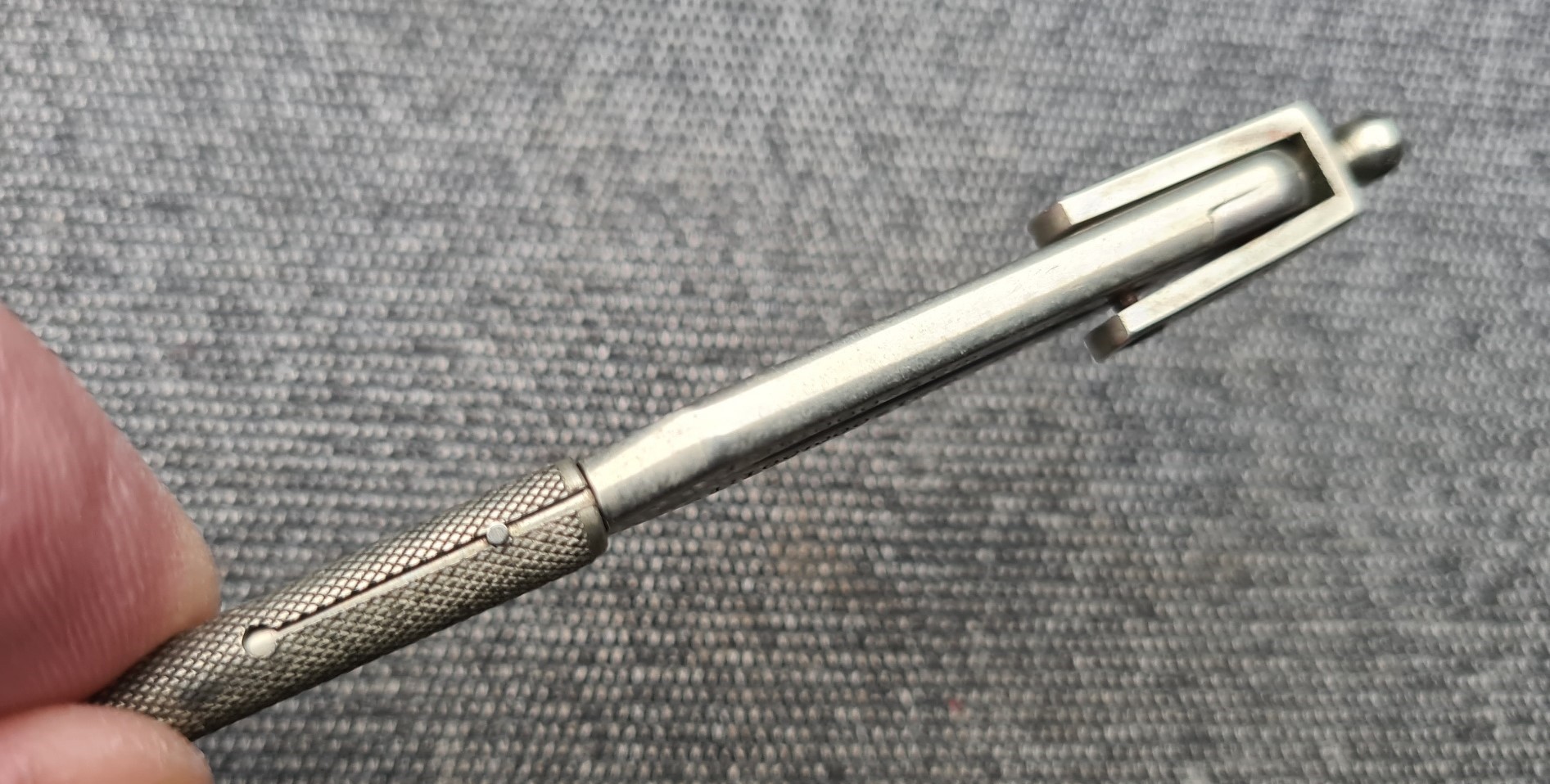
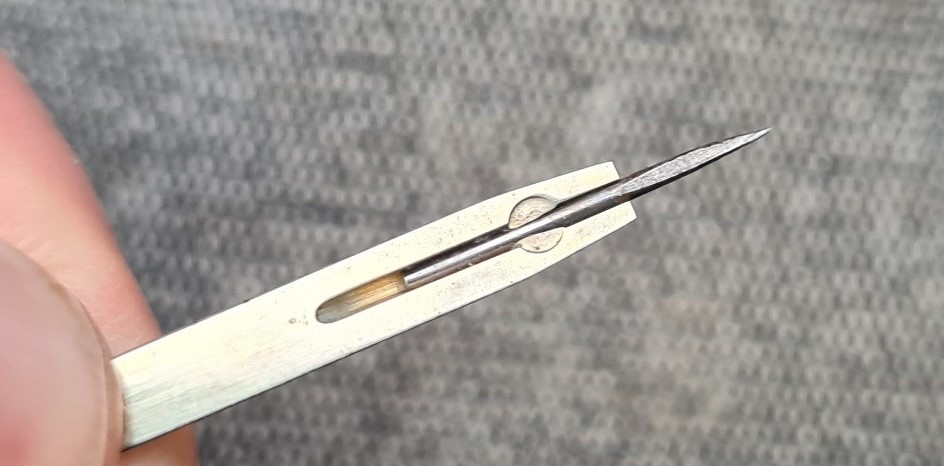
This is a small instrument. It is after all, intended as a pocket tool, that can be carried around. The dividers are 92mm in length, or 101.75mm with protective sheath installed. Dividers weigh 16.35g, or 20.8g with cover. There is a ball finial at each end of the instrument, one on the dividers, one on the sheath. Each has a small hole through it through which a thin cord could be passed. This could potentially enable the instrument to be hung around the neck, or enable the removed cover to be kept close to the dividers, helping prevent loss.
What would later become Ecobra was founded in Nuremberg, Germany by Johann Eichmüller in 1893. He created a small workshop where he initially manufactured steel bladed ruling pens and spring bows. The business grew and their products were supplied to several companies. In 1901 Eichmüller had a meeting with Philipp Rögner, a drawing tool maker engaged as the purchasing agent for US instrument manufacturer and importer, Eugene Dietzgen & Co. of Chicago. Dietzgen advertised a vast range of papers, drawing and surveying instruments, and drawing office furniture in their catalogues, many, but not all, imported from around the world. Eichmüller now began producing his wide range of good quality instruments almost exclusively for Dietzgen.
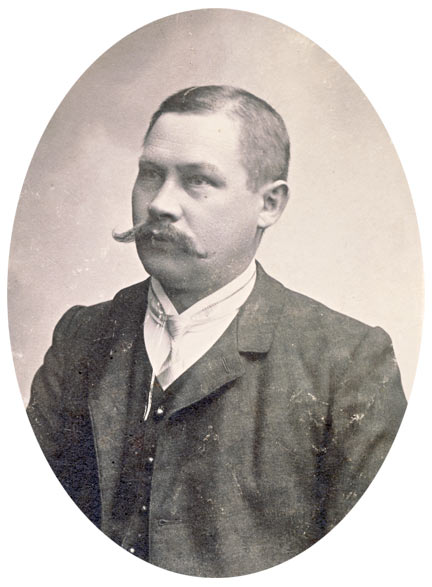
It is probably noteworthy that prior to 1900, Dietzgen had been importing goods from German company Friedrich Gysi. where Johann Eichmüller had previously trained as a drawing tool maker. In 1905 Eichmüller went into partnership with Rögner and his business was renamed Reißzeugfabrik Eichmüller & Co. Johann Eichmüller died in 1908 and Joseph Dietzgen took control of the business the following year. In 1922 the company was incorporated under the name Bayerische Reißzeugfabrik.
In the 1920s the company began to use the ECOBRA trademark, registered 15 April 1924. This was derived from the company’s initials Eichmüller & Co. Bayerische Reißzeugfabrik Aktiengesellschaft. Aktiengesellschaft is usually abbreviated to A.G. and is a German word for a corporation limited by share ownership. During both World Wars, US company Dietzgen concentrated on goods for US needs while Germany company Eichmüller manufactured for their own country’s requirements. Afterward, Dietzgen resumed distribution of the, often rebranded, Eichmüller/Ecobra manufactured drawing and surveying instruments.
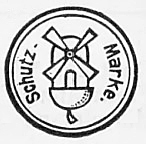
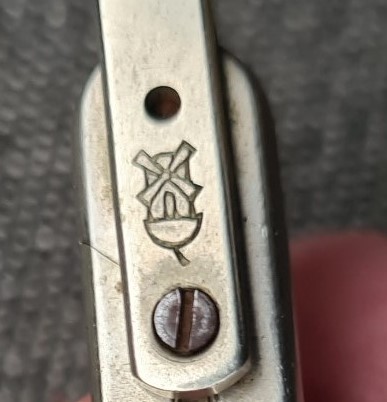
While the Ecobra brand name is not shown on my instrument, it does have their distinctive logo. This depicts a windmill and acorn. The name Eichmüller literally translates as ‘acorn miller’. I have seen a similar measure on an online auction site that had both logo and trademark name, shown below.
The dividers are not confined to use with just the short four centimetre scale shown on the side of the protective sheath. That could potentially be lost anyway. Any centimetre scale could be used; a ruler, or the scale usually included on any good quality map.
This instrument is carefully made, is simple in construction and still performs much as it did when new. It could easily be pulled in to service. The Rumold & Ecobra company are still active, manufacturing office, school and drawing supplies, presentation materials, optics, navigation and writing instruments. Sadly, but understandably, they produce nothing like the little navigation measure shown here as the days of such analogue tools are long gone. Three Points of the Compass has looked at quite a few equally as obsolete map measurers in detail. Links to these can be found here.

 Three Points of the Compass