
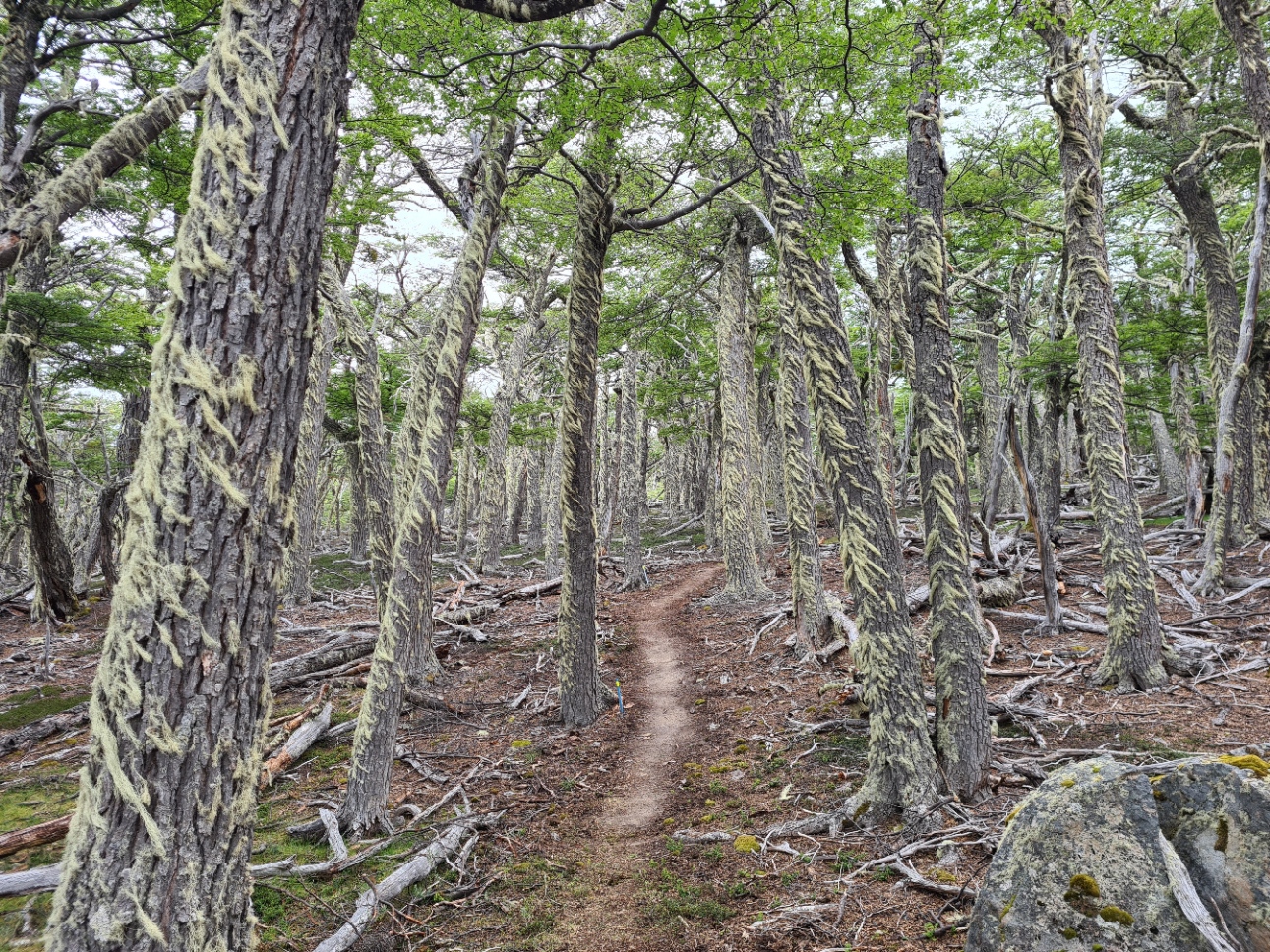
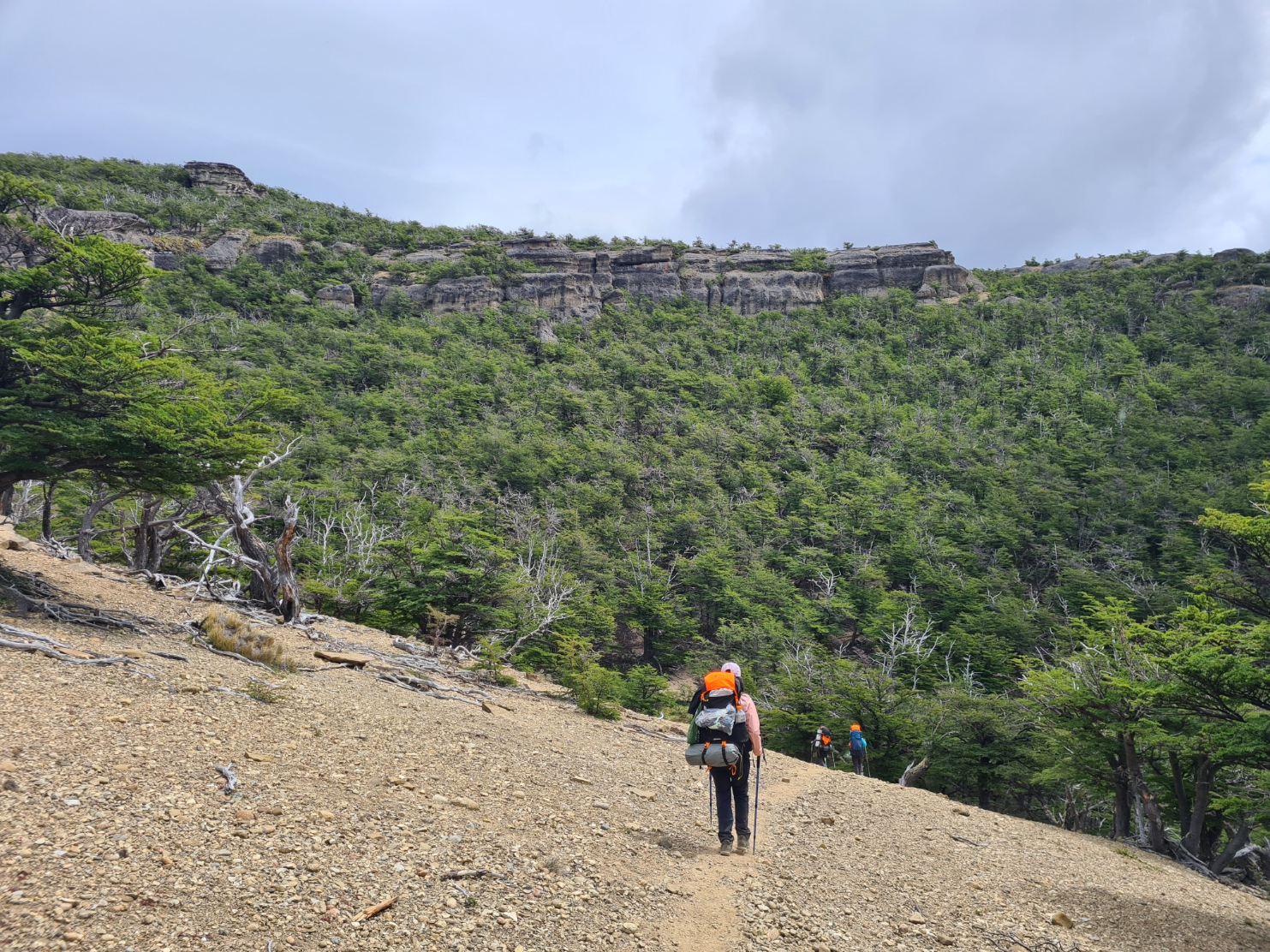
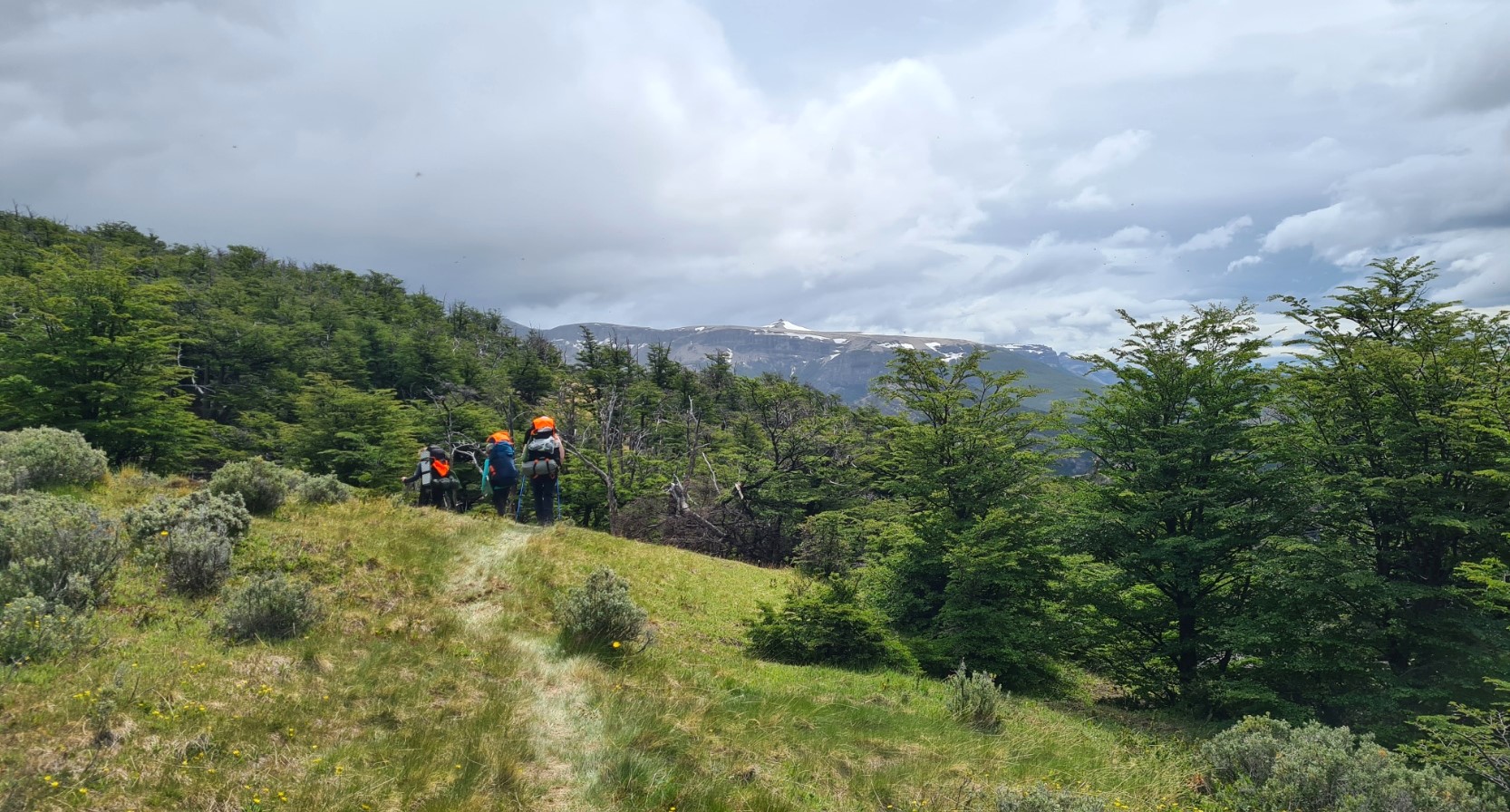
Three Points of the Compass strides out on the first of four days on the Fjällräven Classic Chile 2024. Much of the day was spent amongst the trees, with distant mountains only occasionally slipping in to view.
- Fjällräven Classic Chile 2024: check-in
- Fjällräven Classic Chile 2024- Day 2 ‘The Mountain day’
- Fjällräven Classic Chile 2024- Day 3 ‘The Lakes day’
- Fjällräven Classic Chile 2024- Day 4 ‘The Torres del Paine day’
Day 1 ‘The Forest day’:
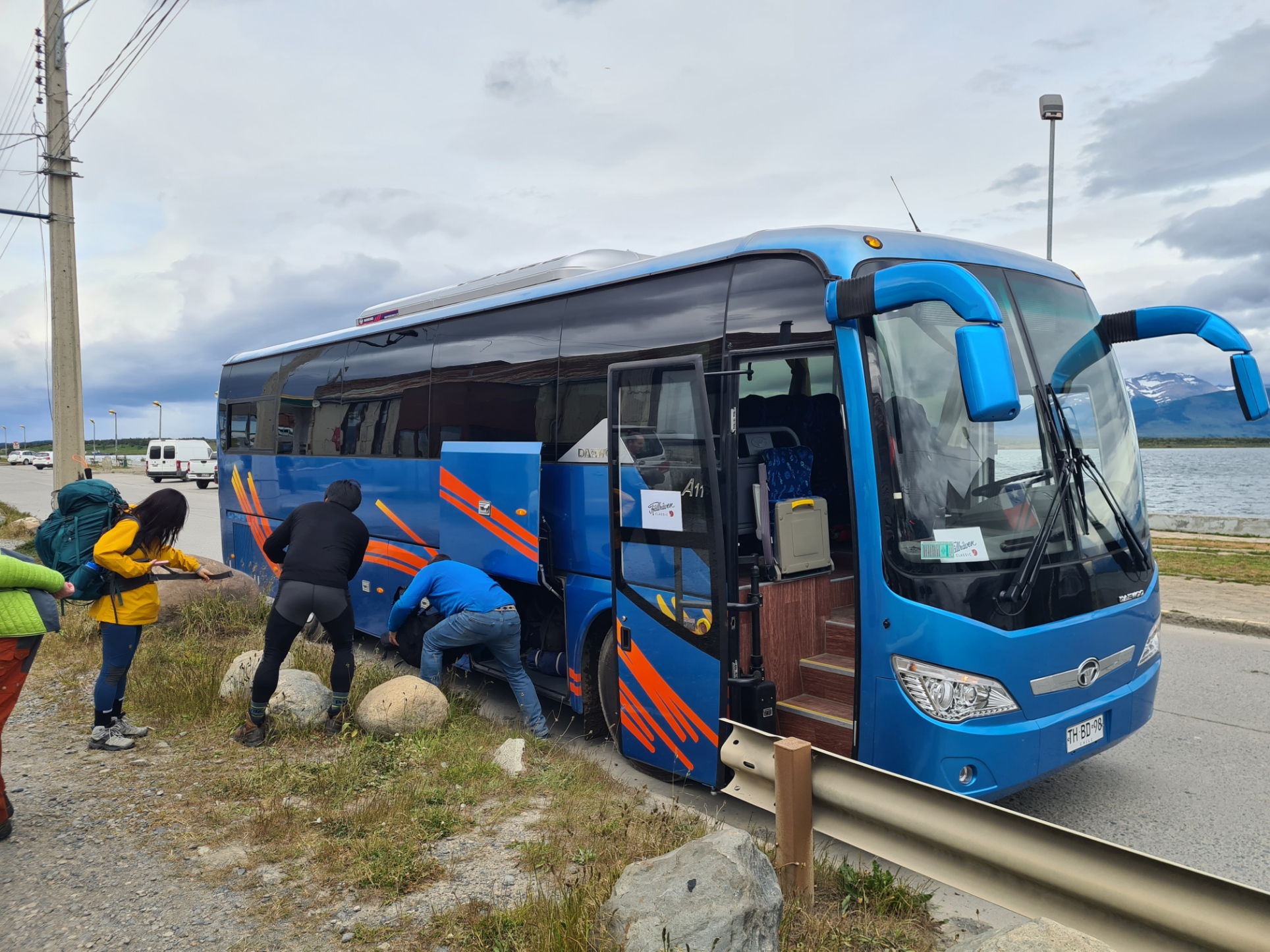
Despite being a B&B Hostel, I never did discover the second B, and breakfast-less, left the accommodation at eight in the morning, for the ten minute walk back through town, down to the coastal road to the large shed-like El Galpón, where I had checked in yesterday. I was a little surprised to find only staff and volunteers inside and I was the first hiker arriving for the later start group. The previous starters had left some time earlier, but other hikers in my start group began to arrive within a few minutes. There was soon a quiet buzz of excitement amongst the dozen or so that gathered. I had a coffee and croissant from the little pop-up café and also purchased a ham and cheese toastie, asking them to wrap it up. This would be tomorrows breakfast. Then I joined a short queue to leave my unrequired luggage at the bag drop. I was surprised at the large suitcases many were leaving here and for some reason felt somewhat self-conscious when I handed over my limp cargo bag with its meagre contents, that had encapsulated my pack on the flights out, in which I now left a set of ‘town clothes’ and map and guide book for a hike I hoped to complete after the Classic. I hadn’t felt the need to bring anything else with me to Chile. After a few minutes, during which I took the opportunity to use the w/c, I went outside to wait for the shuttle bus that would take our small group to the start point at Dos Lagunas. This is around 30 minutes from Puerto Natales.
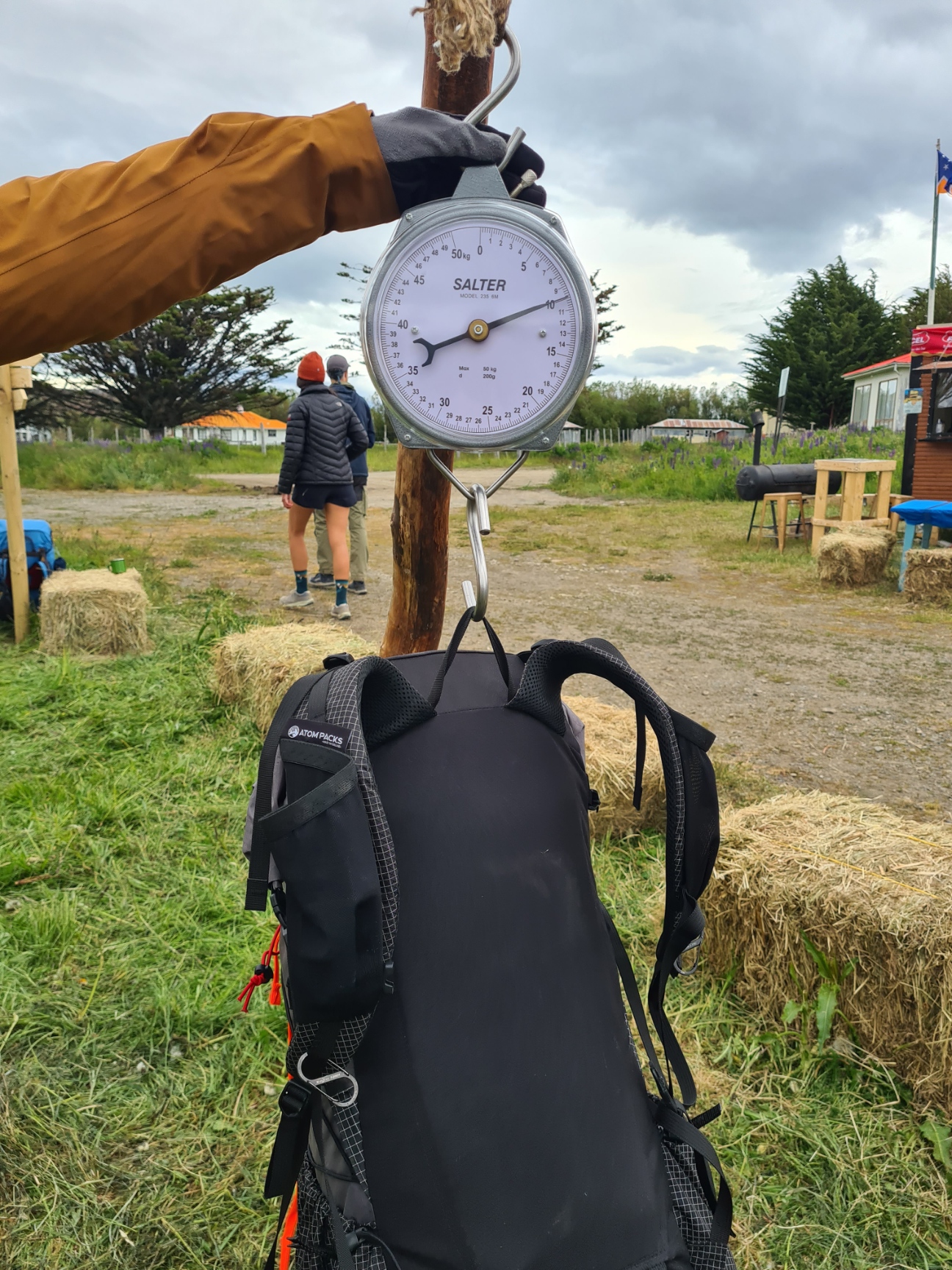
At Dos Lagunas, there was opportunity to weigh a backpack. I had planned carefully for this hike and with two days of food, a couple of litres of water, my pack totalled 10kg. I asked the chap with the clipboard what had been the heaviest and wasn’t too surprised to hear 23kg. What is compulsory at the start point though, is obtaining a first stamp in the Trekking Passport and ensuring a square of bright orange safety material is attached to the backpack. It didn’t take long to do any of this and we all seemed to be simply milling around, just waiting for someone to say “go“. It was now within the time-window for our start group so I asked one of the organisers in what direction to set off, he pointed the way and I walked off, leaving everyone behind. I think I might have missed some sort of official send-off, but there was a bit of a lack of clarity about the start. It meant nothing however and it was only a few minutes before the first speedier hikers I had left in the paddock, swiftly caught up and passed me.
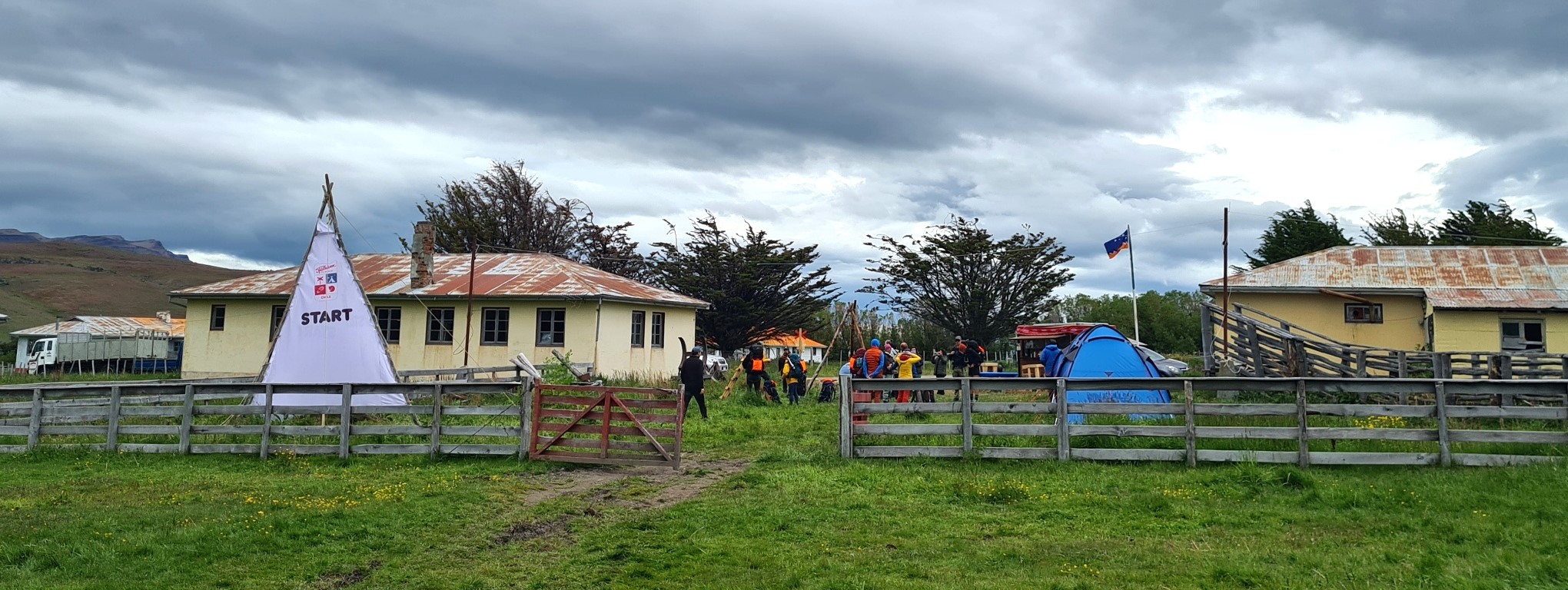
The buildings disappeared from view as we all slowly climbed into sparse forestry. It remained a steady climb, following Rio Rivas. I paced myself at my usual ‘conquers all… eventually‘ gait, and every single soul slowly reeled me in and over-took me. The small groups of chatting two, threes, four or more moved ahead, disappeared from view and the trail would grow quiet. I quite enjoyed the solitude. I paused, froze, a movement below. A small deer was slowly approaching me, up the slope down to my right. It hadn’t seen me, hadn’t heard me. It neared and I held my breathe. It abruptly stopped, turned, ran and disappeared from view. It had been startled by Harrold, the Fjällräven ‘sweeper’ walking up the trail behind me. I’ll never know what it had been. Possibly Southern Pudo, the world’s smallest deer species, or even the extremely rare Huemul. It was the only deer I would see in Chile.
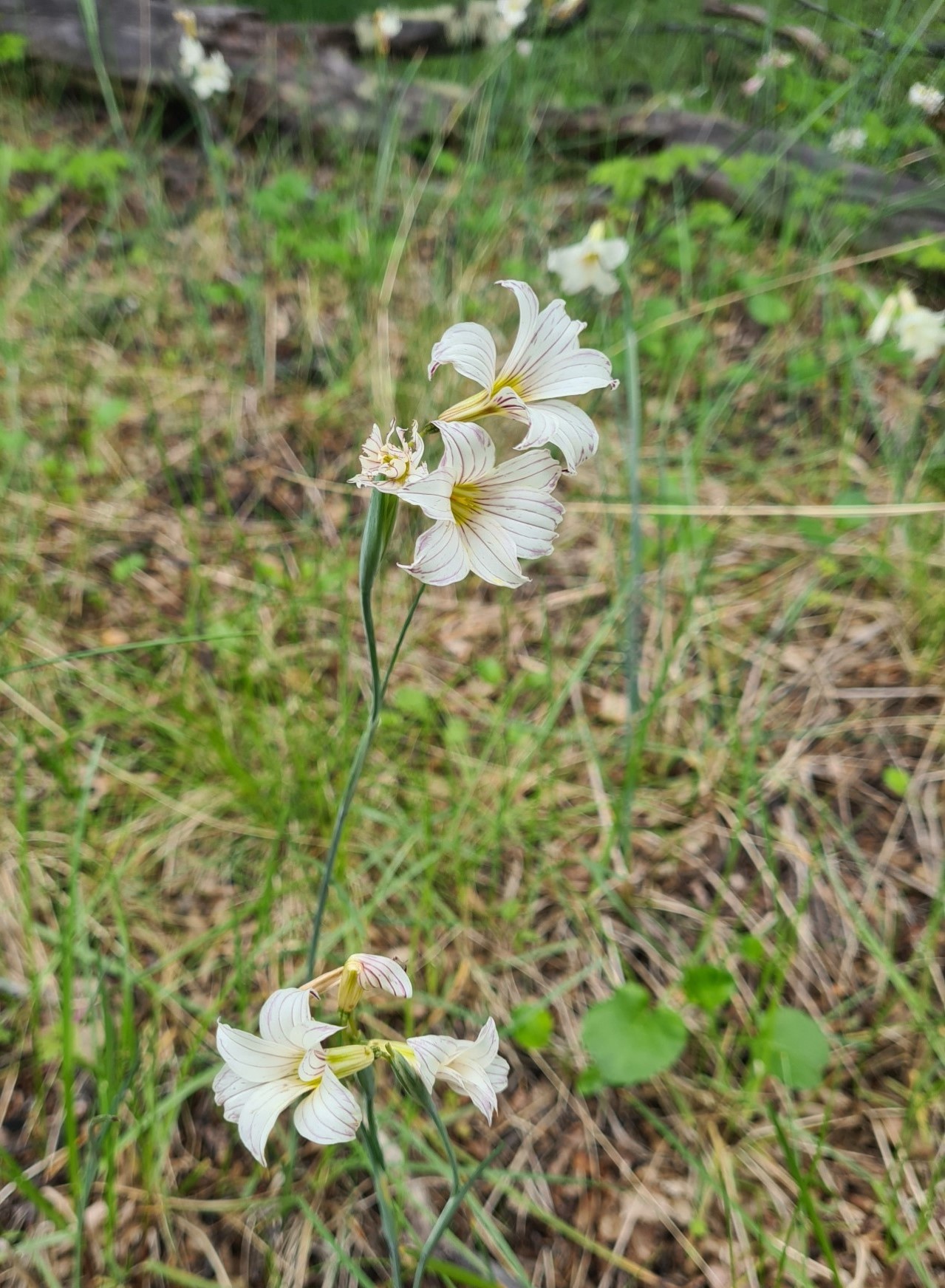
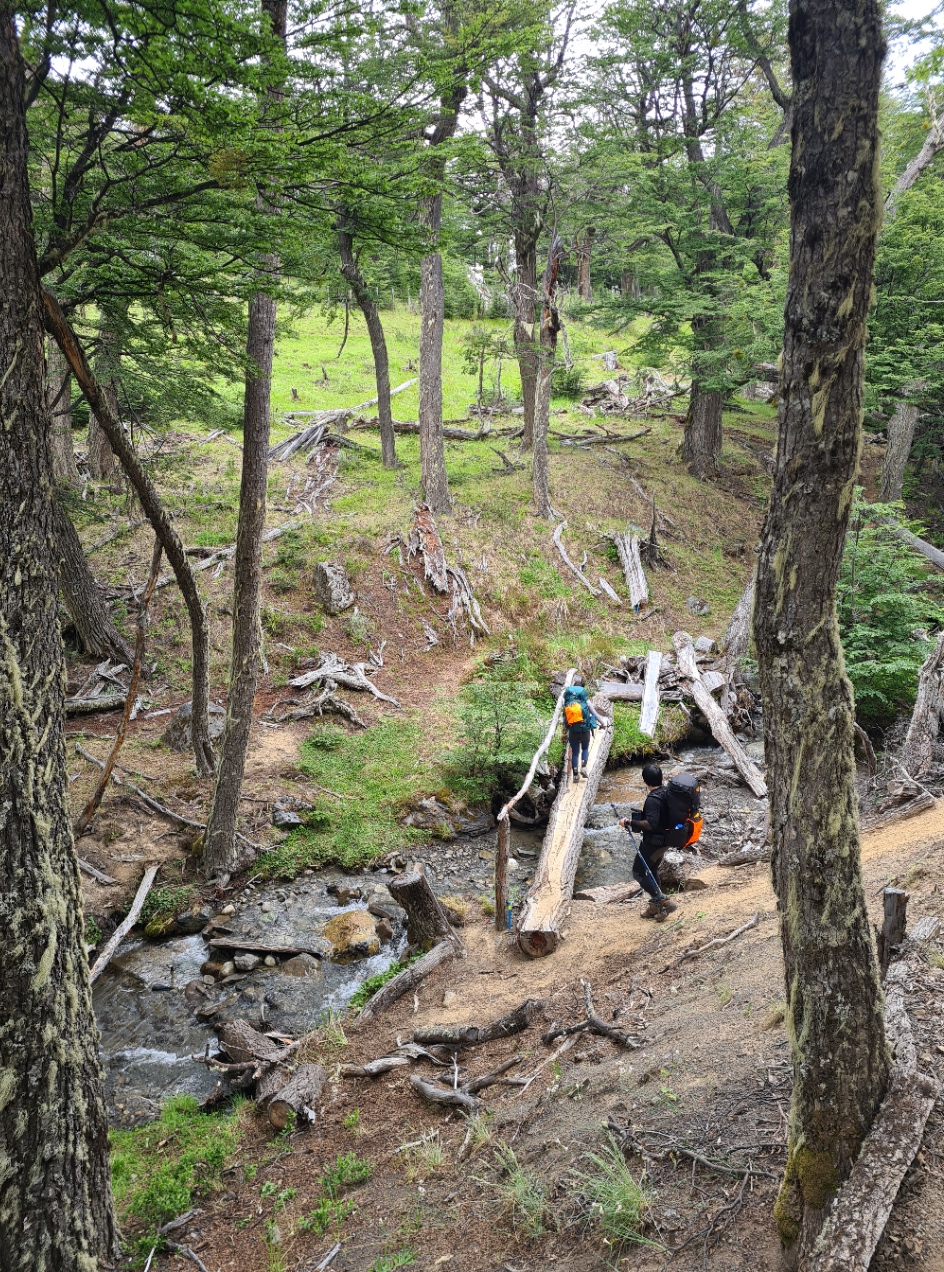
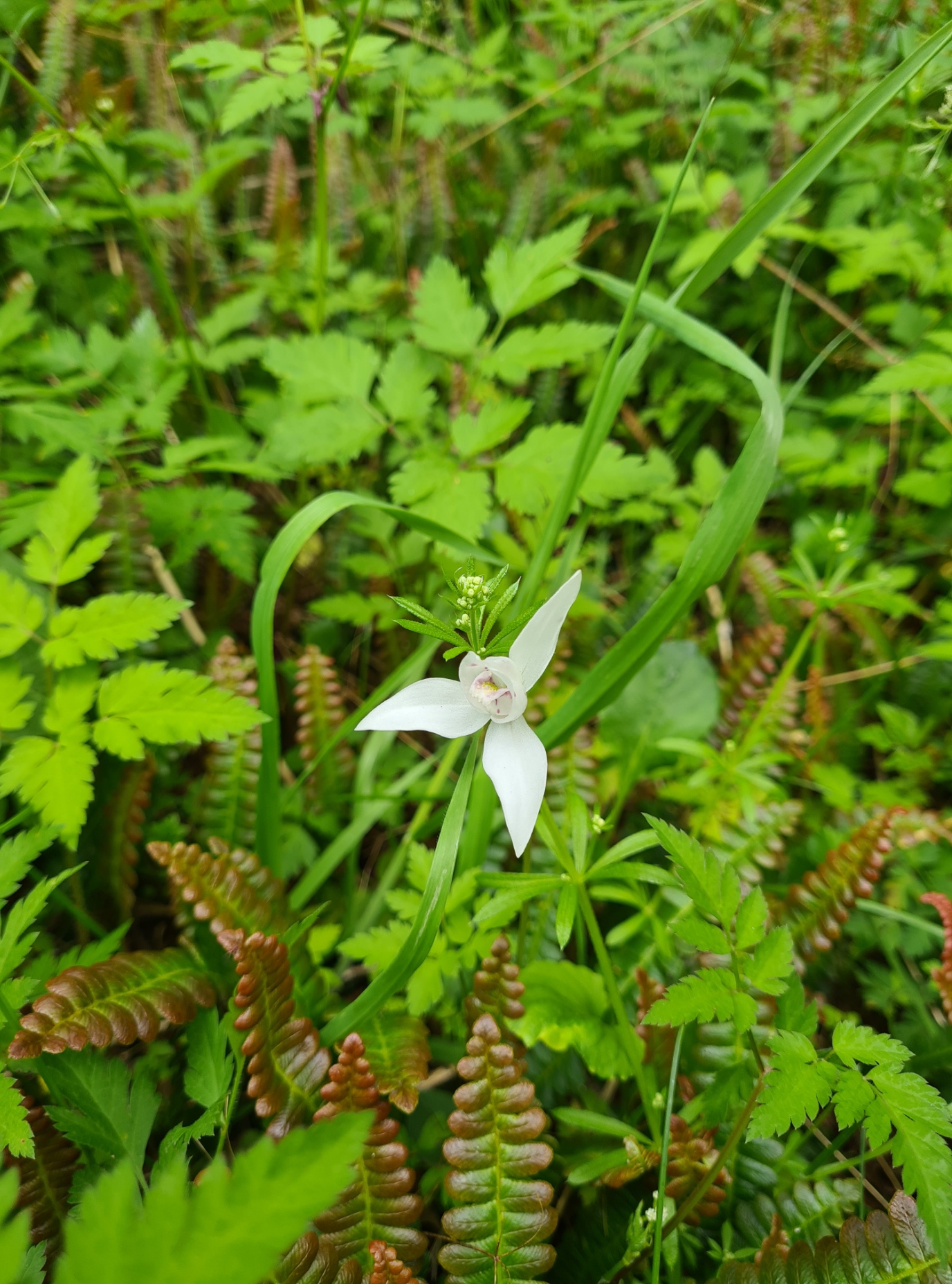
The climb became steeper and wound left, right, left, right, left and up. I began to catch and pass some of those that swept past me earlier as they paused for breaks, to adjust packs, or inspect feet. On just a couple of occasions the forest opened up, giving views across to snow dotted tops. Cerro Mocho was the first checkpoint, reached after 5.3km. The group of three volunteers at this checkpoint were by far the most enthusiastic of them all, and I always recognised them at subsequent checkpoints over the coming days as they leapfrogged their way along. Lots of enthusiastic cheers, and blowing of whistles as hikers came into view. One of their number was keen to teach something of the culture behind mate, and allow anyone that wanted to, to sample this caffeine rich herbal tea from his favourite gourd (also called a mate), with its distinctive bombilla, a silver straw. It is the social aspect and sharing of this drink that is central to its culture.
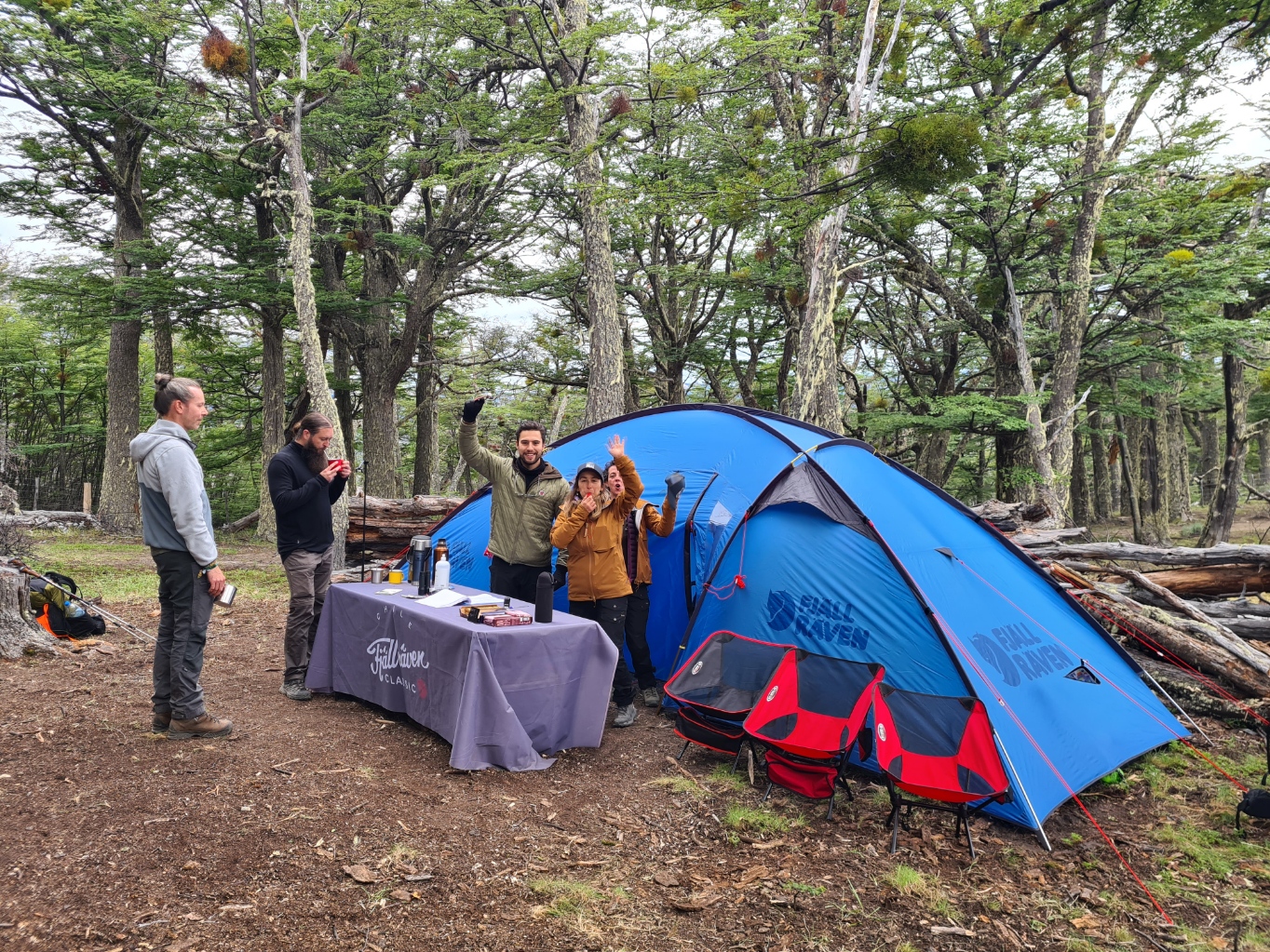
I keep a journal on most of my multi-day walks. This will eventually be my memory jolt and recourse when I am old, knackered and doolally tap, incapable of completing longer hikes. I asked each checkpoint to also stamp my journal in addition to the necessary application to the official trekking passport. After which, I was given a tasty blueberry bar. Most of the checkpoints have a treat of some sort. Dropping my pack, I took this and my bottle of water to the nearby mirador. Both consumed while enjoying the wide view from the clearing. Harrold had left me a couple of km back, to walk in with hikers that I had passed, but now came in, and he joined me at the viewpoint for a chat. He is a product-development manager for Fjällräven and was carrying a prototype, large capacity backpack. Of particularly lightweight construction, it was a bit of a diversion for Fjällräven, who normally produce heavier and more robust gear..
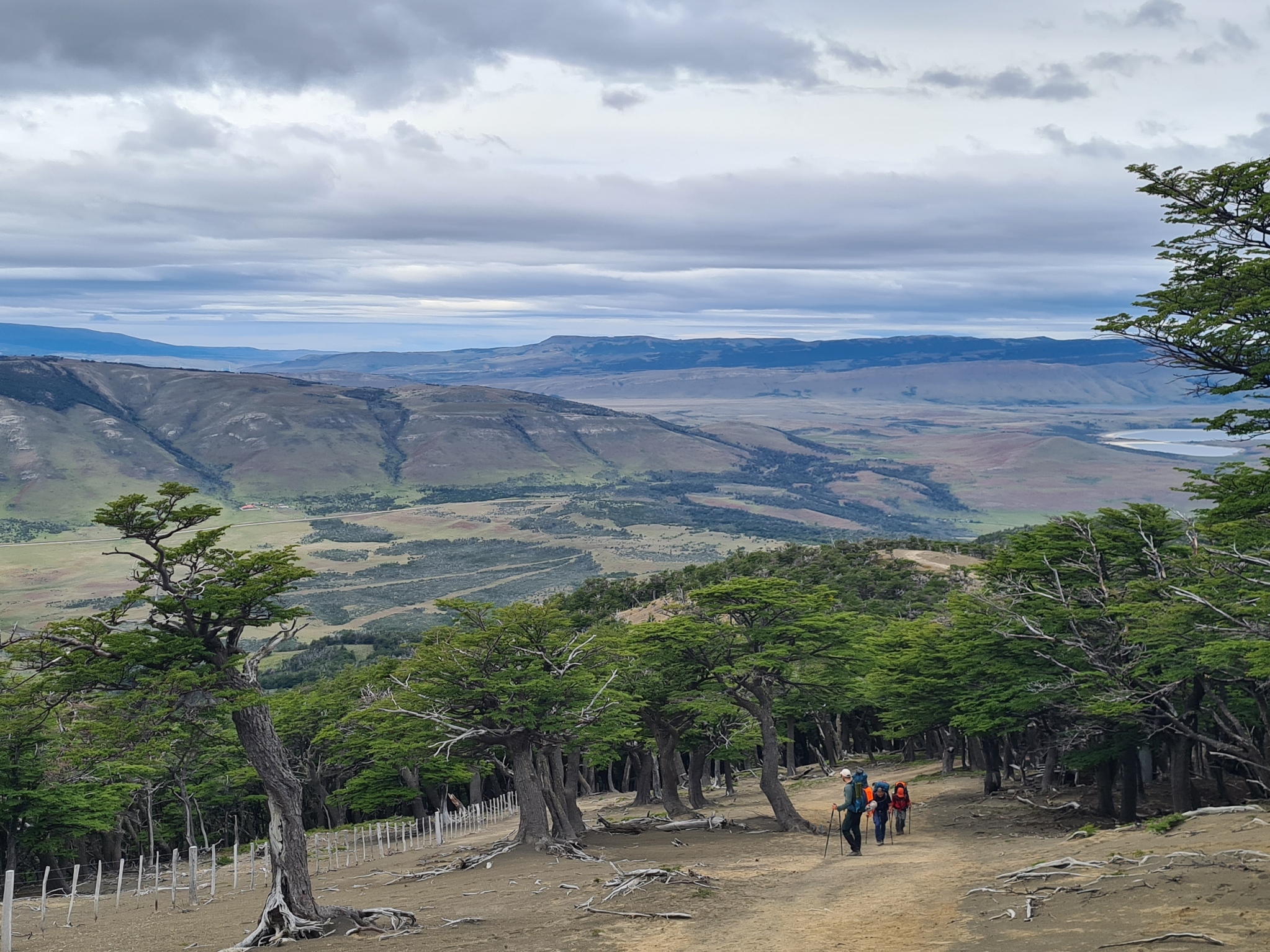
I didn’t spend much time there, and left him and a dozen or so other hikers to go and rejoin the trail. Some hikers were stopping at the checkpoint for an early lunch, but it was a bit early for me and I had my mind on another location. It wasn’t long after this check point that the trees thinned and I came to a longer and steepish climb. I simply slowed down and trudged up the wide sandy path, finding it not particularly challenging and enjoyed the views, especially behind me, as they opened up. Other hikers seemed to tackle it in alternative manner, heads down and powering up with much panache, which probably explained the collapsed groups of hikers and their exclamations at the breezy top- “a killer“…”wow, that was tough“. Hmm, I’ll stick to my sure and steady method thanks. At 823m and above the treeline, this is the highest point on the entire Fjällräven Classic.
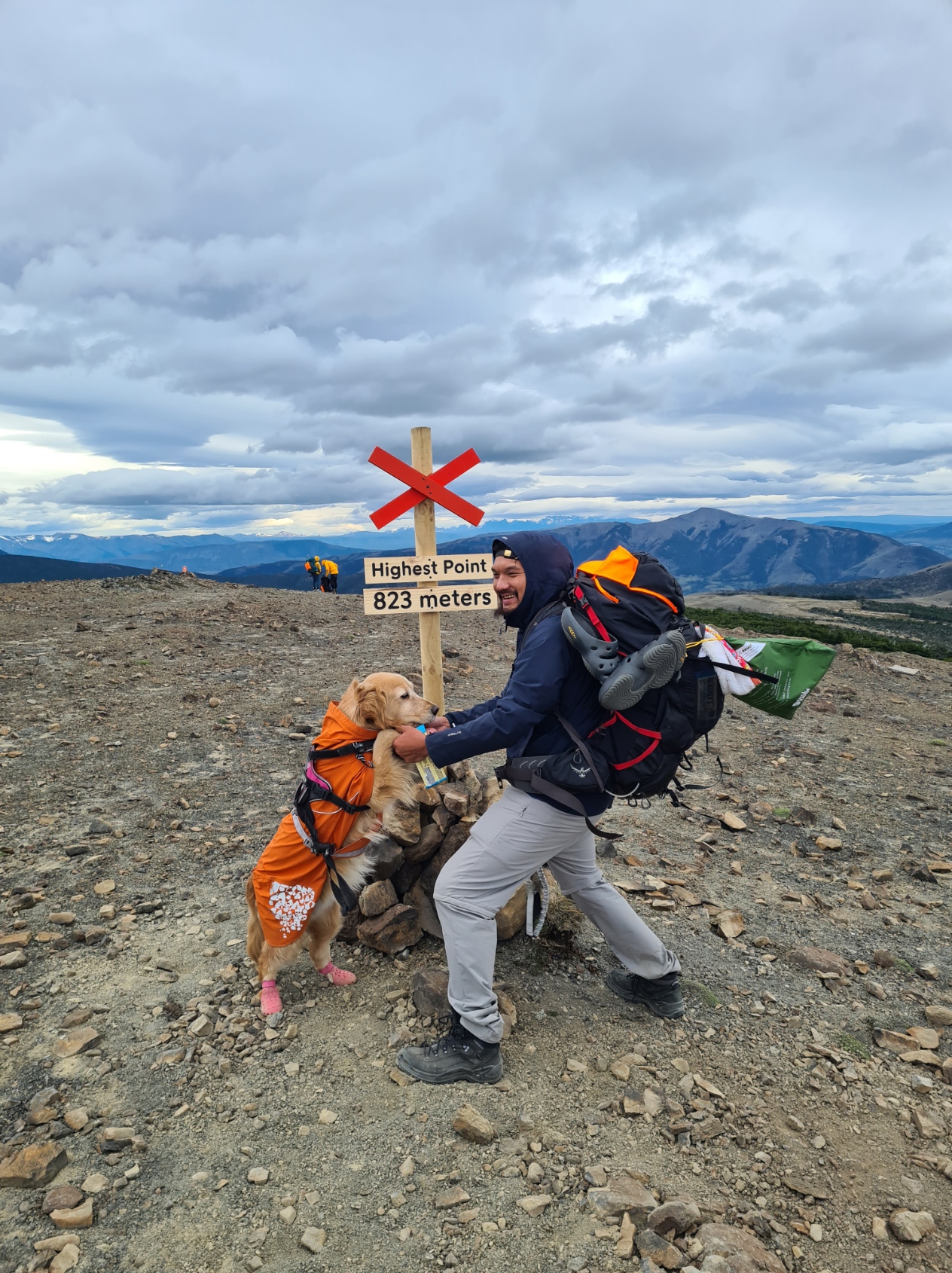
One Korean hiker was posing for pictures with his dog, the latter wearing pink shoes. I was slightly mystified as the rules for the hike strictly stipulate ‘no dogs’, but the owner was wearing the official orange patch on his pack. Much of the Classic crosses the private farmland of Estancia Cerro Guido. At 100,000 hectares (1000 square km), it is the largest farm in the area. Other than that, all I know is that this was the last day I saw the two of them.
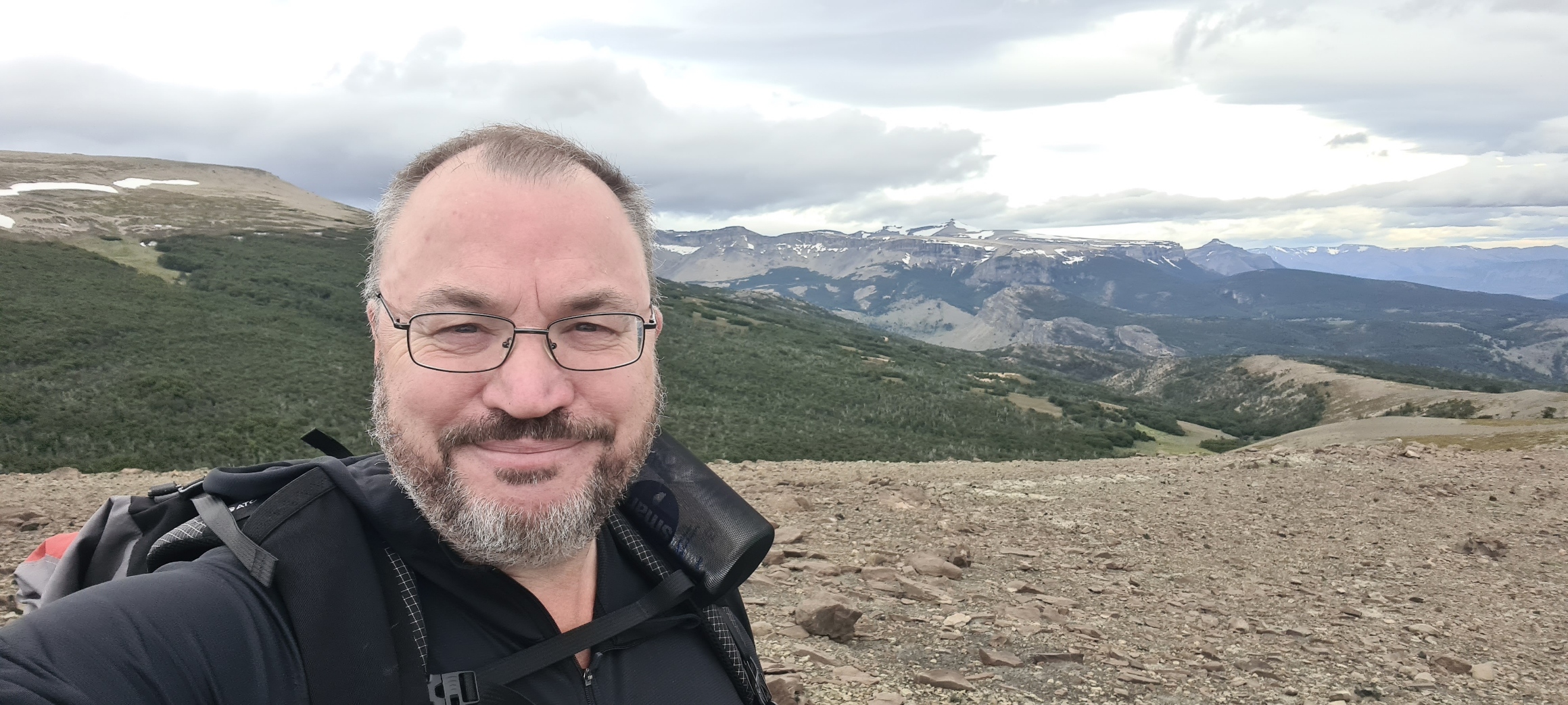
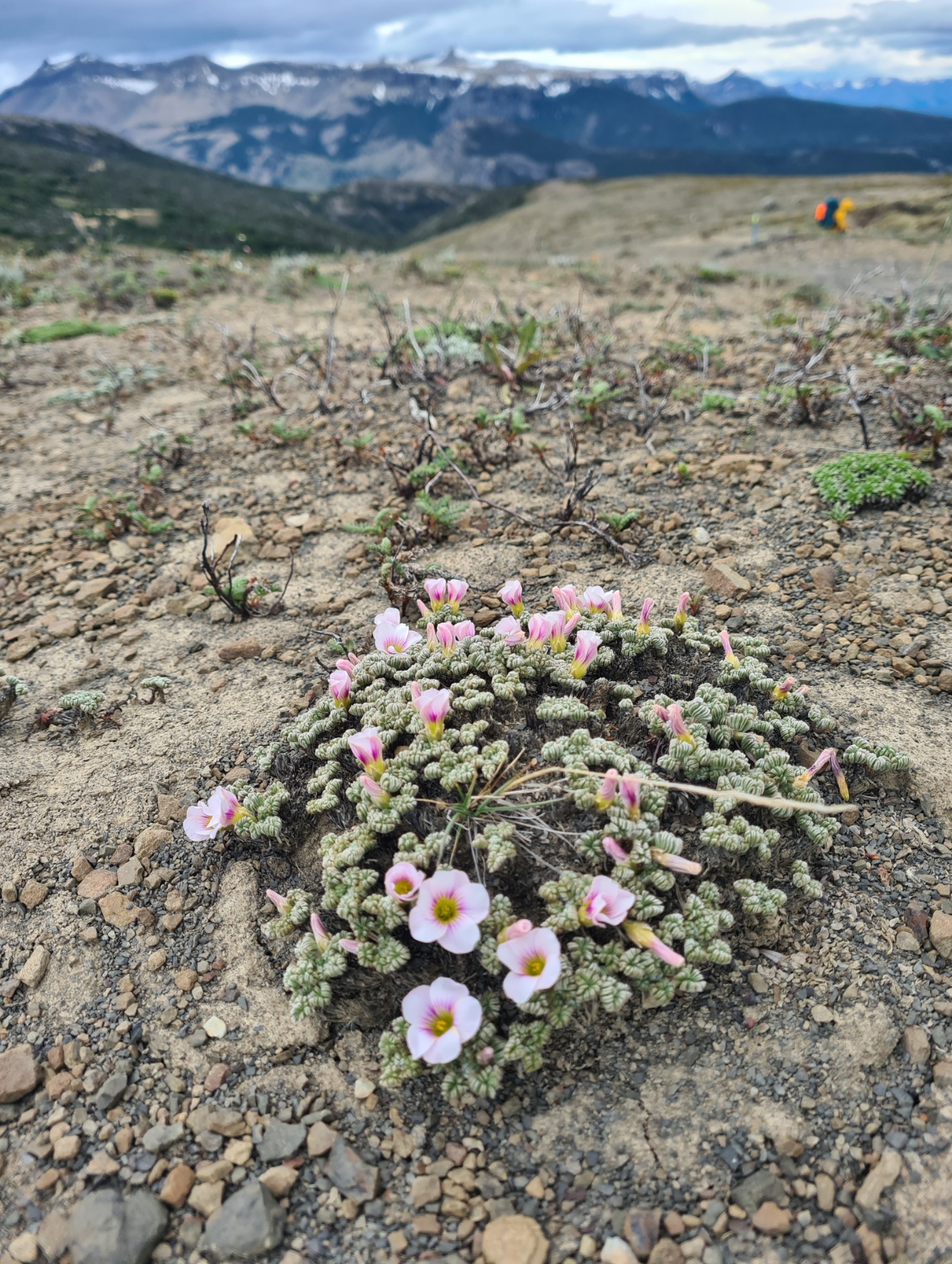
It was then down the sparsely vegetated surface, a gentle, stone clattering, descent and back into the trees below. Then dropping further down to the left, down to grassy slopes, where I came across a large group of hikers sitting in a sheltered clearing, close to a small river. Obviously in common with them, this was what I had been hoping for as a suitable spot for lunch. Despite normally preferring a little more solitude for my lunch halts, I didn’t have to think much on the subject as I was now hungry and it was a lovely place to stop. Drop pack, and prep a decent Real Turmat dehydrated beef stew and brew for lunch. Sitting there, I picked off the various beetles that tried to attach themself to my pack. Not sure they would appreciate being carried miles from their home. Before setting off I slipped and slid down to the stream to filter and top up the water I was carrying.
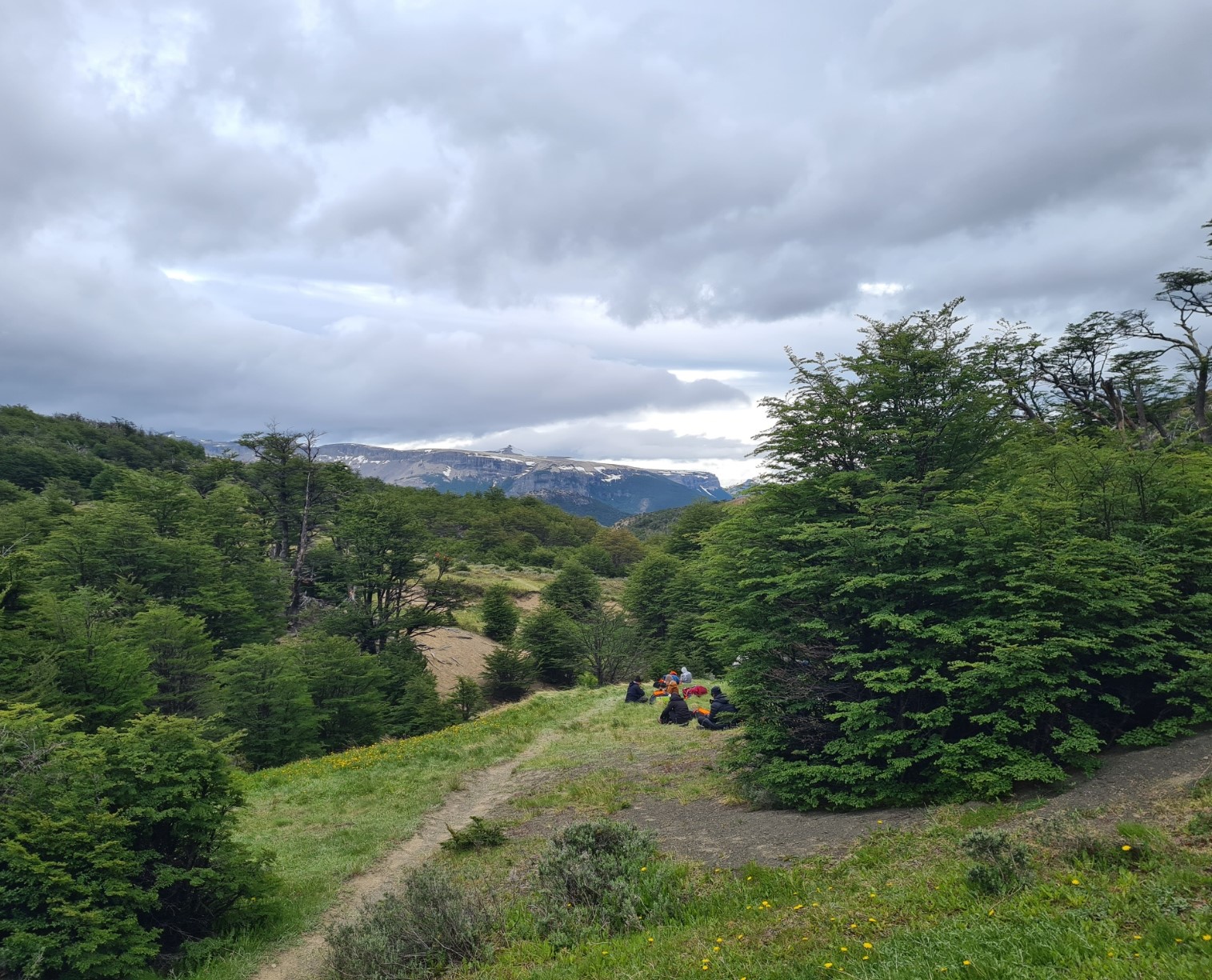
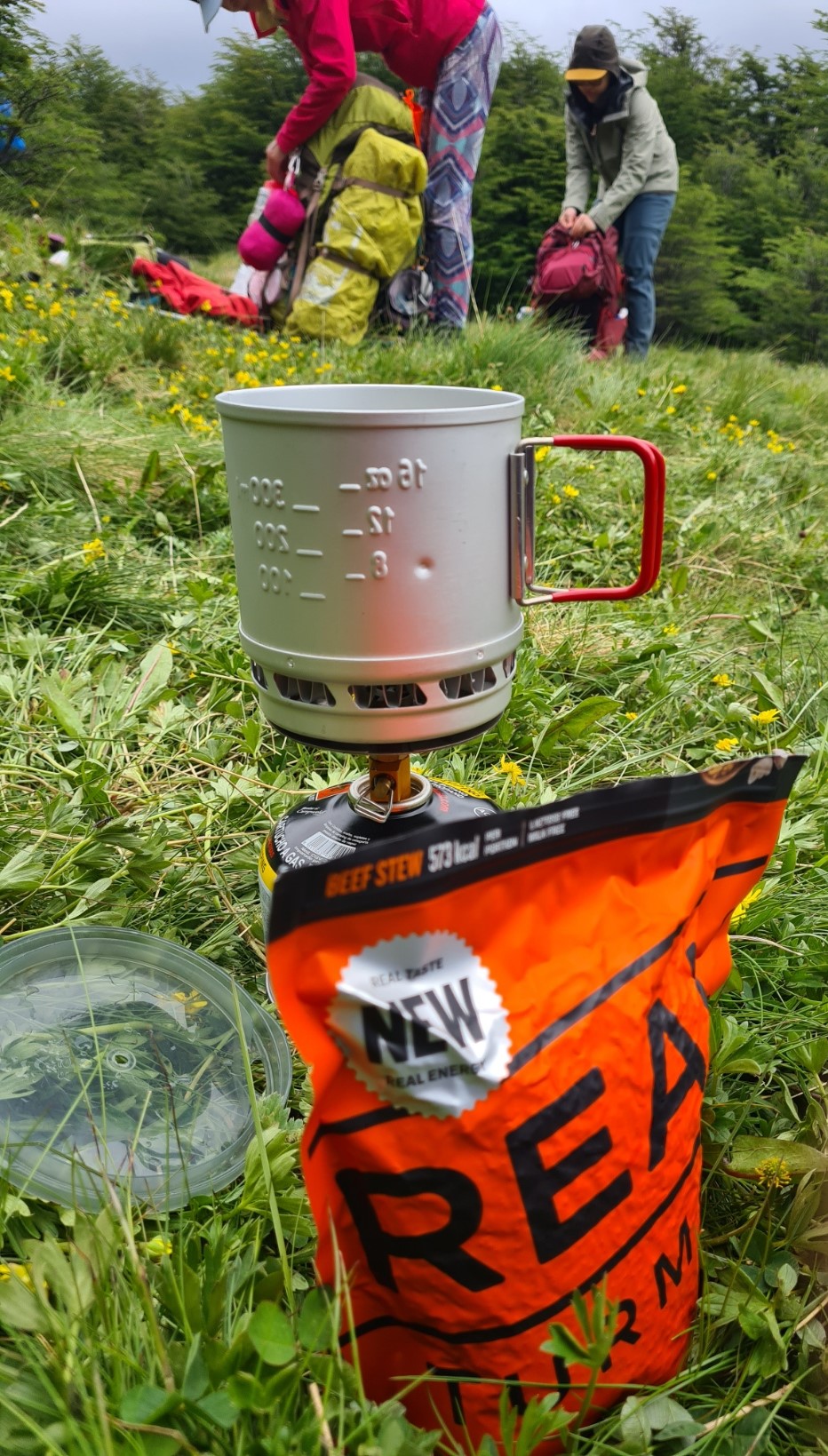
After lunch I felt good. Muscles were fine with no tightness, feet were comfortable. It was a good start to this hike. Having contoured around the hills, the forest again cleared and became sparse and there was often quite good views of mountains, many dotted with snow. Then began another long descent of many miles. I hadn’t realised I had made so much height that it required this degree of descent. At one point I had to take extreme care not to slip on a steep sandy track and watched two others slip and fall in quick succession. To be honest, my Altras don’t have the best of grip and I was a tad surprised not to have ended up on my arse. The last thing I wanted was an injury.
While it had been overcast all day with barely a glimpse of blue or sun, the sky had been getting ever more darker this afternoon and there was obviously rain coming. The flies were out. They weren’t biting but buzzed around me and landed on my bare arms. I attempted to wave them off but they didn’t move, invariably getting squashed and smeared across my skin. The flies cleared off eventually, but that was because it began to rain.
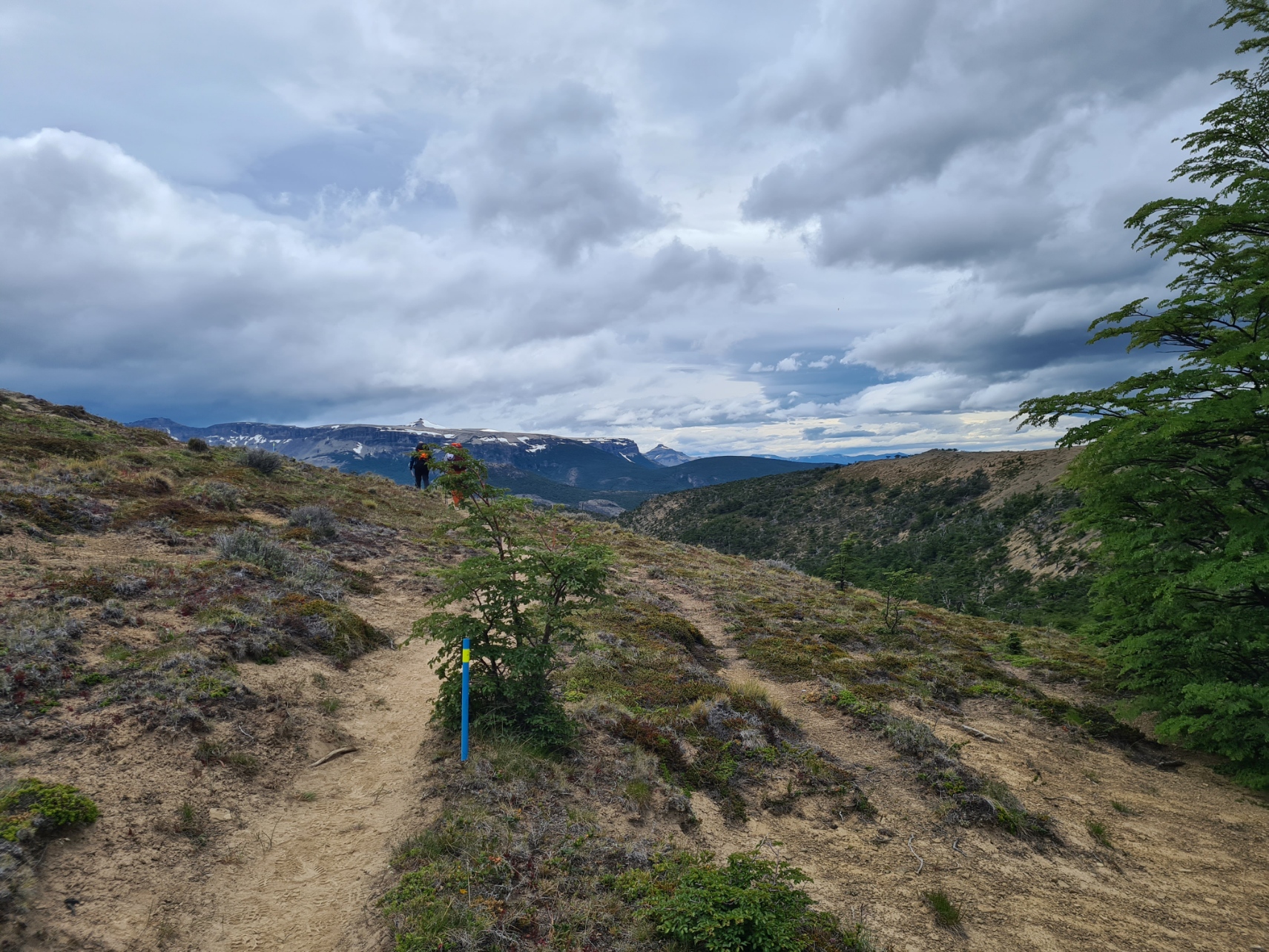
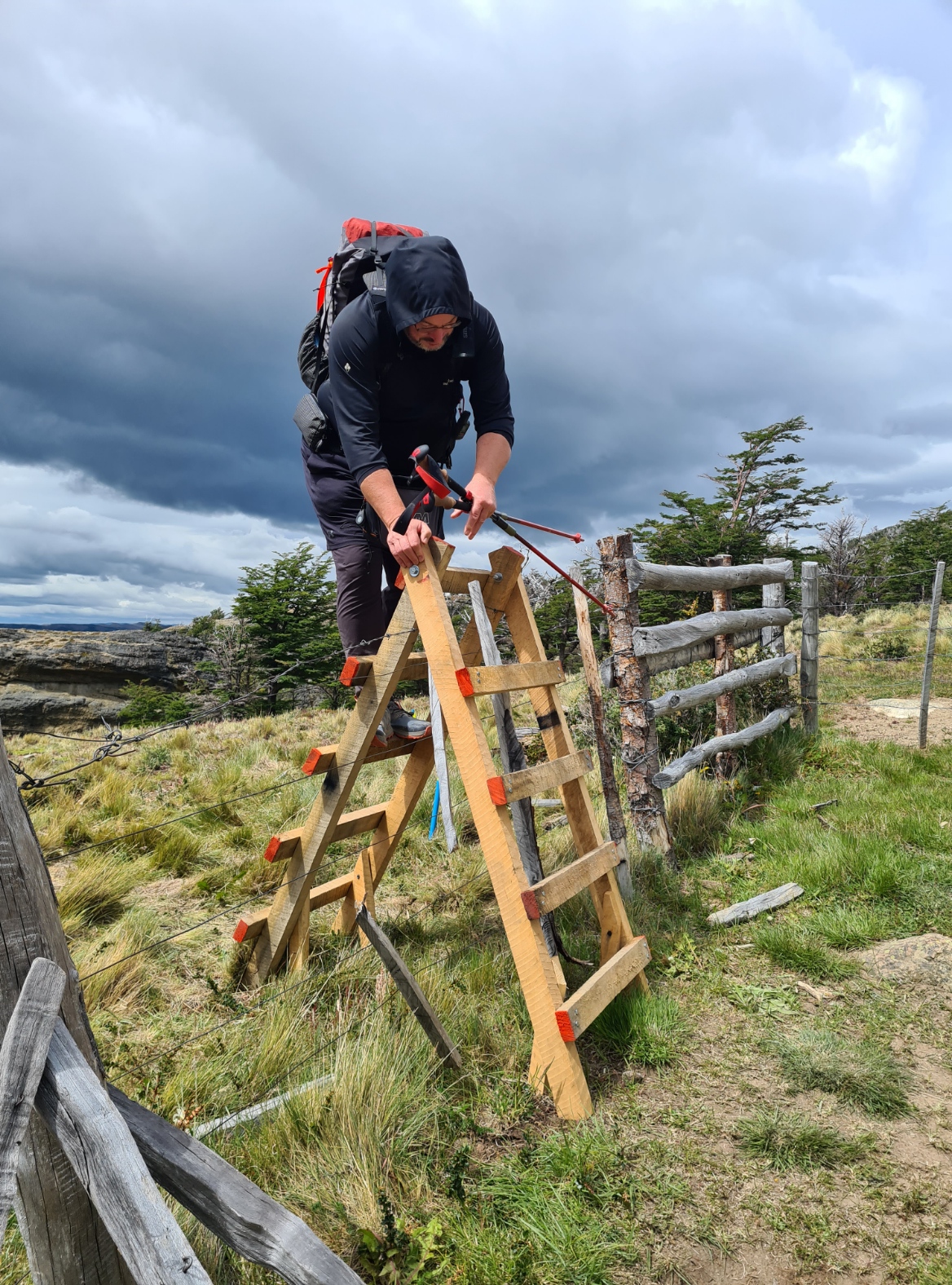
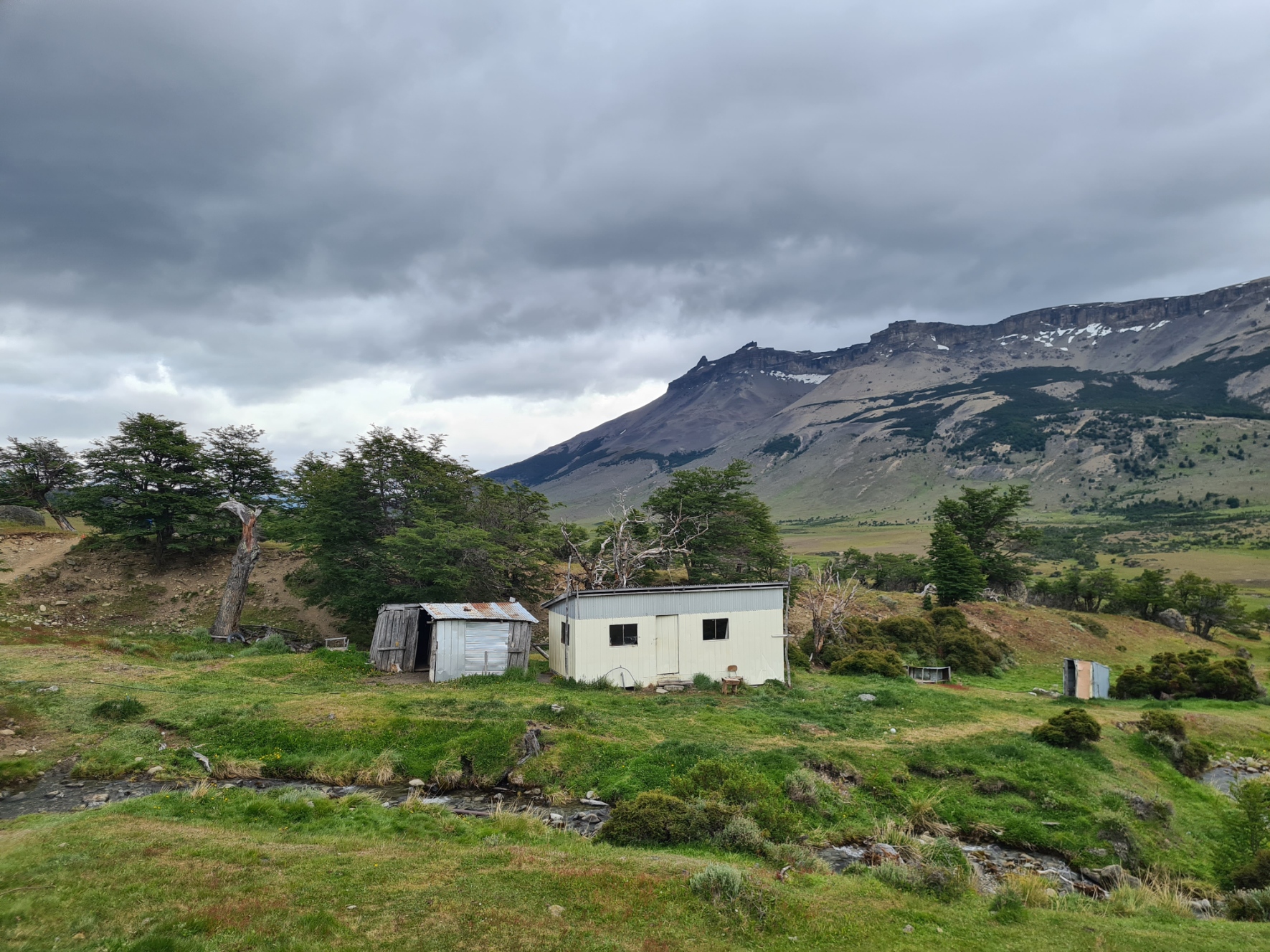
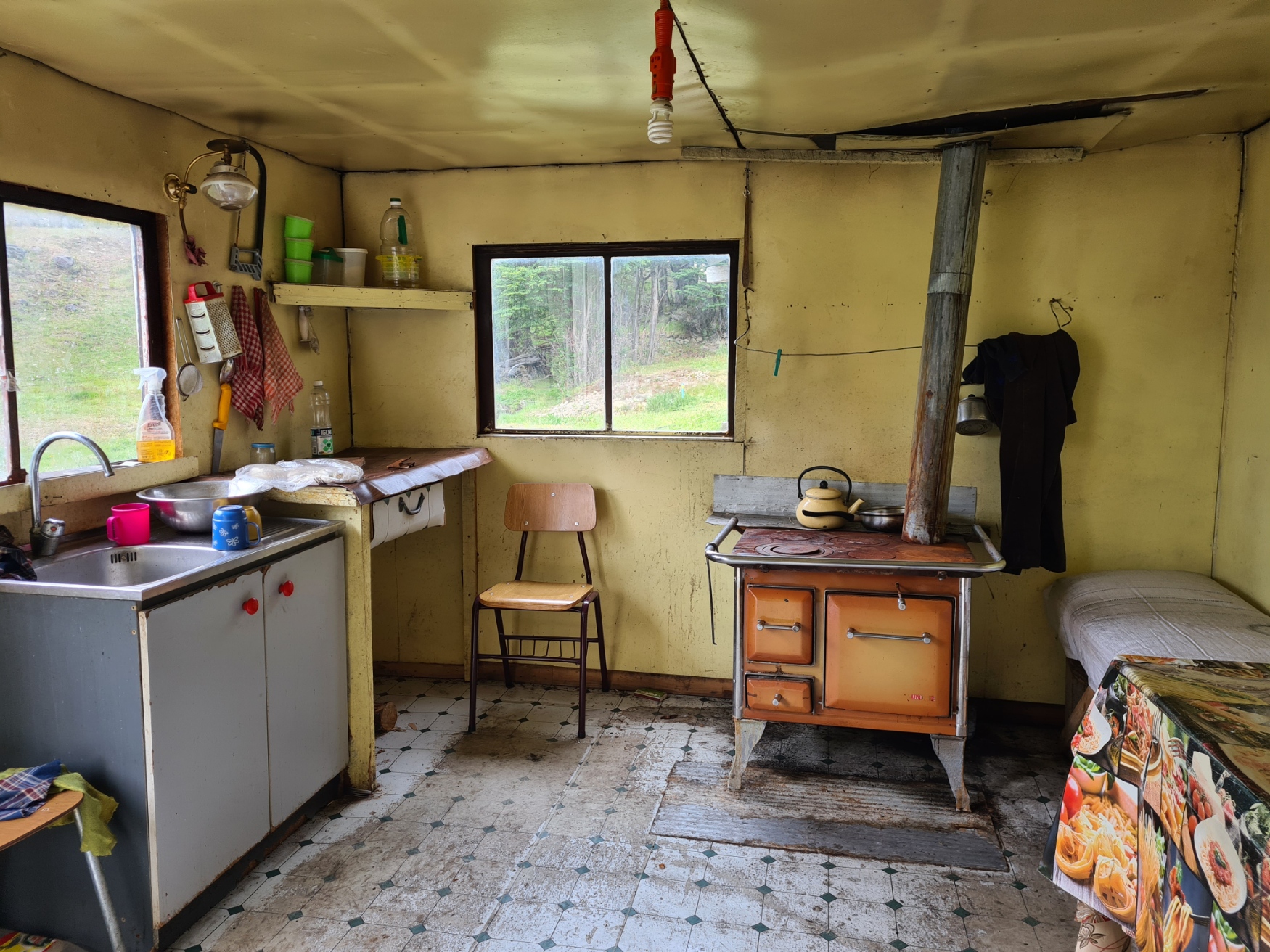
This is cattle country and both livestock and gauchos can move across large areas according to season. The gauchos may remain in areas for weeks at a time and semi-permanent camps, or homesteads, are occasionally seen. I passed an abandoned one-room place, complete with hitching rail, outhouse and woodshed, all beautifully sited in a sheltered spot beside a clean looking flowing stream. I took a few minutes out to explore the simple place, and try and imagine what it must be like for the working people who spend many days out here, far from most home comforts. Trees and shrubs grew in profusion around the little buildings, browsing cattle kept out by surrounding fence lines. All along the trail fencing has been erected to keep cattle in demarcated places and the Classic organisers had erected wooden step crossings over these where there were no gates. I had to clamber over many of these today and the following days.
Wildcamping is not permitted on the Classic and we have to camp at designated points. From the last checkpoint, it is a further 8.9 km to Camp One at Vega Señoret, situated below and between the tops of Cerro Mocho to the left and Cerro Ventana to the right This is reputed to be a good place to see soaring Andean Condor, the largest flying bird of prey in the world, but I failed to spot any. It would be days until I saw my first.
Our spread out group of hikers were now descending to a wide valley bottom. Once down to the grassy expanse, I followed the left side of the valley floor for some distance before a sharp right turn, following the temporary thin blue stakes put in as trail markers, across the valley floor, toward Camp One on the right side. I heard later that one hiker, head down in the wind and rain, had missed the turning and continued straight on. He was fortunate that someone in camp spotted him in the distance and ran across the valley to retrieve him.
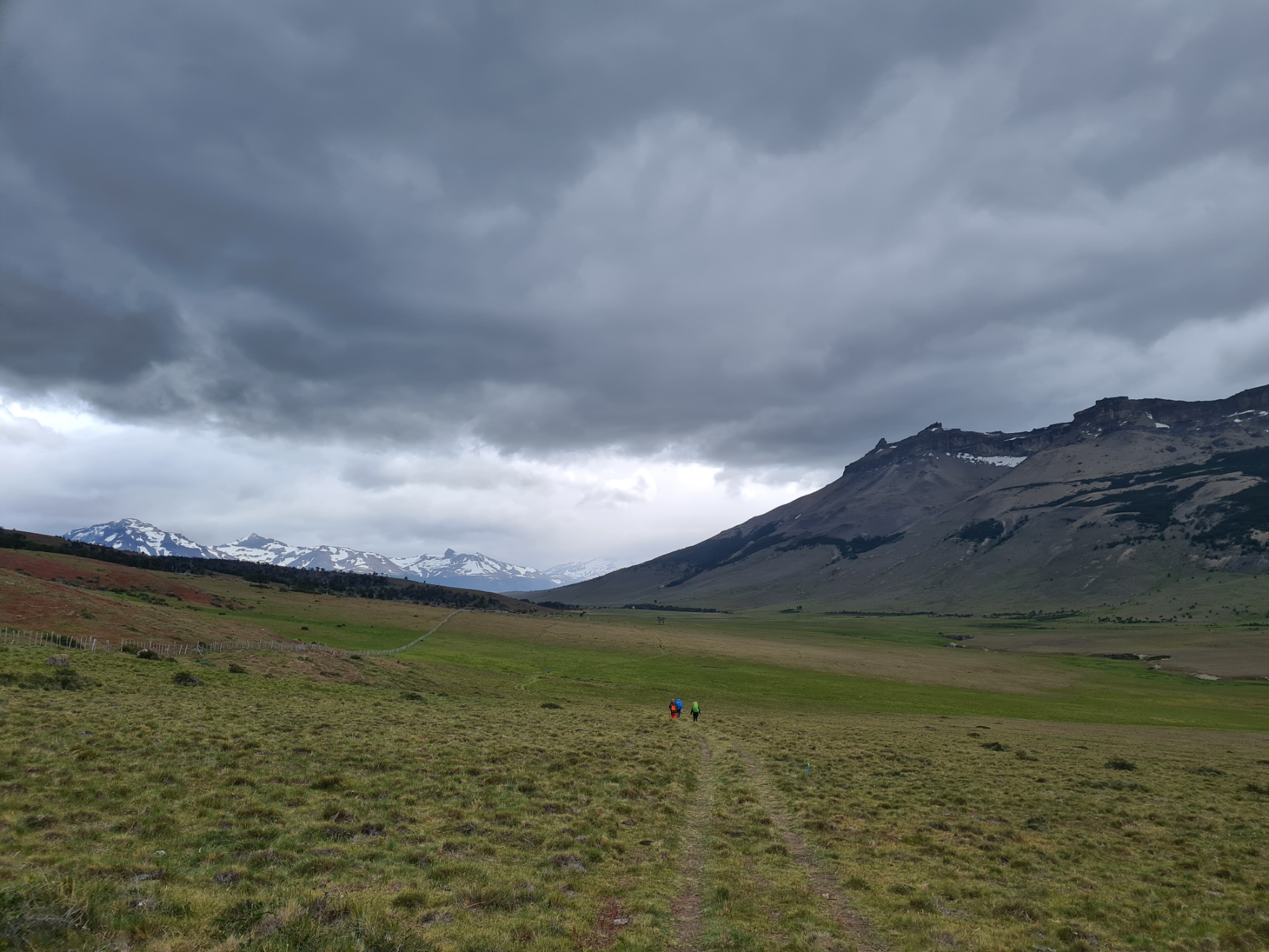
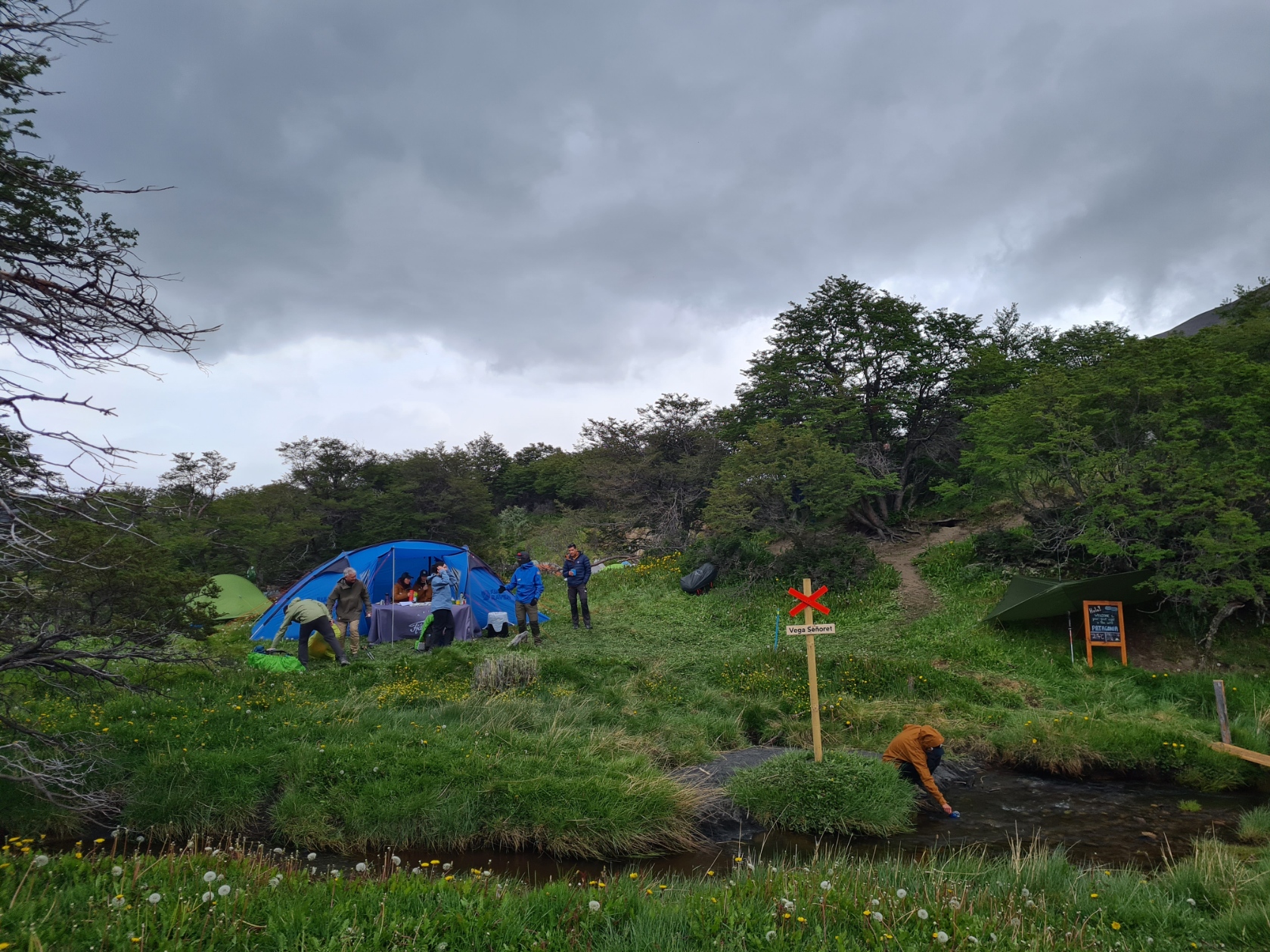
I checked in, had my hiking passport (and journal) stamped, and received my instructions for tonight’s halt. Toilet tents had been erected for hikers across the area and we were forbidden from digging ‘cat-holes’, everything, and I mean, everything, had to be packed out and each of us were issued the required bagging receptacles to enable this.
Southern Patagonia is known for its unpredictable mountain weather and strong winds but I had been fortunate so far. The organisers were obviously well aware of how windy a site tonight’s halt could potentially be as they were keen to stress the need to look for as sheltered a spot as possible. All well and good but I had been in a later starting group and a great many hikers had come in before me and obviously all the prime spots were taken. Some 150 hikers were going to squeeze into this night’s stop, 250 had somehow managed it the previous night. I walked the extent of the small stretch of trees, as far as the bordering barbed wire at the far end, beyond which we were not supposed to stray. Just before this barrier, with a bit of clearance of a few fallen branches I produced a decent patch of ground, surrounded by sheltering trees, sufficiently large to take the large footprint of the Durston. No need to put it up in ‘skinny mode’ tonight. I saw later that the many hikers that came into camp after me spread themselves out across the more exposed ground each side of the river below me. After pitching, I went down to the river to filter three litres of water for tonight, tomorrow morning and the first few hours of hiking. I found the air thick with mozzies and was thankful I hadn’t ended up down there as it was a sub-acceptable pitch. While it did get a bit wet and breezy overnight, the weather was fortunately nothing remarkable and I don’t think anyone had much issue. Well at least I never heard of any problems.
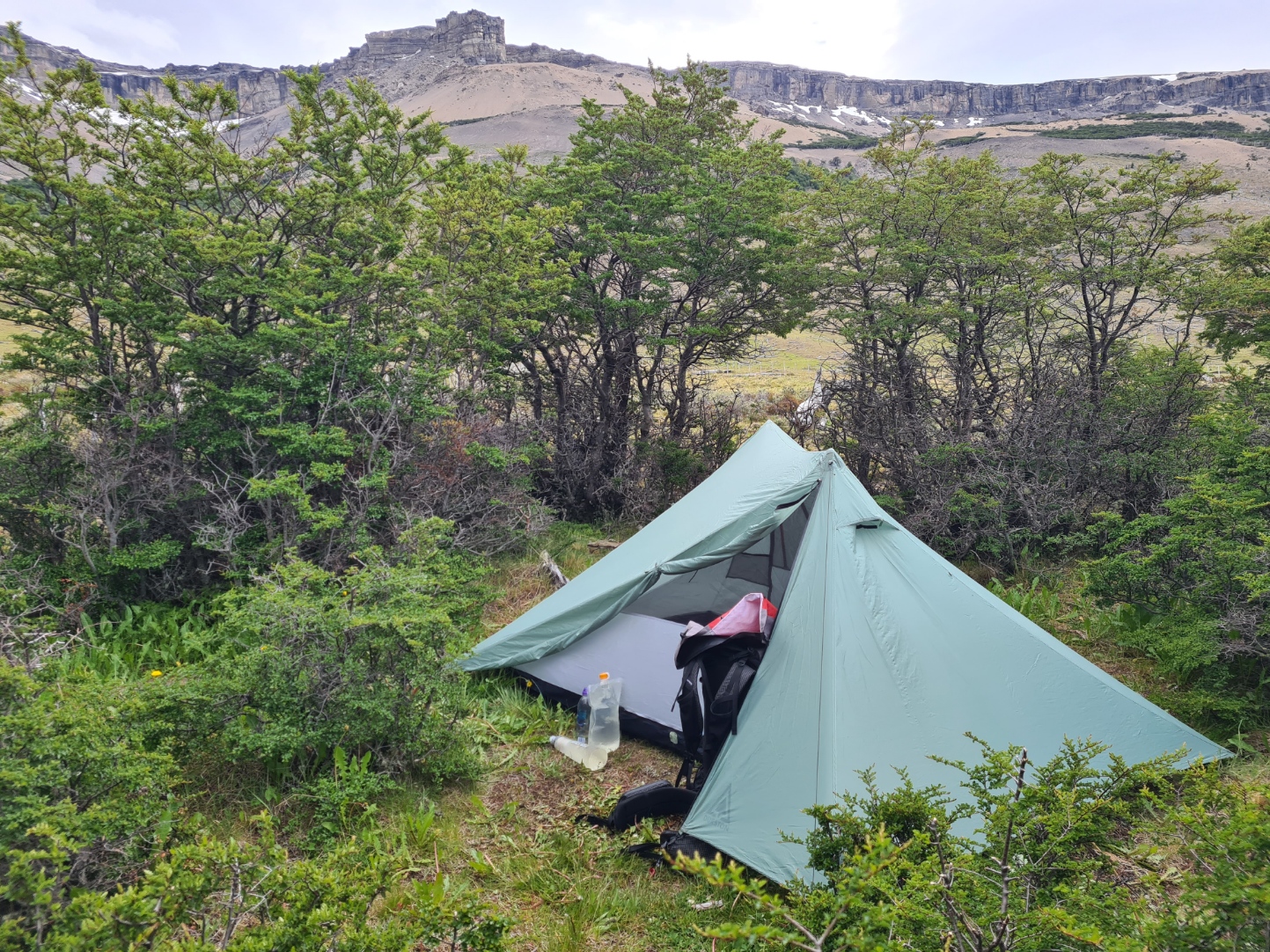
Once I had filtered the water, it was time to clamber into the tent, pull everything out of the pack, inflate the pad, shove the quilt to one side to enable it to loft, and then get a brew on. I drank this while using the Garmin to message ‘all OK’ to home, then stripped for a tent wash, changed into sleep clothes and draped the quilt over me as the temperature was dropping. I peered out of the open door. What looked like a huge kingfisher, but was actually a Chilean flicker, kept returning to perch on a bare branch a few metres away. Noisy Geese flew overhead, followed by equally as loud plovers, no doubt disturbed by those pitching beyond the river. Time for another brew and I drank this, now wearing my puffy, while writing up my journal. My evening meal of Chicken Tikka Masala was followed by a Jonut and a few handfuls of trail mix that I had forgotten to eat earlier. All consumed while my electronics charged. It had been a good first day and everything I had hoped it might be. Three more days to come. The ‘Mountain Day’ tomorrow.

 Three Points of the Compass
4 replies »