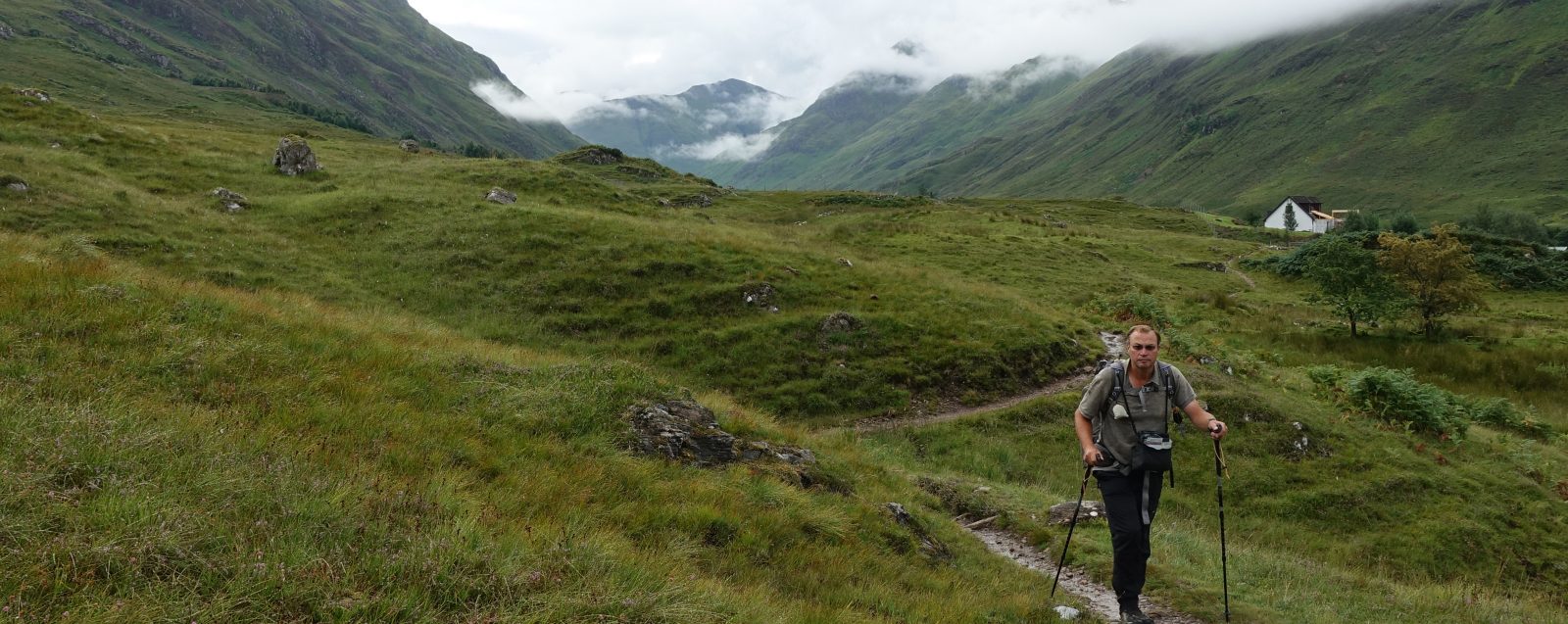
Mr and Mrs Three Points of the Compass wind up their summer adventure with a short climb to the eastern end of the Ridgeway and a visit to the monument to the ‘canal duke’
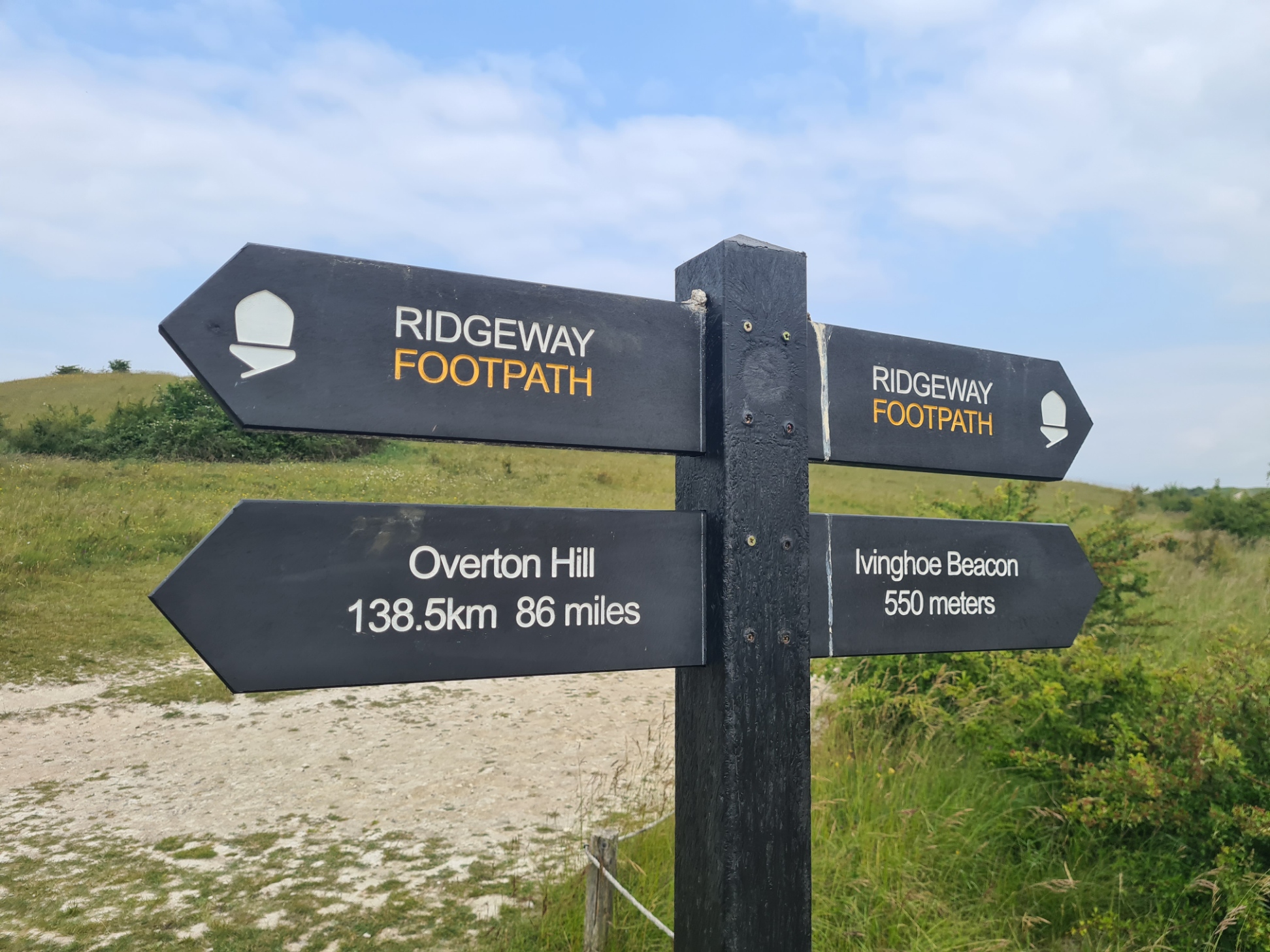
Aldbury to Ivinghoe Beacon and the Bridgewater Monument. 8 miles/13 km… ish:
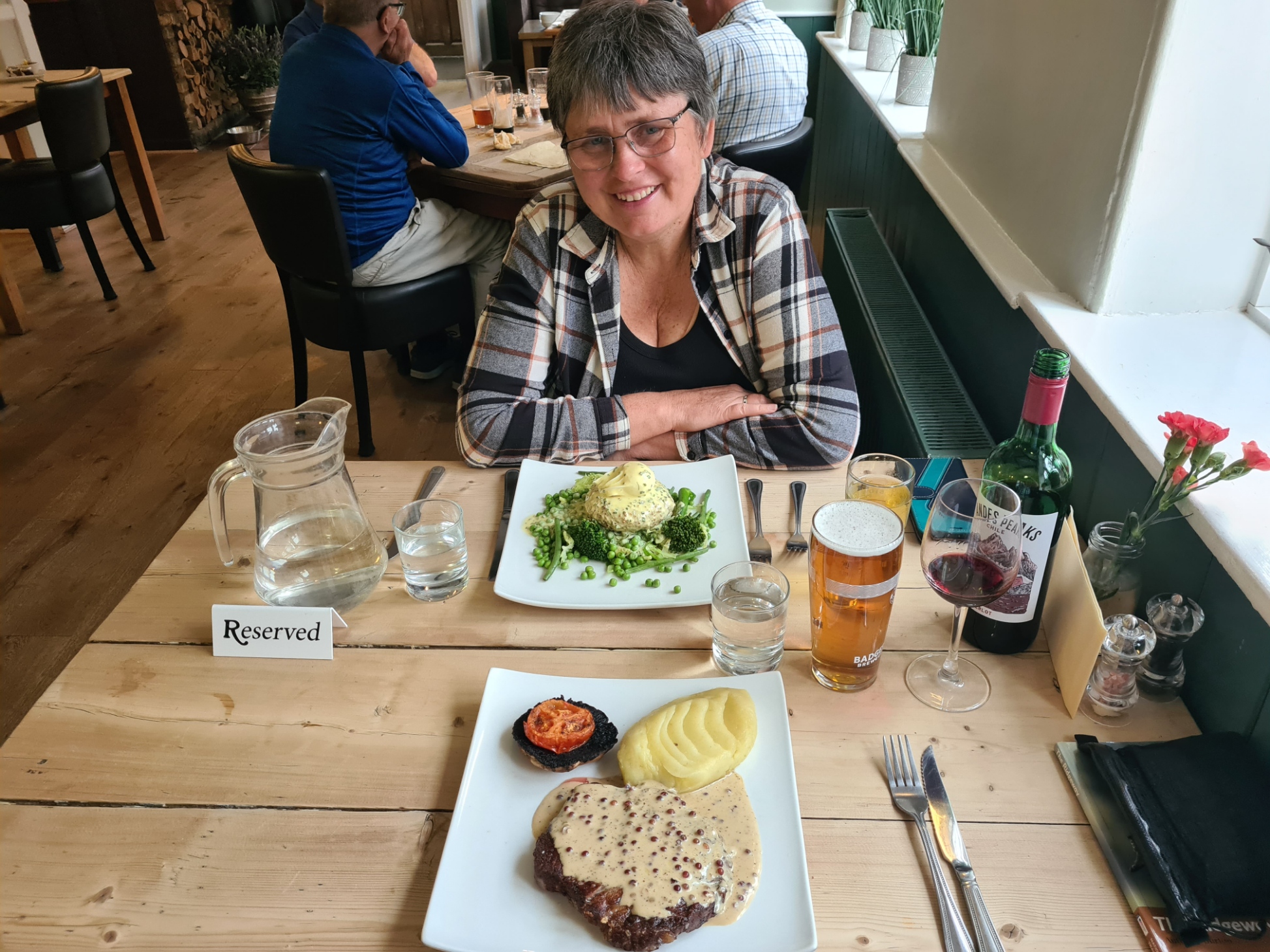
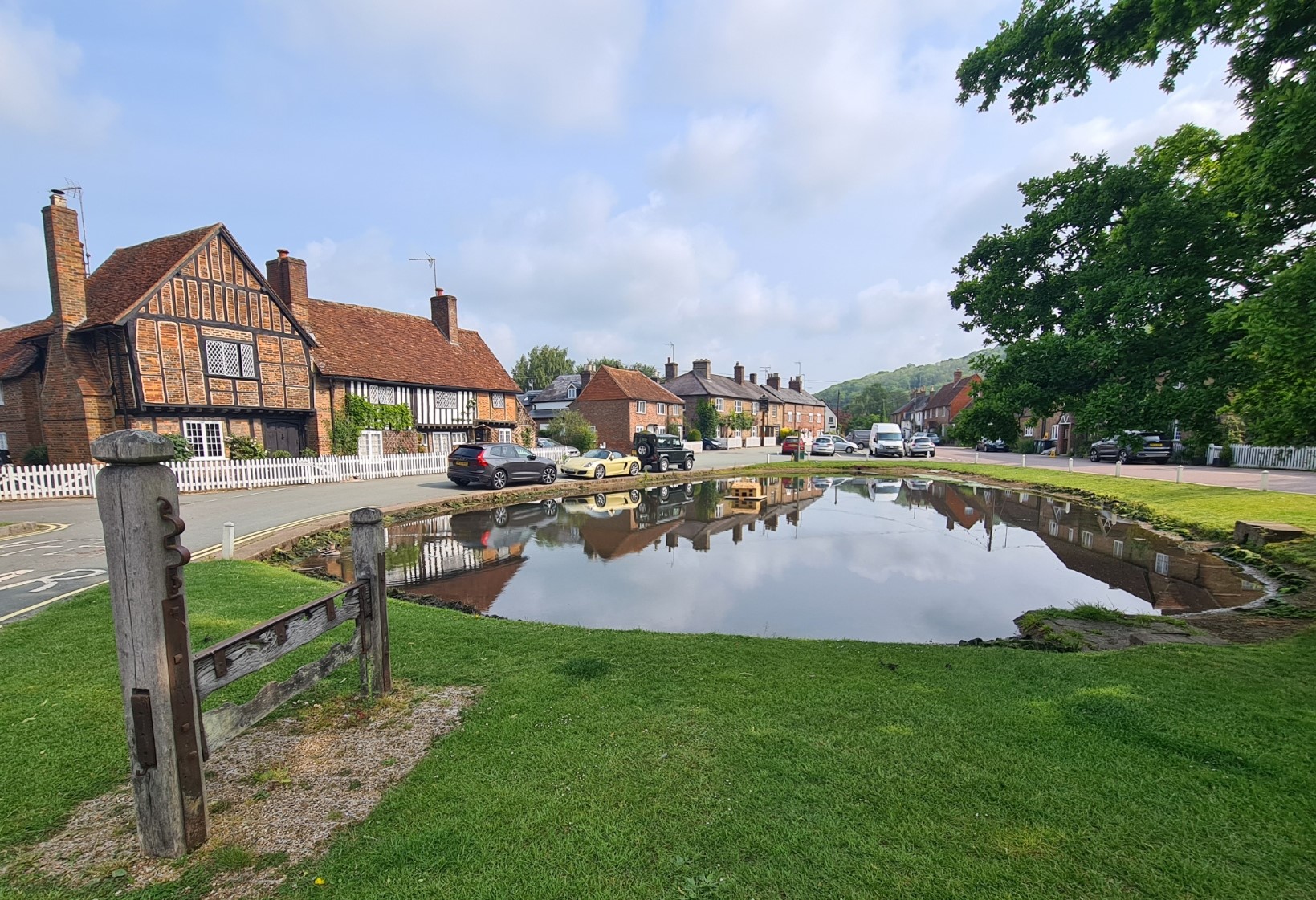
What appeared to be a very short day today actually isn’t. We are again staying at the same accommodation tonight, so having walked to rejoin the trail, then walked the last few miles to trail’s end at Ivinghoe Beacon, we then have to retrace our steps back to The Greyhound. At least we can eat later tonight, as yesterday’s meal was far too early. To that end we have a 19.30 table booked in their restaurant. With no time pressure the two of us were simply looking forward to a final short day’s stroll.
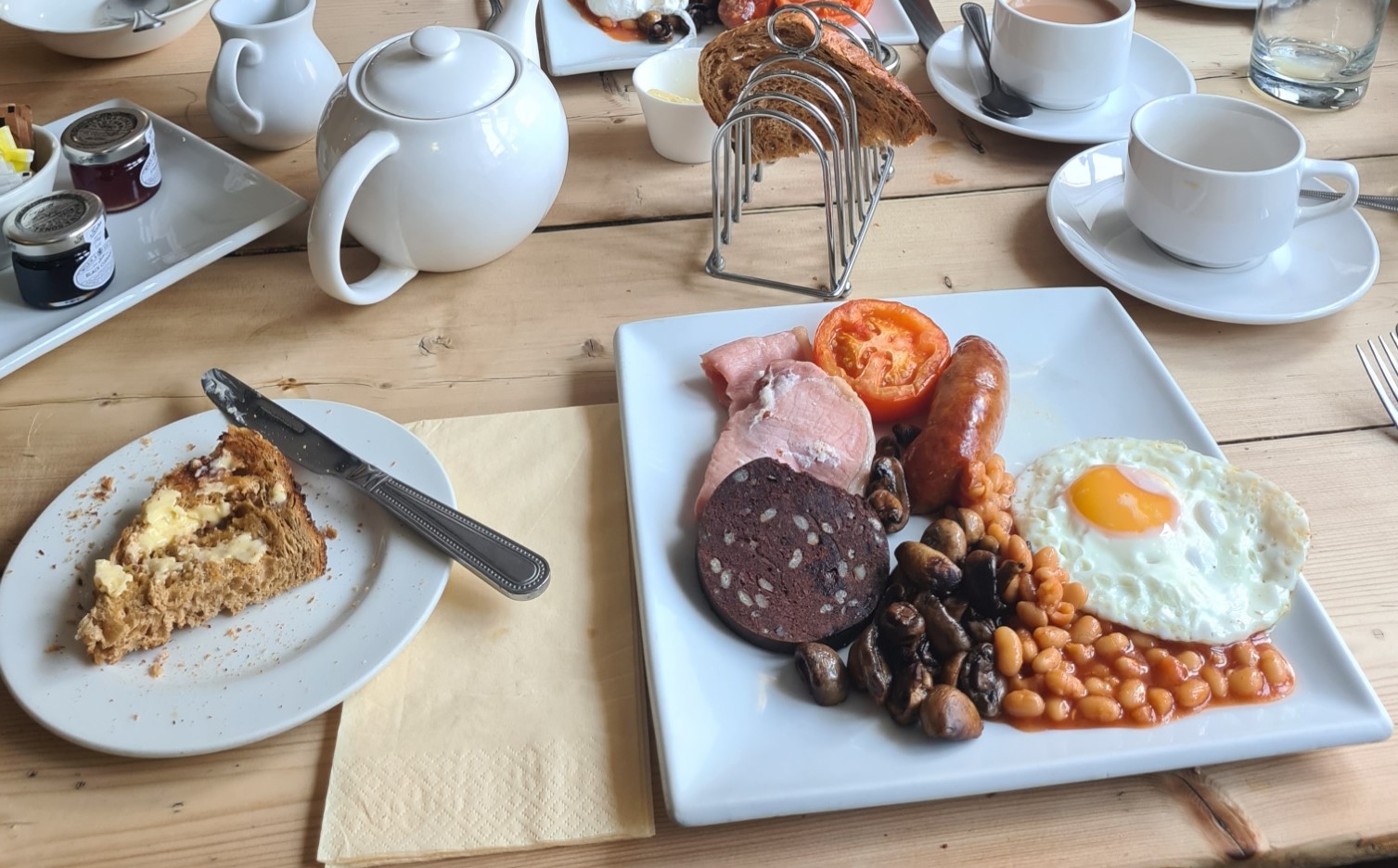
As usual, I am up first, mugs of tea in the room, but a more leisurely affair as we don’t need to pack suitcases today, and have very little that needs to be carried on trail today. We were down to the restaurant for yet another Full English, good that it was, after tomorrow morning, I will be glad to see the back of these for a few weeks. Too much of a good thing… and all that. First down, we were later joined by Andrew, Andrew, Harry and Rick, who also stayed here last night and are likewise completing the trail today.
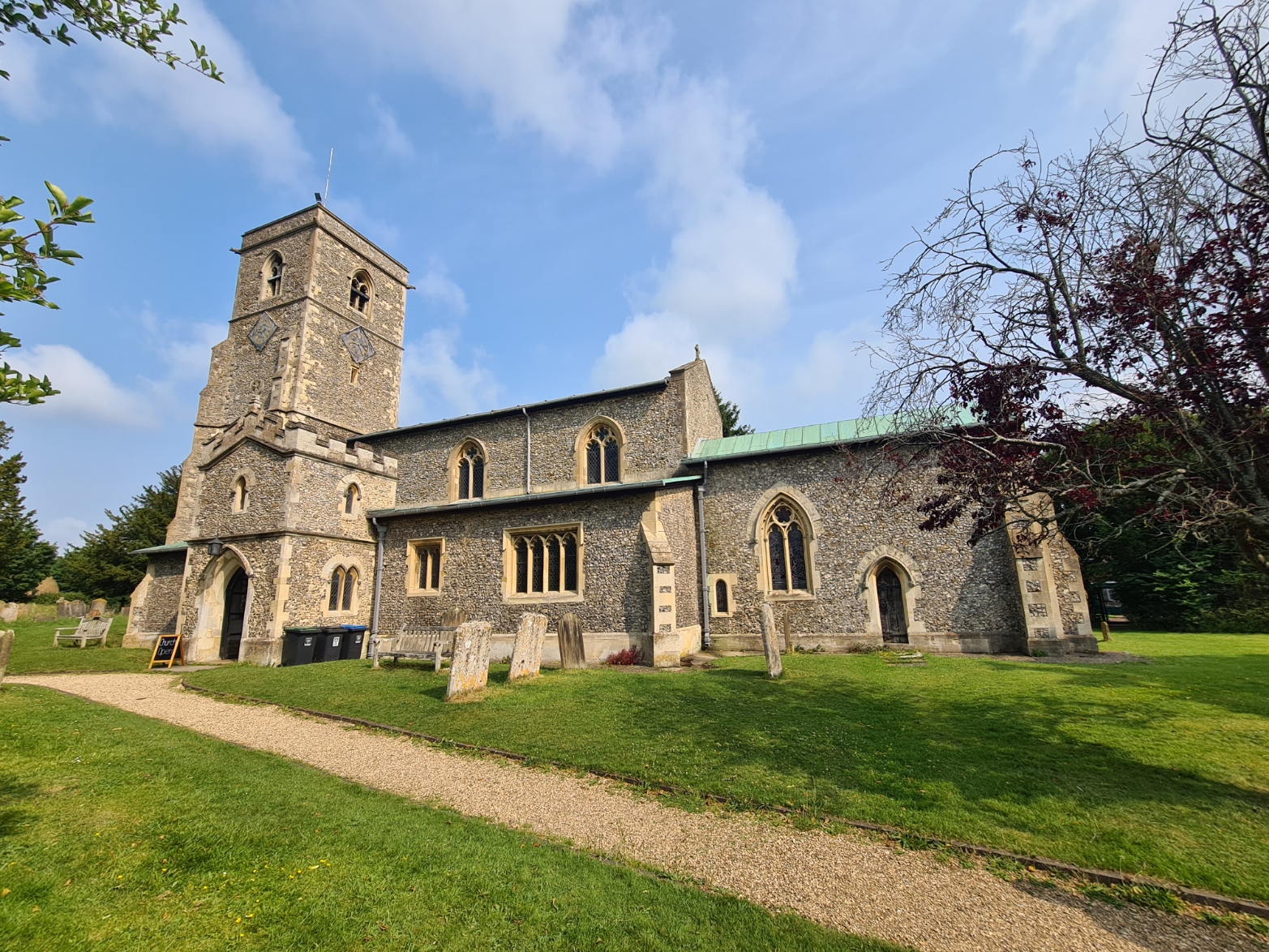
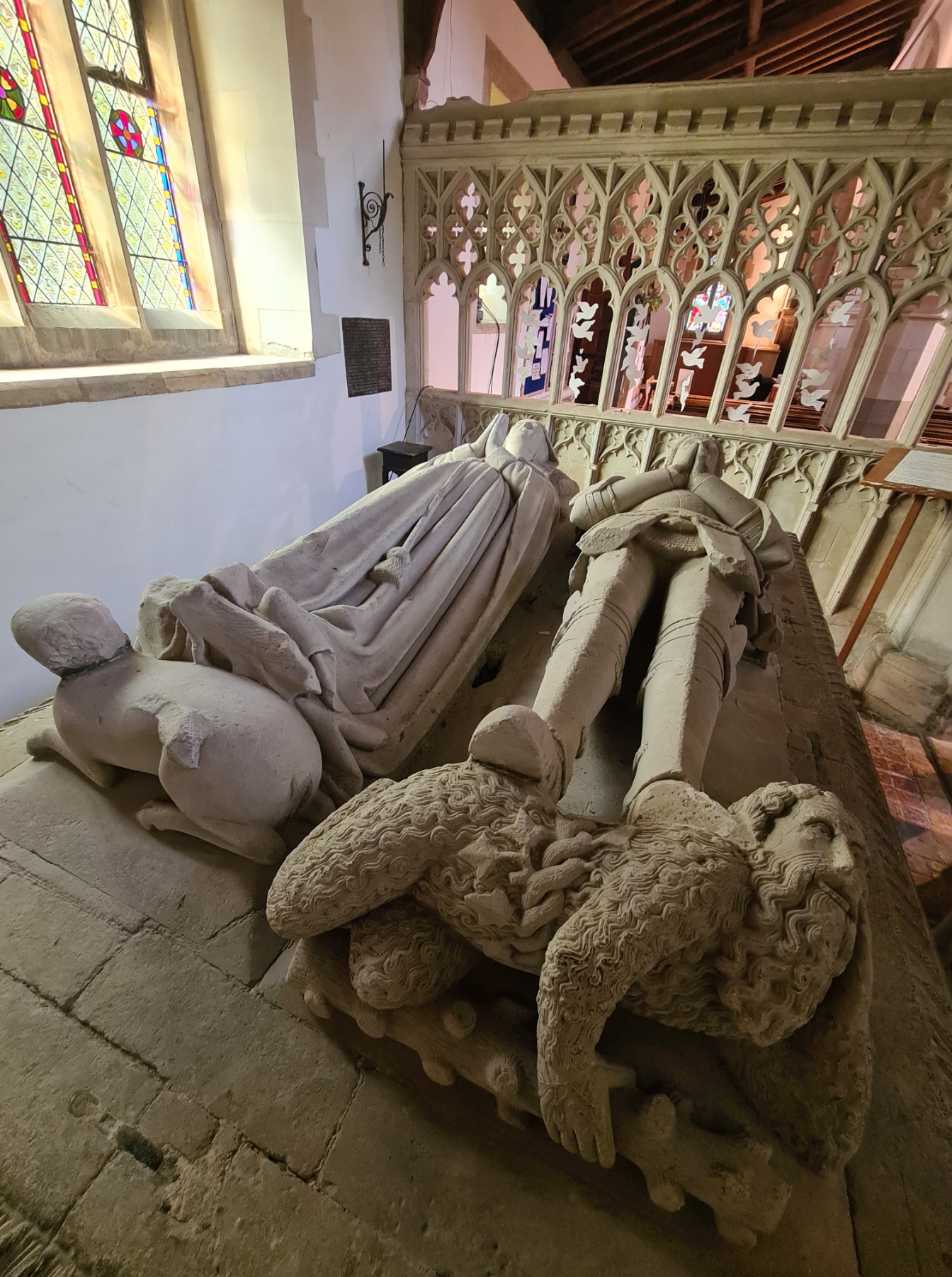
Before getting back on trail, we went to explore the village church. St. John the Baptist Church is of Early English style, and was granted to Missenden Abbey by William de Bocland in about 1200. We were most interested in seeing the Pendley Chapel, also known as the Verney Chapel, an ornate memorial chapel which is located at the east end of the nave. It contains a tomb moved here from the dissolved monastery of Ashridge in 1575 but is older. Lying recumbent on the tomb are effigies of Sir Robert Whittingham (d.1471), a nobleman who was slain during the War of the Roses at the battle of Tewkesbury. Dressed in plate armour, he is lying next to his wife, Lady Katherine, a maid-in-waiting to Queen Margaret. She has her feet resting against a now sadly damaged animal that we at first thought was a cat, but is actually a hind. The knight is resting his feet against a wonderful Wild Man, bearded and hairy, clutching a stave or club.
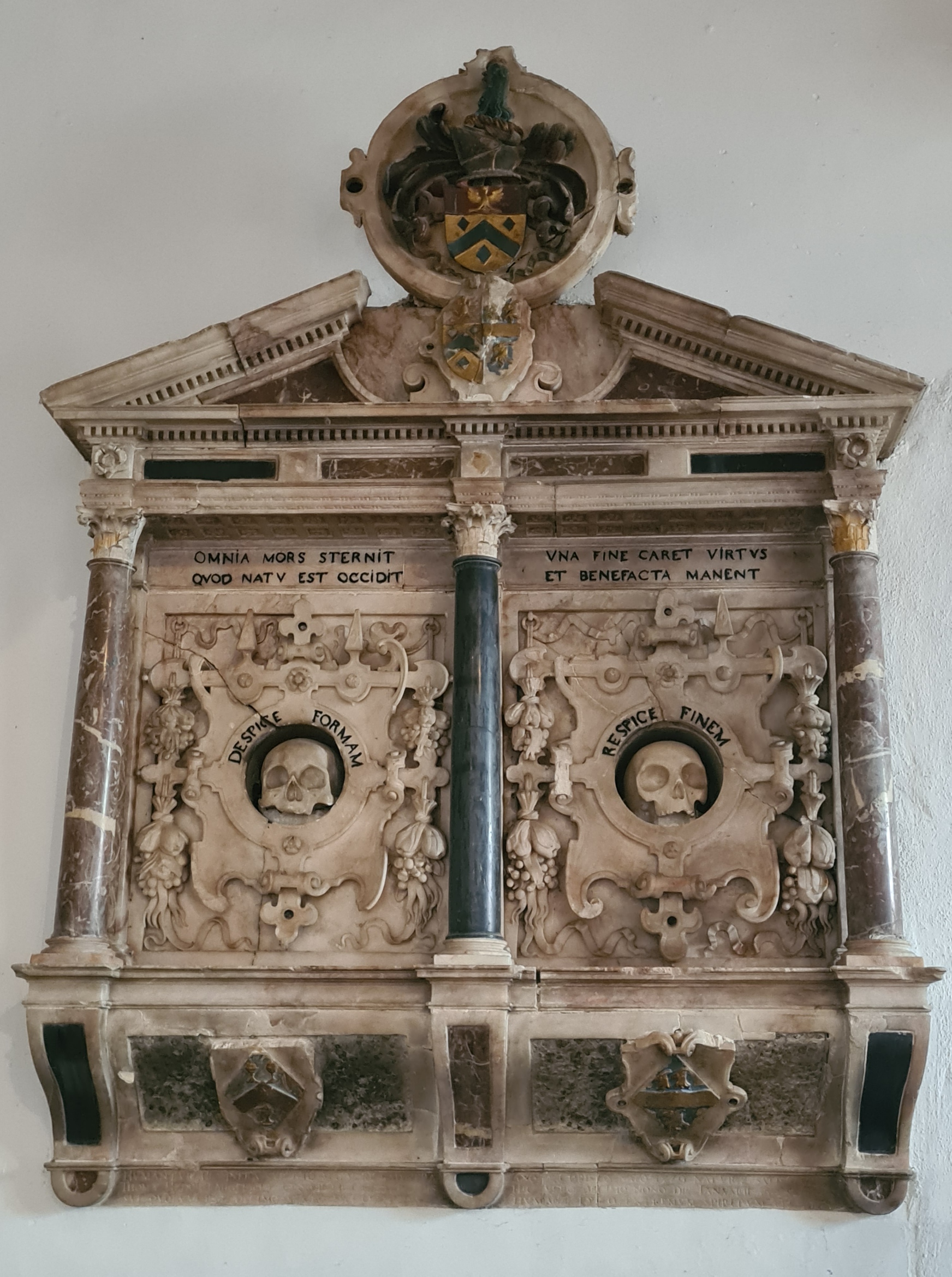
There is much of interest in the church besides the tombs, such as medieval floor tiles and wall painting, and I was also taken with the alabaster and coloured marble wall monument on the north wall, complete with marble skulls gazing out from holes, dedicated to Thomas Hyde d.1570 and his son George d.1580. The Latin inscription Respice finem translates as “consider the end” or “look to the end”. A Roman cautionary reminder to think about the consequences of one’s actions, choices, and life path. A lesson for us all there.
After briefly wandering around the churchyard, noting the occasional iron headstone, it was time to finally get back to the business in hand, finishing the Ridgeway. We followed the Hertfordshire Way back out in to the countryside. Up to the golf course that we then crossed, rejoining the Ridgeway in the wooded hill beyond.
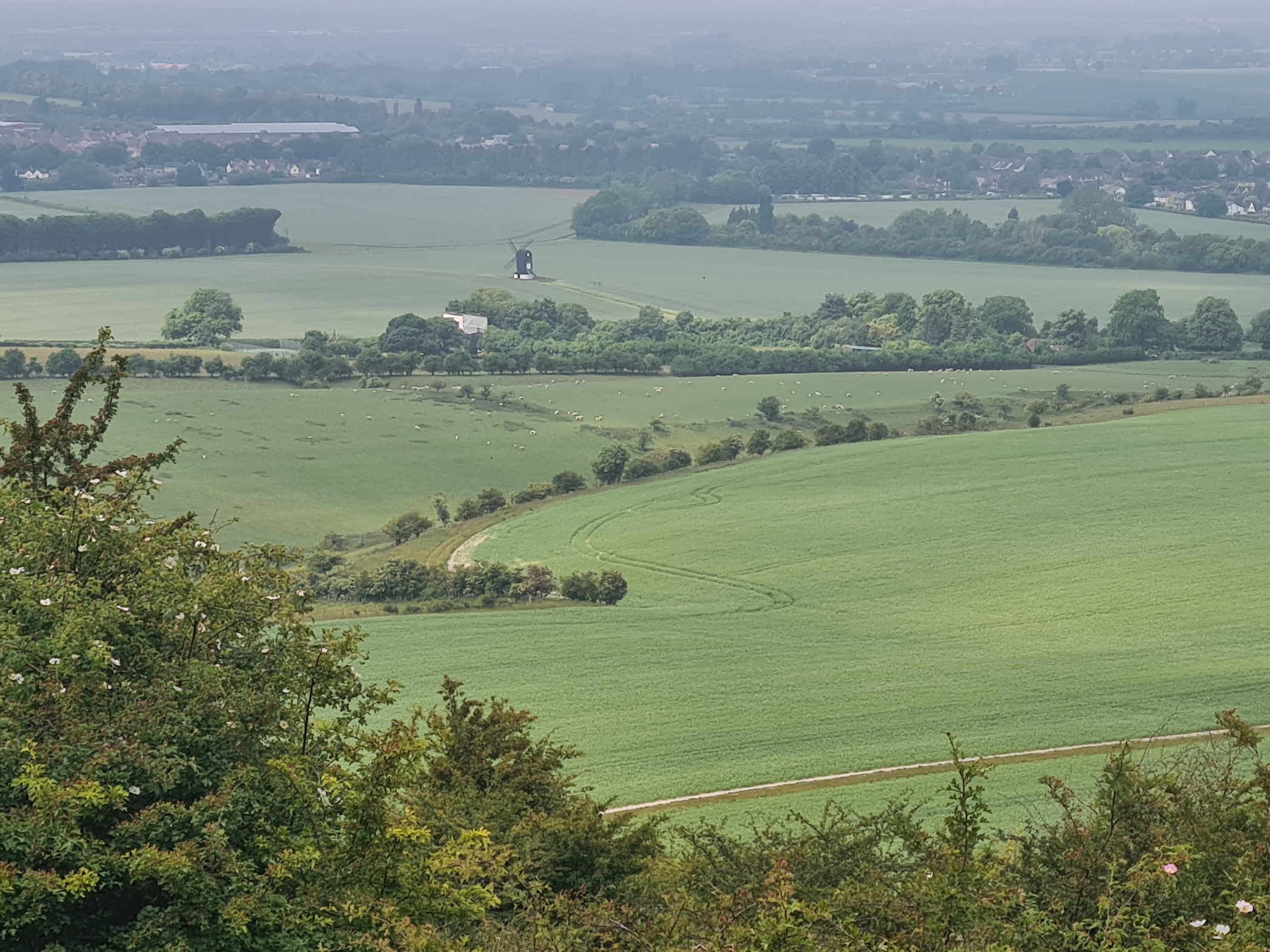
The path was easy walking, following the contours round Pitstone Hill, offering views out and over toward the Tring reservoirs and beyond. We could see the Pitstone Windmill below us. It is one of the oldest post mills in the country, milling flour for over 300 years. The Ridgeway continued on along and down, first following (another) ancient Grims Ditch, before crossing rabbit cropped chalk downland with the occasional orchid.
This is a popular place for day walkers and dog walkers and they were out in some force. We were passed by what looked to be a couple of individuals setting off on the Ridgeway, walking it the opposite direction, but most of those carrying packs were under-taking the Duke of Edinburgh expedition challenge, we recognised a couple of the groups from earlier.
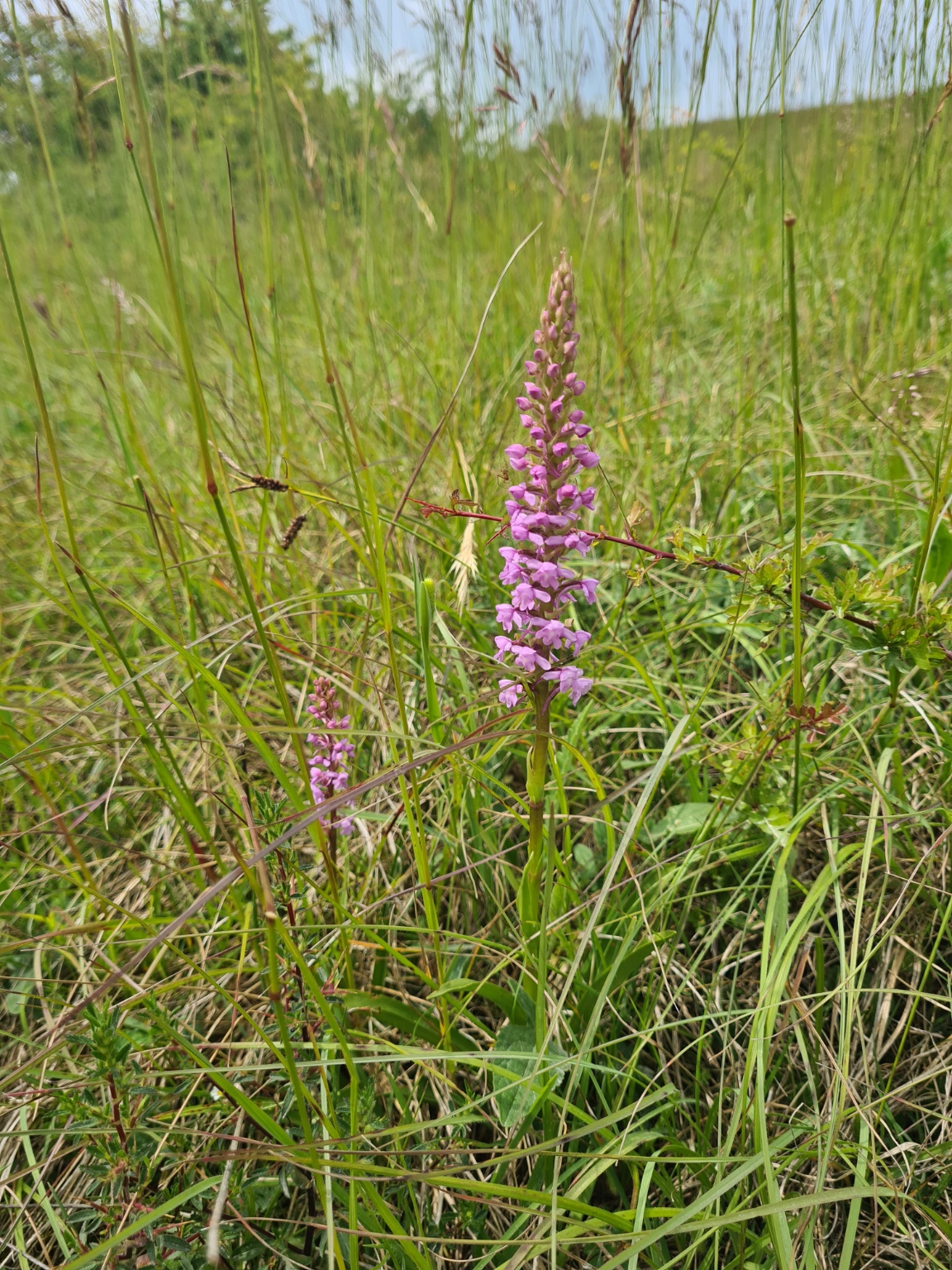
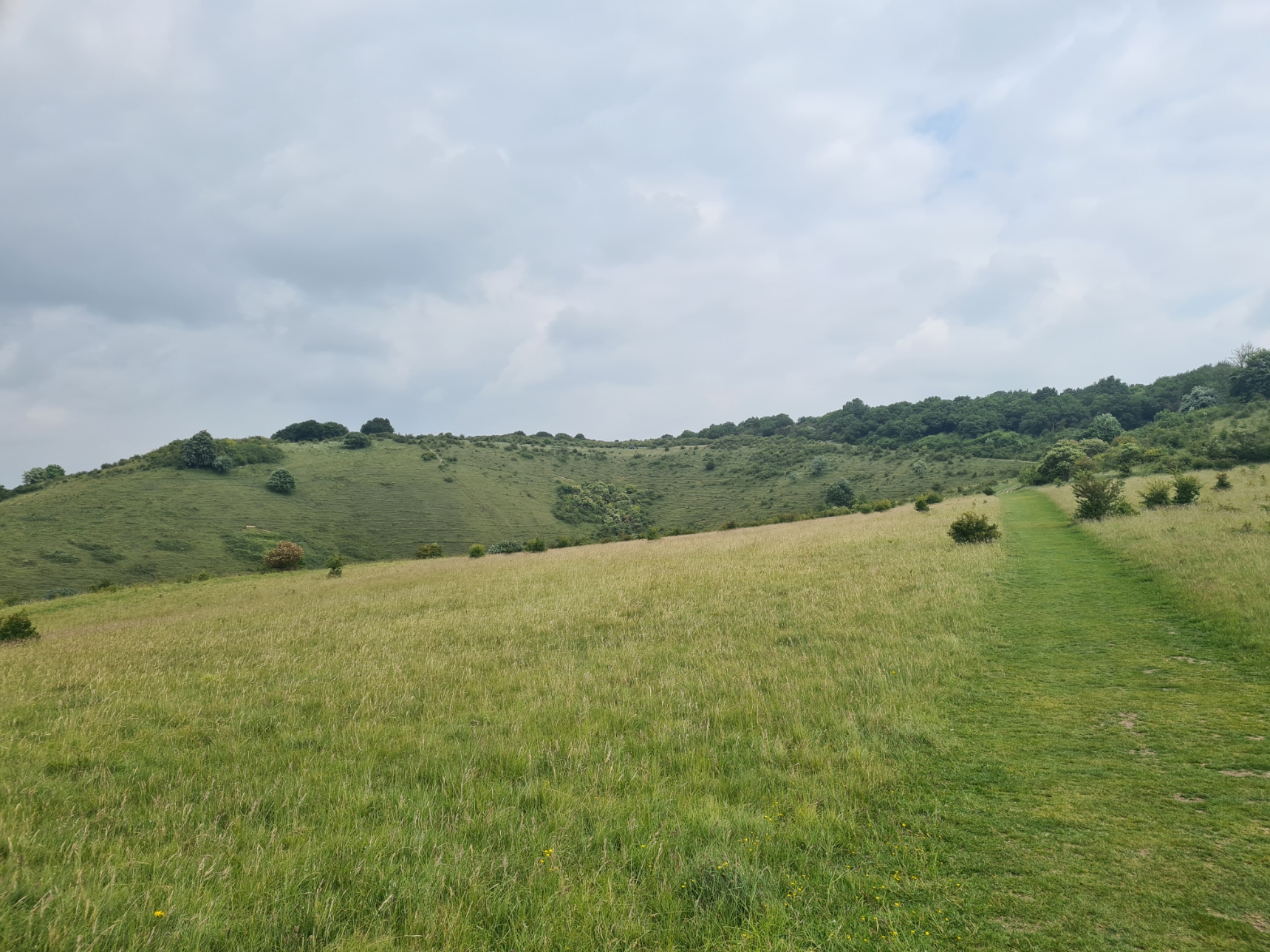
Between Pitstone Hill and Ivinghoe Beacon lies Incombe Hole, a deep hole formed by glacial action. Having crossed a minor road with carpark, our path went along the side of it, gently climbing Pits Hill and onward to Beacon Hill, also known as Ivinghoe Beacon. There was a hill fort located up here, almost certainly dating from the Bronze Age, but unlike those we had walked the ramparts of on previous days, little obvious survives today.
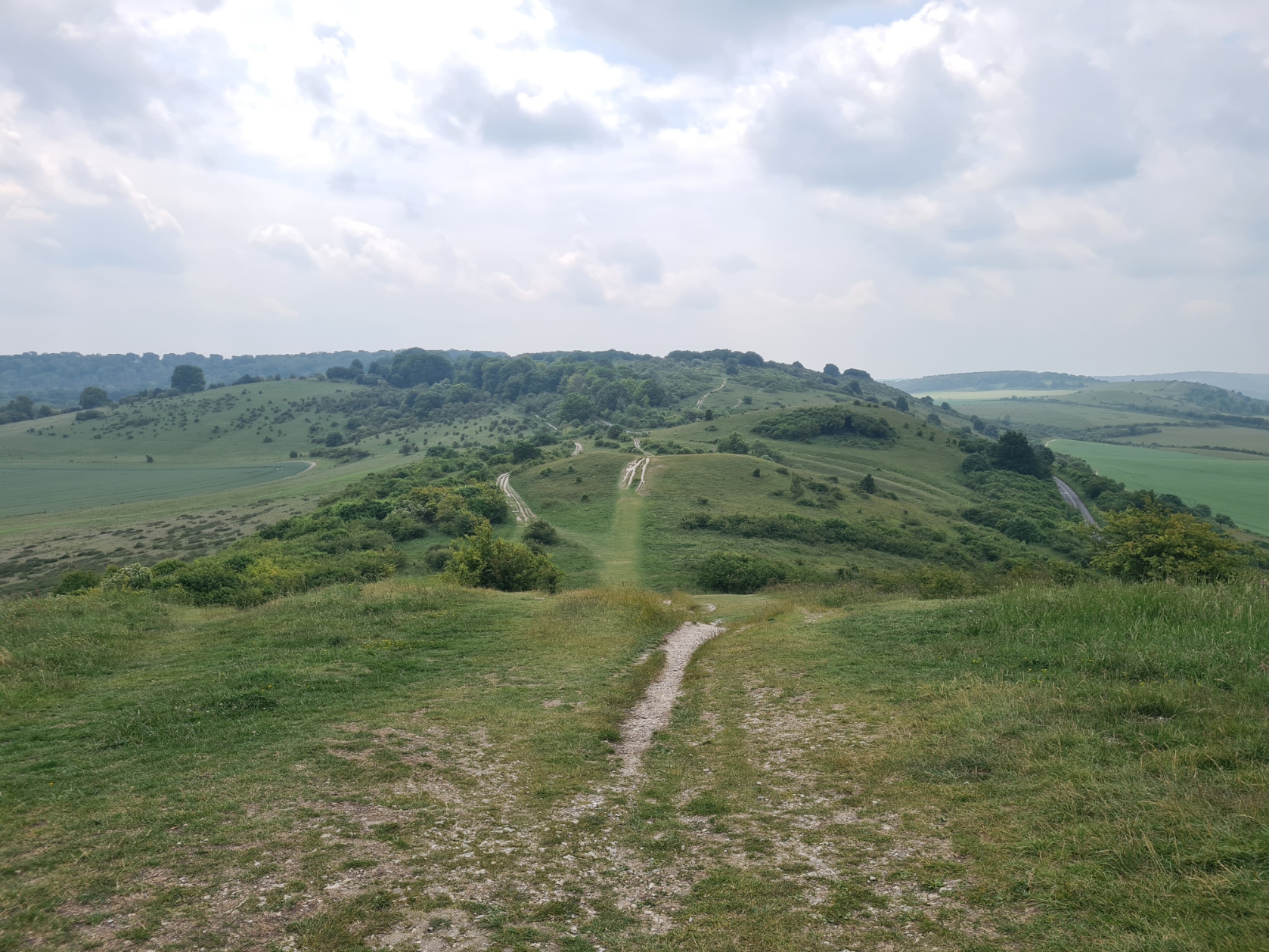
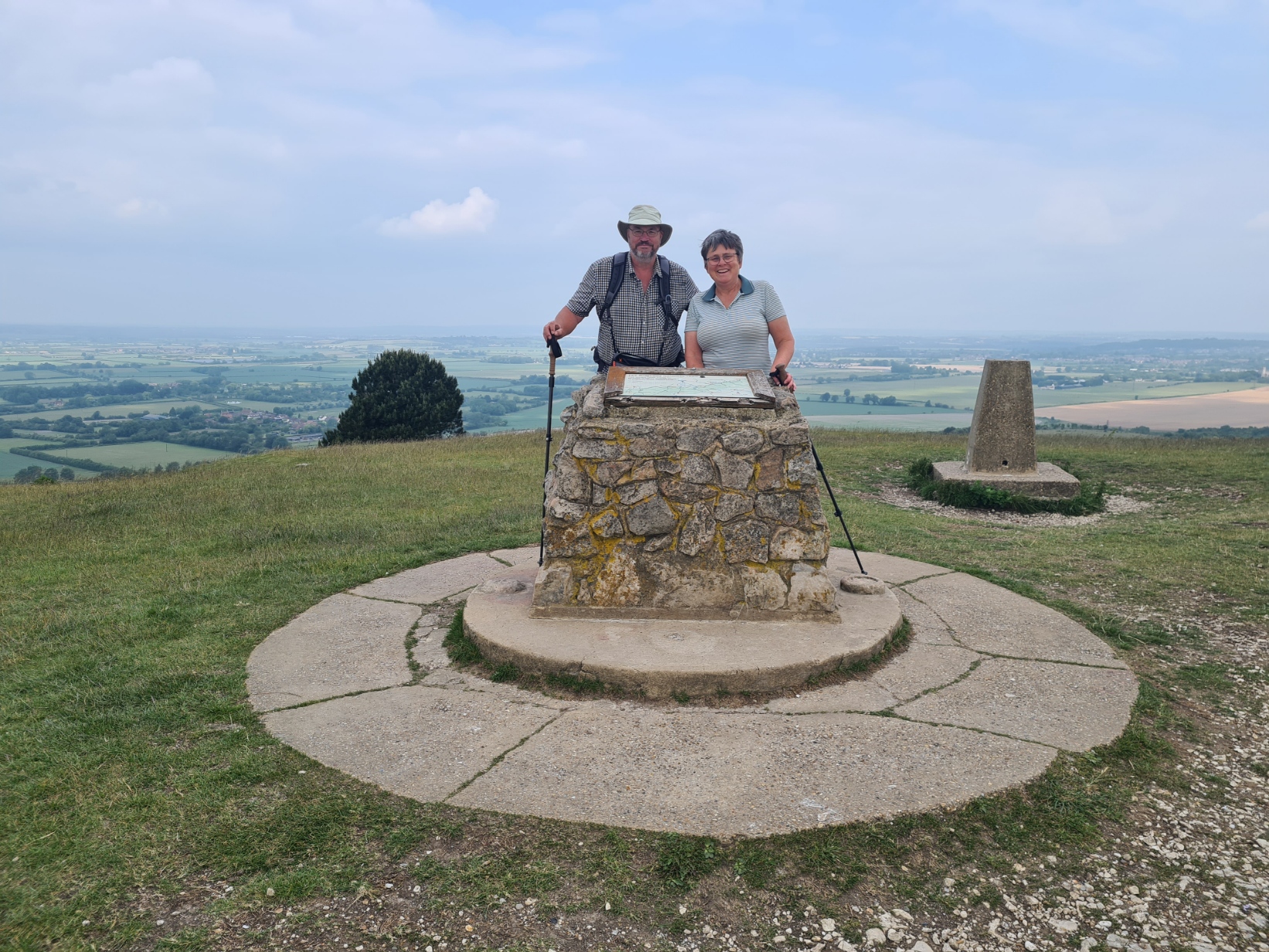
A last couple of hundred metres climb up the badly eroded chalk path and we were there. A Trig Point and marker plinth vied for official end point, so we ‘touched in’ at both before posing for obligatory ‘trail done’ photos.
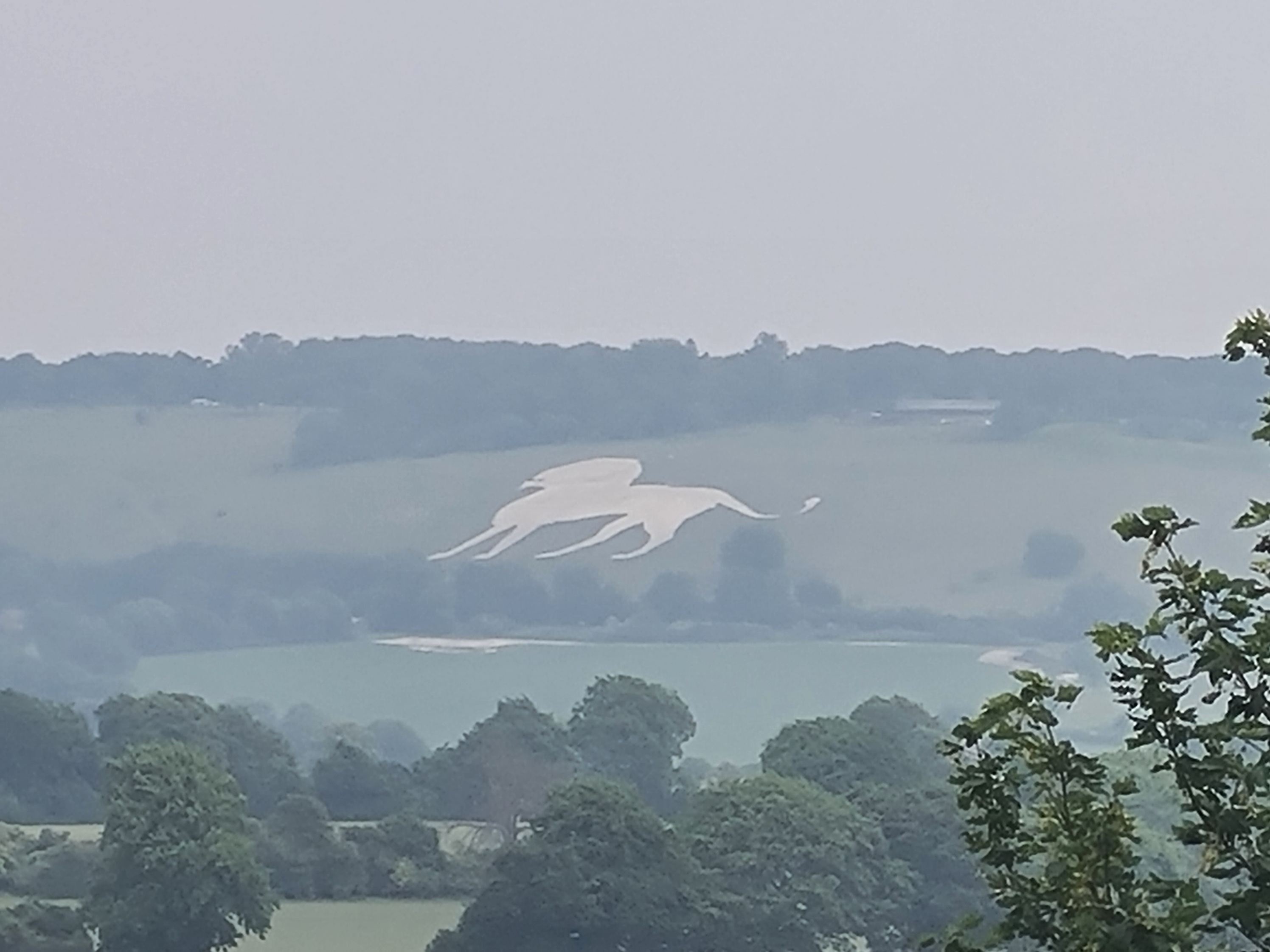
We paused for a while to take it in and enjoy the views. Across the valley were the Dunstable Downs, complete with the 147m (483ft) chalk hill figure of the Whipsnade Lion, completed in 1933, that advertises the nearby ZSL Whipsnade Zoo. During the eighteen month construction, Ivinghoe Beacon was used as a vantage point to check the accuracy of the outline.
Our day wasn’t over though. Rather than simply retrace our steps to Aldbury, we decided to walk back a different way, taking in the Bridgewater monument that sits on a hill overlooking our village. Setting off downhill, we met the intrepid four Ridgeway walkers last seen at breakfast, now on their way up to the finish, then continued down to the carpark, where we turned left off trail to first follow the Icknield Way in the direction of Aldbury, before branching off to climb steadily up to the Ashridge Estate, now managed by the National Trust.
Due to the tree cover, we came on the monument quite suddenly as the trees thinned and opened up to a wide grassy plateau, with the 33m (108ft) tall column standing proud. In truth, I don’t think it a particularly attractive monument. Designed by Sir Jeffry Wyattville in neoclassical style, the fluted Greek Doric column is surmounted by a giant copper funerary urn finial. It has an internal 172 steps leading up to a viewing platform that I had hoped to climb, but it is only open on weekends and bank holidays. It was built in 1832 to commemorate the ‘Canal Duke’, Francis Egerton (1736–1803), 3rd Duke of Bridgewater and 6th Earl of Bridgewater. In 1761 he opened the Bridgewater Canal in North West England to transport coal from his mines in Worsley to Manchester, in North West England. Later extending it to Runcorn and then to Leigh. While a horse could pull a one-ton cart of coal by road, it could pull 30 tons on a canal barge. It is said to be the first true canal in Britain.
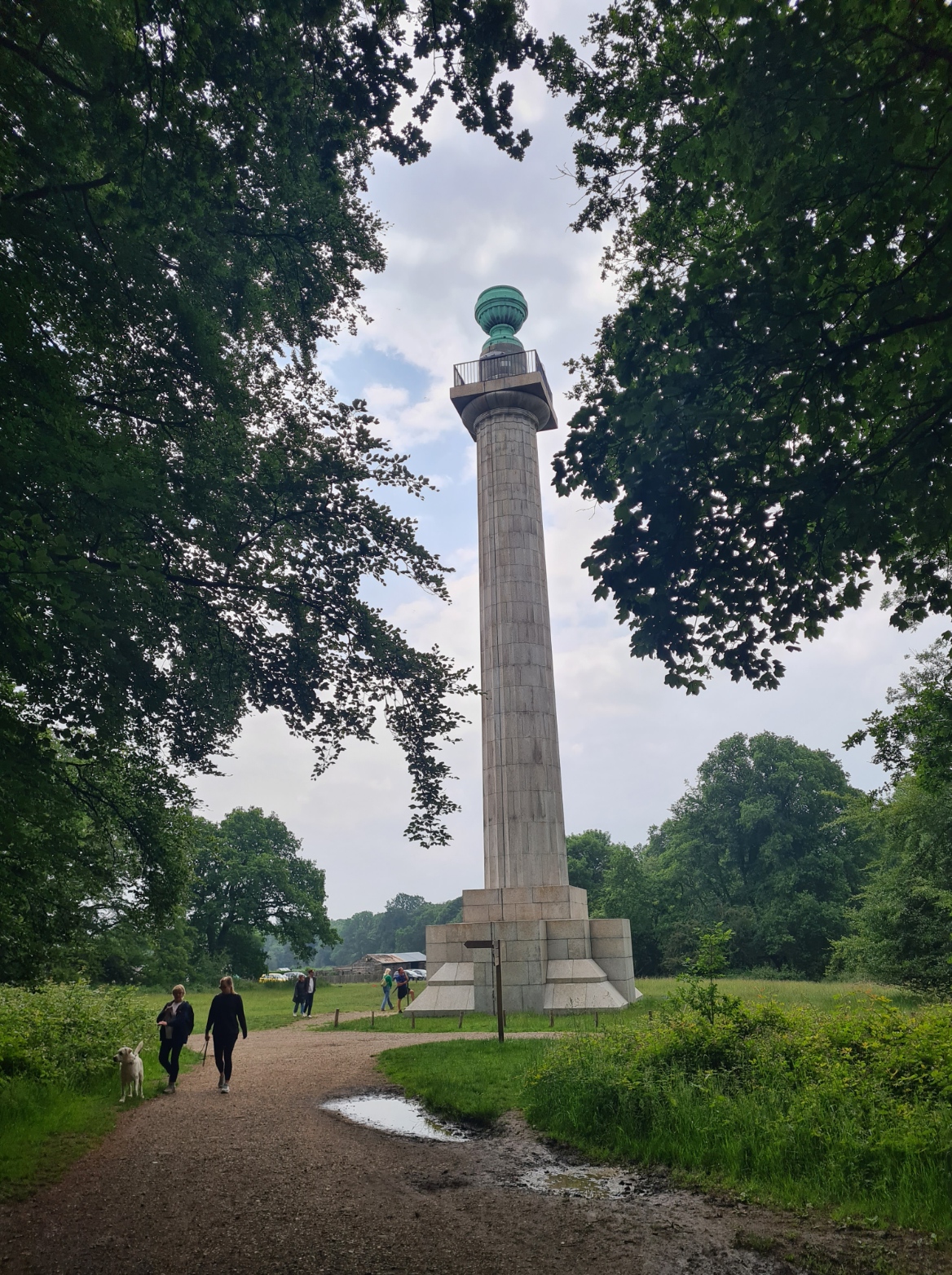
It was a popular place with a nearby packed carpark and there was large number of families out enjoying a walk about, picnics, ball games, and the busy café. I queued for teas, and went and joined Mrs Three Points on one of the benches for our simple lunch. From there it was just a steady walk down the hill, back to Aldbury. We arrived back at the pub in time for a late lunchtime pint. One of the four hikers came in, completely done in with painful feet, he had left his colleagues earlier when they had also decided to walk up to the monument, choosing instead to road walk straight back to the village.
As for us, that was it. The walk was over. The Ridgeway has been a superb trail, despite the occasional wet day. We had enjoyed over 5000 years of history, mostly gentle walking with moderate daily distances, together with some excellent drinks and meals in rather lovely accommodations. We had one final evening meal to enjoy tonight and a taxi ride to Tring station tomorrow morning. Mrs Three Points is in fine spirits and we are both already planning next year’s trail. A coastline in the north east of England has been mooted…
- The Ridgeway- National Trail
- Short film- Grims Ditch
- 2016- Planning
- 2016- Food
- 2016- Water sources on the Ridgeway
- 2025- day zero- Arriving at Avebury
- 2025- day one- East Kennett to Ogbourne St George
- 2025- day two- Ogbourne St George to Woolstone
- 2025- day three- Woolstone to Letcombe Regis
- 2025- day four- Letcombe Regis to Goring
- 2025- day five- Goring to Watlington
- 2025- day six- Watlington to Princes Risborough
- 2025- day seven- Princes Risborough to Aldbury

 Three Points of the Compass
5 replies »