
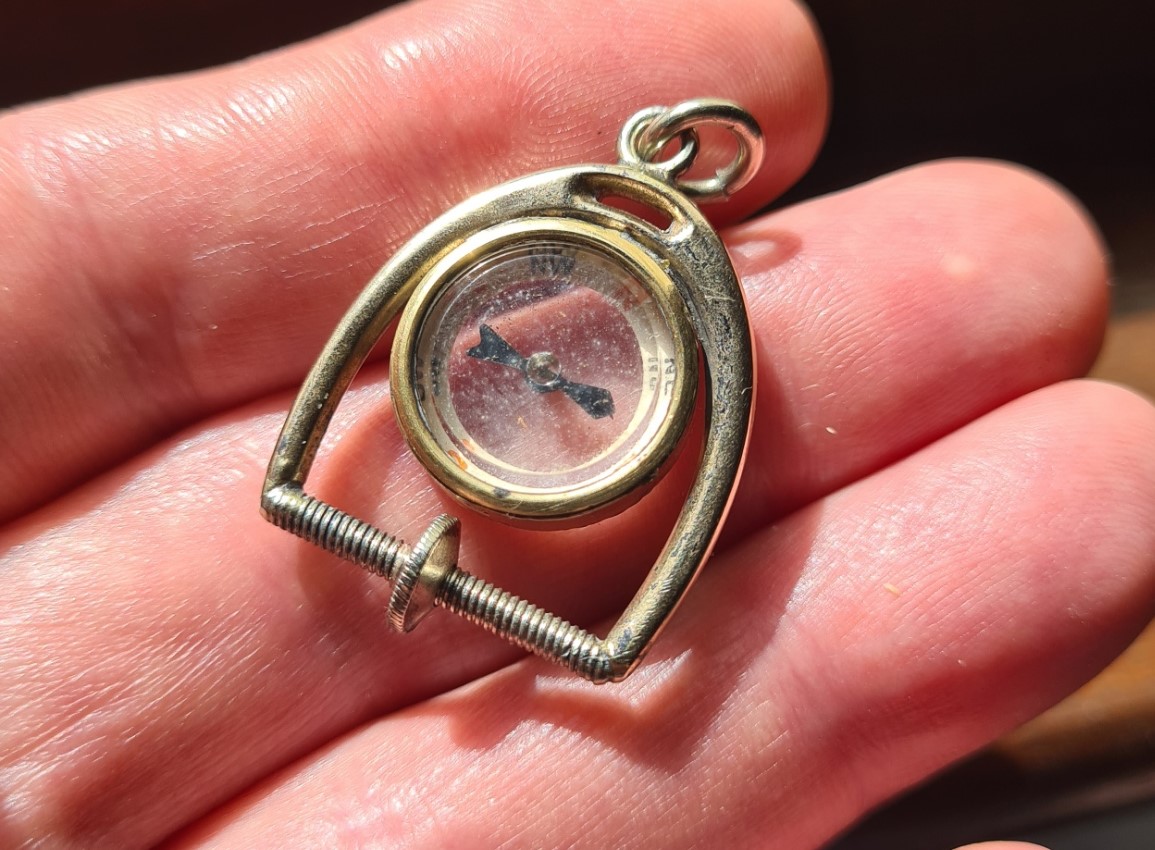
Produced by a London jeweller specifically for cyclists in the 1890s, this little fob instrument bought together two useful functions
This little tool combines a basic compass with a simple map measure. There isn’t much to it. A curved metal hanger supports a threaded bar at it’s base. There is a ring at the top to enable this to be attached to a gentleman’s watch chain. The spindle has a knurled tracking wheel, used to measure lines on a map. It is an opisometer, if a very basic one. In addition, there is a transparent compass centrally mounted within the hanger. The 16mm diameter compass has flat crystal faces on each side, with chamfered edges. It is a press fit into it’s silver housing. Only cardinal (in red) and inter-cardinal points (in black) are shown on each side, with a blued arrow needle indicating north. It is not liquid filled but the needle settles quite quickly.
“simple, perfectly accurate, and impossible to get out of order. Indispensable for all tourists”
Munn advertising for their combination map measure, 1892
Following the invention and adoption of earlier examples of ‘running machines’, commonly referred to as a dandy horse, mechanically propelled bicycles slowly became more commonplace in the mid-nineteenth century before larger scale production of bicycles in dedicated factories took off in the later part of the century. They became very popular and innovation in both mechanical efficiency and comfort ushered in the ‘Golden Age of Bicycles’ in the 1890s. Many companies took advantage of this boon and produced publications, clothing and accessories for cyclists.
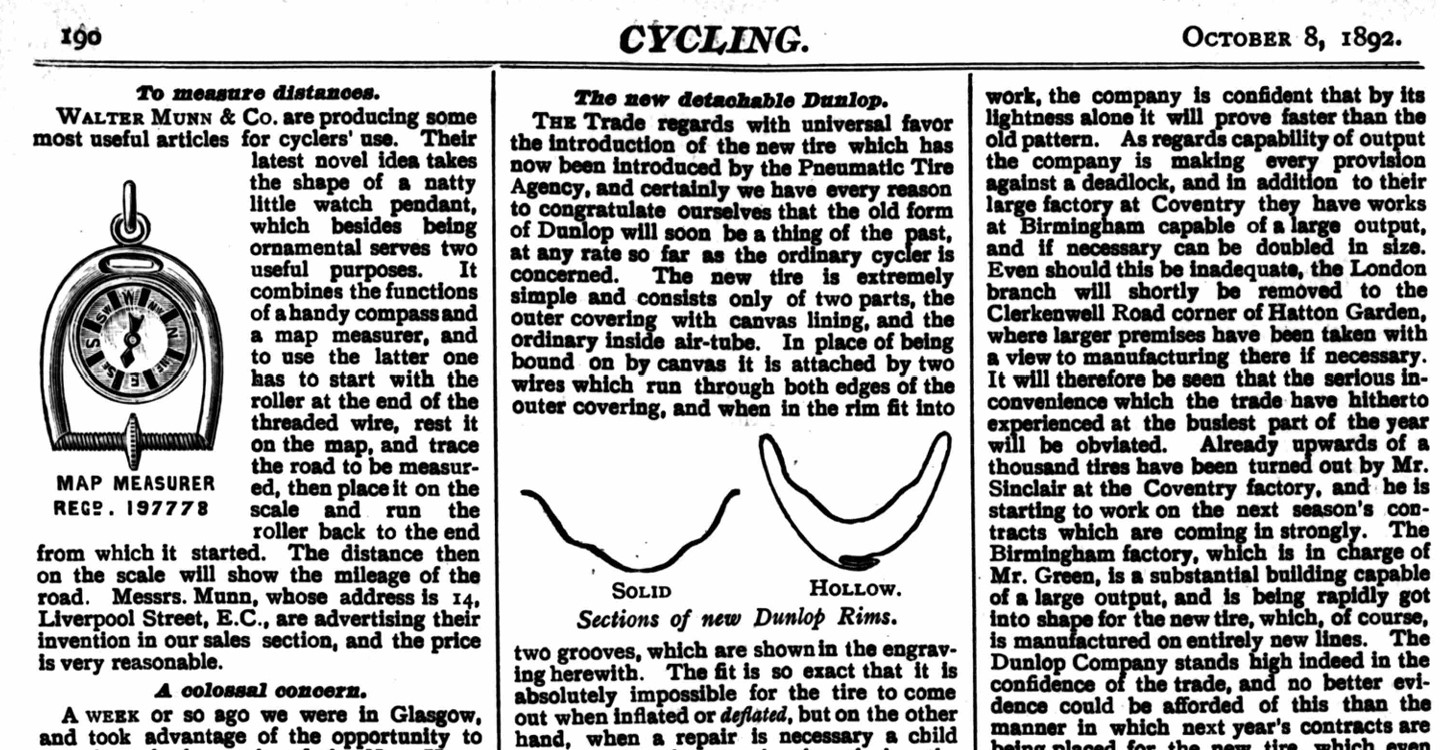
As well as providing a rough compass bearing the opisometer can be used in the normal fashion. The knurled silver tracking wheel is rotated to one end of the threaded spindle. The wheel is then placed on a line, a road, or track on a map, and rolled along it’s length. The tracking wheel is then rolled back along the scale usually present on accurate maps. This will indicate the length of the line traced, including curves.
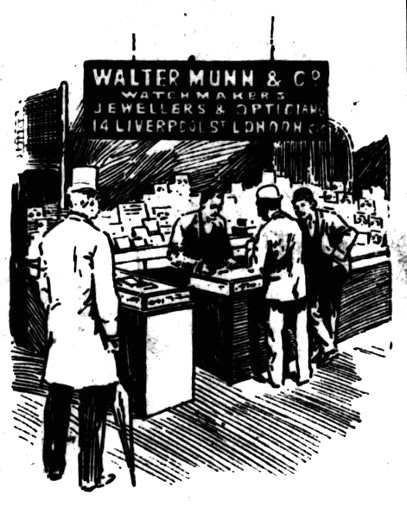
Walter Munn & Co. was a jeweller, operating out of 14 Liverpool Street, London. They advertised themselves as ‘watchmaker, jewellers and optician”. Munn was a keen cyclist himself and produced a variety of accessories targeted at cyclists. These included Eye Protectors, a watch-holder for mounting on handlebars, a ‘Speedograph’ watch, and an “ingenious charm for the watch chain, with a compass and map measure combined”. Munn’s Map Measurer and Compass was advertised in Cycling. This was a newspaper. published 1891-1920 by Future Publishing Ltd. in London, that catered to the cycling fraternity. It reported on innovation and activities of interest to their cyclist readers and traders, also carrying many advertisements in a supplement to the newspaper.
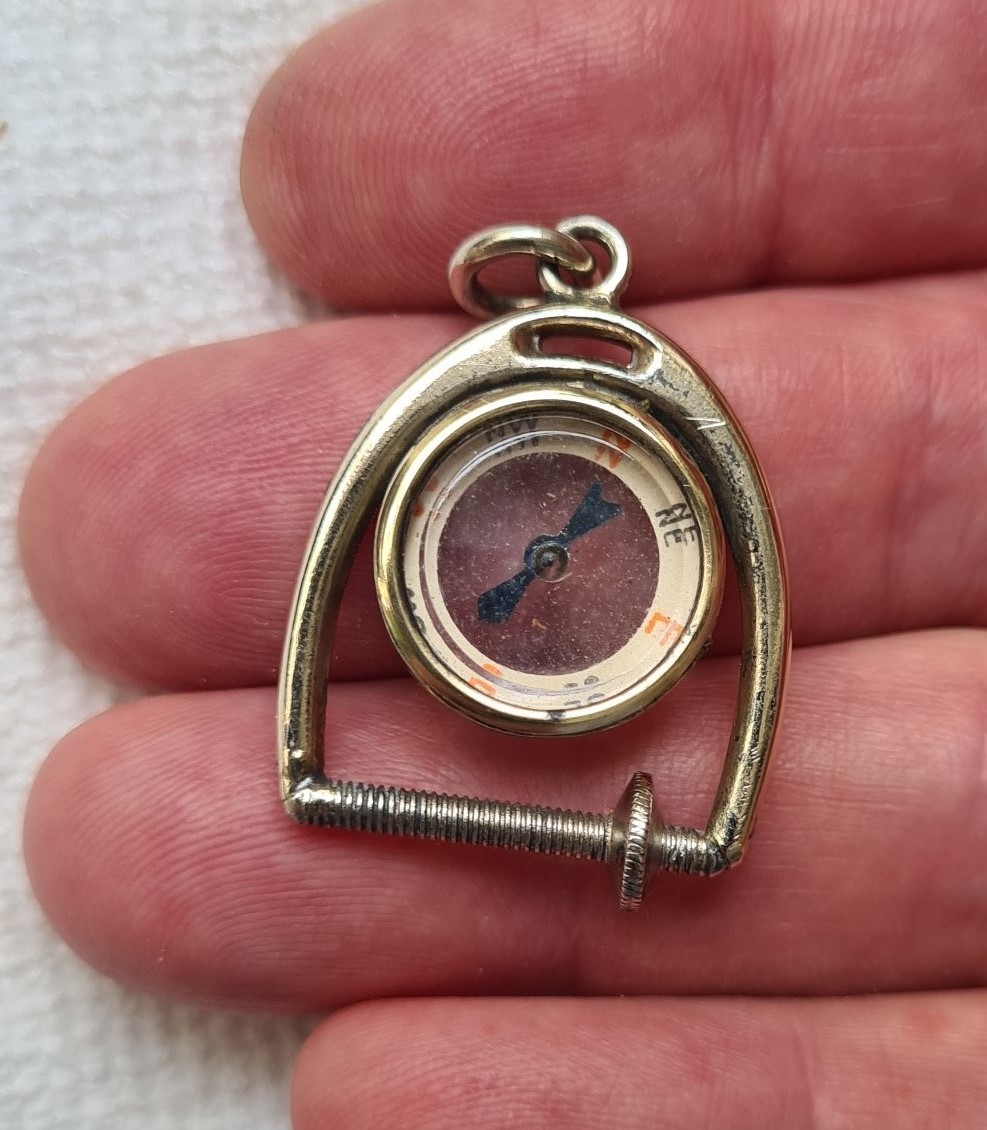
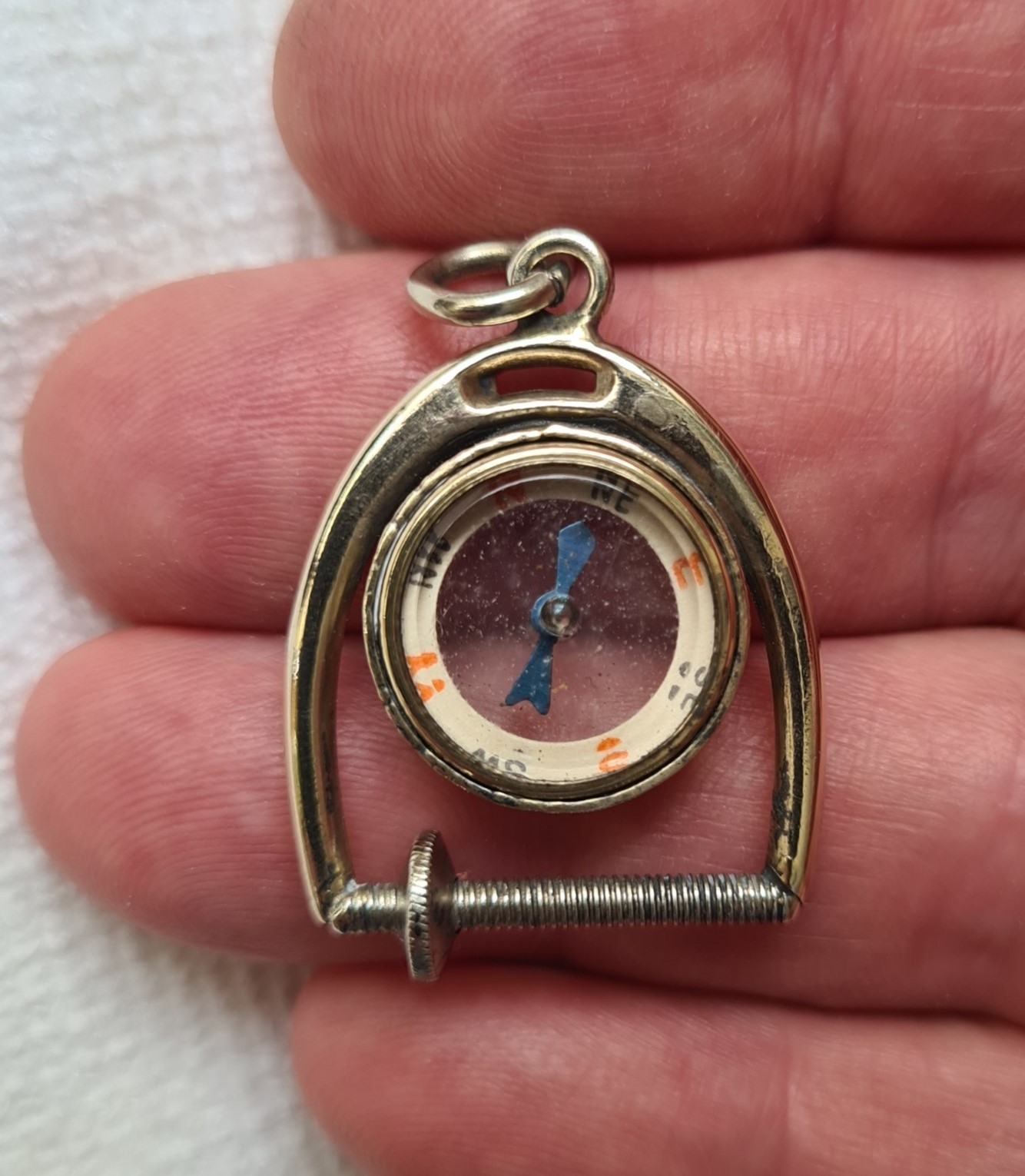
The ‘charm’ measure has modest dimensions. Including the hanger loop, it has an extreme measurement of 35mm (including tracking wheel), and is 25.5mm across it’s width. The compass is just 5.5mm deep across it’s two faces. It weighs 8.84g. Despite it’s small size, the opisometer (tracking wheel) will measure an impressive 745mm.
Munn sold this little charm in a number of finishes. First available in 1892 as silver plated for two shillings, or gold plated for three shillings. Later that year it could also be purchased in solid silver for six shillings and sixpence. In 1893 it could alternatively be purchased in solid gold for 21 shillings or hallmarked 15-caret gold for 30 shillings. 15-caret gold was used for some jewellery in the UK 1854 to 1932. Munn may have been over ambitious in his expansion as he entered bankruptcy in 1894. .
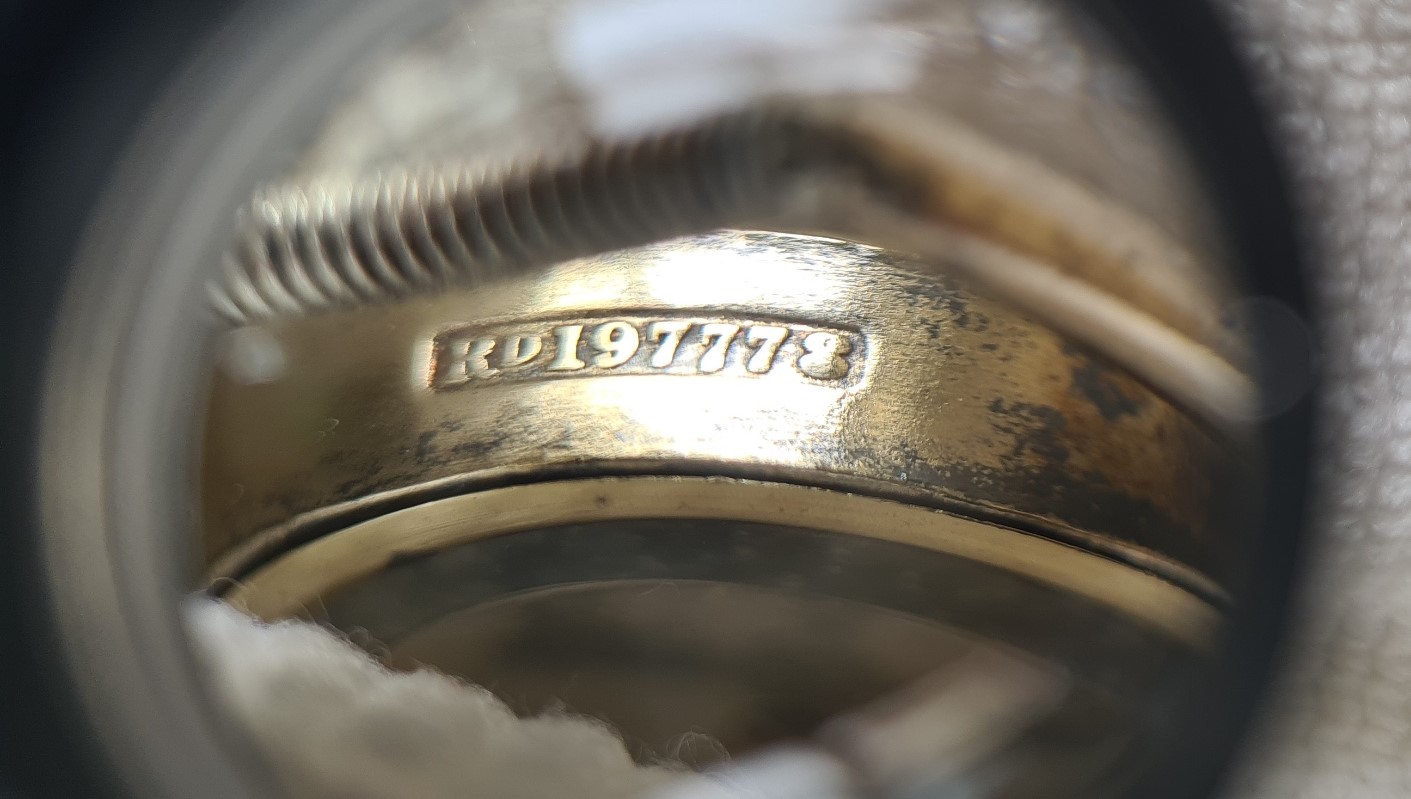
Despite the metal hanger having no magnetic attraction, there is no hall mark on the example shown here, so is likely silver-plated. The registration mark is shown however. This is RD197778
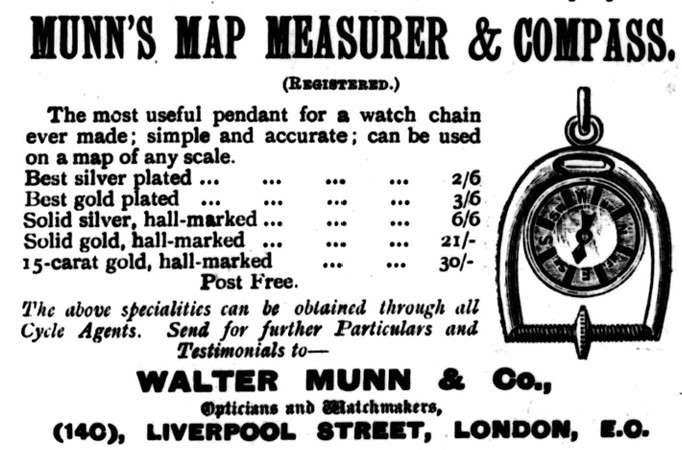
It does appear as though the design of the paper ring surrounding the compass needle was later improved upon. Contemporary illustrations show additional markings around the circumference of the compass dial and the compass points have been repositioned slightly closer to the axis, thereby improving visibility. This would suggest that the example shown here is an earlier version.
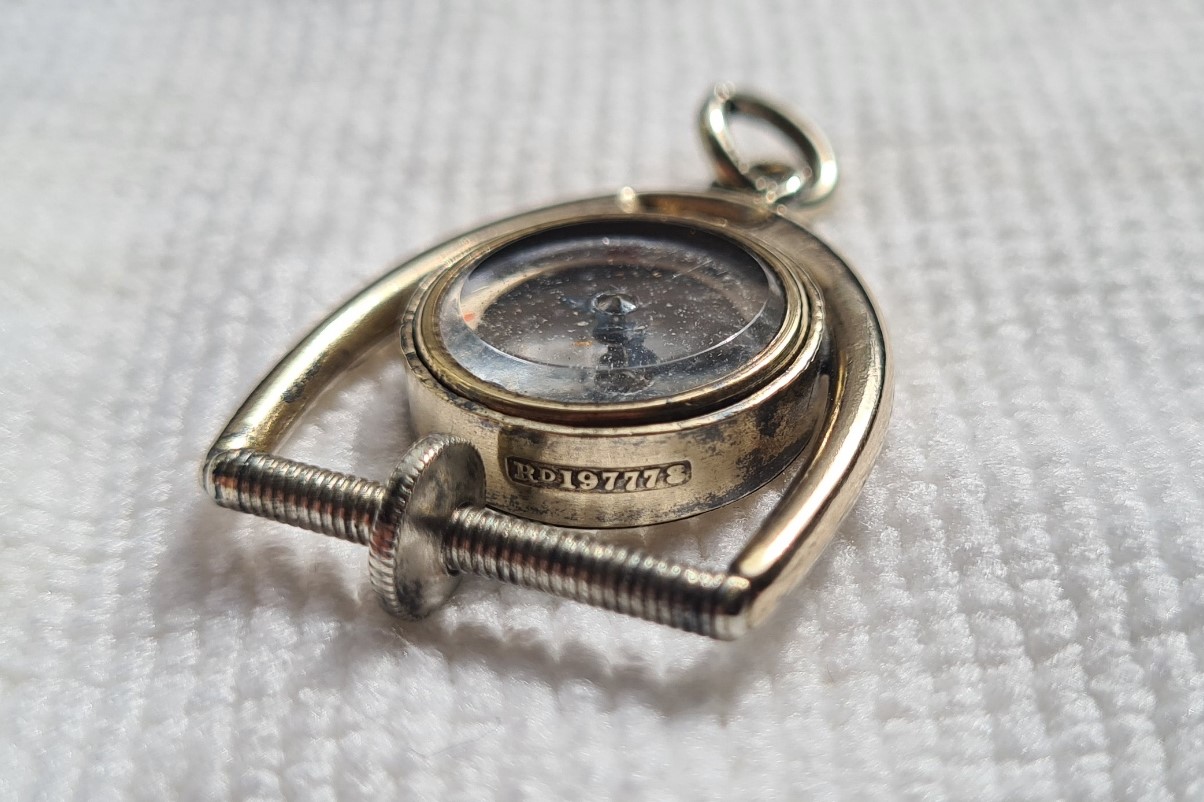
This is a charming little measure and a fairly remarkable and uncommon survivor. The glass may have sustained a few knocks and scratches over the intervening years but, despite its simplicity, it still works as both compass and measuring device, if not producing the degree of accuracy that more complicated and better constructed measures will enable.
Three Points of the Compass has looked at quite a few more, perhaps more traditional, Map Measures in detail. Links to these can be found here.

 Three Points of the Compass