
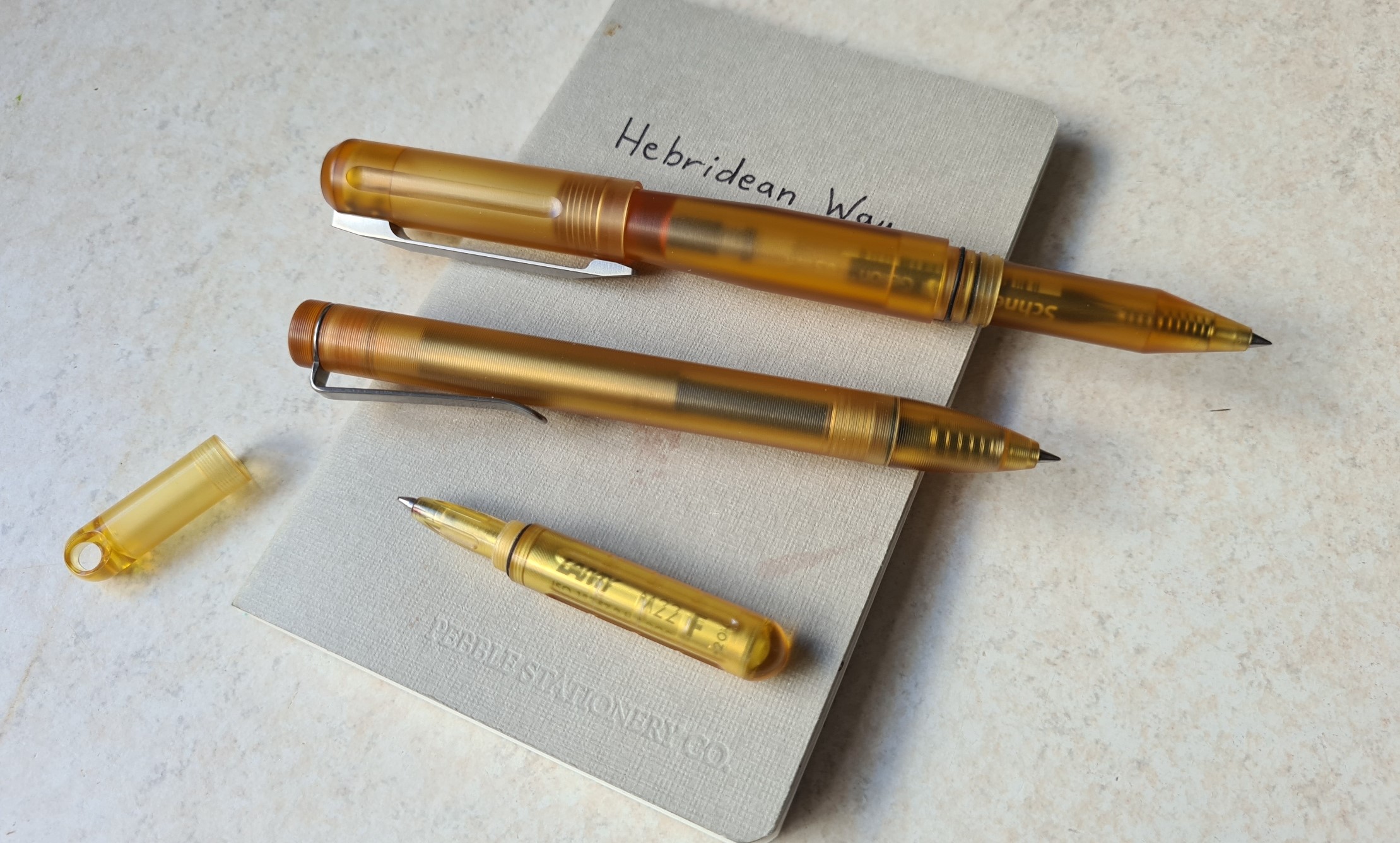
One type of plastic has been exciting comment among the Everyday Carry brigade. But does polyetherimide have anything to offer? Three Points of the Compass purchased a trio of pens to try them out.
What are Ultem and Polyetherimide? :
Polyetherimide (PEI) is a group of thermoplastics introduced to the general market by General Electric Plastics Division in 1982. One particular type of PEI goes under the trade name Ultem. It has a number of interesting properties- it can be extruded, thermoformed, extrusion blow moulded, injection mould shaped, machined and polished. Available in a small number of colours or tints, it can also be transparent but I think it more commonly translucent, what I have seen some describe as ‘semi-transparent’. It is most commonly encountered as pale yellow to amber to brown, sometimes black. Some like the yellow colour, others find it abhorrent.
Products made from Ultem can be quite expensive but other manufacturers, particularly in China, are producing items more cheaply, usually correctly stated these as being PEI, but sometimes erroneously (and probably illegally) as Ultem, which is a trademarked name. All Ultem is PEI, but not all PEI is Ultem. PEI has similarities to both Polyoxymethylene (POM) and Polyetheretherketone (PEEK), both also used in engineering applications. PEI is a bit of a middle road material, balancing tensile strength, stiffness and high temperature resistance while also being resistant to chemical action. It is sometimes reinforced with glass or carbon fibre and maintains shape and size under stress.
All of these materials and others have found applications outside their first intended usage. Some manufacturers have been happy to fill a niche and provide pens and pencils made from this ‘en vogue‘ material. Look at most of the prevalent EDC sites or better pen suppliers and you will find Ultem pens. From the US, these will be carefully targeted within the market, cleverly advertised and often highly priced. They might be domestically manufactured and assembled, or parts or complete pieces may be outsourced, frequently overseas. China is the usual source of more competitively priced items. Chinese products are sometimes uniquely designed, though occasionally a clone.
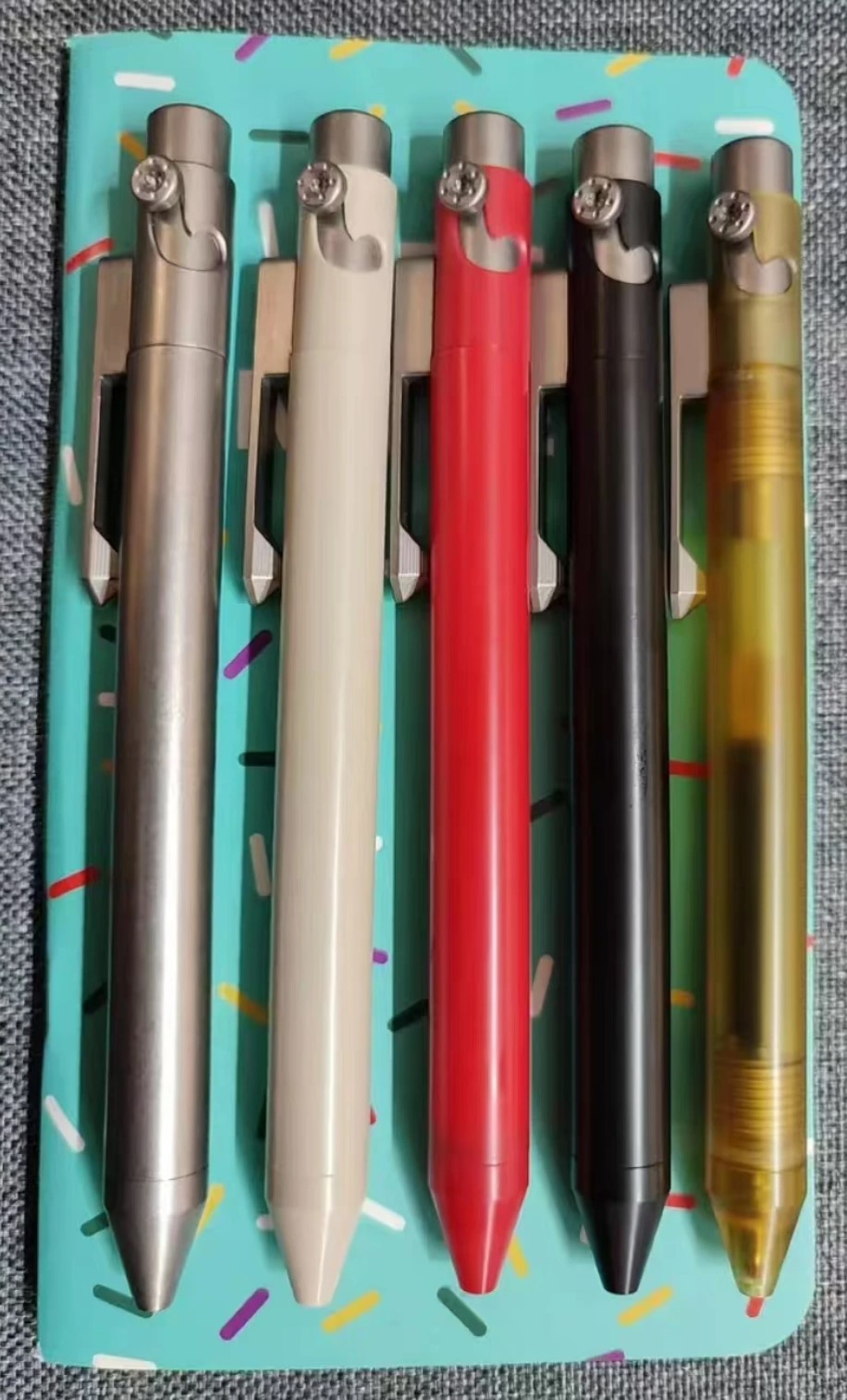
By way of example of how manufacturers attempt to fill all possible corners of a market, I include an image from one Chinese supplier’s online advertising. There are five of the popular ‘bolt-action’ pens, each utilising interesting materials. From left to right: Titanium (35.5g), Polyetheretherketone (PEEK) with titanium parts (19.7g), Polyoxymethylene (POM) with titanium parts (20.2g), Polyetherimide (PEI) with titanium parts (19.7g) and Polyetherimide (PEI) with titanium parts (19.5g).
This shouldn’t be a surprise. Those in the outdoor world have always experienced cross-over application of materials and products. Dyneema Cuben Fiber/Dyneema Composite Fabric/Cuben Fiber was originally developed for the sails on racing yachts, Nalgene has their roots in the pharmaceutical industry, and difficult to produce Titanium found use in military and aerospace applications until much more widely applied. More recently, Polartec Alpha was originally produced for US Special Forces operating in Afghanistan. Ultem is simply the latest greatest GOAT material to attract attention. It might stay the course, it may fade with time, we shall see.
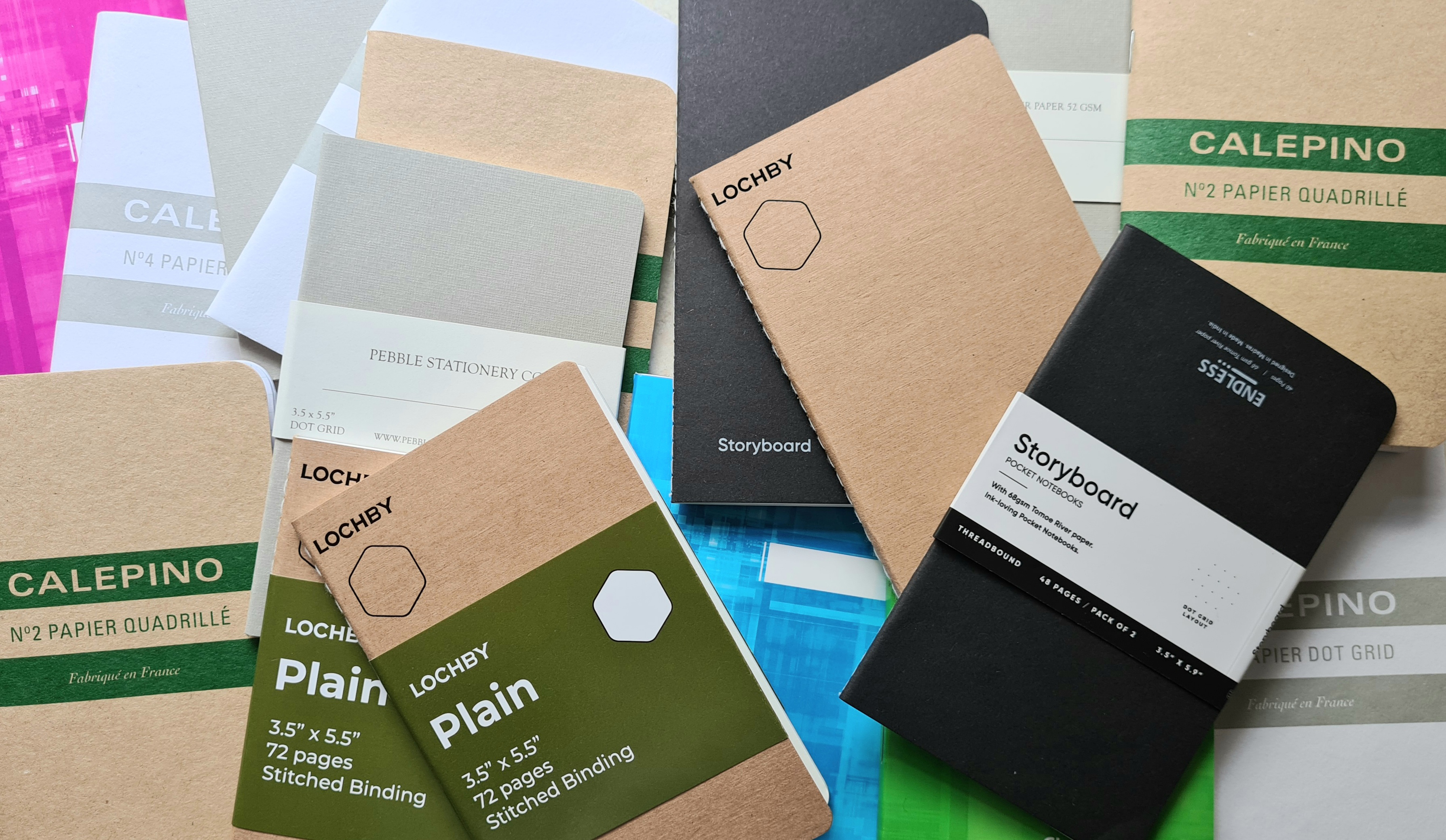
Remaining analogue:
Three Points of the Compass still likes to keep a written journal on trail and is always on the look out for lightweight pen options to take backpacking. Sadly, because they are small, often taken out to be used and often roll off tables, I have frequently mislaid (read ‘lost’) pens and or their caps. I had seen the buzz in the EDC world regarding items made from Ultem, so dipped a toe into the morass by purchasing three pens made of Ultem/Polyetherimide to try them out. I am a lightweight backpacker (not ultra-light) and recognise that my journaling is a luxury that has a (slight) weight penalty. This is easily personally reciprocated by the analogue and tactile enjoyment it provides me, together with a lasting legacy of recorded memories. Journals might even include a sketch or two, or ephemera stuck in. I have used a fountain pen in the past, even on trail, and will do again, as these are doubly tactile and can suit sketching. There are quite a few Ultem fountain pens on the market but I have not, as yet purchased one as I still have my favourite, albeit a modded pen.
When I include a luxury in my pack I am always looking at how I might decrease it’s effect on my overall enjoyment, usually with regard to bulk and weight. Occasionally I might have to compromise with efficiency, but not always. For example, I like to include a pump to blow up my sleeping mat. I now have a tiny yet effective pump in my kit that weighs less than 10g. I can live with that. An advantage with an Ultem/PEI pen, not so far mentioned, is that it is a very light material.
Valyrian PEI Signature pen:
I don’t think the Valyrian Outdoor Store, established 2018, on AliExpress actually manufacture anything themselves but simply retail existing products under their own brand and various outlets. It would appear that the middle-man in the supply for this pen was Zenjiang Roy Import and Export Trade Co. Ltd., a company that imports and exports to and from many countries. However where my pen was actually made and by who, I haven’t tracked down. The pen I purchased was advertised as the EDC Imported PEI and Titanium Alloy Signature Pen. It cost me £18.47.
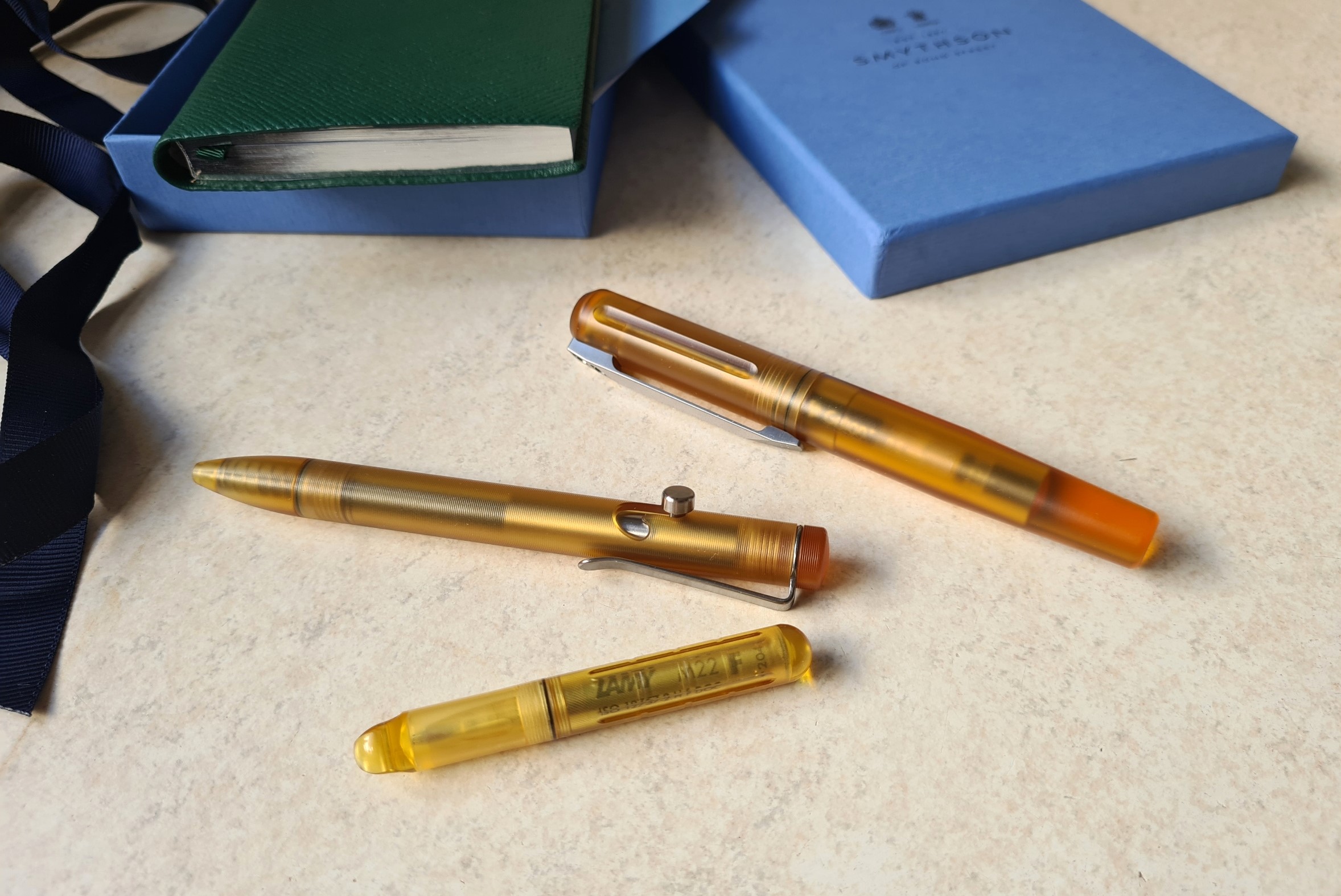
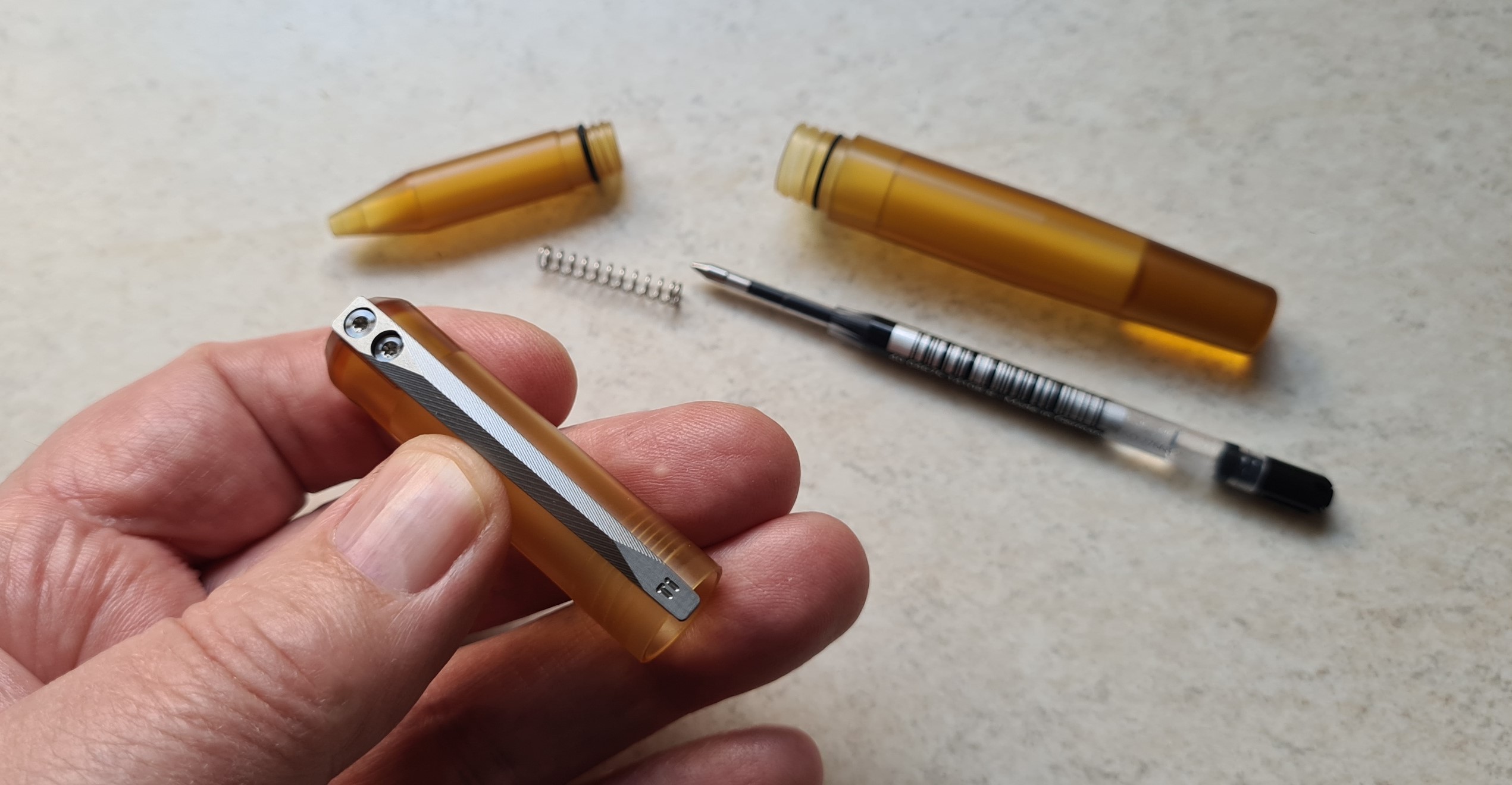
The pen is manufactured from the standard yellow-coloured PEI with a handsomely designed titanium clip. The cap screws on to the pen body and will post on the end to give a longer pen that is more comfortable in use. It is a ‘proper’ pen. There are two O-rings, one where the cap screws on, the other where the body unscrews to two parts, to change the pen cartridge. Everything screws together or apart easily and firmly. The transparent material enables the writing on the pen cartridge to be read through it. Which could be off-putting for those more ascetically demanding. The cap has a couple of deep ridges on its length to aid grip, but the main pen body is smooth throughout. Holding the pen, the tips of the fingers can rest below the step down and partly on the thread, which is comfortable to use.
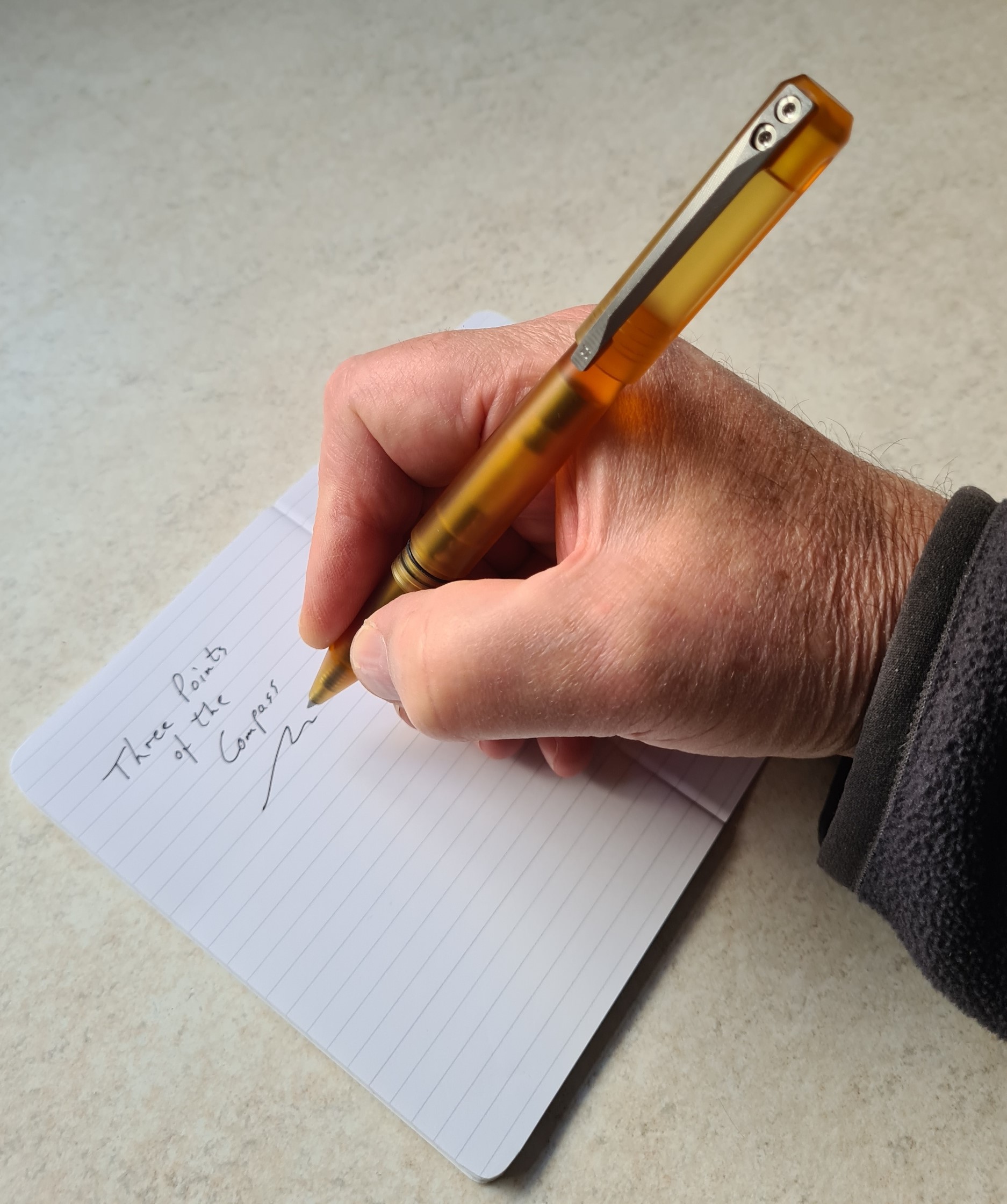
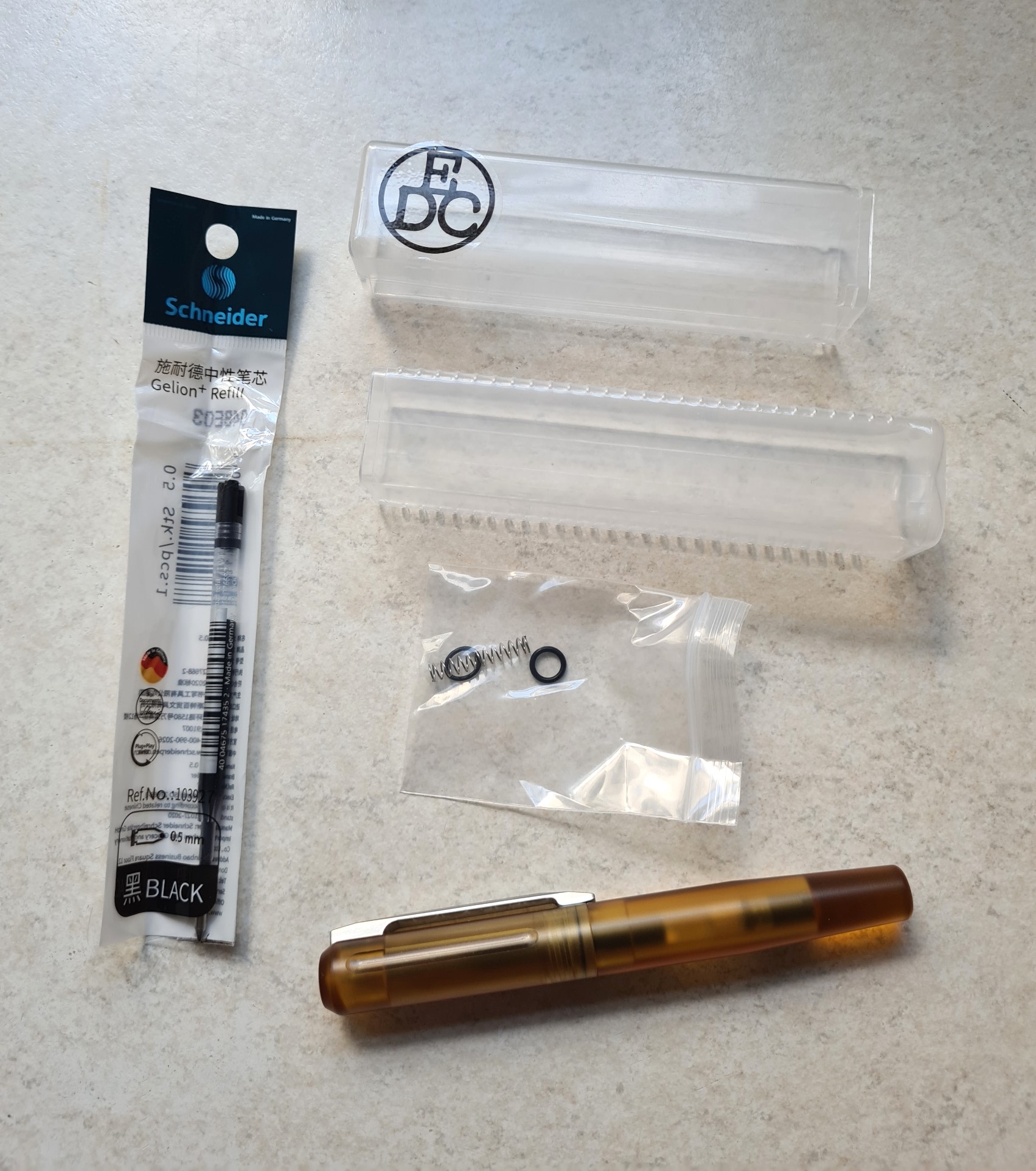
The pen is mostly made from Ultem PEI other than the 45mm deep titanium clip, two hex screws fixing this to the body, steel spring and O-rings. It weighs 20.9g with pen cartridge installed and measures 121mm in length with cap fitted, 117mm without. The grip is 14mm diameter.
It comes with a German made Schneider Gelion+ black ink gel ball refill with 0.5mm tip installed. This is a waterproof, light-resistant ink which complies with ISO 27668-2. These are widely available, or use any equivalent size refill. The two part plastic tube that the pen is supplied with also contains a sealed spare ink refill, two spare O-rings and spare steel spring, all good to see.
This is a perfectly functional full size PEI pen that will interest pen aficionados, though I am sure some might prefer to swap out the ink cartridge to their preferred refill. It is comfortable in the hand and well balanced. Considering this as being used as a desk or office pen, I am not keen on the transparent body as I feel it detracts from the aesthetic in that setting.
Bolt action pens:
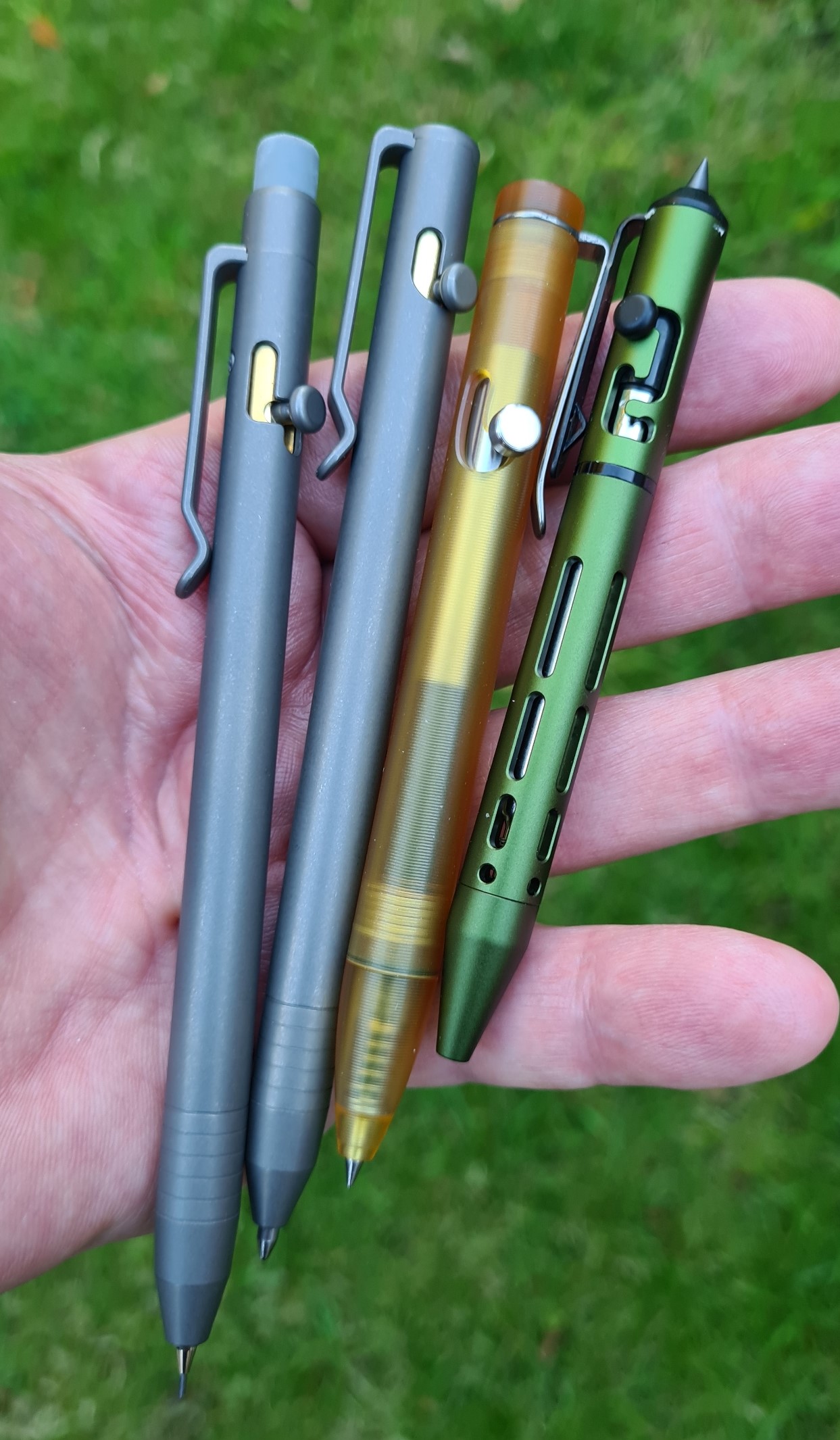
Bolt-action pens and pencils have gained an appreciative following in recent years. Not only for their efficient operation, but also partly due to their slightly satisfying fiddle-factor. Most such pens you encounter will be constructed from steel, aluminium, titanium, brass and other metals, less commonly encountered are plastic bolt-action pens as this material is seldom tough enough. I do already use a bolt action pen, and pencil, in my travel set-up. These are an expensive titanium Slim Bolt Action Pen from Big Idea Design, together with an equally expensive titanium Bolt Action Pencil from the same manufacturer. When I don’t want to carry both of these, I am currently favouring the Olight O’Pen Mini 2, that combines a black-ink ballpoint pen with a metal alloy ‘pencil’. This bolt-action pen/pencil not only slips into a pen holder-loop, nestled beside a small journal, but is a much more versatile and far cheaper option than the admittedly well-made, but over-blown Big Idea Design duo.
Ultem/PEI bolt-action pen:
Advertised as the Ultem PEI Gel Ink EDC Bolt Pen with TI Pocket Clip, I purchased this pen via AliExpress for £19.93. The pen I purchased is produced in two lengths, ‘Short’ and ‘Long’, I have the short version. Like the Valyrian product above, the EDC Flashlight Store where I purchased it is simply an online store front for a pen made elsewhere by someone else. Possibly Shenzhen Siyuanweitong Technology Co, Ltd. As far as I can ascertain, the EDC Flashlight Store was established in either 2017, 2021 or 2024! You find these products sold by numerous outlets for varying prices. I have seen it also sold by EDC Gear as the LoneLabs Field Agent Ultem Pen, costing £45. It can be difficult to nail down information about Chinese stores and pen refills can be peculiar to China or Japan.
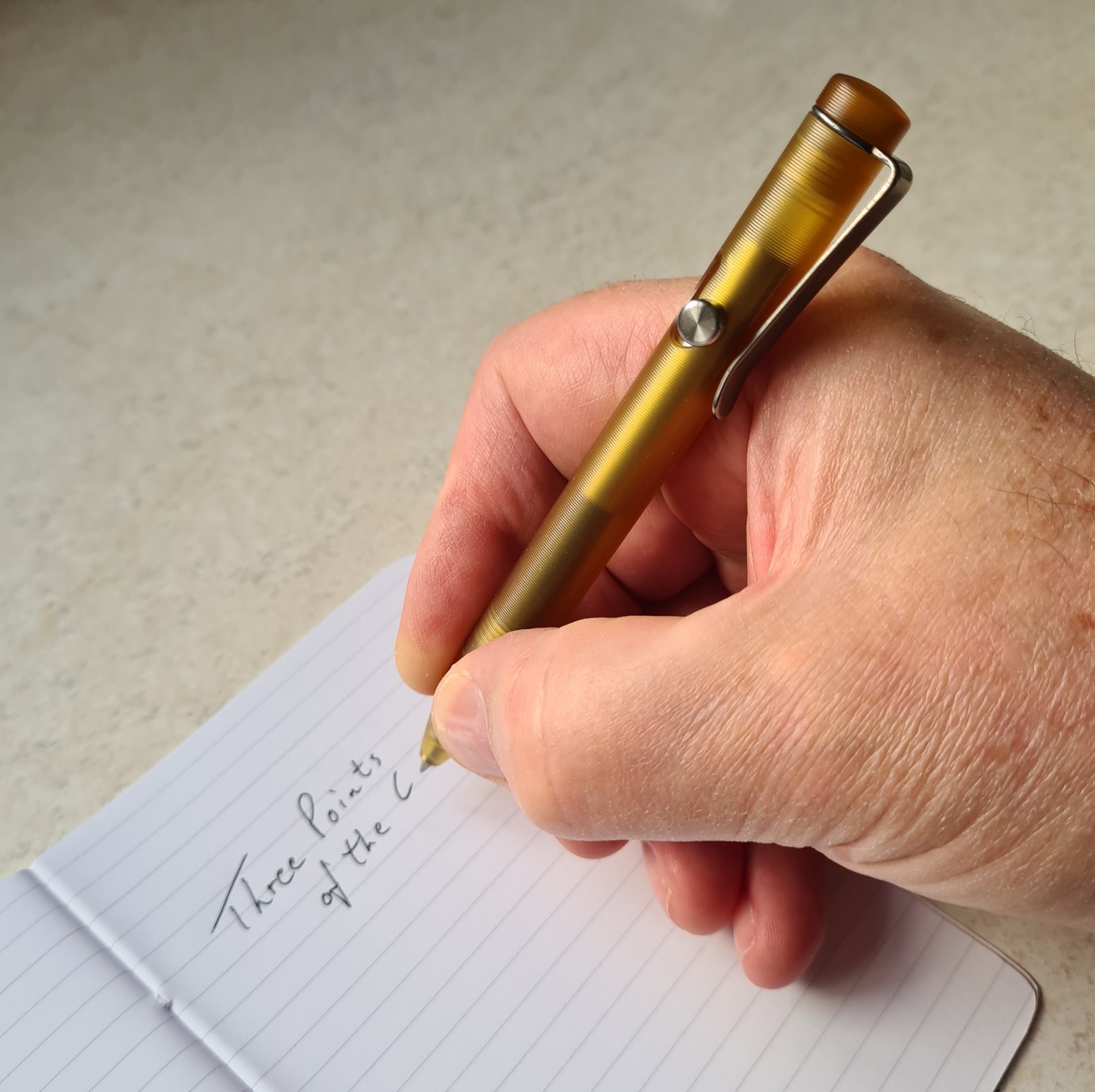
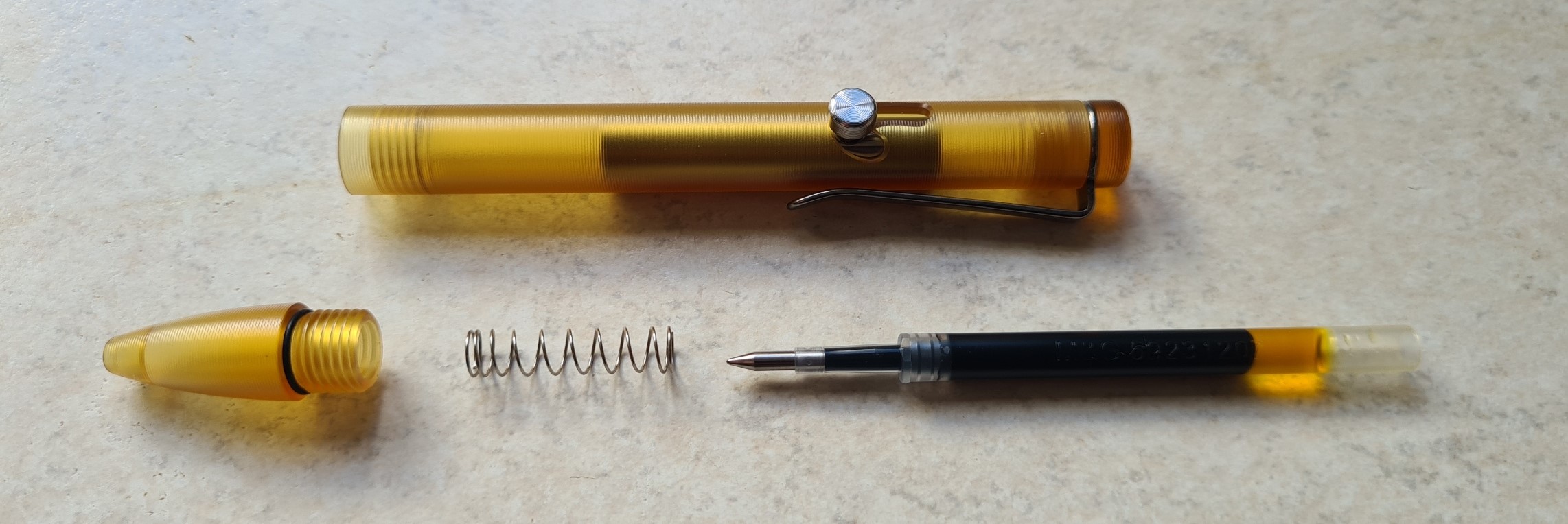
So, one seller advertises this pen as being Ultem, another as PEI. It just shows how some manufacturers are not bothered by branding rights. Again, it has an attractive transparent body, more translucent to my eyes, with steel bolt action and 37mm deep titanium pocket clip.
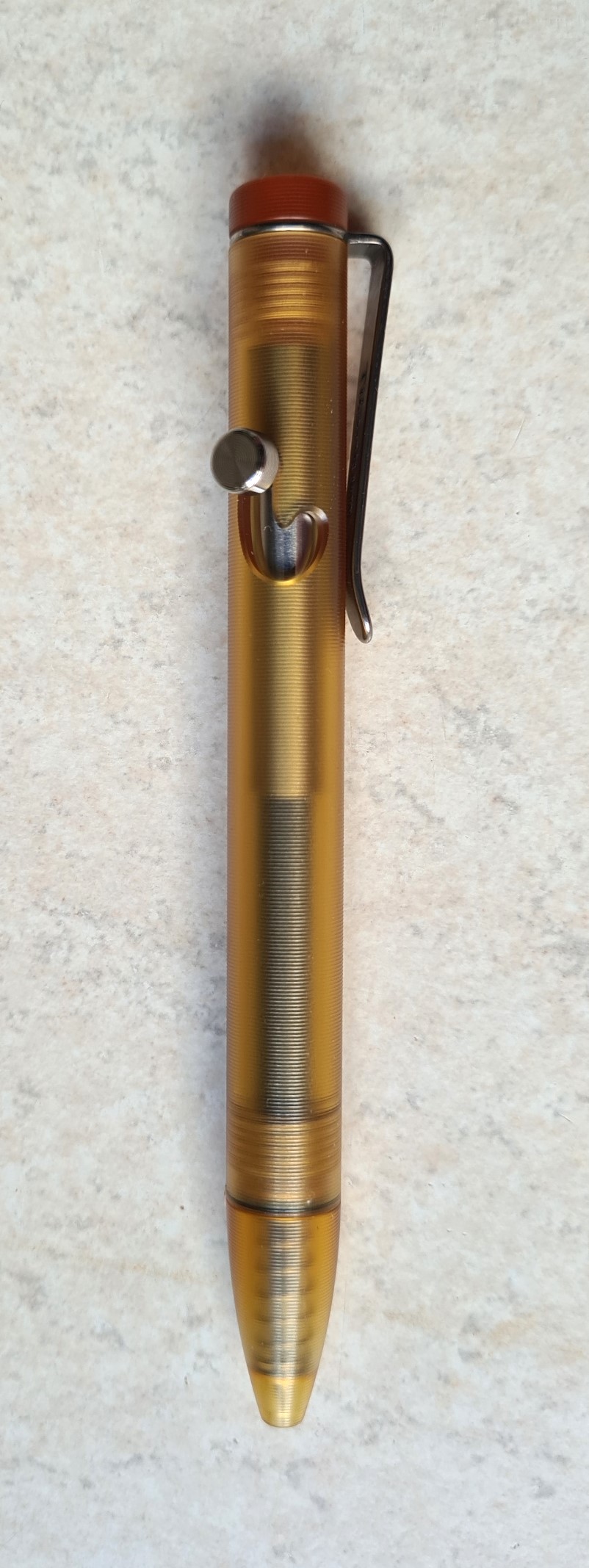
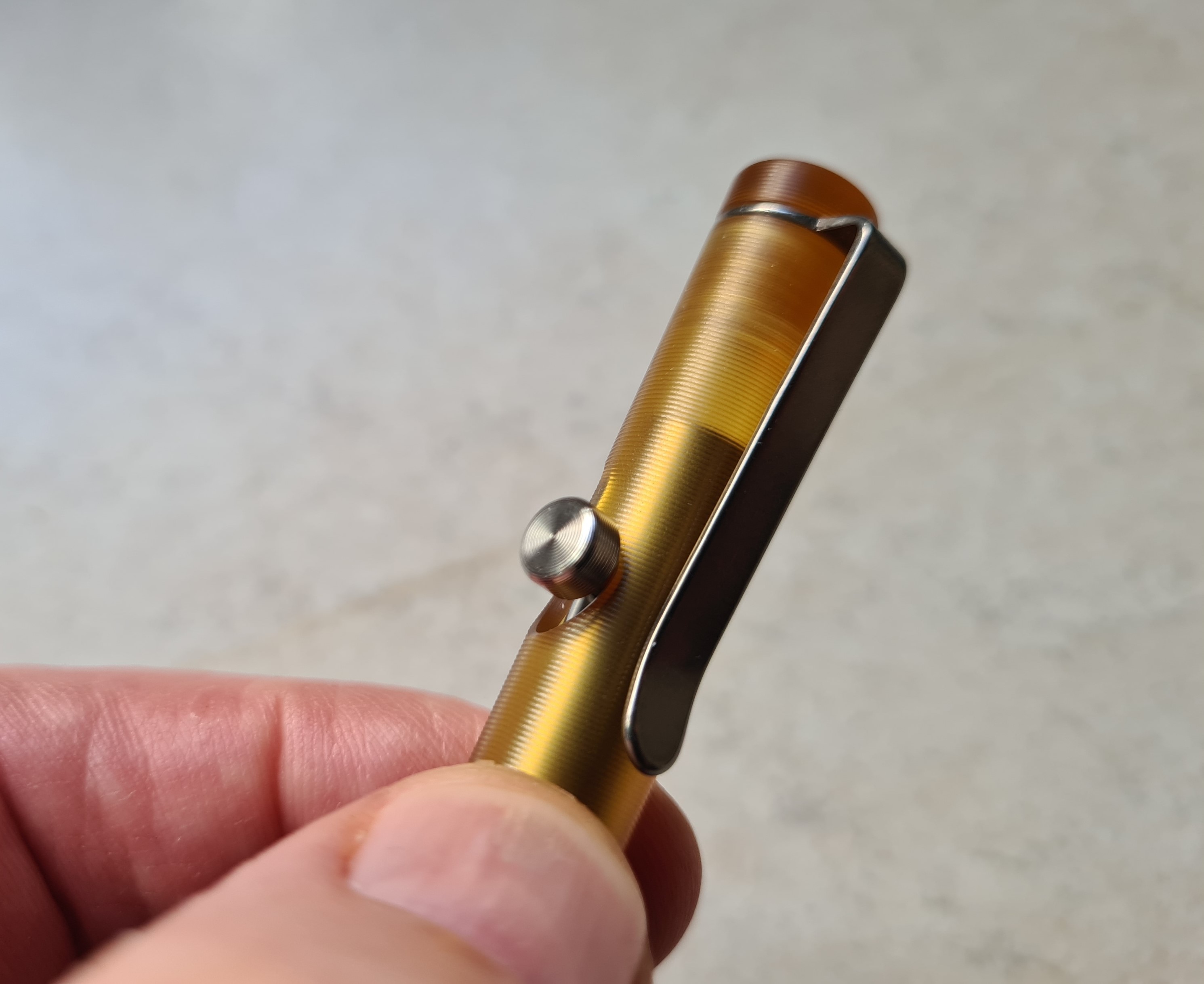
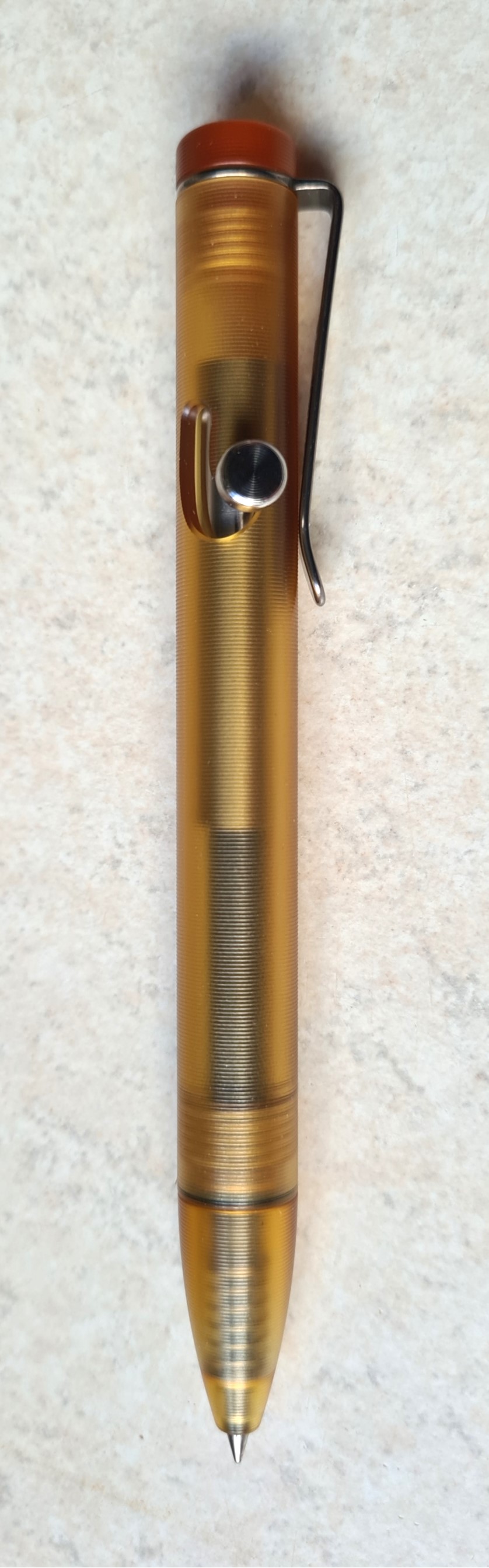
It is 117mm long and the grip is 11mm diameter. So while not as comfortable in use as the Signature pen, particularly for extended periods, it is fine as a jotter, for short note taking. It weighs a scant 15.5g. So may suit many for use while backpacking, however I am usually looking for something even lighter than this.
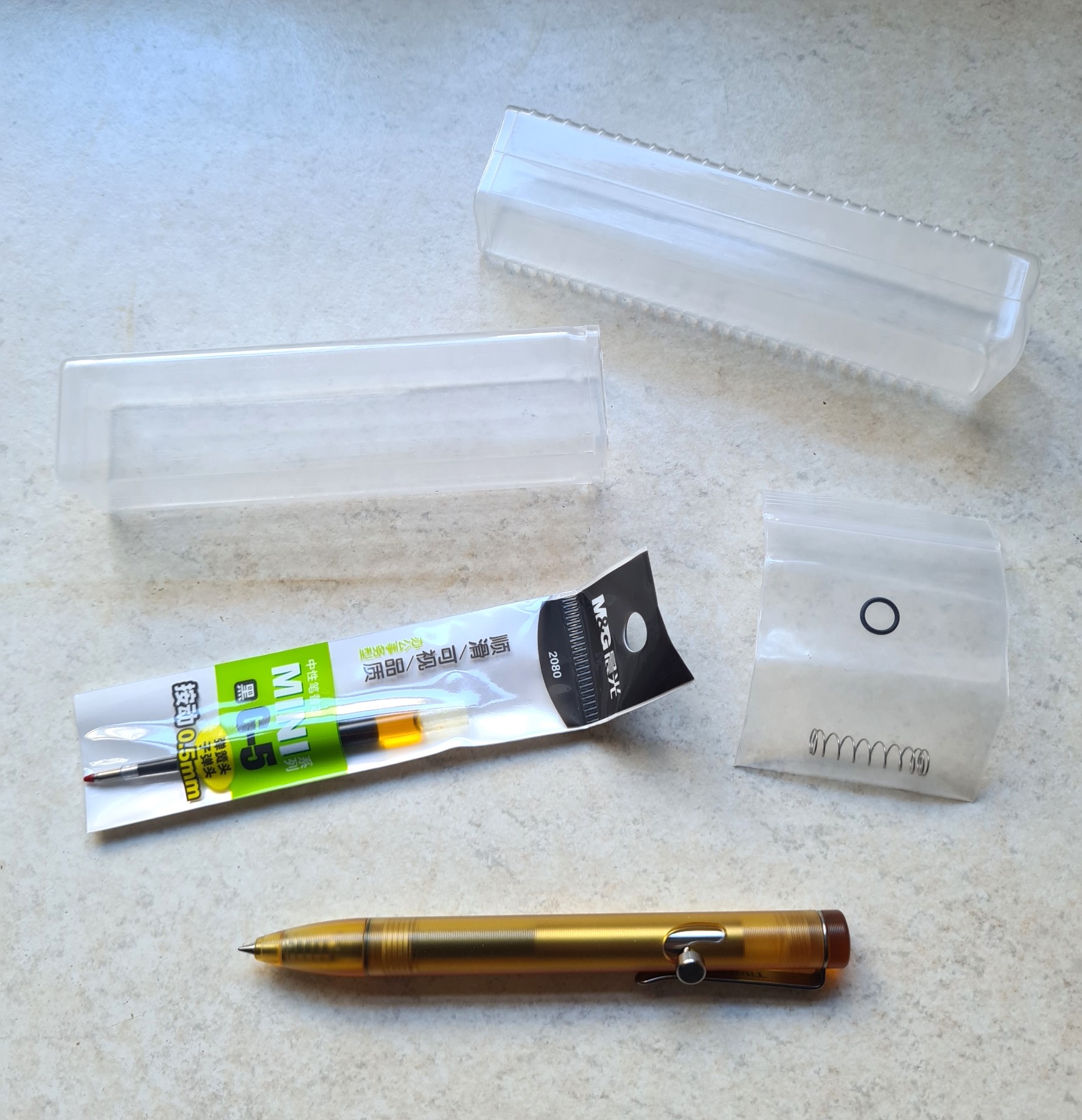
The pen is supplied in a two-piece plastic case and comes with a spare ink refill, spare spring and a single spare O-ring. Other than the main body of the pen, this is anything you would ever want to replace. This pen uses a Mini G-5 2080 refill. This gel refill is from Shanghai M&G Stationary Inc. and will write when inverted. I haven’t found this the easiest of refills to source. If anyone is aware of an equivalent decent refill, I would appreciate knowing. Unlike the Signature pen refill, the refill in the bolt-action pen has clear writing on it’s side which does not show through the transparent body of the pen. Instead, you have the dark ink filled refill extending from the steel shaft of the bolt action workings and making for a clean appearance to the pen. To my eyes, it is a great deal more attractive than the Signature.
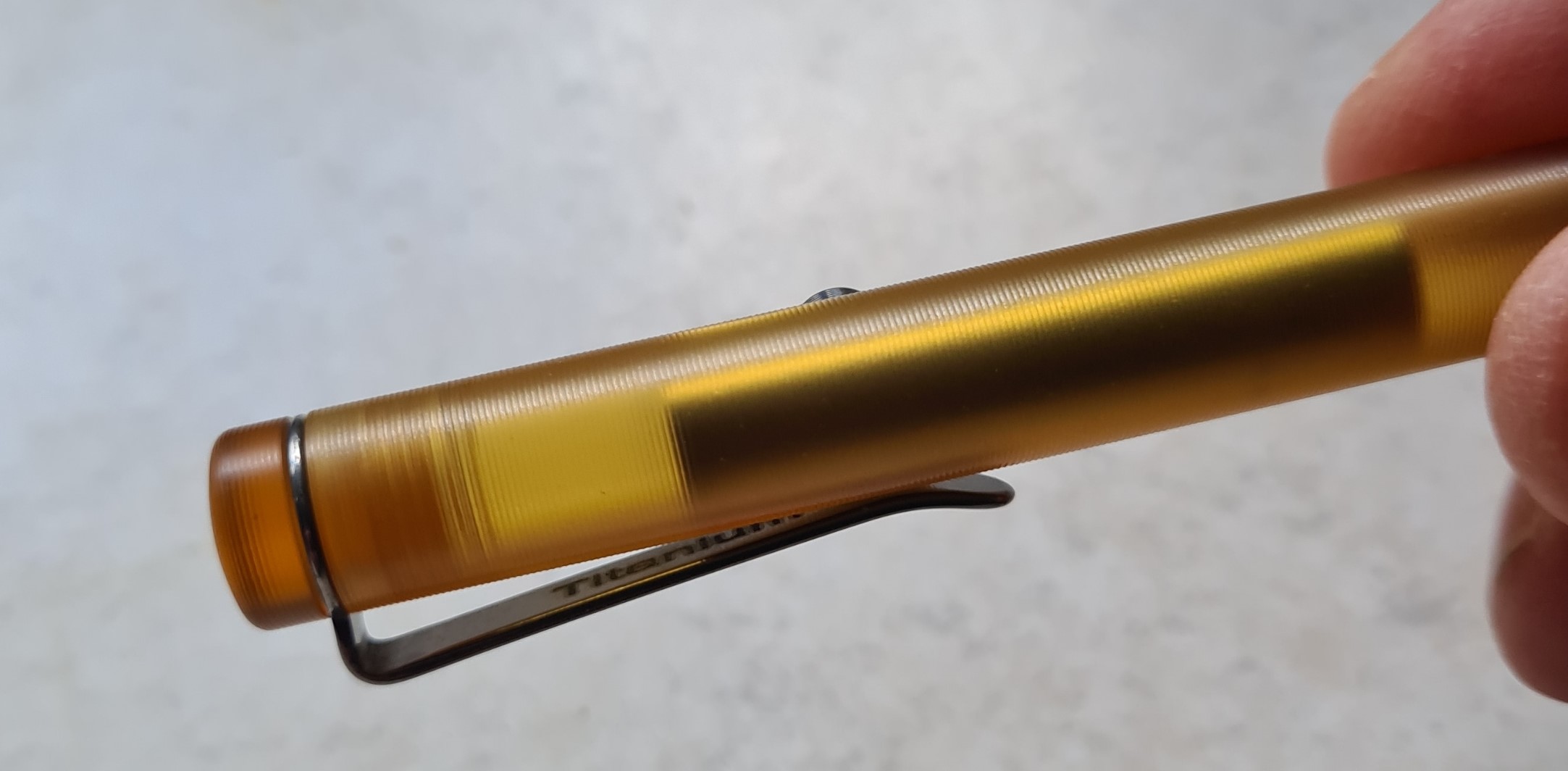
This is another well-made pen, without a single apparent flaw in it’s construction, other than a strange anomaly. The word ‘Titanium’ is hidden from view on the underside of the pocket clip. All of this model I have seen advertised also seem to have this. I don’t know why. If you want to show off a titanium construction, why not flaunt it on the outside of the clip?
Despite the short length and light weight of the Ultem bolt-action pen, I cannot see it soon replacing what I already use when out of the house for the day, nor on trail. But if I didn’t already have such a pen, then why not? But for lightweight backpacking, where weight is a primary concern, there might be a better option.
Backpacking pens:
I like to carry a small pen when backpacking, however I recognise that this is a luxury so am prepared to accept something that is a bit small and less comfortable to use. On trail, my primary concerns are weight, write length (ink capacity) and reliability. Cost is also a factor, but I am prepared to pay a little more if I feel that what I am getting balances my primary demands well.
Maratac Pen-Go Ultem:
The Limited Edition Pen-Go Ultem Pen by Maratac is limited in numbers, hard to find, horrendously expensive, but possibly the ultimate in lightweight pens for backpacking.
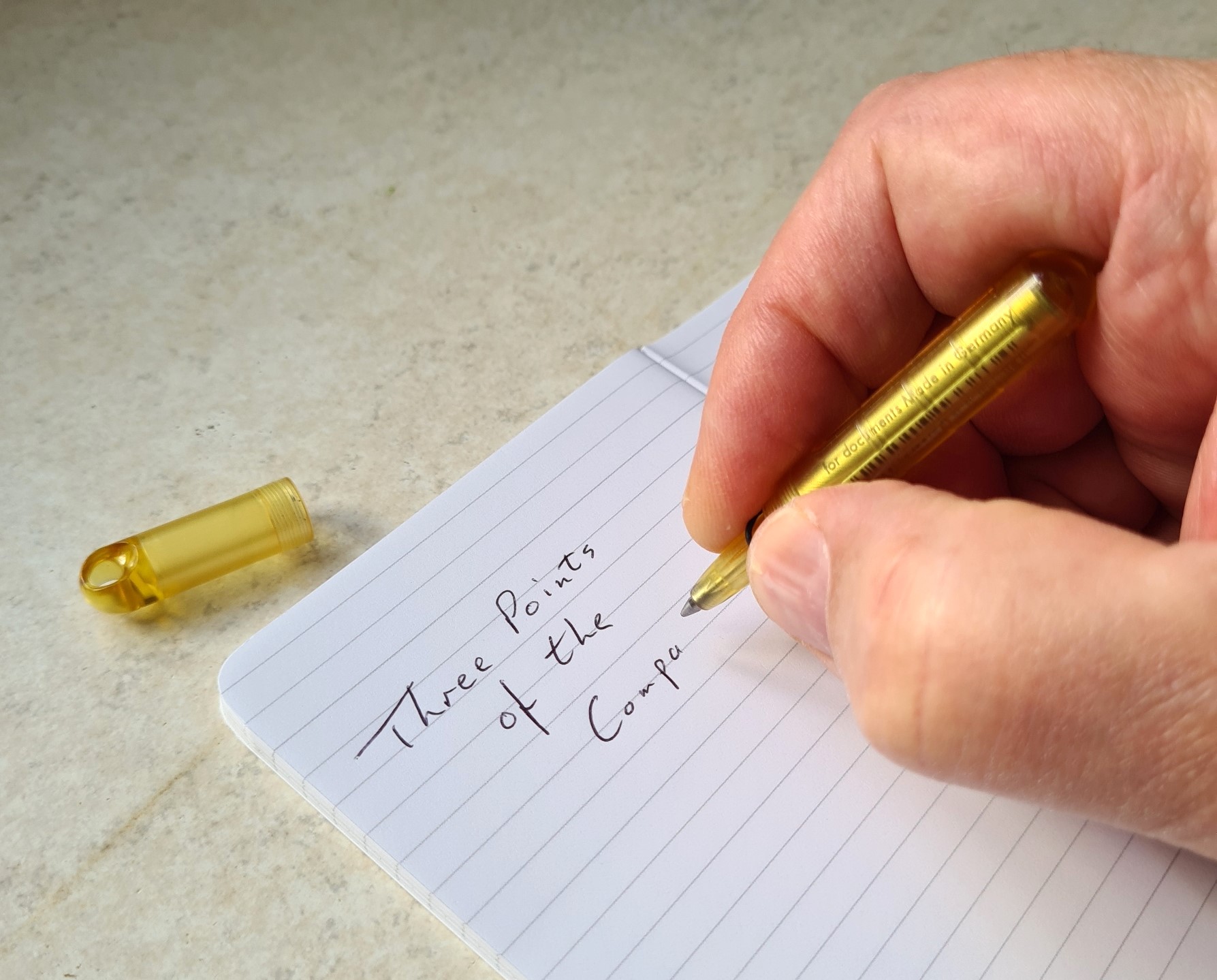
US company Maratac’s little Pen-Go has been made in at least four variants. Others I am aware of are Brass, Copper and Titanium, each of these limited to just 500 produced. Maratac seem to like making limited runs, obviously playing to a collectors market, creating an anticipatory buzz and (almost) justifying the sky high cost. Which never stopped me from purchasing their latest offering- the Limited Edition Pen-Go Ultem Pen. It cost me £39.95. A lot of money for a tiny pen. While an expensive pen, the Lamy Pico, that takes the same size refill, costs around £35.
CountyComm (County Communications) is a company based in Sunnyvale, California. They were established in 1992 and design, manufacture and sell select specialised products to US federal, state and local government agencies. They focus on Everyday Carry (EDC) items such as small tools, lights, watches, storage solutions, and radios. Excess inventory is sold to the public either direct through their website or via third party retailers. I cannot seem to find much in the way of information on Maratac as a brand, beyond finding their various products on sale, some made in-house, others rebranded. These pens are made in County Comms machine lab, strictly to the aforementioned limited numbers. Whether this pen is assembled in the US, or actually manufactured there, I don’t know.
Dimensions, as you might expect, are modest. With the cap fitted, the pen is 72mm in length. With cap removed, you have just 64mm to work with. The body of the pen has a 9mm diameter. The pen itself is not only tiny. It is also very light. The Pen without refill weighs 3.52g, which is comprised of 2.54g pen body and 0.98g cap. Each pen refill weighs 2.22g. The entire pen with refill weighs 5.74g, lets call it 6g.
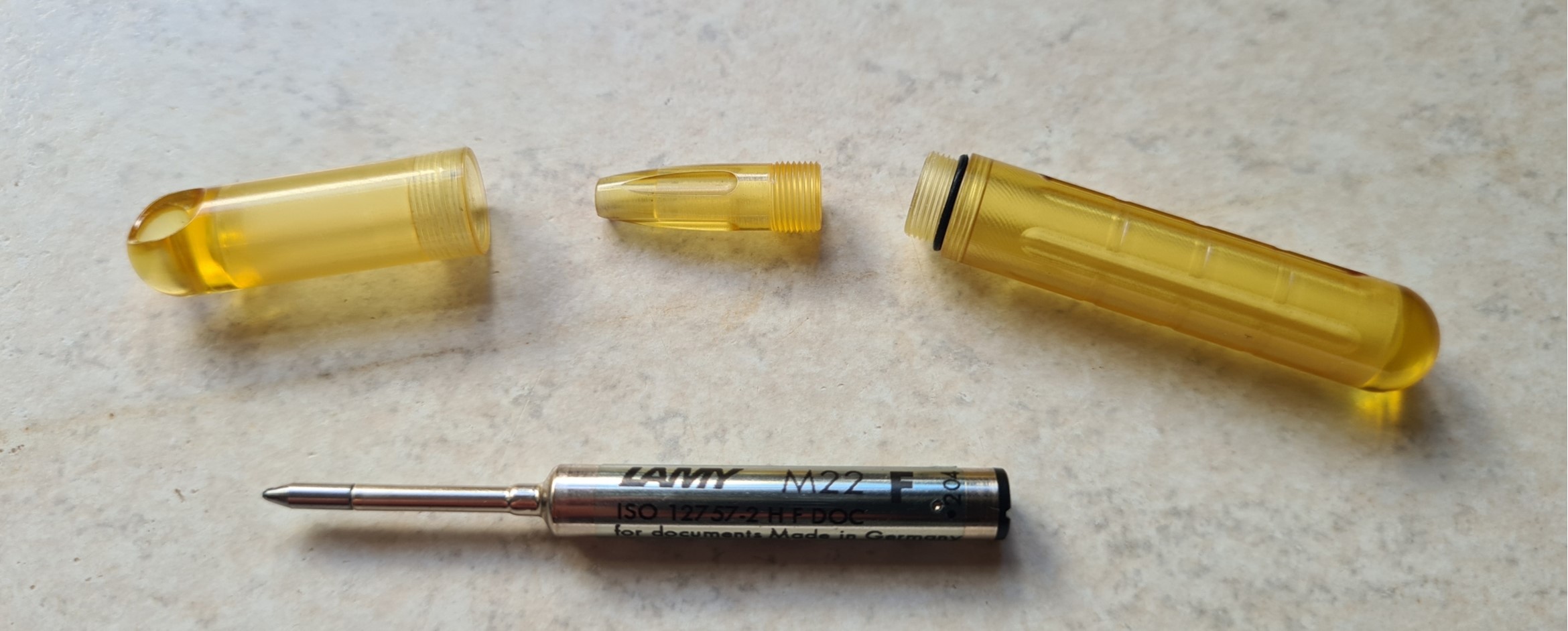
This pen takes a proprietary Lamy M22 refill (LM09672). This is a compact ball pen refill for their Lamy Agenda, Pico, Pickup, Screen and Scribble ball pens. These refills are available in Blue or Black and with Broad, Medium or Fine tips. I prefer fine black pen refills, but interestingly, research suggests that blue ink is better for inspiring creativity and enhancing memory.
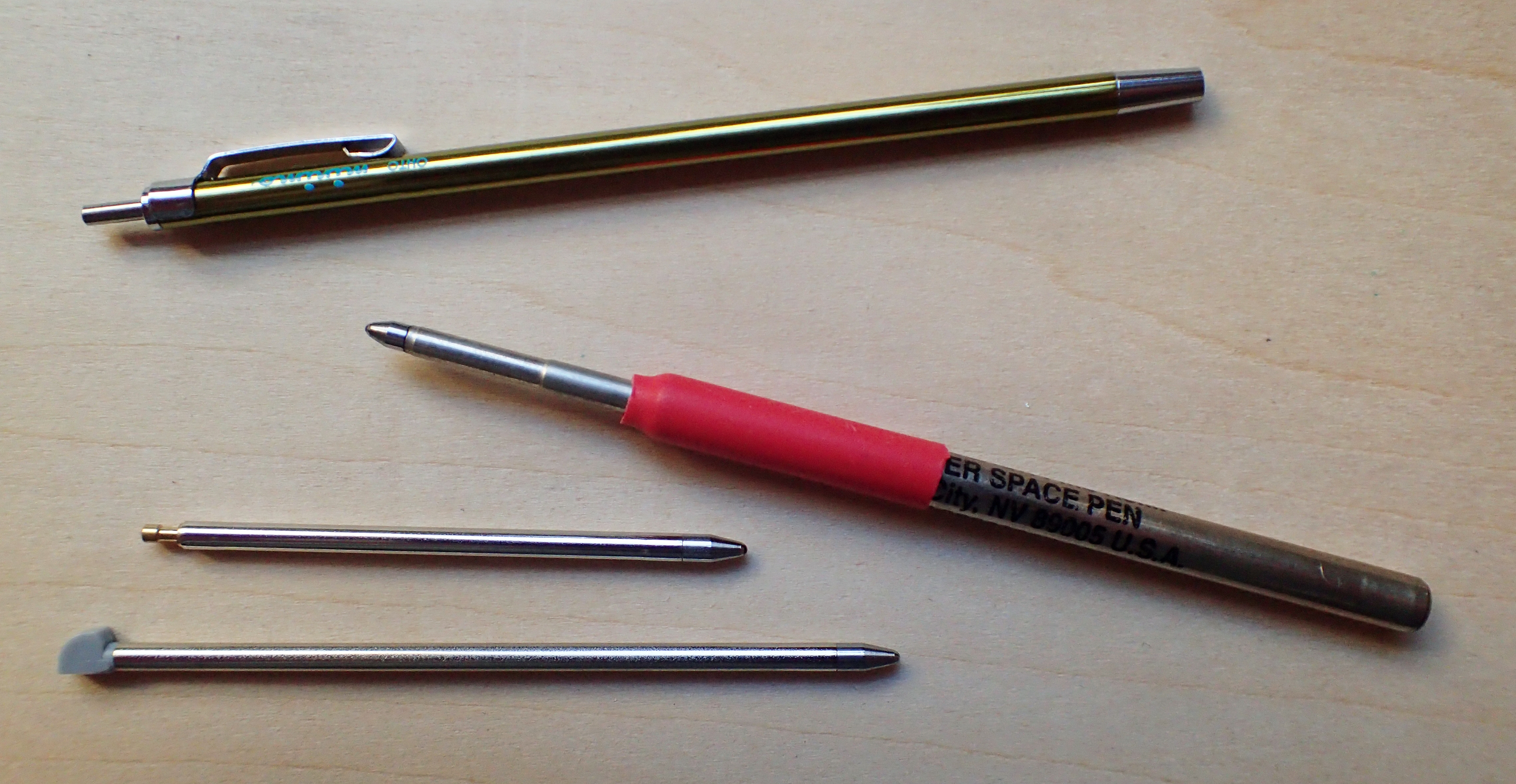
I am not aware of a gel refill that fits this pen but I am sure someone will put me right on that. The refill is itself 5.8mm wide, so could potentially be used as an even lighter standalone pen for those seeking extreme lightness, but is a bit uncomfortable to use as it is. But for just a few scribbled notes, why not. I have been using a Fisher Space Pen refill, with a couple of lengths of heat shrink tubing on the body, for years as an imperfect solution on lightweight backpacking trips. The M22 refill is rated for use in temperatures -30F to +250F. Sadly, the M22 isn’t the greatest of inks. It is non-archival and un-pressurised. There are many similarly made PEI pens available off AliExpress for a great deal cheaper, but in common with the previous two looked at, those all seem to be larger and heavier. Nothing made of Ultem/PEI, as yet, seems to be rivalling the compact dimensions of this little pen. Also in common with the Signature pen, the printing on the side of the refill shows through the transparent body, which is a brighter lighter yellow colour than the other two pens, though the cap is slightly more translucent.
The cap does not post on the pen body. It would be a better pen if it did. I think a thread should have been added to the top so that the cap could be screwed on. This might have only made it 24mm longer but with such small dimensions, anything extra would be a bonus. I am able to write with it, tucking the end of the pen into the base of the index finger, and that is fine for recording short notes. It is less comfortable when used in this manner for any length of time. This is part of that compromise on trail that I wrote of earlier. I have found that the O-ring can occasionally slide down the thread in use, but is quickly and easily rolled back in to its groove at the top of the thread. There are fairly pronounced grooves in the pen body and these give an improved grip when screwing the cap on and off, but are too far up to grip when using the pen. Instead, the tips of fingers and thumb rest just over the body step-down to the threaded section. Because the cap doesn’t post, there is a risk of losing it when it is removed. It does have a closed loop to enable it to be fixed to a key ring. This can instead be used to fix a short cord to, which may help tether it.
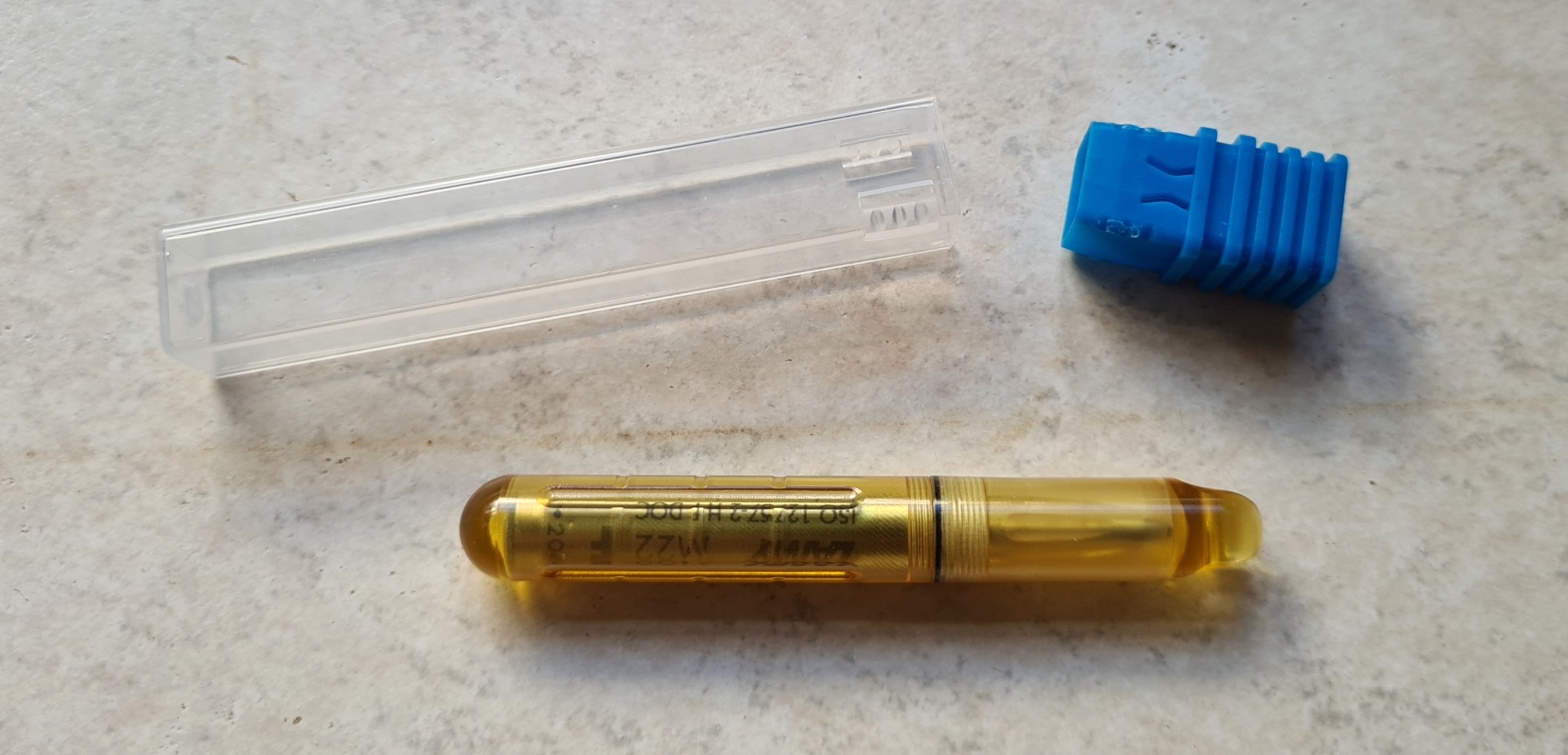
All three pens came supplied in two part plastic cases. The Maratac had a blue plastic cap to the top, the other two had clear plastic slide covers. While the two Chinese pens came with useful spares, including refills, the American offering was a bit more miserly. Despite costing almost twice as much, nothing came with it. No spare refill. No spare O-ring. Not even a bit of advertising blurb, company sticker or warranty. It had the cheapest and most minimal of packaging, barely sufficient to protect it on its international journey. A shame, as this is the version that I prefer over the others, seeing more potential use for it. Such a pen is where Ultem’s primary advantages; robustness and extreme light weight, are allowed to show themselves.
Conclusion:
I found all three pens fine to use. They do get slightly more fiddly and difficult to use as the size decreases. But that would be the case regardless of material. I find very little to actually promote the use of Ultem as a build material over just about any other material that has been used in the past, other than for purely interest sake, or where extreme light weight is a primary importance. That is where one of the three shall find most use for me. The tiny Maratac pen, despite being over-priced for what it is, now takes its place as my favoured on-trail pen for lightweight backpacking. The increased awkwardness in use is countered by it’s slight weight. This is not intended for writing essays, but for scribbled notes in an equally lightweight journal. The decent capacity ink cartridge is also a bonus as many small pens have a quite pathetic reservoir by comparison. As for the other two pens. The largest, the Signature, has simply joined my small arsenal of pens on my desk. The bolt-action pen would have become a suitable travel pen, however I prefer my existing options and will likely pass that on to Mrs Three Points of the Compass.

 Three Points of the Compass