
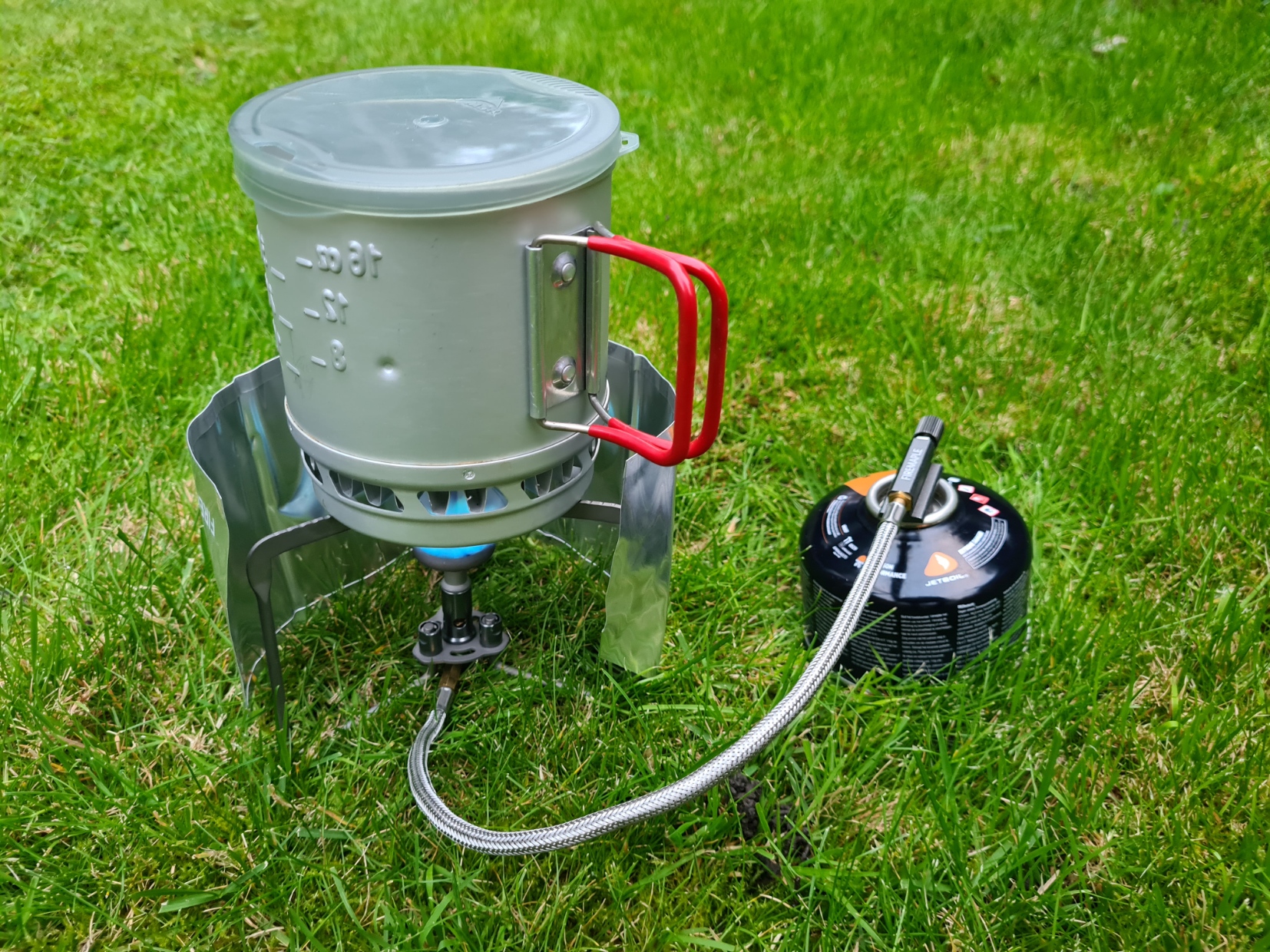
Easily the world’s lightest commercially made remote canister stove, Fire Maple’s new offering is a welcome addition to the choice of lightweight stoves, providing something a little different.
Backpackers looking for a lightweight gas stove are a little spoilt for choice these days. Most are always going to settle on a canister top stove as these can be extremely light, compact and relatively frugal. It is easy to pack many a lightweight canister top stove inside just about any pot, but sitting on top of a gas canister can also mean a pot of boiling water at height, with a risk of the pot toppling or sliding off, coupled with a need to provide the burner with some form of protection from wind to improve efficiency and reduce gas use. A remote canister stove lowers the centre of gravity and is more easily protected from side breezes. However this comes at a cost- greater bulk, increased weight from the fuel hose, more parts to fail, and often increased cost. Fire Maple’s latest addition to their Petrel range answers most of those issues, if only in part.
Fire Maple should have come up with a far better name for their stove. Petrel Titanium Ultralight Backpack Stove is simply too much of a mouthful. It can’t even be shortened to Petrel Stove as there is already a unique Petrel stove in their Petrel Quickboil Pro integrated system. Shortening to PTUBS is uncomfortable so I shall simply refer to this as the Petrel Remote Stove from here on.
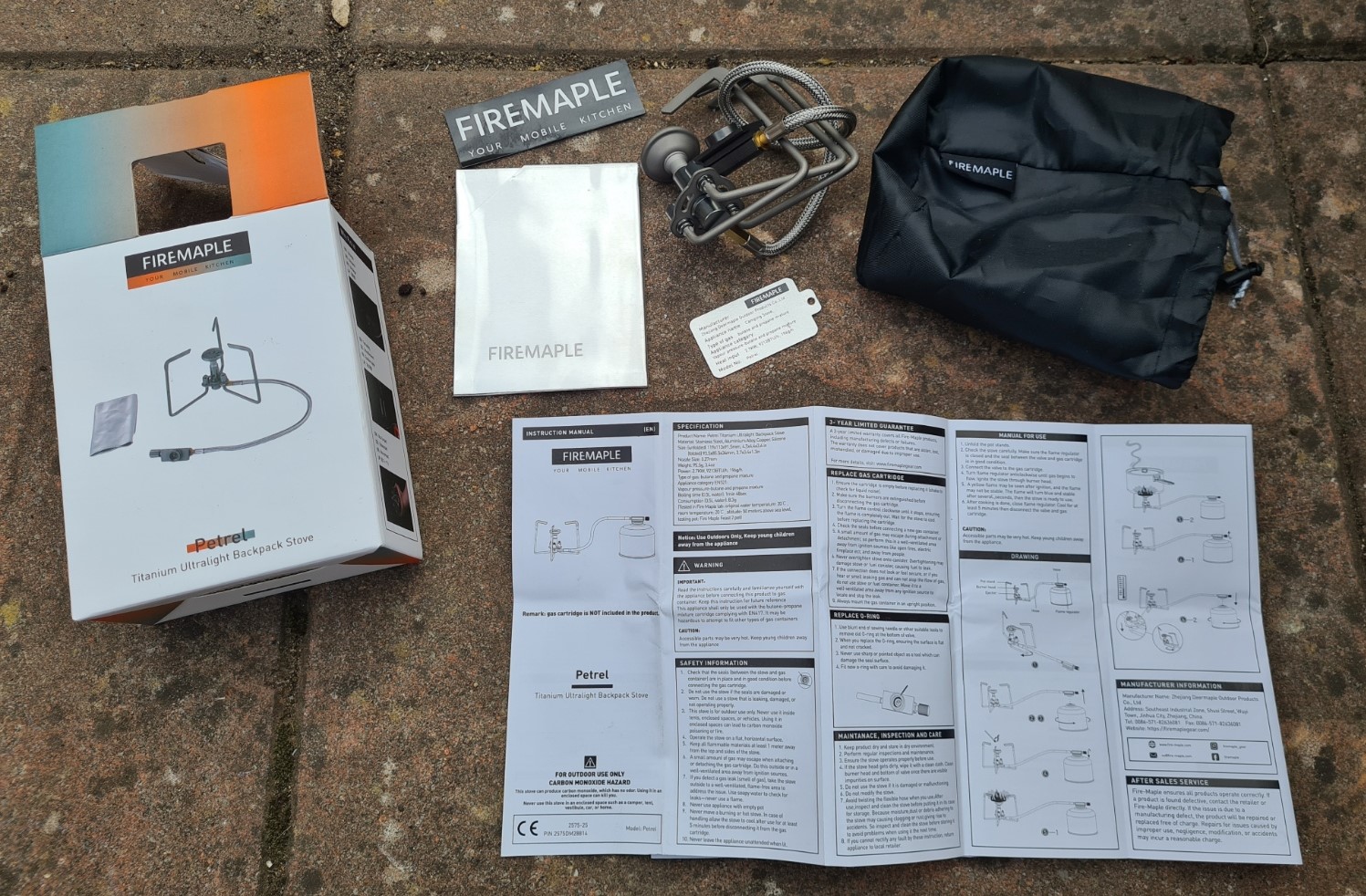
The stoves comes in a card box. Accompanying the stove on purchase is a nylon drawstring baggie, windscreen and instruction sheet, printed in English, German, French and Japanese. The stove has a three-year guarantee. As I write this (2025), it is available in the UK from the Fire Maple website for £41.11, plus shipping, though this price seems to fluctuate a bit.
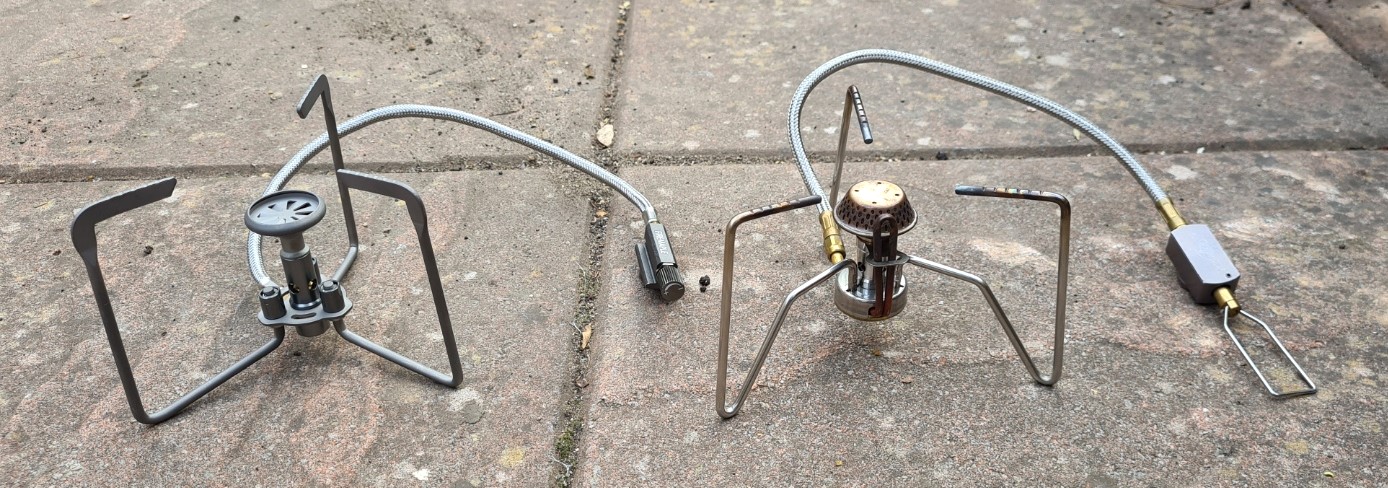
There has been a small number of decent relatively lightweight remote canister stoves available for some time. The Kovea Spider, model KB-1109, was released in 2012 and is still available. Despite the bulk from its three pot support arms/legs and fuel hose, the Spider fits inside just about all of the pots I would want to use it with and also comes with a pre-heat tube to vaporise a liquid feed, enabling it to be used all-year round. This is one of the things that sets it aside from the Petrel Remote Stove, that lacks any pre-heat tube and is therefore more suited to three-season use, when most backpackers actually venture out. Another difference is the weight. The excellent Kovea is no heavyweight, tipping the scales at 173g (advertised weight 168g). Fire Maple advertise their Petrel Remote Stove as weighing 95.5g. On my scales it came in at 95.18g. This astonishing weight is achieved by extensive use of titanium and a fairly short 300mm fuel line. That said, the fuel line is the same length as that on the Kovea Spider.
Fire Maple have quite a range of lightweight remote canister gas stoves, each with different features, and weights. Previously, their lightest have been the FMS-117T Blade, FMS-117H Blade 2 and FMS-118 Volcano stoves. The FMS-117T Blade is a primarily titanium, remote stove, without pre-heat tube that weighs 106g (advertised weight formerly 99g, later 103g). The FMS-118 Volcano (replaced by the slightly upgraded FMS-118A Volcano in late 2022) is a stainless steel remote stove with pre-heat generator tube. Advertised as weighing 146g, it is actually 155g. Finally, there was the best of the crop, the FMS-117H Blade 2. This is a mostly titanium remote stove, but also fitted with a pre-heat tube, enabling four-season use. Advertised as weighing 135g, it is actually 140g. The Fire Maple FMS-117H Blade 2 comes with a stainless steel generator loop. The model was also OEM prepared for sale by Alpkit as their Koro stove. The only difference of note was that the Koro came with a plain brass generator loop and the FMS-117H has an electro-plated brass generator. The Koro weighs 124g against the 140g of the Blade 2. In 2023 Fire Maple informed me that they were discontinuing manufacture of the lightest of these, the FMS-117T. I presume the Petrel Remote Stove was envisioned to be the bare-bones, lightest, titanium stove replacement in their catalogue. Not only is the Petrel lighter, but being a significantly different design, is also considerably more compact when folded.
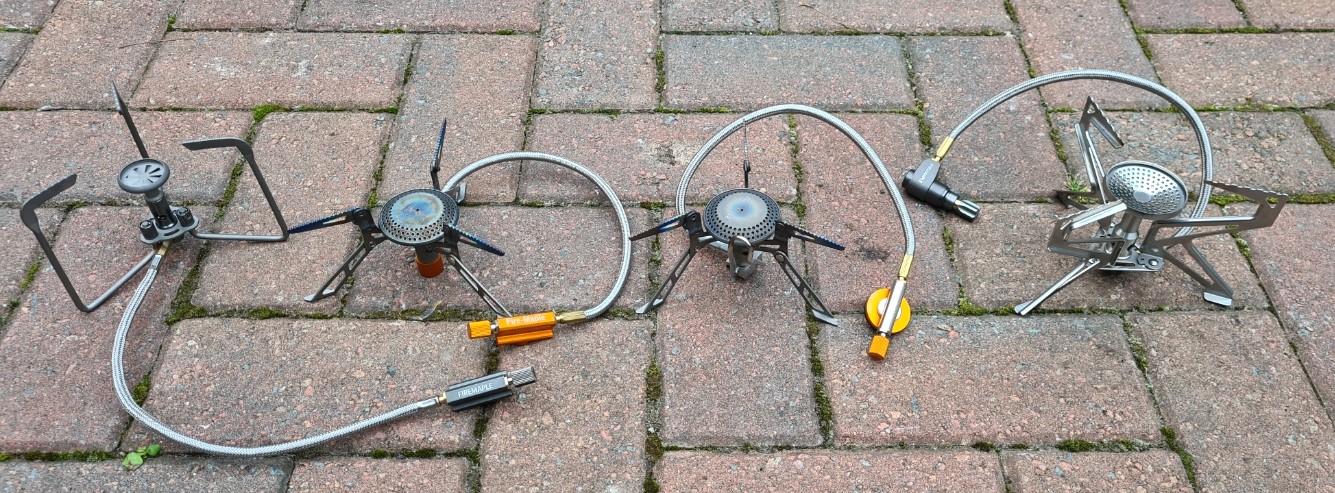
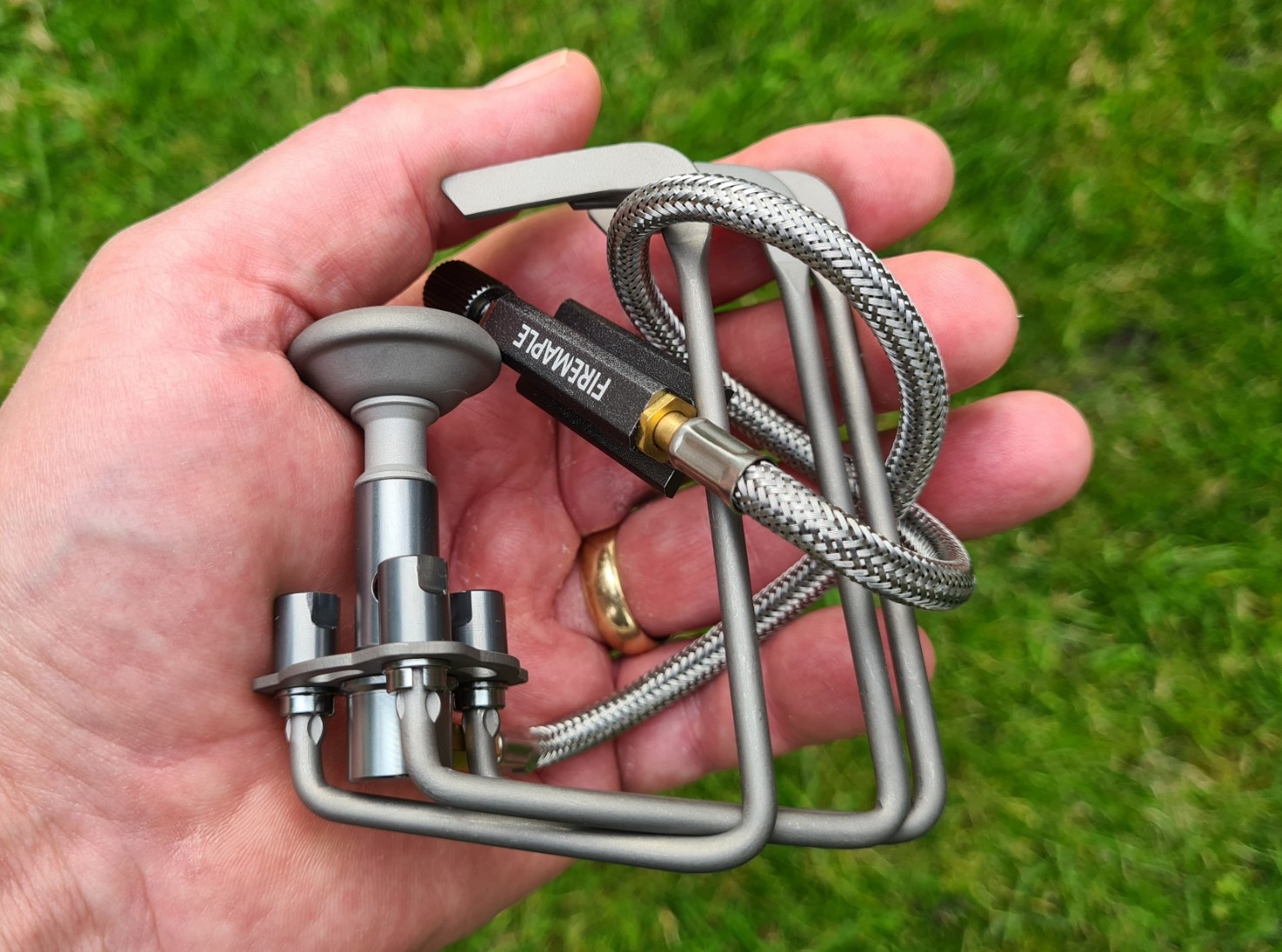
Despite it’s name, the Petrel Remote Stove is made of a mixture of materials. The legs and pot support arms are titanium, as is the burner head. The remainder are aluminium alloy and copper. But seeing as the great majority of the stove is titanium, this is where weight savings are made. The stove legs are round, flattened where they bend over to become pot supports. Fire Maple have added a few ridges to the top edge of the pot support arms but they do not amount to much.
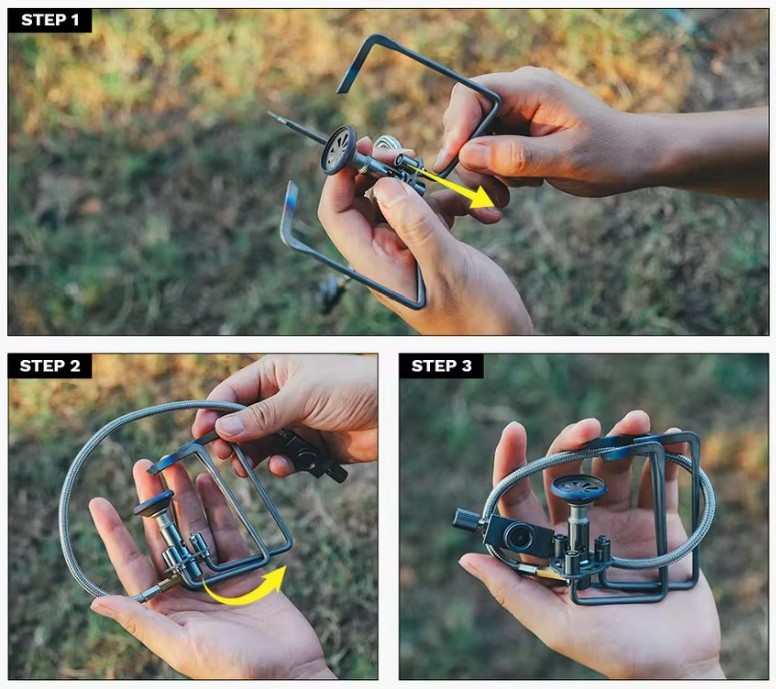
Opening up the stove is a simple process, swing out the three pot support arms/legs and they clip into place. These are spring loaded and held in place by indents. To stow the stove, push each leg down against the spring until the wing tabs on each leg are clear, and swing them round to rest against each other. This makes for a compact unit that will stow inside many pots, often alongside a gas canister if that is your thing. Though I don’t like to stow a gas canister inside my pot as it sits on the ground in use and I don’t want to contaminate the inside of my pot. The stove can be carried inside the supplied 7.6g baggie, or wrapped in a square of Lightload towel to stop rattling.
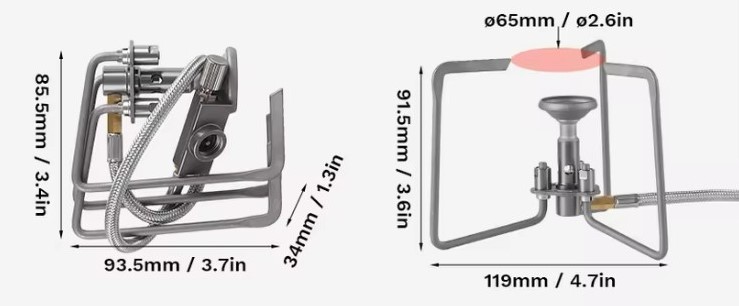
Dimensions:
Unfolded: 119mm x 113mm x 91.5mm
Folded: 93.5mm x 85.5mm x 34mm
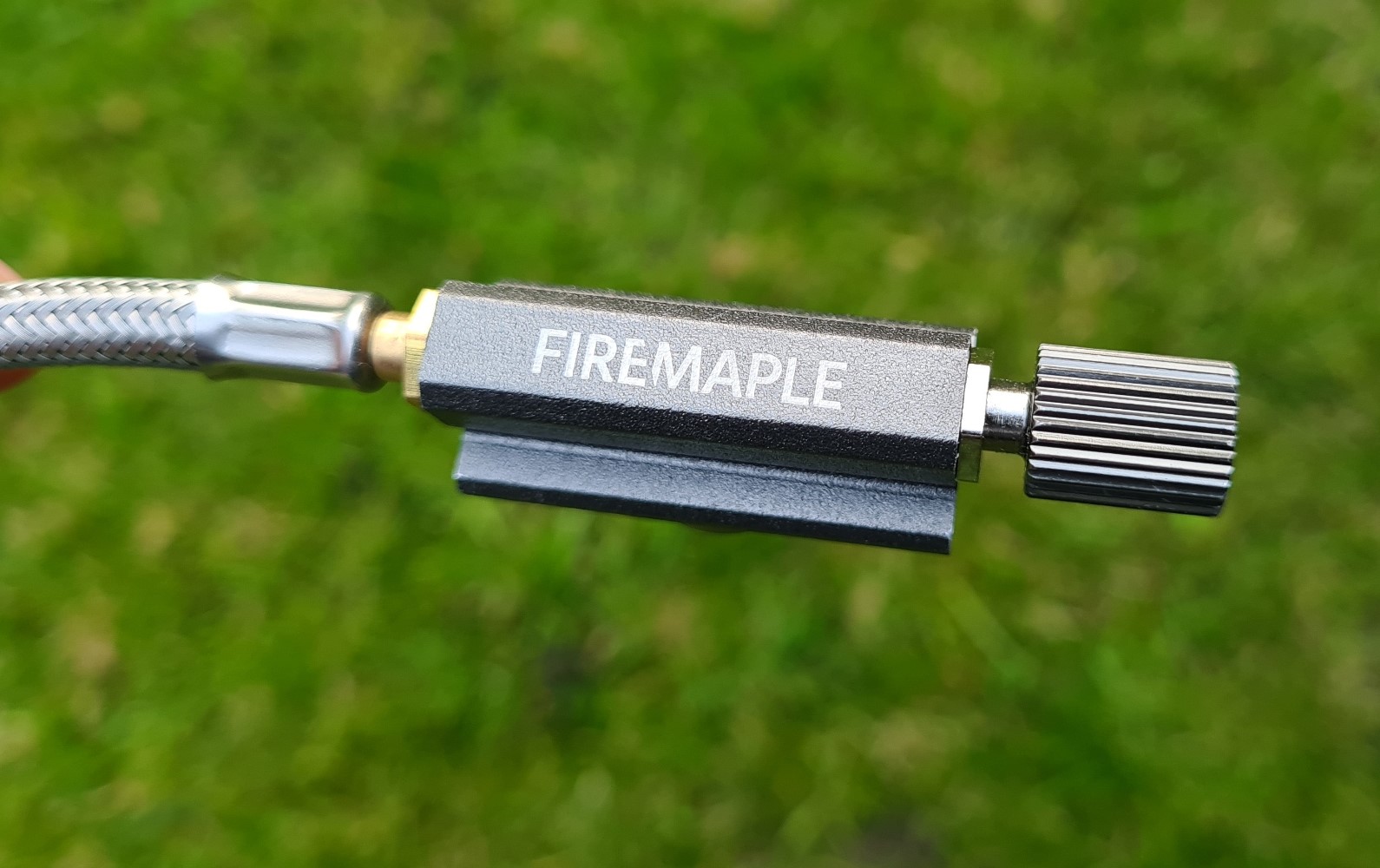
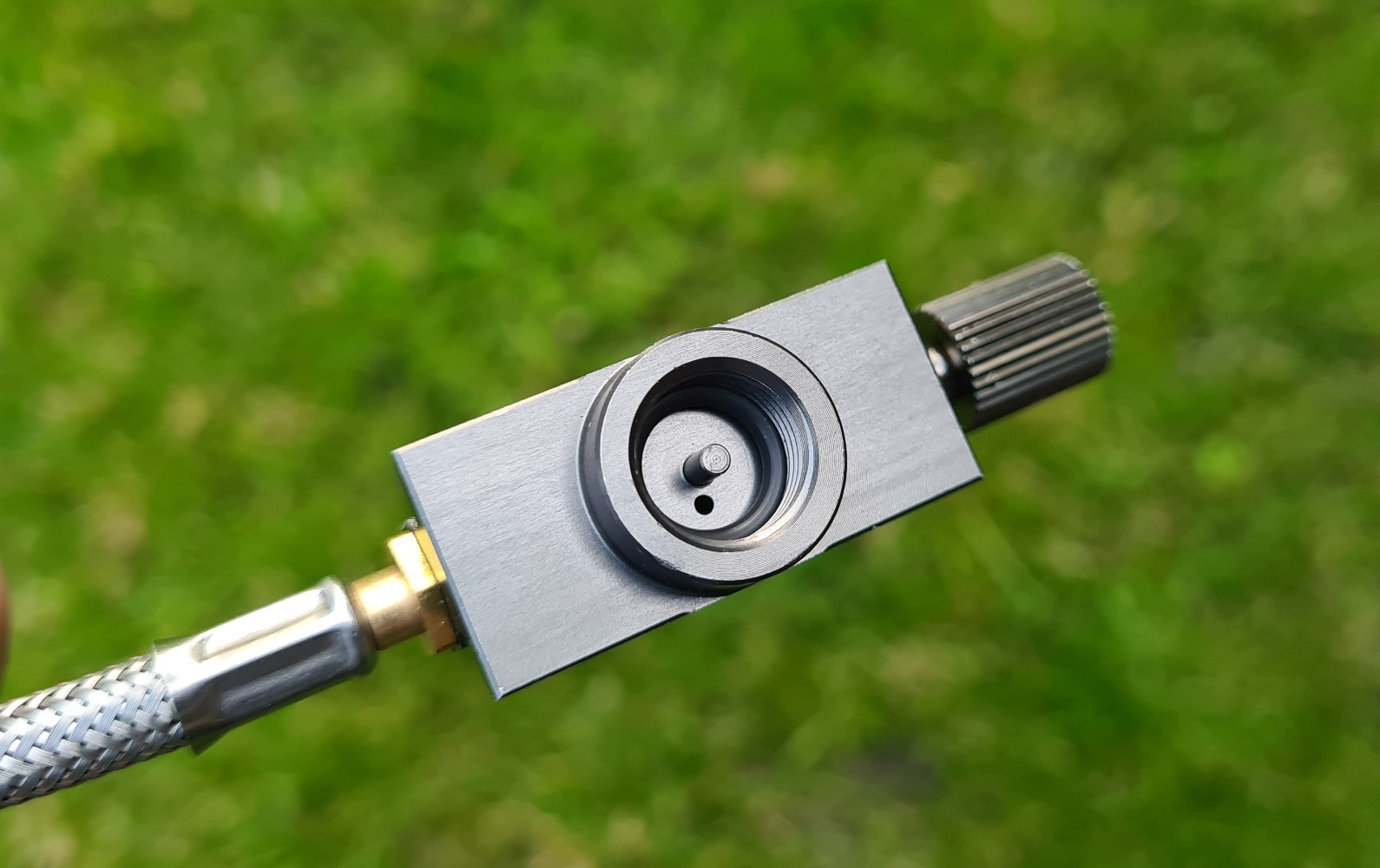
An important factor with remote canister stoves is to have the gas regulator control at the canister end and not at the burner end of the stove. This removes the need to place the hand beneath a hot pot, possibly in the dark, also removing the need to remove a close fitting windshield to adjust the gas. Fire Maple have put a simple 10mm diameter twist knob on the canister valve block. This seems identical to those used on some of the FMS stoves. This is to the extent of threading directly into the aluminium block. There is no copper or brass insert in here and if not taking a little care when screwing a canister on, there is a risk of tearing up the thread. Fire Maple used to include a threaded insert in their valve blocks but there were occasional reported issues with this coming loose, so it was removed entirely for the simpler design. There is an O-ring here and it pays to check this remains in place and is in good condition, possibly even swapping out to a replacement as part of the annual winter gear check. The entire block, with screw adjustment knob, swivels on the fuel hose. This enables a kink free, twist free connection between fuel canister and stove. One and three-quarter turns of the valve move from off to fully open.
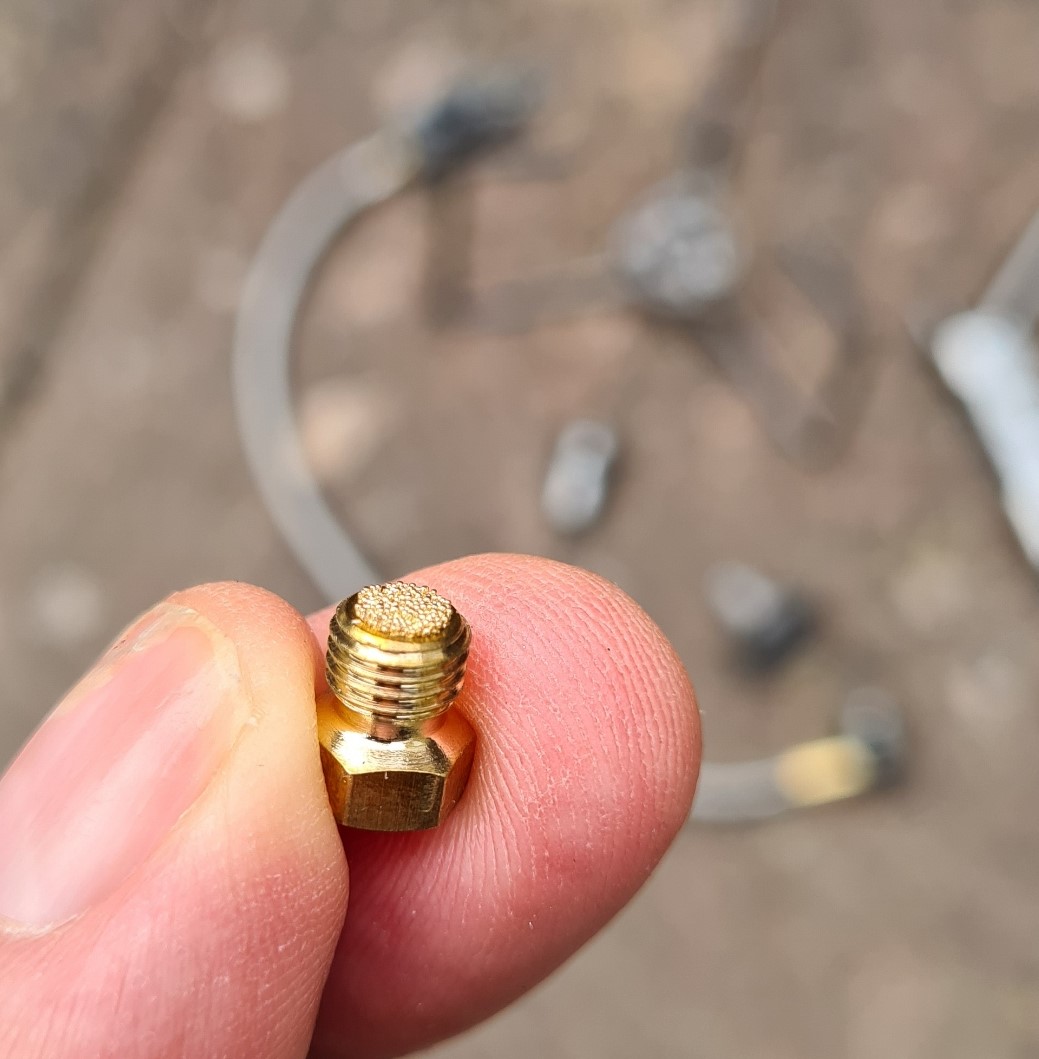
The stove is fitted with a No.3/0.27mm jet. This has a sintered brass filter insert. As found in many of Fire Maple’s other stoves, this is intended to stop impurities from blocking the jet when in use. These filters are more useful with liquid gas feed where a canister is inverted and impurities inside a canister might find their way through a lindal valve. The canister can not be inverted with the Petrel Remote Stove as no pre-heat generator loop is fitted. Nonetheless, it is always good to see an additional protective measure fitted as standard. I presume that manufacture of just about all Fire Maple stoves now use these filter jets as standard.
Output from the stove is 2700W, 9213 BTU/h, equating to 196 grams of fuel in an hour on full bore. But in common with most stoves, improved fuel economy will be achieved at around half this, with less heat being wasted whistling up the side of the pot. Using a heat exchanger pot will improve efficiency still further. Fire Maple say that 500ml of water can be bought to a boil in 1 minute 48 seconds in their Feast 2 pot, using 8.3g of gas. Again taking stats provided by Fire Maple, bringing 500ml to the boil in their G3 pot reduces boil time to 1 minute 30 seconds (7.1g gas used), or 1 minute 16 seconds in their G2 pot (6.2g gas used), or one minute 18 seconds in their Petrel 800ml pot (5.9g gas used). This last being the most frugal combination. All of these will be in optimum conditions. Reduce the flame, wait a little longer, and enjoy improved fuel usage.
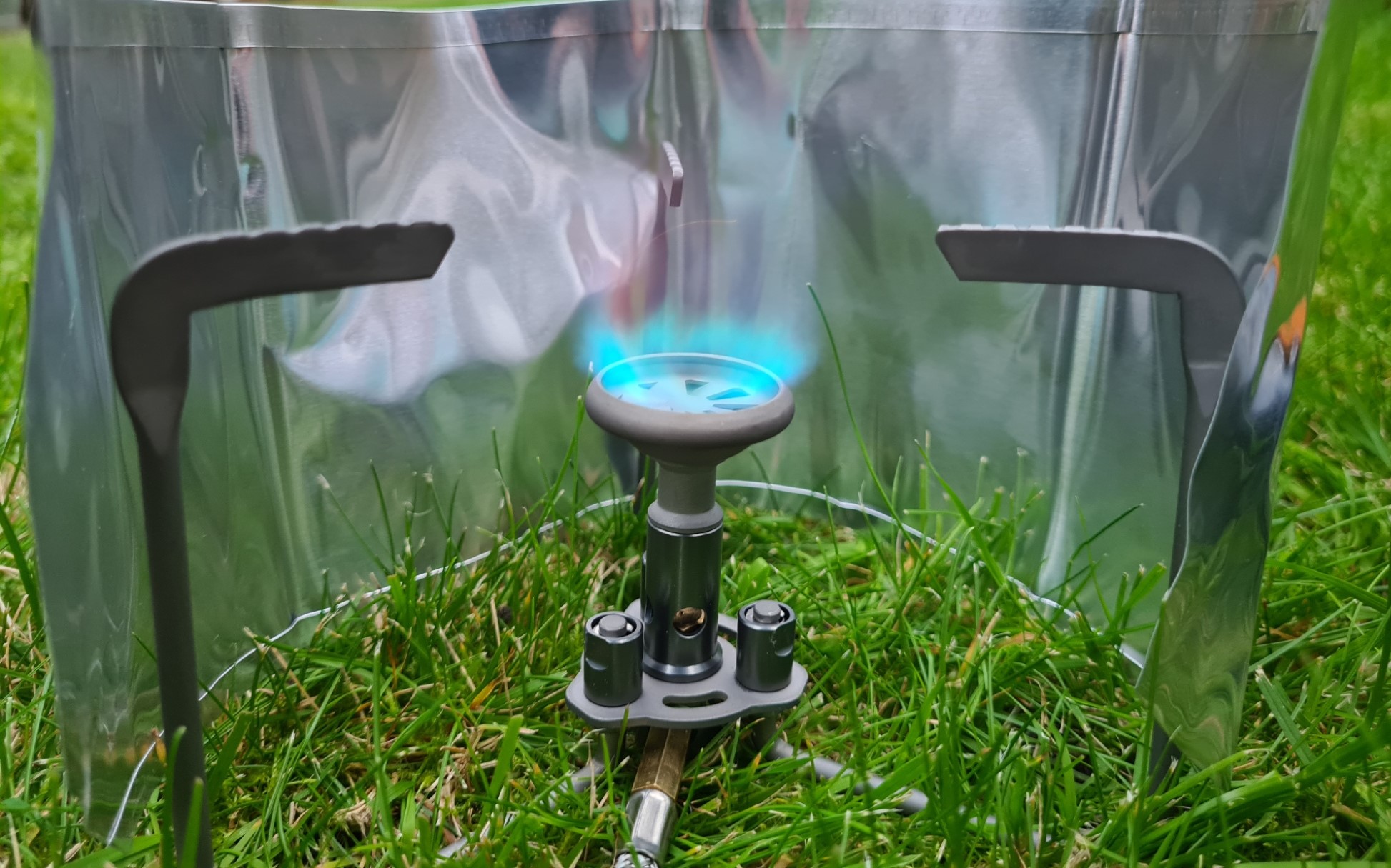
Using a windscreen with the stove will greatly improve efficiency and Fire Maple supply a simple 20g sheet of folded aluminium foil. This measures 335mm x 108mm. Better windscreens will provide even better protection. I have successfully used the stove with a slightly modified Ocelot windscreen made by Flat Cat Gear. This weighs 14g but I have made my own version of that from thin titanium foil that weighs just 4g. Provided there is airflow, a windscreen can be fairly tightly wrapped around the stove and pot as there is no risk of thermal feedback to the remote canister and the control valve is placed at the canister end.
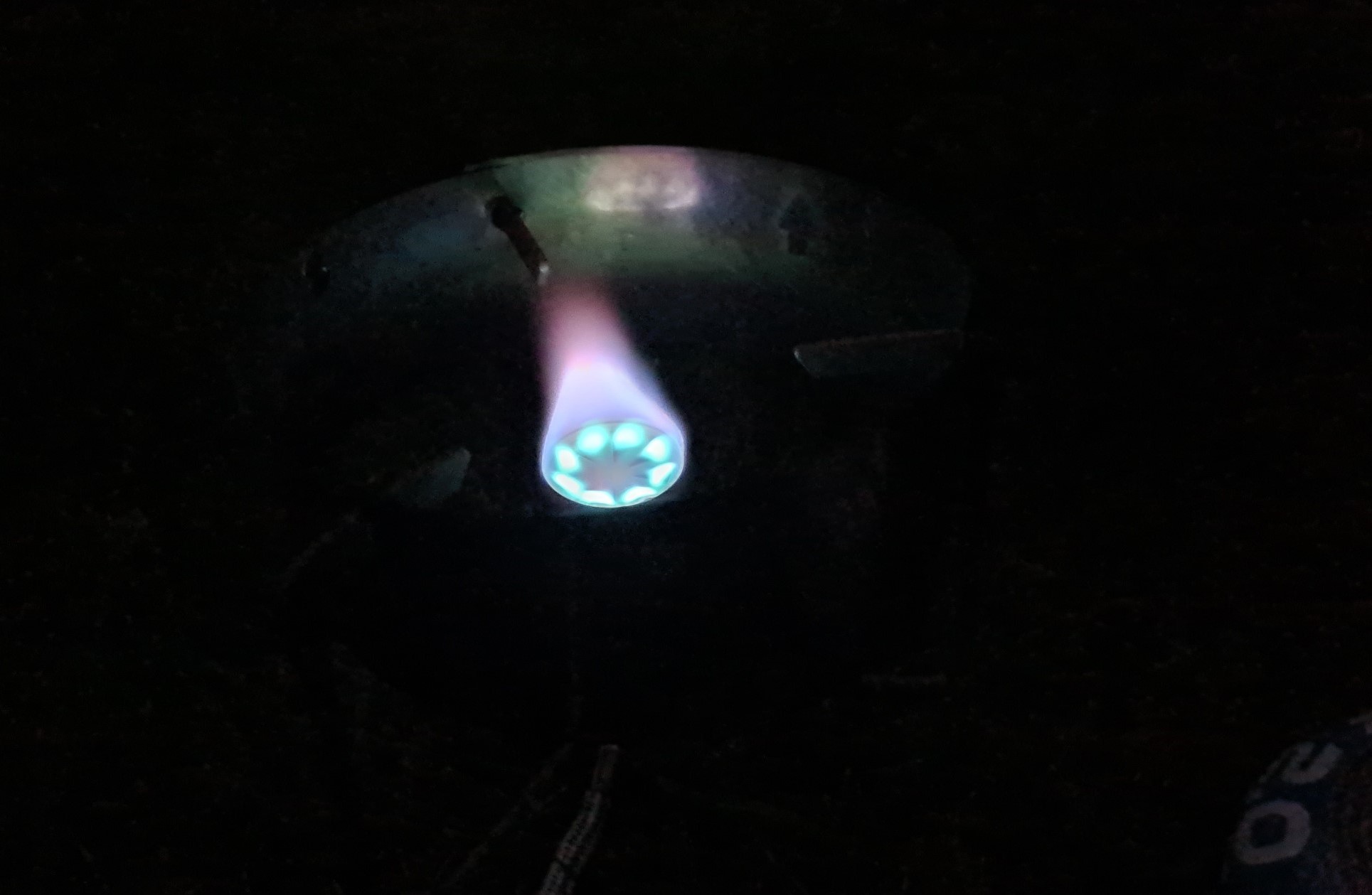
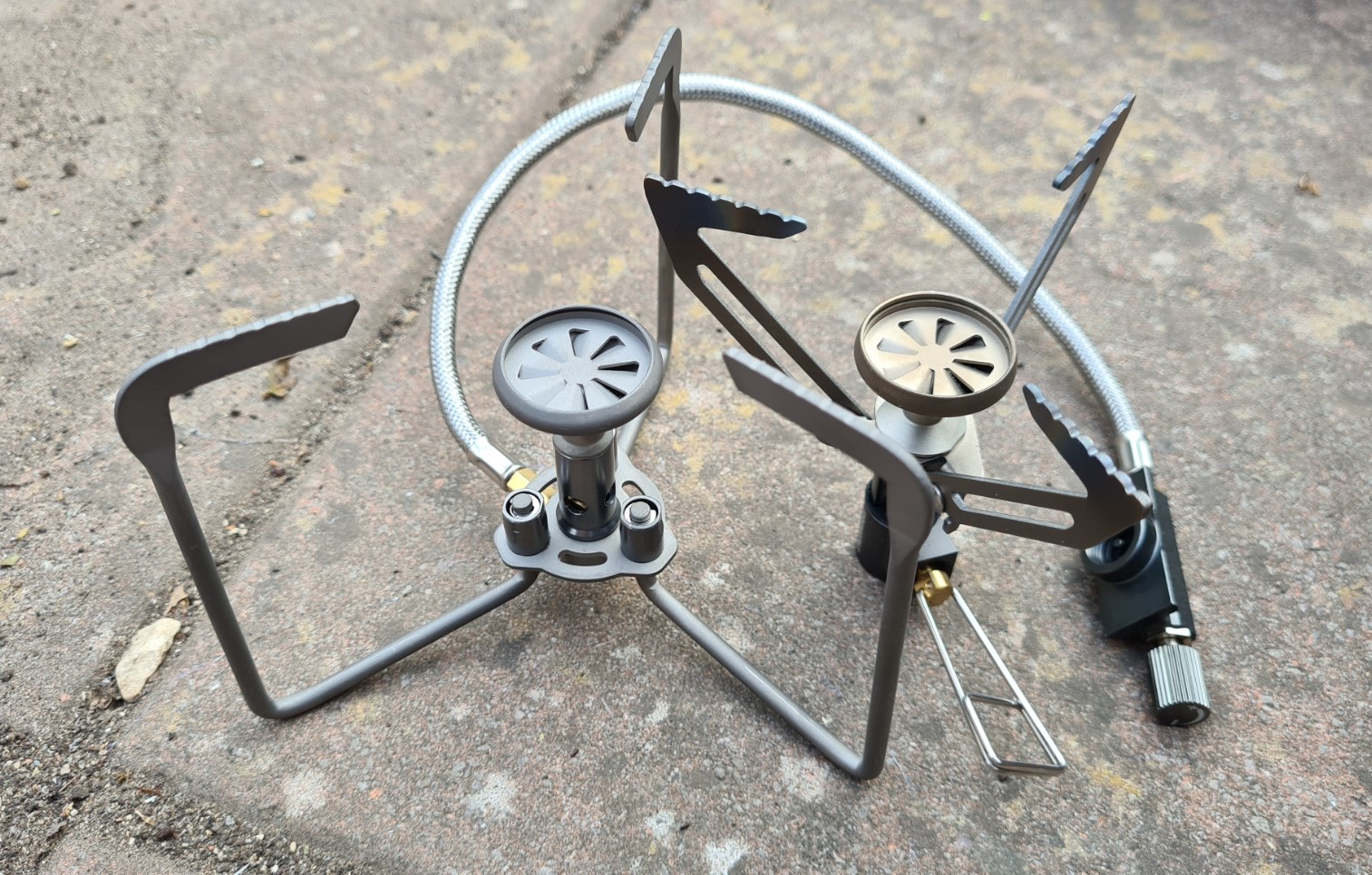
The 29mm diameter burner head design includes a lip around the circumference that offers a little protection from side breezes, helping prevent the flame from blowing out but offering little protection to the actual flame above the lip. This shares a design with Fire Maple’s Hornet II. Within this lip the stove has a small 21mm wide burner that creates a narrow flame pattern with recirculating vortex-style flame.
The pot supports are 91mm high and the burner head is 25mm from the base of the pot. The pot supports will accommodate quite narrow pots, anything over 70mm diameter would fit. But it will perform much better with wider pots, or preferably, pans. While not in any way intended to support very large pots for large numbers of people, the Petrel Remote Stove will handle loads up to 3.5kg. If supporting heavier pots, or perhaps melting snow, a remote canister stove provides a far more stable and safer combination than canister top gas stoves
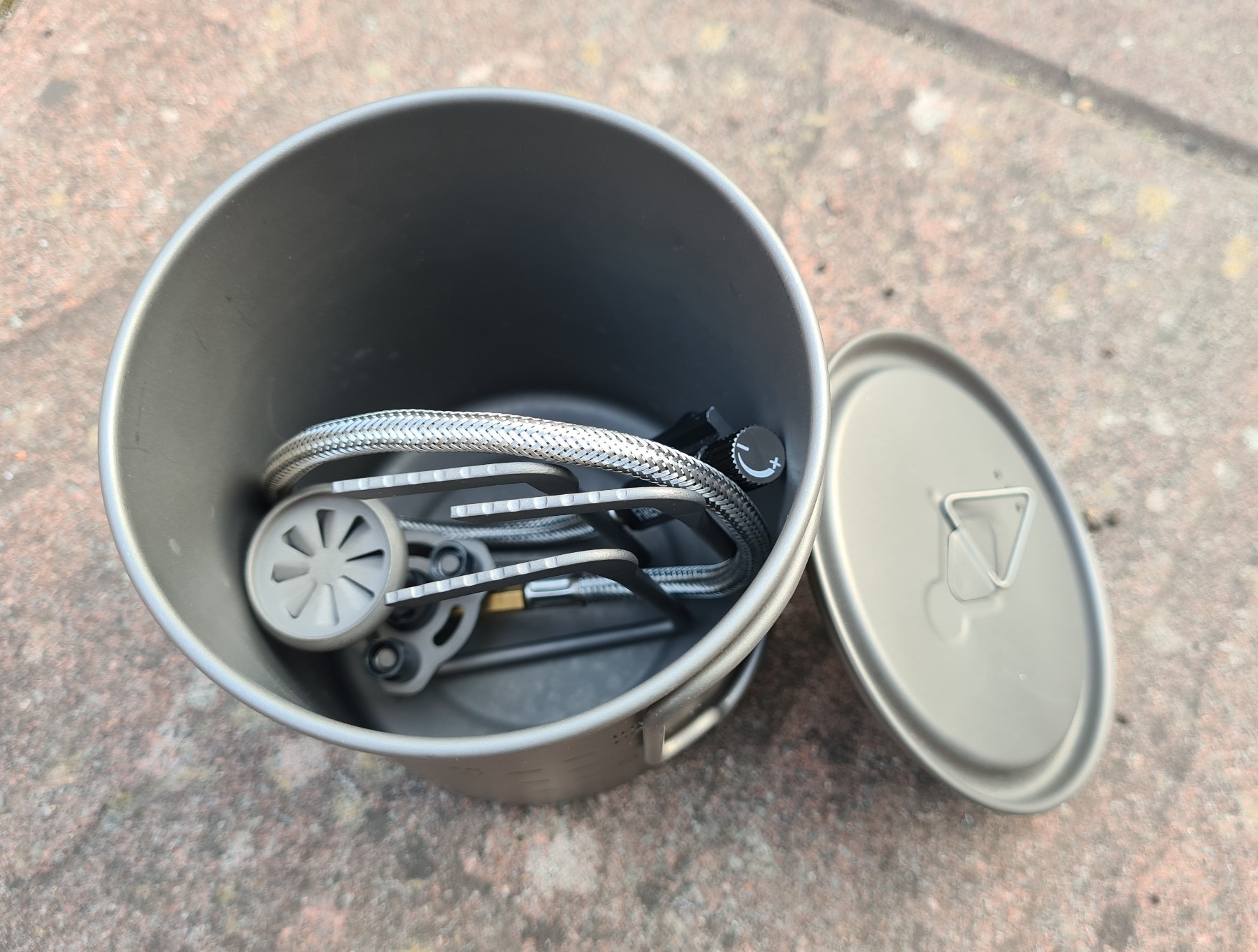
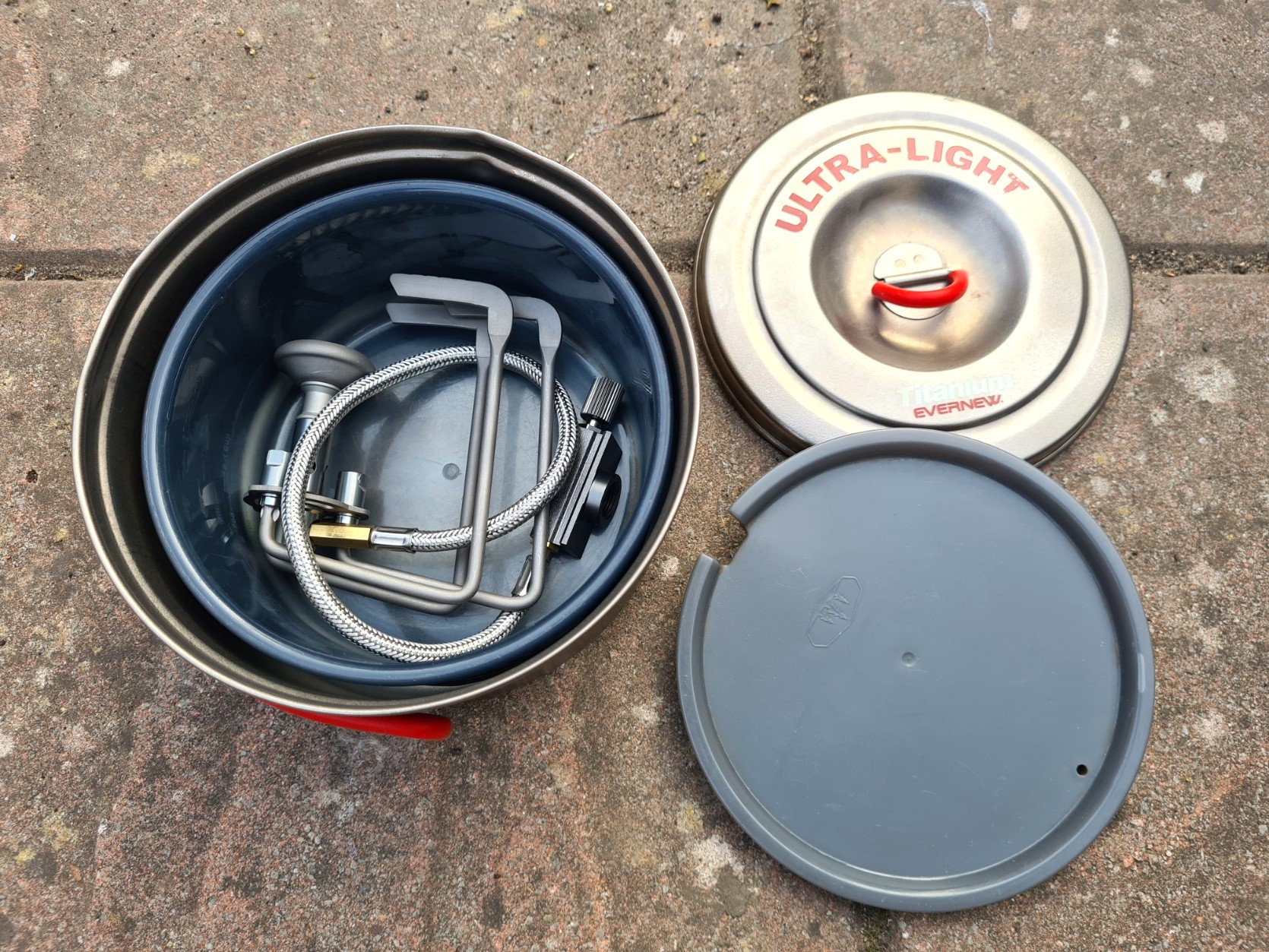
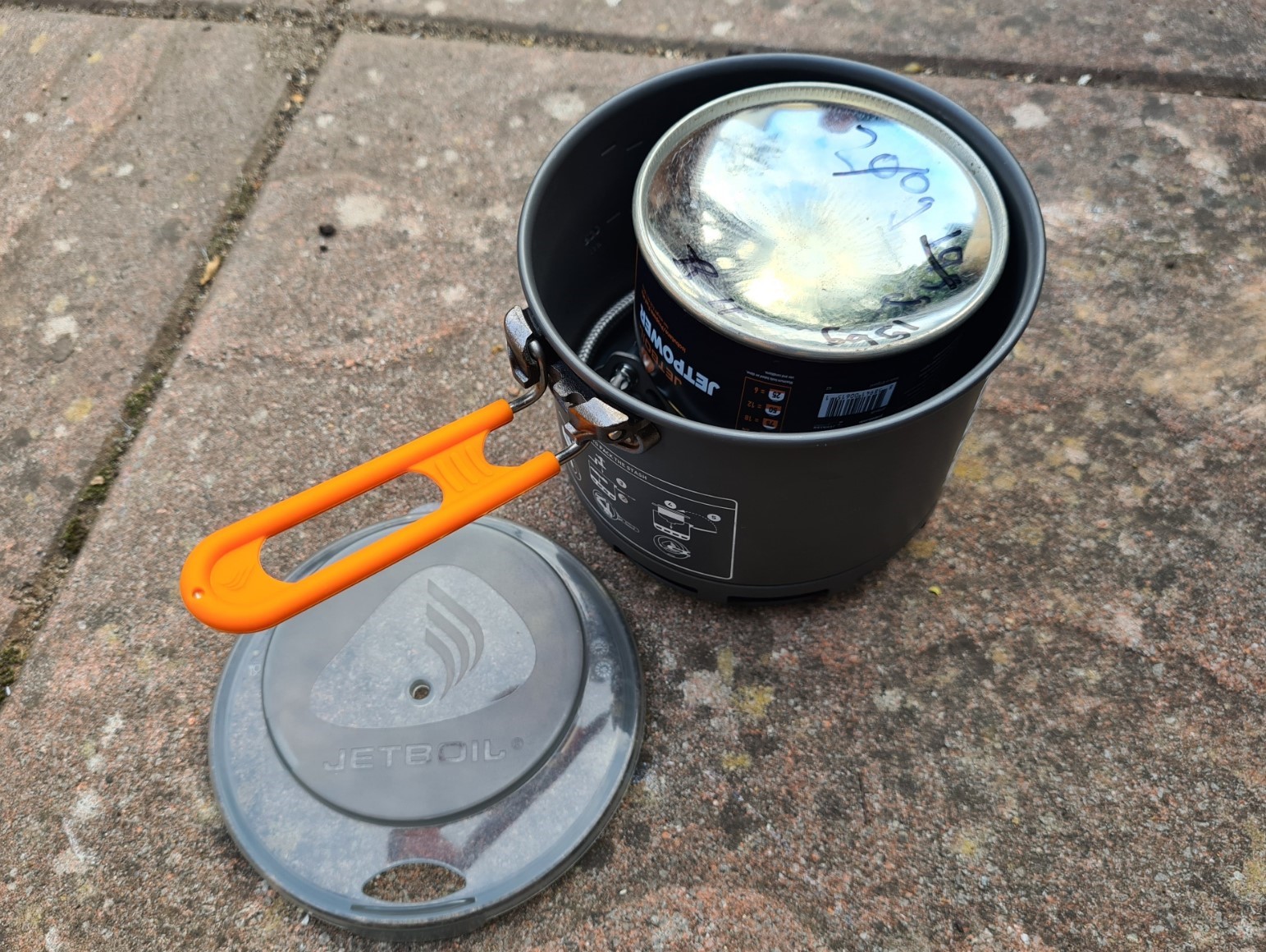
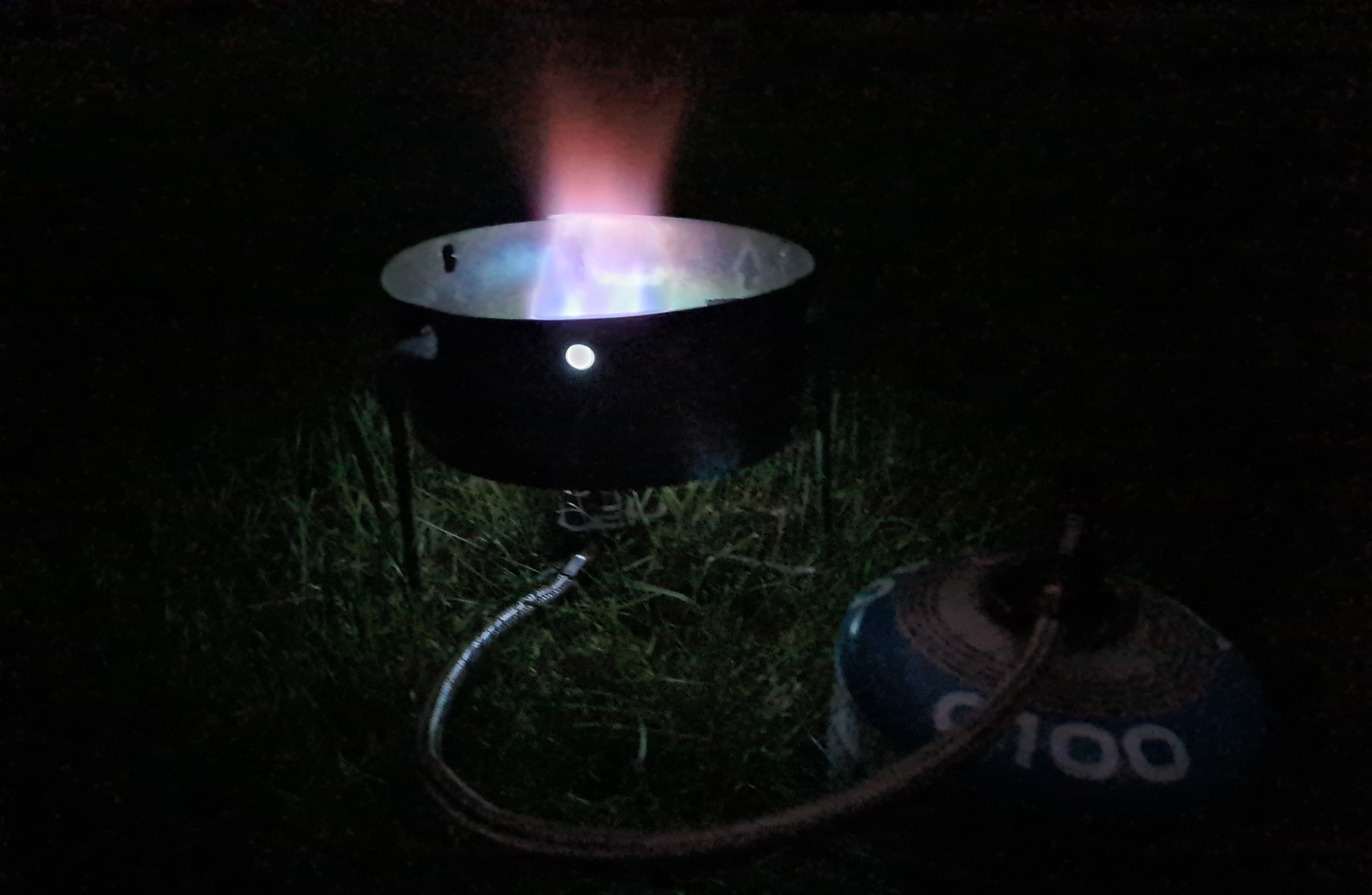
Combining the Petrel Remote Stove with Jetboil’s Stash pot probably makes for one of the best lightweight combinations possible, marrying together an efficient, reasonably wide-base heat exchanger pot with the lightest remote canister stove on the market. But would make for an unfortunately expensive combo. A cheaper option would be using one of Fire Maple’s innovative range of reasonably priced heat-exchanger pots that have slots cut into the vanes on the base.
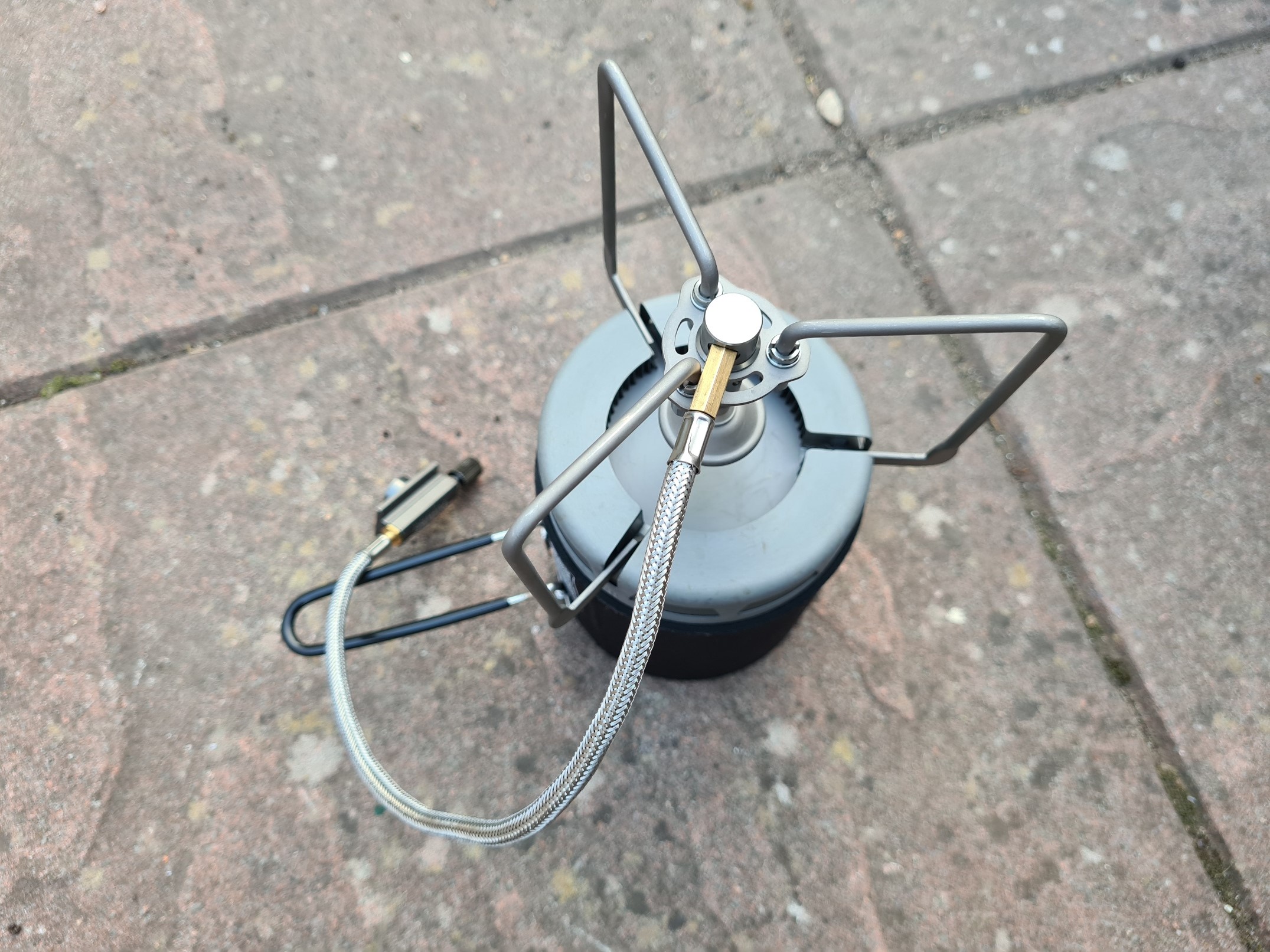
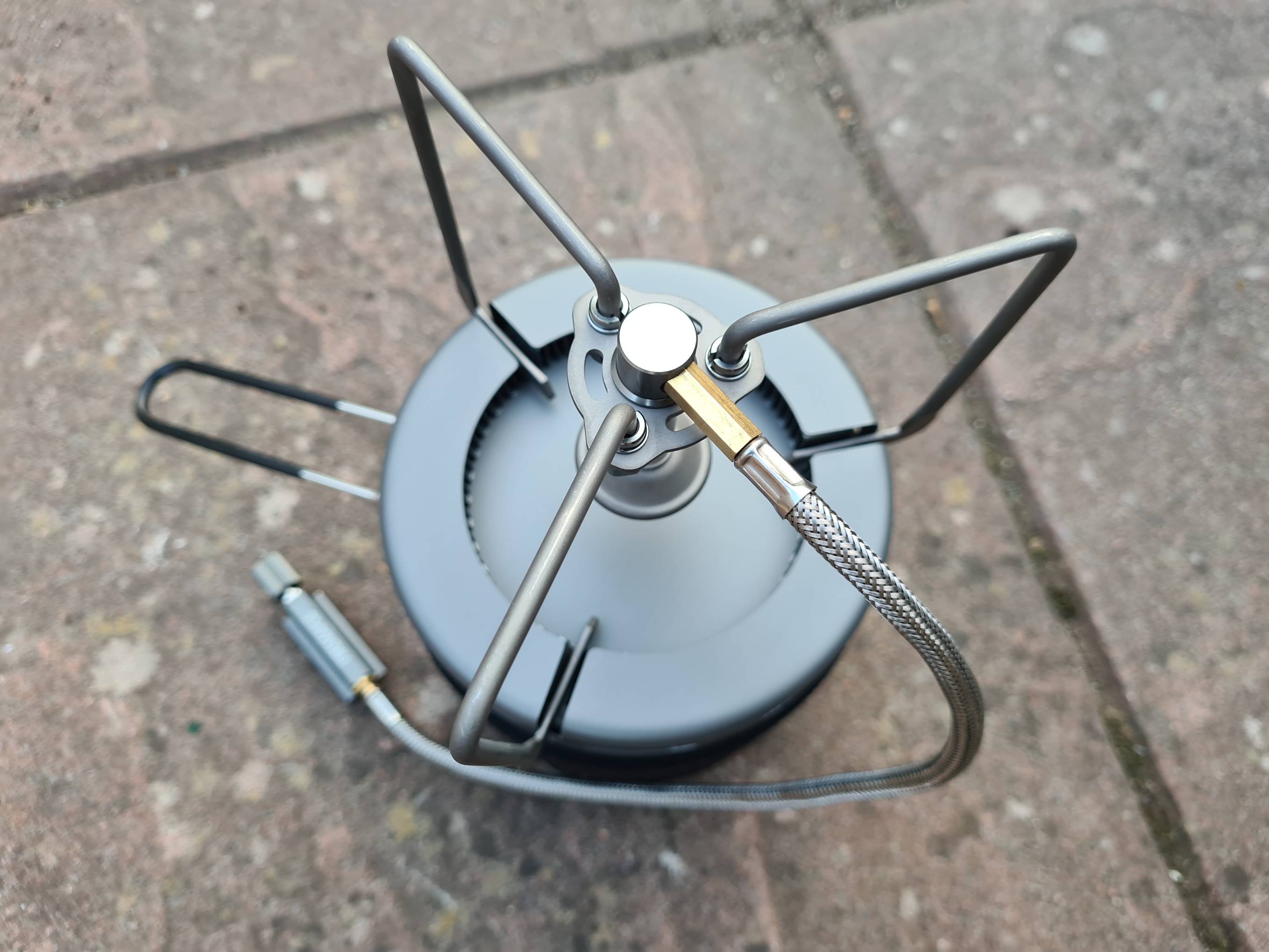
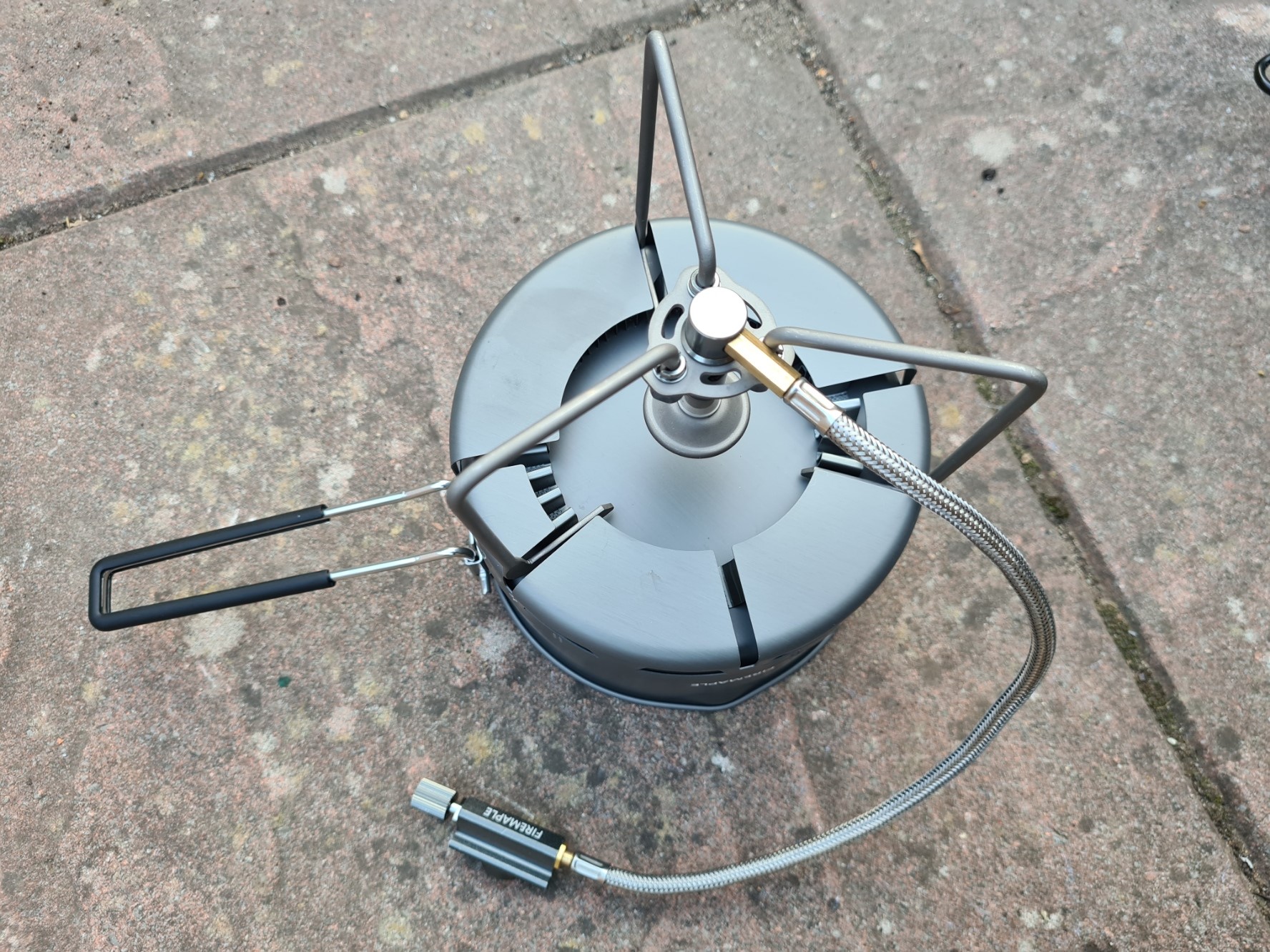
Fire Maple’s Petrel Remote Stove is a welcome addition to the very wide choice of backpacking stoves. Personally, it is a product that I have been waiting for and provides a lot of my own preferences. Despite being somewhat of a stove butterfly, I can see me getting a lot of use out of this stove, particularly when used with a really lightweight heat exchanger pot such as the aforementioned Stash pot or the now sadly discontinued Sterno Inferno pot.
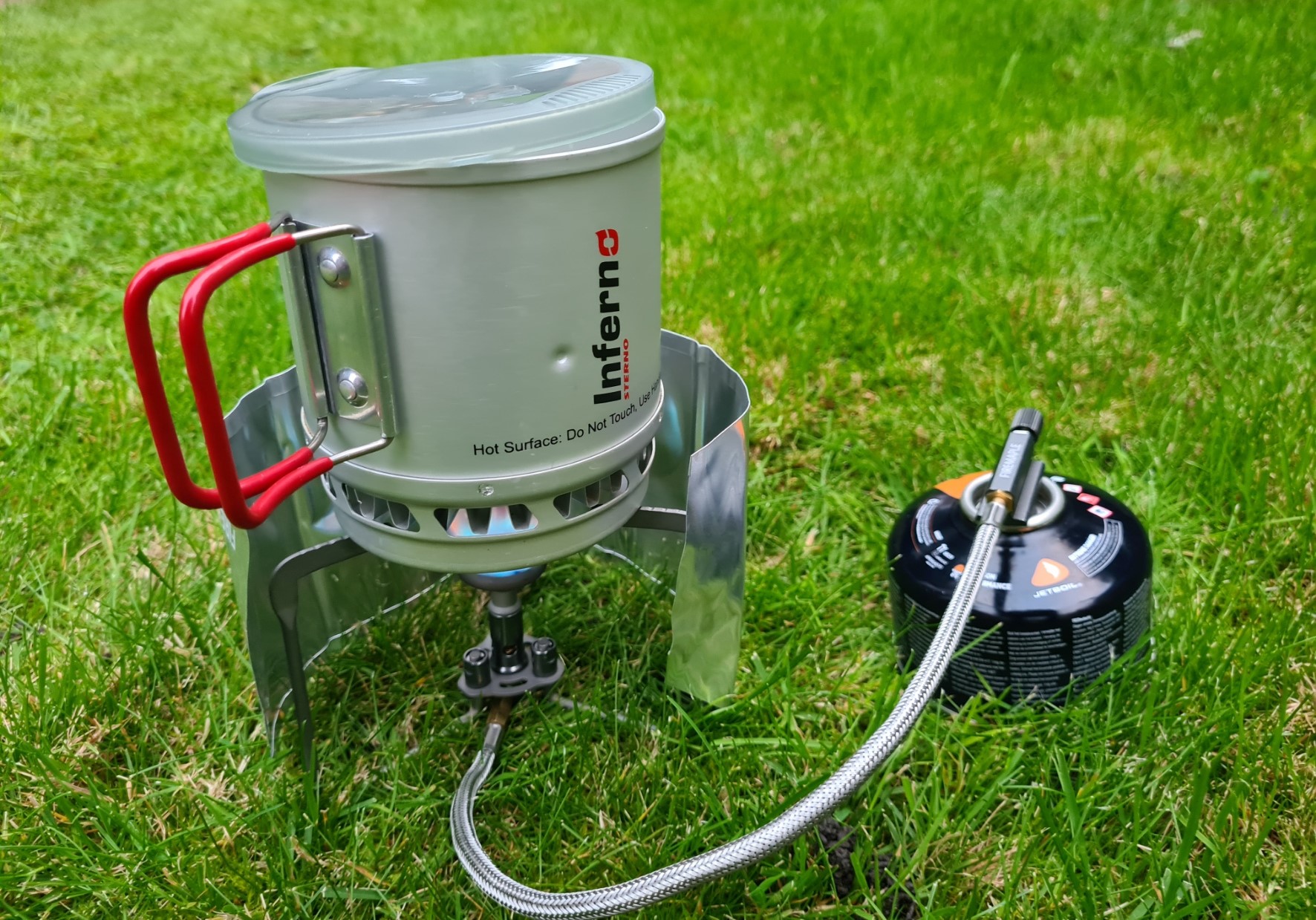
You will have noticed my caveat above: “world’s lightest commercially made…”. Backpacker and author Roger Caffin has been making his own remote canister stoves for years, selling hundreds to members of the Backpacking Light community, and those were for use with inverted canisters too! Fire Maple have produced quite a niche product, and while the ultralight crowd is a relatively small market, there are also many who would aspire to being ultralight, but can easily succumb to a bit of marketing spin. There is, of course, nothing wrong with that, if the product actually works. Thankfully, the Petrel Remote Stove is a decent product and the price point should prove doubly attractive.
Three Points of the Compass has previously looked at a few stoves that may suit the lightweight camper and backpacker. Links can be found here.

 Three Points of the Compass
1 reply »