
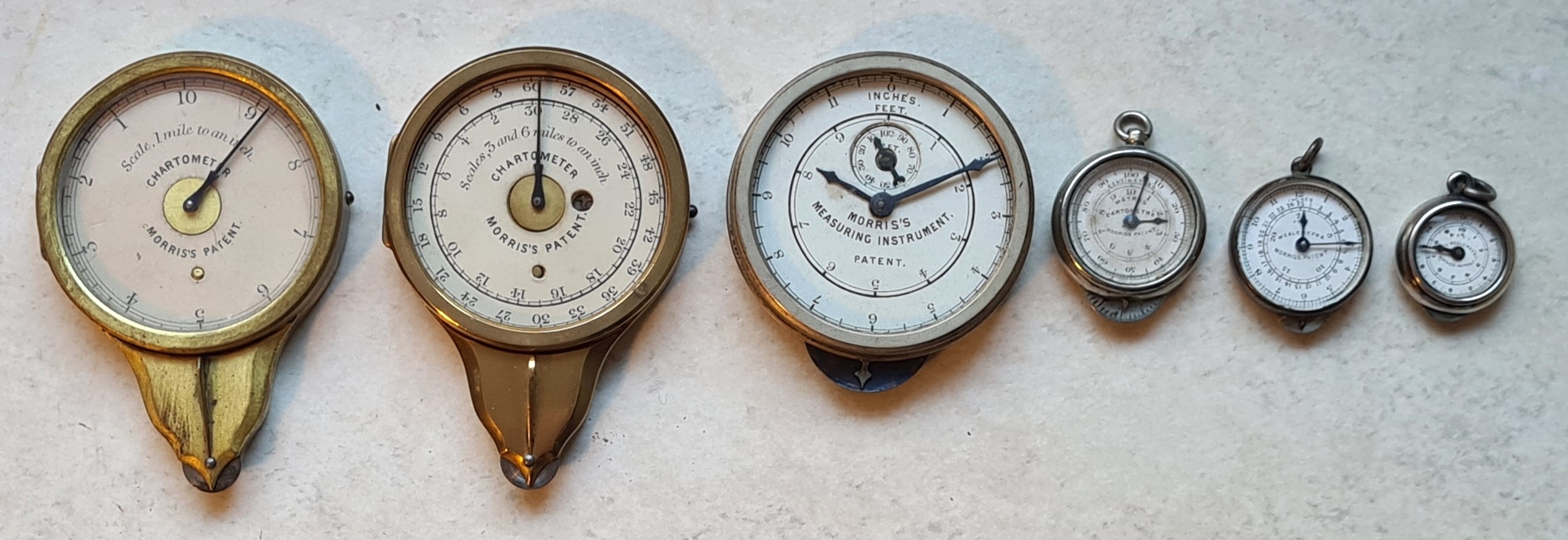
With the release of this tiny instrument, English inventor and manufacturer Edward Morris probably reached his zenith when he created the smallest in his developing range of map measures.
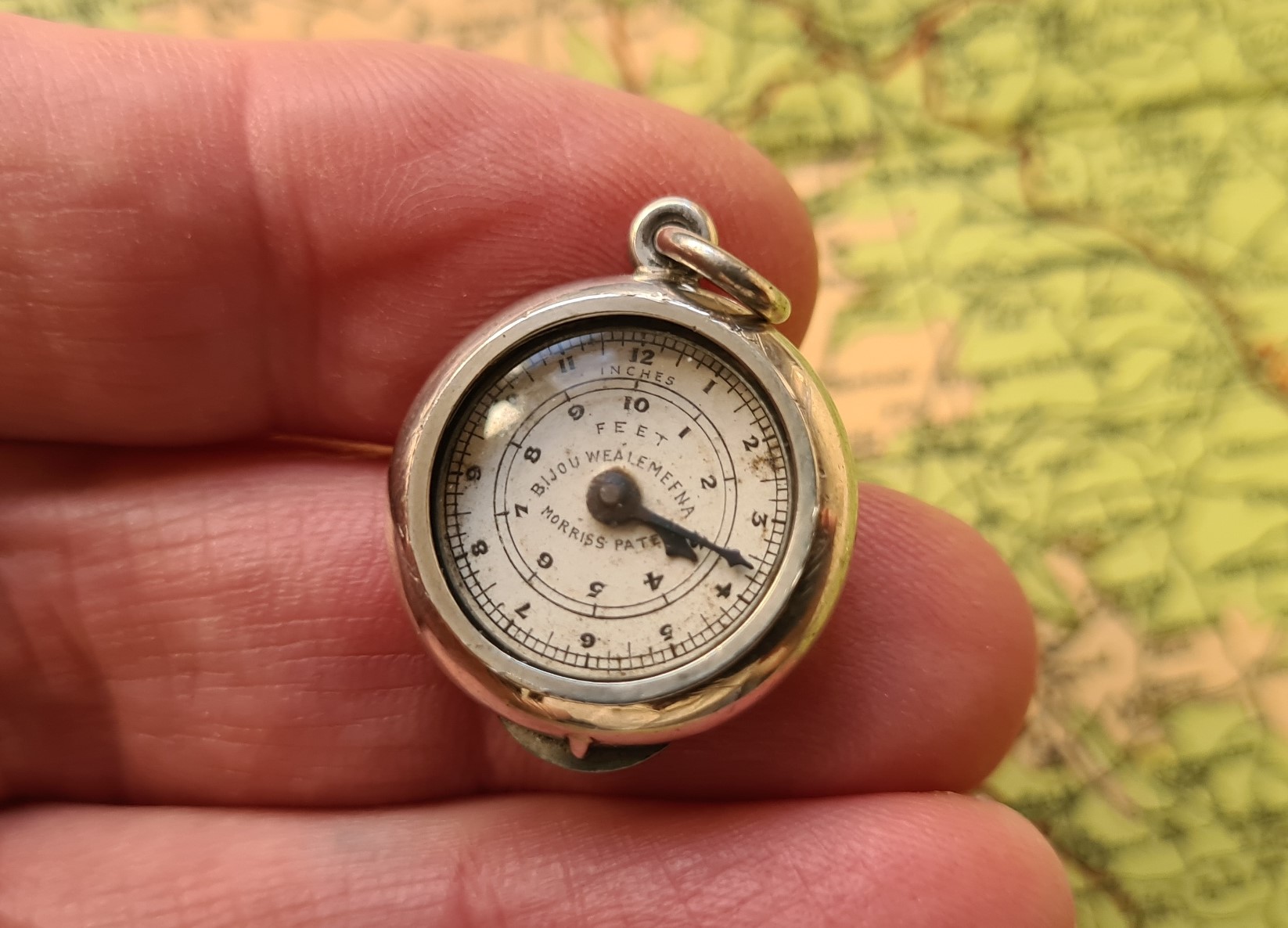
Morris’s Patent Bijou Wealemefna is a simple map measurer made to smaller dimensions than his equally as oddly named Wealemefna. Dating from the late 1870s/1880s. It was invented by Edward Russell Morris, of the Morris Patents Engineering Works, High Street, Birmingham. Tiny in size, it was designed to hang from the end of a gentlemen’s watch chain.
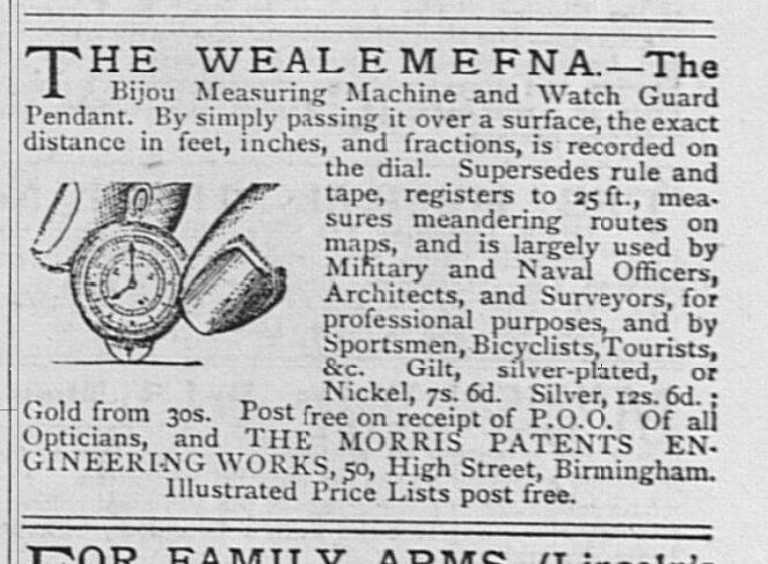
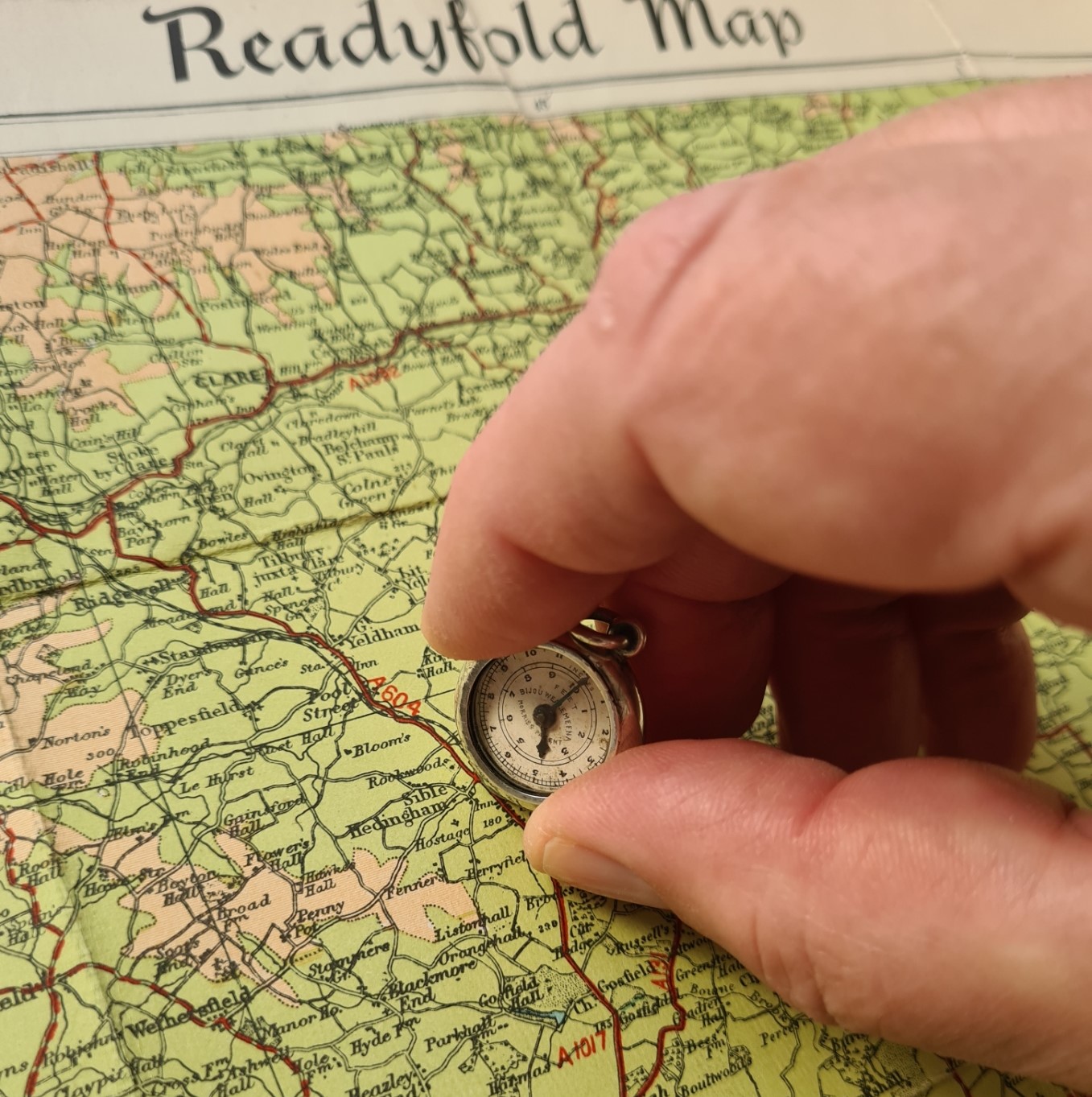
The Bijou Wealemefna will measure lines on maps or anything else, by holding it in the hand, face toward you, then wheeling it forward. A single revolution of the dial by the larger needle pointer measures up to 12 inches, in eighth-of-an-inch increments on the outer circle on the dial. The smaller hand indicates the number of these revolutions, up to 10 feet, on an inner circle on the dial. Quite an accomplishment for such a small tool. Though an 1880 newspaper advertisement in The Graphic suggests there was a version that could measure up to 25 feet.
The advertisement in The Graphic informs us that it was possible to purchase this instrument with a variety of case finishes- gilt, silver-plated, nickel (each 7s 6d), silver (12s 6d) or gold (from 30 shillings). Cases were simple and lacked any additional decoration though subsequent resellers and jewellers would occasionally add their own case inscription or decoration and some examples were made to look quite fancy, occasionally combined with a compass on the opposite face.
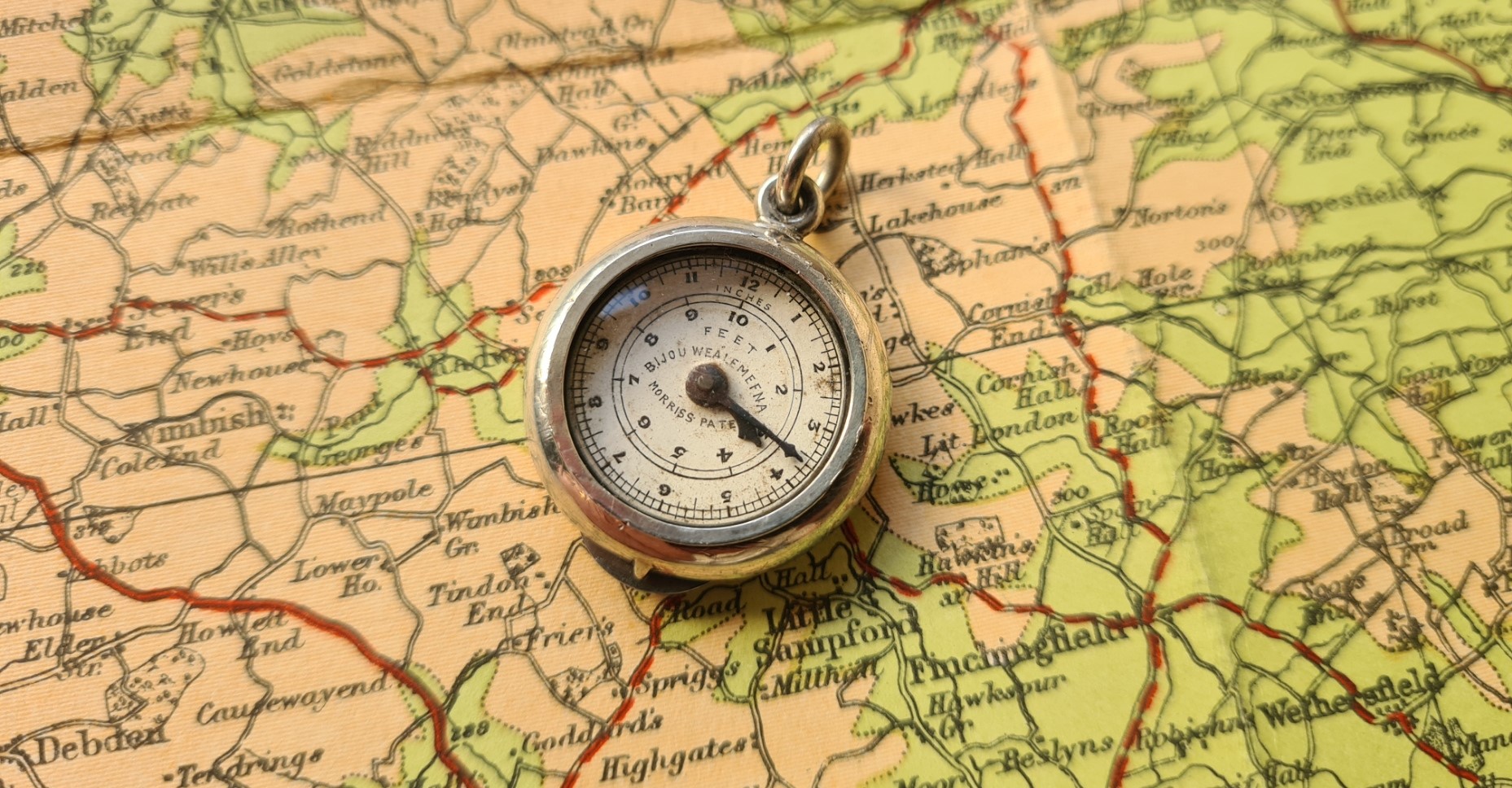
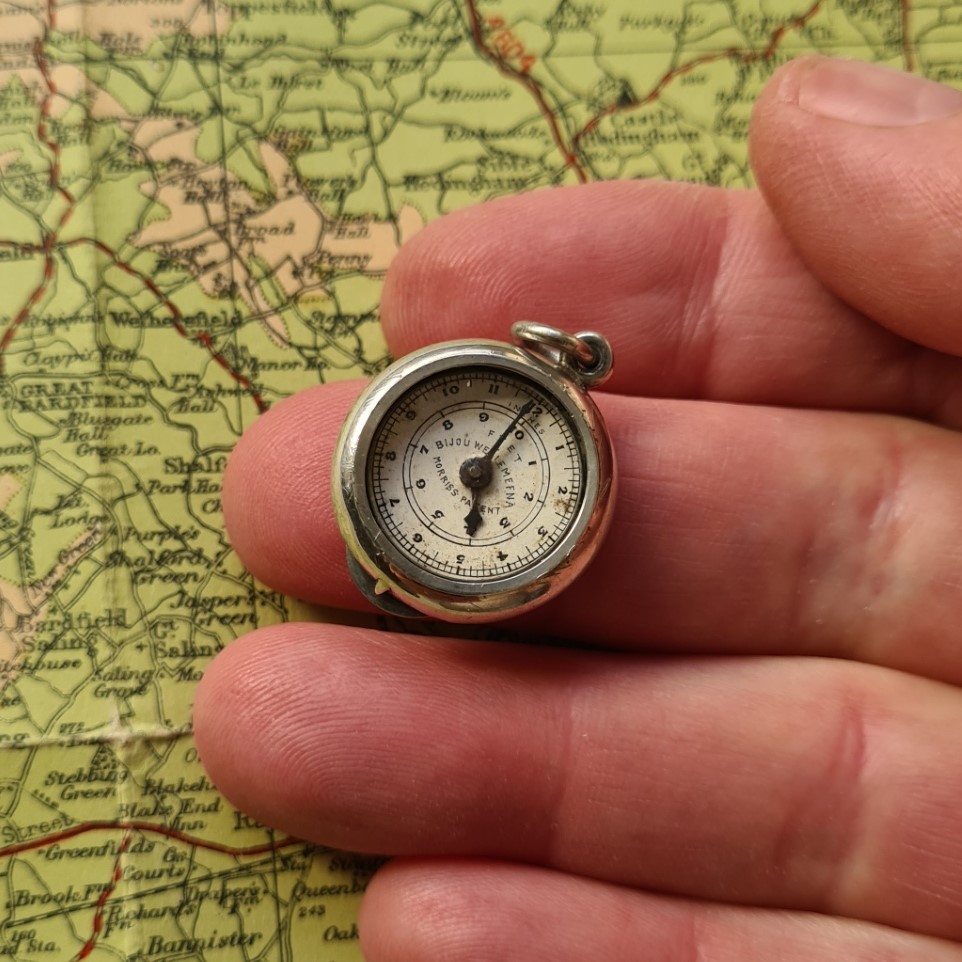

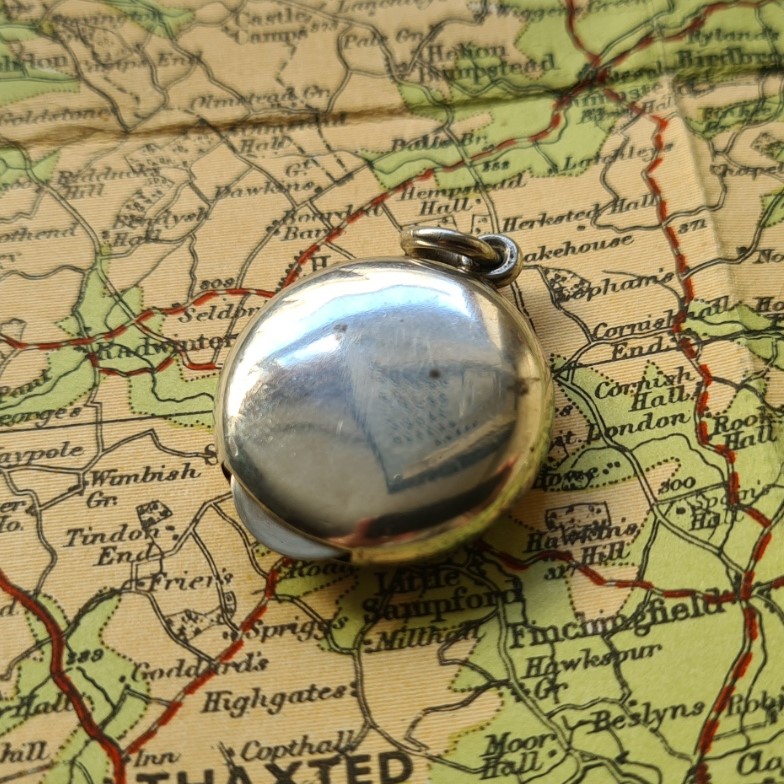
Morris was a member of the Institute of Civil Engineers from 1880 and designed and manufactured five types of map measure. The Bijou Wealemefna was the smallest measure that he produced and weighs just 7.8g. It really is quite tiny, measuring 22.2mm in diameter and 7.15mm deep. Held between a single finger and thumb, it is easy to use.
“Mr. Morris has invited our inspection of several forms of his ingenious little mysteriously-named measurer, and though it is late in the day to call attention to it—and probably unnecessary—we may just say that it is a most handy and accurate companion. Its inventor has recently brought out a miniature form of the instrument, which registers up to 10ft., and maу be carried in the waistcoat pocket, or worn as a watchguard-pendant”
“English Mechanic and World of Science” Vol. 33, London, 1881

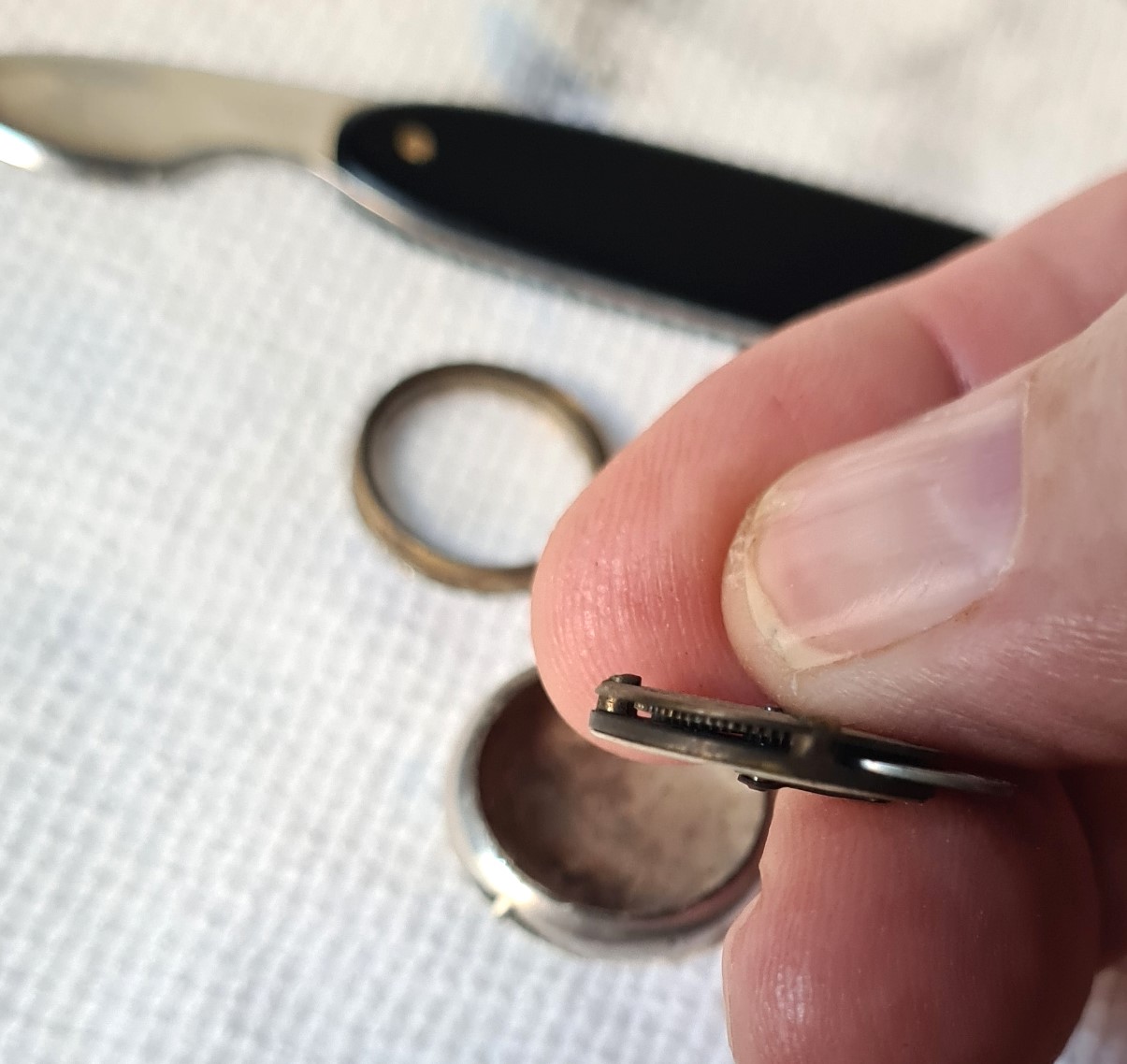
Opening the case reveals the internal workings, such that there are, squeezed between backplate and measuring dial. The tracking wheel drives one large(ish) toothed gear that meshes with the driving cog for the hand movement. With the important parts made of brass and steel and with little to go wrong, it is unsurprising that the movement is still operating well and smoothly after a century and half.

It has an odd name. The English Mechanic and World of Science journal reported on the instrument in 1881 and informs us that Morris created the wholly original name Wealemefna in an attempt to outwit his imitators, also declining to disclose the actual origin of the word. Bijou simply means small and delicate.
While the larger, but still quite small, original Wealemefna does demonstrate a little variety; with different printings of the measuring dial and two different measuring capabilities, I have found little variety in the Bijou Wealemefna. I have two examples and these do have different size metal hanger loops and rings. Perhaps enlarged slightly to make it easier to attach to a watch chain.
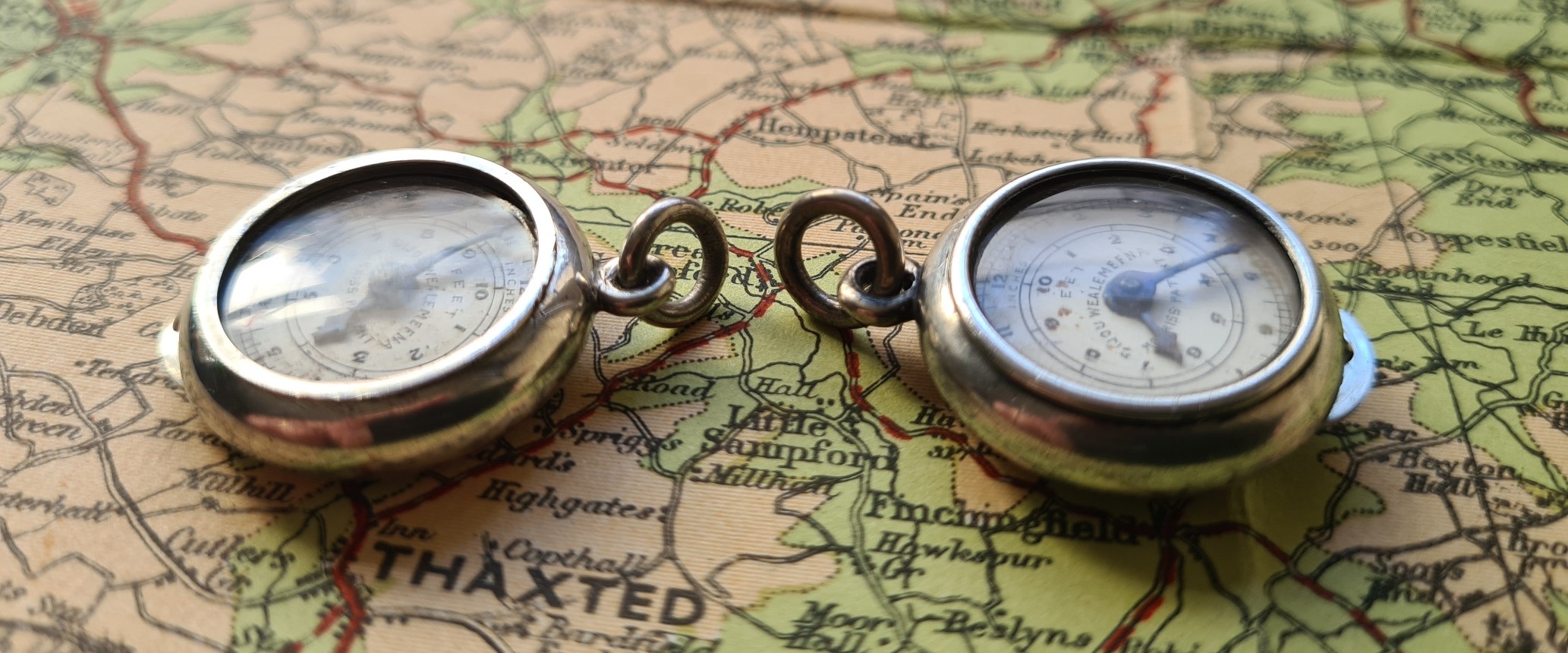
The Bijou Wealemefna is probably the smallest metal mechanical map measure I have. It is not to be written off as a toy as it is a perfectly functional item. As to whether it was ever used much for its intended purpose is obviously unknown. I suspect it was, but was it more an item for a discerning gentleman to pull from his waistcoat pocket to show to his friends as a modern scientific curio? This measure was almost certainly the epitome in Morris’s development of measuring instruments. He moved to the US in later years and seems to have turned his attention to inventing other items, but leaving us this little Wealemefna as a lasting record of his ingenuity.
This measure has featured as part of an ongoing monthly series where Three Points of the Compass looks at Map Measurers in detail. Links to these can be found here.

 Three Points of the Compass