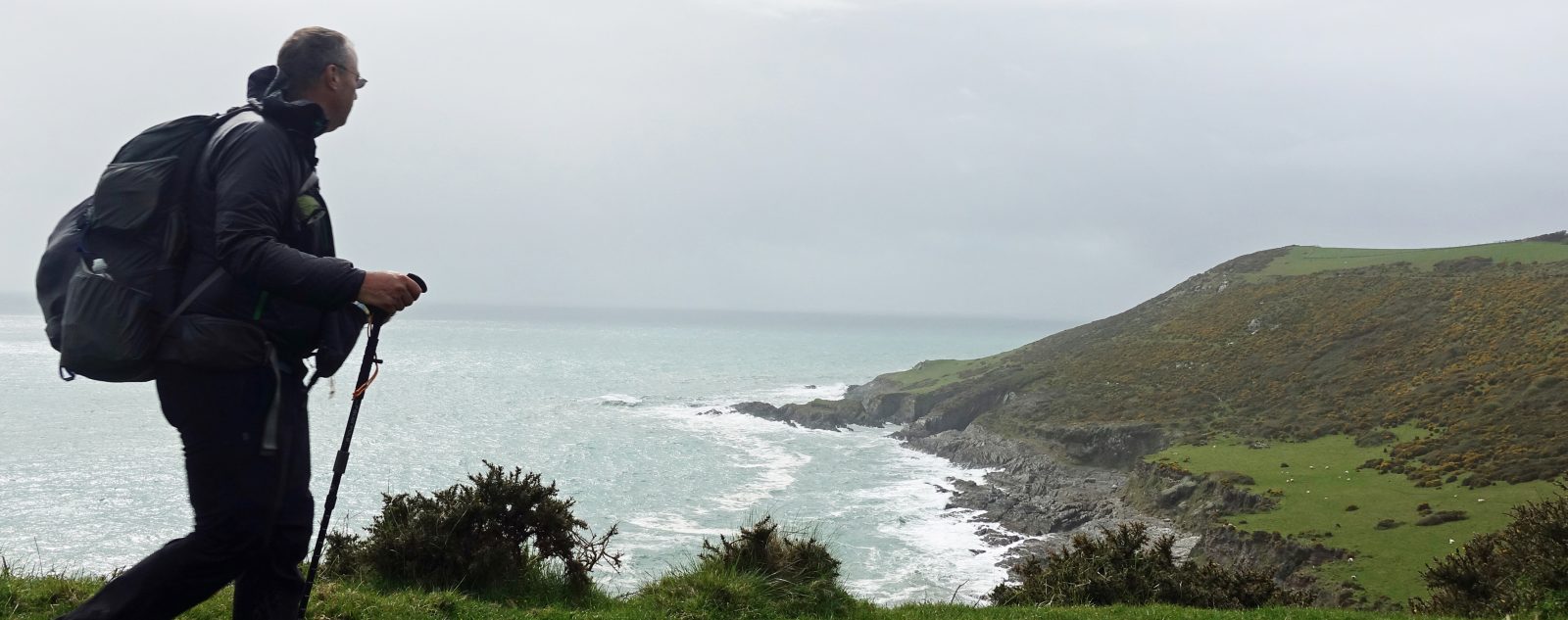
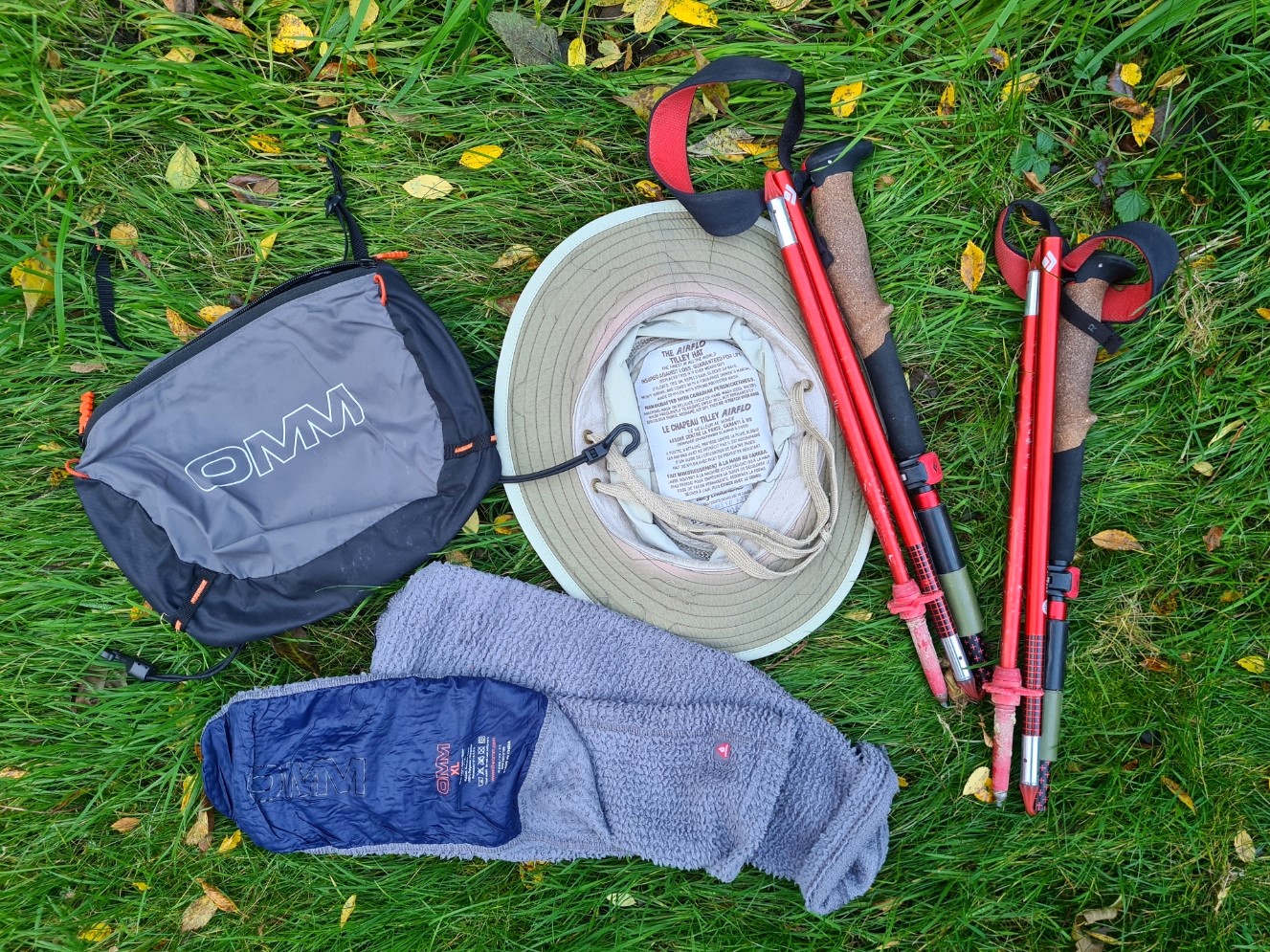
It’s time for the Three Points of the Compass annual retrospective. A look back at a handful of items that were particularly valued while hiking and backpacking this year.
2025 has been a slightly odd and frustrating year for Three Points of the Compass. Periodic illness and moving home took far too many months and conspired to scupper many plans, and few multi-day hikes were completed as a result. Three days completing the Camino de Santiago de Gran Canaria in February were mostly enjoyable but raised issues with footwear. In May, I managed to fit in my annual trip to Scotland and backpacked the beautiful Hebridean Way. June saw Mrs Three Points of the Compass again joining me on a long distance trail. It was my second time walking the Ridgeway National Trail, but unlike my first time, instead of backpacking, the good-lady insists on a degree more comfort and this trip demanded decent accommodation and meals. Then, apart from a few day walks and overnighters, that was about it. Everyday life got in the way, and trips to the east of Scotland, Germany, and Denmark were postponed. It wasn’t until a month long trip to New Zealand where I was able to fit in one of their Great Walks. That was the stunning Abel Tasman Coastal Trail. More on that particular ‘tramp’ in a future post. But still, various pieces of gear were appreciated during 2025 and as part of my now annual review, I have selected five for particular mention here. So, in no particular order…
OMM Chest pack
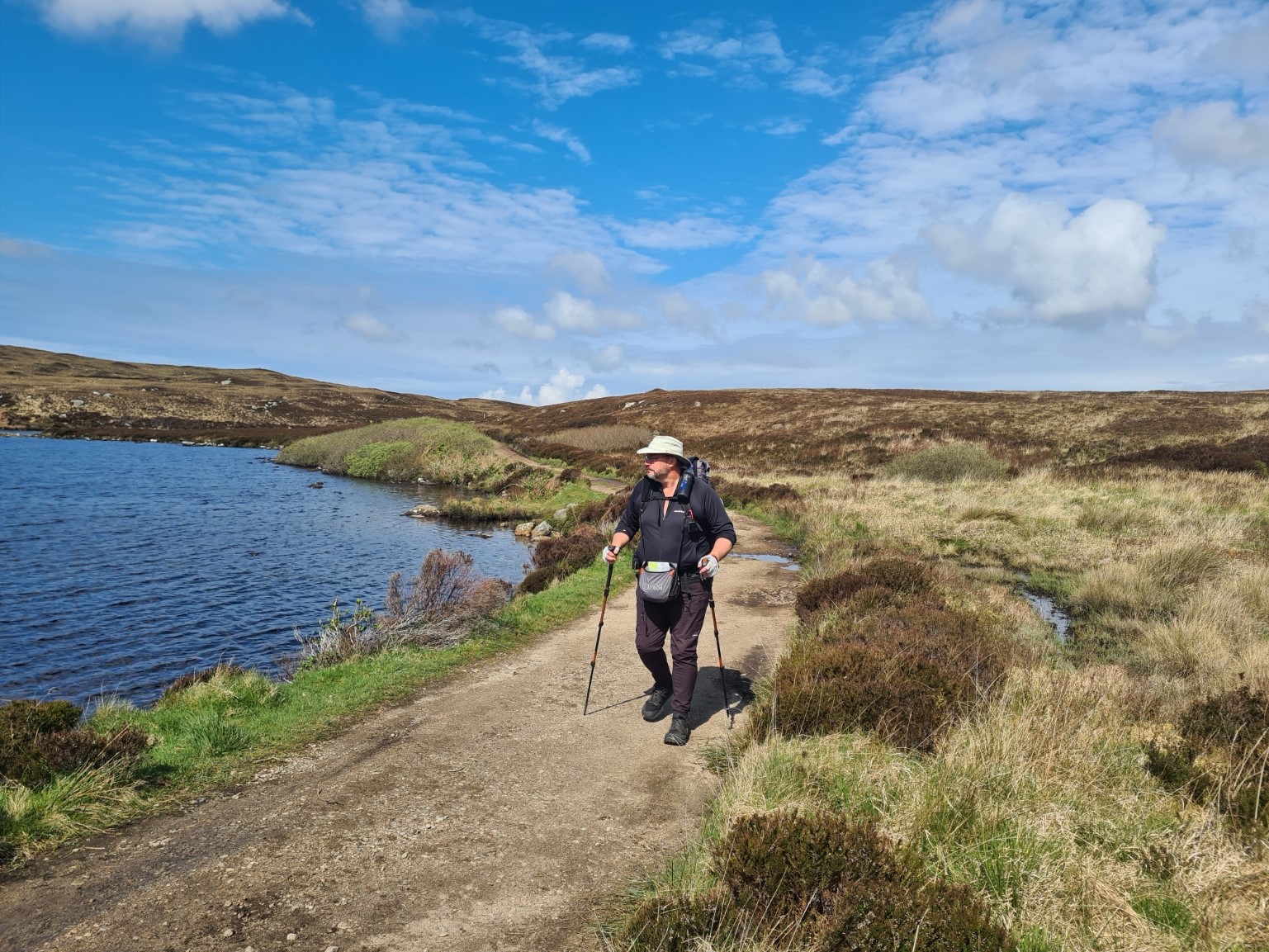
I have been using a chest pack for many day hikes and all backpacking trips for almost a decade and first used a Zpacks Multi-Pack. I was very happy with it. The useful front pack was light and functional. It was a size that I liked and I went through two of them, buying another when the first wore out. But as importing US supplied goods get ever more costly and many on this side of the water start to make similar items, I looked around for something similar. There are some, what appear to be, very light and minimalist DCF chest packs being made by UK based entrepreneurs, but I eventually settled on one from a larger specialist designer and retailer, the OMM Chest pack.
While I have it primarily for day use on trail, the chest pack becomes a bit of a man-bag, if that is still a term, when I carry it away from my pack, tent or room at halts and evenings. The 4lt volume is enough to really pack in a few extras for evening pub visits, or stuffing food into if managing a small resupply in an unexpectedly encountered shop, and that is on top of map, phone, snacks, perhaps a guidebook, possibly gloves, a hat, the list goes on.
In addition to top straps, the chest pack has two bottom straps, with clips that can be attached to the packs’ hip belt or bottom of the shoulder straps. When cinched down the four straps keep it as a tightly mounted small front pack/pocket and lessen swaying and bouncing for trail runners or fastpacking. But I tent to wear my chest packs low, across my stomach. I find them cooler and more easily accessed in this position. So I also tend to only use the two top straps, clipped on to either mini-biners or Nite Ize S-biners attached to my shoulder straps. In this position it is also easily unclipped from one strap if dumping my pack.
The chest pack isn’t in the slightest bit waterproof, so anything susceptible to damp requires a baggie at the very least. I also clip a little Thermodrop thermometer to a loop on one side and my little RovyVon Aurora A5 USB-C ‘glow-in-the-dark’ keychain Flashlight on the other side.
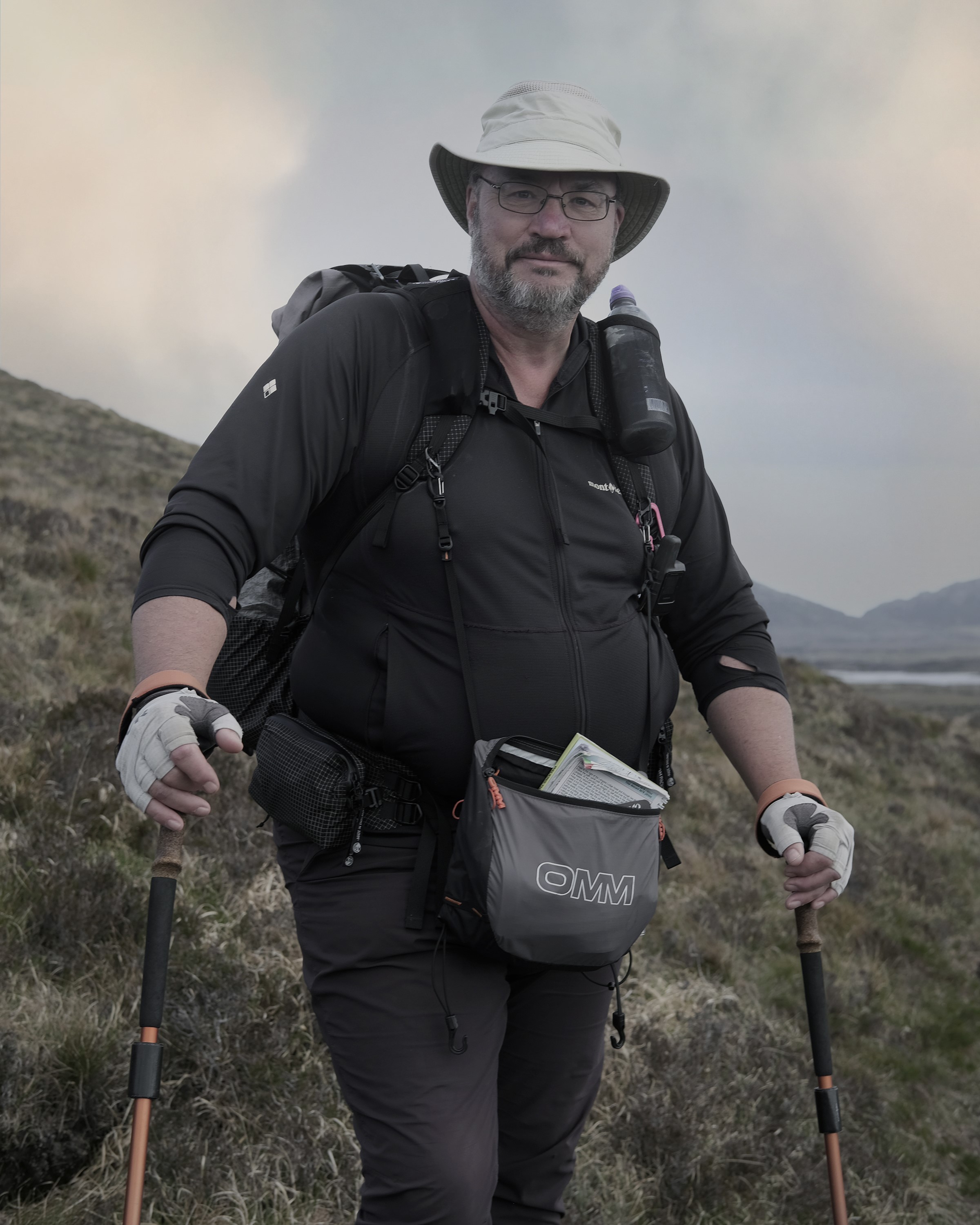
I will probably continue using a small front pack, but I doubt that it will always be the OMM offering. But for now, it works as it should, I see no reason to change, and it is, very definitely, a favourite item of gear.
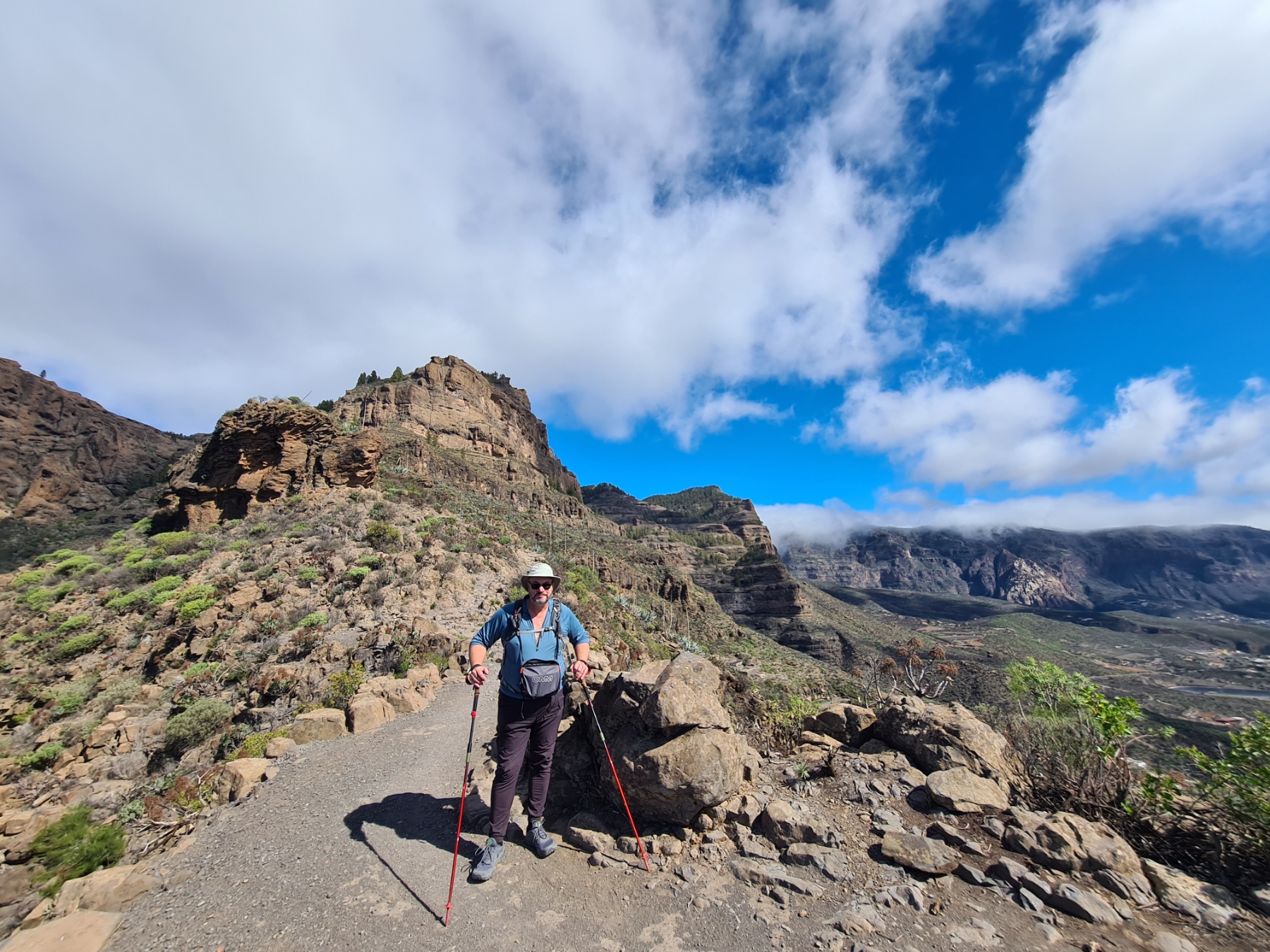
Black Diamond Pursuit FLZ Folding Trekking Poles
It may seem odd that I include an item that has an annoying fault in this list, but I have been using the Black Diamond Pursuit FLZ Folding Trekking Poles for a handful of years now and they have proved, mostly, excellent. Many hikers and backpackers have found that especially when flying to overseas hiking destinations, hiking poles can be a bit of an annoyance to transport. Not only are they frequently long and awkward to stow in transit, but can sometimes be confiscated by airport security when going air-side. Unlike those who chance it, I pay the extra and check my pack in when flying. Folding poles can then be carried inside my pack and my Medium/Large size aluminium BD Pursuit FLZ Folding Poles collapse to just 43cm (or 37 for size Small/Medium). They also extend to 125cm-145cm so are easily capable of supporting my tent (size Small/Medium extend to 110cm-125cm). Flicklock adjustment works well and I like the ergonomic cork grip with foam grip extension. The polyester wrist straps are wearing a little but I would expect that with any pole.
However there is a weak design element to these poles. There is a small silver button in the side of the top shaft that is depressed to collapse the pole. I have had this disappear inside the shaft on one pole so it couldn’t then be locked in place. That pole was replaced under warranty in 2024. This occurred on a backpacking trip and meant I couldn’t fully extend the pole meaning a sub-optimal pitch for a few nights. However I now find that on one of my poles, that little button will creep in while I am hiking, until the pole collapses. It then just requires pulling and snapping back into place taking a second or two at most. This will frequently happen during a hike, perhaps a dozen times over a day. It is frustrating more than onerous, but because the remainder of these lightweight slim poles is so good, I persist in using them. So, no 10/10 score for these, just a 7, but still a favourite, for now.
Zpacks Ultralight Camp Shoes
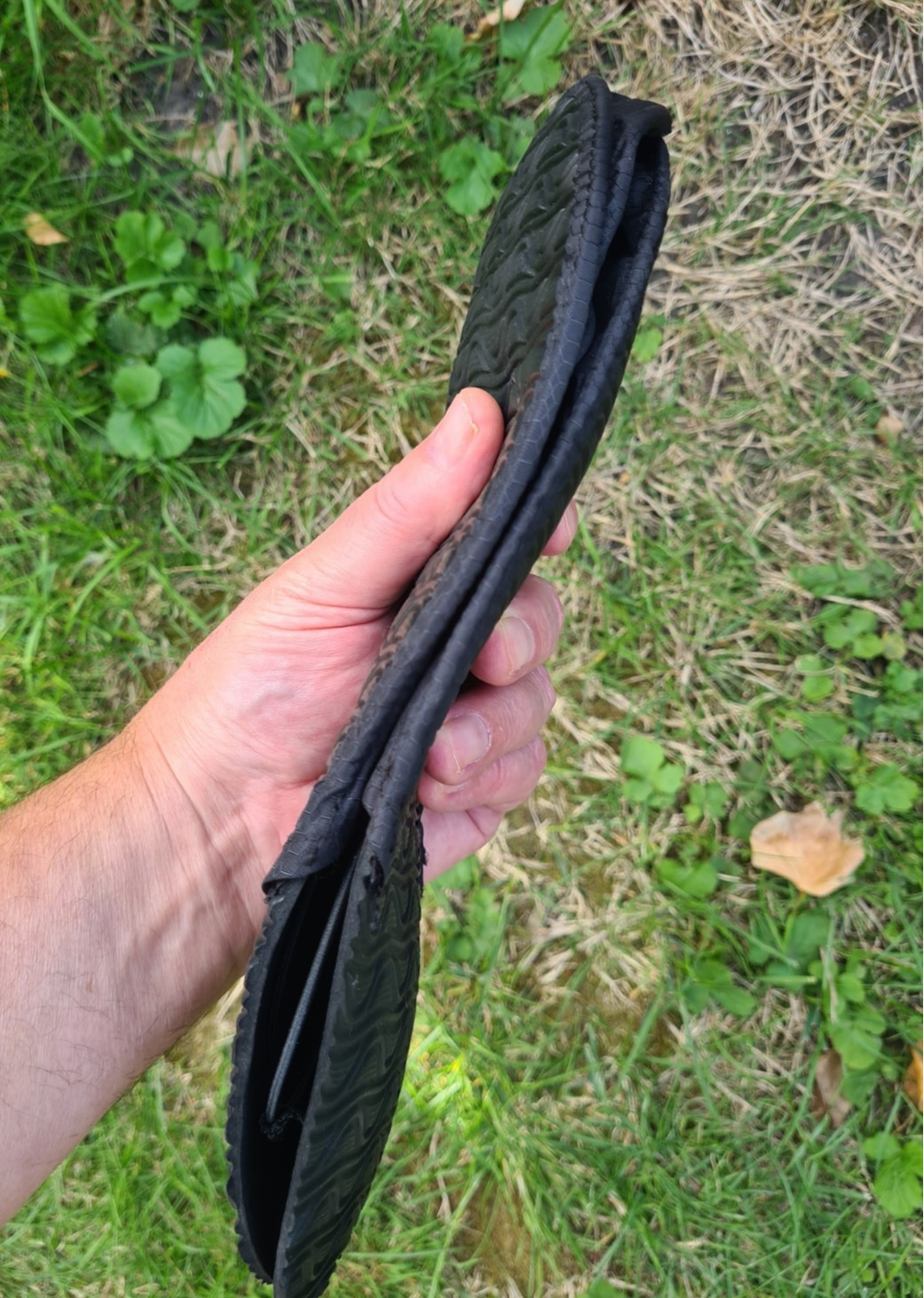
There isn’t much to the Zpacks Ultralight Camp Shoes but careful design makes up for any lack of materials. They are constructed from durable Robic 100D ripstop nylon fabric around the front half and toe of the foot, stitched to stretchy breathable Lycra mesh above. The mesh allows my feet to air, dry and breathe. It also removes any vestige of waterproofness from the front of the shoe. The back of the shoe is open.
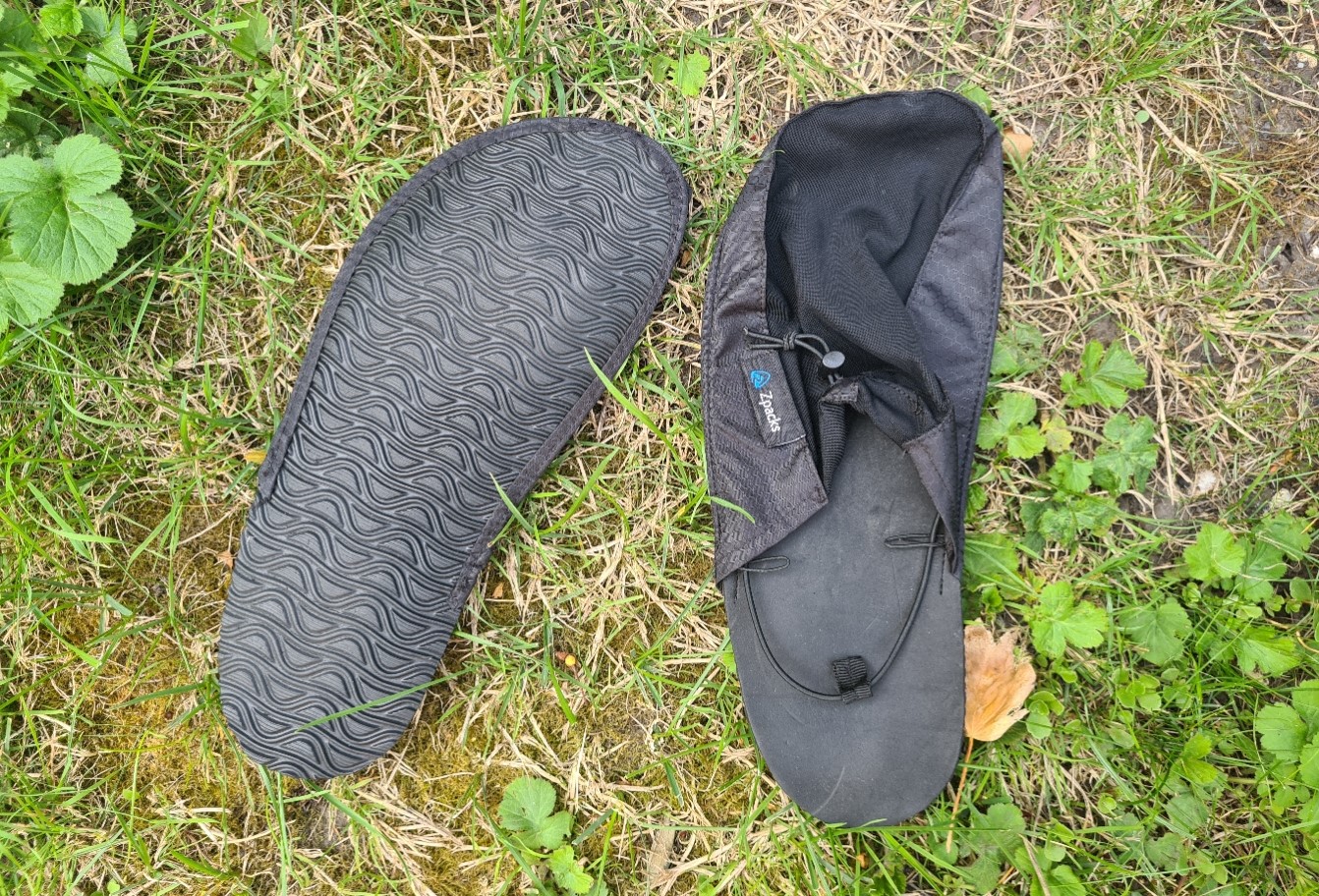


They are quite an expensive purchase for a UK based backpacker and shipping adds considerably to the cost, but I haven’t come across anything quite like these this side of the pond, certainly not as well-made, minimal and light.
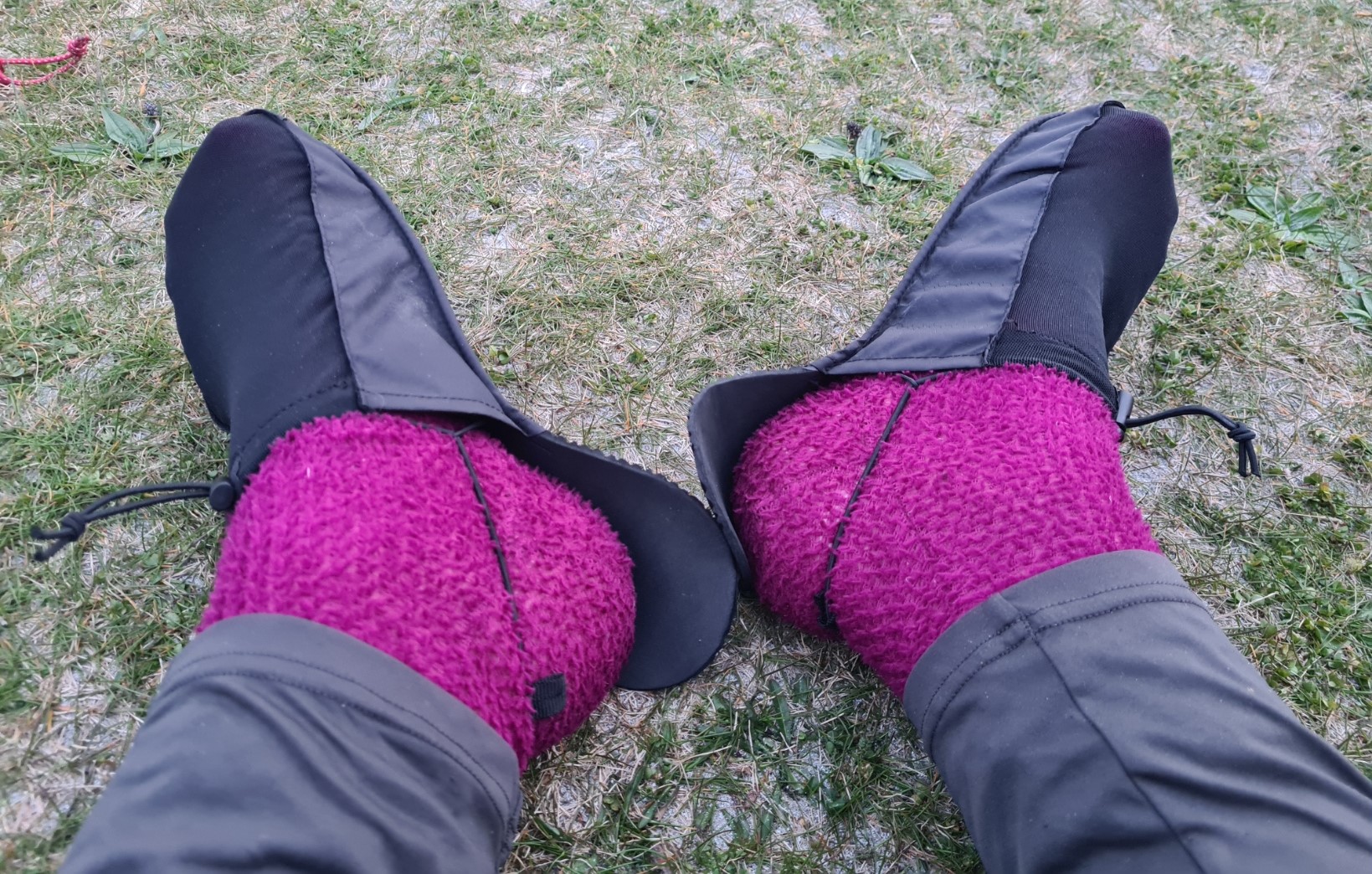
Annoyingly, with a house packed for upcoming move, I was unable to locate my camp shoes to photograph them specifically for this post, hence their missing from the header and featured images.
OMM Core Tent Socks
I find it interesting that my next choice is made of a cutting edge material that also appeared in my 2024 gear retrospective. Back then, it was a Senchi Designs Alpha 90 Hoodie with half-zip that was wowing me. It still is, and I continue to use it a great deal, not just for backpacking, but ‘away from home’ trips more generally.
Alpha Direct has its detractors, mostly complaining about its lack of durability, loss of pile over time (neither something I have experienced), or simply not understanding how to use this grid material. I still think it is an amazing light and effective material and it was almost obvious that I would choose to experiment with it for an item of clothing that sees little wear, namely sleep socks.
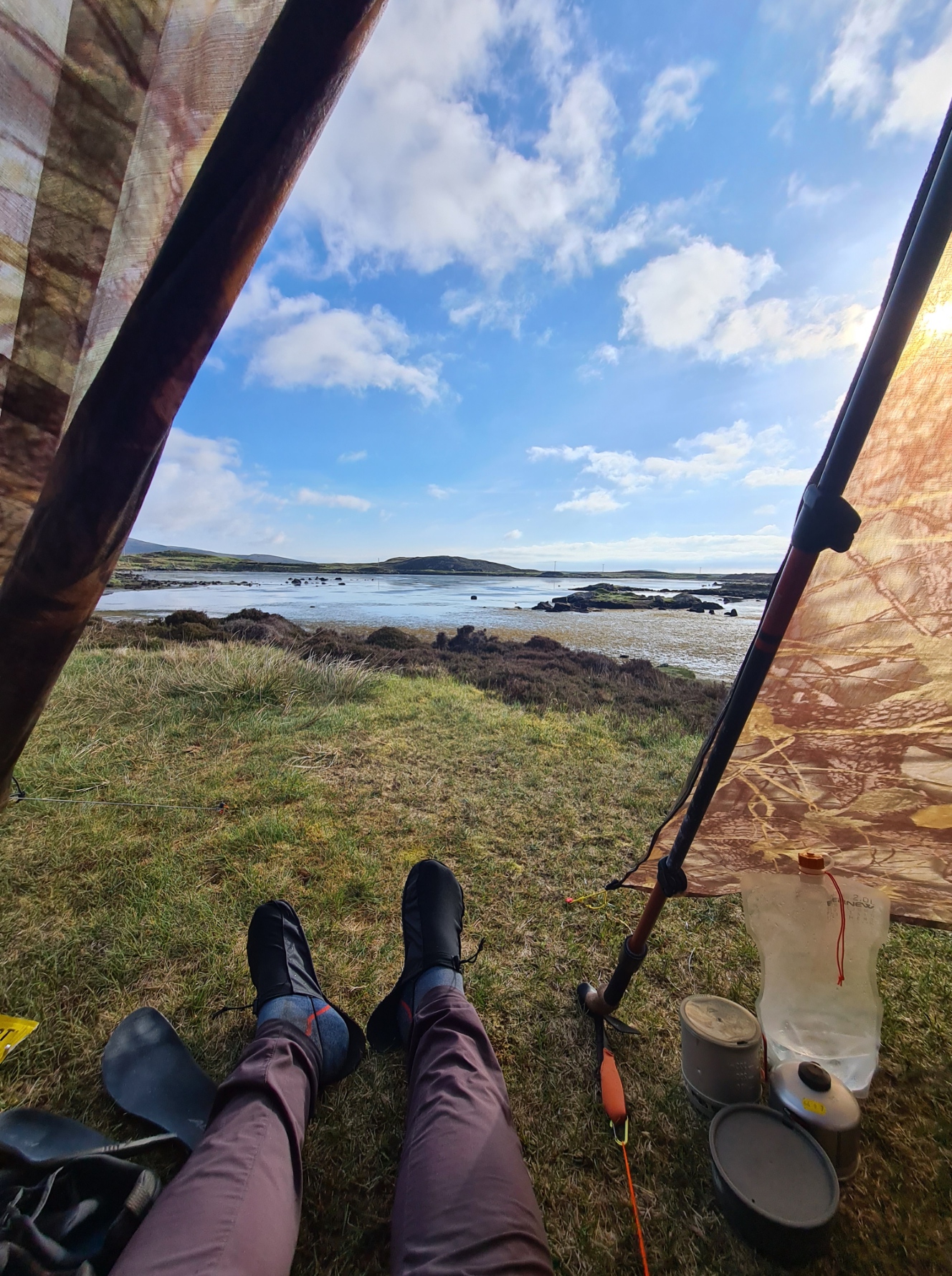
I did purchase 90gsm Camp Socks from FarPointe Outdoor Gear (shown above) but have found the OMM Core Tent Socks, incorporating 125 gsm PrimaLoft Active insulating fabric more suited to walking around camp and bothy due to their more durable, wind & water resistant nylon sole, that results in less risk of snagging. The fleece material is air permeable, allowing feet to breathe overnight. I also use foot balm after a day’s hiking and these socks keep the grease isolated from the inner surface of my quilt.
My sleep socks are comprised of an insulating fabric. This is a synthetic plume woven through a knitted mesh, providing a high volume and open structure, while still remaining lightweight. The fabric is made in three weights- 75gsm, 125gsm and 250gsm. Mine are the mid-weight 125g material. They are pretty much shapeless and weigh just 45g for the pair.


Polartec developed their open weave Alpha material, what they termed ‘Active Insulation’, specifically for US Special Forces operating in the cold mountain areas of Afghanistan. A lightweight material was required that could not only act as an insulating mid layer, but also permit quick dumping of excess heat during times of heavy exertion. It is constructed from lofted knitted fibres connected to a breathable open weave layer. Manufacturers seem to have been a bit slow to adopt it, perhaps wary of a tide of returns from people that fail to understand its limitations and snag, rip, pull and generally knacker fairly pricey pieces of kit. Though those Special Forces, notoriously hard on their kit, seem to have been able to make it work for them. Variations on a theme continue to be developed, with tougher faces. These are, admittedly, heavier, but are more durable and we will no doubt see more of this airy open fleece in the future, almost certainly clones coming out of China, at ridiculously low cost.

These socks are never going to win a fashion award. They are loose around the foot with just about zero support and despite the material having four-way stretch, are tight to pull over my heels due to the lack of stretch around the cuff. There is little in the way of seams in these socks to press into the skin so are pretty comfortable as sleep socks regardless of the position in which my feet are positioned overnight and my feet recover well as a result of both the evening balm, foot massage and the loose comfortable fit these socks deliver. I definitely sleep better on trail with sleep socks, and other than high percentage possum down socks, these are amongst the best I have used.
Tilley LTM5 Airflo
Looking around the gear and clothes I wear and carry on trail, particularly this past year, I was a tad surprised that I hadn’t included my Tilley hat in any previous annual retrospective. Not only is it a classic, the Tilley LTM5 Airflo is just about the perfect compromise. No hat is perfect. In strong sun a wider brim might be preferred, in windier conditions a slightly narrower and stiffer brim would be better, on very hot days, a little more airflow across the crown would be appreciated.

I wore a cotton Tilley T5 for around a decade before making the switch to my current version, that features 3/4″ of mesh around the crown for ventilation. This is a hat worn not just for protection from UV. I wear glasses and the medium brim does a pretty good job shielding these from rain. I found that even if worn when it was raining, my head didn’t get any wetter with the mesh than without it, but that mesh does give just a little airflow and ventilation when it is hot. It may offer a little less sun protection due to the modest brim width but packs better and is not affected so much by wind bending the brim. When I changed to the Airflo design I also changed to the nylon option (with polyester mesh). This is far lighter than the cotton version and dries quicker.
There are a lot of features about the Tilley that I like. Naturally it offers UPF 50+, the highest sun protection. There is wide brim option available but my medium brim is 2 5/8″ at the front, 2 3/4″ at the rear with 2 1/8″ sides. This is usually sufficient to protect the majority of my face and much of my neck from the sun but I do occasionally wear it obliquely when a low setting sun is to my side. The underside of the brim is green to prevent glare, a thoughtful addition.


The brim also holds a head net away from the face to prevent bugs biting through. At just 95g, this hat rarely gets left at home whatever the season or country I am hiking in. Originally desgned for those sailing yachts, the hat has front and back cord system to stop it blowing away. It is possible to really clamp these down fore and aft when it is gusty. You can’t see these cords in these images as they are tucked inside out of sight. I usually just employ the ‘under the chin’ cord, and that rarely. It gets thrown in the washing machine when I am proofing a hard shell and little other care from me at all.
There is a secret stowage pocket in the crown but I don’t access that for anything other than tucking the cords away for most of the time, or to remove the little wafer-thin foam pad that sits in there, prior to machine washing. The foam is there to make the hat float should the unfortunate occur and the hat end up in the water, it also adds a degree of waterproofness to the crown, but this hat will wet out eventually.
Known for their durability, after many many years of use and thousands of trail miles, mine now has quite few loose threads around the brim and while these do not reduce effectiveness, it may be time to test that lifetime warranty.

And that is about it. I have been using a few other interesting bits of kit this year, stoves and cookware amongst them, but don’t feel I have put in sufficient nights and miles to properly appreciate any or include any of them, perhaps next year. I also note that no electronic/digital items have made my list this year, which makes for a refreshing change.

 Three Points of the Compass
Interesting to hear your thoughts on the Zpacks camp slippers. I hopefully have a pair waiting for me under the Christmas tree. I’ll be using them with the Farpointe sleep socks (for now) and if it’s wet maybe a pair of Reed Chillcheater waterproof socks. I also like to air and massage my feet with a cork ball and then a bit of Gehwol cream so they can come back to life during the night. I hope this little system makes the evenings more comfortable and pleasurable. I’m a bit bored of bread bags in wet shoes. How do you find the durability of the camp slippers, so far? It’s not something I want to have to shell out on once a year. Hope you have a better 2026 and I look forward to reading your trip reports. Have a good one 👍
LikeLike
I haven’t had any issues with durability, but probably because I only use them for short wanders. They simply wouldn’t take much more as there really isn’t much to them.
We seem to have a similar foot pandering routine, seems to work well
LikeLiked by 1 person
Have a good Christmas and cannot wait for New Zealand posts.
LikeLike
Thanks, likewise. I probably need to write up my Chile trip first
LikeLike