
A midge ridden evening on the Cape Wrath Trail, clegs on a walk through Kielder Forest to a bothy on the Pennine Way, mosquitoes on a lakeside section of Sweden’s Kungsleden, these are amongst the times I have scrambled for a bug head net and been relieved to pull it over my head to distance myself from the mozzies.
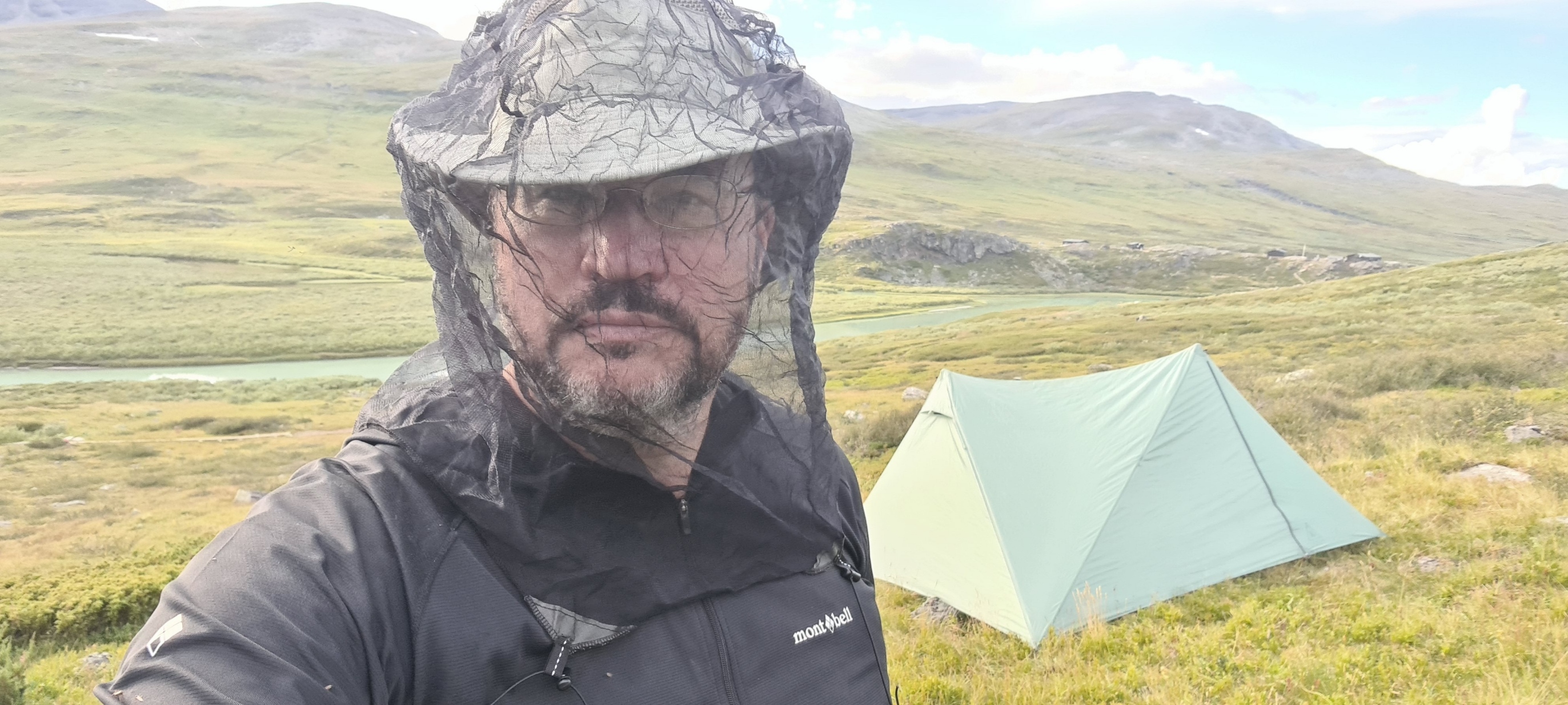
Three Points of the Compass has just returned from backpacking in Sweden’s Arctic Circle. In common with most three-season multi-day hikes I make, before setting off to trail, I slipped a little head net into the pack. When I have had to use this while backpacking it is probably all that has enabled me to keep my sanity. Head nets are relatively cheap, extremely lightweight, easy to use and there is a lot of choice. All of them look daft, though that simply is not a factor. Some are simple narrow tubes, others are a little more complicated in design. It pays to be just a little careful in which is chosen to join you on a hike. I have a favourite, but have tried a small number of others that proved less satisfactory. You can buy a head net for not-a-lot of money and it is easy to scrimp here. You may be afforded plenty of opportunity to regret such a cost saving.
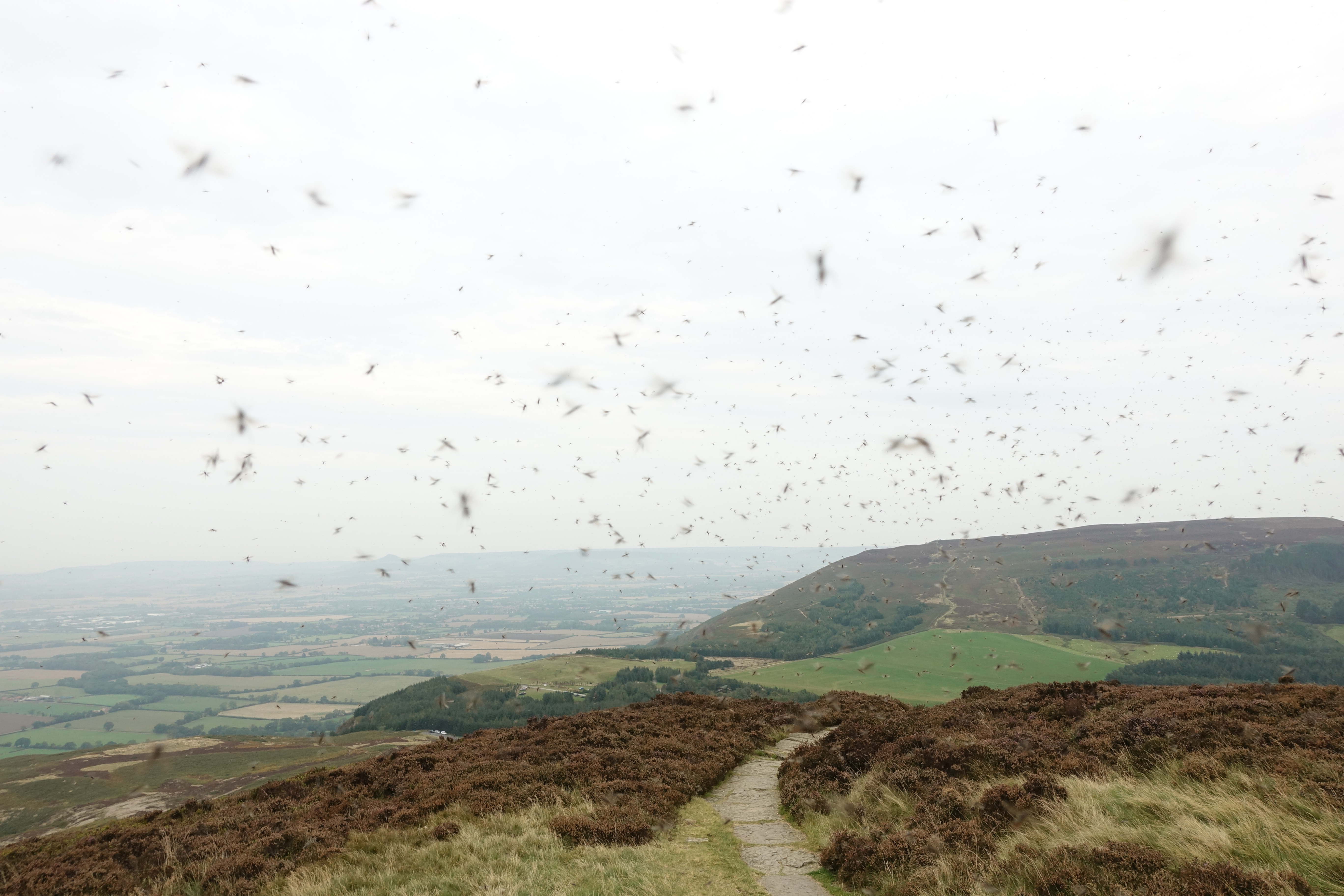
There are different types of mesh used for head nets and other outdoor apparel and gear. It mostly comes down to the number of holes per square inch specification and durability. A mesh that is OK excluding mosquitoes, may be insufficiently fine enough to prevent smaller midges, thrips and gnats from crawling through. Larger holes permit greater air flow, which can make wearing a head net a cooler and more comfortable affair, but you may as well buy a net with small enough holes to exclude every bug that might bother you. The number of holes in a mesh is indicated as holes per square inch (psi). Mosquitoes are quite large so a mesh size of 150psi – 400psi is sufficient. That is no use to me as a fair amount of my hiking is in midge country and these much smaller beasties require a much smaller mesh hole size to exclude them. Look for a specification of at least 600psi to stop midges, though some tighter meshes of as much as 3000psi are available. The more extreme 3000psi is overkill as while it will effectively exclude tiny pests, it also reduces breathability uncomfortably and a very high psi also reduces visibility through the mesh.
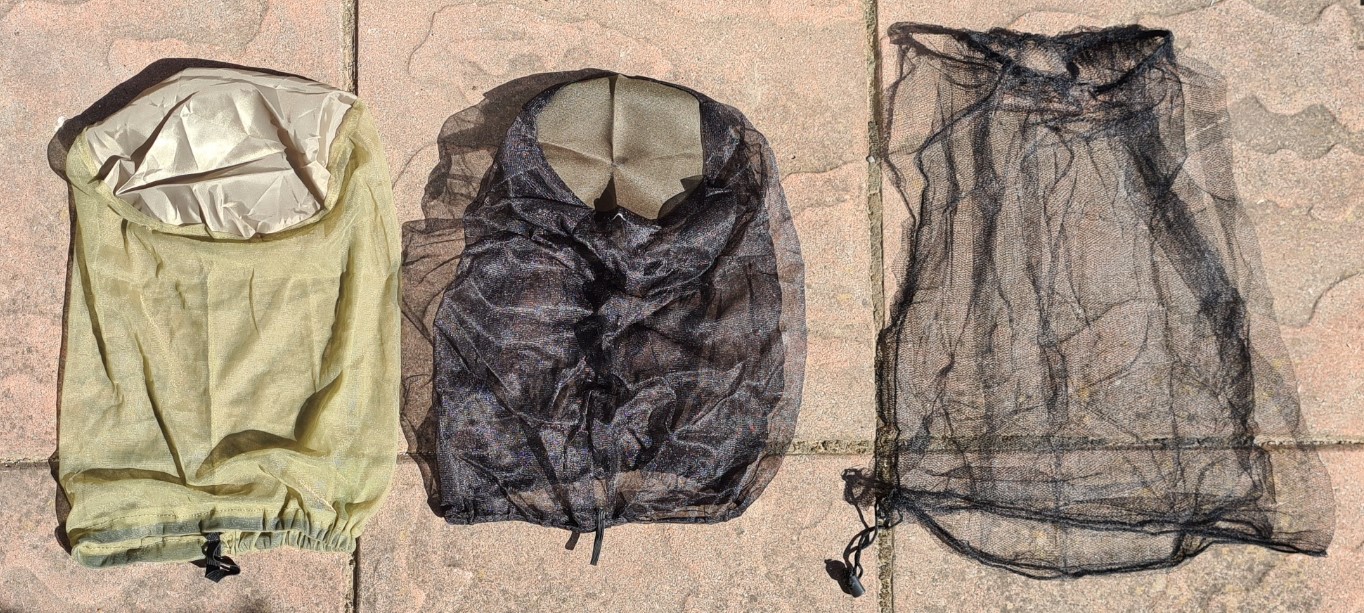
Net mesh colour is a factor too. While many flies and midges are attracted to darker colours, these are also easier to see through. Visibility is more important to my mind however so Green or Black are therefore the best colours to opt for when choosing a head net, and of these two, black is the easiest, by far, to see through when wearing.
A head net is best worn over a hat. This provides a biteproof barrier to the top of the head and moves the net away from the face, as mosquitoes can still bite through a net. A baseball/truckers peaked hat does keep a net distanced from the face but leaves ears and back of the neck mostly unprotected. A wide brim hat is more efficient though wearing a Buff neck tube or draping a bandana over the head and neck inside the net might be an alternative. As it is, my favoured on-trail hat is a Tilley LTM5 Airflo, which works well with a wider head net such as the MLD Bug Head Net.
Of the many meshes available, the two industry standard meshes used by many reputable manufacturers for their head nets and bug screens in tents etc. are Noseeum (0.9 oz/yd²) or Nanoseeum (0.67 oz/yd²). Constructed with a tight weave and irregular pattern, the first is cheaper and more durable, the second is lighter, slightly more expensive and slightly less durable. While I have no real issue with more durable Noseeum being used on tents, durability is not necessarily a factor with head nets so I prefer Nanoseeum. There is now an even lighter mesh fabric (0.5 oz/yd²), but I have yet to see anyone using it for head nets.
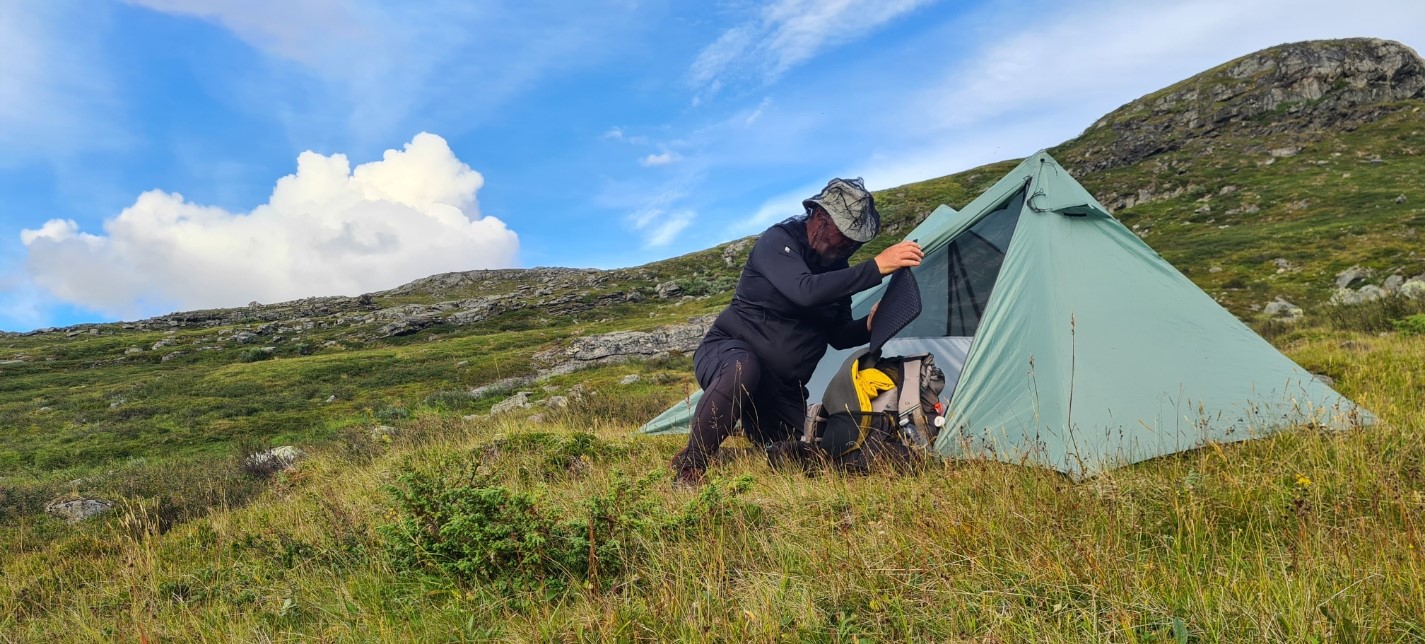
Soaking a net with some form of chemical repellent such as Picaridin may be preferred by some hikers. However, I prefer to avoid chemicals next to the skin where I can and work more with physical barriers. So my net has to be wide enough and long enough to form a decent barrier around my upper shoulders and exposed front and back of neck while also keeping the mesh away from the skin.
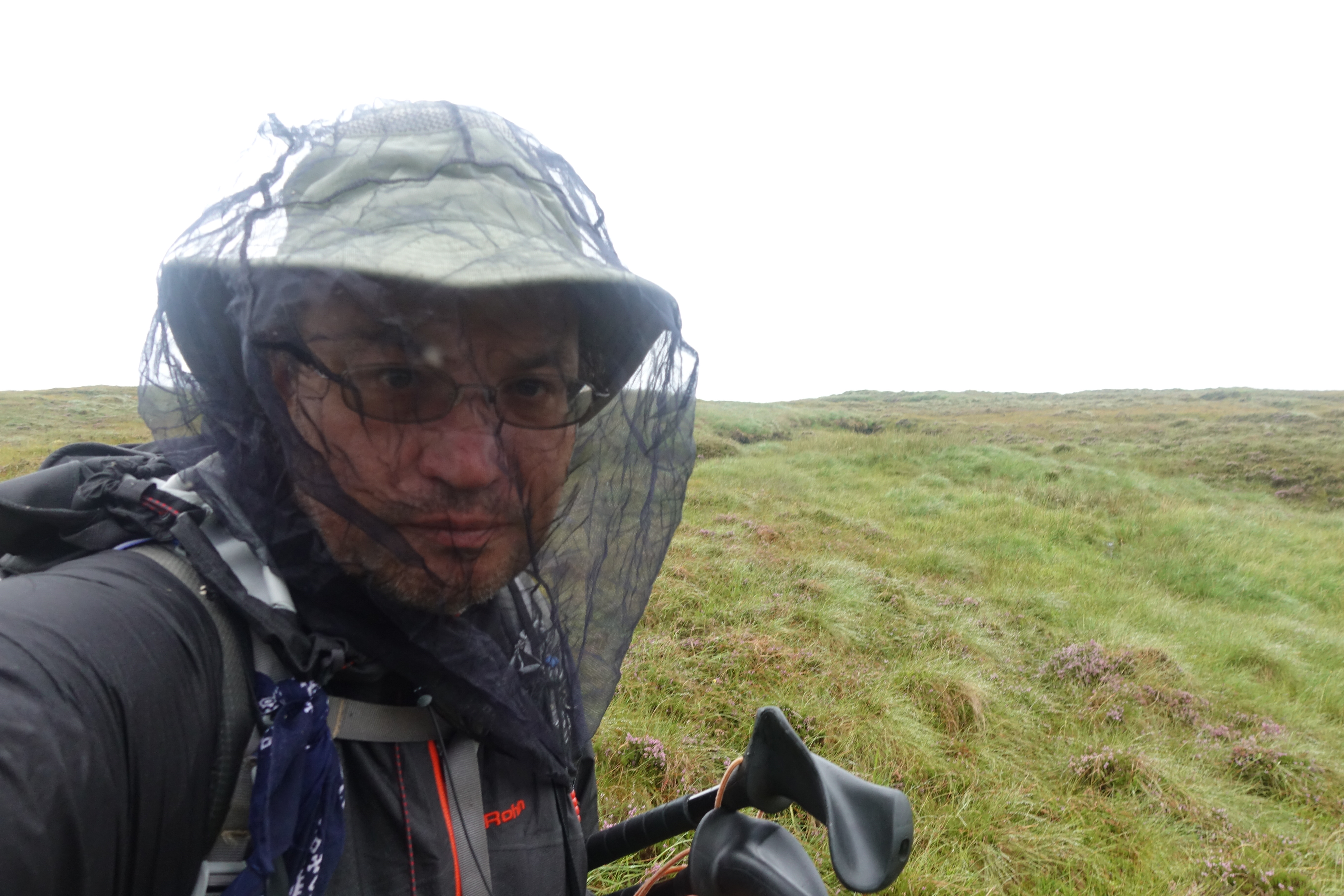
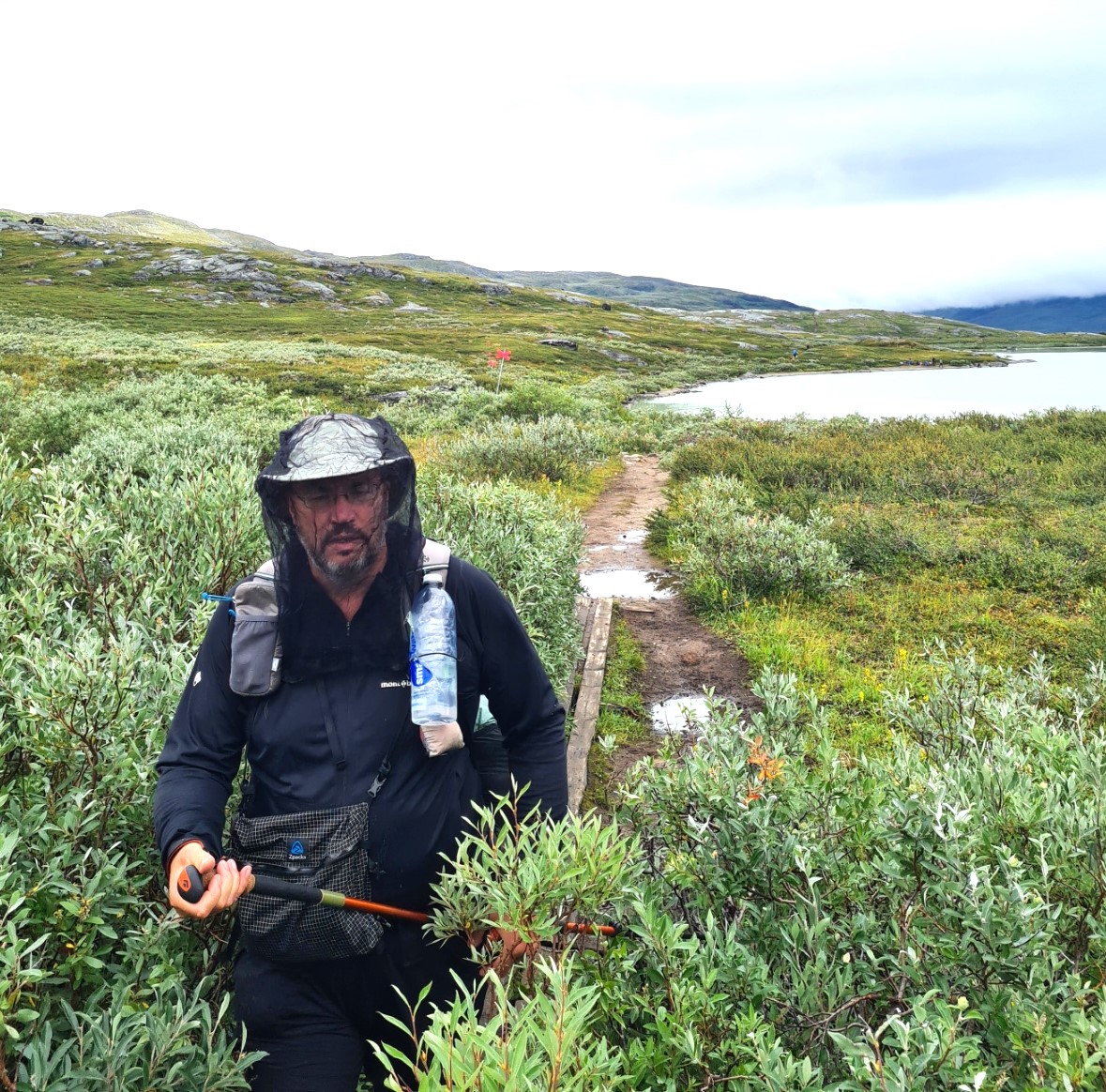
Three Points of the Compass has been using the Bug Head Net from Mountain Laurel Designs for the past six years and I cannot see any need to change from it. It is a cleverly designed and carefully shaped net with a closed 41cm/16″ wide top to go over a brimmed hat, with a 51cm/20″ long tube of material covering the head with the mesh kept away from the face and side of head and exposed neck so that insects can not bite through, with a contoured shoulder area designed to be kept tight to the upper torso, front and back. It is primarily made of flame-retardant 15 denier nylon and thin shock cord with tiny plastic cord locks.
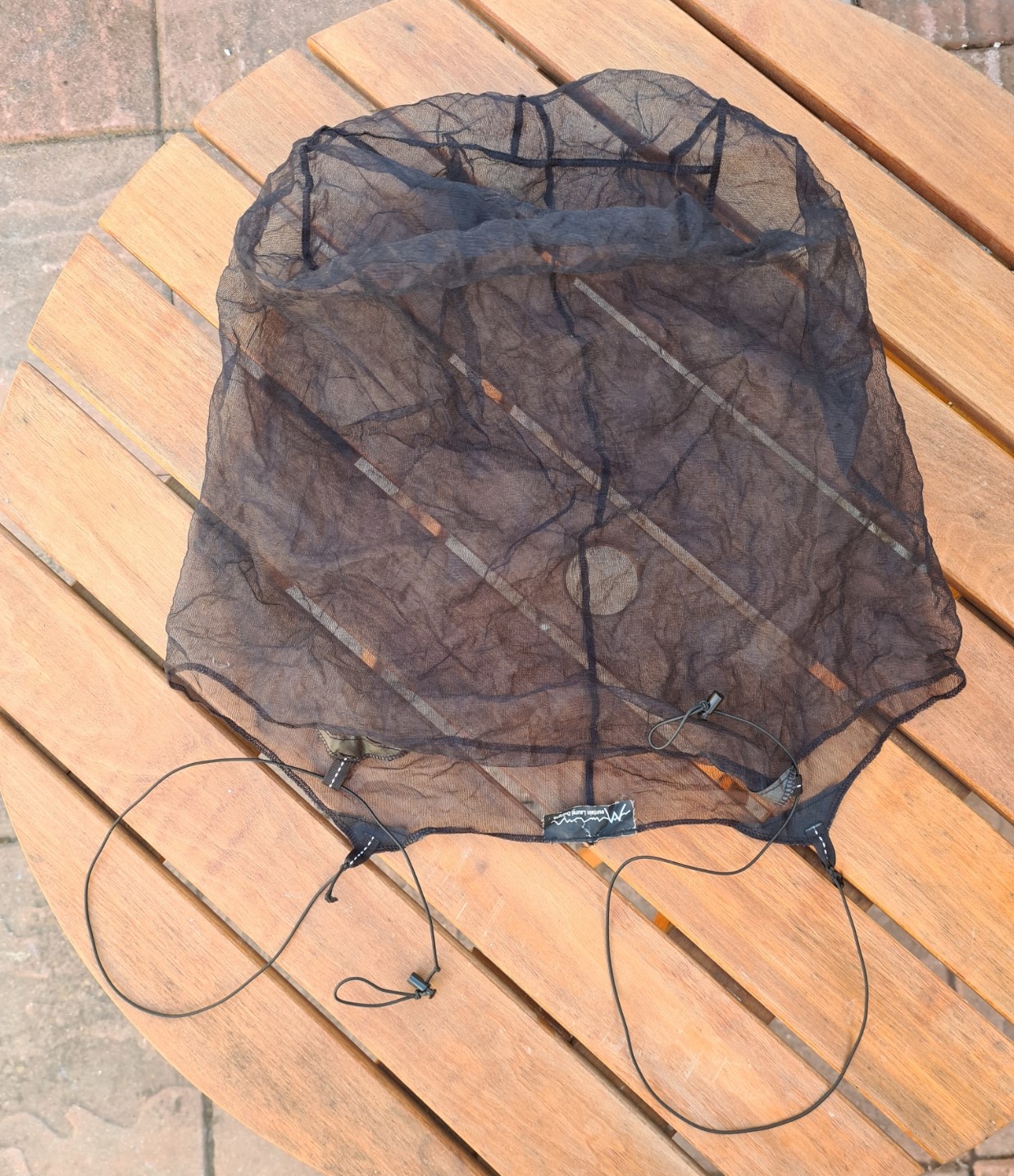
This is not the simplest of head net, though could be just slipped over the head if wished. Instead it has thin shock cord loops that slip under the armpits, tightening down on the two small cord locks at the front enables this net to be tightened down and it then forms an effective sealed barrier that doesn’t move away if bending to put up a shelter or performing camp chores. While this net works well with my medium brimmed Tilley LTM5 Airflo hat, it may not fit over some very wide brimmed hats.
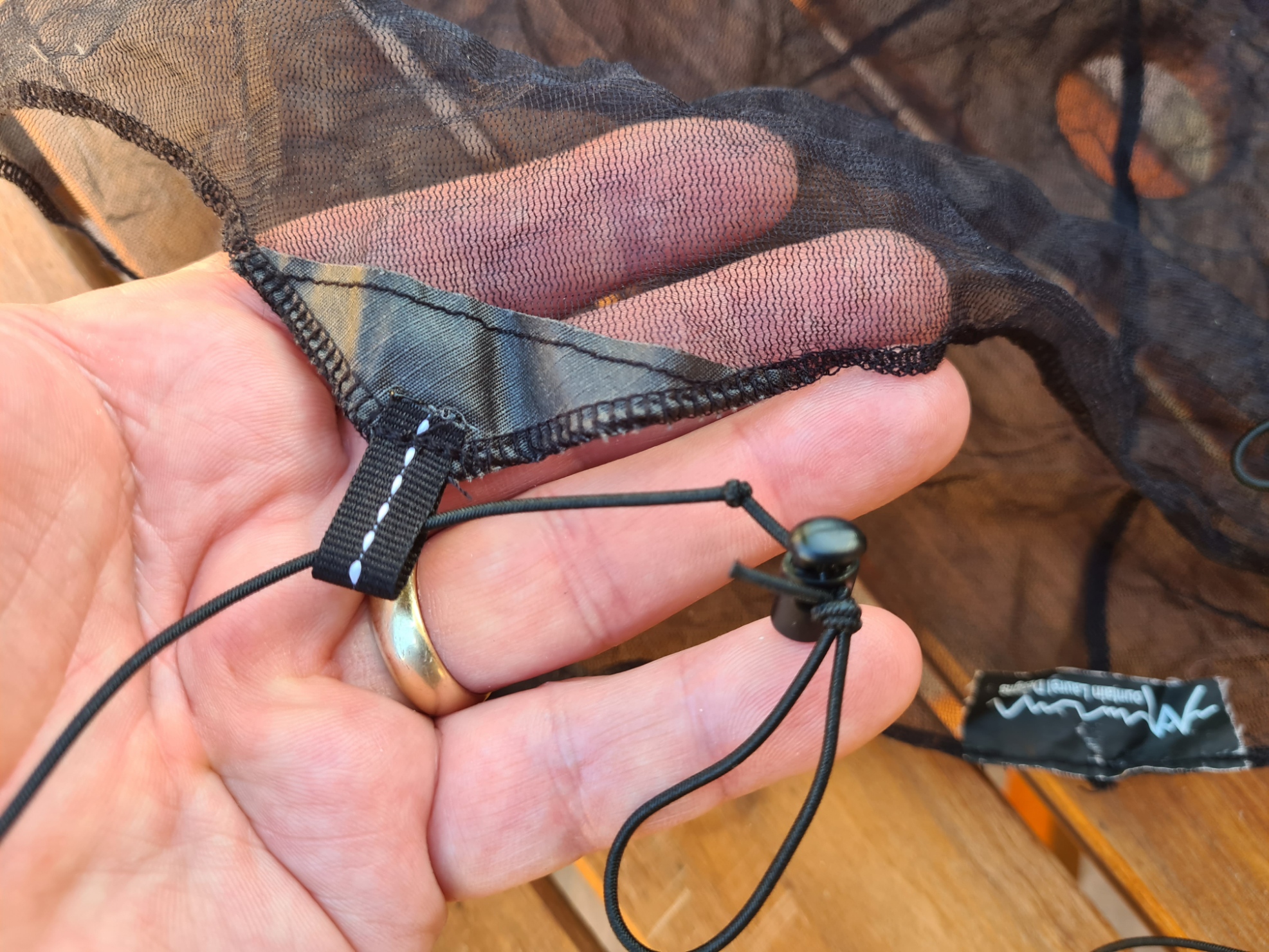
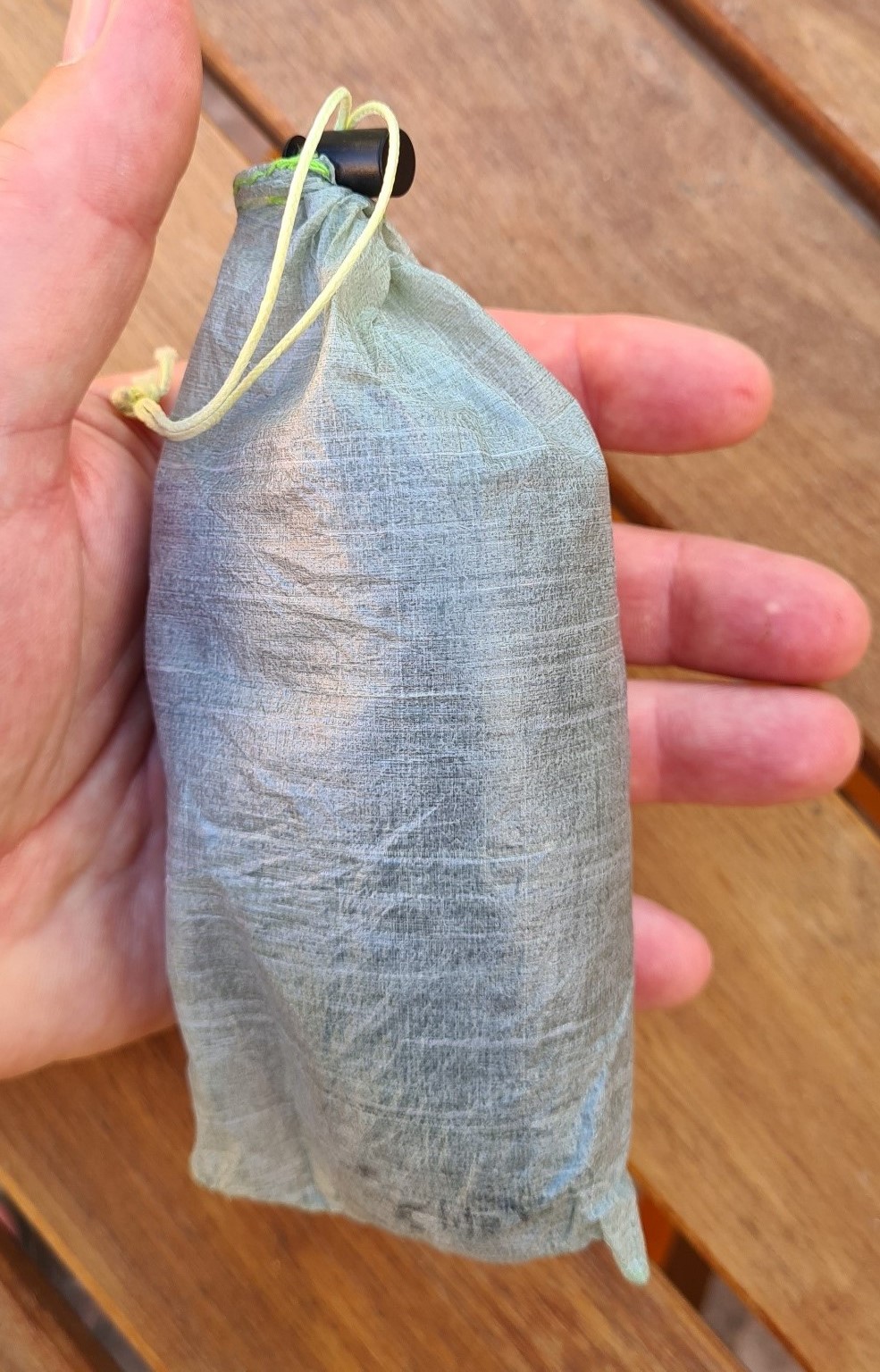
It is advertised as weighing 18g, mine comes in at 20g, and I keep it stored in a 2g DCF baggie. The 0.67 oz/yd² mesh has 1250psi (+/- 200) which is a fine enough barrier to stop midges. While breathable, it allows for very little airflow so it makes for warmer hiking when wearing. A fine drizzle is also kept off the face, but the brim of my Tilley hat does this anyway. MLD advise that it can be also utilised as a very lightweight balaclava when sleeping as due to the restricted air movement, it can add just a little warmth around the head. While I haven’t used it for that reason, I have slept while wearing it occasionally when camping under a single skin tarp, with no other bug protection, though this is not my preferred way of camping.
I have shown a handful of head nets here of which many are very cheap. The Bug Head Net from MLD is not cheap. It now costs $33, to which shipping will have to be added. I persevered with other head nets for many years before taking the plunge and buying the one I have used for the past six years and have never regretted the decision and outlay. However there is no shortage of alternatives available, many for a lot less than $33. The $14 Ben’s UltraNet Head Net looks like it may be a viable alternative though I have no experience of that particular product. Whatever head net you buy, just look carefully at the specification, particularly if buying for the first time.


 Three Points of the Compass
Normally I dont like sprays and definitely stay away from scents when going outdoors. But once I found AVON Skin So Soft Spray… Its spray away!
Helps to the point its now said in bush lore it’ll wards off evils!
OK, although it does help keeping most of most little creatures, one still needs to adorn oneself with a head net.
LikeLike
Hmmm, tried Avon’s Skin So Soft myself. While there are some ingredients in there that repel midges, picaridin for example, it is mostly effective due to its greasyness/oiliness, hence it needing reapplying frequently for best effectiveness. I think there are better products, Smidge etc, but nowt beats a physical barrier
LikeLike