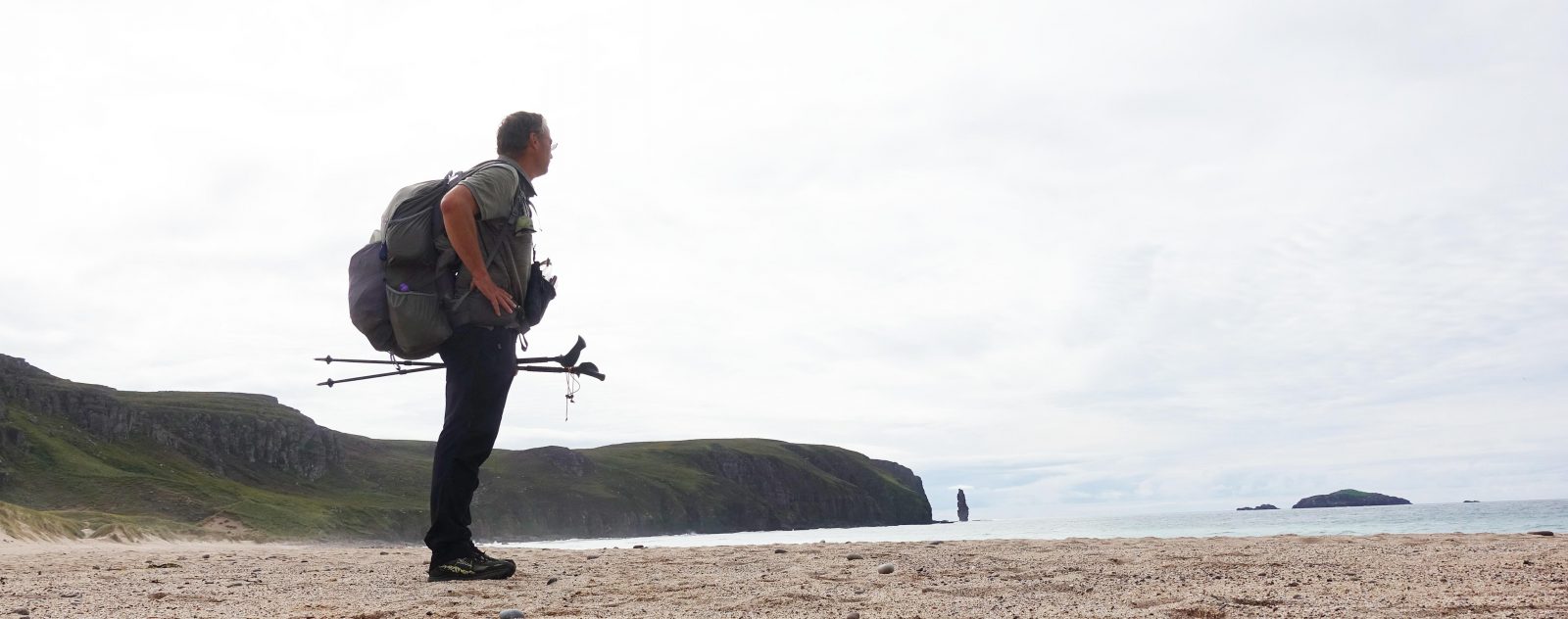
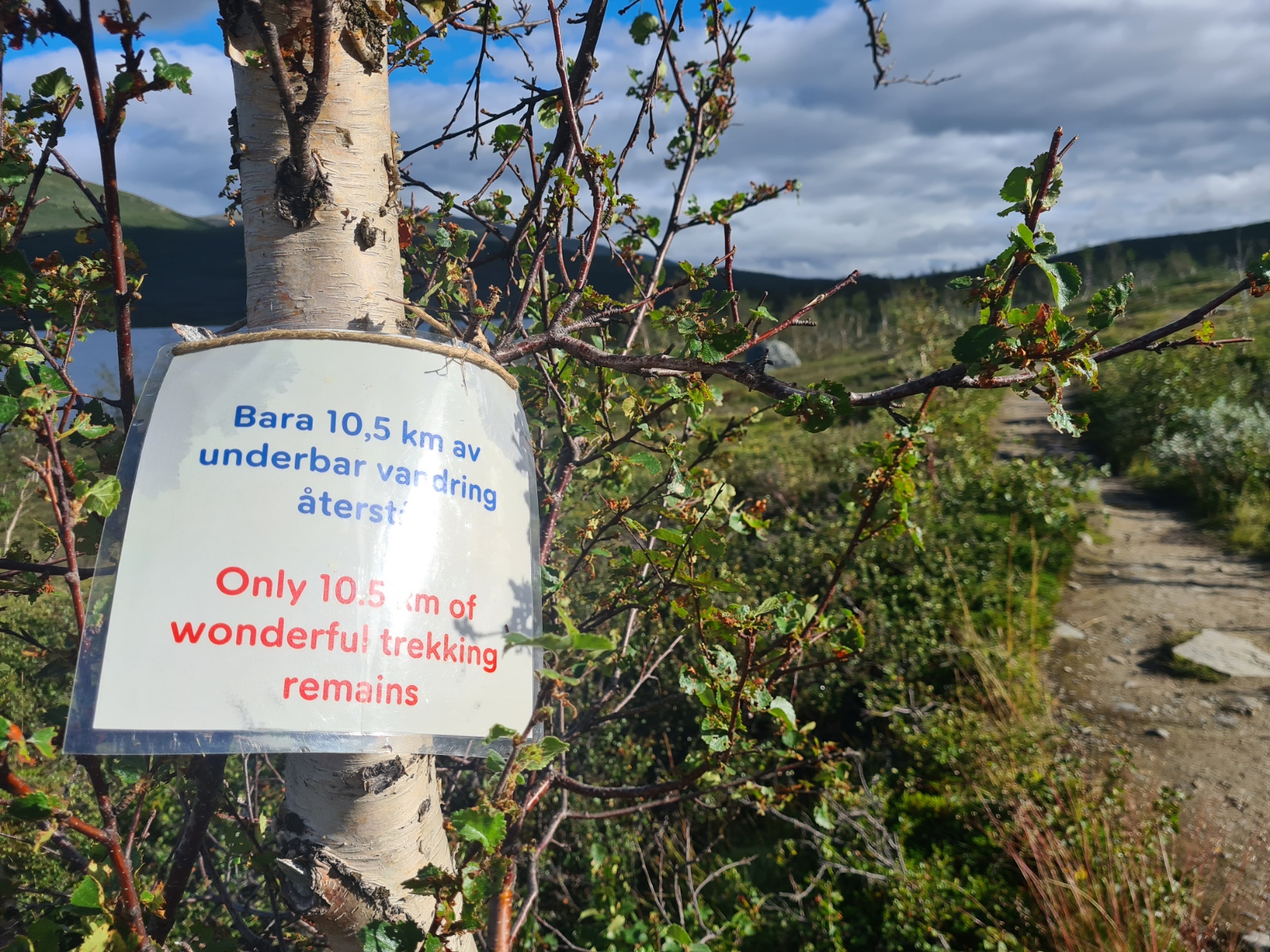
Three Points of the Compass continues northward on the Fjällräven Classic Sweden, toward the Abisko National Park and finish line.
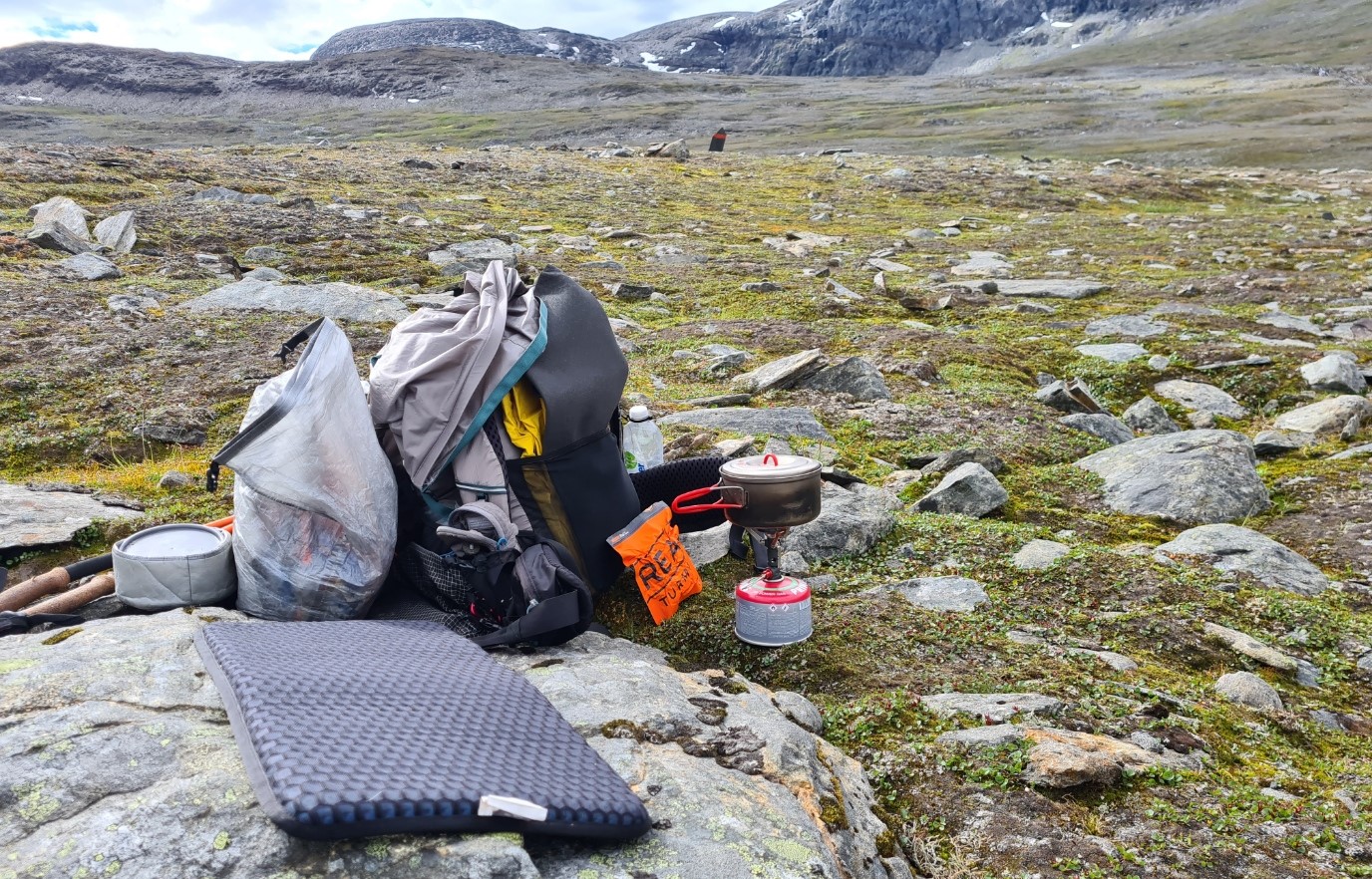
He pointed at the pile of Real Turmat meal packets, “would you like any more dehydrated meals?”, his colleague was poised over the many boxes, waiting for my selection
“yes please, two reindeer stew and one of anything else, but NOT the cod in curry sauce” I replied
much laughter- “that’s exactly what we would have chosen“
Day three: Sälka to Alesjaurestugorna:
I slept well. There was no noise and once awake, I lay there until the sun came over the ridge and dried out the rain covered fly. I breakfasted on polar bread and squeezy cheese and treated myself to a second pint of tea. Leaving my wildcamp near Sälka I was moving into another valley and this one said goodbye to me by introducing wet boggy patches between the rocks on which to slip and slide my way through my first hour of walking. The rocks were left behind and the path became easier as it began to climb. One of the reasons I had made yesterday a bit of a longer day, other than I was simply enjoying it, was to get myself closer to the Tjäktja mountain pass that separated the valleys. I wanted to get it over and done with fresh legs. This climb has a bit of a reputation amongst those new to walking the Classic. Having now walked over it, I am not quite sure why. Yes, it takes a while, but take your time and it isn’t particularly high or difficult.

I pulled over to one side a couple of times, once trying to photograph Lemmings, as usual, woefully unsuccessful, the second time for second breakfast when I finished off the last of my squeezy cheese. There is a rest shelter at the pass but I felt no need to pause there and carried on down into the vegetated valley, liberally scattered with glacially deposited rock, ignoring an inner childlike urge to tramp through the small patches of snow that were refusing to melt away in a gulley to the left of the trail.

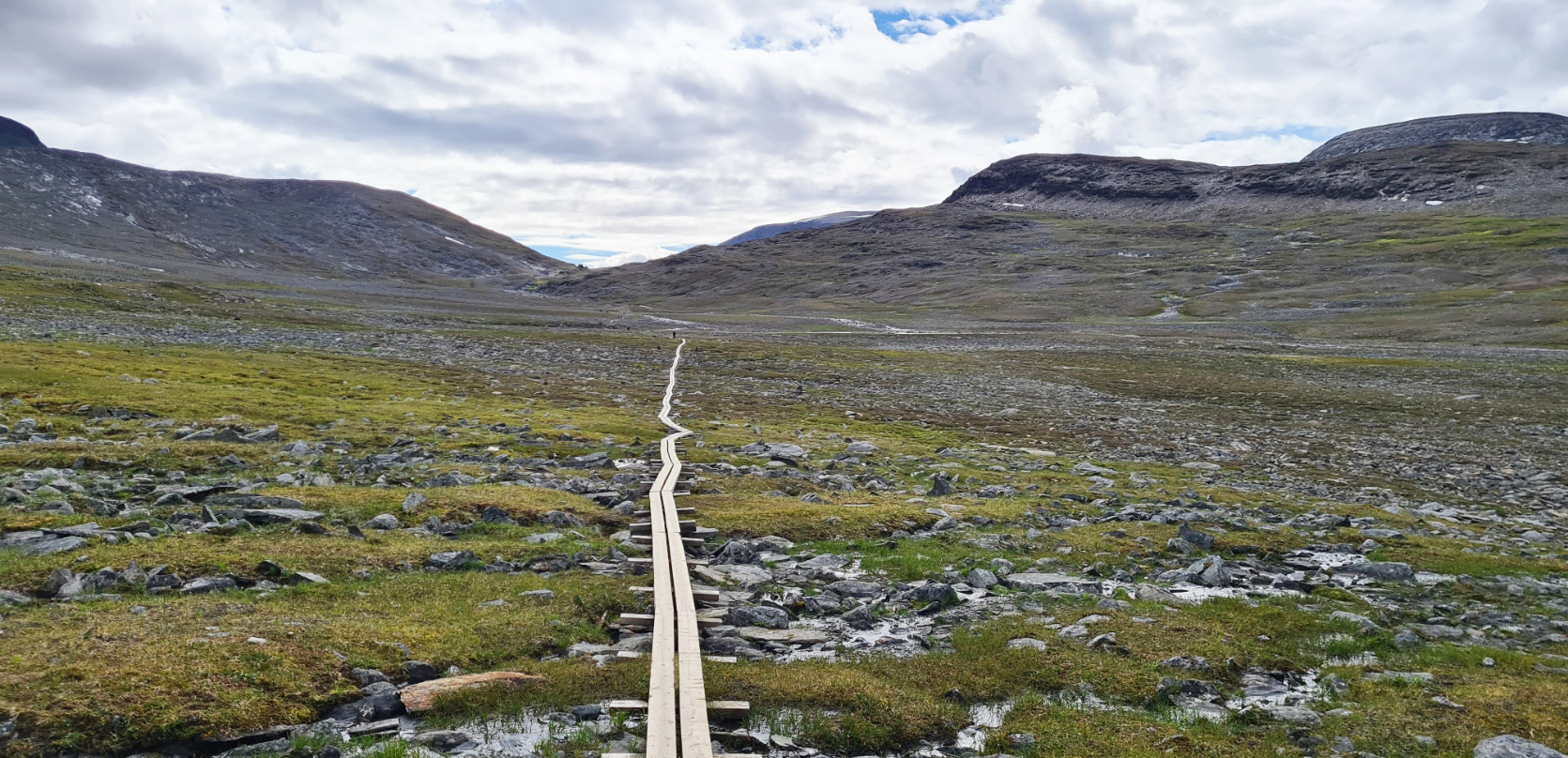
I quite enjoyed todays walking. Hikers were spread out along the trail with no real bottlenecks. It was an open, rocky terrain through glacial deltas, bordered by mountains to my left and right. I was frequently thankful of the boardwalks when lain across the ankle-breaking surface, water was frequently running between the rocks and there were many half hidden deep holes that swallowed a pole when I bent to test their depth. It would be very easy to come a cropper if you took your eyes off the tread, looked up and inadvertently stepped off. When I wanted to stop for a ‘proper’ look around, I almost always simply halted for a few seconds breather, or combined it with stepping to one side when north-south backpackers were approaching.
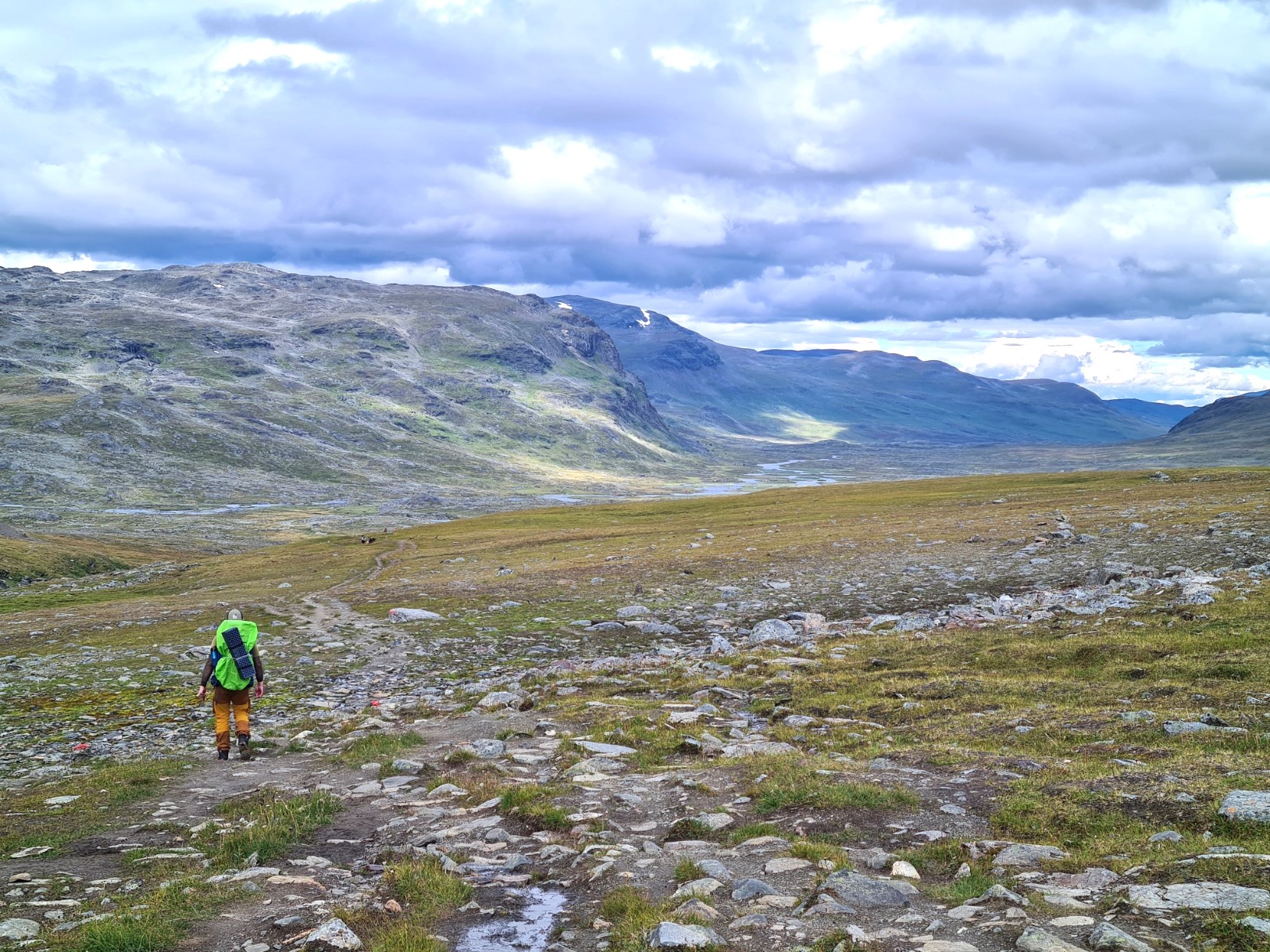
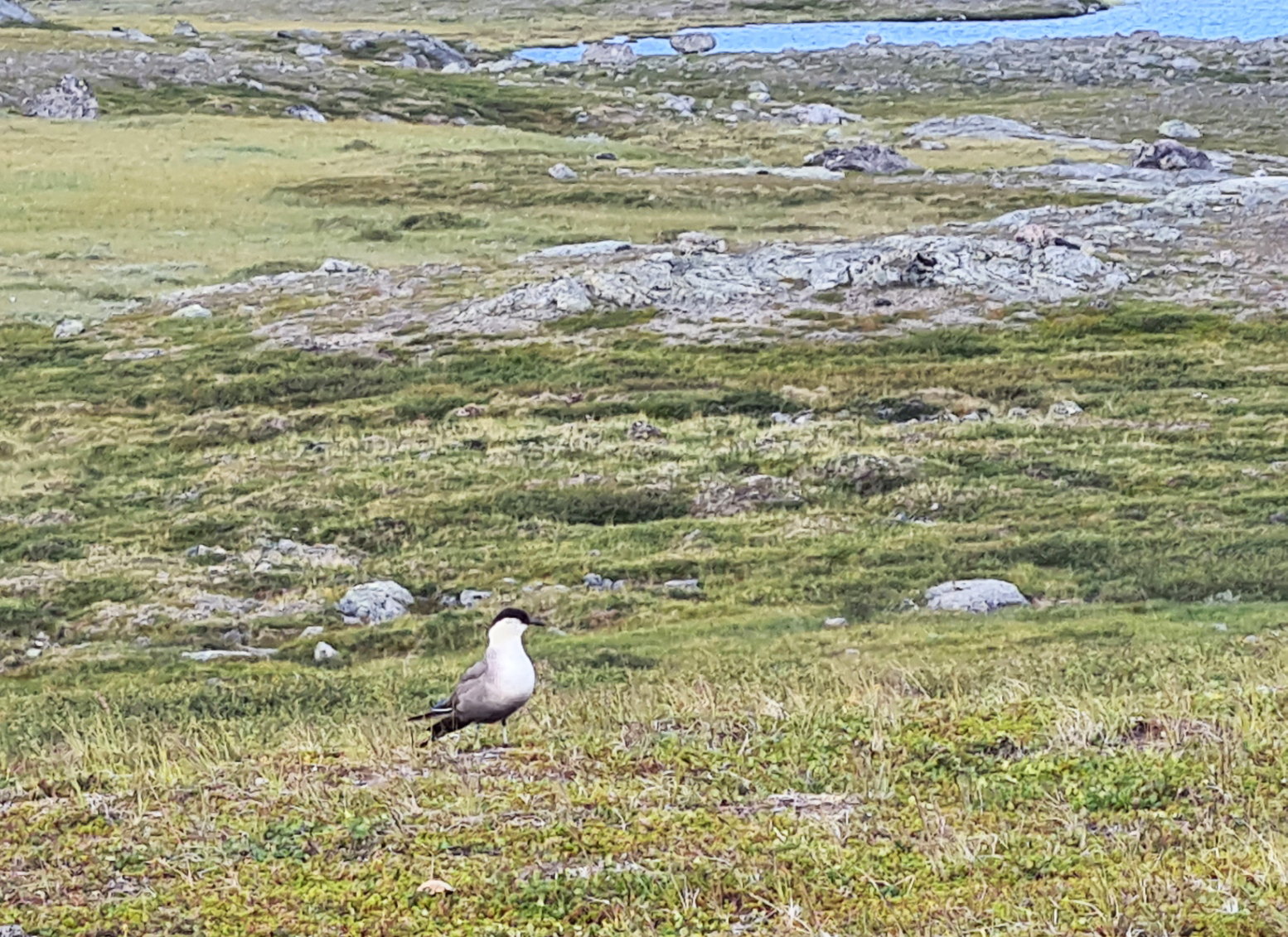
Long tailed skuas often drifted overhead but no attacks. Well, not on me. I met a backpacker later in the day, hiking the trail but not part of the Classic (her boyfriend was manning a checkpoint further down trail), who was walking with her small dog. The little chap had been harassed a few times by skuas divebombing it and she had to gather him in her arms and wave his lead in the air to fend the birds off. That wasn’t her only problem. She was also contending with stomach issues and without her going in to too much detail, I understood she was having to deal with a frequent call of nature.
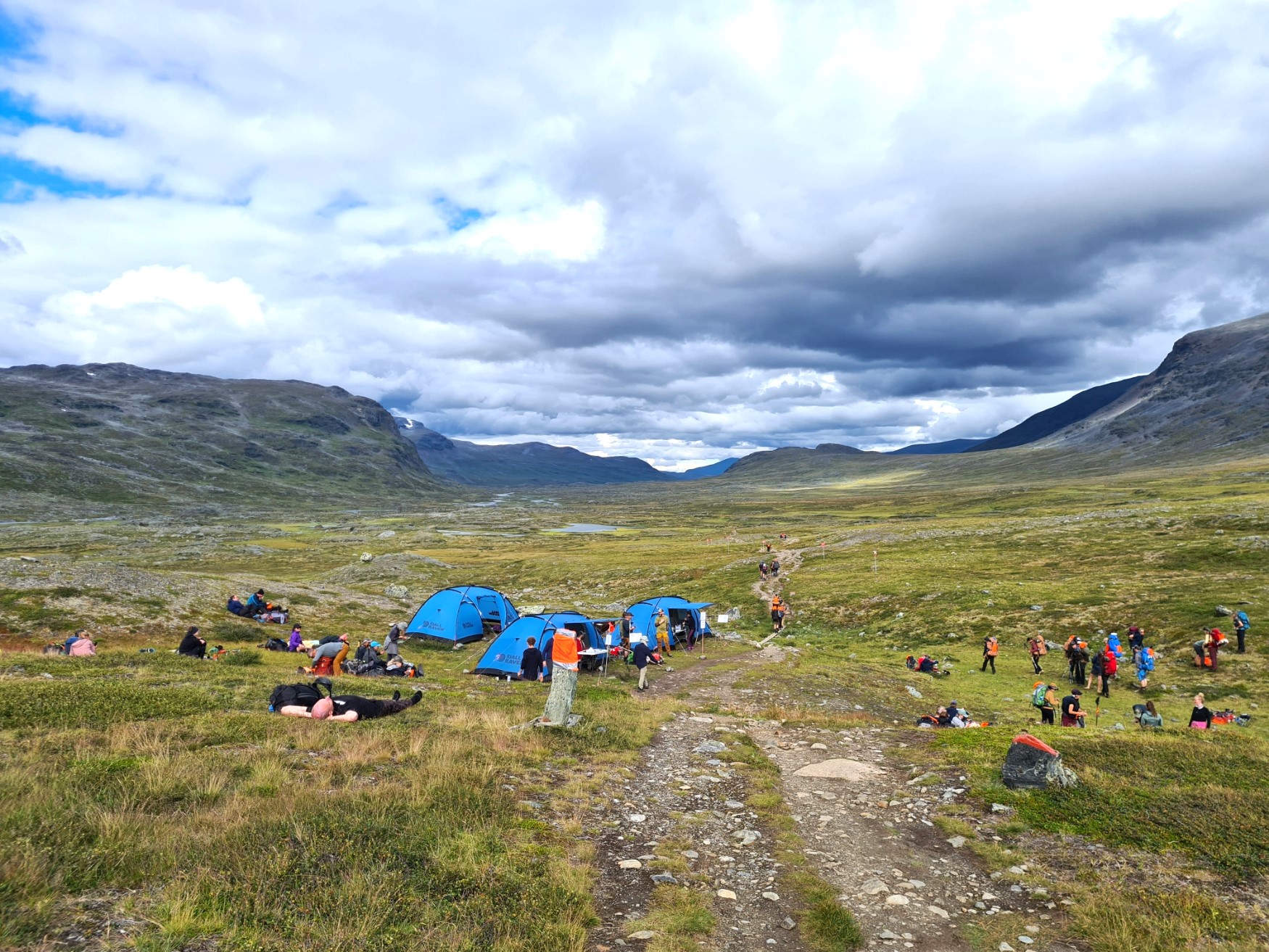
Beside stamping my hiking passport, checkpoint Tjäktja had a decent treat on offer. I took my raspberry brownie and peppermint tea and sunk into the soft vegetation and soaked up the sun for a few minutes while consuming both. The bright blue tents were not far from the Sielmmajjira jokk and had been positioned in a sun trap hollow and many participants were taking the opportunity to doze in the warm conditions while their spread wet tents dried off beside them.

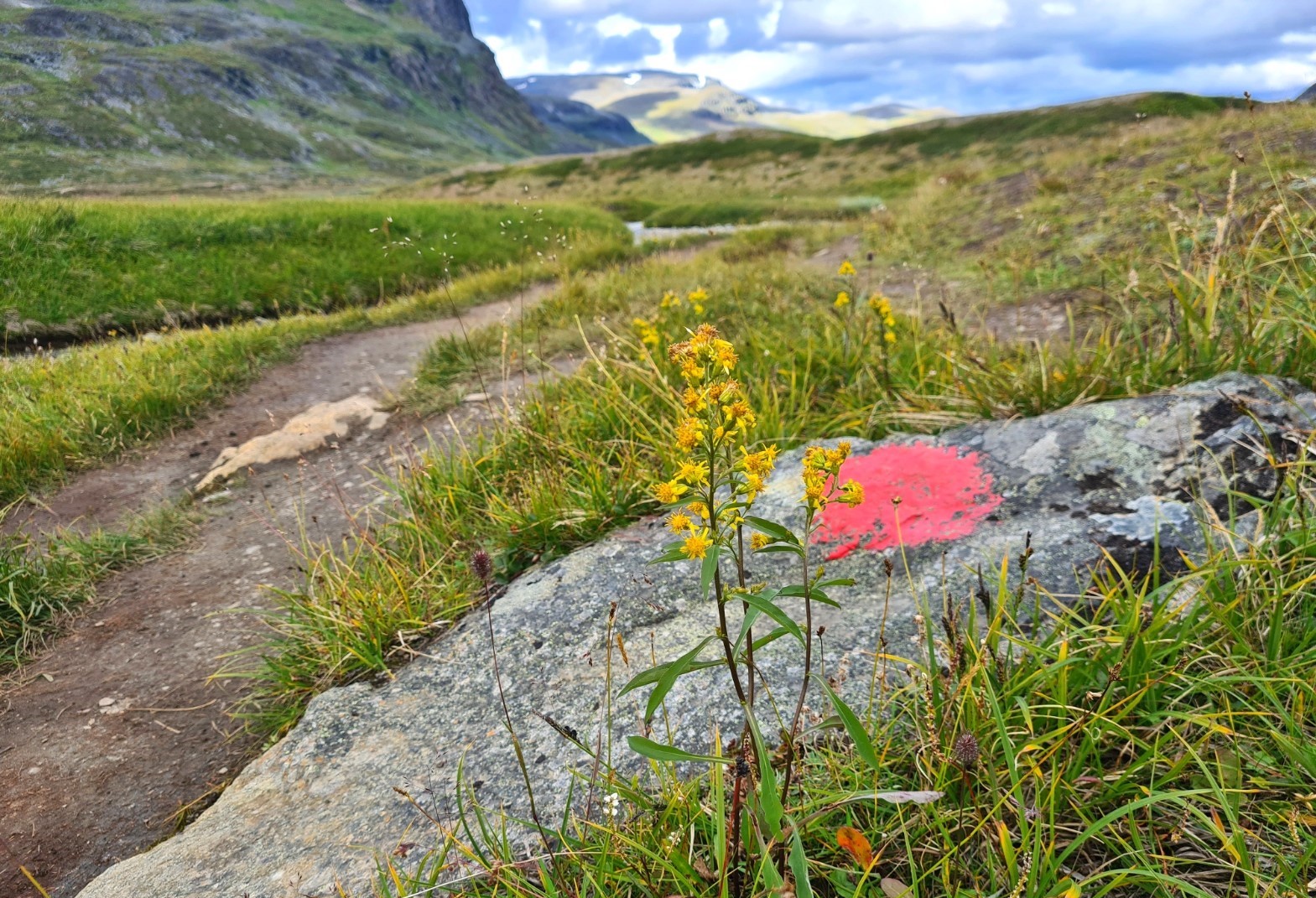
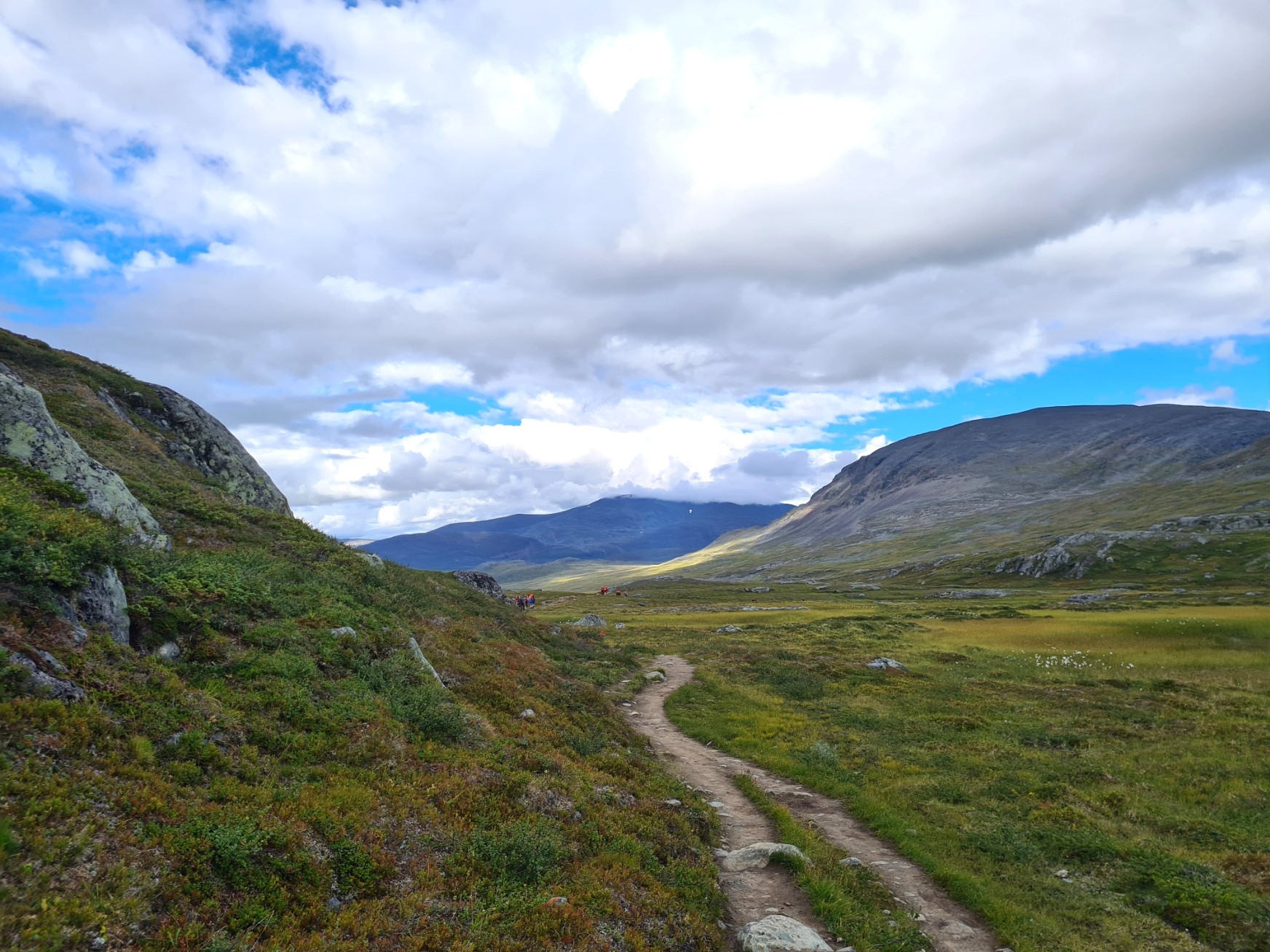

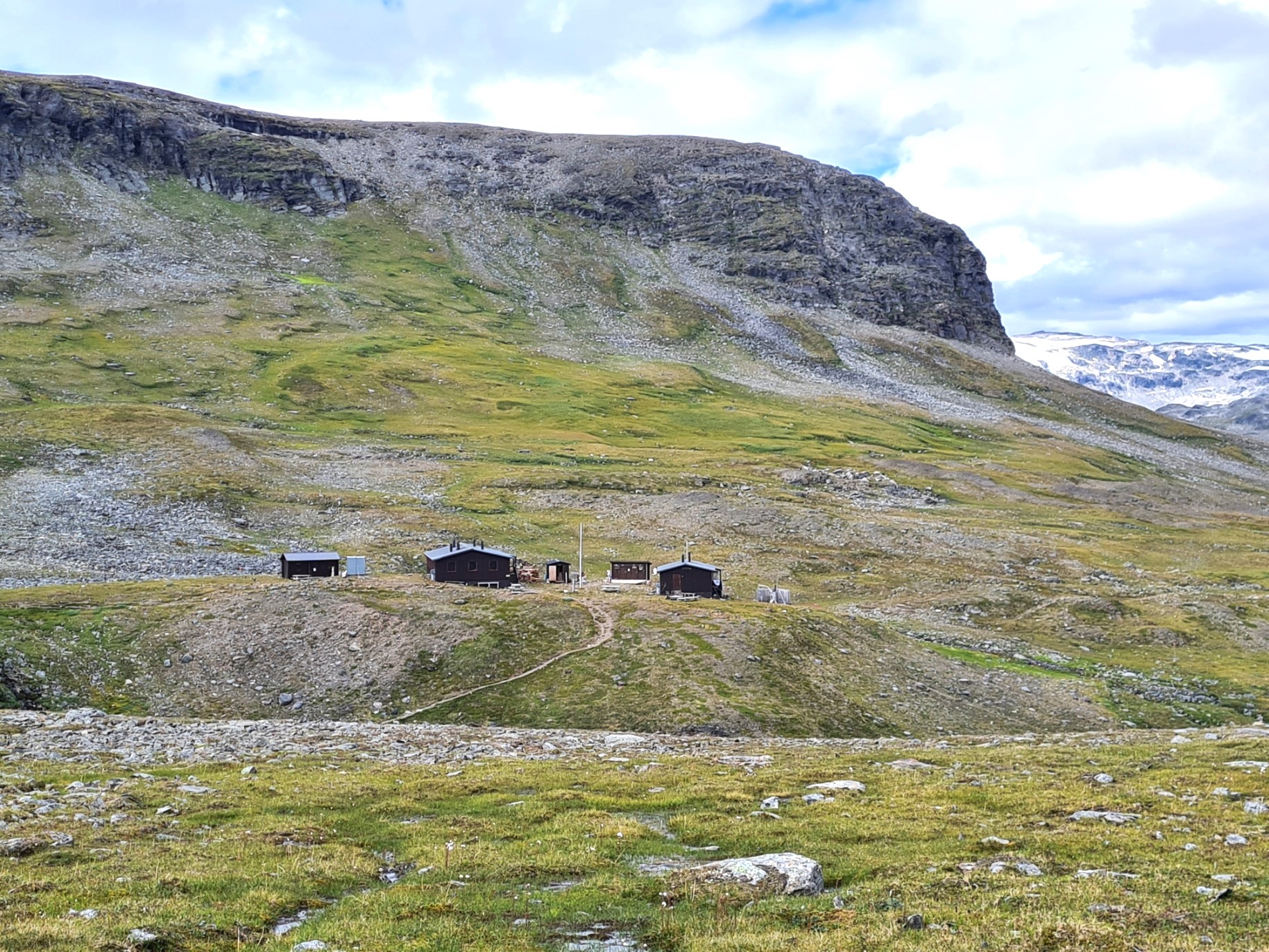
I had left the rocky terrain behind and the walking got progressively easier, often on fairly wide dirt paths. My ‘old man pace’ had increased just a tad on the easier paths but I noticed that a few of the greyhounds had slowed, it was evident that some were now nursing blisters, sprains and strains and I heard complaints of aching knees, hips, backs and feet. I was fortunate that my body seemed to be hanging together quite well. The trail passes close to the Tjäktja mountain huts, but doesn’t actually visit them. If you want to go there you have to turn left and cross the suspension bridge and climb up to them. Carrying on, the path got grassy and there were some really lovely places along here that would have made for spectacular wildcamping, but it was too early and I had another location in mind that would leave me easily achievable 18km and 15km days to finish off with.

There wasn’t a breath of wind and combined with recent damp weather and low vegetation, I shouldn’t have been surprised that when I eventually turned off trail and climbed the slopes looking for a flat spot, I was inundated with midges and mosquitoes. There were enough in the air that the headnet went on while I quartered the ground, eventually finding a decent spot overlooking the valley and trail below me. The Durston has decent bug netting and once inside, around 18.30, I just zipped it up, stripped off to cool off and drank a pint of tea and ate butterscotch chocolate while I tent-washed, changed into baselayers and lived inside for the evening, isolated from biting blighters outside. The soft underlay beneath the tent floor meant that heating water was a very careful affair. I was fortunate that the stove was off and there was no hot drink in my hand when the bomb went off. Well at least I thought it was a bomb. One of the baffles in my Thermarest pad had blown. Two more followed later. Bugger! It wasn’t as though I had inflated it to any extreme pressure, preferring my pad a little soft to allow my hips to nestle in better when side sleeping. At least it was at the head end so I was able to sleep on the thing for the next couple of nights, curled foetal in the space left.
Every now and then one or two hikers plodded along the trail below me. Some looking very tired and they were going to have a late finish. One unfortunate chap was carrying two packs while his partner limped in his wake. It rained for an hour or so and the clouds crept down the hills opposite. The sky took on colour and looked spectacular. While waiting for my evening meal of chilli stew and beans to hydrate, I took a little time to inspect my feet, trimmed a couple of nails and rubbed in some foot balm, finishing off by clothing them in my night-time possum down socks, that always feel a bit like heaven when slipped on at the end of the day. They also go some way to keeping any of the oily cream off the footbox of my quilt.
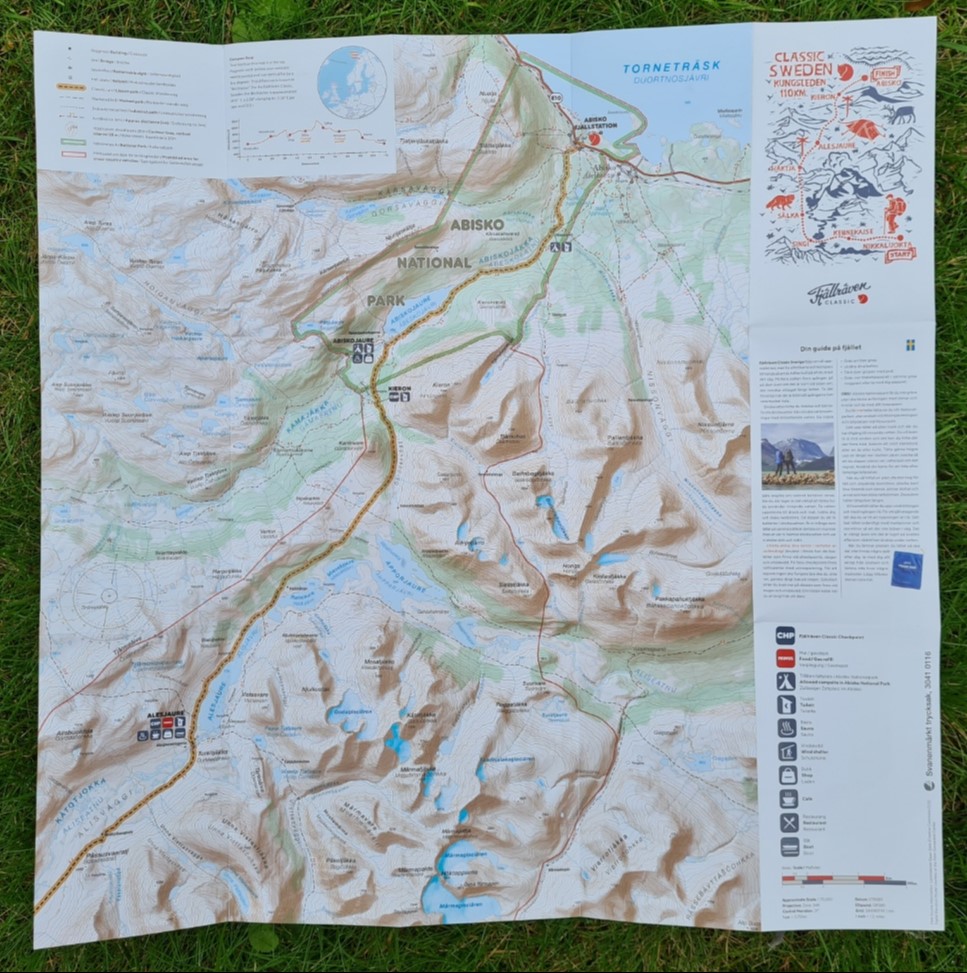
Day four: Alesjaurestugorna to Abisko National Park
I didn’t sleep particularly well. A tooth, scheduled for treatment a week after I returned to the UK, troubled me during the night and I swallowed a couple of ibruprofen. It started raining again around 2.30 and was still raining when I rose at 7.00. It stopped raining and I exited to wipe the tent down. Just as I finished it started raining again, there was no great rush today so I went back in for another mug of tea and dig out some breakfast from my foodbag. Despite struggling to enjoy my chocolate muesli, I felt inordinately happy and my journal records my thoughts at the time, simple that they were: “I think I would rather be here than just about anywhere right now”. I had everything other than the tent packed away and sat waiting for the rain to lessen. It stopped and I went out to again wipe down the fly. Packed and away, it was a damp morning and the mozzies were already out. It wasn’t too bad so I never put on a headnet, that was to change!
I was leaving the Alisvaggi valley behind me and entering another with an extensive river system joining the two lakes- Alisjávri and Radujavri ahead. It was a short slippery walk down to the bouncy suspension bridge where I startled a Sandpiper on the river below, but other than that, there was just a handful of ducks and geese on the water. It was then another short slippery climb up to the Alisjaure Huts. The huts were re-sited here after their previous location, three kilometre to the southwest, was destroyed by fire in 1984. I never paused here as those participating in the Classic are not supposed to use the huts for anything in an attempt to keep participants isolated from the stomach bug that had been raging through the hut system recently. Many I had spoken to felt that this was over-cautious and I was well aware that some people were ignoring instructions and using the hut shops, showers, and what ever else was on offer. Some like to buy the little fabric patches that each STF hut sells and they would not be denied. The following day I heard that one chap amongst the small group of hikers that had stood outside my tent and chatted to me on night two, had gone down with the bug. He was confined to his tent for 48 hours, supplied with food, a pop up w/c, and a visiting nurse.

Sámi from the Laevas summer settlement on the east shore of lake Alisjávri run a boat service from here to the northern extent of the lake, another alternative to actually walking the trail. I was again baffled by people supposedly walking the Classic who wished to catch this. I understand that the odd individual may be suffering and is prepared to do anything to get to the end, but I witnessed a young lady booking a bespoke boat for her group of fifteen. Surely they can’t all have been in dire need of a four kilometre short-cut.
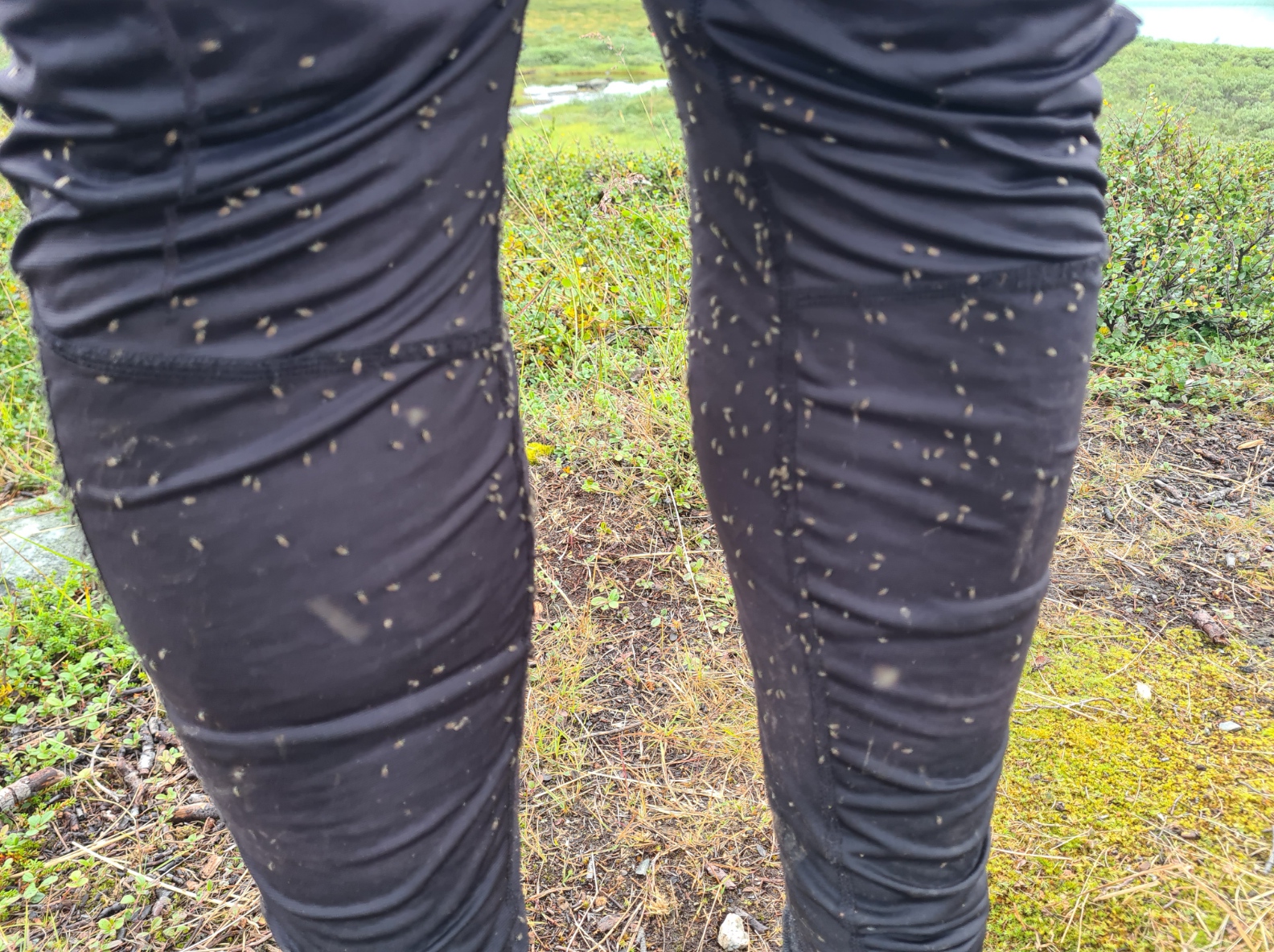
Checkpoint Alesjaure was just a few hundred metres past the huts and was another opportunity to pick up any meals required for the final stretch and I selected what I required plus a single spare in case of problems. There was no need to hang around and I set off down the hill toward the lake. It was a dull day, high humidity and almost no wind. There is also a lot of low vegetation for much of the remainder of this lakeside section, which no doubt again accounted for the high numbers of flies and mosquitoes that troubled everyone. I felt sorry for those who hadn’t bought a headnet as it was almost a necessity to retain any degree of sanity, it also stopped me swallowing any more flies, I managed to cough and splutter on three before the head-covering went on. That said, I was in high enough spirits that I stopped with a couple of Koreans to hold a stone skipping mini world-championship across the lakes surface. The UK reined supreme.
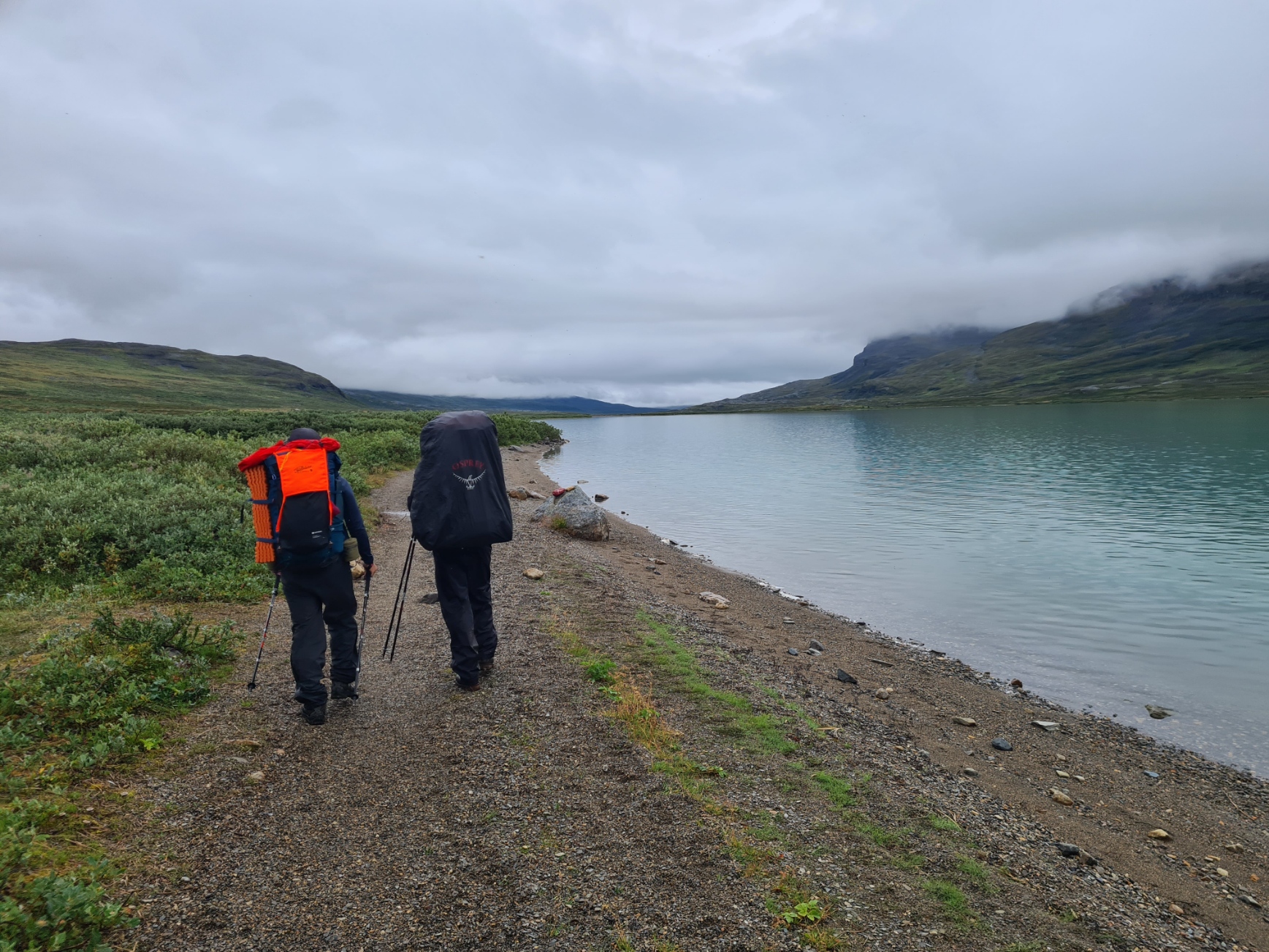
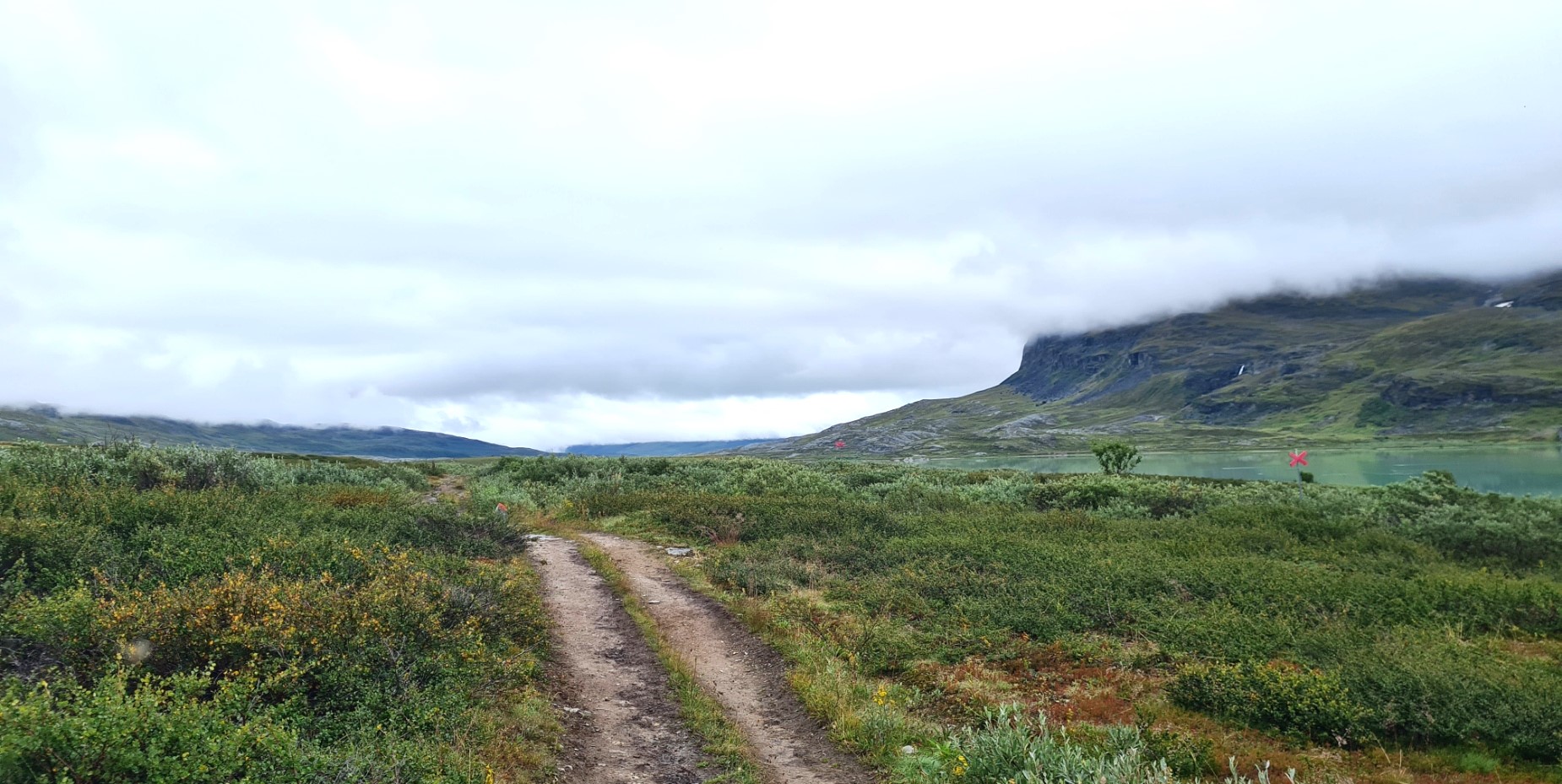
The walk along the lakes took no more than a couple of hours, with a halt or two to view the cloud wreathed hills on the opposite shore. I was slowly being chased down by rain however and, leaving the water behind, the low shrub also petered out and as the headnet got packed away, the rain jacket had to be dug out to take its place. It wasn’t ‘proper’ rain however, just enough to get me wet before moving on and I took the jacket off as soon as I could. Just as well that the rain cleared off, as having passed through a gate in a reindeer fence, there was an ideal sheltered spot with a rock for a seat, right beside the trail, perfect for a lunch halt of one of my reindeer stews and a hot oxo. Packing up, I was chatting to a hiker and looked up just in time to see a Rough Legged Buzzard drifting slowly over our heads. Impossible to photograph and I don’t know why I attempted to do so. I should have simply stood there, watched, and enjoyed the occasion.
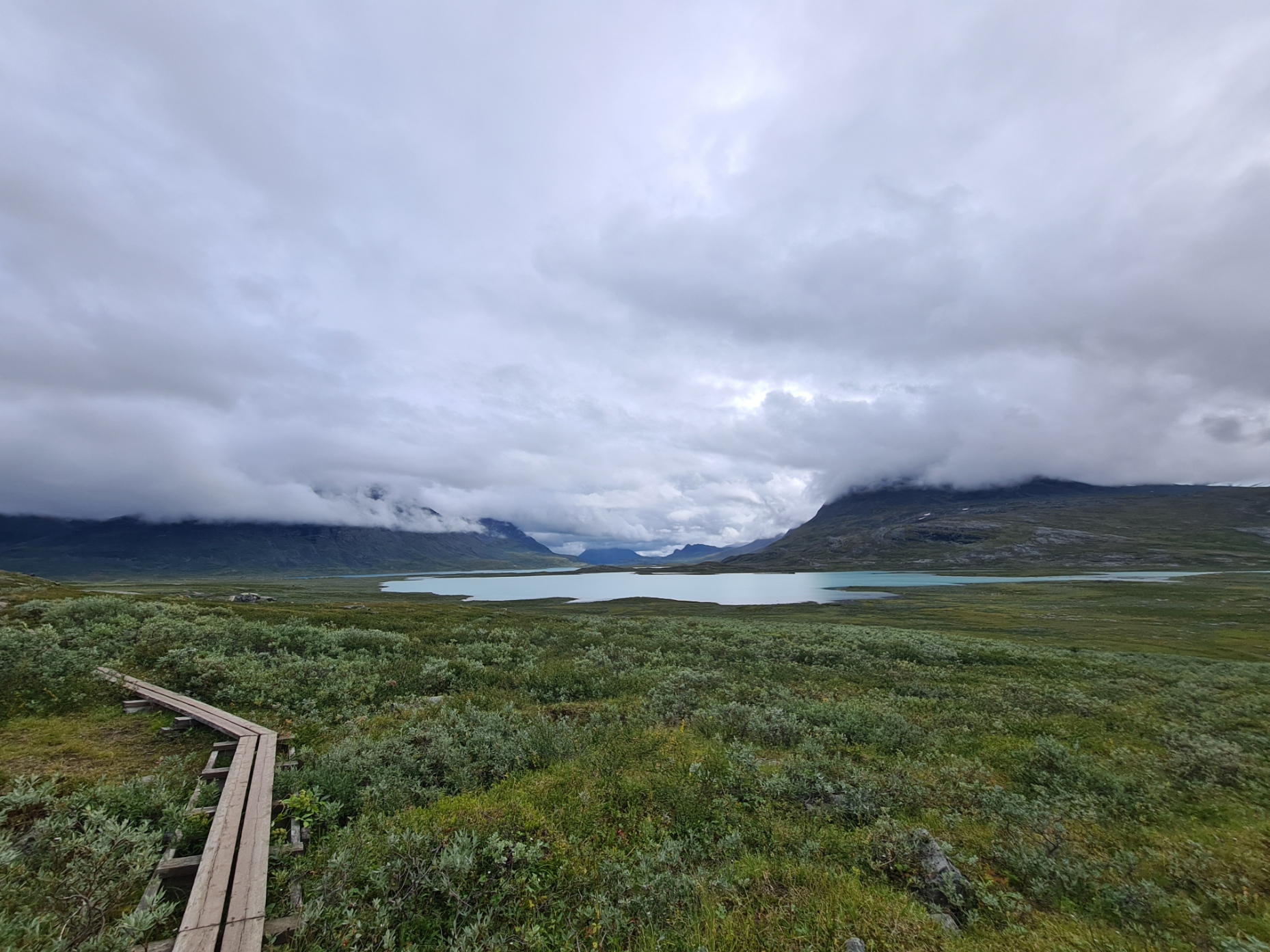
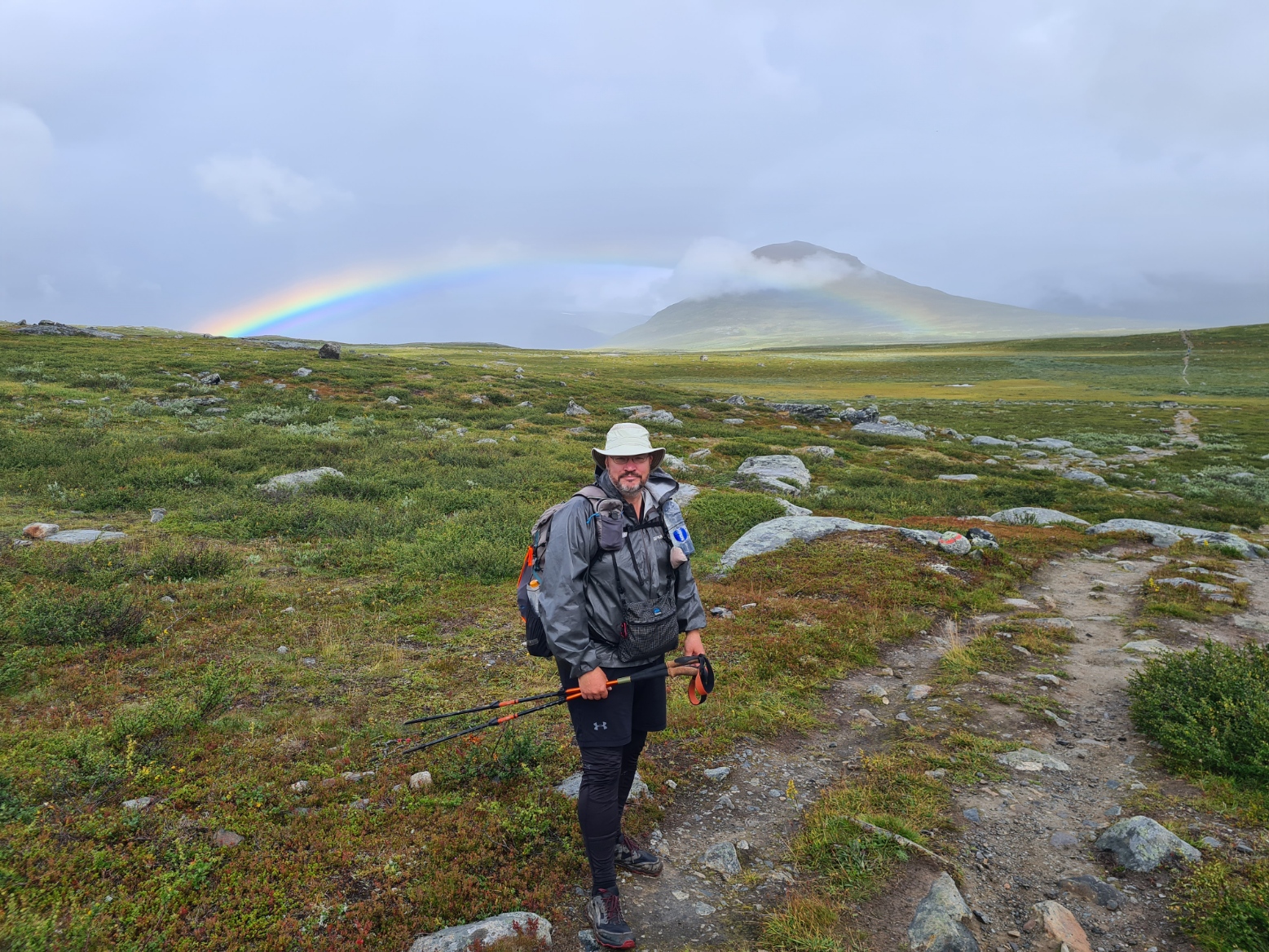

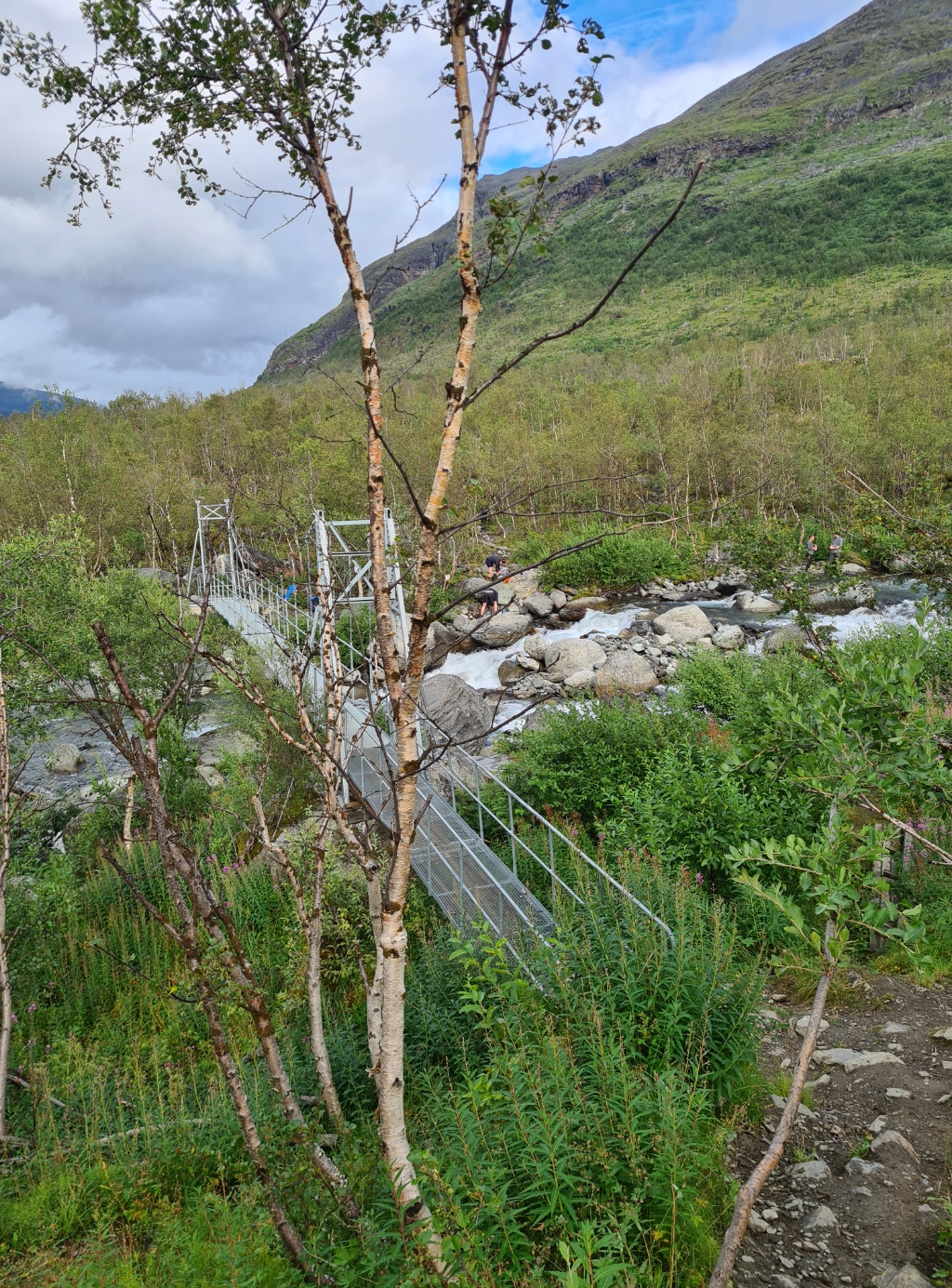
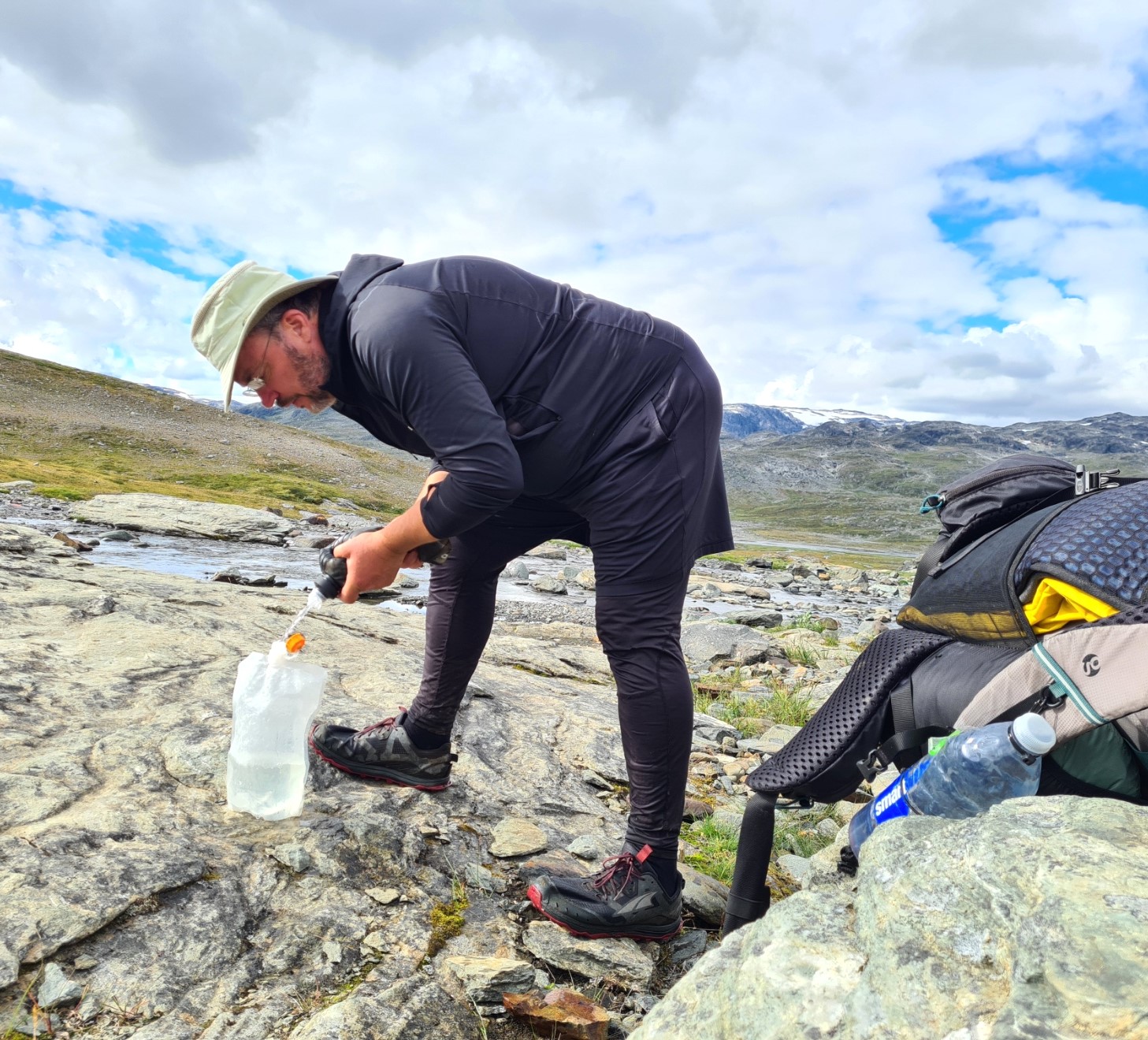
From there, it wasn’t too far to the end of my penultimate day, the trail crossed a couple of hills, then contoured another as trees appeared and increased in number. It was very similar in appearance to many a Lakeland walk. Stunted little birch, that gradually got larger and blanketed the hillside and dominated the view ahead. I passed another little Dag Hammarskjöld meditation stone then it was a careful drop down Kieronbacken to the bridge crossing the river Sielajohka, where a notice advised campers to pick up their nights water here. I filtered three litres of water and sploshed this the couple of hundred metres to the last on trail checkpoint at Kieron. This is just outside the Abisko National Park and STF Abiskojaure is only a few hundred metres further on, if slightly off trail and I never saw that set of huts.
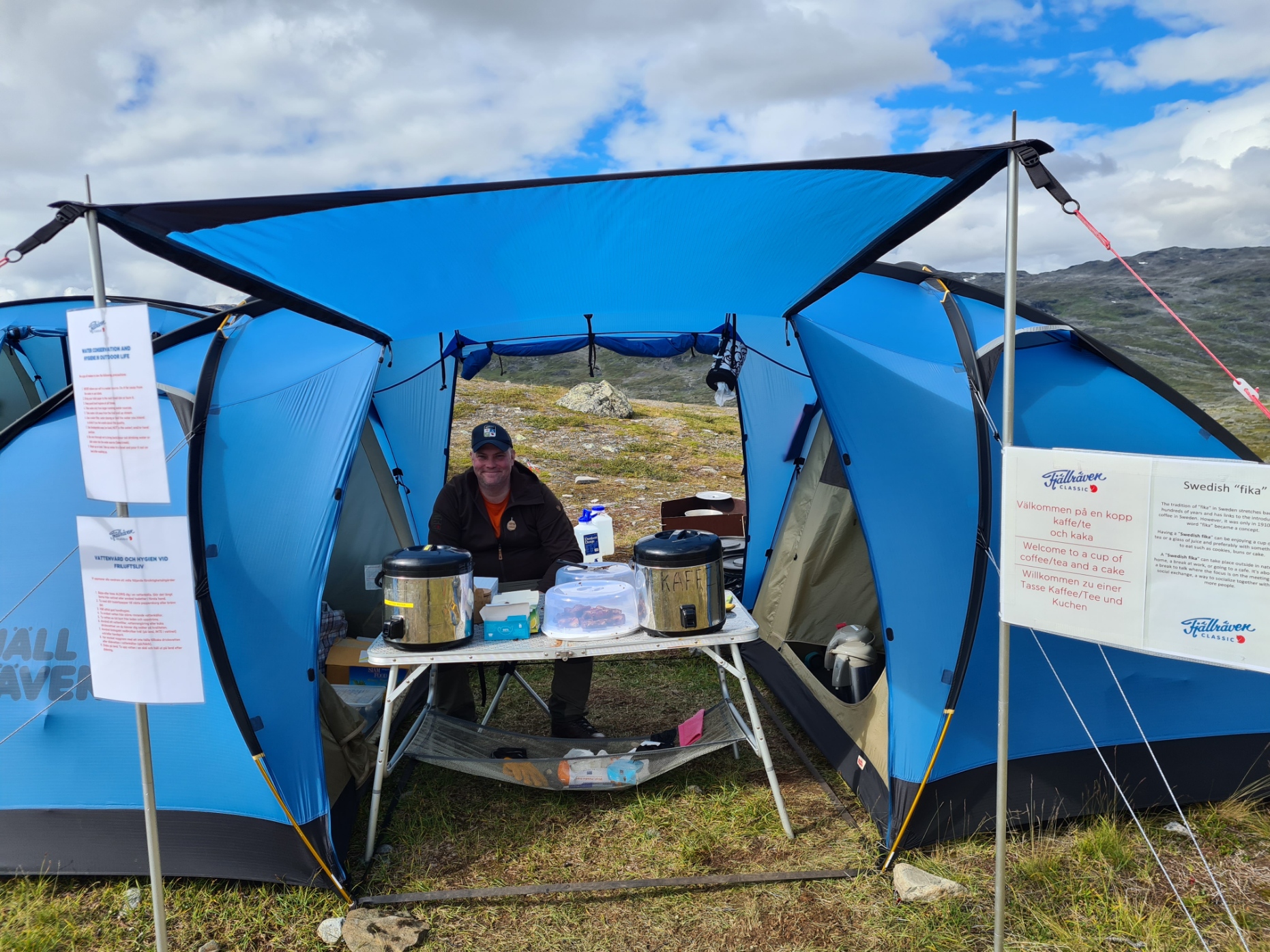
Once at the busy Kieron checkpoint, I paused just long enough to get my hiking passport stamped then rather than join everyone else at the bright blue tent offering the best treat on trail. I instead thought it wisest to go and find a decent pitch. There were going to be a lot of hikers here tonight as wildcamping is not permitted in the National Park. My decision was borne out later when I saw what some hikers had been forced to settle for.
When the shelter was up, it was time to join the queue for crepes/pancakes. I took these back to the tent to enjoy these with a pint of tea as coffee unsurprisingly rules supreme at the checkpoints. This became a busy site as hikers came in and gradually filled the gaps between the early arrivals. I was in a little hollow with trees around me so was able to keep away from the snoring that would no doubt occur later. Not too far away, a couple of groups sat in circles, what appeared to be a cross between an AA meeting and last day of school term hysteria, one by one, each hiker (loudly) relating on how they had discovered themself on trail. I could have done without the singing…
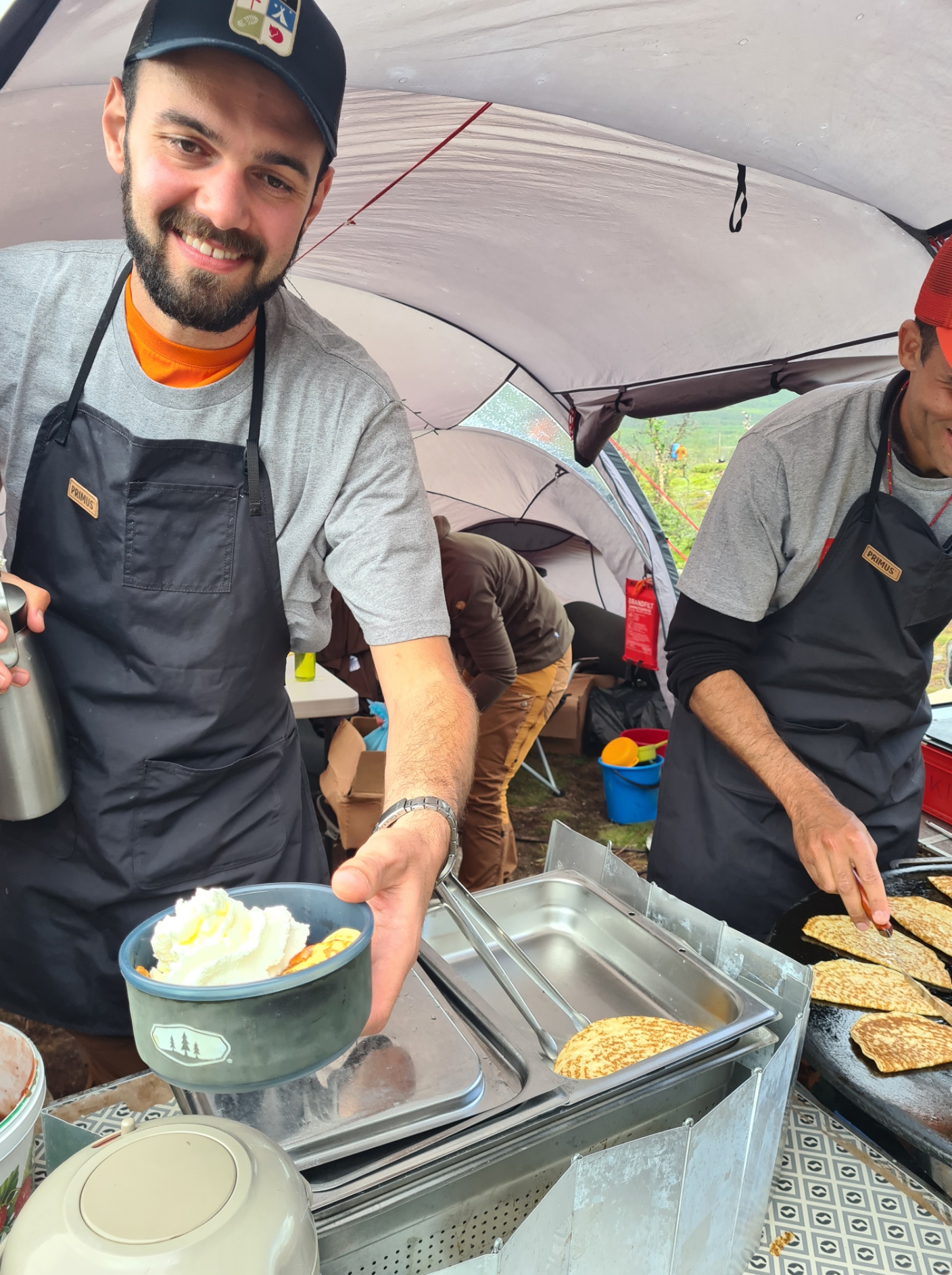
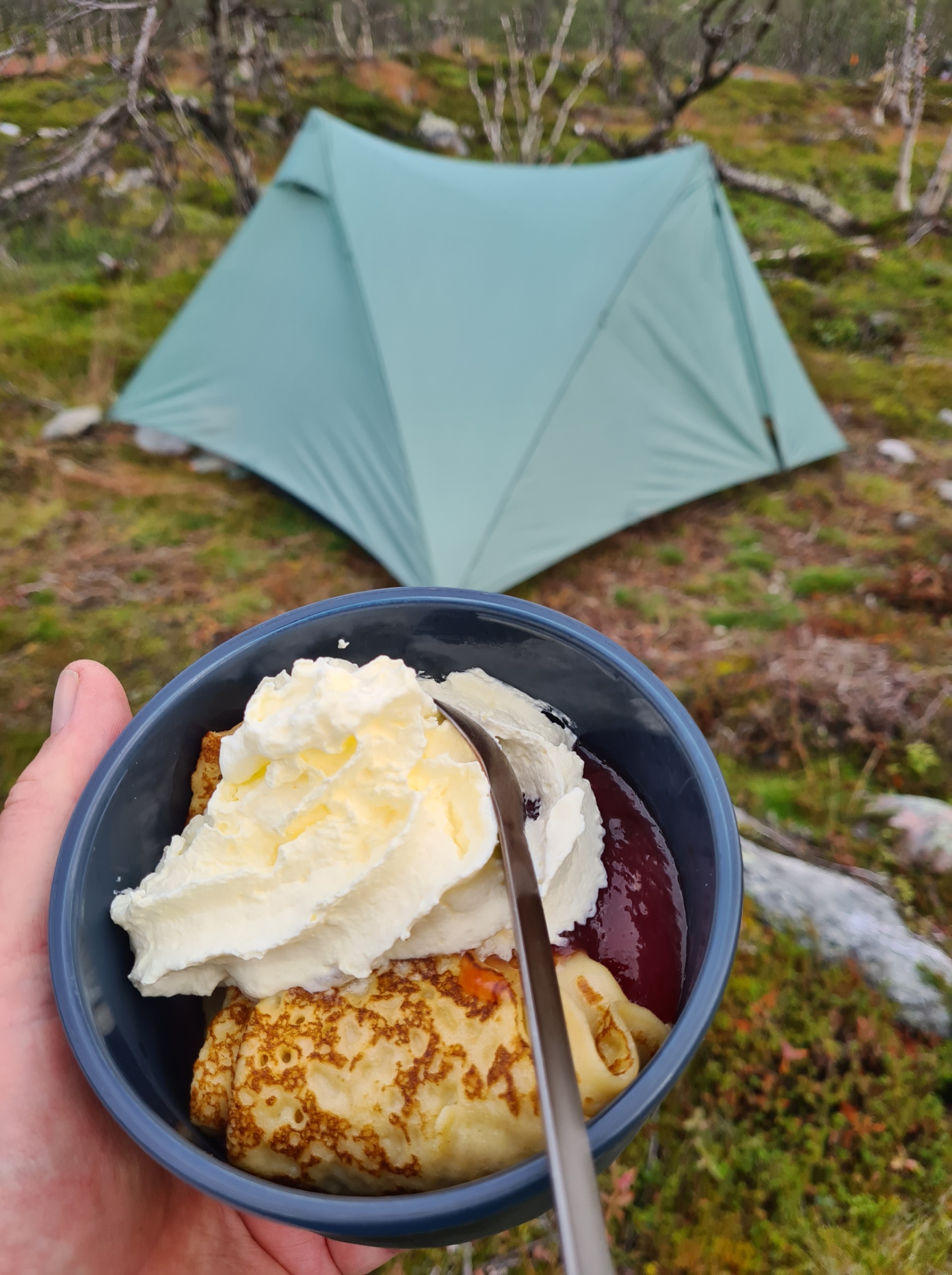
Other than that, my personal evening was quiet enough, other than the occasional buzzing drone being flown overhead- more hot drinks, chicken curry, then a gear writer for an outdoors magazine appeared outside my shelter. He wanted to talk about my Durston, referring to it as “the most desirable of tents in the world“. I might not go that far, but it is an excellent shelter.
I was now being troubled by a cold that had slowly taken hold over the past couple of day. I popped a couple of paracetamol and tried to settle to sleep, natures recuperative, around 21.45, the site finally beginning to quieten.
Day five: Abiskojaure to STF Abisko Turiststation:
I was up pretty early, partly because I didn’t want to join a queue at the tent w/cs we had to use in this camp, secondly because I wanted to finish early enough to enjoy an afternoon beer at Abisko. My last breakfast on trail was comprised of tea, stale polar bread and Babybell cheeses, carried all the way from the UK.
It was just a few miles from here to the trail end at STF Abisko Turiststation and everyone seemed a little subdued. Campers slowly packed and gradually left. There was a steady procession of hikers heading to the path that swung round and approached the Abiskojåkka, then handrailed the river all the way to the end. Packed and away, I joined the stream of hikers and headed down hill out of camp. The sparse birch forest gradually thickened and after a couple of hours I was walking through decently sized mature trees.
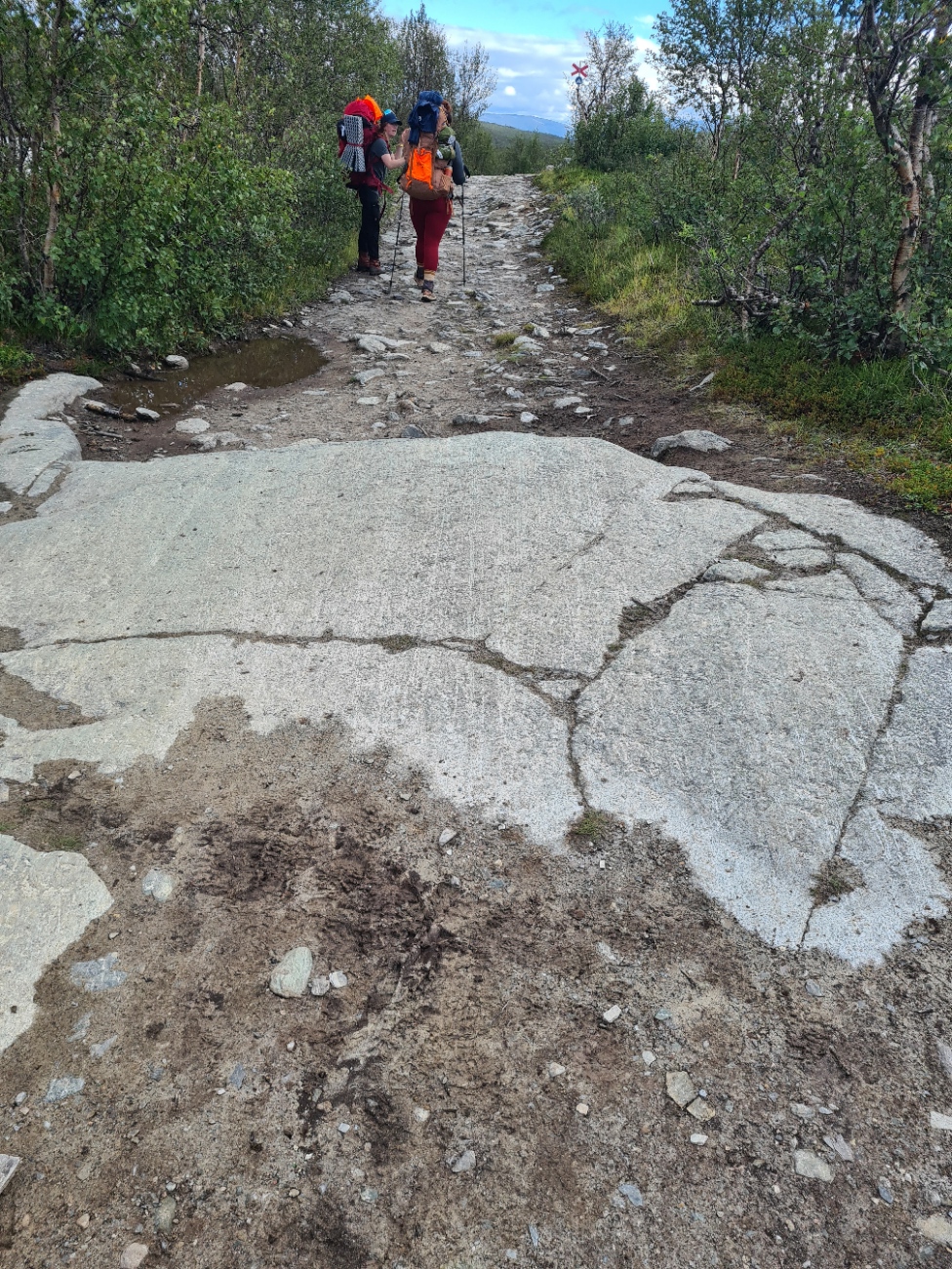
Some individuals and groups walked quickly, the end in sight, others loitered, a last opportunity for photographs. There were also a fair few limping or stiffly hobbling, quite a bit of athletic tape was on show. For much of the remaining distance the trail runs concurrent with the winter snowmobile trail and that trail’s markers, red crosses on poles, now bordered my tread, instead of being visible a hundred or more metres off to one side or another as they had been for the great majority of the Classic.

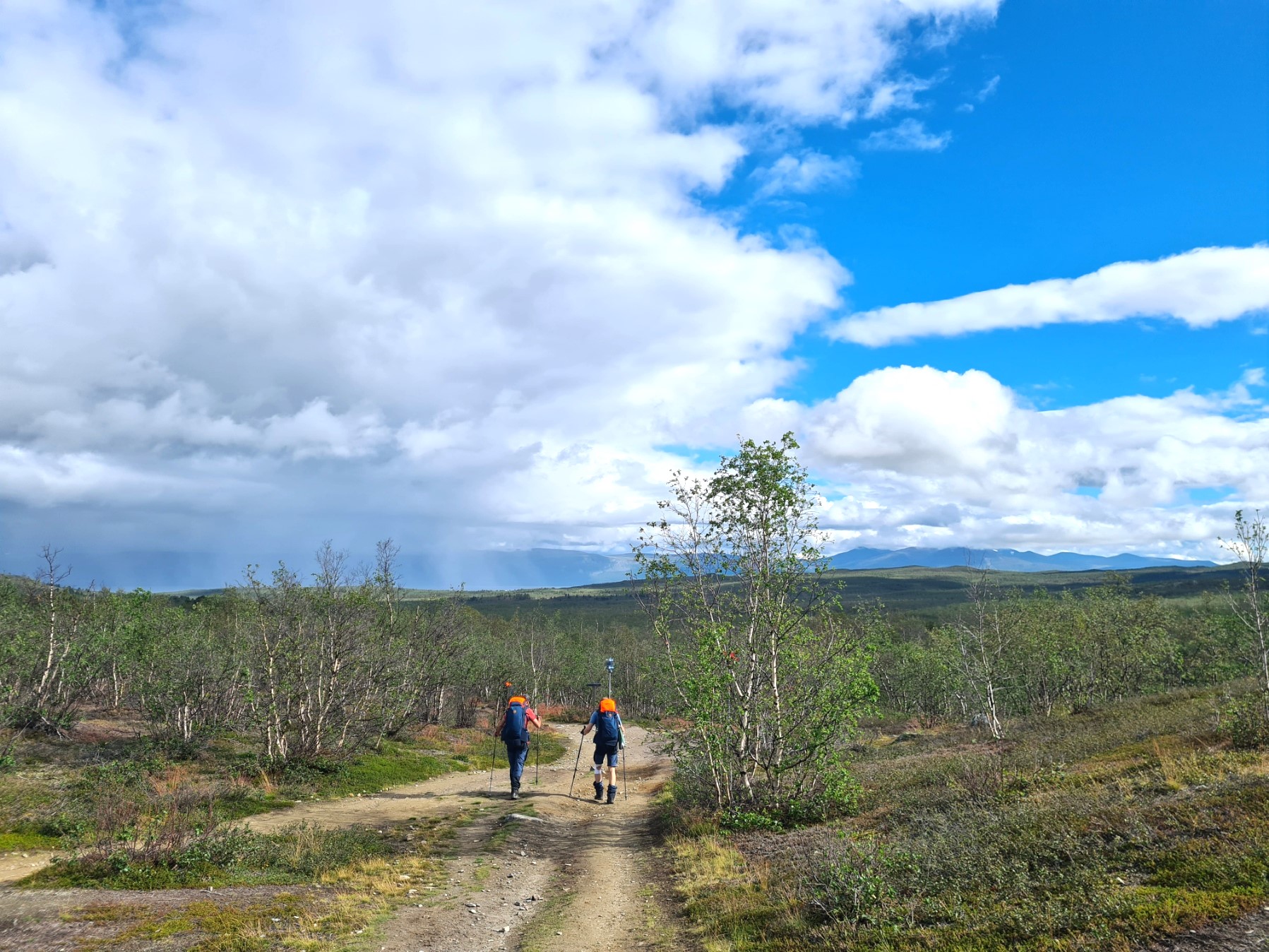
It was on the last few kilometres that, speaking to one of the leaders of one large group, I found I had been dubbed ‘the bird guy’ by her party. This stemmed from a couple of days earlier when I had answered a query about Skuas. Perhaps I had gone on at length! By no means qualifying, I was now regarded as an authority on the natural history of the area. I was more than happy to be referred to as ‘bird guy’, rather than ‘smelly guy’, ‘old guy’, ‘wheezing unfit guy’, or, my cold now having firmly taken hold, ‘coughing up green phlegm guy’.

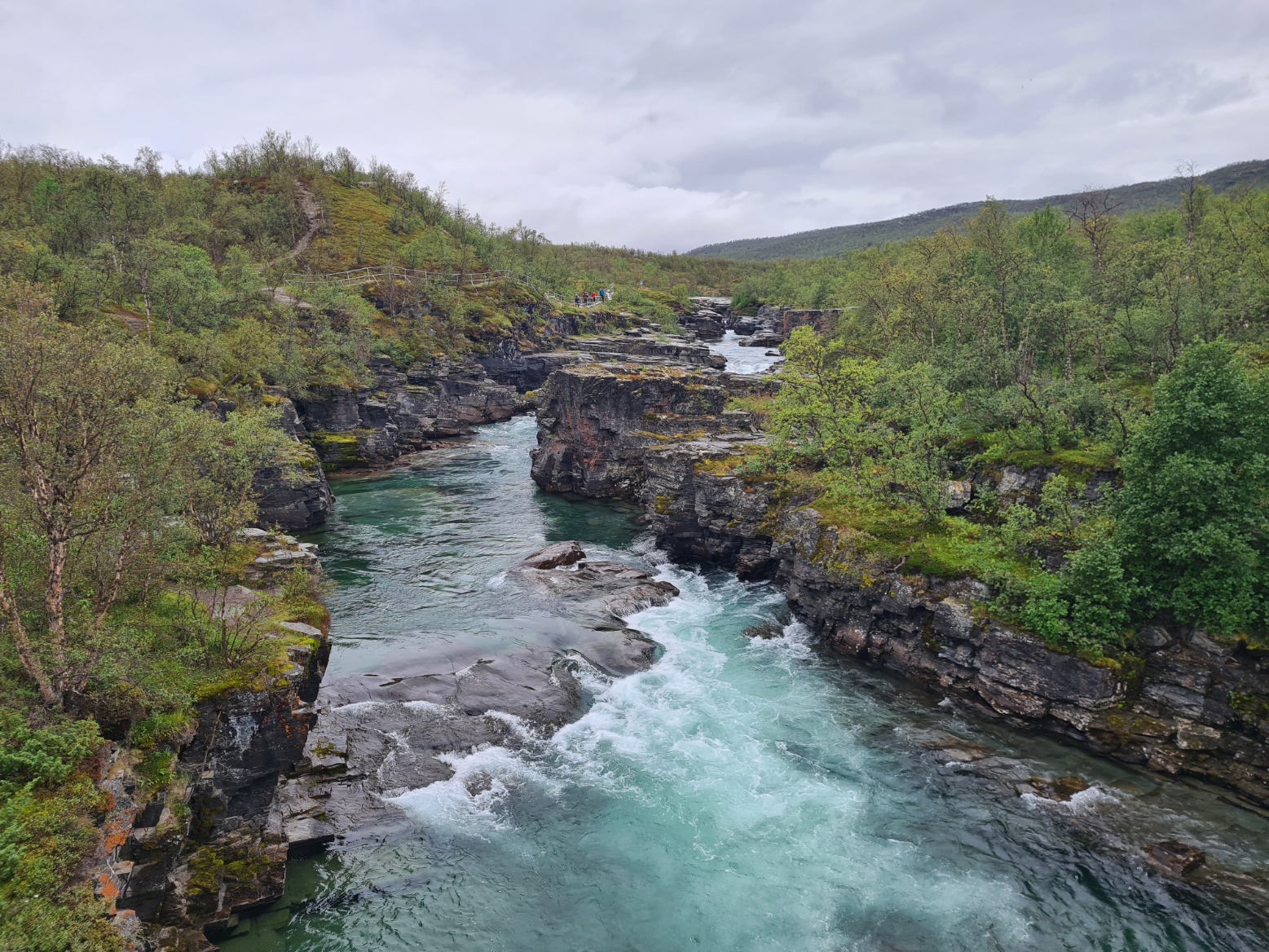
I had been a little surprised at how little wildlife I had seen over the five days. Birds had been few, even in the birch forests, mammals just as limited. I was not surprised not to have seen Moose. Lynx, Wolverine and Bears are obviously rarely encountered by anyone, though they are present. In ‘Lemming years’, these little rodents can prove problematic to backpackers, chewing their way into tents for food. Thankfully not an issue I had to contend with. The wide braided river gradually narrowed as I neared Abisko, the last kilometre I was treated to white roaring water in a narrow gorge. Obviously on the tourist trail, day walkers from the Turiststation increased in number.
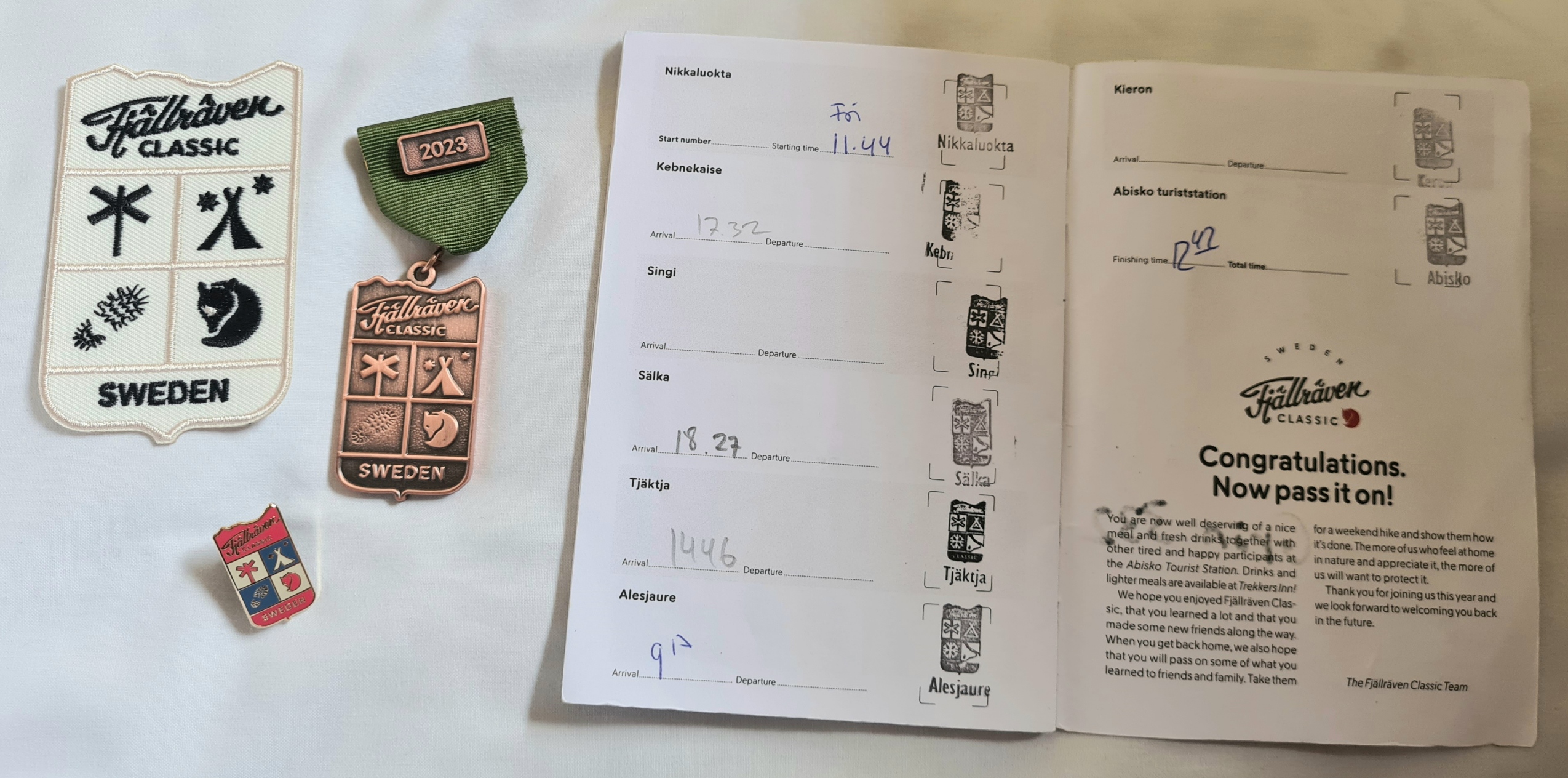
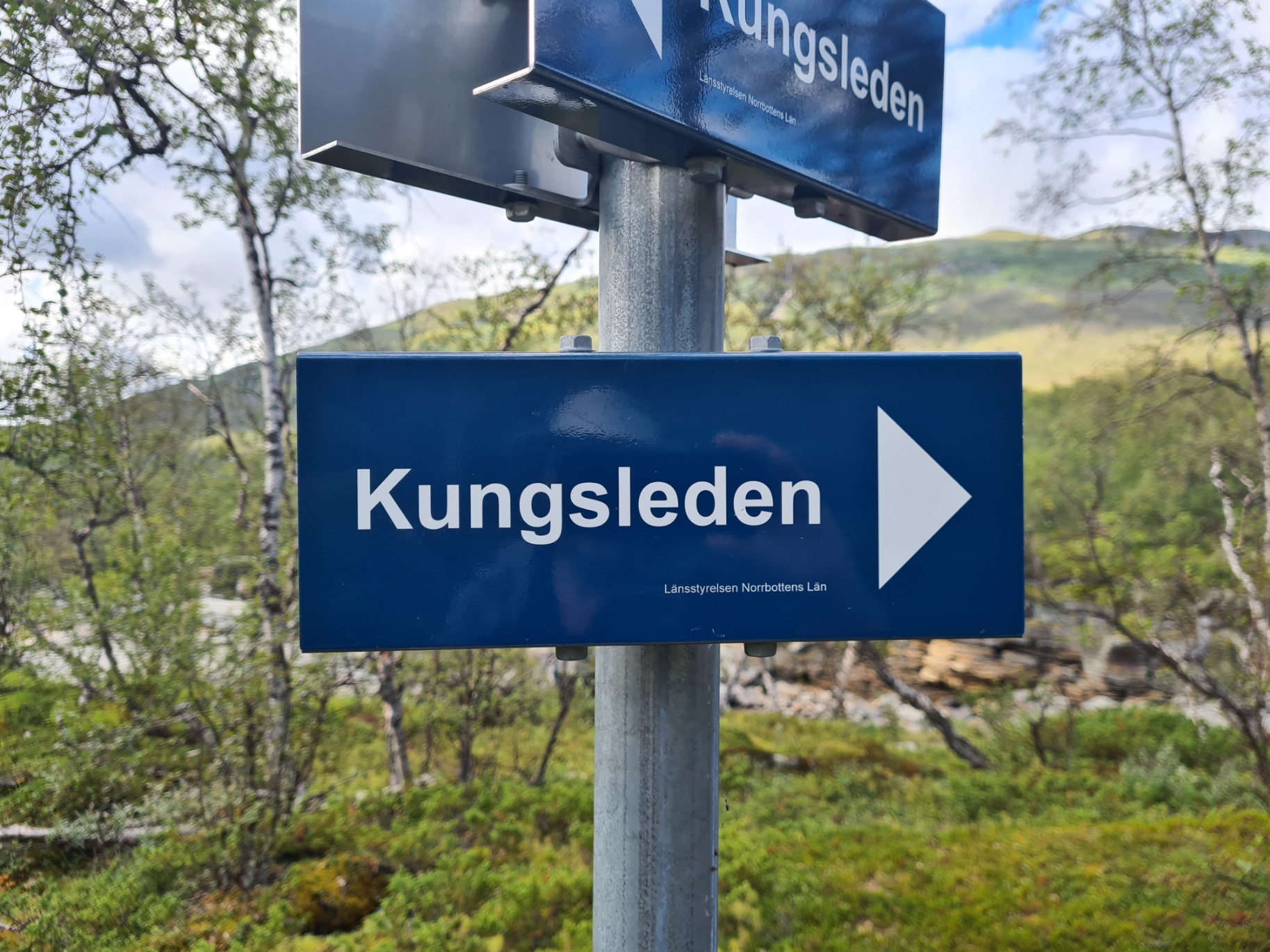
The last couple of hundred metres was a little surreal. It became just a little urban, all very strange after five days in the ‘wilderness’. Through an impressively made wooden Kungsleden themed tunnel, up to the brick buildings and before I knew it, I was at the finish. A little embarrassed by being applauded and cheered by those lining the path. Just about all of my multi-day hikes I finish alone and there is no-one present at the end. The finish of the Classic was all a bit of a whirlwind daze. My hiking passport was taken away to be checked. I was handed a large lingonberry juice, congratulated, handed my participants medal, badge and patch, had everything on site pointed out to me, then staff moved on to the finishers behind me and I was, well, finished. My Fjällräven Classic Sweden was over, almost.
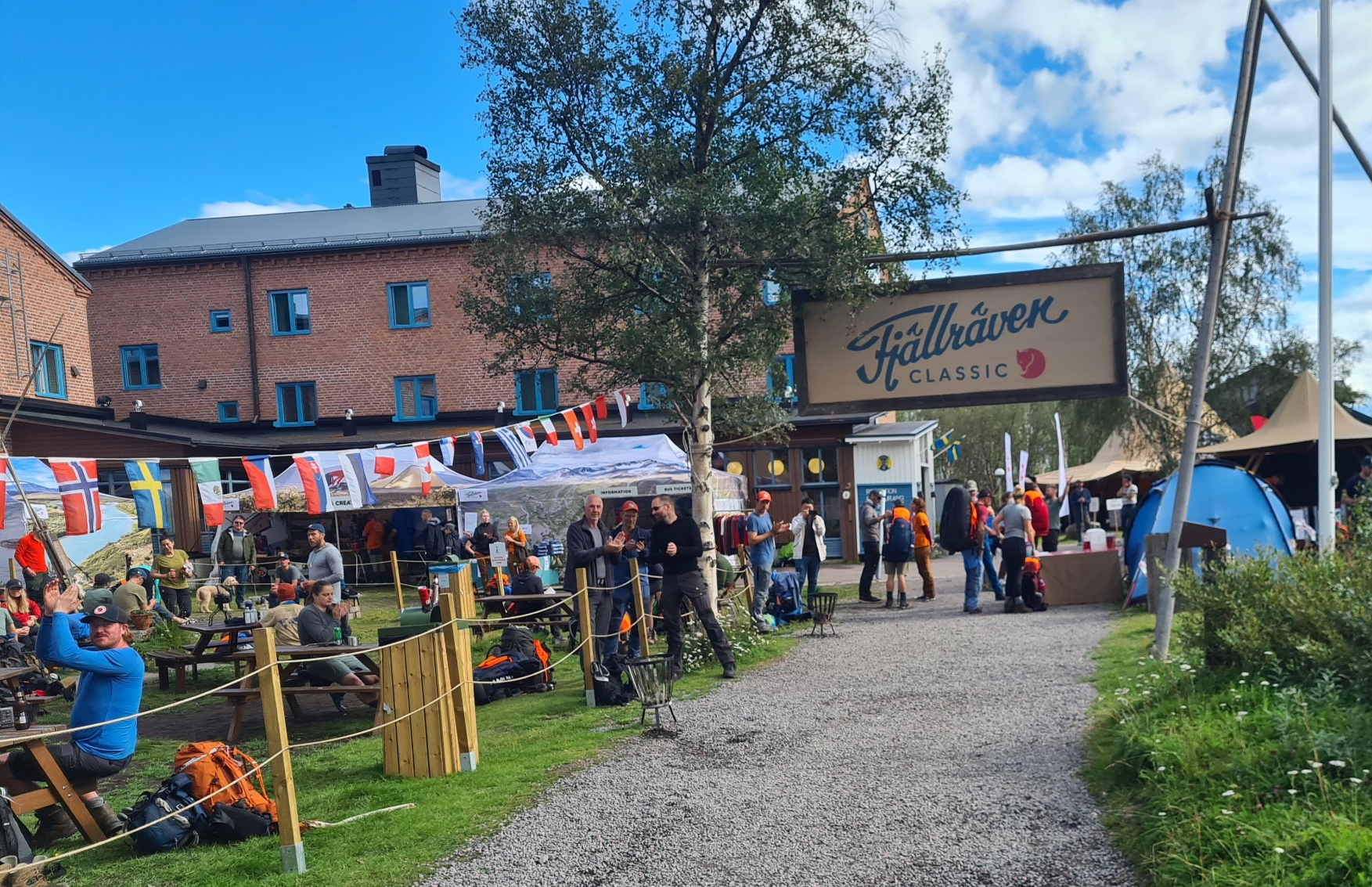
Before going any further there were trail niceties to be completed. My bag of trash was first weighed (anyone meeting a specified weight, is entered into a raffle for Fjällräven gear), this is then separated into recycling groups, my fuel canister was taken from me, then I went to book a seat on the bus to the airport for two days time,
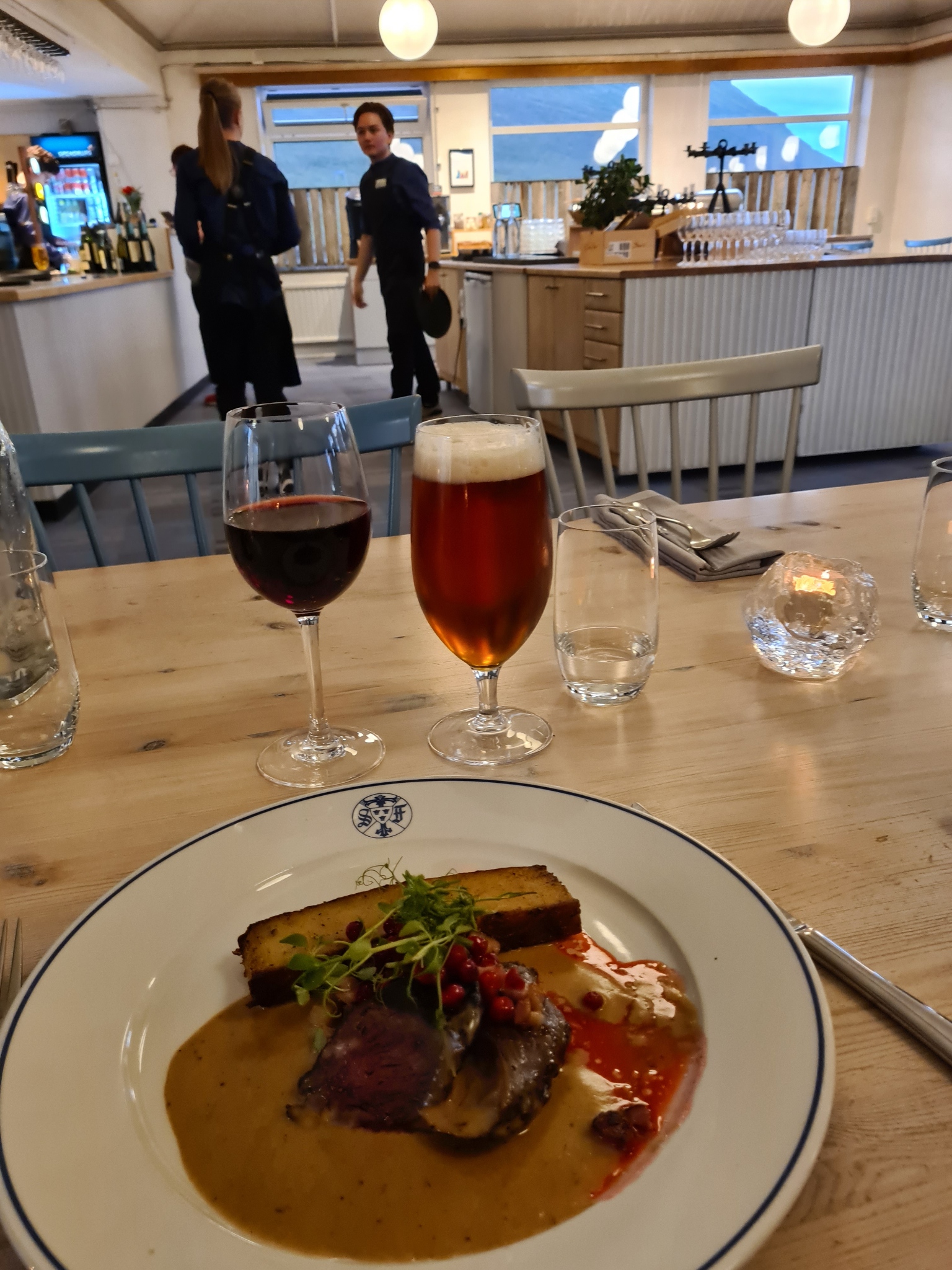
I had built in an extra day in case I required it through weather, injury or anything else. As it was, there were no issues and I walked the Classic in my planned five days. Some took less time, others took longer. This left me a day and a half to amuse myself at Abisko. I had pre-booked two nights in the hostel at the Turiststation and been prepared to lose a night if delayed on trail. Rather than immediately hit the bar, I went to book in at the hotel reception and get my room key for the hostel next door. I was advised not to delay booking a table in the restaurant if I wanted to eat later as covers would go quickly as hungry hikers trailed in. It was good advise and I secured one of the last slots for later that evening. There was also a buffet lunch on so I availed myself of that as I was hungry, piling the vegetarian option on top of the meat option. After which I collected my suitcase and found my room. It was time to get showered and change into the clean clothes I had packed in the suitcase. THEN, it was time for a pint. (There may have been a few more drinks sunk that night in the Trekkers Tent while the band played and hikers danced)
A day off:
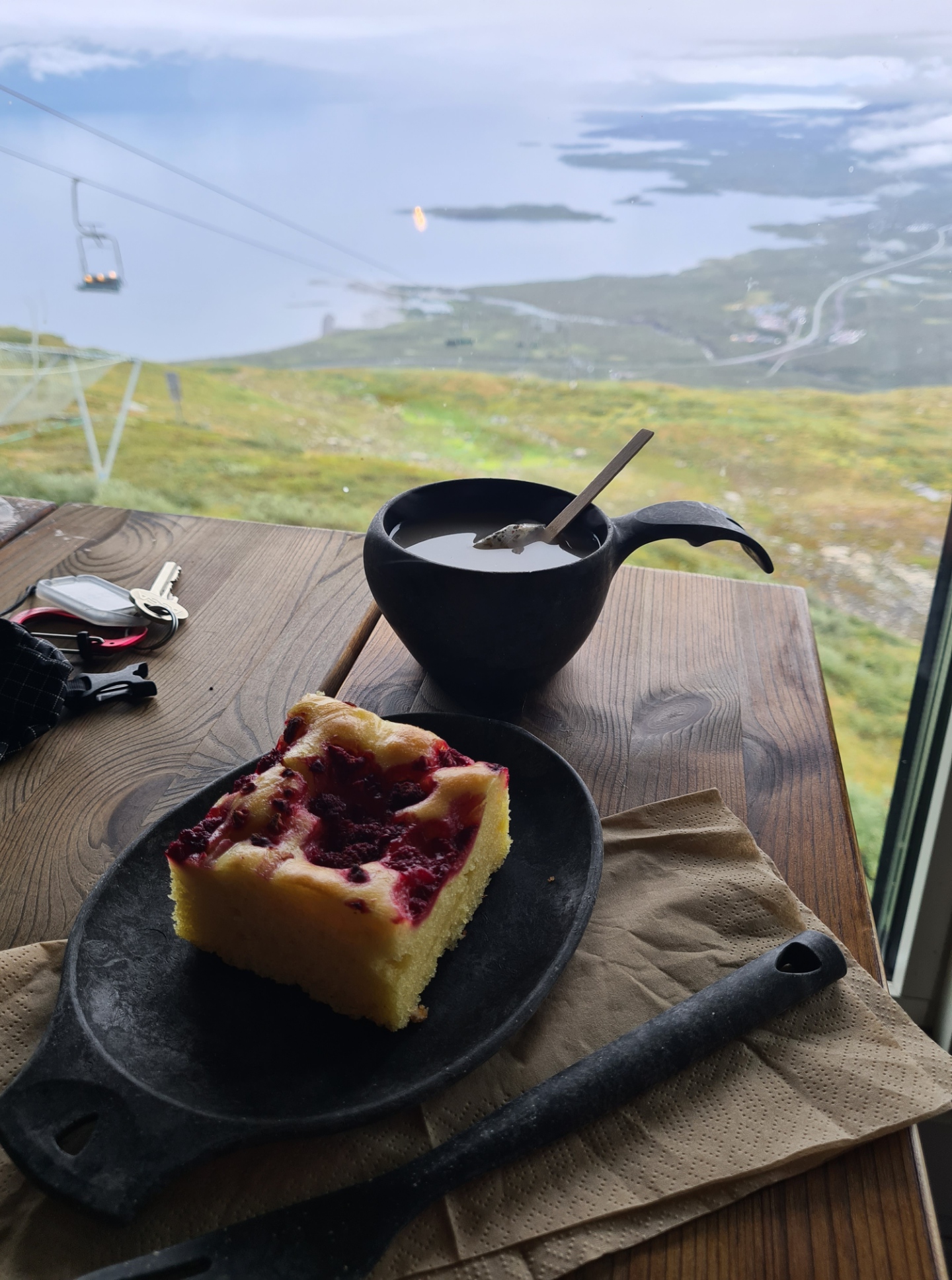
The following day, thick with cold, I simply took it easy around Abisko Turiststation. A late buffet breakfast in the restaurant followed by sitting outside for a while and applauding the hikers that continued to file in, then I went off exploring. Medal holders from the Classic get a 50% discount on the chairlift up Nuolja, so I was whisked up to the clouds for a lazy hour at the quiet little restaurant on the mountain where I enjoyed Swedish Fika while gazing out at the extensive hills, lake and forest beyond the Turiststation below. I was told that at certain times of the year, they switch the lights off at the mountain station restaurant and meals are illuminated by the Aurora borealis.
After which, back down to ground level for a visit to the natural history block to ask the warden there a couple of questions and learn a little more about the area, then an afternoon beer, killing time until my evening meal in the convivial company of a Swede and a German where we discussed our respective future hiking ambitions. A few more beers and a bottle or two of wine may have been consumed. Hey, I’m on holiday.
The next morning the bus was on time and it was empty roads all the way back to Kiruna, first depositing hikers at the railway station, then to the airport. Two flights to the UK via Stockholm, and I was back home for a curry that evening. Job done.
Some post-hike thoughts:
Fjällräven Classic Sweden was a fantastic experience. The organisers do a great job at sorting out the most important of logistics and are a real help at getting hikers out on this excellent trail. For those new to a multi-day hike, this can be a reassurance, combined with a lot of help and advice on the Facebook group in advance. Myself, I had less need of the wealth of assistance offered, but still appreciated the help, food, fuel, advice and friendliness that I encountered. It has helped me become much more aware of what this part of the world has to offer.
I am almost exclusively a solo hiker. I enjoy my own company in nature and appreciate peace and solitude. Before applying for the Classic I was obviously very aware that I would be compromising my preference and would be sharing the trail with hundreds of other hikers and had thought I was prepared for that. But I did struggle with the attitude of some that were either unaware of trail etiquette or simply didn’t care about impinging on other people’s enjoyment. Or perhaps this is all acceptable behaviour these days and I am just getting old! Such entitlement is not peculiar to the Classic of course and is increasingly encountered wherever you are.

There were many positives- the participant excitement was palpable, camaraderie contagious, the kindness for those struggling much in evidence, I appreciated the lack of littering, and especially the beauty of the trail and surroundings themself. Perhaps Fjällräven were successful in their aim after all, as I am very much tempted to return to this part of Scandinavia, though definitely when there are a good few less people on trail!
The hike between Nikkaluokta and Abisko is the most-travelled trail in all of Sweden. Despite this, if it were not for the 1500 or so other participants in Fjällräven Classic, it was all too clear that I would have encountered very few other backpackers.

 Three Points of the Compass
Hello, thanks for those three great articles. I really enjoyed reading them with all the genuine and helpful insights. I‘ll be doing the Classic this August 2024, so in less than 3 weeks!
And I would have two questions. If you decide not to invest time here, all good, no hard feelings. 🙂 But they are probably easy to answer:
I also have planned 4 nights plus 1 optional extra. In retrospective, would you push through 5 days if the health allows it to have full day at Abisko or would you instead stay on the trek for 6 days, maybe going: 1st night Kebnekaise, 2nd somewhere between Singi and Sälka, 3rd Tjäktja, 4th Alesjaure, 5th Kieron.
I haven‘t reserved accomodation at Abisko, since I don‘t know when I‘ll arrive and I don‘t want to block a room for other people. Are there enough accomodations in Abisko or can you pitch up your tent in Abisko for a spontaneous arrival?
Kind regards,Eric
LikeLike
Thanks for commenting Eric, I hesitate to tell or even suggest to anyone how they should tackle this particular walk. Some people like to push through quickly, but I fail to understand why. It is a quite beautiful walk and I see no reason for rushing it, particularly as you have paid good money to be out there.
My itinerary was just about right I feel. But I would say that!
There is quite a bit of accommodation at Abisko, but if you don’t want to block a space, then simply pitch up when you arrive, but the decent pitches do go fairly quickly as the earlier arrivals pile in. But I wanted something ‘indoors’, to get clean, to get out of hiking clothes, and, you also collect any luggage/suitcase you have forwarded, which doesn’t fit in a tent particularly well!
Have a great time Eric. I’m doing the Classic Chile this year
LikeLike