
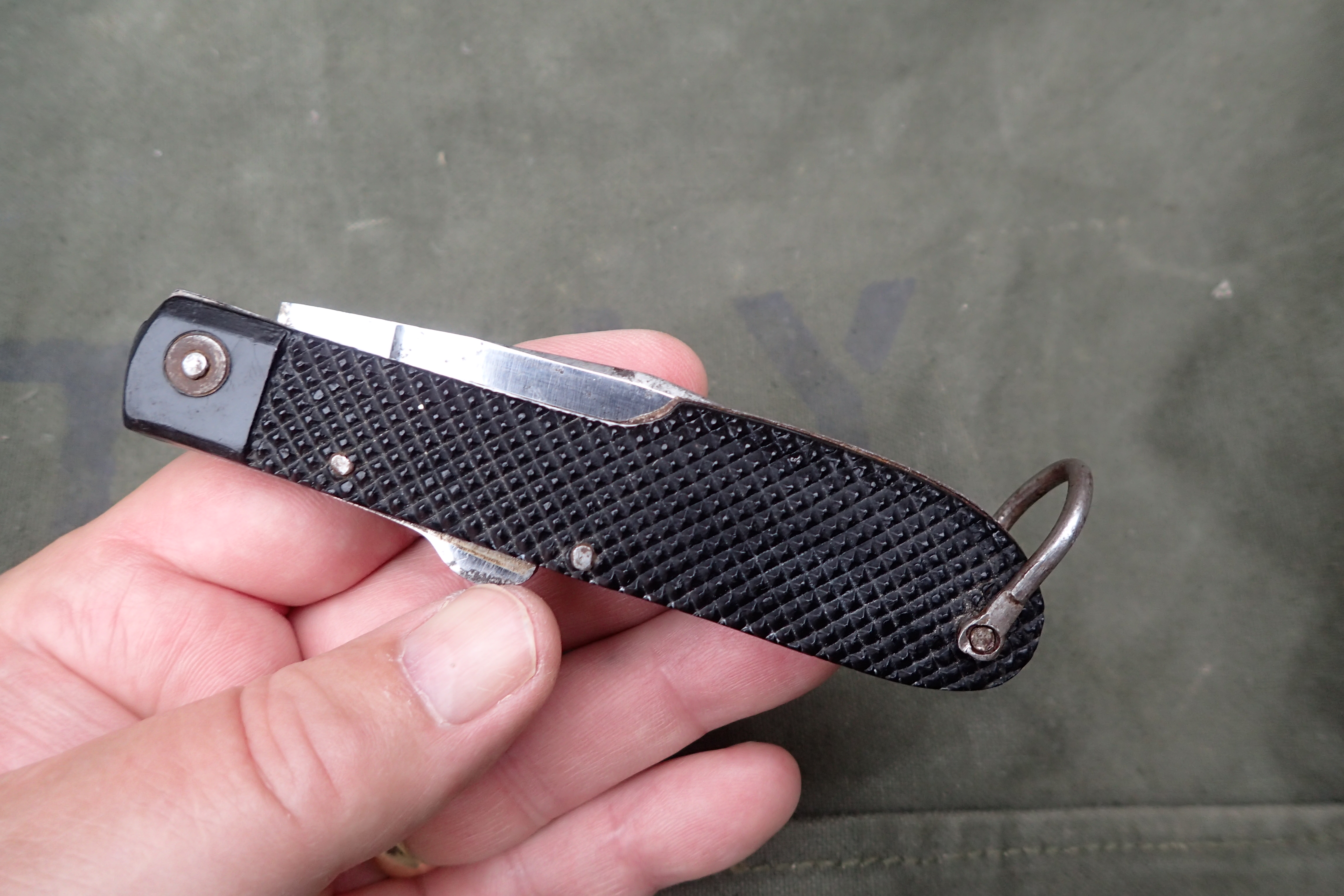
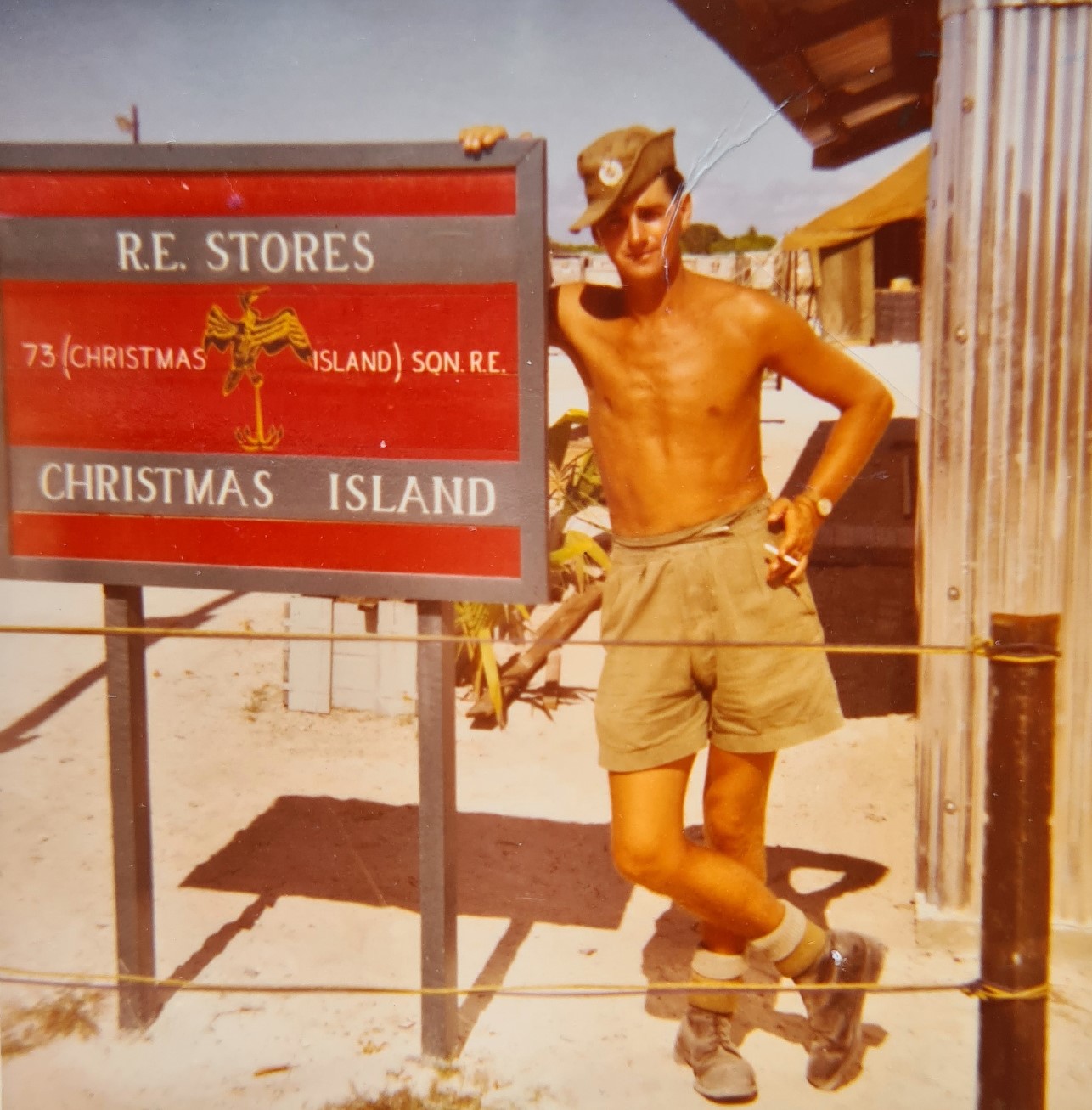
Amongst my dad’s belongings when he died some years ago was his old British Army knife. Following the Second World War, Eric Stray served in the Royal Engineers in various places, including the UK. One of his highlights was overseeing the building of a Bailey Bridge across the Thames for the 1951 Festival of Britain. Though he remained reticent to expand on how it fell in the river. He also served with 73 (Christmas Island) Squadron during Operation Grapple, the British hydrogen bomb programme. It was probably this period of service that eventually caused his demise, together with so many others put at risk at that time.
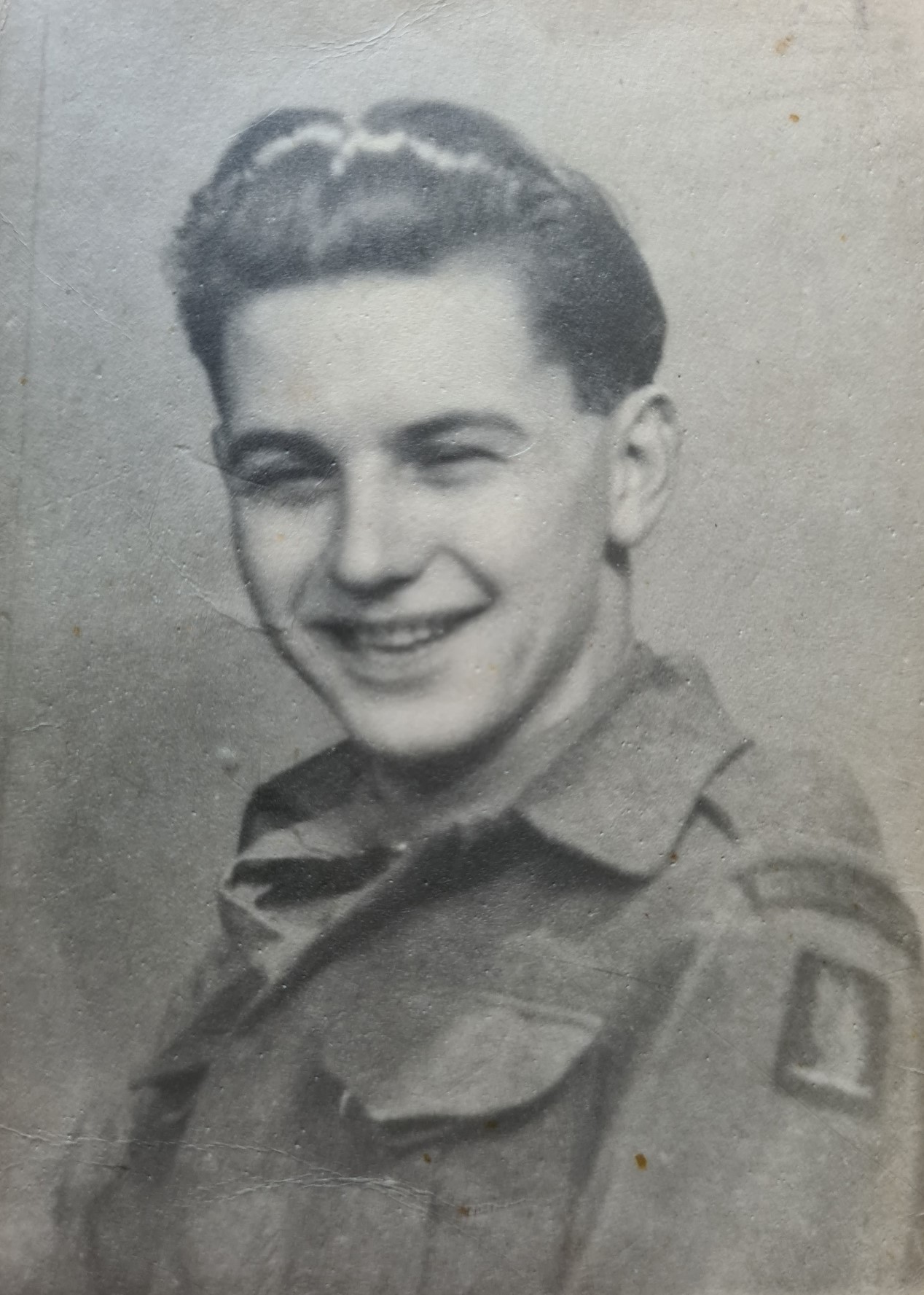
Dad showed me his service knife a couple of decades ago, years before he died, and mentioned that it once lived permanently in his service uniform pocket from where it was frequently pulled into duty for various tasks. This is valuable testimony as this knife is outside the norm for most knives issued. Probably since the day he was demobbed, it has mostly sat in one drawer or another, unused.
His jack knife, also known as a clasp knife, was made in Sheffield, England, and this type of knife with this particular handle material was a standard issue for soldiers in the British Army from the late 1930s until the early 1950s.


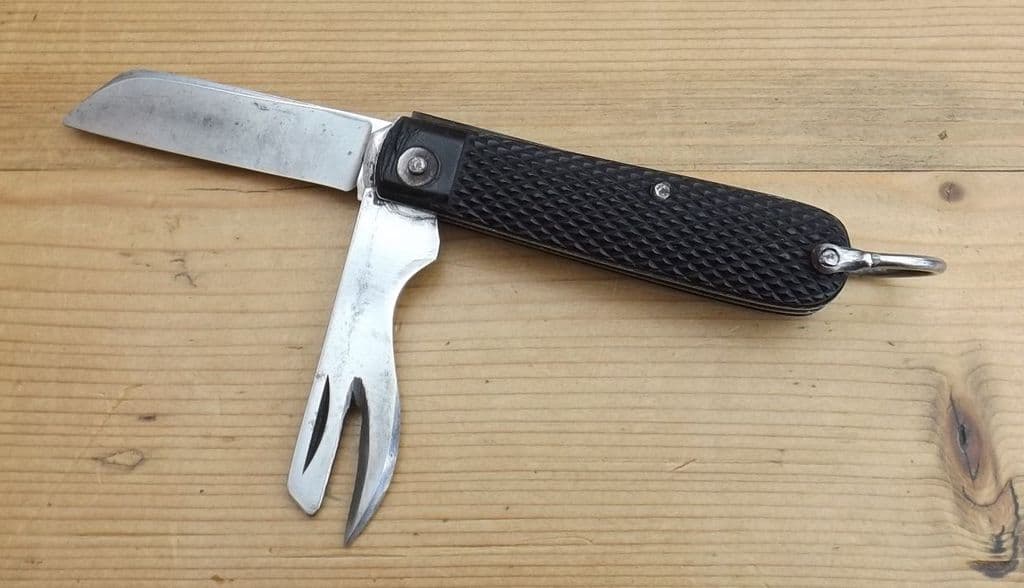
My dad’s old army knife is a simple tool, with a single blade. Other versions could have, in addition to the blade, a tin/can opener, or a marlin spike, or both tin opener and marlin spike. The design of tin opener on military knives changed completely in 1939, and again in 1952. A bottle opener was added to the tin opener in 1944/5. The lack of features other than a blade put my dad’s knife outside the norm for knives issued to army personnel.

“The blade and Tin Opener to be made of best cast steel, free from flaws, properly hardened and tempered, and to be as thin and as well ground as the Standard Pattern; the edge of the Blade to be wetted on an oilstone; to be 3 ½ inches long from “kick” point, to be 11/16 inch wide; the Bolster to be ½ inch long, to be solid, and made from the best iron; the “Springs” to be made of best spring steel, properly hardened and tempered. The Marline Spike to be made of cast steel, properly hardened and tempered. Length of Marline Spike when shut to be within 1/8 inch shorter than Spring; and the point, when shut, to be fitted close on the spring to prevent catching in the pocket.
1905/6353 British Army Knife specification
The Length of the Handle to be 4 7/8 inches; the Scales to be checkered black horn 4 3/8 inches long Bolster ½ inch; to be riveted to plates with two iron rivets; the Shackle to be made of copper wire, No. 11 gauge, same size and shape as that of the Standard Pattern, and riveted with brass wire. The Blade, Tin Opener, and Marline Spike to be firmly riveted in, and to bear makers name on tangs.”
The British Army has had various specifications for the knives issued to servicemen and women. The standard 20th century specification was laid down in 1905 (pattern 6353) and modified slightly in 1913. There were periodic updates to the specification to include either additional tools or different materials. The size has also changed over the years too. Knives were made by a number of manufacturers, many based in Sheffield, once the centre of knife making in England. Early British Army knives had bone handles, in 1902 these changed to either buffalo horn or ‘black horn’. In 1913 this was altered to chequered horn. The chequered knife scales on dad’s knife are made of Bexoid. This ‘Special Purpose Material‘ was introduced by the British Xylonite Company in 1936 and initially used for making radio dials, The new substance was resistant to heat and humidity and part of a ‘new age’ of mouldable synthetic plastics. The textured plastic scales and internal steel body have a shaped cut-out to enable the blade to be gripped to open it A strong steel shackle is fixed to one end of dad’s knife. This helps date it. Copper shackles were fitted up to 1941/2 until they were replaced by steel shackles as copper was required elsewhere for the war effort. A lanyard would be attached to this, lessening the chance of the knife being lost from a pocket.
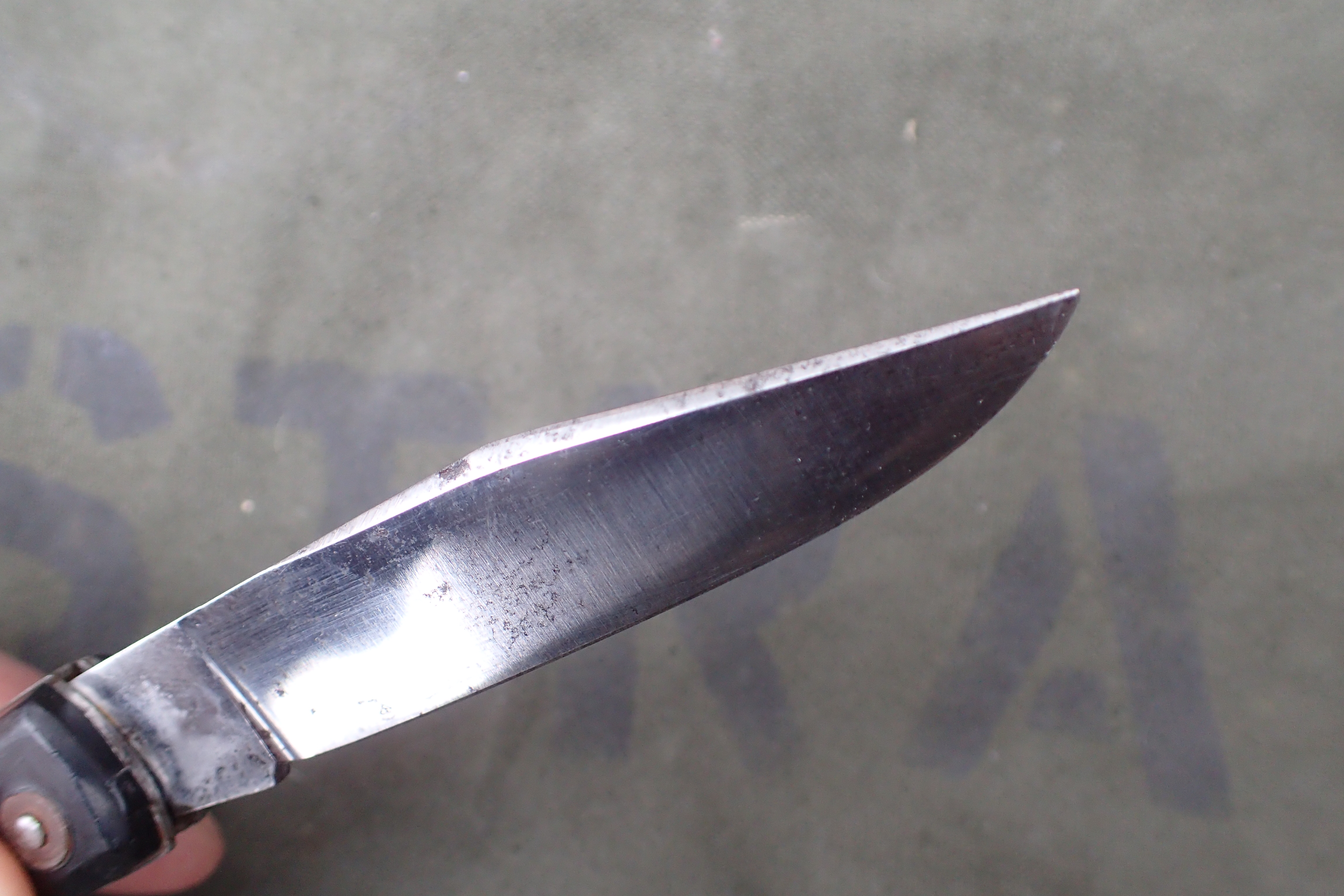
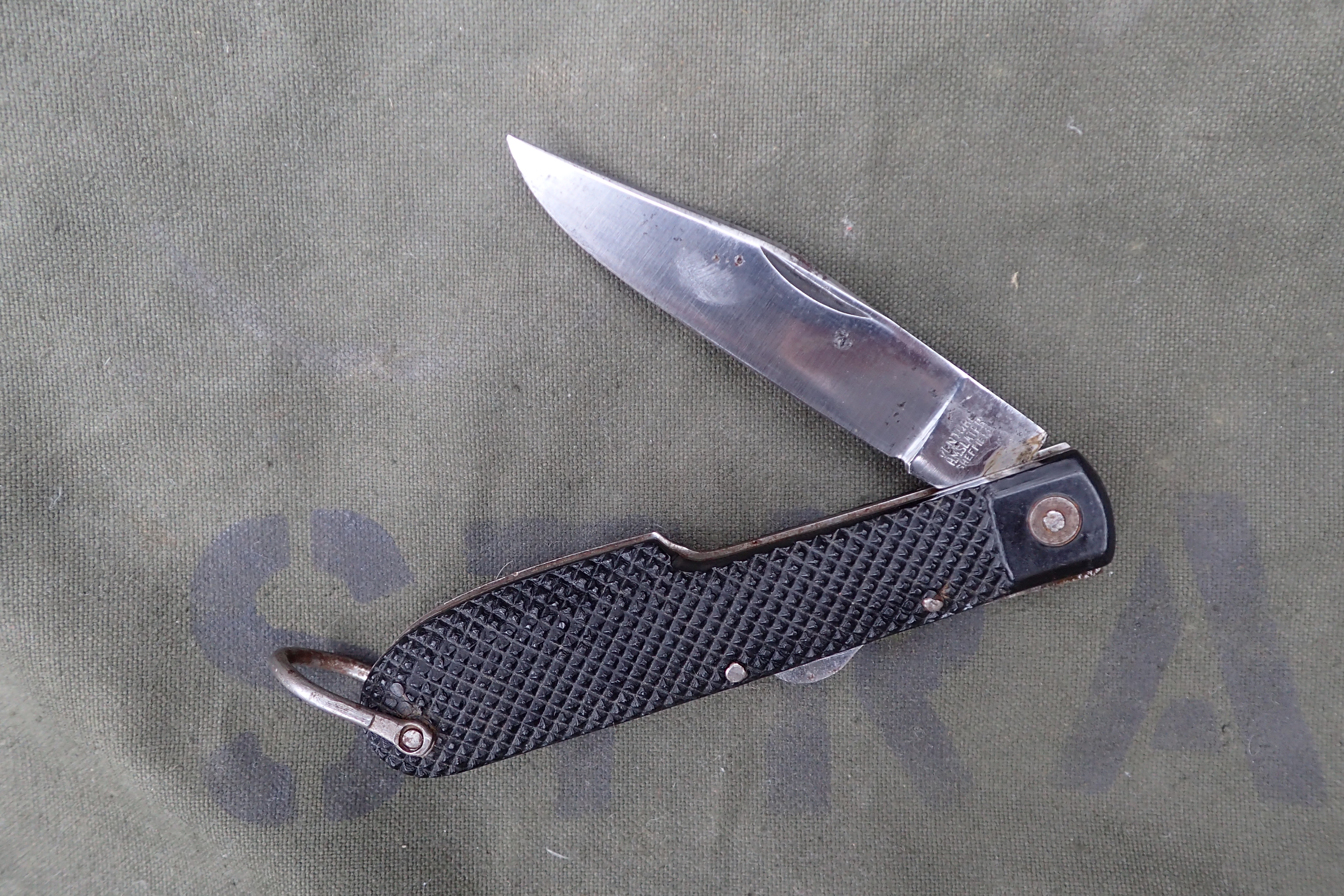
The knife is 4 3/4″ in length and weighs a hefty 117g. Blade length is 3 9/16″ with a cutting edge of 3″. Dad’s knife is a locking blade with a stiff release button on the back spring. Note that this is a Clip Point blade. This is quite unusual for British knifes in general and the standard blade profile on military issue knives was either a Sheepsfoot or Spear Point design. Clip Points are a popular blade shape in the US and require just a little more skill to effectively sharpen. There is no NATO stores number (NSN) on the tool, those numbers were introduced in 1956 so the manufacture of dad’s knife probably falls between 1941/2 and 1952, certainly no later than 1956. As said, his service was after the Second World War.
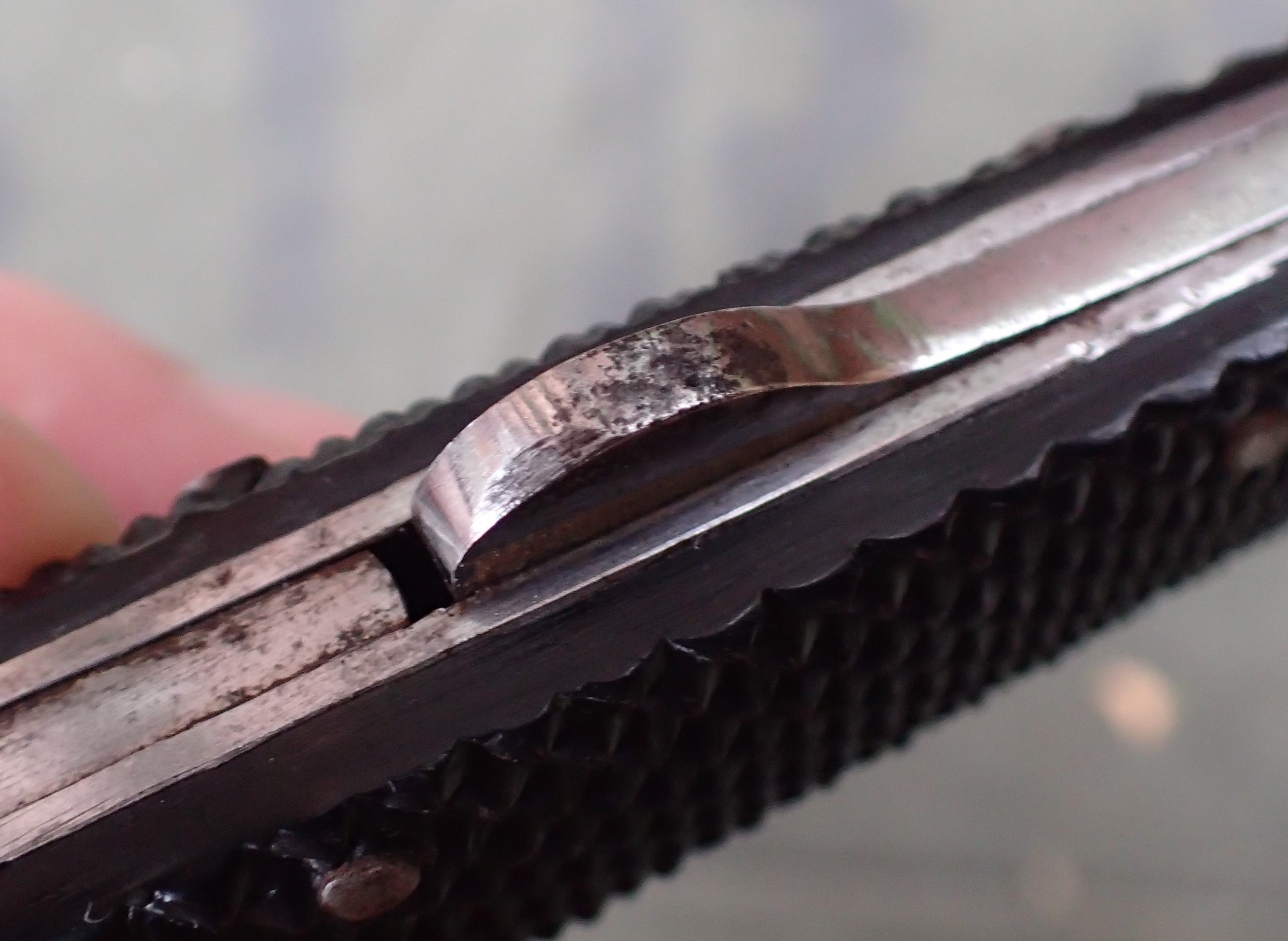
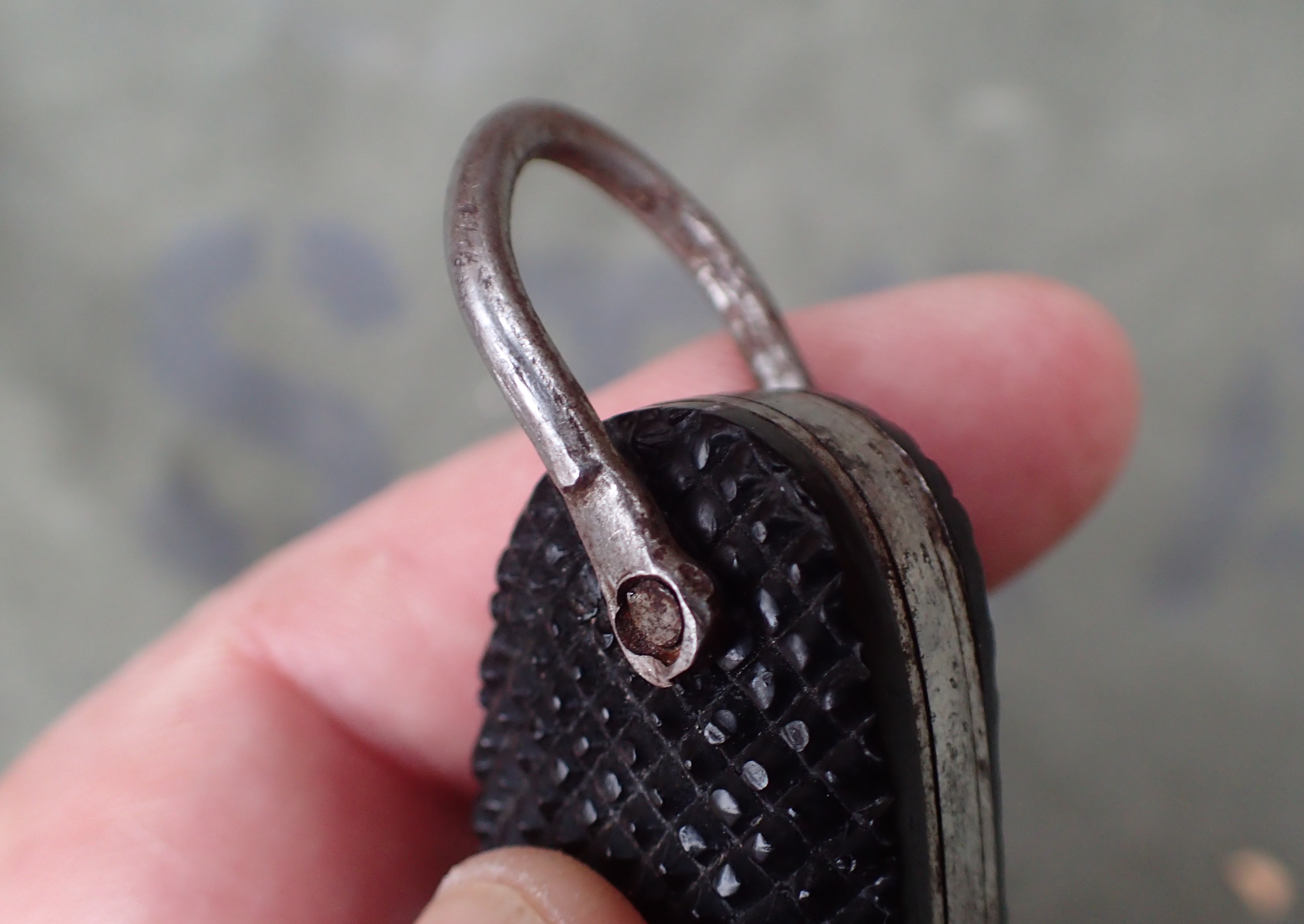
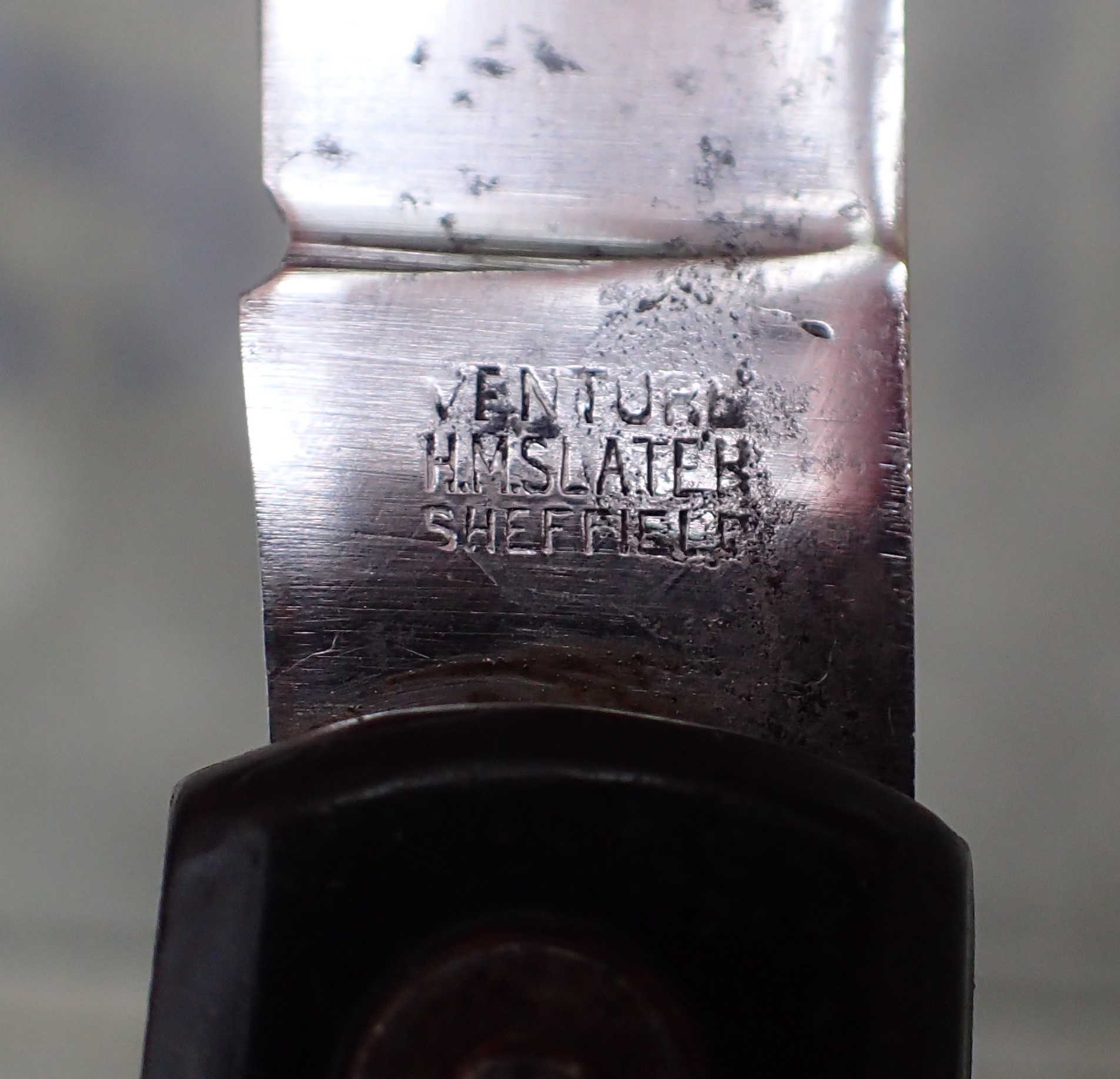
Surprisingly, there is no Broad Arrow- /|\, or Year marking on this service knife. This is also remarkable for a military knife and if it were not for dad’s account, I would largely discount this as a military issue knife. Certainly most knives produced during World War II carried these markings, and most produced afterwards too. Some knives might also have a WD (War Department) stamp. The only marking on my dad’s knife is on the tang where it is marked with the makers name: ‘VENTURE H.M.SLATER SHEFFIELD’. ‘Venture’ was one of the Slater Bros. corporate trademarks.
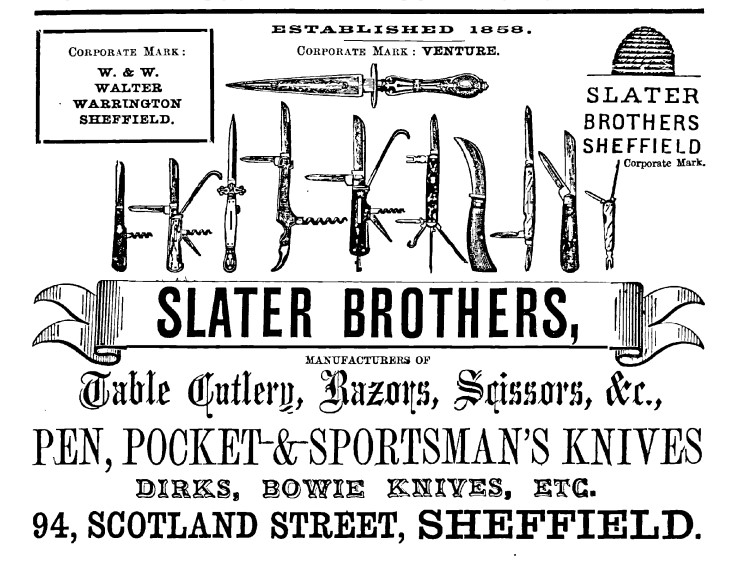
The Slater cutlery business was founded by Warrington Slater in 1858 and he ran the business with his brother Walter Slater (W & W Slater). Based at Eyre Street, Sheffield, the business name soon changed to Slater Bros. They changed premises a few times- to Scotland Street in 1876 and to Fitzwilliam Street by 1885,. The business struggled in later years however, and stock and trademarks were sold in 1903 and Marples & Co. took on their Beehive trademark and business. Warrington’s son, Herbert Marriott Slater, started a new business and registered his H.M.S. mark at 105 Arundel Street in 1907.
This three floor Sheffield factory was named Venture Works and the firm Herbert M. Slater Ltd was incorporated in 1931. It is his name that is shown on my dad’s knife. The Slater Works became one of the most successful of the Sheffield cutlers and acquired many names and marks as those businesses closed. Production or rebranding of pocket knives etc. had ended at the Venture works by the 1980s and the business was sold the following decade.

Various manufacturers produced knives for the military, other than Slater, amongst these were Atkinson Brothers, S.S.P. (Sheffield Steel Products), W&SB, Watts, Wade & Butcher, Clarks & Son, J. Allen & Sons, Harrison Bros and Howson.
The British Army introduced a smaller and shorter clasp knife circa 1939, prior to the Second World War, though earlier issued knives would have remained in service with their owners so both types would have been seen concurrently. WWII and later knives also had a handy flat screwdriver added to the end of the knife. This is, again, missing from our knife. So dad’s knife has some odd features about it- it is longer than most military knives being issued during his service, has a different blade shape to the norm and lacks some markings that might have been expected. It is possible that older knives continued to be issued, also that servicemen may have purchased commercial copies to replace lost or damaged issued knives. This may explain the lack of markings found on dad’s knife, though he did tell me it was the one he was officially issued with. It is a bit of a mystery.
Edit: since I posted this blog, one comment drew attention to a similar clip point knife made by H. Rowbotham & Co. of Birmingham and marked on the blade- “U.K.A.E.A.” [UK Atomic Energy Authority]. An intriguing example considering my Dad’s work on Operation Grapple. Thanks Graham, unfortunately this is a mystery unlikely to be definitively cleared up.
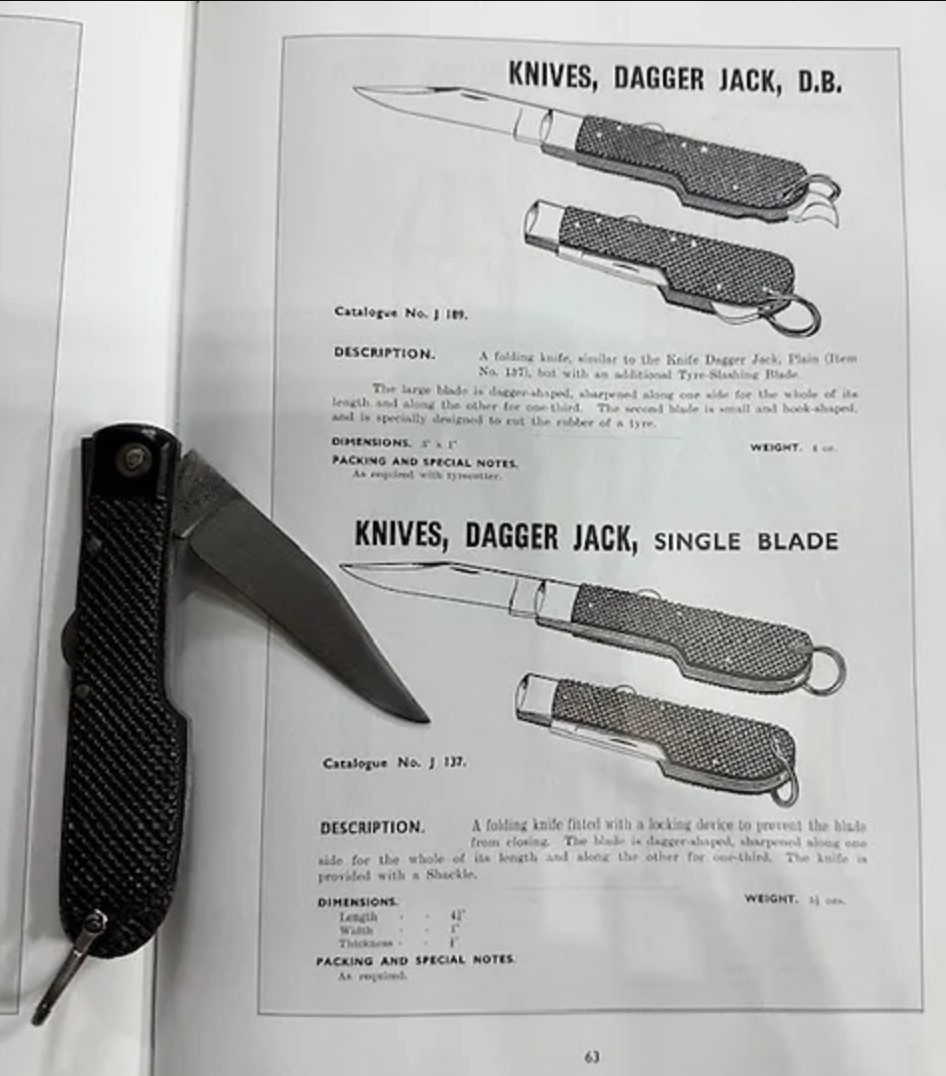
Further edit: It has been further suggested that dad’s knife was the type issued to British Commandos. Well, it might have been, but he wasn’t a commando either! I have included an image from one publication that shows this particular knife. This describes dad’s knife as “Knives, dagger jack, single blade“.
Like my dad and older brother before me, I joined the British Army, serving with the Royal Engineers in the 1970s and 80s and was issued my own official British Army Knife: NSN 7340-99-975-7403 (with can opener and marlin spike). I still have it. I looked at that very different knife in another post.
Knife chat: A blast from the past- the British Army Knife

 Three Points of the Compass
An interesting memento. Do you ever use it?
LikeLike
Nope, never used it Daniel. It isn’t UK legal anyway
LikeLike
These are said to be ww2 commando and SOE issue knives not standard issue. One variant had a tyre slasher blade. Your dad maybe traded for it. WD militaria have several in their sold archive.
LikeLiked by 1 person
Thanks Graham, all interesting stuff!
LikeLike
Interestingly, there is an example marked up to the uk atomic energy authority on the website of Graham currie. A link to your dads work on operation grapple?
LikeLiked by 1 person
soe ones wernt marked.
these were made and sold commercially into the 1960s.
last army order for them was around 1947.
LikeLike
Hi I don’t know if you’ve found anymore info on your dad’s knife but what you have is quite a scarce SOE (Special Operations Executive) lock knife.
These knives were manufactured in England primarily used by Commando’s & the S.O.E. These knives can be seen in the following references: ‘British and Commonwealth Military Knives’ by Ron Flook, Secret Agents Handbook of Special Devices by Mark Seaman and The British Spy Manuel by the Imperial War Museum. There are two variants of these knives one has the Tyre-cutter blade at the opposite end of the knife, this one is without.
one can been seen on RARE, WW2 BRITISH SOE FOLDING JACK KNIFE-SOLD (henrysmilitarycollectables.com.au) and also http://www.treasuresofwar.com
regards lee
LikeLike
Interesting stuff Lee, thanks for this. I have absolutely no idea why my Dad had this knife, as he was certainly not in the Commandos or SOE!
LikeLike
I have a collection of military jack knives, dating from the Boer war, right up to present day issue. I’ve maybe 95 or so, including some from America, Australia, India and Germany. It’s a great way to collect militaria without taking up a lot of space.
LikeLike
Sounds an amazing collection Alan. I agree, a fortunate choice of collection that takes up relatively little space. Having gone down the hoarder/collector route myself in the past. I can very much identify
LikeLike
Interesting post, thanks. A forerunner to the Buck 110 lock knife, similar blade shape.
LikeLiked by 1 person
I’ll take your word on that Tony!
LikeLike