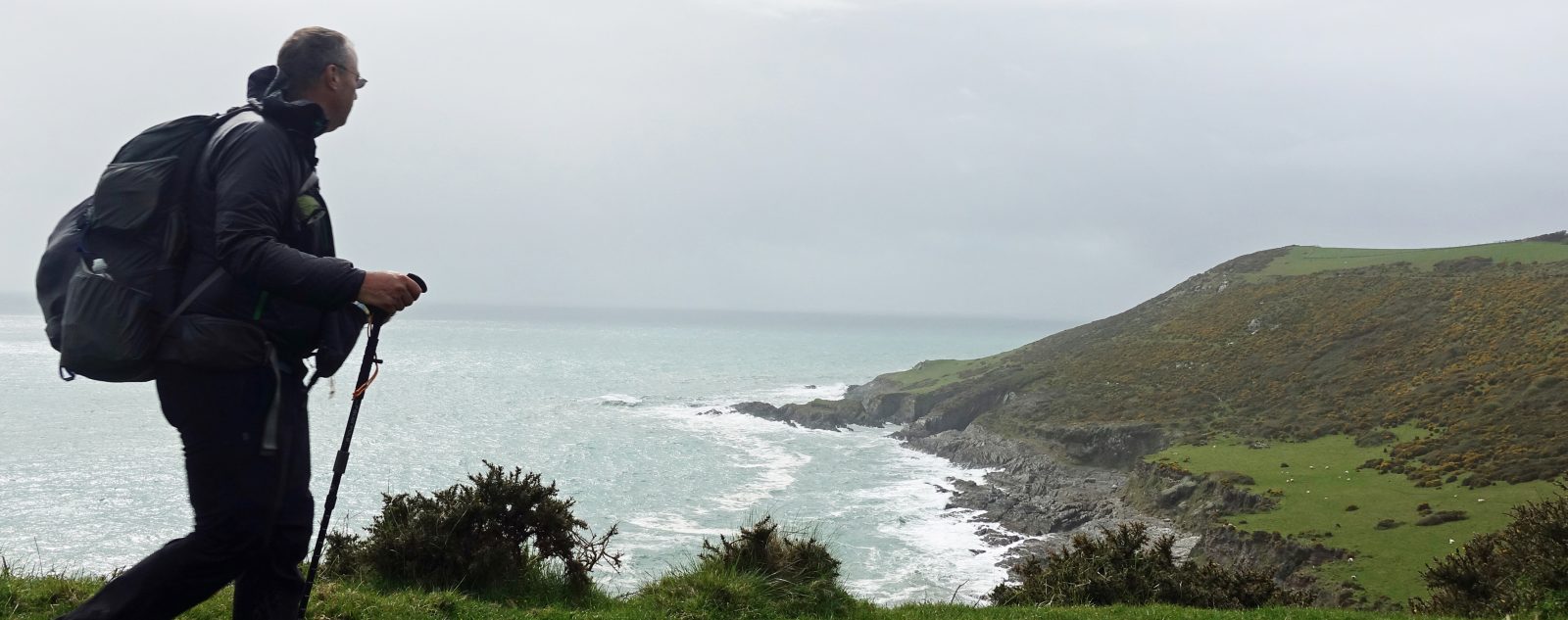

Three Points of the Compass looks at end of day foot regime on trail. An important part of hygiene and sleep system, and something that keeps a quilt or sleeping bag cleaner, permitting a more comfortable sleep.
Life on trail is invariably dirty and smelly. Despite making an attempt to keep myself as clean as possible, I look on physically isolating myself from my quilt at night as almost an essential. Long sleeve baselayer top and thin leggings take care of most of the body but a dedicated pair of sleep socks are always included in my gear. I could just use a spare pair of hiking socks of course. But there are lighter, more comfortable and better alternatives. These will vary according to season, so a quick glance at what I have been using for the past decade and a recent change.

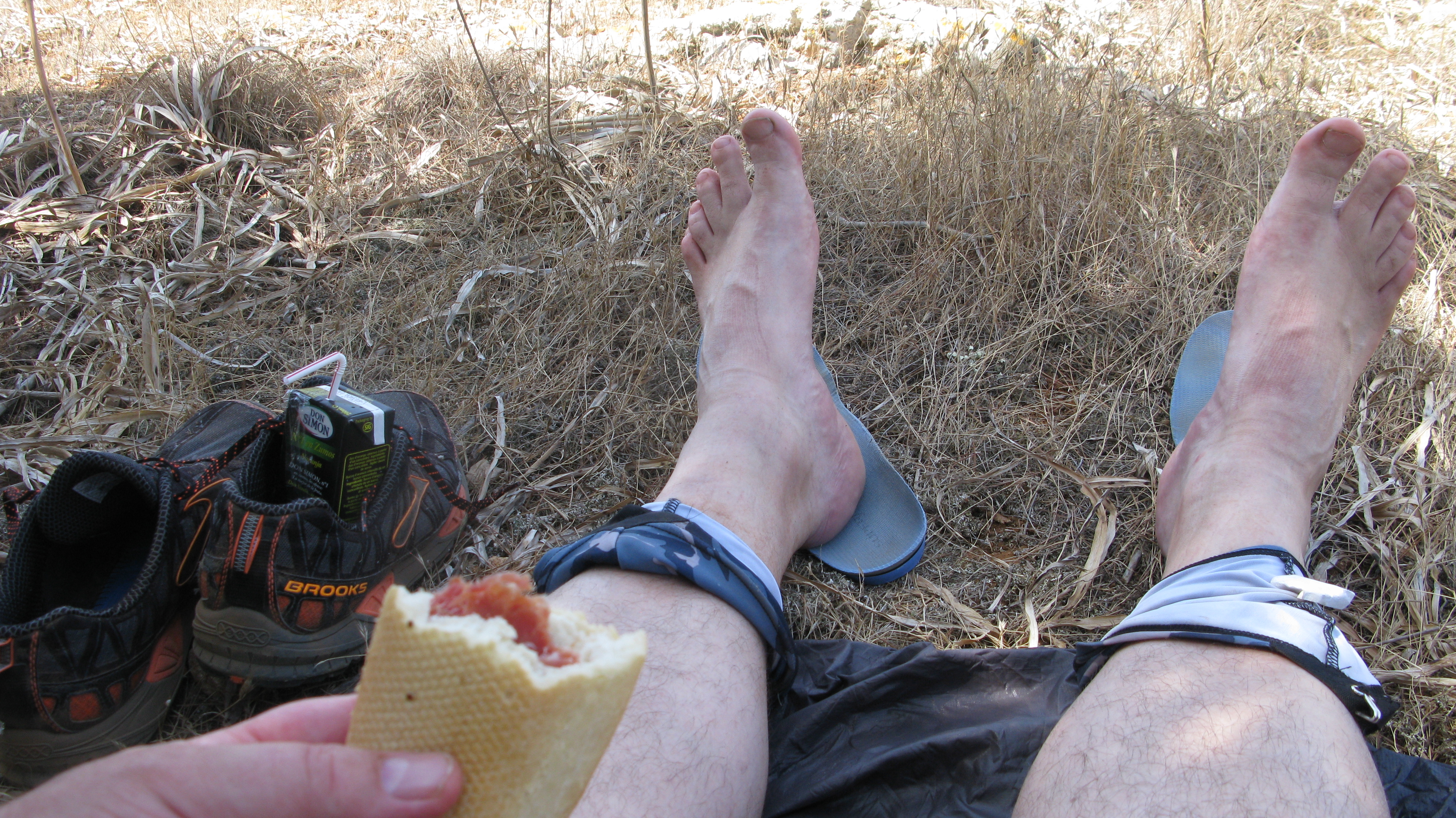
Body and feet get pretty grotty on trail, especially wearing breathable trail runners that can allow a fine dust or silt through. Skin maceration is also something to be aware of. I do three things at the end of the day to care for my feet. First I’ll get my trail shoes off and airing and have an attempt to both clean and inspect my feet, looking for any issues that may require sorting. I carry a couple of items in my pack and wash/hygiene kit to aid in this clean up. Usually the least they will get is a wipe over with a moistened towelette, with perhaps a scrub first with a damp all-purpose Swedish Cloth if particularly grotty. Towelettes come as small compressed disposable ‘pucks’ and I throw a half dozen or more into my hygiene kit before setting out, how many will depend on the length of trail. Each puck weighs a gram or two depending on size. Usually advertised as being made of cotton, they should be more accurately described as rayon/viscose, which can be made from cellulose materials other than cotton. They do not take too much punishment but can be washed out and reused if necessary. At end-of-life they are bio-degradable so can be packed out for disposing.

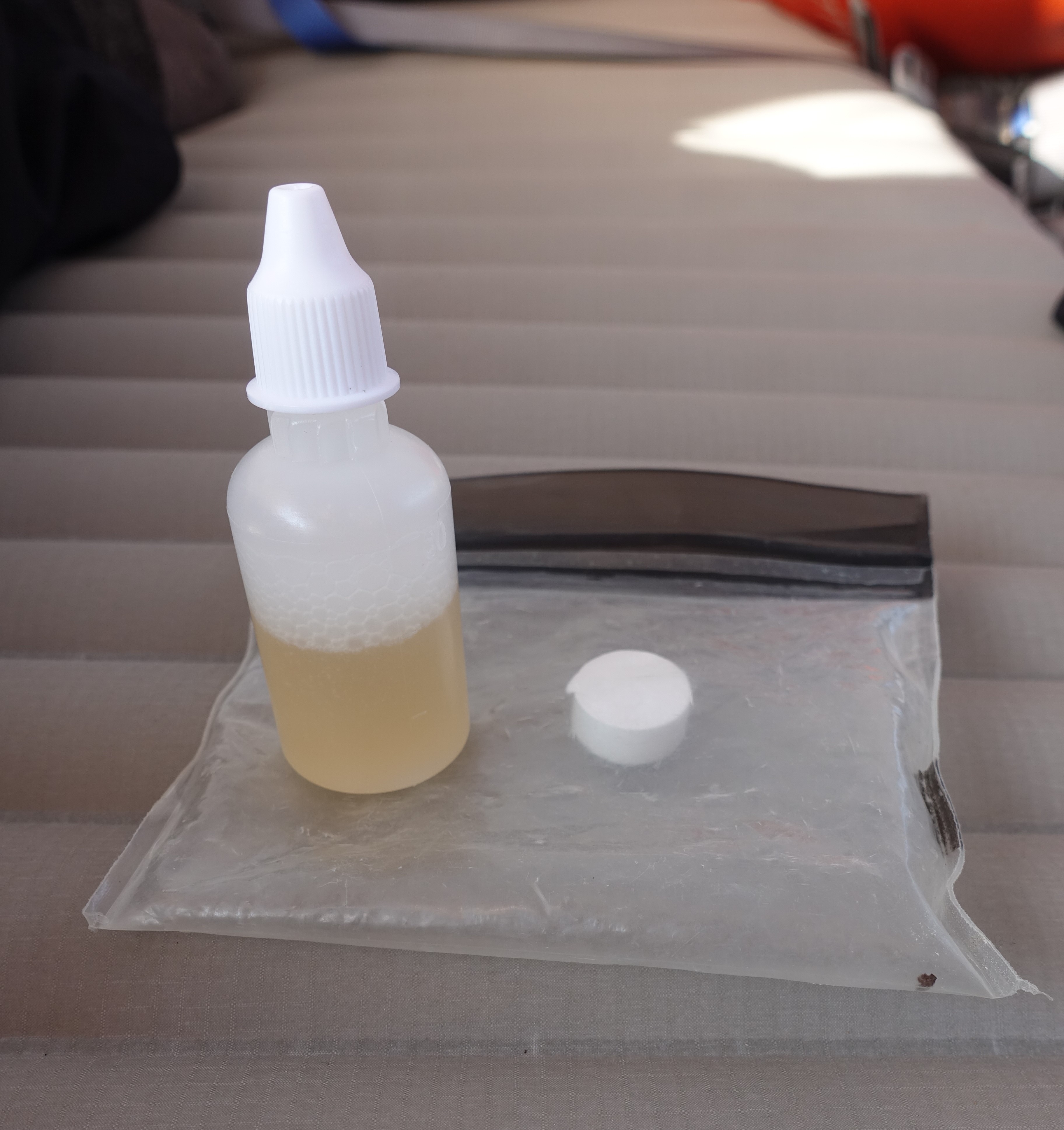
I add a couple of drops of Dr. Bronners castile soap from a mini dropper bottle to an unwrapped puck, then a smidgen of water to wetten and loosen it. This soap is super-concentrated and goes a long way and the small bottle will last me many weeks. I have found the slippery stuff can leak from a bottle occasionally so keep it inside a small baggie just in case.
Face, pits and bits, torso, legs and feet get a scrub and wipe down to remove as much of the days grime, sweat and salts as I can. I always feel better after this. It may be far from a good wash but realistically is about the best that is do-able on trail if a proper scrub is impossible. A decent hot shower is all too often a good few miles away and will have to wait.
Second- once dry, if my feet have been particularly battered by the trail or are feeling a bit sore, I might also roll them out on a 2 inch diameter hard cork massage ball. I then almost always apply a foot balm or cream of some type to put a bit of oil back into the skin while also killing off bacteria, reducing any itching, calluses and helps keep dry or cracked skin supple and if not completely removing smell, at least masking it slightly.
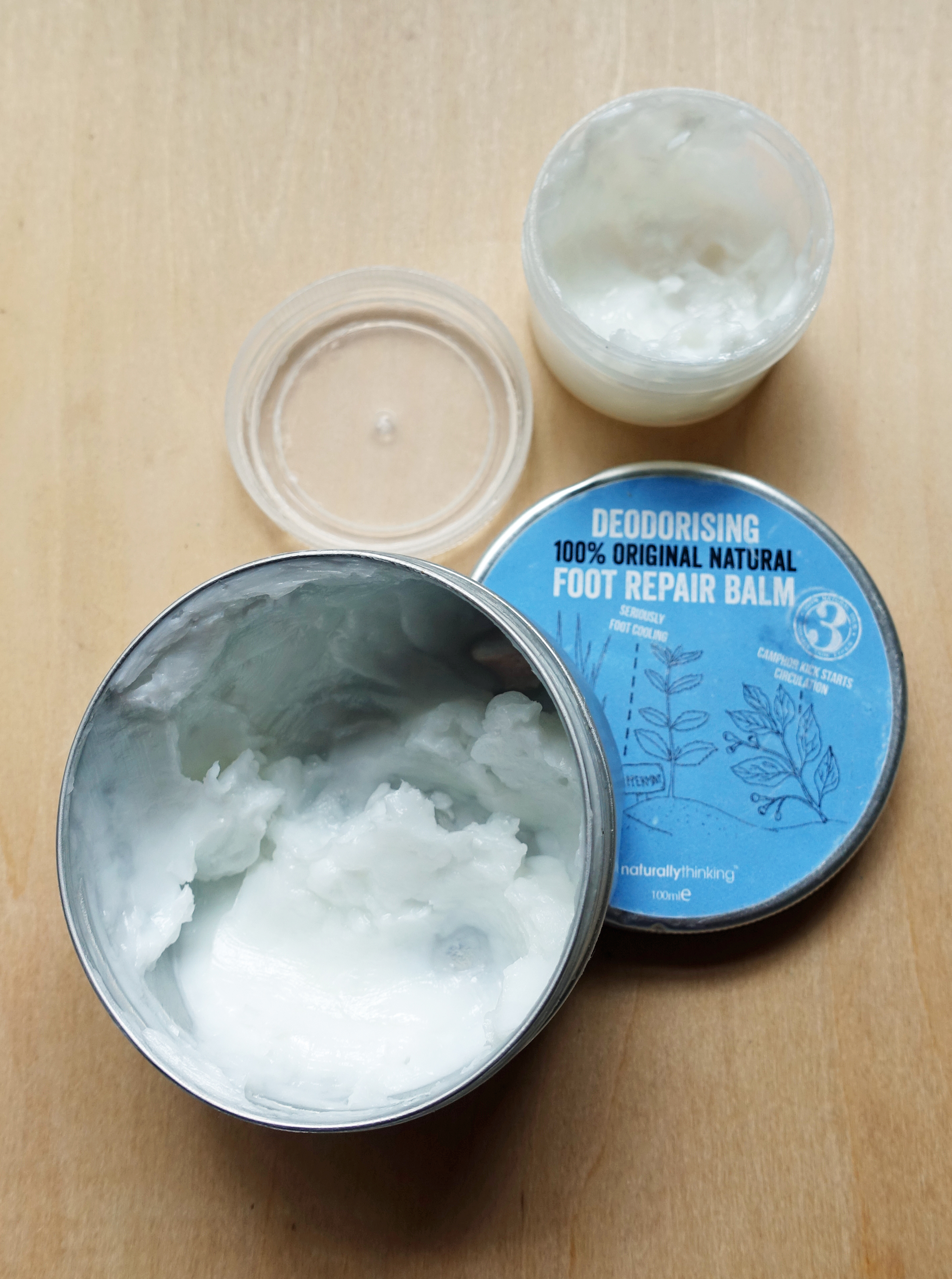
I used Gerwol foot cream for a few years, which contains eucalyptus, rosemary, lavender and thyme oils and was good, but I moved on to another that I slightly prefer. This is a deodorising foot repair balm from Naturally Thinking. This balm includes things like peppermint, lemongrass and enough camphor to bring tears to the eyes at time. There are of course plenty of other products out there and everyone will have their personal preference, but I like this and rather than carry the whole tin, just decant some into a small 40ml plastic pot. I take my time applying this as this is when I also give my feet a bit of a deep massage, working on the muscles and ligaments, pressing into and stretching out the plantar fascia with my thumb. This goes a long way in relieving foot issues. If my feet have been particularly stressed or wet during the day, I may repeat this process the following morning before putting my hiking socks on.

If I still have to wander around outside my tent a bit, or pad around a bunkhouse or bothy, I’ll put on a pair of Sealskinz waterproof socks. Because these are waterproof, my feet are isolated from the damp and dirt of my trail shoes and remain clean. I’ll also slip the Sealskinz on if I have to get up during the night for a pee. However these socks are not for sleeping in.
My third and final foot task is sleep socks. I always carry a pair of dedicated sleep socks for nights on trail. I have my preference and have more or less stuck with the same two types of socks for the past decade or so. Which pair I have with me depends on the season. However last year I began swapping out to another type of sock that may take the place of both my previous options, more on that below.
I never use sleep socks for hiking in, they are purely for sleeping in and will either be in my clothes bag inside the pack or left in the footbox of my quilt when packed away during the day. The simple reason they are not always left in the footbox is because I take one of two quilts with me depending on expected temperatures, and only one has a footbox.
In summer I am usually carrying a generic pair of thin high merino content socks. They are nothing special. Just dark in colour, usually black, so that they show less grime over time and dry quicker in the sun if washed. Merino wool also resists foot odour so remain acceptable for quite some time before becoming noticeable, they are certainly acceptable for many weeks. Mine came from M&S and a pair weigh 56g for size XL.
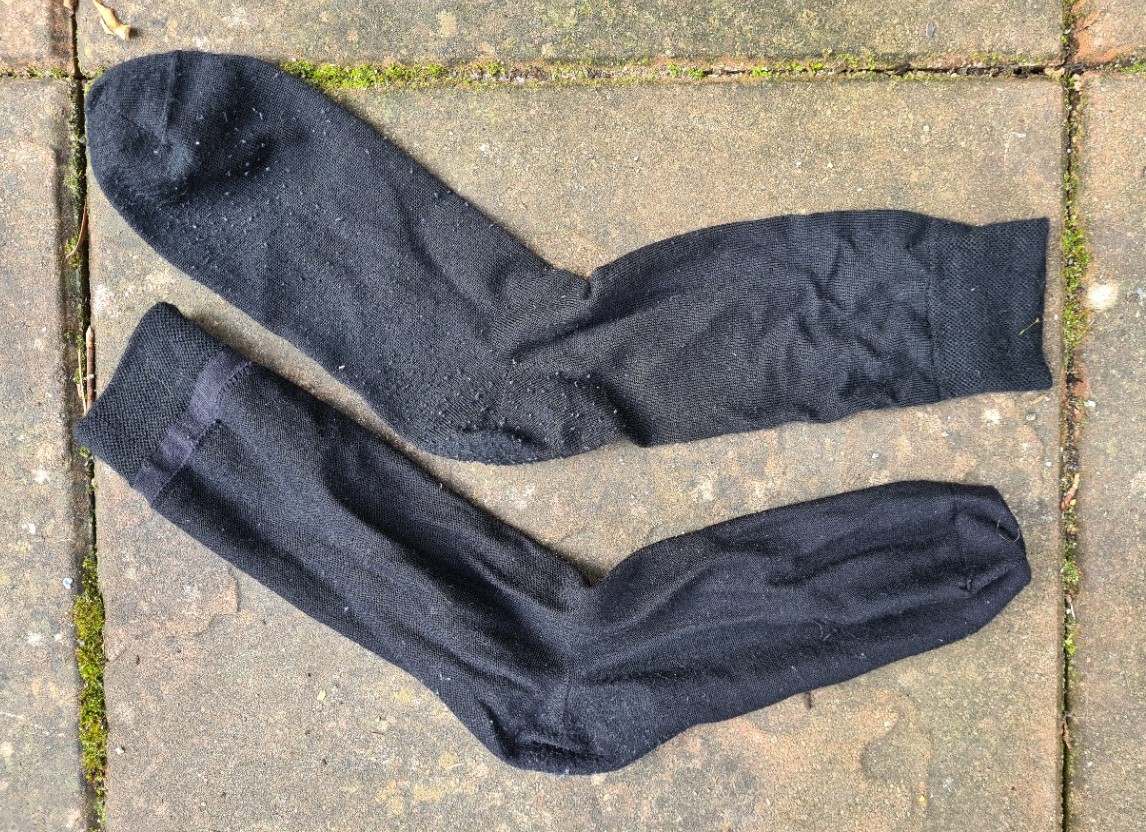
There is no hard and fast rule to this pair of summer sleep socks and in particularly hot weather I have swapped out to the thinnest and coolest socks I have prior to setting off on a hike. Despite the hot weather, I still want to isolate slightly grubby and potentially greasy feet from my quilt. In really hot weather I have tended to rely on either a really thin pair of size Large stretchy merino wool mix trainer socks that weigh 22g, or an even thinner pair of 57% polyester, 20% polyamide, 19% polypropylene, 4% elastane ‘Inner and Hot’ socks from Rohan that cover a good deal more of the ankle but still weigh only 27g. That is what I use, but for warmer weather there is no real need to go buying anything too specialised for sleep socks, just see what is already sitting in the drawer at home.

As the temperature dips however, it is time to step up the game and for colder walks when I expect even colder nights I carry a thicker pair of sleep socks. Not only am I keeping my skin isolated from my quilt but I am then attempting to keep feet warmer too, possibly prior to even getting inside my quilt as cold feet take a while to warm up. I had a brief period of ‘sock experimentation’ about ten years ago and fairly quickly came across what I have using since then.

The Australian Brushtail Possum is a pest species in New Zealand so it could be argued that using possum down goes some small way to helping solve the environmental issues that have resulted from their introduction to that country. But regardless of any environmental kudos, possum down is especially suited to this type of clothing use as due to its hollow nature, possum fur fibre is very efficient at insulating, being both warmer and lighter than merino wool for the same weight, while also remaining fairly fresh smelling over many days. It is very soft and a real cosy luxury to pull on at the end of the day. By itself, possum is not a particularly hard-wearing material, hence many suppliers using it in a mixed fibre format. It is actually quite hard to find high percentage possum socks as a result. Many supposedly possum products can actually be as little as 15%-20% possum content. However sleep socks are not abraded much and it is worth searching a bit for high possum content. I am still using the same pair of New Zealand made 70% possum down, 30% merino socks that I first purchased ten years ago. But they have shrunk a little over that time so the hunt has been on for a while for an equally as high percentage possum replacement, but it is proving to be a struggle. The pair I bought way-back were quite light in colour but I unintentionally found this a bonus as I am often changing in to them in the dark due to the shorter daylight hours of shoulder months and winter and the lighter colour is then useful for locating individual socks in the gloom of a tent. My pair of XL Possum Down socks weigh 82g.
While quite content with the two types of sleep socks I have and use, It has so far been impossible to find another pair of particularly high percentage possum down socks so until I do, I decided to experiment further, moved away from natural fibres and purchased a pair of socks made from one of the most recent developments in fleece material. I recently purchased a Senchi hoodie made from Polartec Alpha Direct fleece and have been mighty impressed with it, so I looked around for a pair of socks made from something similar and found that OMM include socks in their Core range.


These are made of Primaloft Active, an insulating fabric comprised of a synthetic plume woven through a knitted mesh. This provides a high volume and an open structure while still remaining lightweight. The fabric is made in three weights- 75gsm, 125gsm and 250gsm. My OMM Core Tent Socks are the mid-weight 125g material. All weights are extremely vulnerable to snagging so the socks also have a simple ‘water resistant’ nylon sole. They are pretty much shapeless and weigh just 45g for the pair so are lighter than my summer sleep socks and almost half the weight of my cold-weather sleep socks.

I hope that these might do me year round and suitability for summer months will be ascertained over the coming year. They are loose around the foot with just about zero support and are slightly more difficult to pull on over my heels due to the lack of stretch around the cuff but these cons are not necessarily a deal breaker. There is little in the way of seams in these socks to press into the skin so are pretty comfortable regardless of the position in which my feet are positioned overnight. OMM state that the print on the nylon sole is siliconised so is non-slip but I cannot see that being much of a requirement anyway. They are so light that it often feels there isn’t sufficient there to keep me warm, but there is. It is a slightly odd feeling that I am still getting used to. I’ll report back at the end of the year as to how I have got on with these.

 Three Points of the Compass
As usual plenty of useful tips. I have sleeping bag from OMM https://przypadkopis.wordpress.com/2023/02/05/omm-mountain-raid-233-a-craftsmanship-gem/ and boxers https://theomm.com/product/core-boxer/ but I said no to those socks — they are no stretchy at all, and for me the problem is they are super tight when putting them on/off, but fluffy when you have them on your feet. This sentence made me smile “dark in colour, usually black, so that they show less grime” because I try to buy everything as bright/white as possible to expose any dirt right away. And the second reason is to spot tick or mosquito as fast as possible. Inspired by your Sealskinz overlay I have to think of something similar, because I also use separate socks for sleeping, but also go out from tent in them so I already noticed I bring too much moss and grass back inside the sleeping bag. Again, thank you very much for sharing!
LikeLiked by 1 person
thanks for commenting macias. Your mentioning the advantage of spotting ticks against lighter apparel is an excellent example of the pros and cons inherent in just about any piece of gear we take with us on trail. Re exiting a tent and picking up ‘stuff’ on the feet, have you considered something like Skinners sock/shoes? I didn’t get on with them, but they may suit you
LikeLike
The different perspectives can give you completely different outcomes, very true 🙂 It is even true for single person, currently I am fighting between sleep comfort (sleeping foam mat) vs. more lightweight, and way more compact package (inflatable sleeping pad). So far foam wins 🙂 As for the Skinners, yes I considered them but I opted for not buying them. Several factors — in general, if I can, I rather like to not buy new stuff, not even because of the money, but primarily new thing A, then new thing B, pile quickly grows. Second reason is I feel more safe in sandals (I wear Xero ones, when I land on camping), so such socks would not add much value. I checked Sealskinz meanwhile, and I think they are comparable with Bridgedales, and those I already have, so I think I am covered, now all I have to do is to remember to put them on after the shower :-).
LikeLiked by 1 person