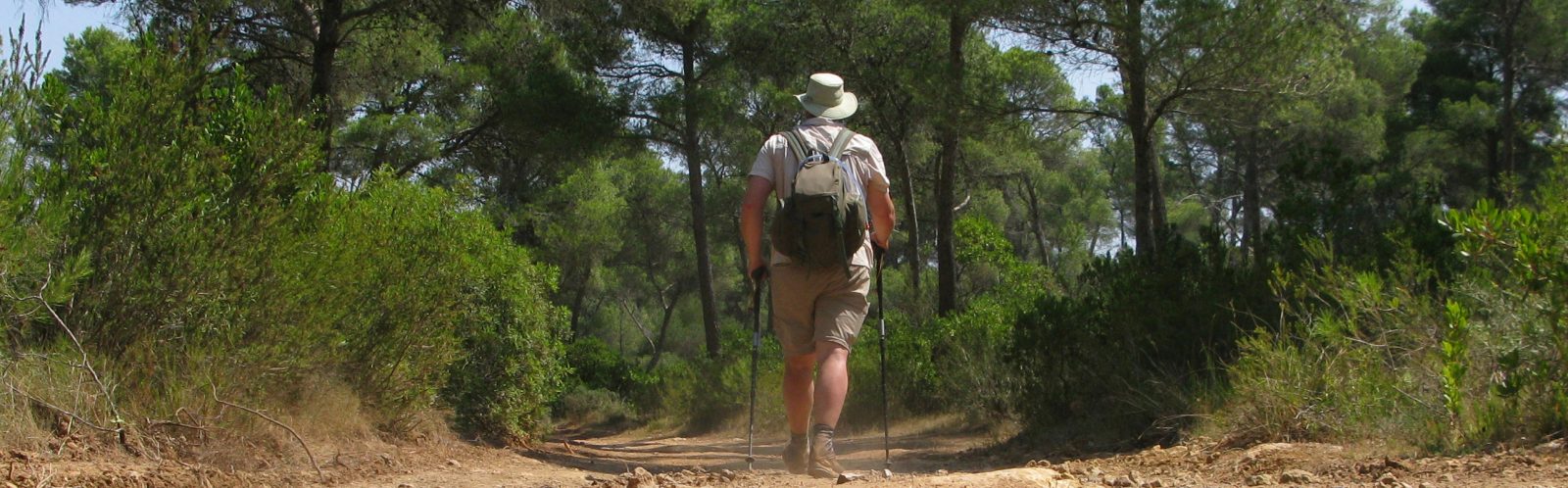
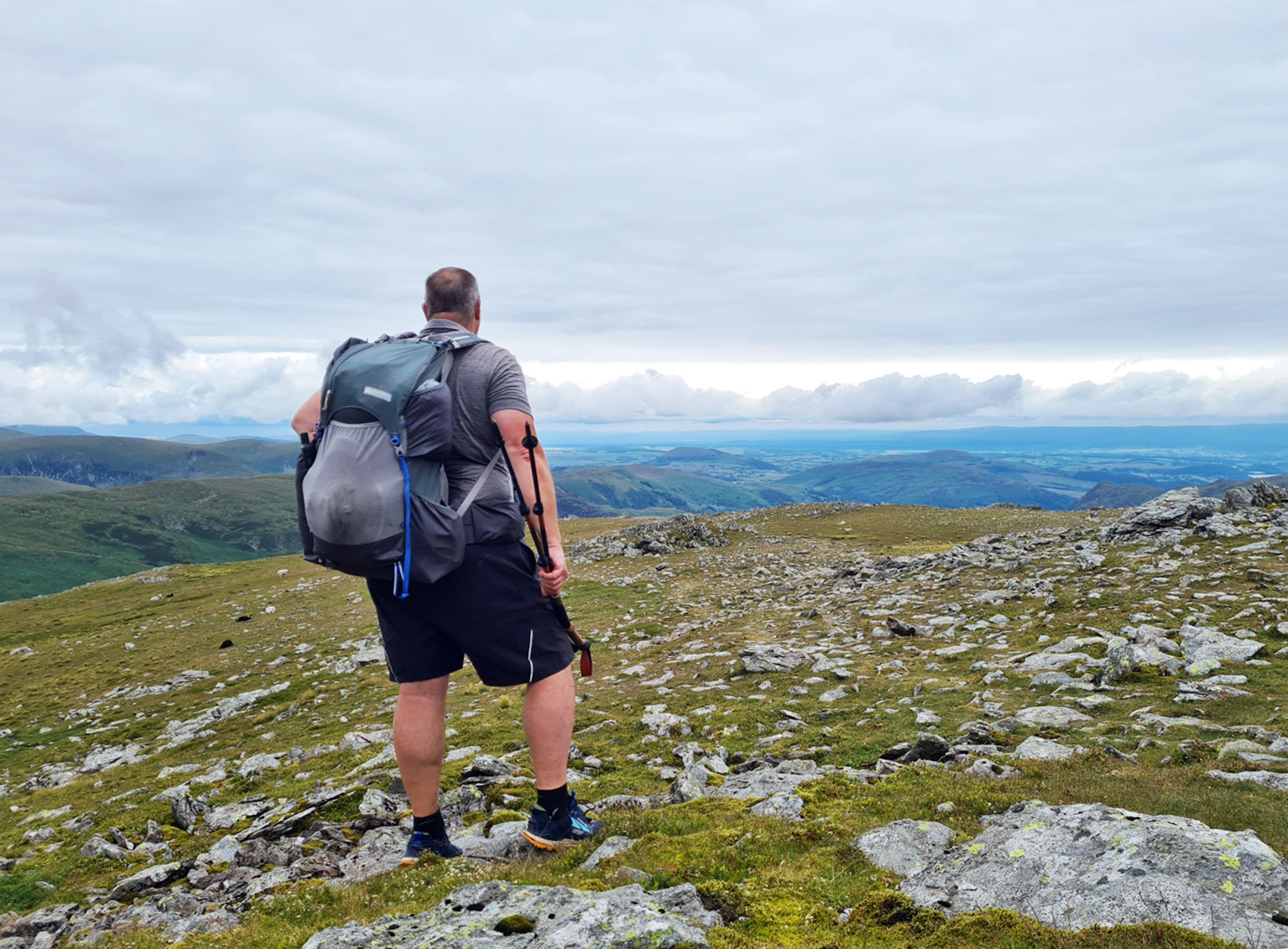
Three Points of the Compass takes a glance at the gear he carried on a recent walk across northern England on the Coast to Coast Path
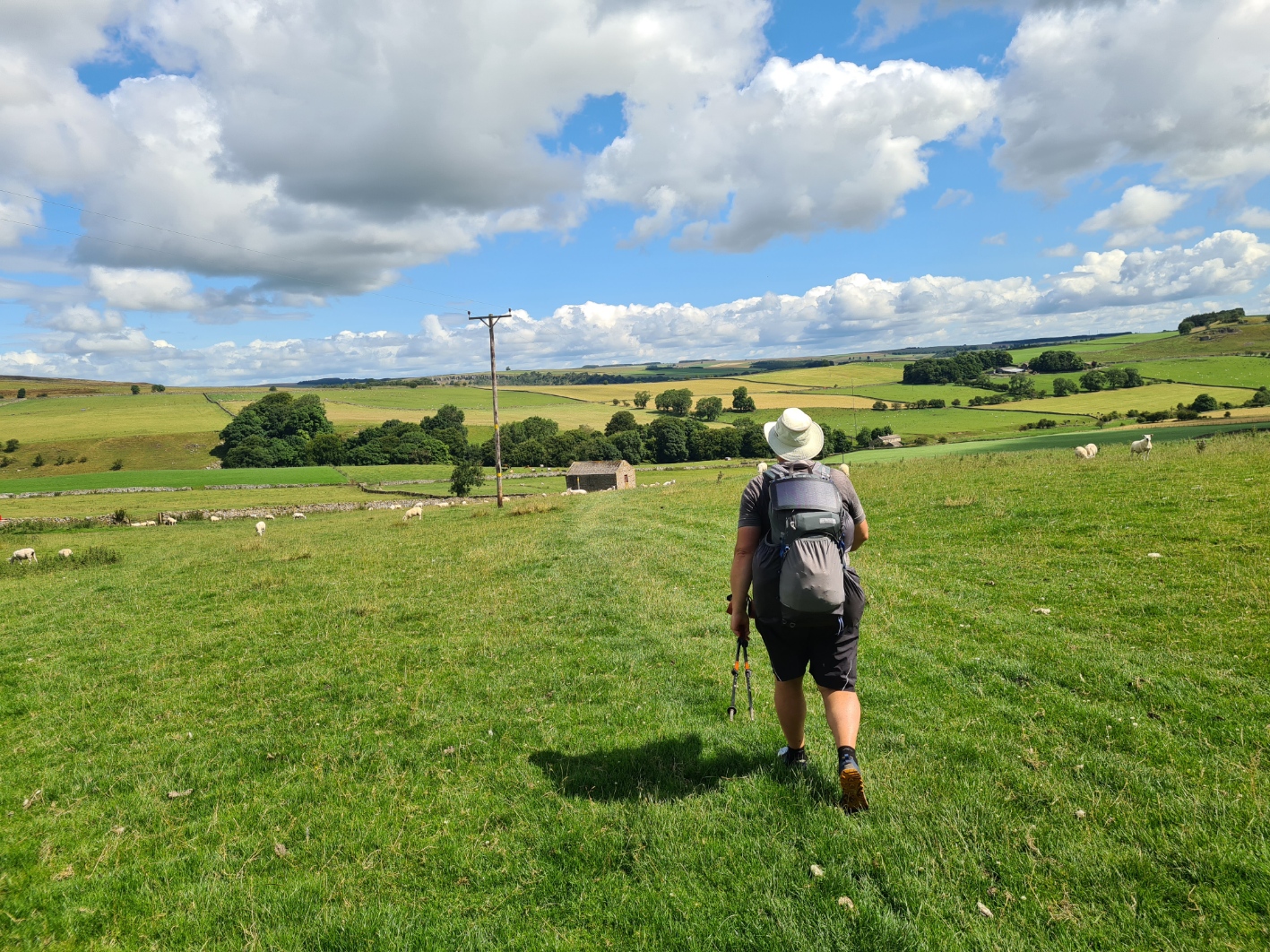
The Coast to Coast, or what has until recently been better known as Wainwright’s Coast to Coast, is the most popular long distance walking route in Britain. Anyone attempting it will cross England from the Irish Sea to the North Sea, covering almost two hundred miles in the process and crossing a quite wide range of terrain. Weather conditions will no doubt change, regardless of the time of year when walked. I walked it in July and weather ranged from hot to a couple to degrees above freezing on a couple of nights. I had bright sunshine, and mist and rainy days. Clothes and gear must be capable of keeping the user comfortable and safe. Lightweight is a plus, as there are climbs on most days. I camped each night, other than one night in an Inn around the mid-point. What follows is a brief glance at what I carried and wore. I am not going in to too much specifics as weights vary greatly according to size. Some items I took are now obsolete, and unobtainable. Replaced by newer models, sometimes better, sometimes not. Gear is and should be personal to each individual- reflecting their experience of using it, and what works for them. What works for me, isn’t for everyone. Footwear for example. I wear light trail runners, whereas others might swear by boots.
Hiking clothes:
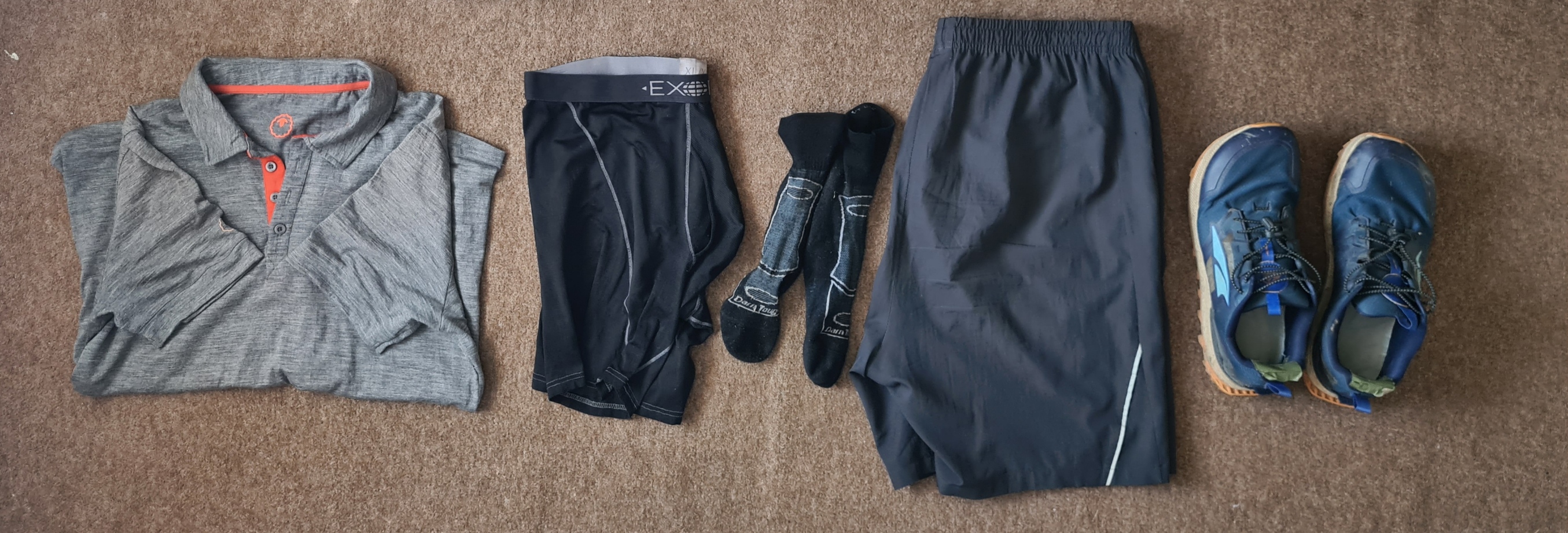
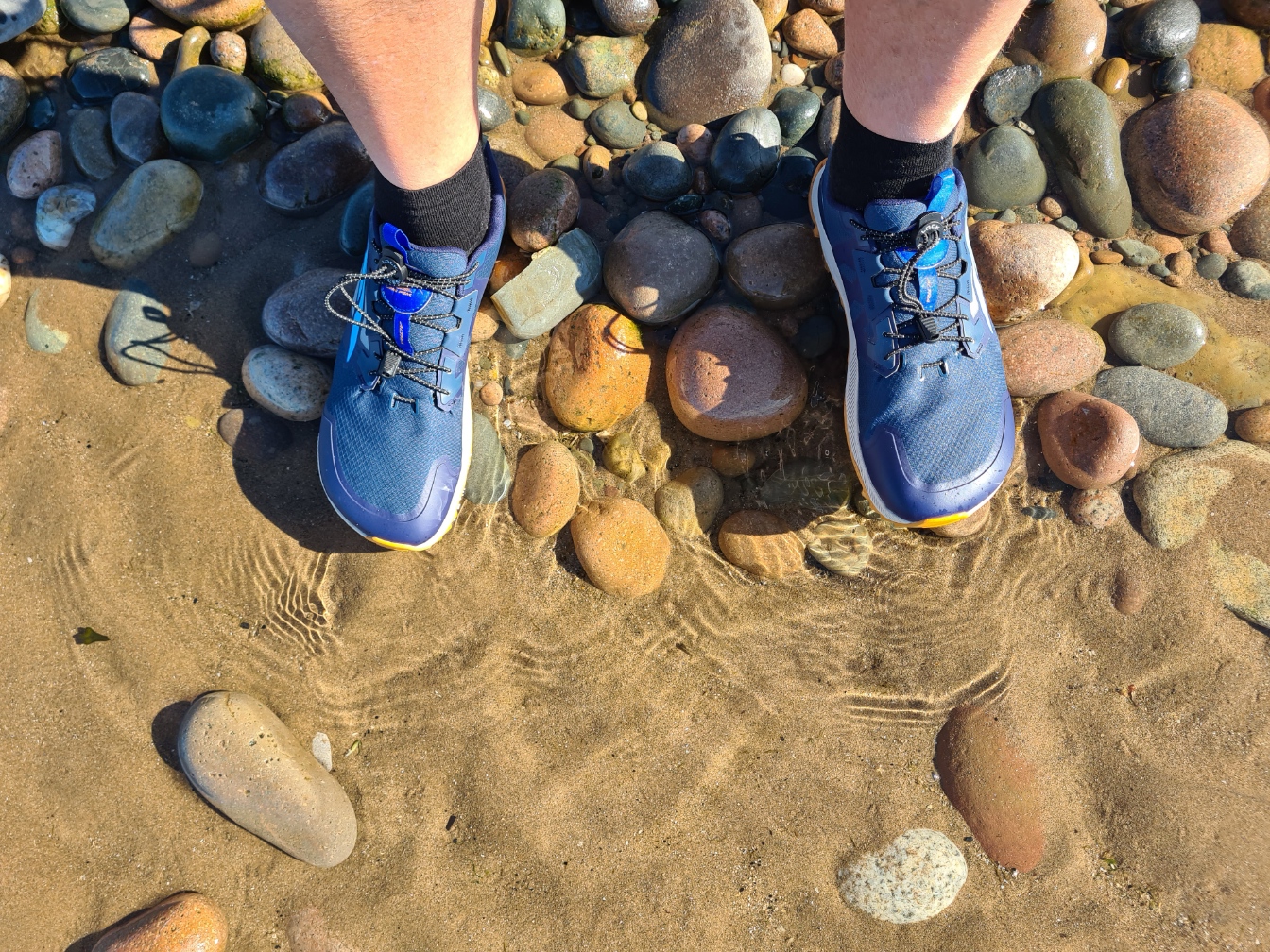
These were my standard clothes worn unless conditions are particularly cold or wet. A lightweight merino polo shirt, synthetic ExOfficio skiddies, that got a wash out in a shower or sink when I could, likewise my sole pair of merino wool walking socks. Shorts were just some cheap synthetic pair off Amazon. The all important footwear was a pair of zero drop Altra Lone Peak 7’s, with standard tie laces replaced by elastic lock laces. This was the only footwear I carried.
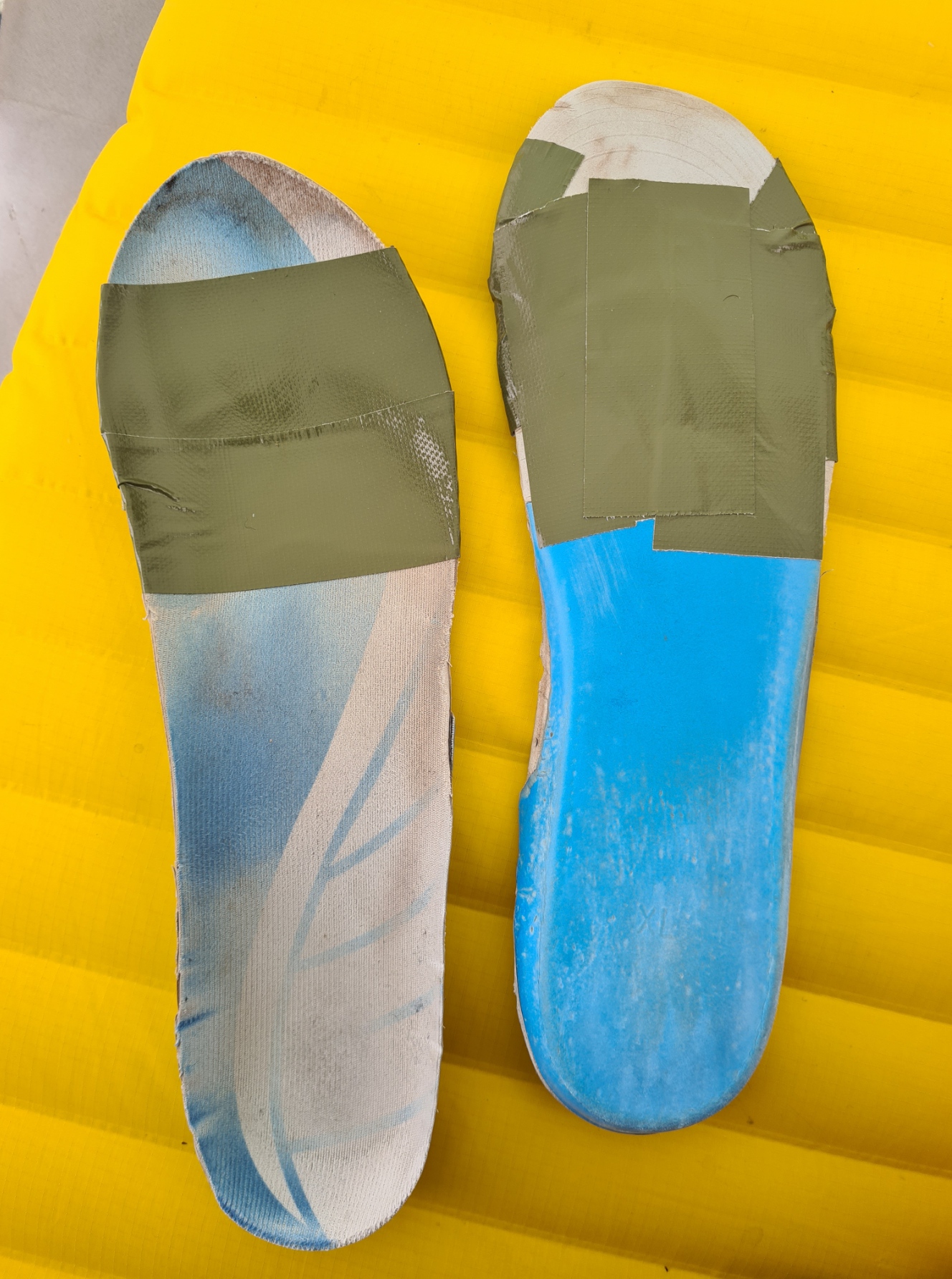
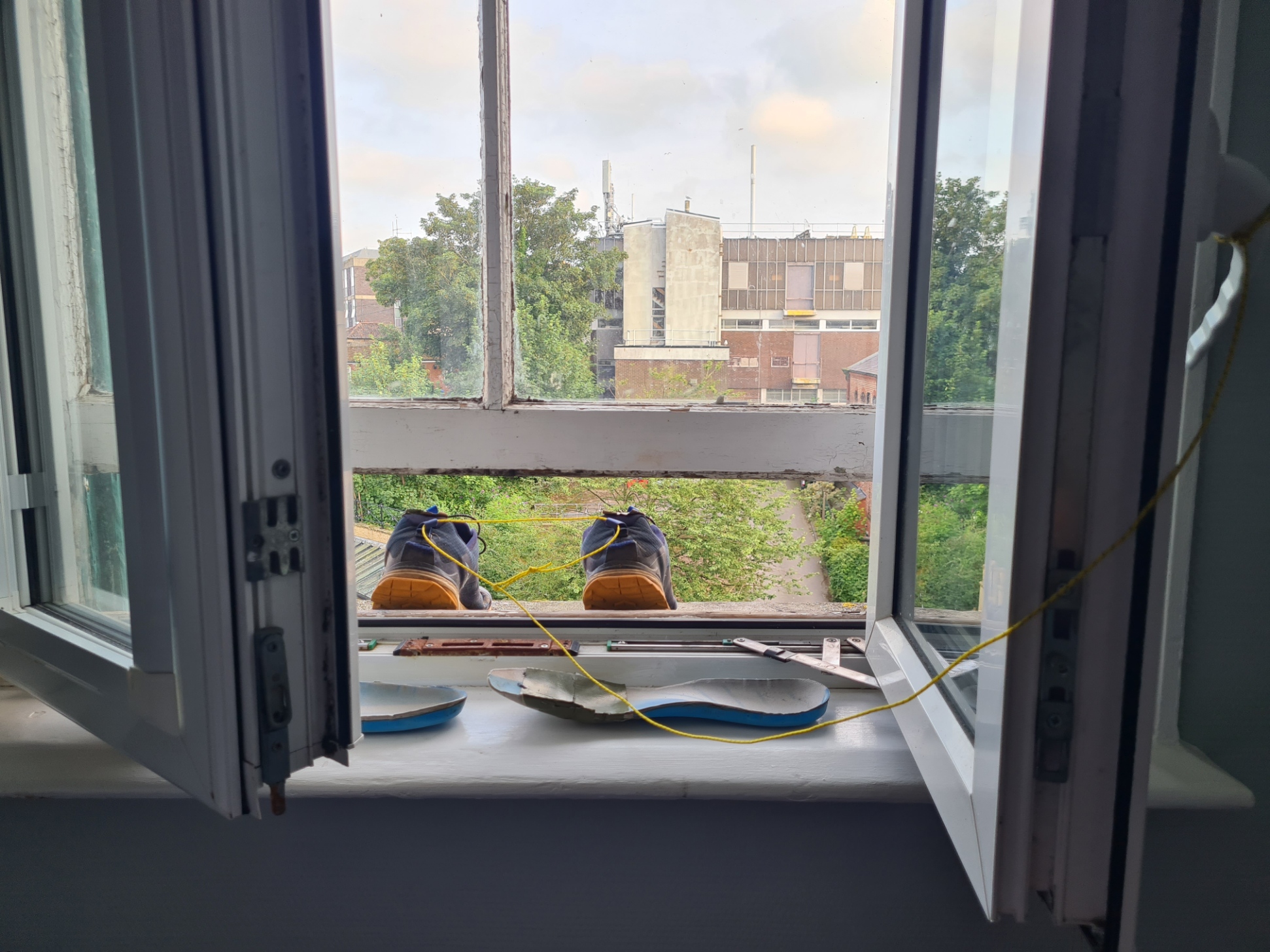
I made a mistake with my choice of insole, though I wasn’t to know it. I have been using a pair of Arch Angel insoles, that I purchased at an outdoor show, on all of my hikes for the past year or so. They have been excellent, light, supportive, don’t soak up water and don’t smell as much as stock insoles. However I had obviously reached the end of their life, which is around the six hundred mile mark. I found on steeper descents that their integrity had lapsed, they buckled under the foot, causing a ripple of material under the toes and I could see there was a chance of either blistering or soreness. This was easily remedied. I carry a metre of so of Duct tape wrapped around the shaft of one or both of my hiking poles and I put a couple of turns around the front part of each insole, restoring stiffness and removing the issue. This did me for the duration of the trail and they got chucked at the end of it. It wasn’t a fault of the insoles, I had just pushed them beyond their practical lifespan.
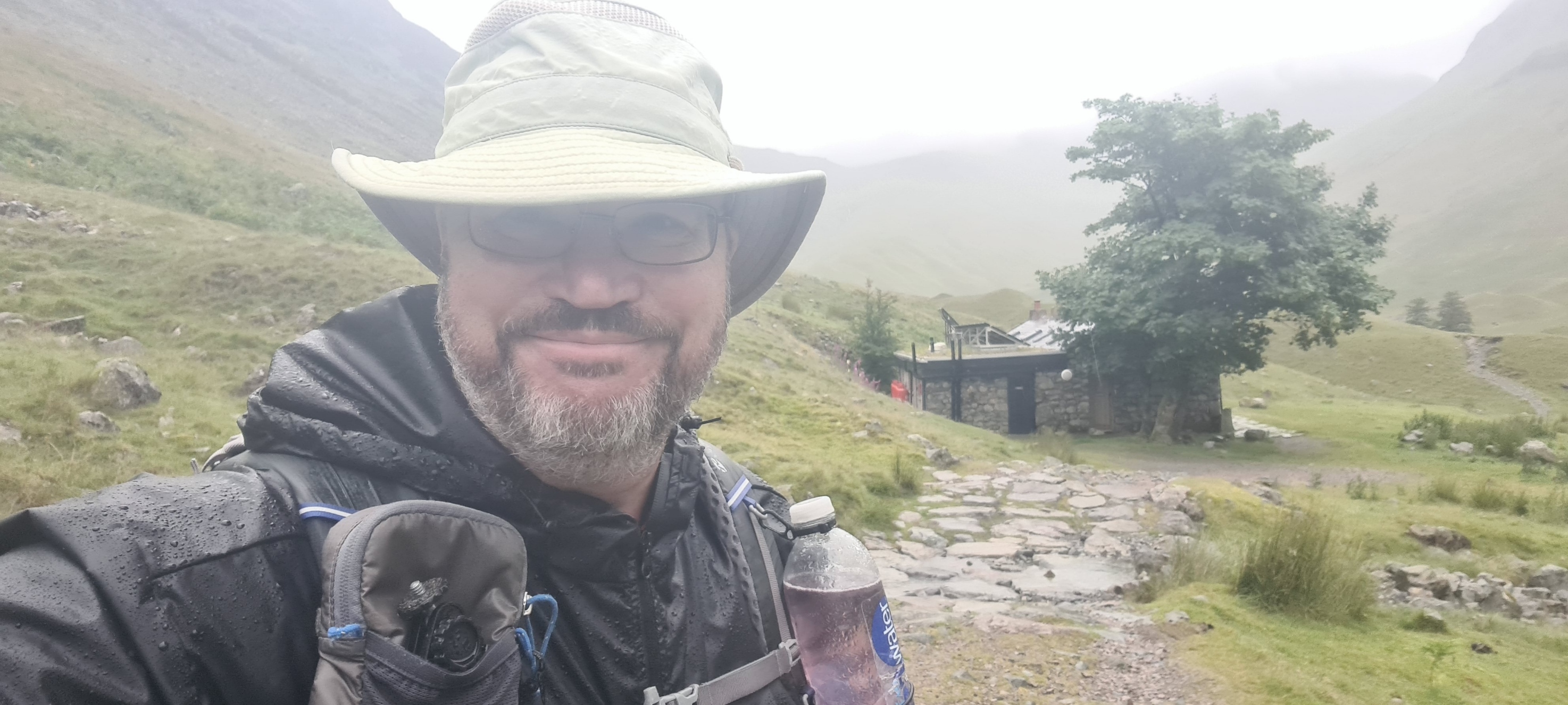
One of my most adaptable items of walking gear is my wide brim Tilley hat. This provides both protection from the sun and keeps rain off my glasses. The brim can be a bit floppy in strong winds but I usually persist.
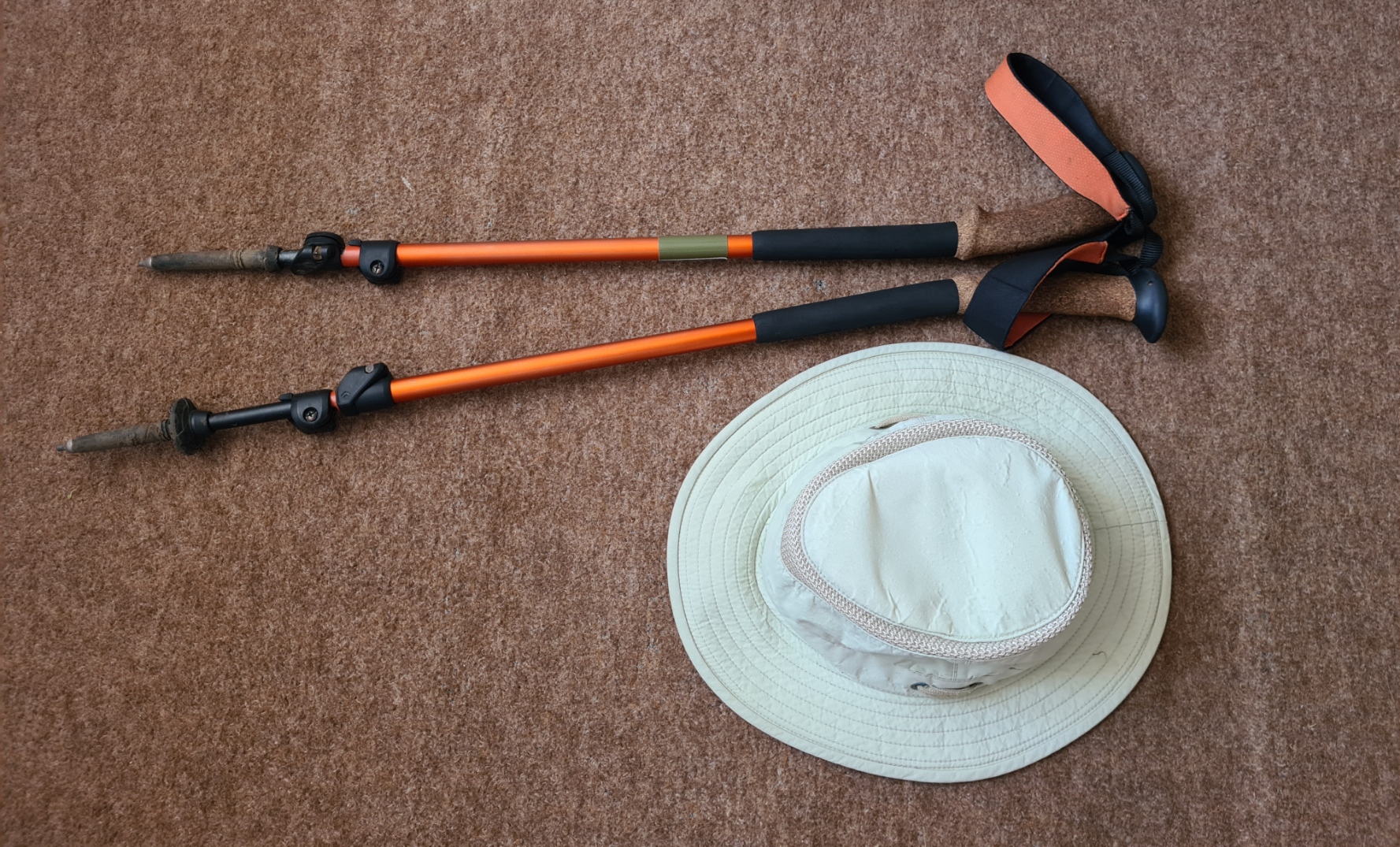
My walking poles do double duty. The Black Diamond Trail Ergo Cork not only enable these old knees to carry on hiking, but also support my tent each night.
Pack:
I took an old favourite on this trail. This was my Gossamer Gear Mariposa. Including all pockets this has around 60lt capacity which I found too much for what I was carrying, including food carry. The Mariposa has a (removable) frame, and I could easily have got away with my lighter frameless Gossamer Gear G4-20 as my carried weight, minus gas, water and food was around 8.5kg. It was also a bit of a last hurrah for this old favourite pack (the second Mariposa I have purchased) before I move over to my lovely new custom Mo (now renamed the Prospector) from Atom Packs. All contents inside the pack are within a very large (and expensive) roll top DCF dry bag. I have used a cheap and cheerful rubble sack or nyloflume bag in the past, and those work fine. However the DCF alternative is far more durable. The Mariposa is a very adaptable pack that allows me to carry much of my gear outside, such as the tent, sleeping pad, a 3mm closed cell foam pad, and loads of ‘stuff’ in the stretchy outside pocket.
- Gear talk: A new purchase- The Gossamer Gear Mariposa
- Gear talk: Gossamer Gear Sit Pads
- Gear talk: my custom Mo, from Atom Packs
I like to wear a chest pack. I prefer to wear this low, around my stomach. The one I took on the Coast to Coast is from ZPacks, and was worn out before I even started the trail. I purchased my first one of these back in 2017 and used it for thousands of miles. It eventually lost any semblance of waterproofness and I replaced it with another. That also eventually wore out, not only losing waterproofness but the zip also began to fail, so I carried my first one on the Coast to Coast as while it leaked, the zip still worked. I have since replaced both with an OMM Chest Pod, that hadn’t arrived in time for this walk.
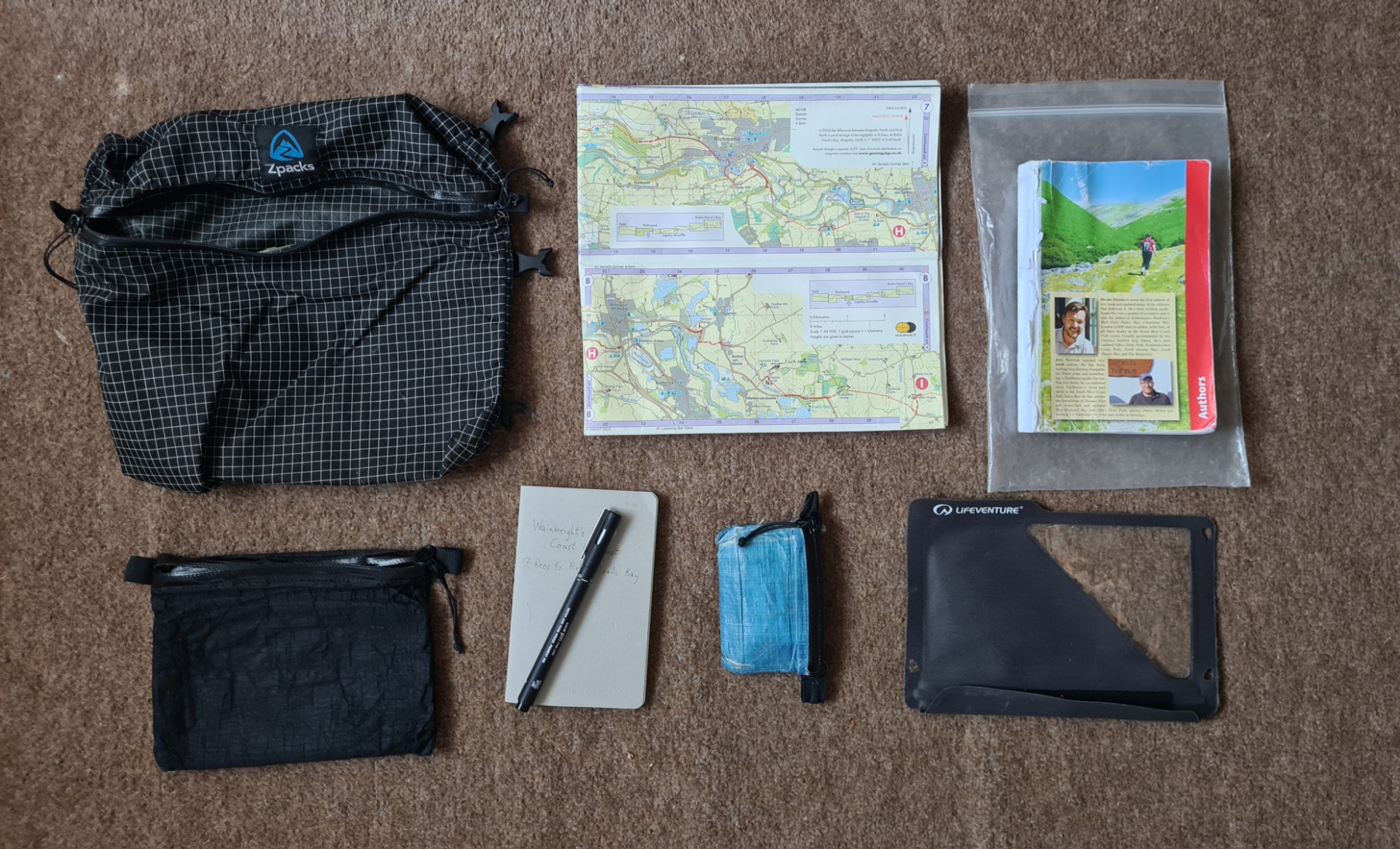
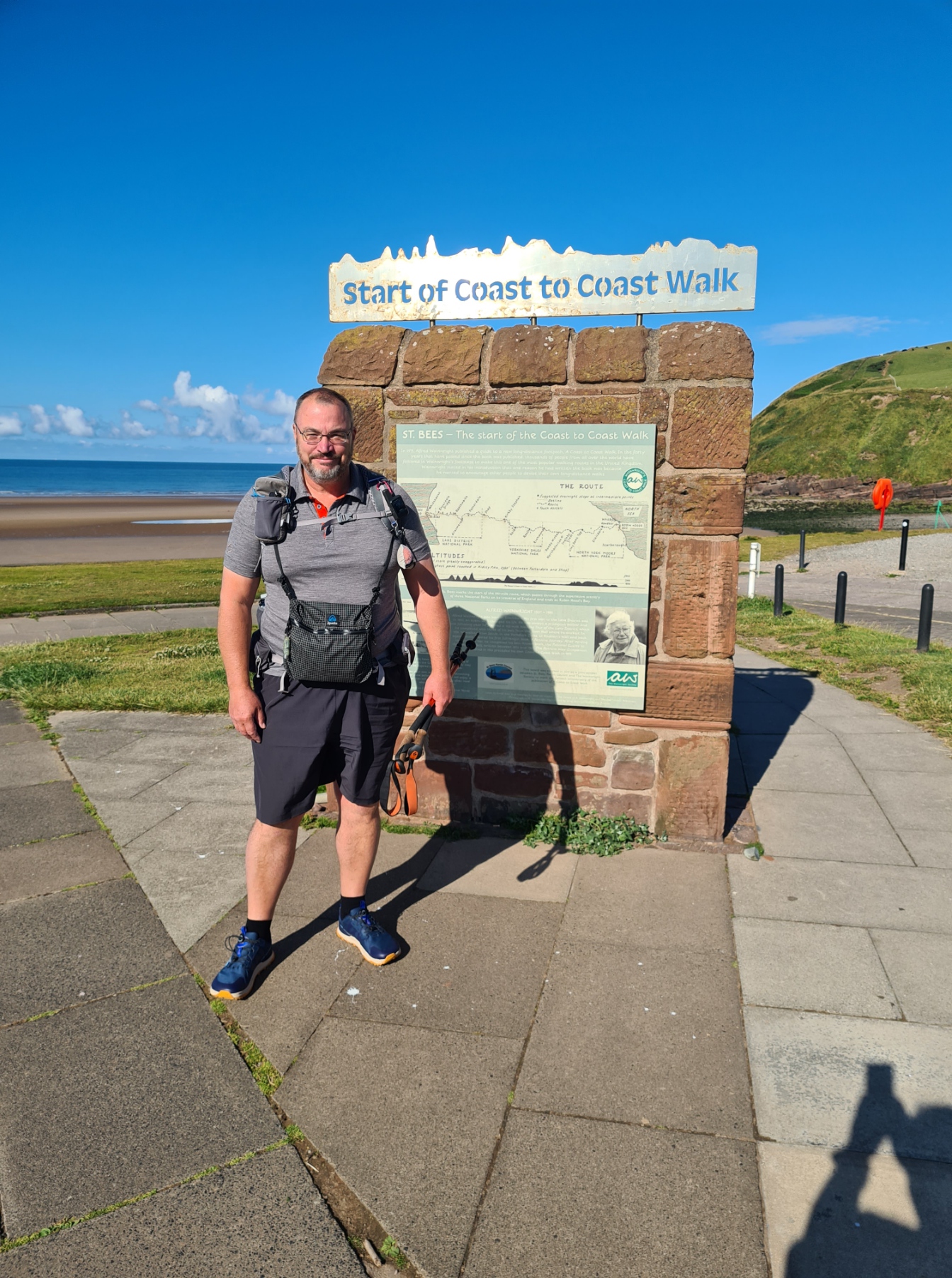
The contents of my chest pack would vary but usually consisted of map, guide book, waterproof phone case, journal/pen and possibly a small wallet with some cash in it.
Contents of pack hipbelt pockets:
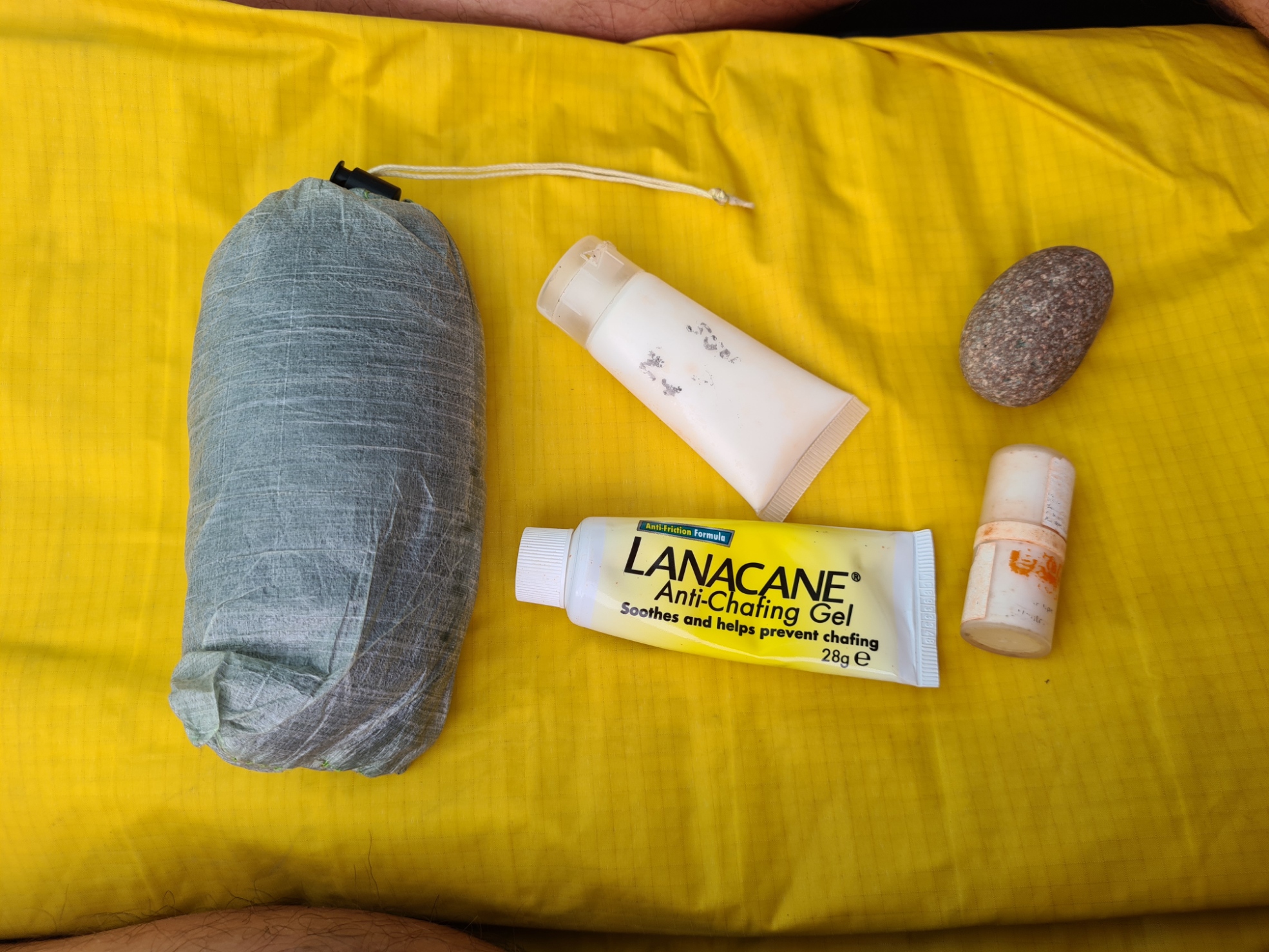
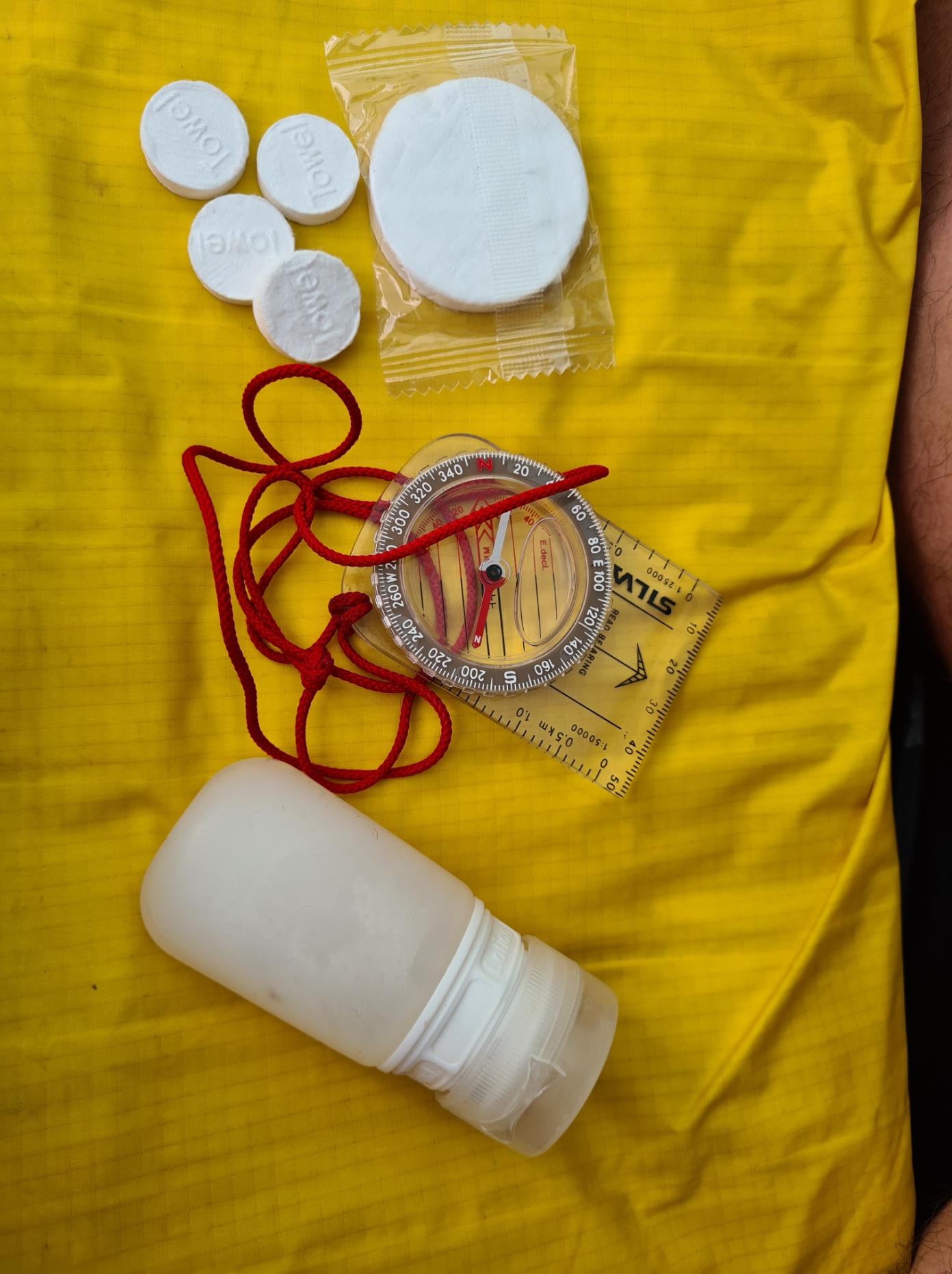
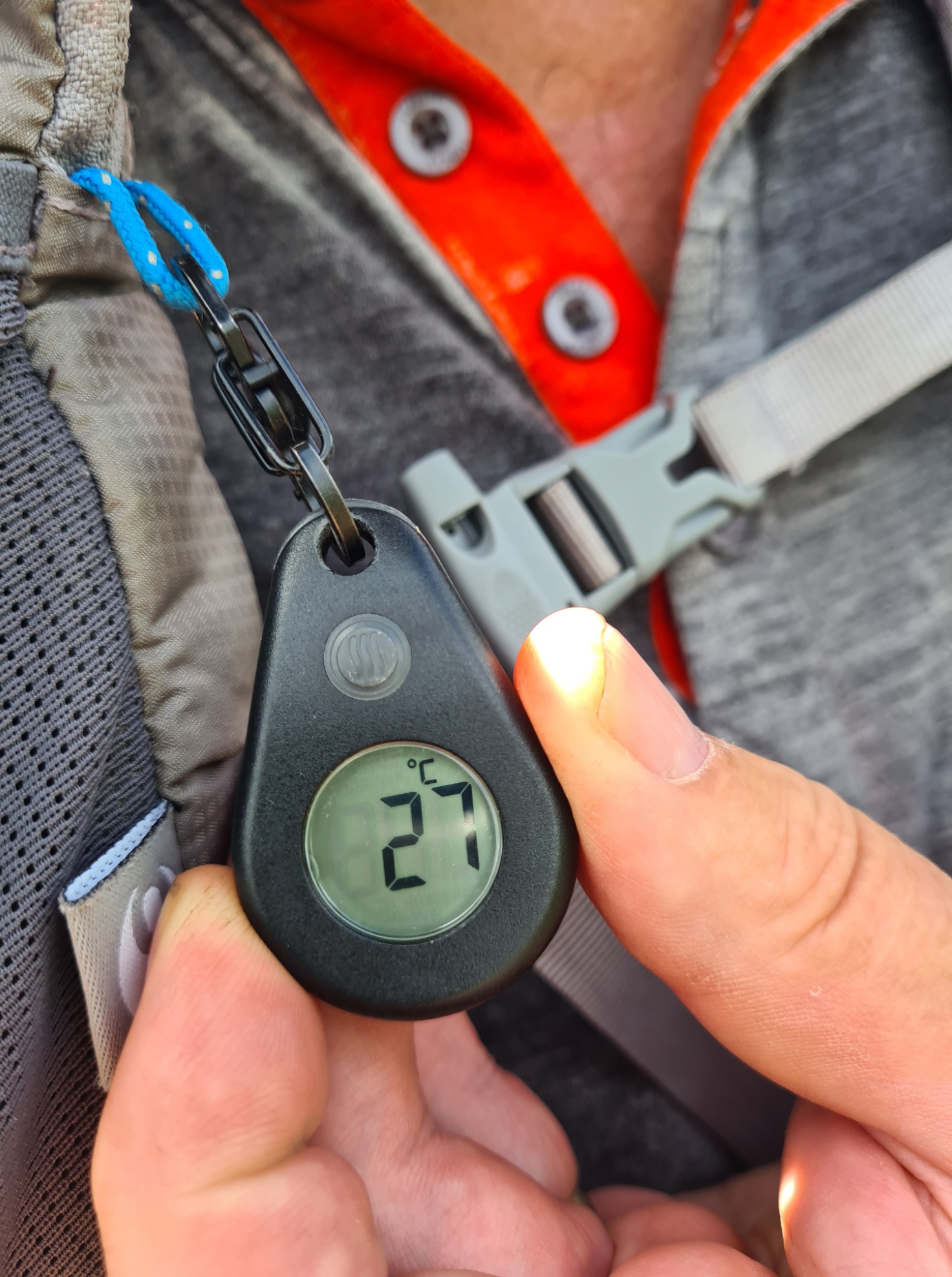
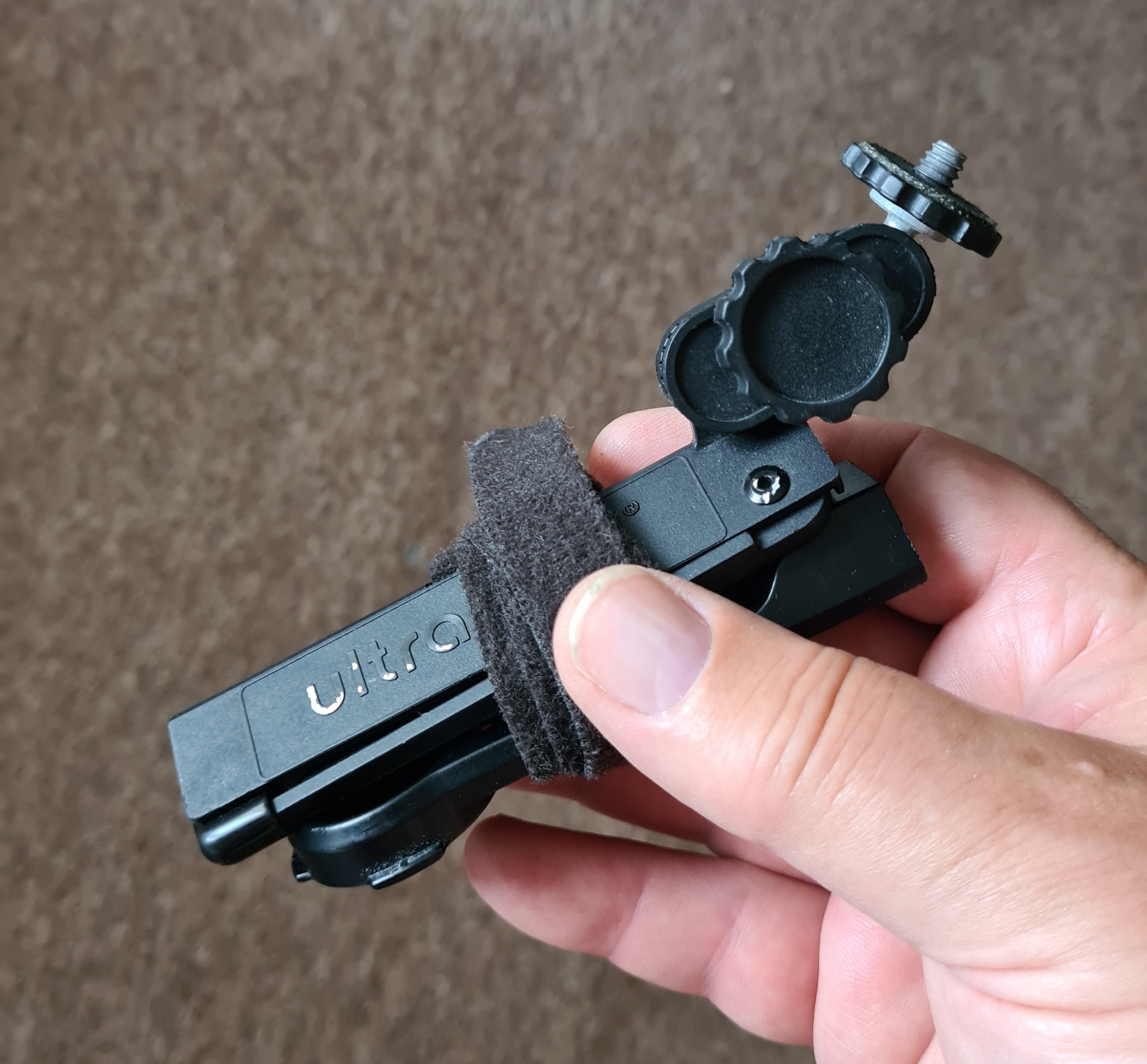
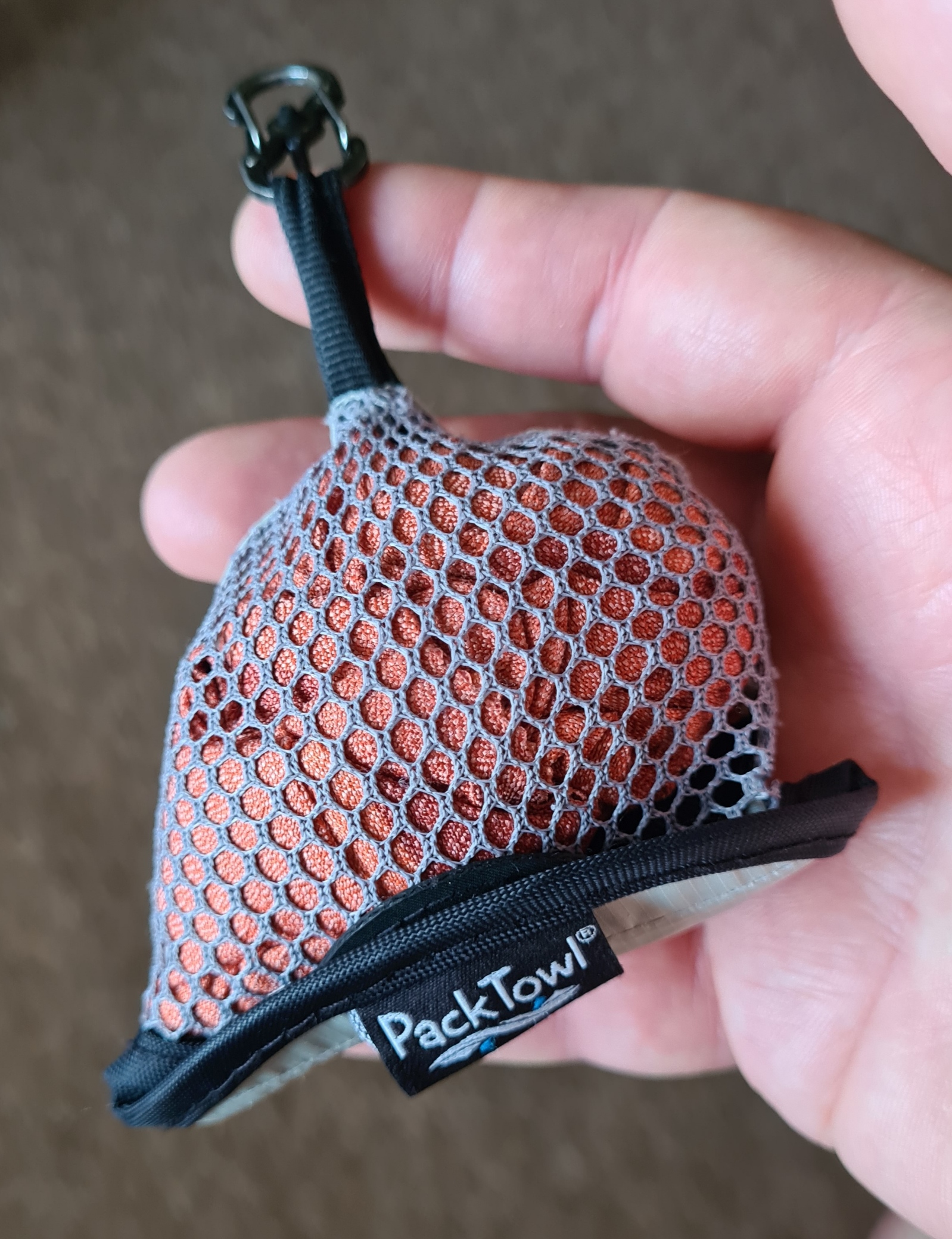
I had an assortment of ‘stuff’ in my hip belt pockets, all things I wanted easy access to, other than my pebble carried across northern England from the Irish Sea to the North Sea. The GoToob has a couple of drops of Dr. Bronners added in the morning, is topped up with water and used to clean hands during the day prior to eating.
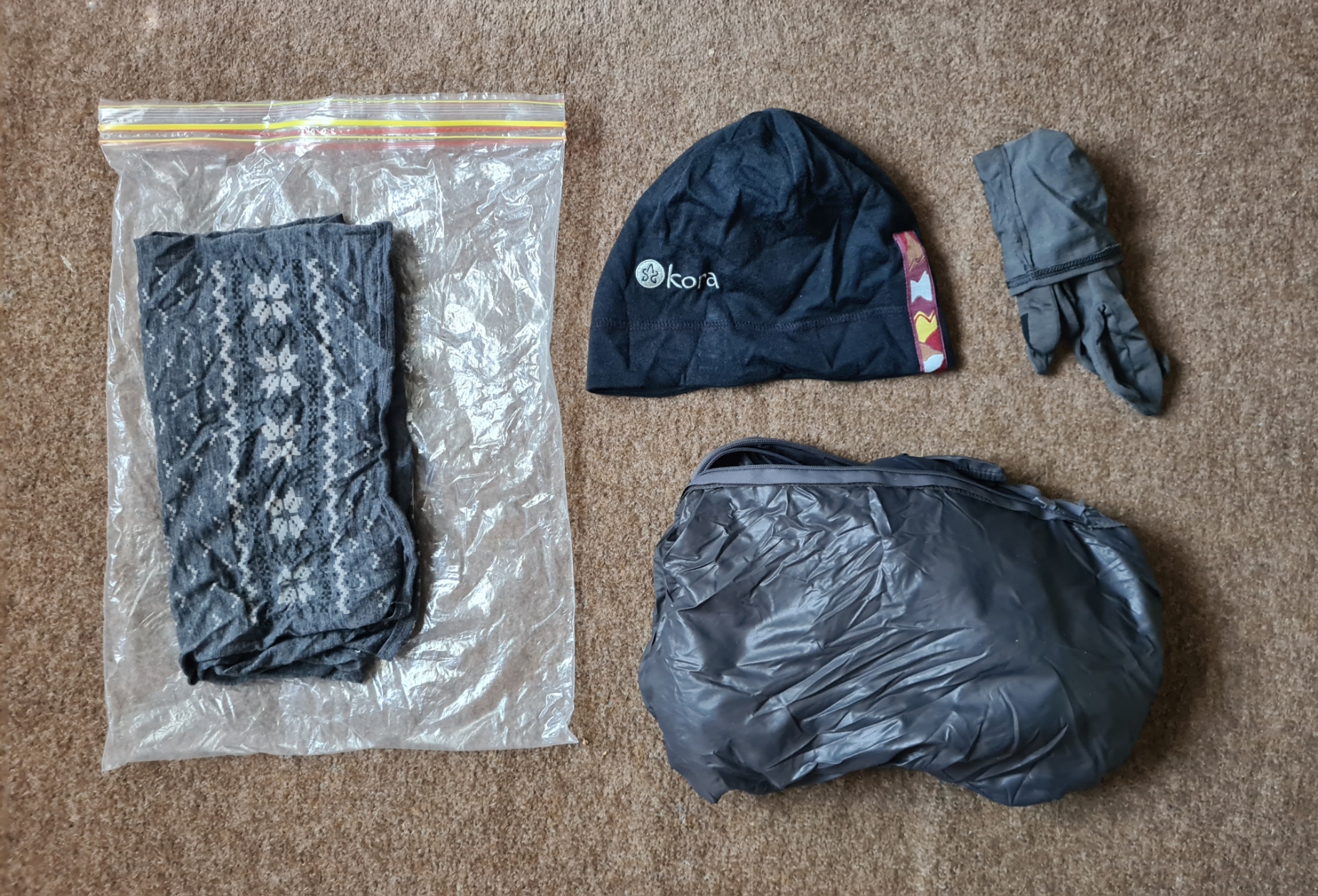
For when it got cooler, I carried some simple insulation layers- puffy, yak wool hat, merino Buff neck gaiter and some thin merino gloves. I also had an old Montane wind jacket for first thing in the morning when it can be a bit chilly.
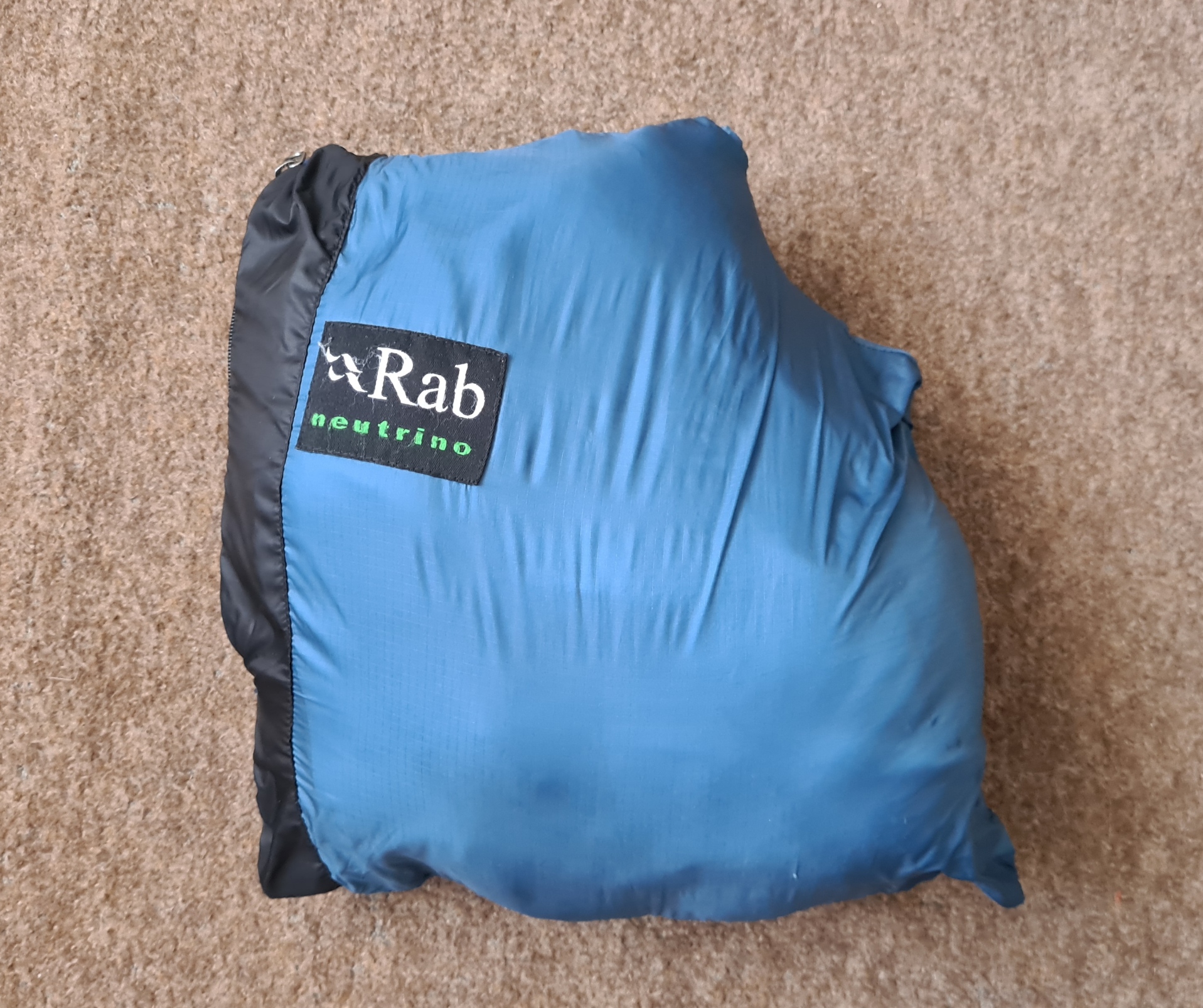
There was no need to get carried away with these. Hiking generates a fair bit of heat but it is important not to get cold and wet.
I carry a puffy jacket on every long distance hike I do, regardless of season. Temperatures can often drop at night, even in summer. Body temperature can also drop when halting and it is easy to get chilled when moving into the tent, particularly if a bit sweaty. I could have carried a lighter weight down puffy, and might have got away with it, but I was expecting wet weather on this crossing, so took a synthetic puffy instead. This was my old Rab Generator jacket with Pertex Quantum inner and outer linings and Primaloft One filling. It may be old but is still fairly lightweight, still works and demonstrates there is no need to automatically upgrade to the latest greatest item of gear if older stuff still works.
Contents of front pocket on pack:
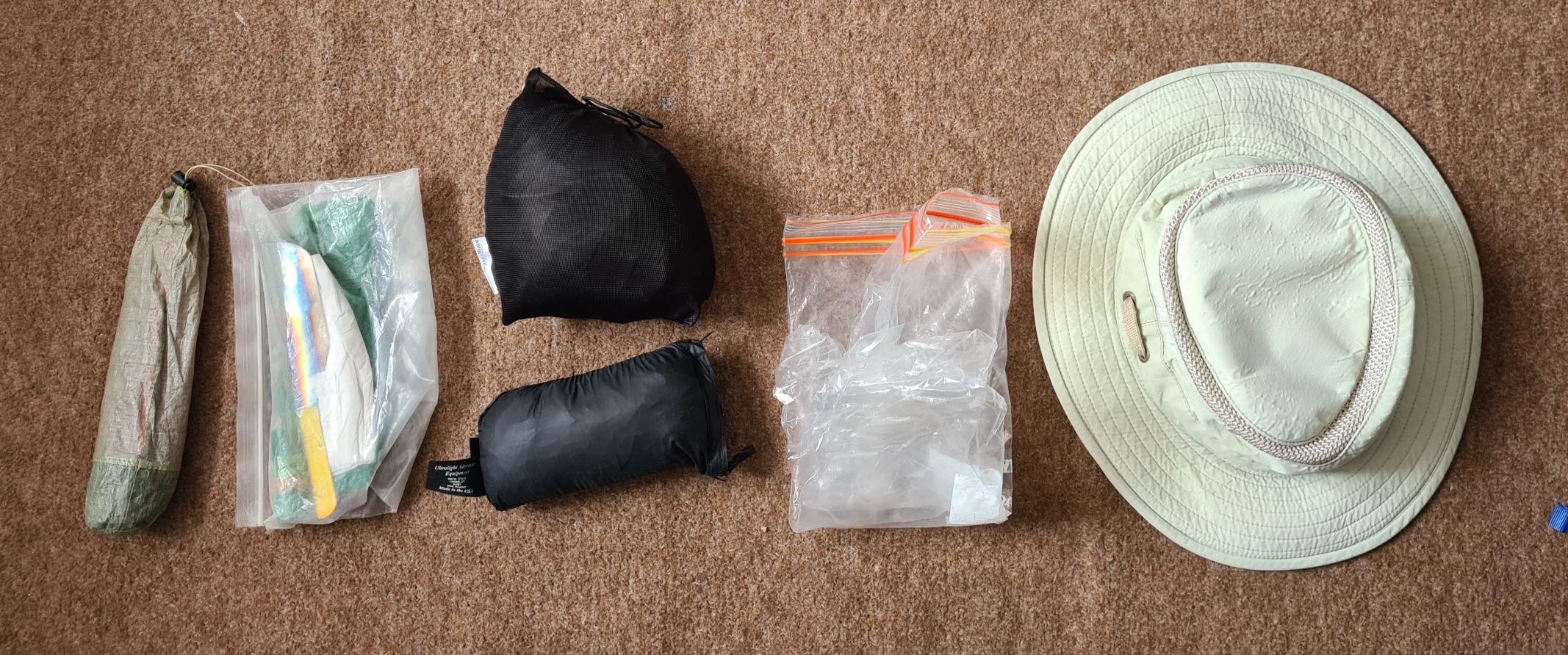
The stretchy front pocket on the Mariposa is where things get stuffed that I might want easy access to. These were usually tent pegs/stakes, poop kit, waterproof jacket and rain skirt, rubbish bag, and wide brim hat
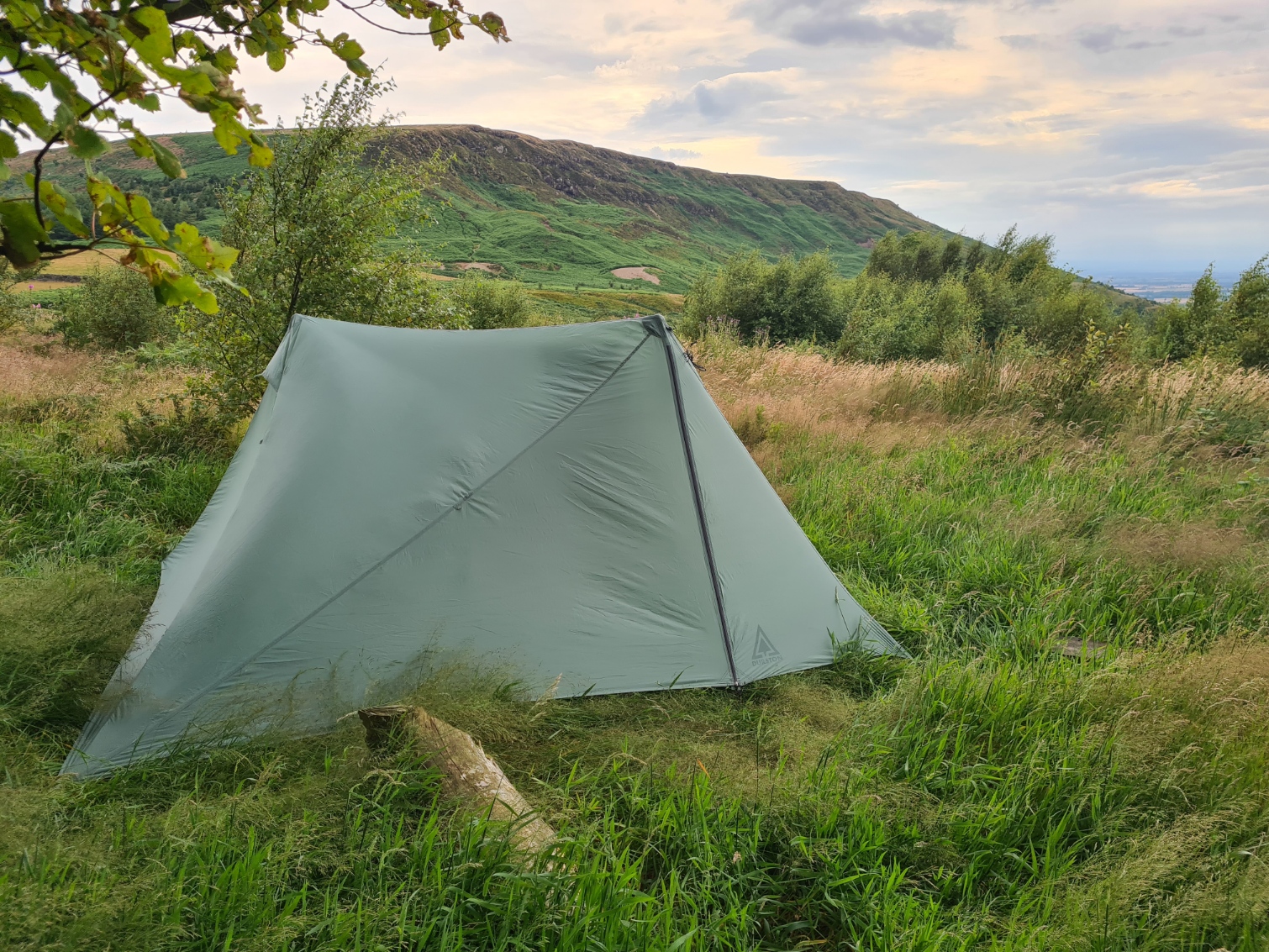
Shelter:
I took my Durston Gear X-Mid two-person Solid tent on this hike. Some backpackers go for tiny one-person shelters. Why I don’t know. I hate crawling inside those coffin sized affairs. It isn’t as though there is much weight advantage these days as modern materials and designs means that good two-persons shelters weigh not-a-lot. My Durston has a mostly ‘solid’ inner, that keeps draughts away better than the mesh alternatives. This is a trekking pole tent so I don’t need to carry tent poles and instead use my two walking poles. This silicone coated woven fabric tent is heavier than the DCF shelters I often use but is still lightweight. The outer weighs 642g and inner 454g. The pegs this comes with are not up to dealing with the varied ground conditions encountered on a Coast to Coast crossing, so were swapped out for a selection of MSR Groundhogs and Mini Groundhogs, plus a couple of Ti pins for hammering into rocky/hard ground and two wide titanium V stakes for softer terrain. I also carried a couple of spare guys in case I wanted to nail the shelter down a bit better in windier conditions.
Sleeping:
I have two Katabatic quilts and took my lighter weight one, the Palisade, on this trail. This was cosy warm and I was never cold. I use dedicated sleep clothes to keep body oils, salts and grime away from my quilt, these were very light and thin Rohan Ultra silver long sleeve top and Rohan Ultra silver bottoms, plus synthetic OMM Alpha sleep socks. My merino buff is also slipped over my makeshift pillow of a night to make it more comfortable to the face.
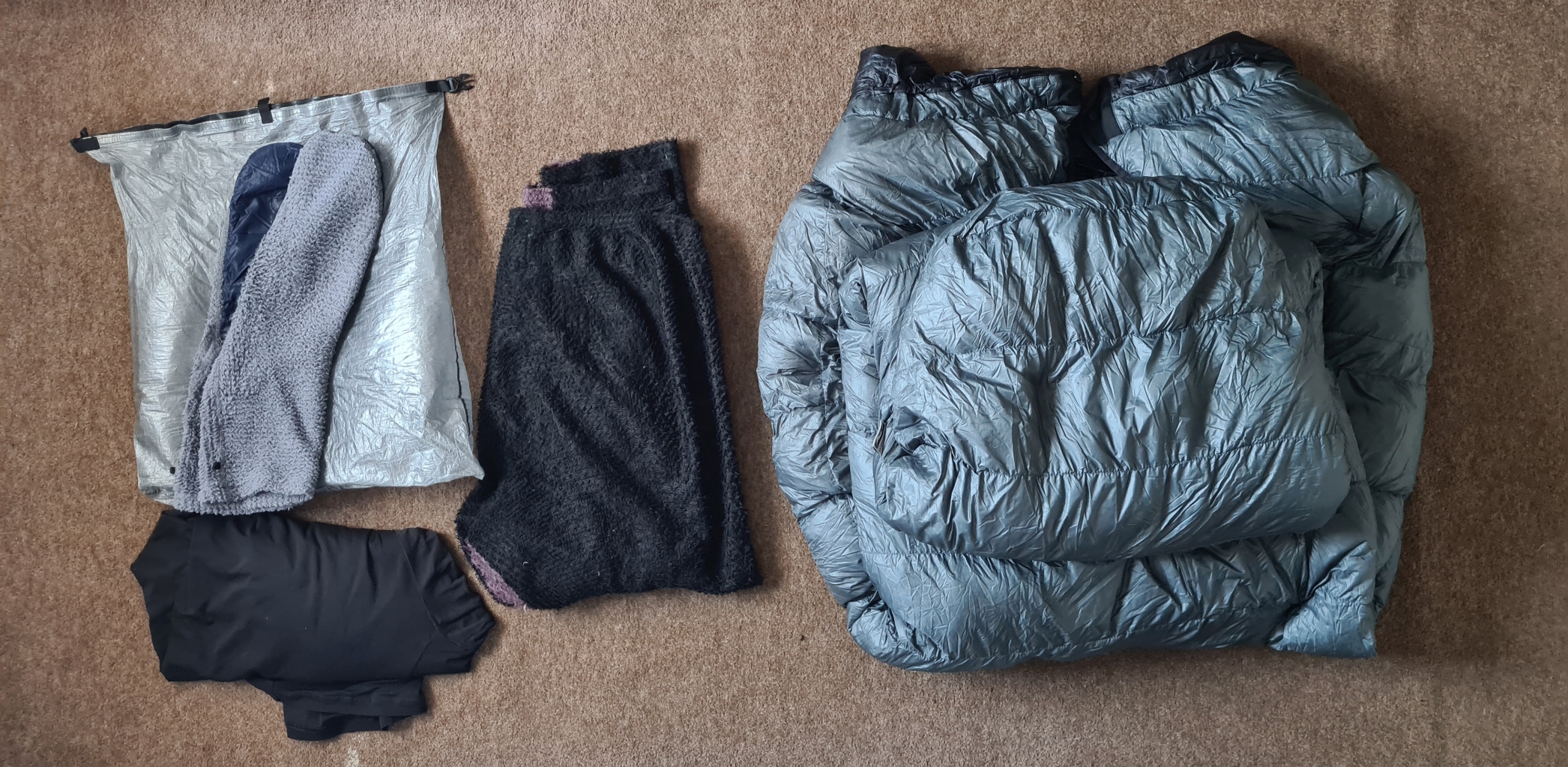
This was all kept in a DCF roll top dry bag but I have become frustrated with not being able to compress this sufficiently. Since finishing this trail, my quilt and night clothes now get packed into a Sea to Summit Evac Ultra-lightweight 13lt. roll top closure bag with event base.
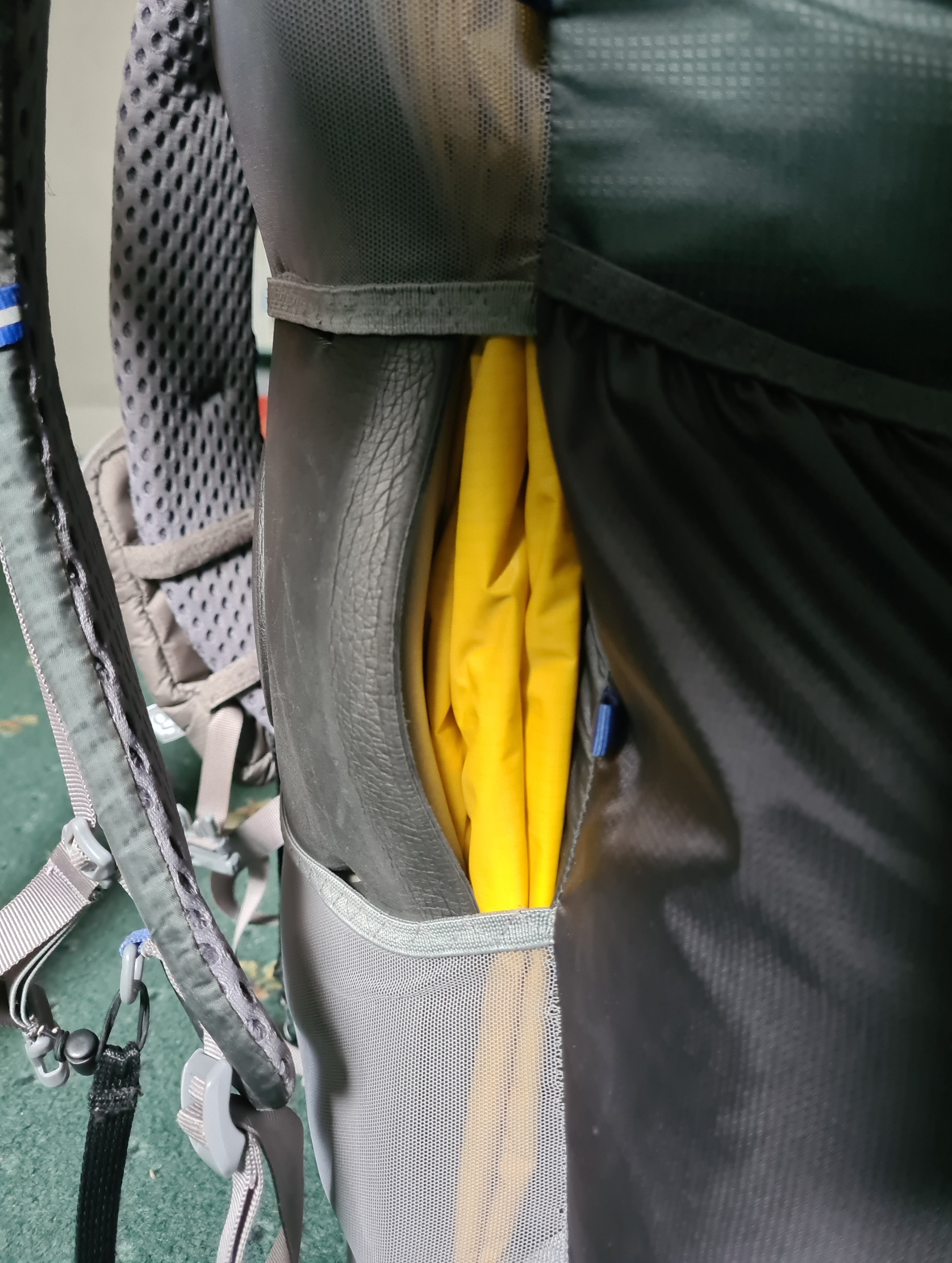
I used a full length Thermarest Xlite NXT sleeping pad. I won’t show this here, we all know what a Thermarest looks like. Instead, I show how I carried it, sandwiched between a foam sit mat, short piece of 3mm closed cell Evazote and the Mariposa pack. This frees up a lot of space inside the pack, not that I really required it on this particular hike. The short length of 3mm foam provides a tad more warmth (0.5R) and more importantly, helps stop a mat sliding around on a tent floor and provides a little protection from punctures from below.
I carried a little pump for blowing up my pad. While everyone raves about the FlexTail Zero, I use the far lighter Pad-Pal v5.1. Less than ten grams and runs off my powerbank. This model has since been superseded by a v5.2, that I don’t have.
Spare clothes:
I carried a few spare clothes with me. While this is an area where a great deal of needless bulk and weight can be either added or excluded from a pack, the Coast to Coast means that you are frequently meeting the general non-hiking public, especially when eating in pubs and cafes etc en route. Just to feel comfortable and not too gross, I carried a full set of clothes that were never worn for hiking. Reserved instead for travelling to/from trailheads, and evenings in a pub etc.
These were a pair of Patagonia Terrebone Joggers, a thin and light popper closure short sleeve shirt from Rohan, another pair of synthetic underwear and a single pair of spare merino socks. Though usually of an evening I would have my dry, cleaned, foot-balmed feet, inside a pair of waterproof Sealskinz socks, physically seperated from my grotty and often wet Altra trail shoes.
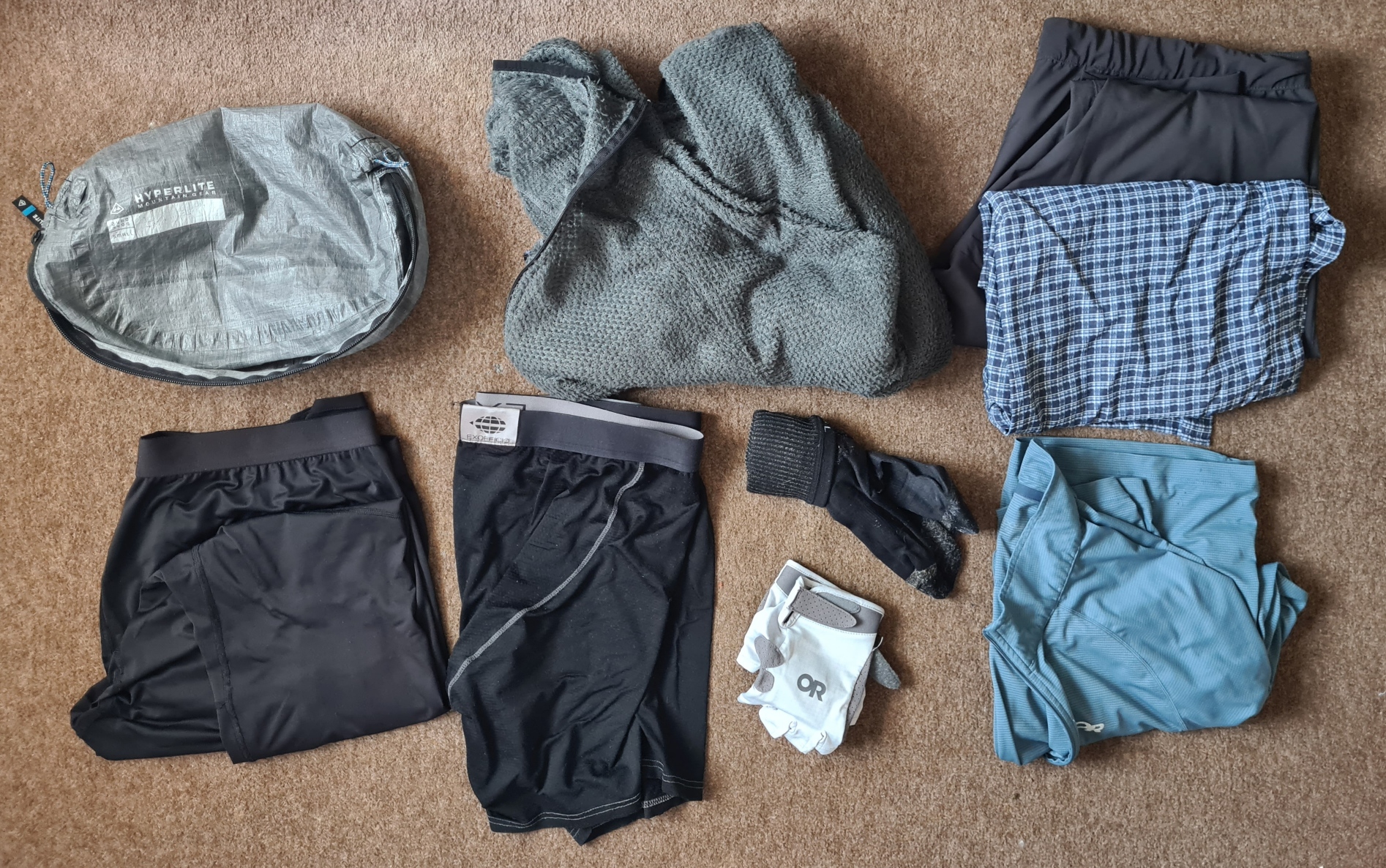
I had a couple of items of clothes that might be worn either during the day when hiking, or in the evening. This was a synthetic long sleeve OR shirt, in case of cooler weather or protection from sun (never worn on this trip), also a pair of Arc’teryx Phase SL bottoms to wear under my shorts while hiking if it was cold. These also remained unworn and unused. What was used was a pair of fingerless OR sungloves, and what is fast becoming a favourite item of ‘gear’, an Alpha Direct quarter zip hoody from Senchi Designs. This was often thrown on in the tent in the evening, or worn to the pub.
Wet weather gear:
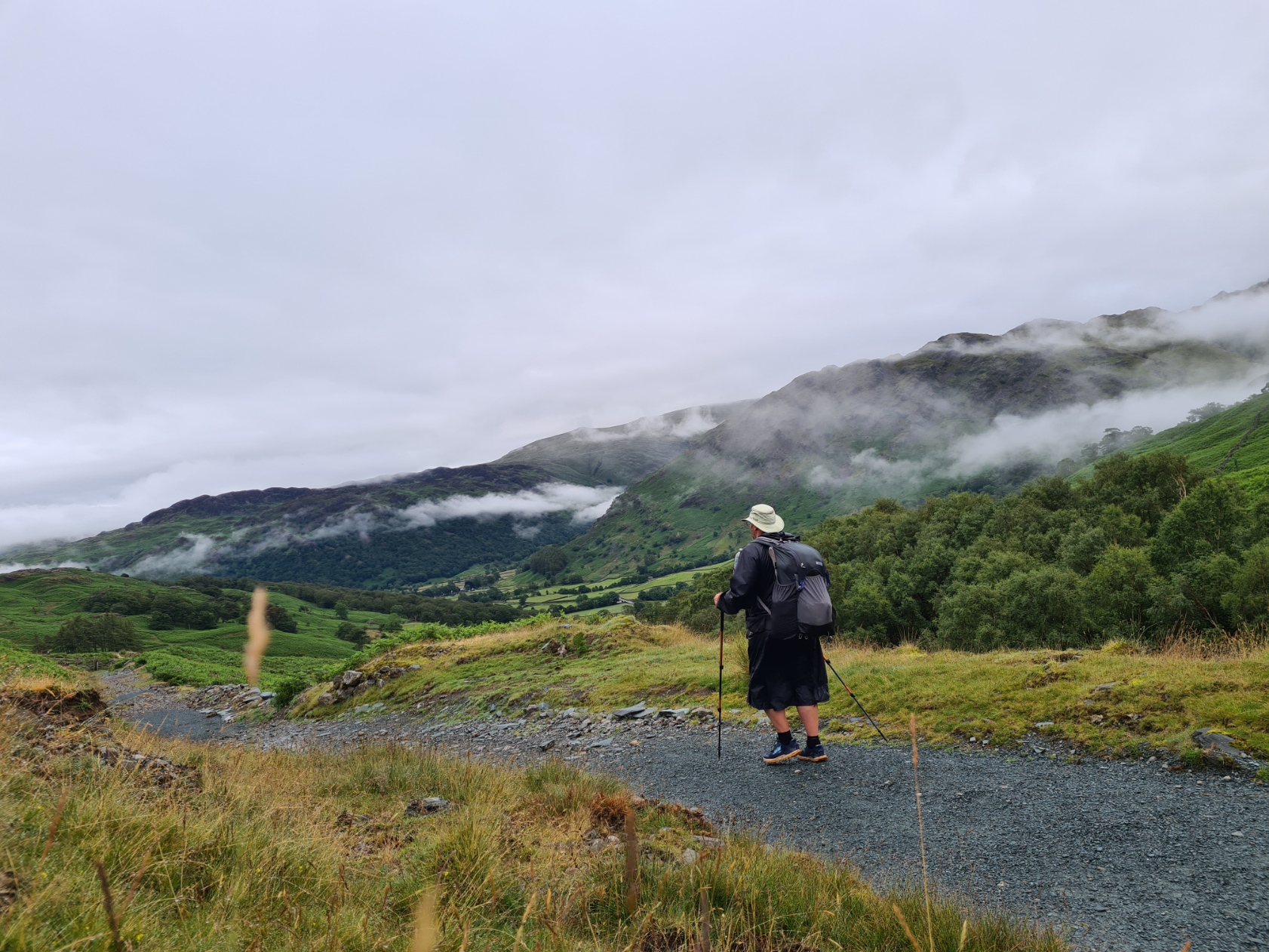
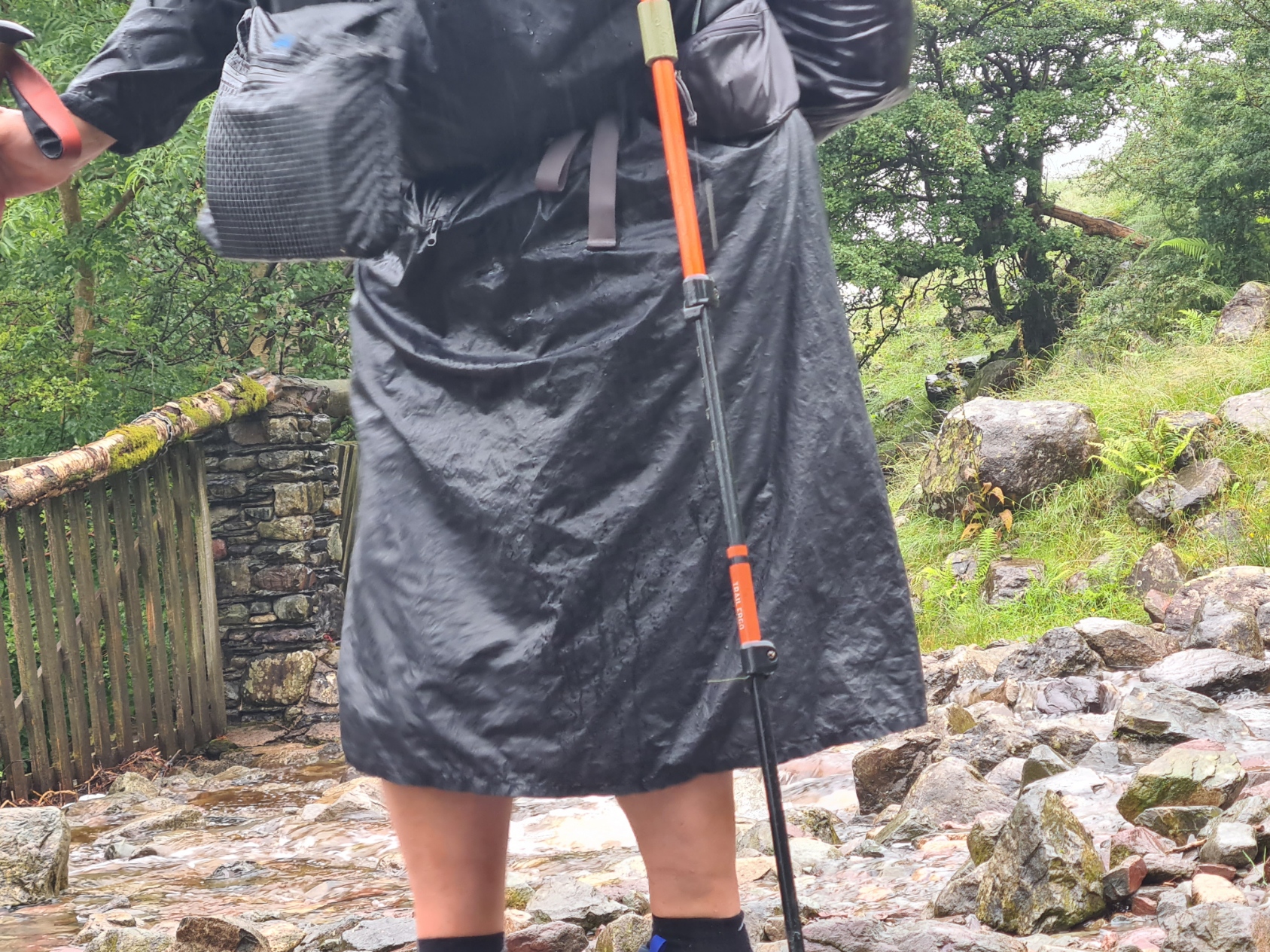
Again, I kept things simple and lightweight with a non-breathable 100% waterproof 2.0 AntiGravityGear Ultralight Rain Jacket with long pit zips and a ULA rain skirt. The latter will leave most people shaking their heads but I have been using this for some years now and I find it a good lightweight way of keeping the waist, crotch and upper legs dry. I don’t worry about the lower legs as I practise ‘wet-feet walking’ with my breathable Altras anyway. Others might want full length waterproof trousers, fine. Combined with my wide brimmed hat, this combination of waterproof worked well for me in frequently wet conditions.
Kitchen and hydration:
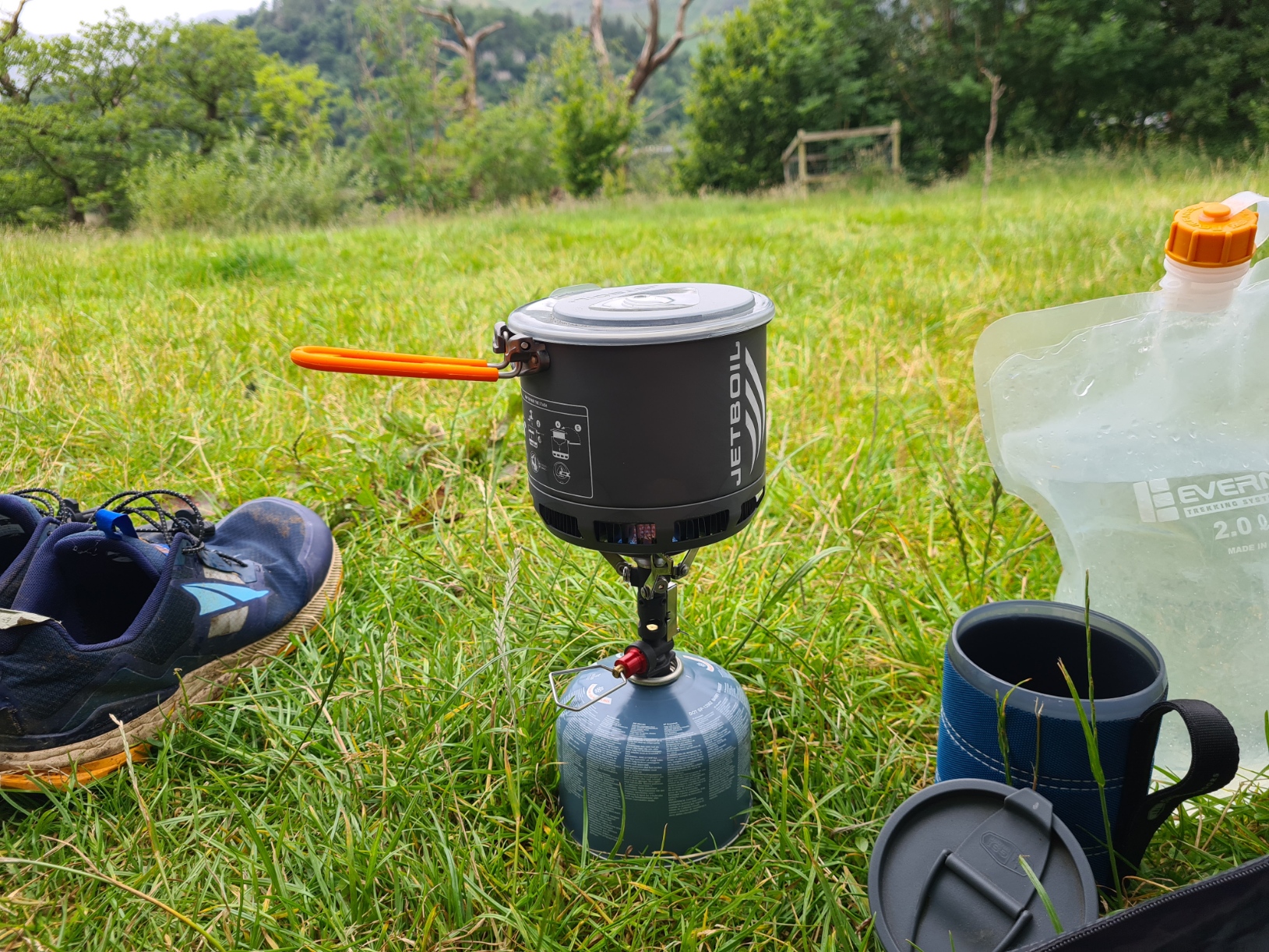
I kept things fairly simple here with just the stove, one pot, mug and spoon. I have been attempting to integrate a heat exchanger pot in to my backpacking set-up and am still experimenting with different combinations. What I took worked well, but is unlikely to be my ‘system’ moving forward. There is no need for large, complicated cook sets as smaller lighter and probably cheaper alternatives will work just as well on this trail. Though my kitchen choices were not cheap by any means. I went with gas for simplicity. I wasn’t cooking as such, just heating water. The Pocket Rocket Deluxe canister top stove works well with the Jetboil Stash pot, certainly better than the stove that comes with that pot. The one canister lasted the entire trail despite me not carrying a windshield which would have improved efficiency. The mug is simply a good lightweight insulated mug with a lid. I carried one long handled titanium spoon, a tiny Deejo knife and small Ferro rod.
- Gear talk: GSI Infinity Backpacker Mug
- Gear talk: Heat Exchanger pots
- Knife Chat: The Deejo 15g
- Gear talk: staying ‘old-school’, with a ferrocerium rod
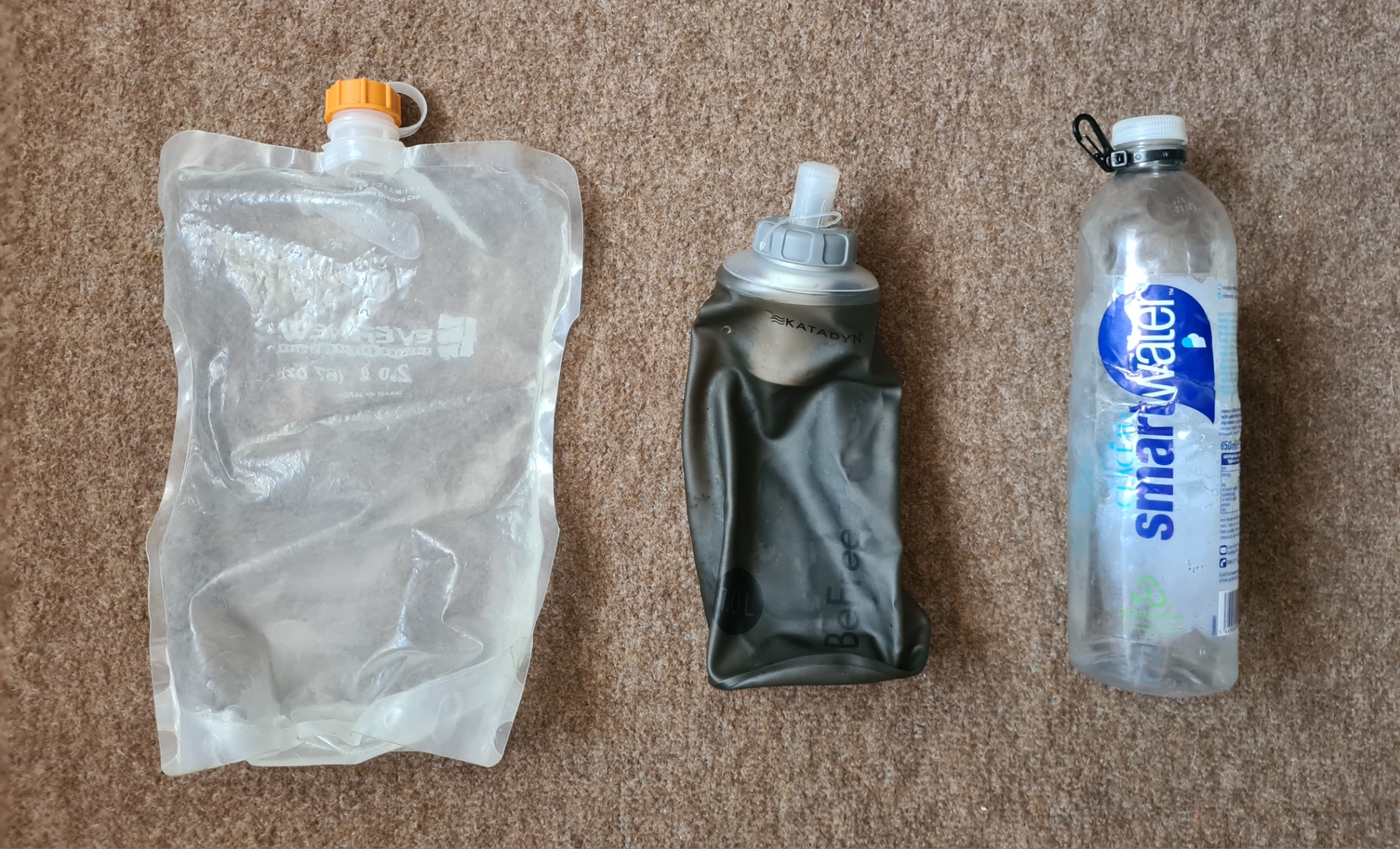
Hydration on trail is all important. As is ensuring water is safe to drink. I carried a similar set of items as I have used for many years. A recyclable plastic bottle clipped to my pack’s shoulder strap for drinking ‘on the go’. This bottle has already been used for a few hundred miles and will likely do a few hundred more. I had my two-litre Evernew bladder, mostly for evenings in camp. This is at least a decade old and has never leaked or failed on me. I like a filter and am still using the Pure Clear water filter, that will also remove some viruses if present, though boiling is the sure-fired way of killing these off. This was screwed into a one-litre HydraPak ‘dirty-water’ bladder. As back-up, I have few Chlorine dioxide tabs secreted in my ditty bag in case of failure in this primary purification system.
Small ‘stuff’:
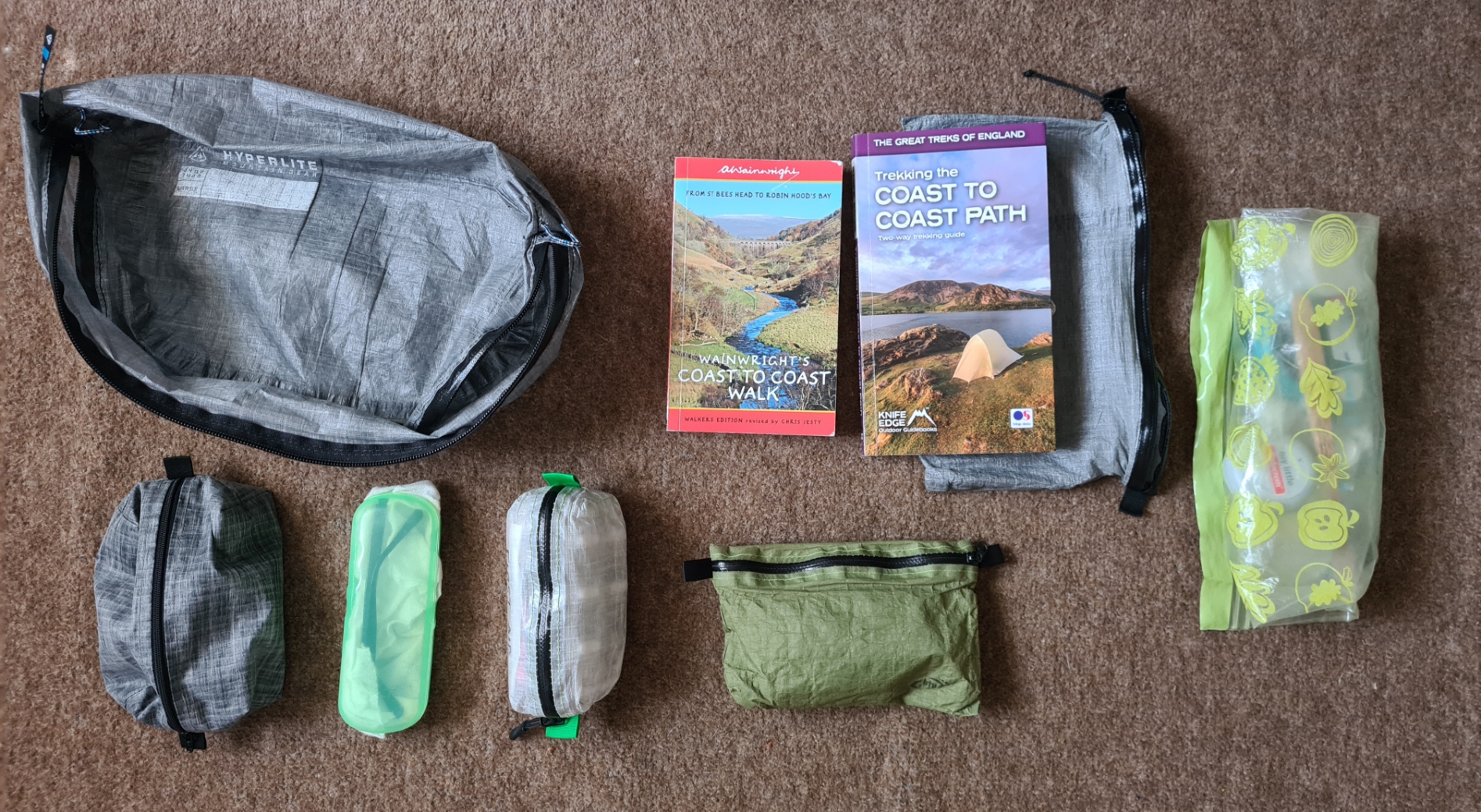
This was all kept in a small size waterproof packing cube and was further compartmentalised for convenience of finding things. Looking at the image below, the bottom row shows my electronics pouch on the left, prescription sunglasses in light rigid plastic case, First Aid Kit, ‘sundries’ ditty bag, and hygiene on the right.
This is another area where it is possible to get carried away and pack too much. It is also a very personal area and everyone’s needs/wants will differ. I did take a couple of extra guidebooks as I was reviewing which was best suited to the trail and the best way to do this was actually refer to them while on trail. There might be more on that in another post.
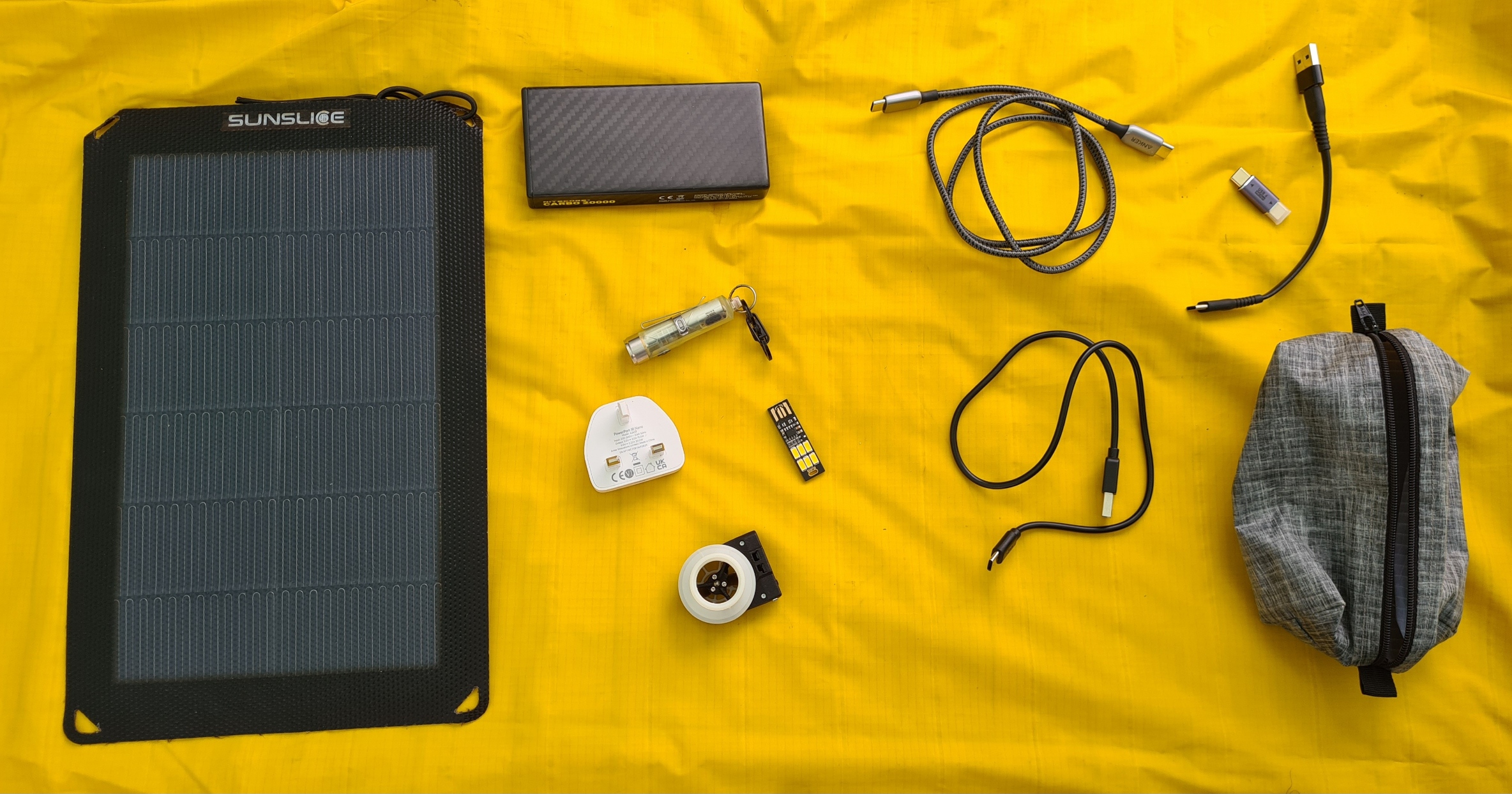
I won’t go into detail for most of these small things as I have covered that ground before, but will mention the electronics as the backpacker cannot necessarily rely on charging phones etc while on trail. I included a solar panel, which worked well, but still carried a 20k powerbank instead of a 10k in case it rained, which it did! The solar panel was a new one for me this year. The Sunslice Fusion Flex6 6 watt flexible panel kept my powerbank topped up despite often grey or wet days. A review on this panel will follow later this year.
Navigation:
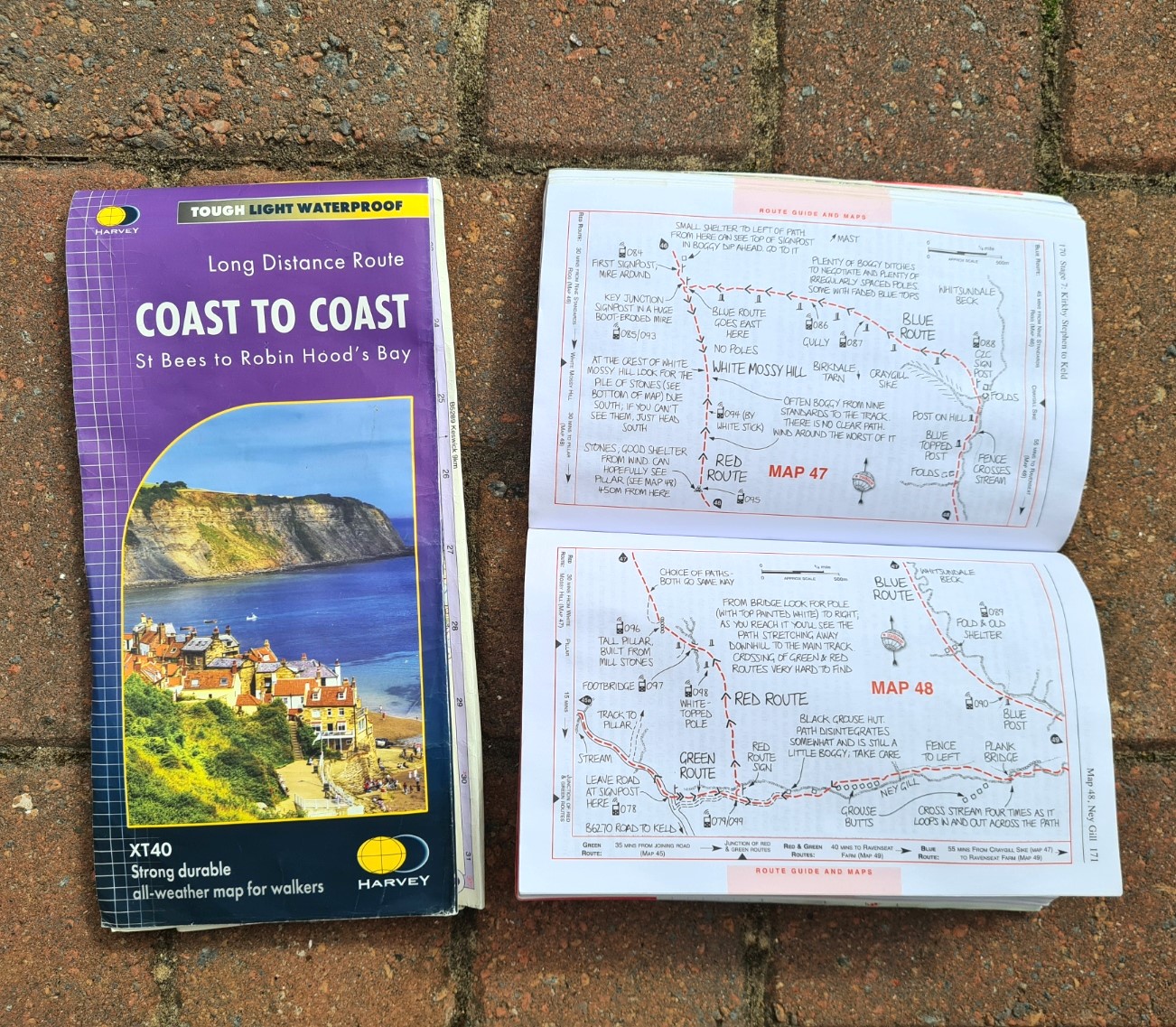
Trail signage is insufficient in itself, and shouldn’t be replied on anyway. Nor should the electronic means that the very great majority of people walking the Coast to Coast rely on. I am no Luddite however, and had the Hiiker app on my Samsung S20+ to refer to if necessary. There are a few ‘paper’ maps available for this trail but I carried the lightest, most up to date, and in my mind, the best. This is the waterproof 1:40 000 Harvey sheet. This was used in combination with what is commonly thought of as the best guidebook, the Trailblazer. But as previously mentioned, I was also carrying others to try and gain a better opinion.
I have written before on the two special strip maps that Ordnance Survey produced back in 1994. 1995 and 1999, that were discontinued in 2002. These quite beautiful and really useful maps are now partially out of date, though I did meet people successfully navigating with them. Much as I would like to have, I did not carry my copies of these sheets.
Other stuff:
There are always a few other things that sneak their way into or onto a pack, a Swedish Cloth, a ziplok for rubbish, poop kit, the list goes on…
I was very familiar with just about everything I carried on trail and had no real issues with any of it. But this shouldn’t act as a recommendation to anyone. Do your research, use what works for you. I welcome any questions on anything I have shown here. But regardless of what gear is carried, the important thing to do is actually get out there and start the trail. It is a fantastic walk.

 Three Points of the Compass
2 replies »