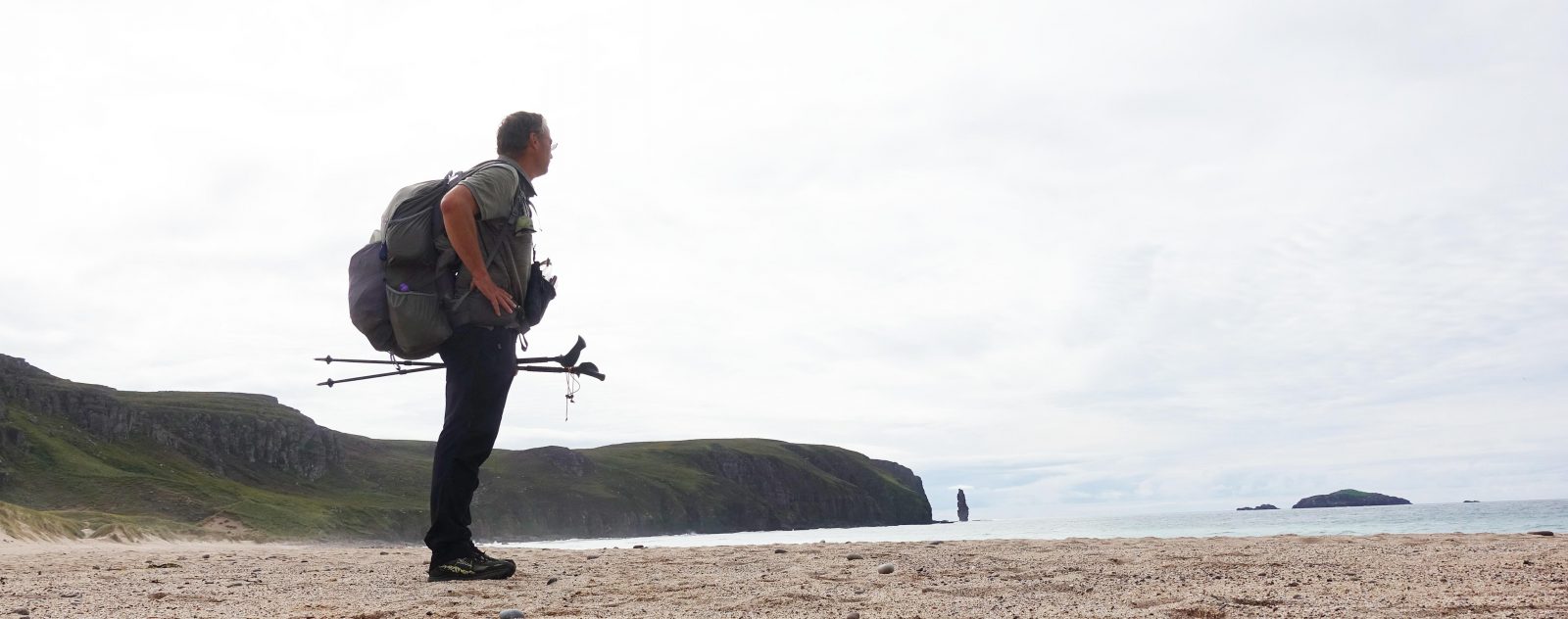
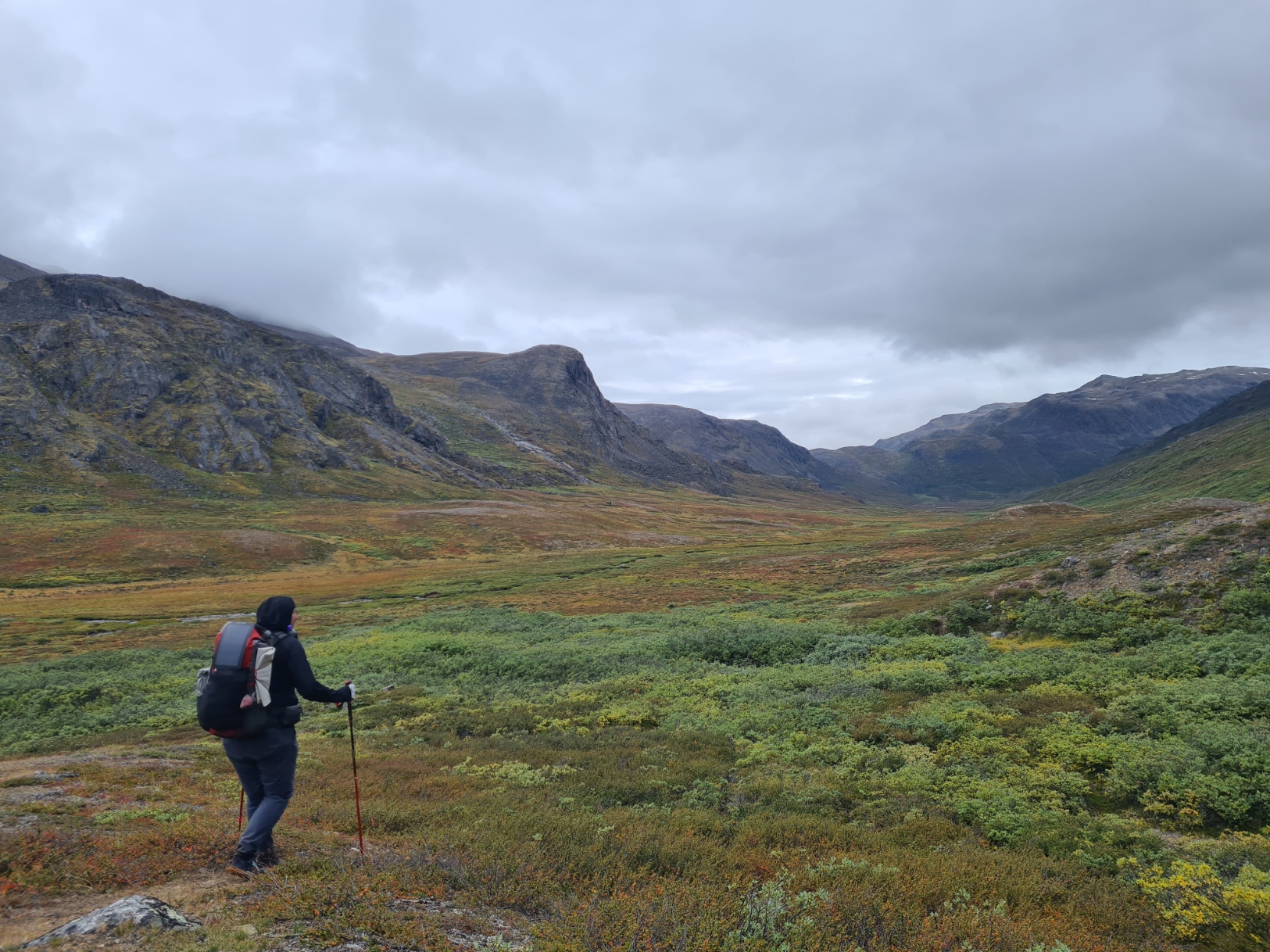
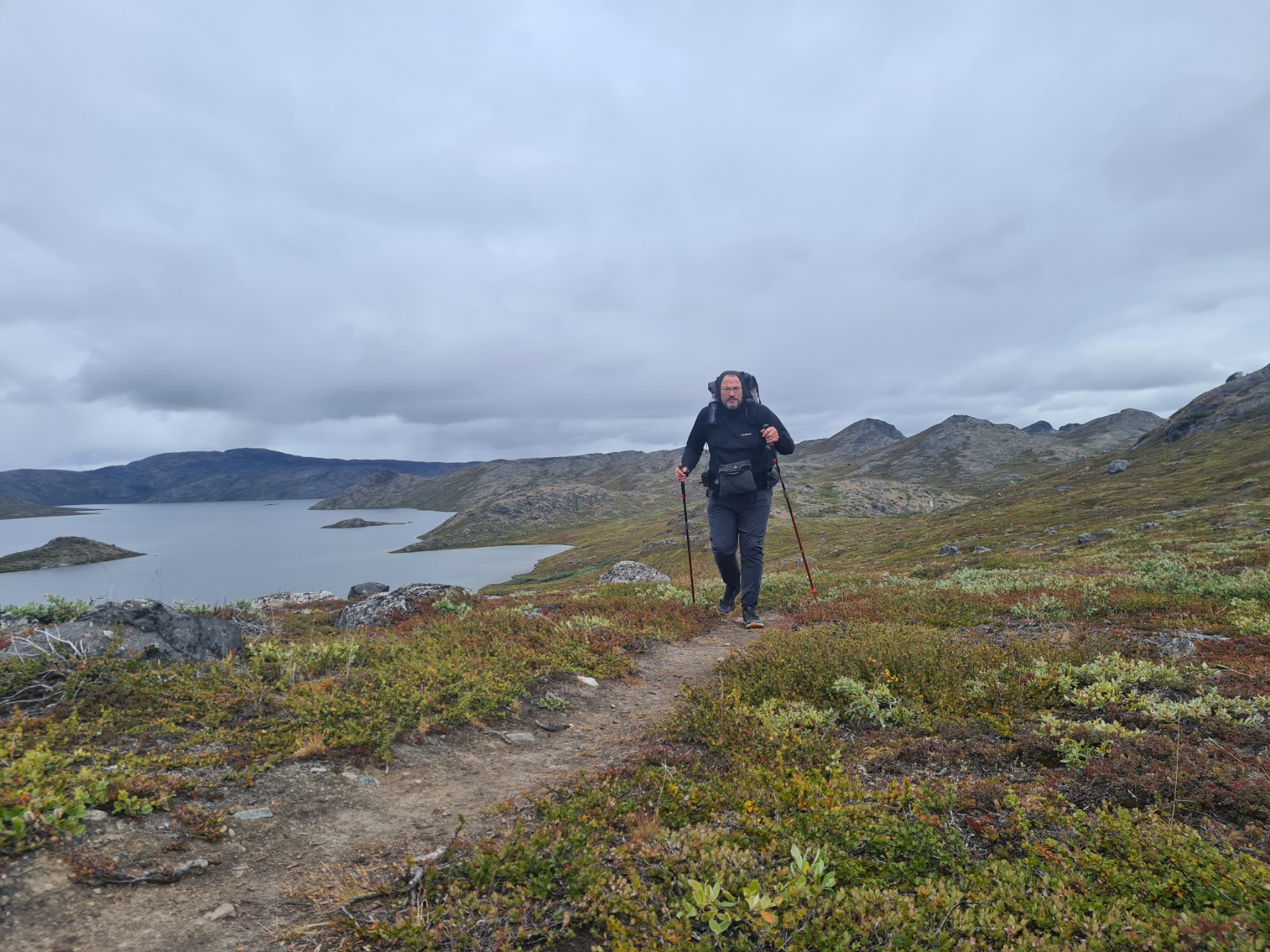
Three Points of the Compass takes a glance at what he wore and carried on an eight day 100 mile summer backpack across Greenland’s Arctic tundra.
At the outset, I should state that what follows is not intended to be a guide or in any way a stipulation on what you should carry on the Arctic Circle Trail (ACT). When preparing to hike the ACT there are many things to consider. These include experience and familiarity with backpacking multiple days and with specific items of gear or clothing. What follows is simply a brief account of what I took with me, and should not be regarded as a checklist for the individual.
Hiking clothes:
You don’t actually require much variety in the way of clothes/apparel to hike the Arctic Circle Trail. Even travelling slowly, it can be completed in less than two weeks and there are no towns to visit on the way when you might want to put on a set of ‘town’ clothes. No one ‘needs’ a fresh set of underwear or socks every day. Everyone is going to smell a bit after a couple of days on trail and it is always possible to rinse off clothes in a stream or lake if you wish. You can even go swimming if you want, but be warned, the water will be cold!
For hiking each day I wore more or less what I wear on any trek. Having used ExOfficio Give-N-Go Sport Mesh 9″ Boxer Briefs for a few years I had swapped out to a similar style from another brand in the hope of improved durability. This was my first year using the SAXX Quest Quick Dry Mesh Long Boxer Brief and they had already proved to be very comfortable and go a long way to preventing chaffing. For socks, I carried one pair of Silverlight Crew and one pair of Darn Tough Hiker 1/4 length. One was a reserve pair and I might have used either on trail. As it was, on the morning I set off, I pulled on the Silverlight and they were worn every day, being occasionally rinsed out in a lake or stream. On another occasion it might have been the Darn Toughs worn. Both are high percentage merino wool, with the remainder synthetic.
If it had been warmer, I would have worn shorts, as it was I wore Patagonia Joggers. These are lightweight, pretty much windproof, but dry quickly when wet. For my torso I wore a MontBell Cool Full-Zip Hoodie. This long sleeve shirt is 100% polyester and is very adaptable, with a full length front zip, hand pockets and thumb loops on the cuffs, though I often pulled the sleeves up my forearm to allow cooling from the wrists. This has easily become a favourite top due to its features, such as flat seams, water repellent treatment, odour control, and it also blocks 90% of UV. I wear black, which can get a bit sweat stained on my back, but that doesn’t bother me.
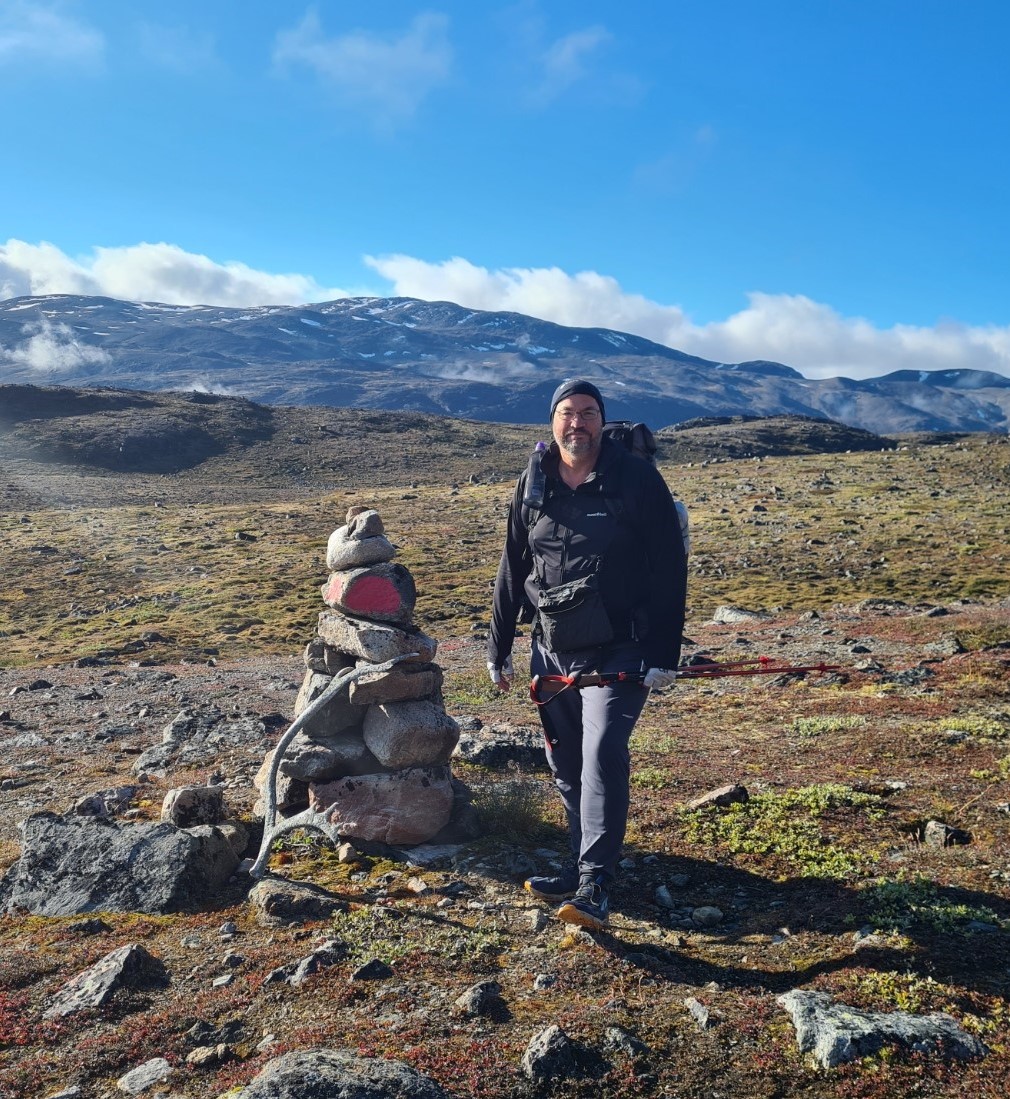
For about half the days on trail I wore fingerless Sun Gloves from Outdoor Research, and a hat, either my Kora Yak wool beenie if it was cool, or a medium width brim Tilley LTM5 Airflo if it was bright sun, raining or I wanted to support a headnet away from my face.
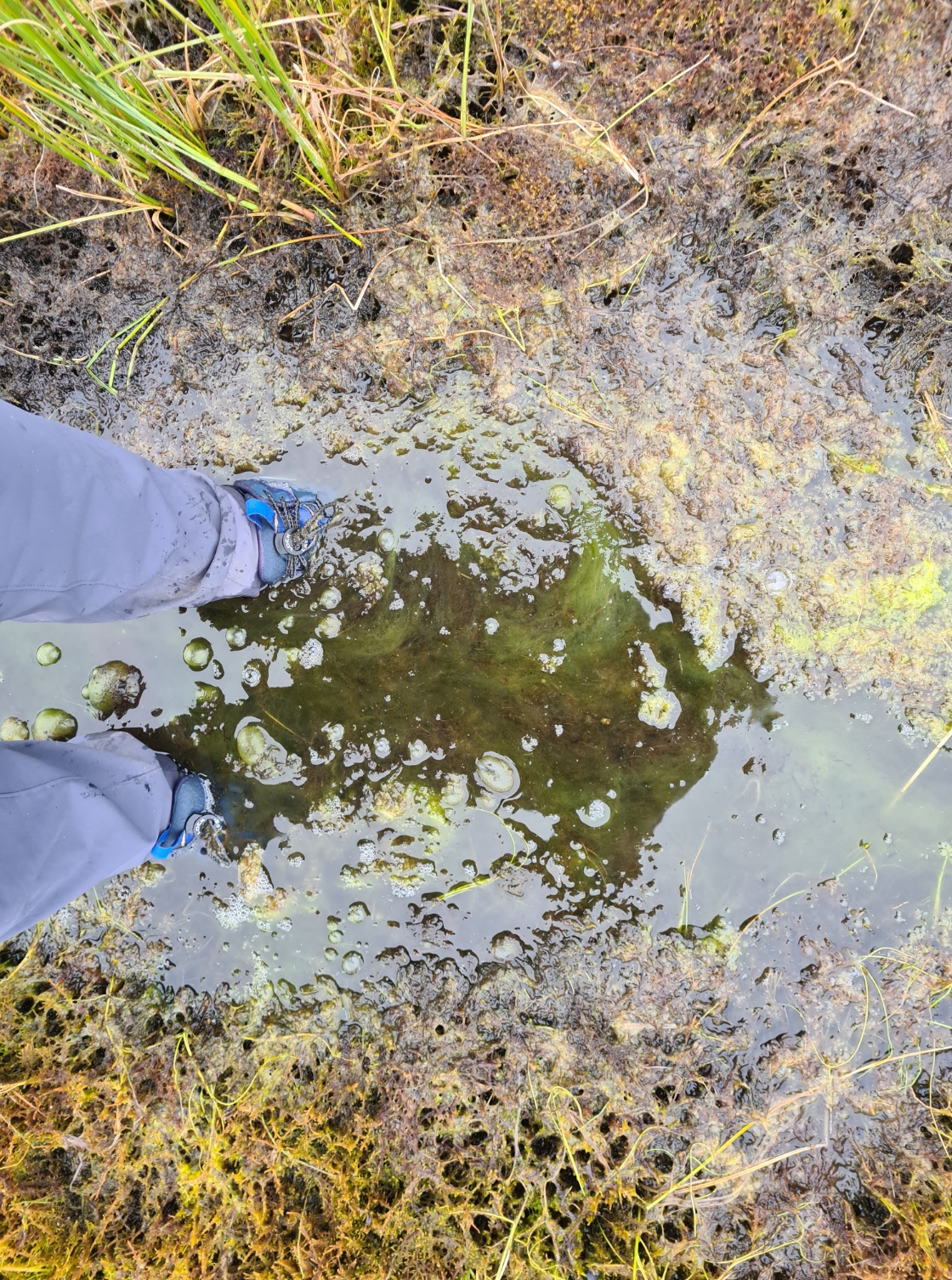
Footwear is a much debated matter. Many hikers swear by boots, personally, I would swear at them. Boots are mostly fine until they get wet inside, then they will never dry and that invariably creates foot issues. I wore my usual breathable Altra Lone Peaks, with replacement insoles, replacement elasticated Lock Laces and the usual duct tape around the heel cup as these wear through far too easily for my liking.
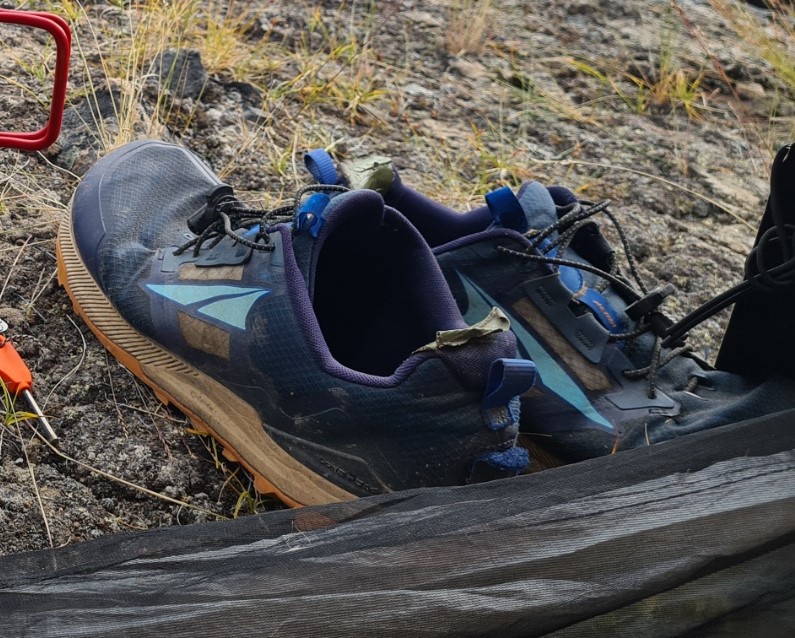
I had no foot issues at all. While they were occasionally cold when putting on still wet shoes in the morning, this was usually easily rectified by walking and getting the blood flowing. While my feet were often damp, they would usually dry out after a couple of hours of drier trail. It is evening and night time foot care that is crucial. Each evening, as soon as I could, feet were cleaned and dried, then allowed to air. Then foot balm was massaged in before putting on dry and dedicated sleep socks. By morning my feet were pink, shiny and ready for another day. This regime isn’t for everyone, but it suits me.
I did make a mistake with my footwear however. The shoes I wore had already covered a couple of hundred miles of trail earlier in the year and the tread was slightly worn as a result, making me slip on a few of the slicker rocks. I should have worn a new pair with full tread. As it is, despite how well they fit my feet I am getting increasingly frustrated with the year-on-year reduction in durability and miles that I am getting with each subsequent generation of Altras. Having stuck with Lone Peaks, from the 2.5s to the 2024 8s, I have finally decided to experiment with another brand. More on that in another post.
Pack:
The Arctic Circle Trail takes multiple days to complete. Usually anything from six to twelve. There is nowhere to resupply during that time and all the food and fuel for the duration of a hike has to be carried from the outset and this is both heavy and bulky. Ideally, food for a day or two over an anticipated schedule should be carried in case injury, weather or simply underestimating the time required, results in remaining on trail a little longer. I carried nine days of food and completed my trail in eight. This weight and bulk means a pack sufficiently large is required from the start. Also that it will compress sufficiently to still be comfortably carried once the bulk of food contents has reduced.
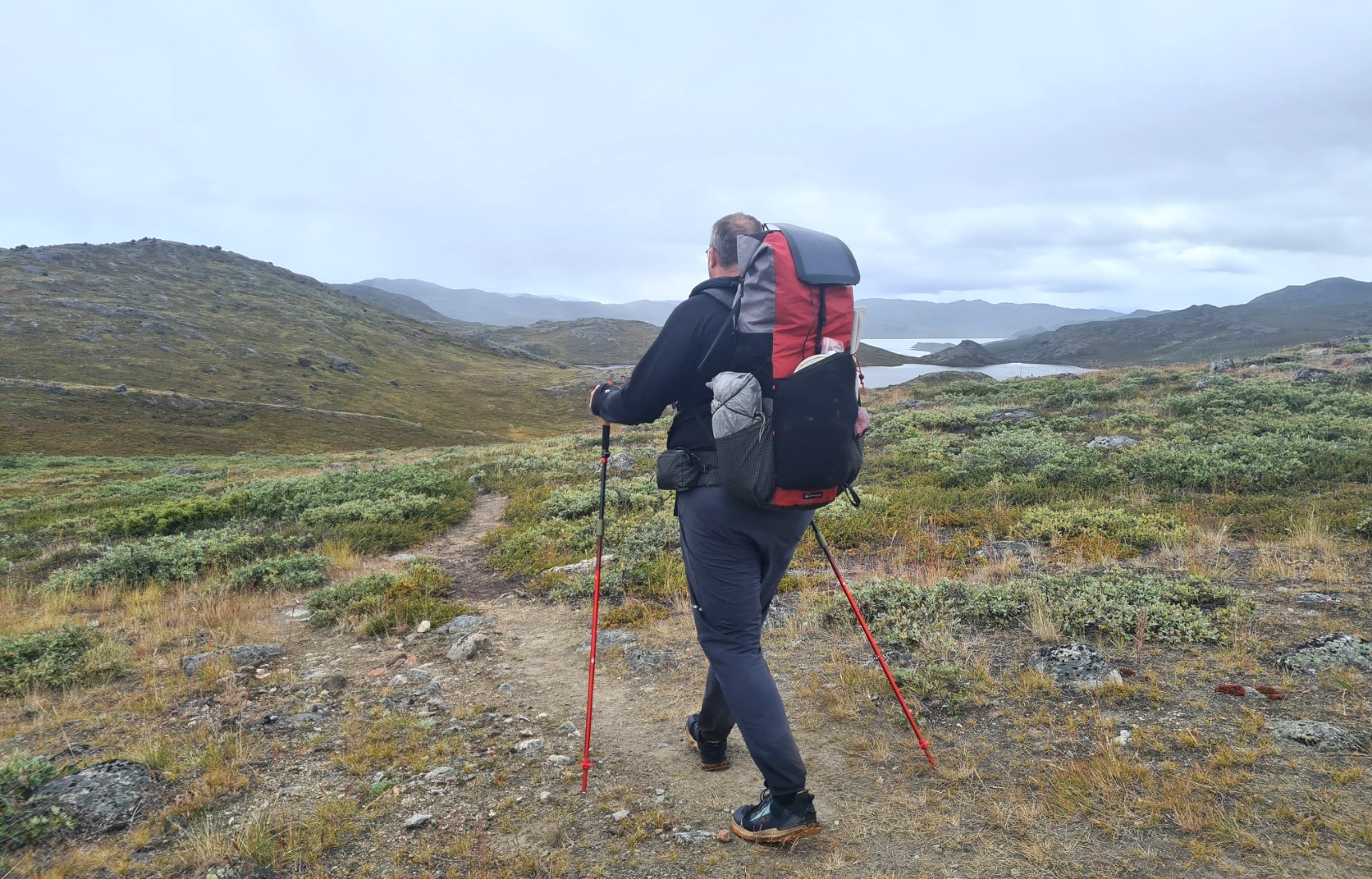
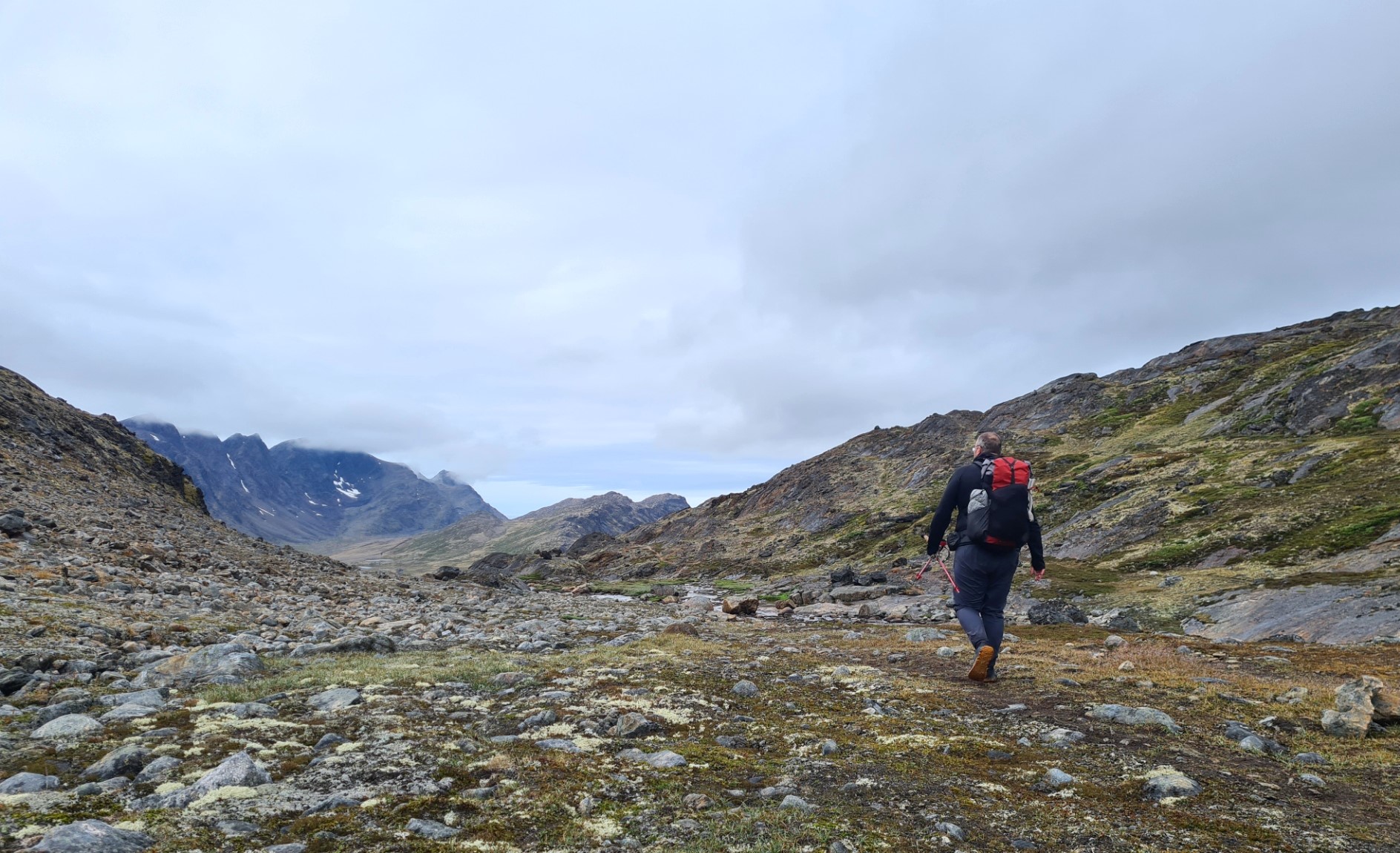
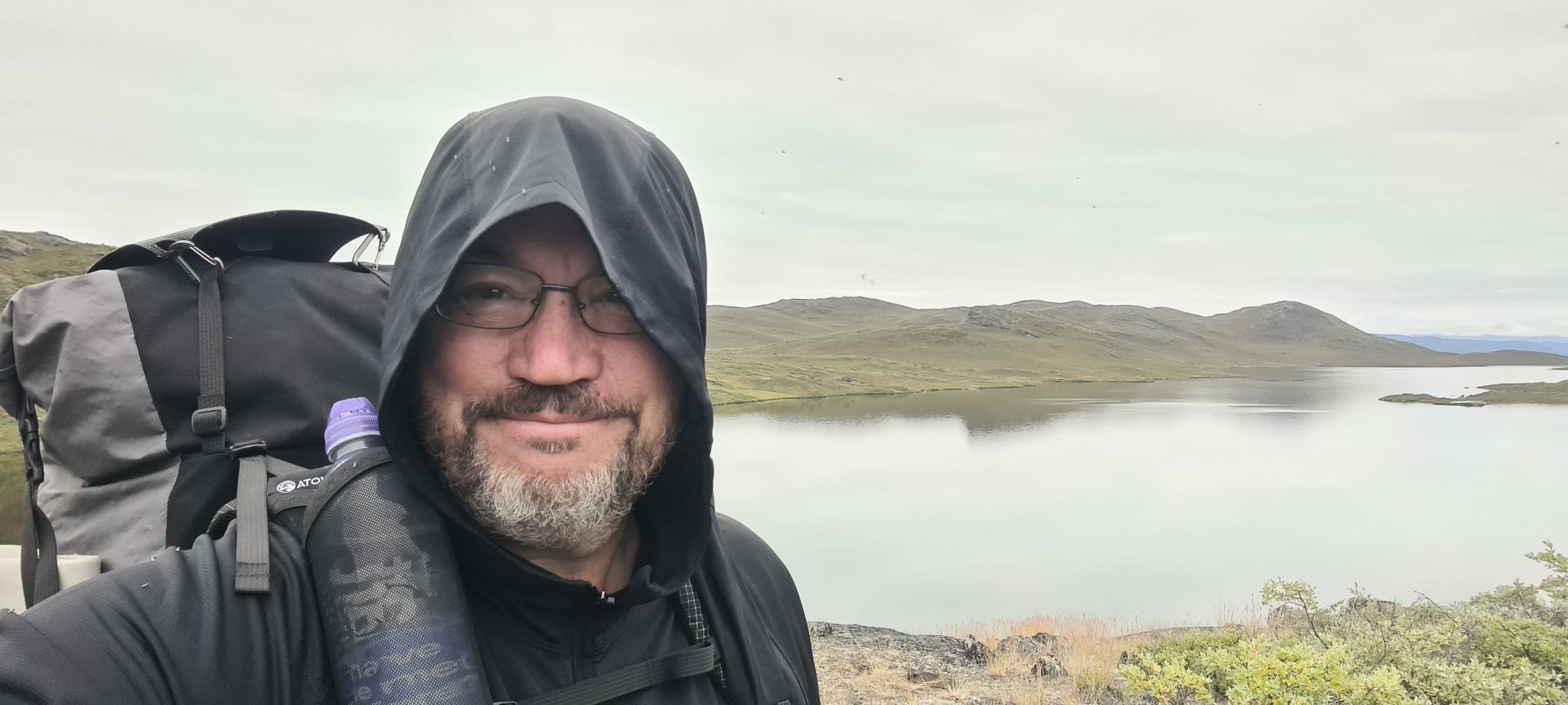
My pack was the Atom Packs Mo (since renamed The Prospector). This has a 60lt capacity, with an extended roll top, but is very adaptable to carry anything from half that capacity to slightly over the top limit. Unlike many I saw on trail, I prefer to pack most of what I carry inside a pack, rather than have it dangling from the outside where it can potentially be lost, snagged or damaged. I carried my often wet tent in a side pocket and a thin short length of 3mm closed cell foam, used as a sit-mat, beneath the compression straps on the opposite side. Because I had thought carefully in advance of my trail on what I would carry, pack weight, including consumables (food, gas, liquids), was below 15kg at the start, and sub-8kg on my final day. It was comfortable to carry throughout. Many hikers resorted to strapping drybags to the outside, or carrying an additional smaller pack ‘up front’ in order to carry everything.
The Atom Packs Mo (Prospector) can have one, two or no hipbelt pockets fitted. I removed them both and kept them inside the pack when it was checked in to flights, but when reattached to the hip belt, they held a great deal of ‘stuff’ I wanted access to. The contents of the left one is shown later, but the right hipbelt pocket just held a large bag of trail mix. I also carried an old and very leaky Multi-Pack from ZPacks. This is intended to be worn across the chest but I wear this lower, across my stomach.
Shelter:
It is perfectly feasible to finish each day at one of the huts. However these vary in size and you are not guaranteed space inside one on arrival. A tent has to be carried. I had little intention in sleeping inside any of the huts and camped every night. I have a small collection of shelters and mostly choose from these depending on expected conditions. I think that any of my shelters would have been fine, from single skin ‘mid’ to double skin with ‘solid’ inner. As it was, I chose to take an old favourite, my ZPacks Duplex. This is a very light single skin DCF tent that takes little room when packed, but still provided a roomy two-person interior with reliable bug netting and the option to set it high for maximum ventilation, or drop it low and really nail it down if high winds were expected. It was an excellent tent for the trail.
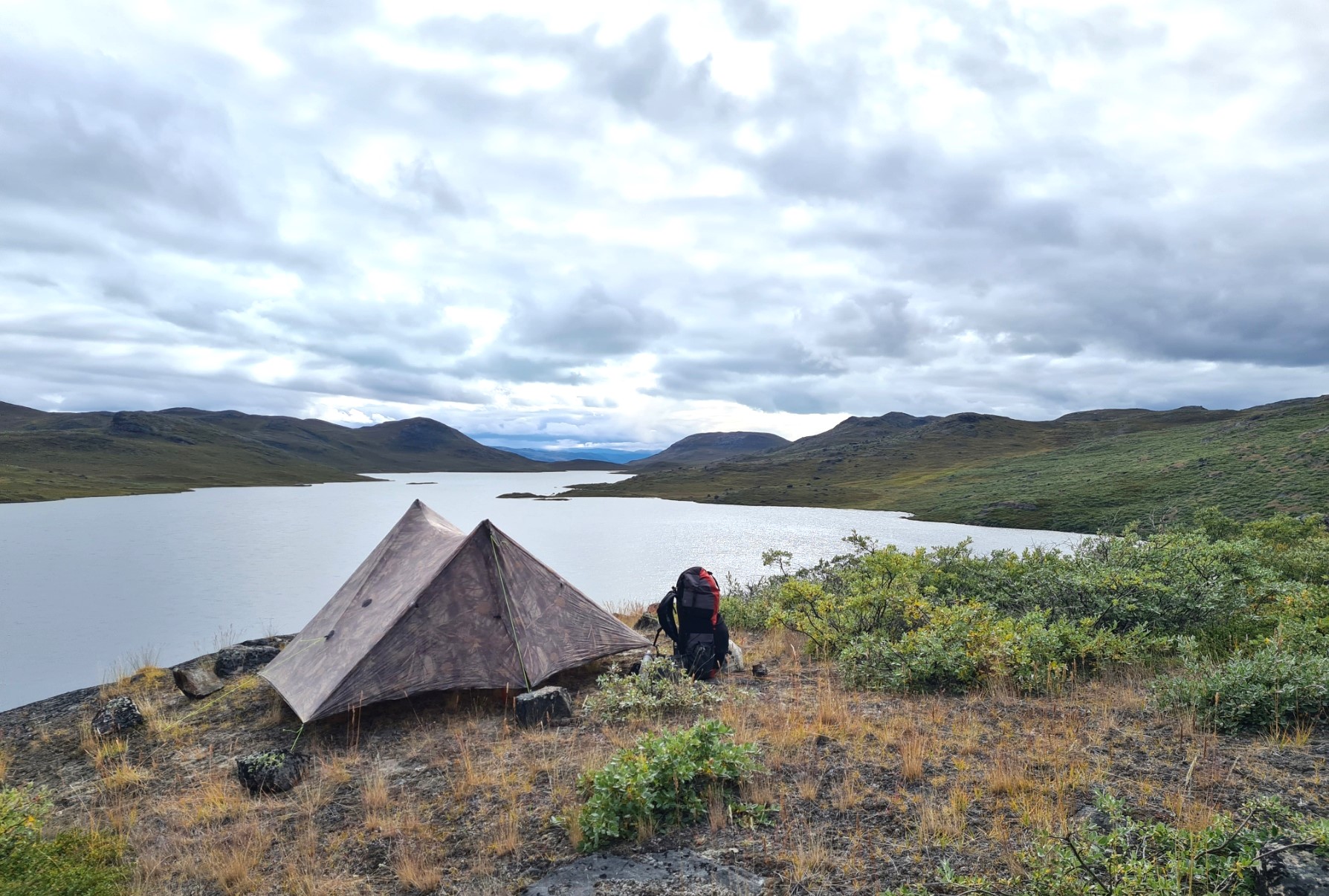
There is one ‘feature’ about this particular shelter that I always value yet still seems far down on most people’s list of desirables. When I chose it, I purchased the ‘foliage’ colour option (some might, erroneously, call this camouflage). This means I can fit into a landscape better, without the glaring contrast of a brightly coloured tent. I feel this is part of the Leave-No-Trace mindset that is so often forgotten or ignored.
I carried no tent poles, instead using my trekking poles as support. I was carrying these anyway so another opportunity to save on a little weight. Because I was flying, I used the Black Diamond Pursuit FLZ folding poles that collapse to 430mm but will extend to 1250-1400mm. They have comfortable cork grips and a single flicklock each. I have been mostly happy with these apart from one pole that has an annoying habit of the lock slowly working its way in, then suddenly collapsing and having to be clicked back into place. It only happens a few times each day, but enough to be frustrating.
Pegs/stakes were my usual mix of Full size and Mini MSR Groundhogs for corners and vestibules. I also had a couple of wide V titanium Clamcleats Tornado pegs for softer ground and two titanium Clamcleats spear pegs for hammering into harder ground.
Sleeping:
As I age, the meagre comfort provided by a closed cell foam pad is simply insufficient and I carry a full length inflatable mat. This was the Thermarest NeoAir XLite NXT. Despite also having a small length of 3mm closed cell foam beneath it to provide just a little more R-value and protection from punctures, the pad had a slow leak that often annoyed me in the small hours. It lost air and I would wake as my body moved closer to the permafrost just inches below the surface. I would simply roll off the pad, puff into the valve to reinflate, then roll back on. But it was an interrupted sleep. I couldn’t find the leak to repair it and have since replaced the pad with another. I had considered taking the warmer XTherm instead of the lighter XLite but despite the leak, if I hiked the ACT again, I would take the same model of pad.
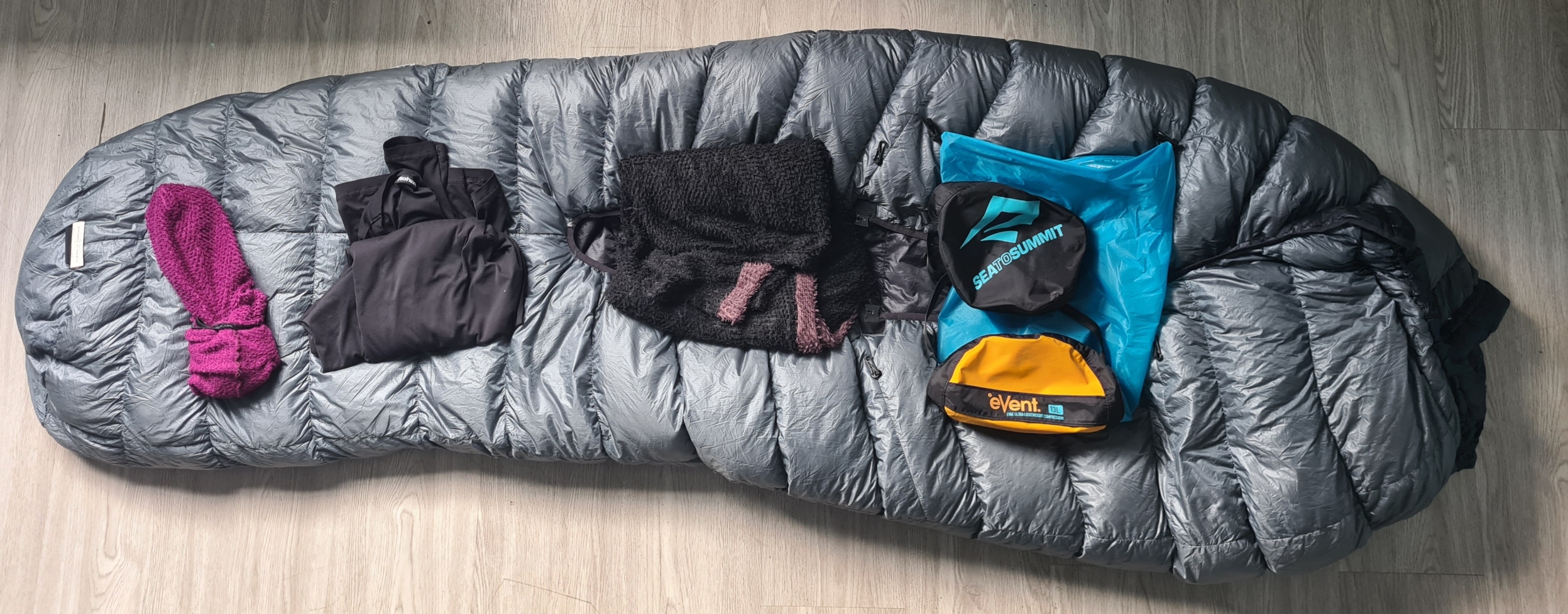
I have two quilts but chose my lighter Katabatic Gear Palisade for this trail as it is also slightly less bulky. When I ordered this I had it overstuffed with three extra ounces of hydrophobic goose down so it will take me to cooler temperatures than its specified standard 30°F. This was cosy warm, apart from one night, where I was a bit too warm! In an attempt to take up less space in the pack and improve on my previous and mostly unsatisfactory method, the quilt and sleep clothes were stored in a Ultralight Evac Compression Dry Bag from Sea to Summit. My dedicated sleep clothes were a very thin (and now very old and long discontinued) synthetic long sleeve T from Rohan, with 60gsm Alpha Direct Camp Pants and 90gsm Alpha Direct Camp Socks from FarPointe Outdoor Gear. All worked great.
Kitchen:
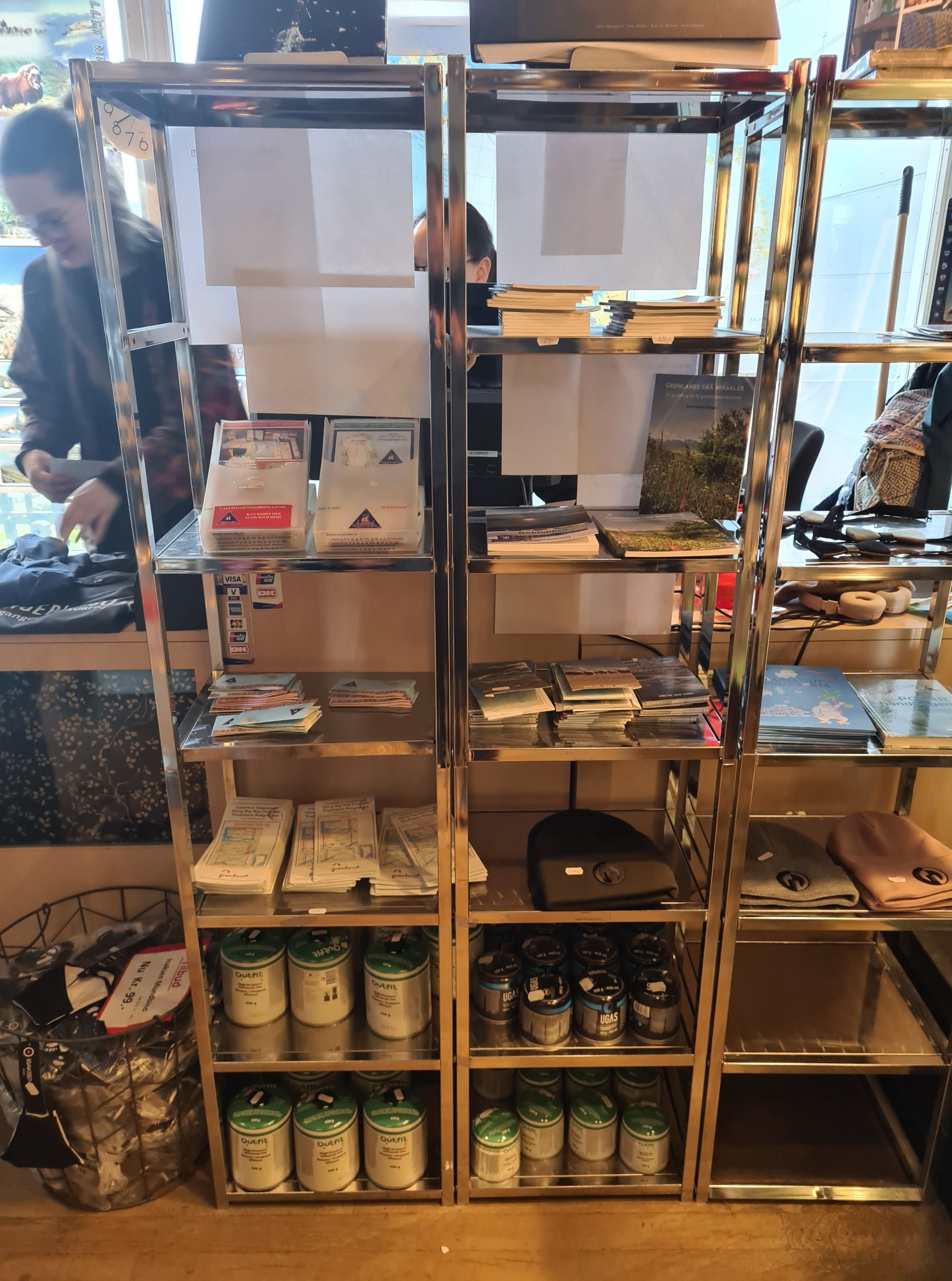
You cannot fly with stove fuel so need to purchase this on arrival in Greenland. Different types of stove require different types of fuel but most people use gas stoves, so need to buy a gas canister on arrival. Both pierceable and lindal valve screw top canisters were available but apparently they do run out at times. The little souvenir shop in Kangerlussuaq airport had both. The two supermarkets and a little shop in the town also had screw top canisters but there is little in the way of choice of canister size.
A handful of hikers preferred their liquid fuel burners- I saw both Soto Stormbreaker and an MSR Whisperlite, but by far the most common stove that I observed being used was the efficient gas powered MSR Windburner integrated ‘system’ that uses a heat exchanger pot. Beside that, the Primus Eta cookset seemed to be a more modern preference over what a couple of hikers were using, the large, bulky, heavy but reliable Trangia stormcookers.
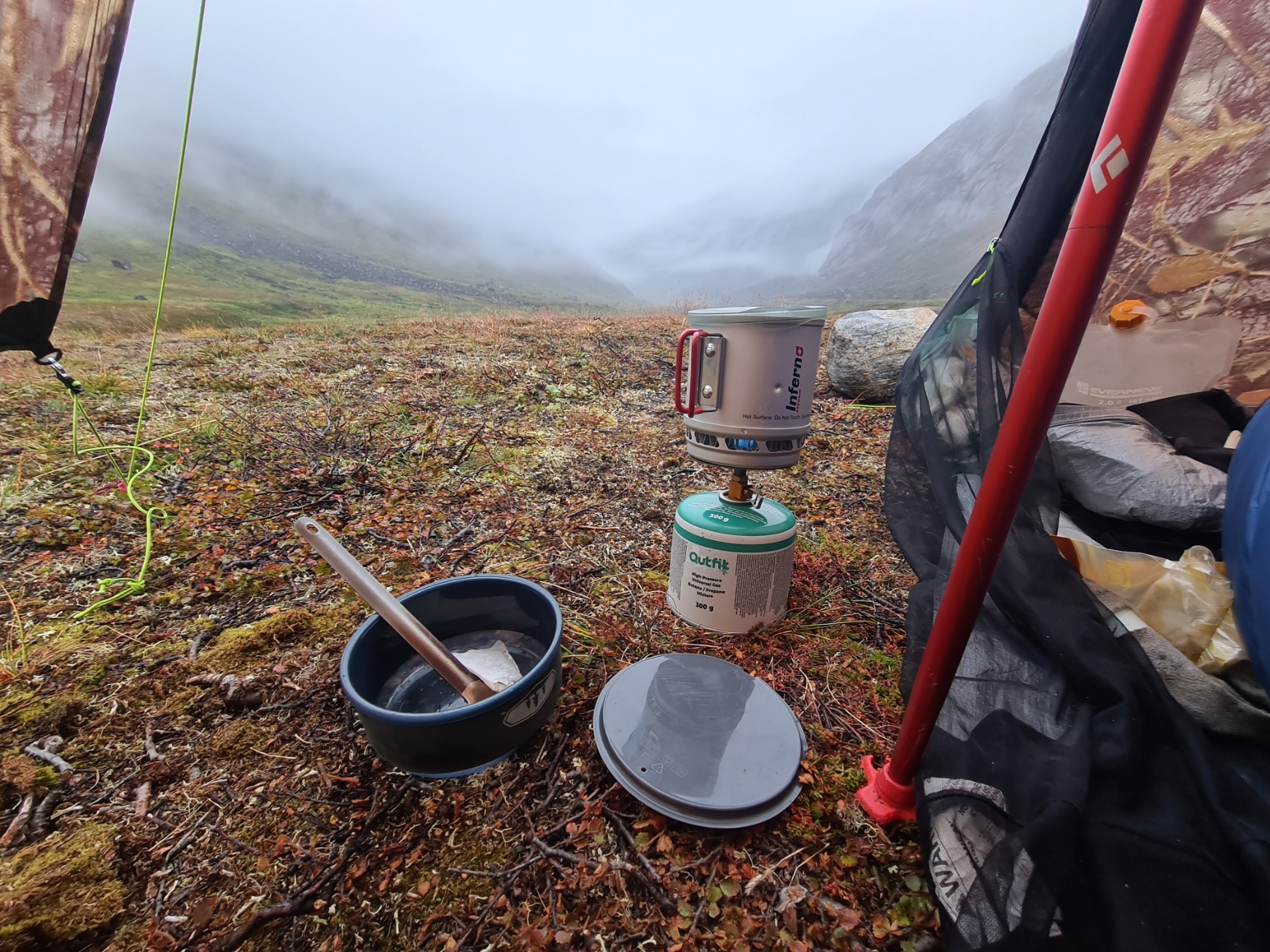
I carried my own lighter and less bulky Frankenstein version of the MSR. This was the now discontinued Sterno Inferno heat exchanger pot, with the lid from my MSR Windburner, combined with the burner part of a little Fire Maple Hornet stove, married with the Cheetah pot support from Flat Cat Gear. This performed faultlessly and was extremely efficient and frugal with gas. To light it I had a little ferro rod and striker strung on a cord with a small and simple folding knife from Deejo. I don’t recall using this knife for anything other that cutting salami to add to my noodles.
I do know that some hikers carried the cheap ‘n’ cheerful Opinel knives of various sizes, and heard of two people having problems when the wooden handles swelled from the damp, jamming the blade, a perennial problem with those knives. Other than the stove and pot, I had my preferred low profile GSI ‘sipper’ mug, with insulating sleeve and lid, and a long handled titanium spoon.
- Gear talk: staying ‘old-school’, with a ferrocerium rod
- Knife Chat: is this the most practical minimalist knife on trail? The Deejo 15g
- Favourite gear: GSI sipper mug
Food:
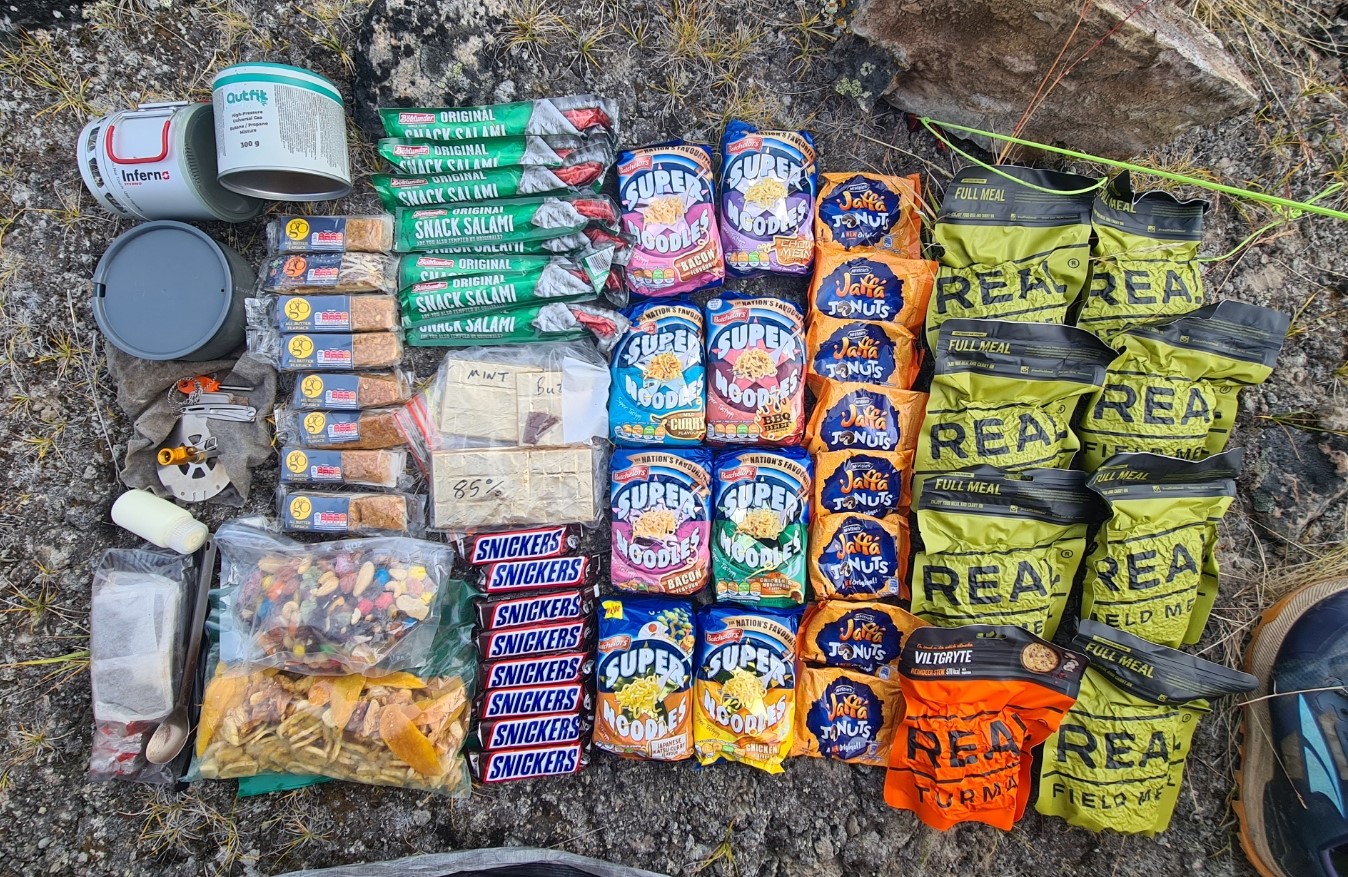
I gave as much thought to my food on trail as I did to anything else I carried. The ACT is a multi-day hike and enough food has to be carried for its duration. Food is both heavy and bulky. I show an image of eight days of food, photographed at my first night’s halt so lacking a ninth day of provisions that had already been consumed. It might give you an idea on how I tackled this particular challenge. The green packaged dehydrated Real Turmat meals are their larger size, with more calories. My two large trail snack bags contain many thousands of calories as a mix of sugars and proteins and were eaten throughout each day.
Hydration:
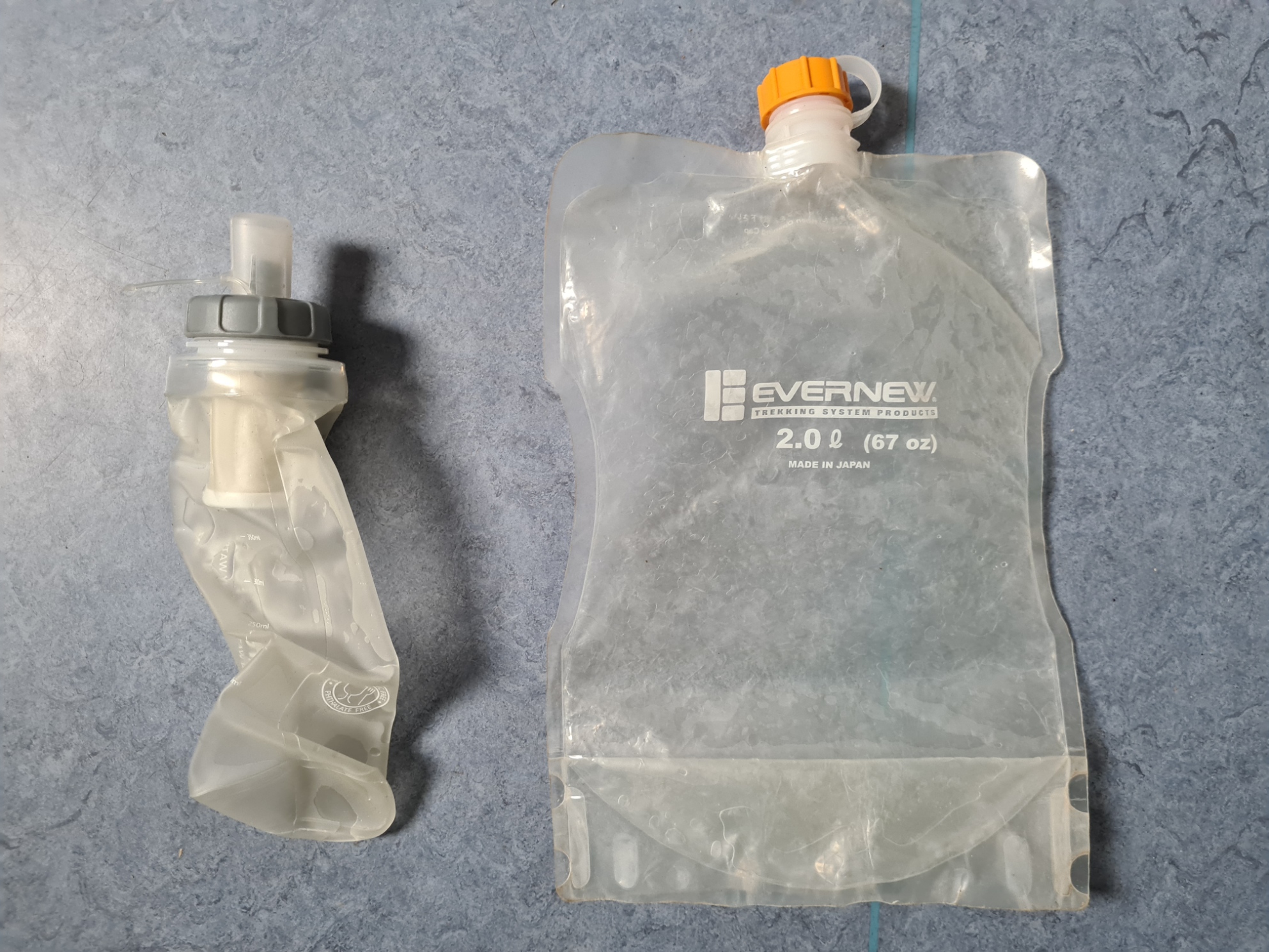
In addition to a standard plastic water bottle with sports cap, purchased at the airport, I carried a one litre ‘dirty water’ soft flask, with a PureClear filter cap, and a two litre Evernew bladder for water in camp. This is a lot of capacity on a pretty wet trail but meant I didn’t need to make additional visits to streams or lakes at overnight halts. Some people don’t bother treating water, I prefer not to risk it.
Spare clothes:
As usual, I carried far more spare clothes than most lightweight backpackers, but still far less than many others. These were also carefully thought out in advance. For my flights out and back, I had a dedicated spare pair of Patagonia Joggers and a lightweight short sleeve shirt from Rohan. Due to the weather I had an unplanned extended stay in town following my trail and I was pleased I had a set of clean clothes to wear for multiple days. These were carried the entire distance of the ACT and I never sought out an airport locker or attempted leaving anything at an accommodation or the like. Which was just as well as rescheduled return flights gave me exactly ten minutes between exiting one plane and queuing for my next at Kangerlussuaq.
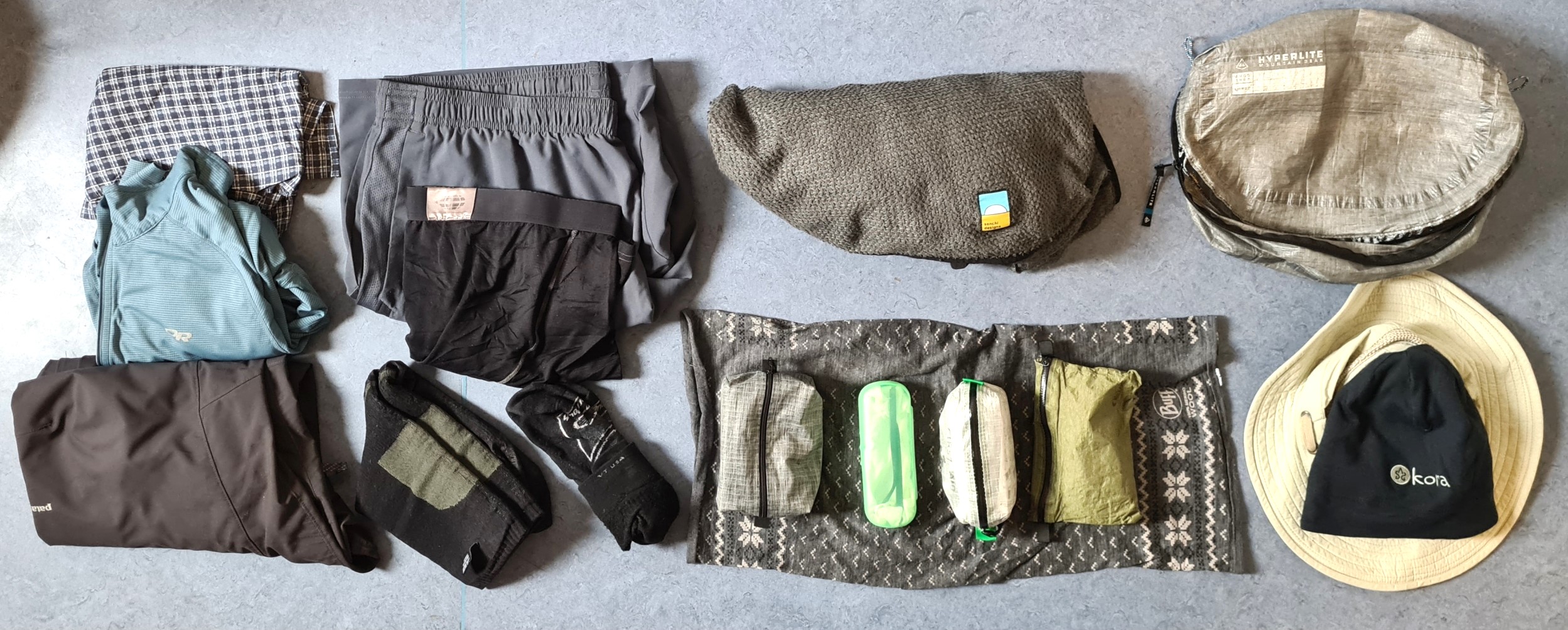
I also carried a pair of shorts, with integral liner, that might, just might, have been worn on trail if the weather had been warm enough. It wasn’t. I included a synthetic long sleeve shirt from Outdoor Research, far lighter than my MontBell hiking top, for the same reason. Both got worn around hostel, B&B, town, restaurants and bars following completion of the trail. As was a second and still clean pair of SAXX Boxer Briefs. Those I wore for hiking were worn every day on trail and were obviously pretty funky on completion eight days later. They got the occasional rinse through in a lake along with my hiking socks. I carried a spare clean pair of hiking socks, only used following completion of the trail, and a pair of Sealskinz waterproof socks. Either of these spare pairs of socks could have been worn as cold weather mitts while hiking if I needed to, which I didn’t. I acknowledge this is perhaps a little extreme for most backpackers.
I didn’t carry any spare footwear of any type- no flip-flops, Crocs, or anything like that. I know some hikers carry spare shoes for water crossings, I see no need, though I would never make water crossings barefoot as there is a risk of either slipping or cutting a foot open on unseen hazards. My waterproof Sealskinz socks were not worn during the day but were sometimes worn in the tent of an evening to keep my feet warm. They were primarily used as my ‘camp shoes’ if exiting the tent for a pee. If I needed to go further than the immediate vicinity of the tent, then I slipped my often wet Altras over the Sealskinz, thereby keeping my cleaned and freshly balmed feet separate from the wet shoe. I had my usual Buff neck gaiter with me This would have been worn if extreme cold had warranted it, I never felt it did and it was only used as a slip on pillowcase.
First Aid Kit:
I had an in depth look at the contents of my First Aid Kit in another post.
Wind and waterproofs:
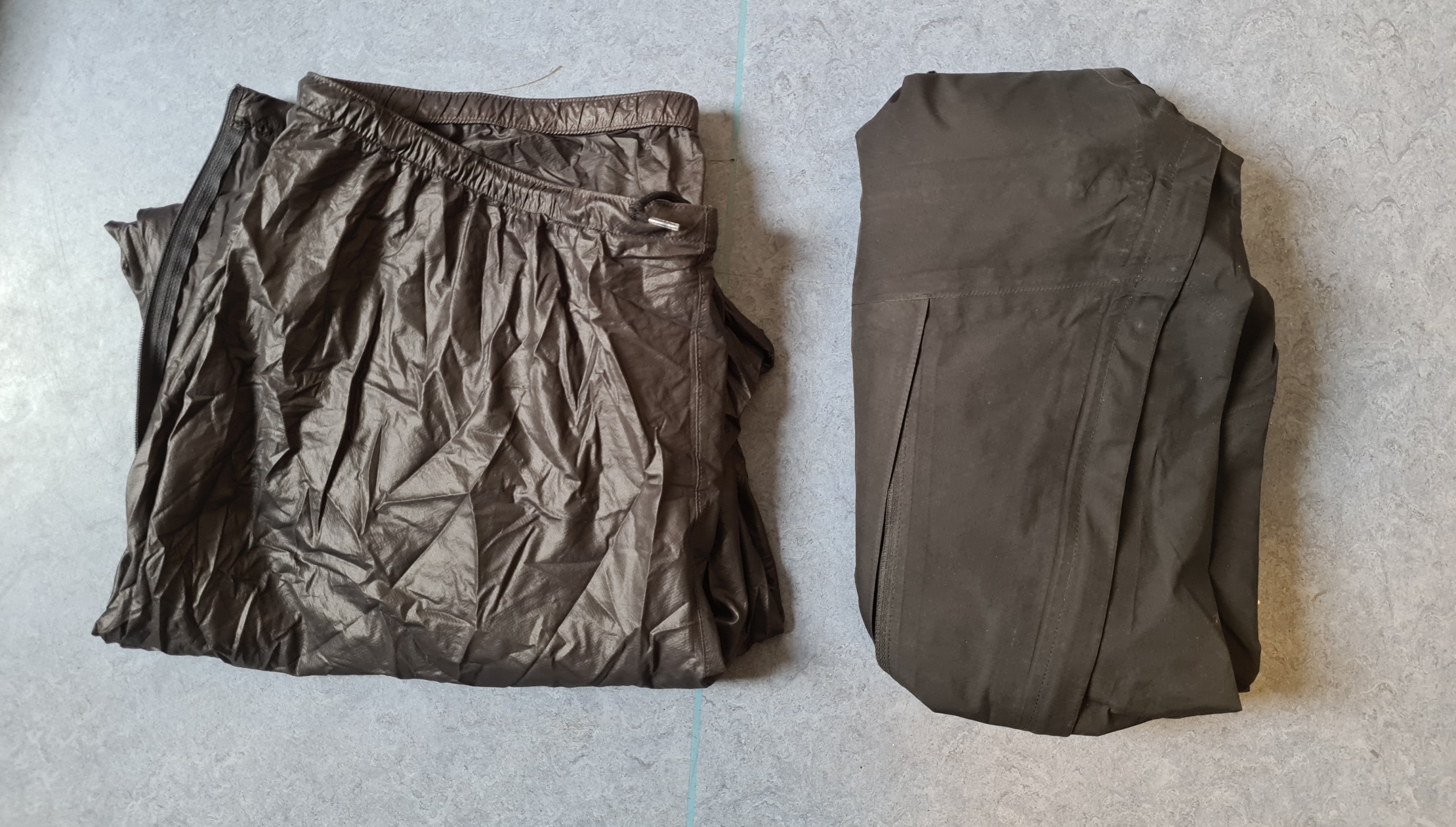
I only carried windpants, no windjacket. These were the Mont Bell Dynamo. These had been proofed with a DWR before leaving home and would have beaded water for a few days prior to this wearing off, but I never wore them when hiking. As it was, they were only occasionally worn in camp, slipped on over my legs if it was a bit cool or I was moving around outside the tent. If I was in my shelter, I threw my quilt over my legs.
Thinking a lightweight but fragile waterproof such as a FroggToggs or my preferred silnylon jacket would get ripped to shreds when crashing through brush (correctly, on at least one day) I carried a slightly tougher and heavier weight waterproof jacket. This was the Foray jacket from Outdoor Research, which has decent length pit-zips. I think this is an essential feature in rain jackets. I carried no waterproof trousers or rain skirt, just the aforementioned proofed windpants.
Insulation:
If I had needed to due to extreme cold, I could layer what I carried, which could potentially be as much as long sleeve OR top as a baselayer below my long sleeve MontBell, with a Senchi Alpha Direct Hoody over that, all below my waterproof or puffy. This 90gsm Alpha Direct top from Senchi Designs is terrific and easily one of my best purchases in recent years. It was also worn both pre and post trail.
I carry a puffy jacket on just about any multi-day hike, regardless of season. This will be either a light down jacket, or heavier synthetic hooded jacket if I think it might be wet. Because I anticipated rain I carried an old Rab Xenon X Hoodie, a model that I don’t think has been available for some years. This has a 60gsm Primaloft One (renamed Primaloft Gold) synthetic filling. Despite being a pretty old piece of kit it is still a cosy warm hooded jacket to pull on of an evening. It never got wet, but if it had, would have retained more loft than even treated down, that collapses under its own weight when wet. I could have saved a few grams by taking my down jacket, but felt I made the right call.
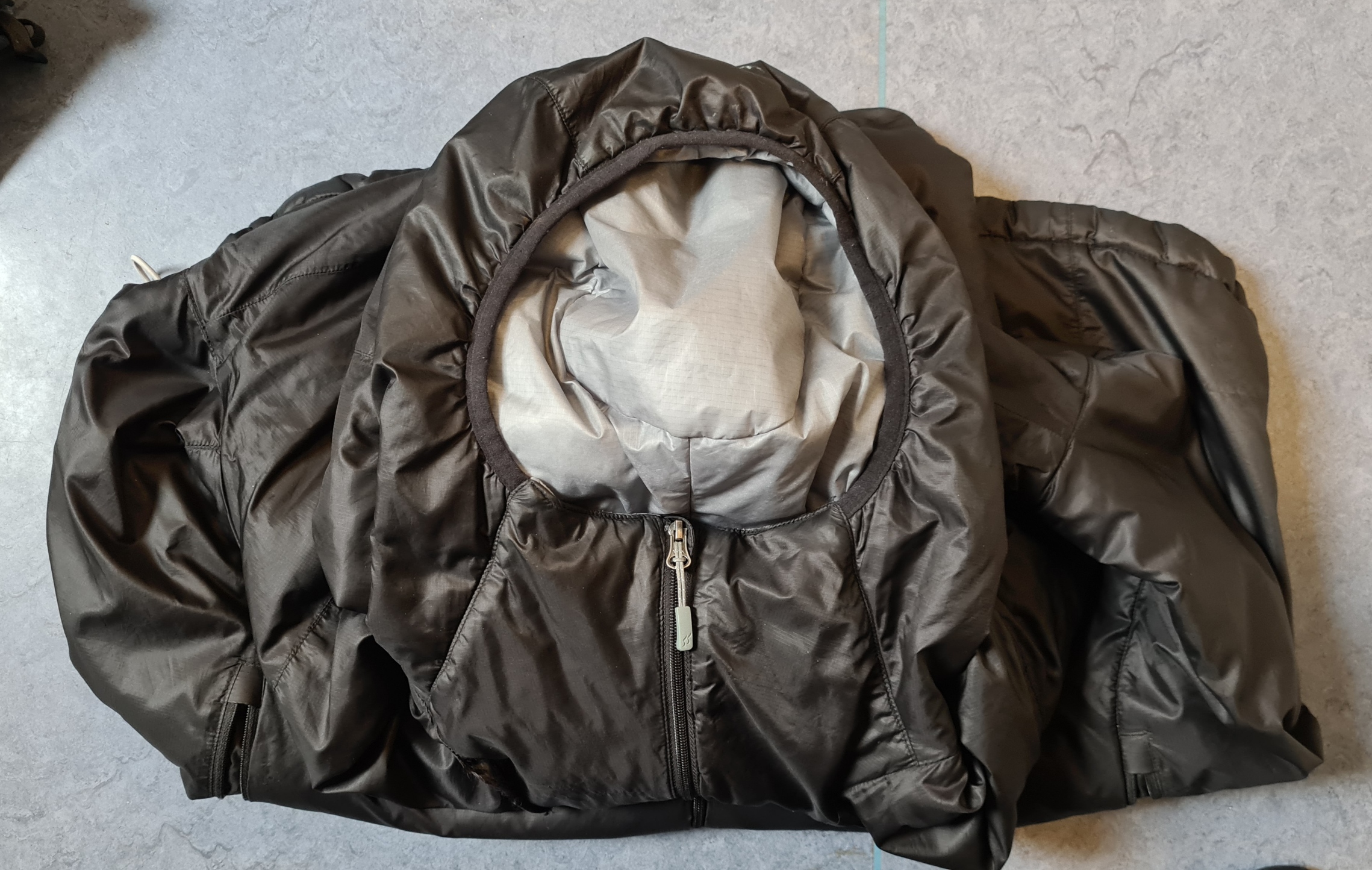
My leg covering options if it had been cold were less, essentially my windproof leggings over my hiking trousers. If required, hand and foot over-layers would be spare wool socks as mitts, and waterproof socks either worn alone or over my hiking socks. I never needed to do either, but the options were there. Note that my sleeping baselayers would not be part of this extreme weather layering system, these remain dry for wearing in the tent and for actually sleeping in. That said, I did make a mistake in this department. I should have carried my winter use 1mm neoprene over-socks on this trail. I never required them, but in hind-sight should have packed them in case of more extreme conditions.
The Arctic Circle Trail can only be tackled by the backpacker in the summer months when snow and ice have (mostly) cleared. Depending on the month, the trail can potentially be covered with snow, or boggy snow melt or even firm underfoot for many parts. There will always be water crossings, these varying from boulder hopping to wading. The deepest I had to wade was to my waist.
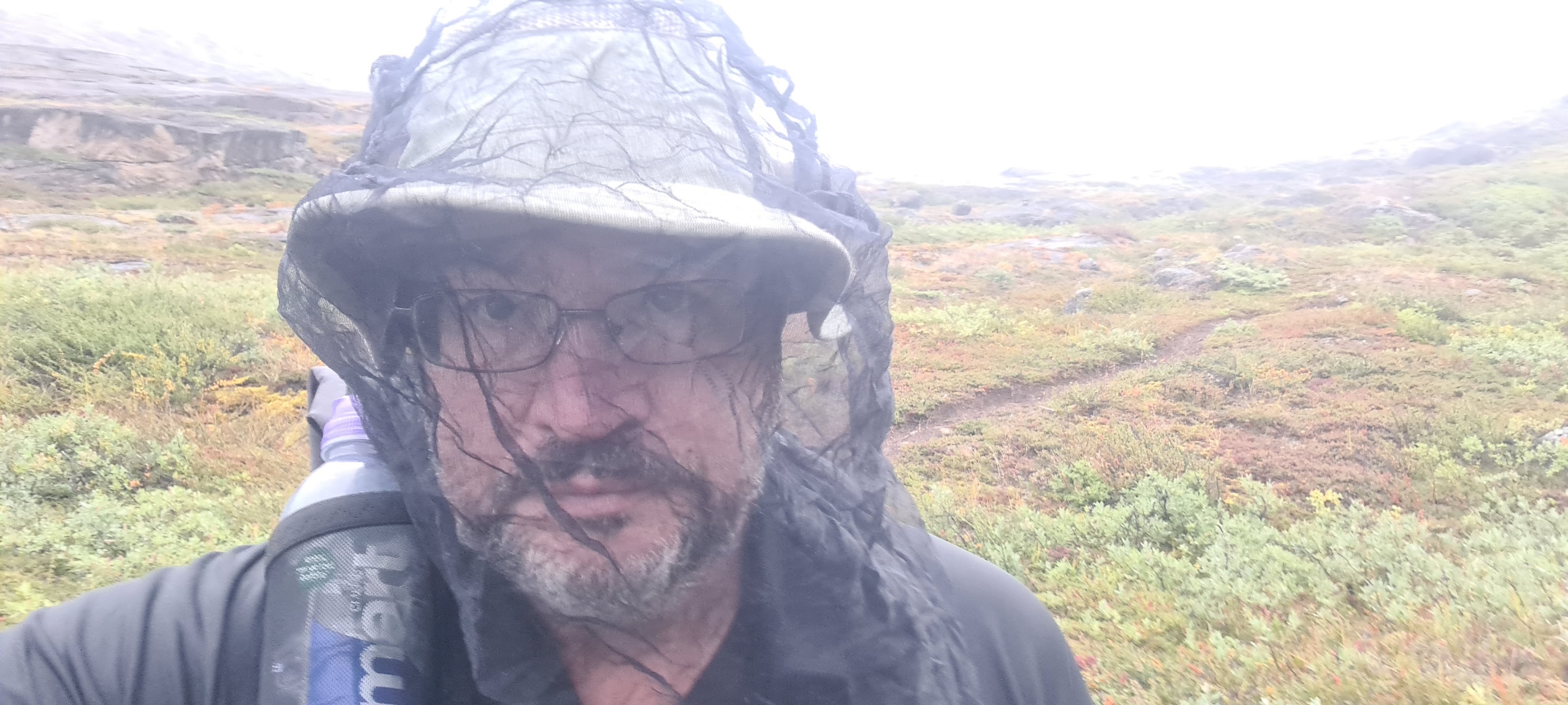
You might encounter strong sun, heavy rain, or even snow on trail. Despite being summer, temperatures can drop below freezing, especially at night. Once the mercury does drop below zero this just about obliterates the mosquitoes but the hardier and almost equally troublesome blackflies and midges persist. A headnet is an essential piece of kit if you don’t want to go nuts. My medium width brim Tilley hat kept my head shaded from the sun, kept the rain off my glasses and supported a headnet away from my face so mosquitoes couldn’t bite through it. A wide brim hat is a prime example of multi-use gear.
Hygiene:
It is very easy to go overboard with hygiene and toiletries when backpacking. Kept in a ziplock baggie, I had a child’s bamboo toothbrush and a mini tube of toothpaste picked up in a hotel at some time. Also a small ‘Slim Jim’ comb for my rapidly reducing head of hair. I had cream for feet and body. These were mostly carried in small aluminium tins but having used these for a few years I have got a bit fed up with the soft metal cross-threading and have since swapped out to equally as small and light tiny plastic ‘travel pots‘ from Muji.
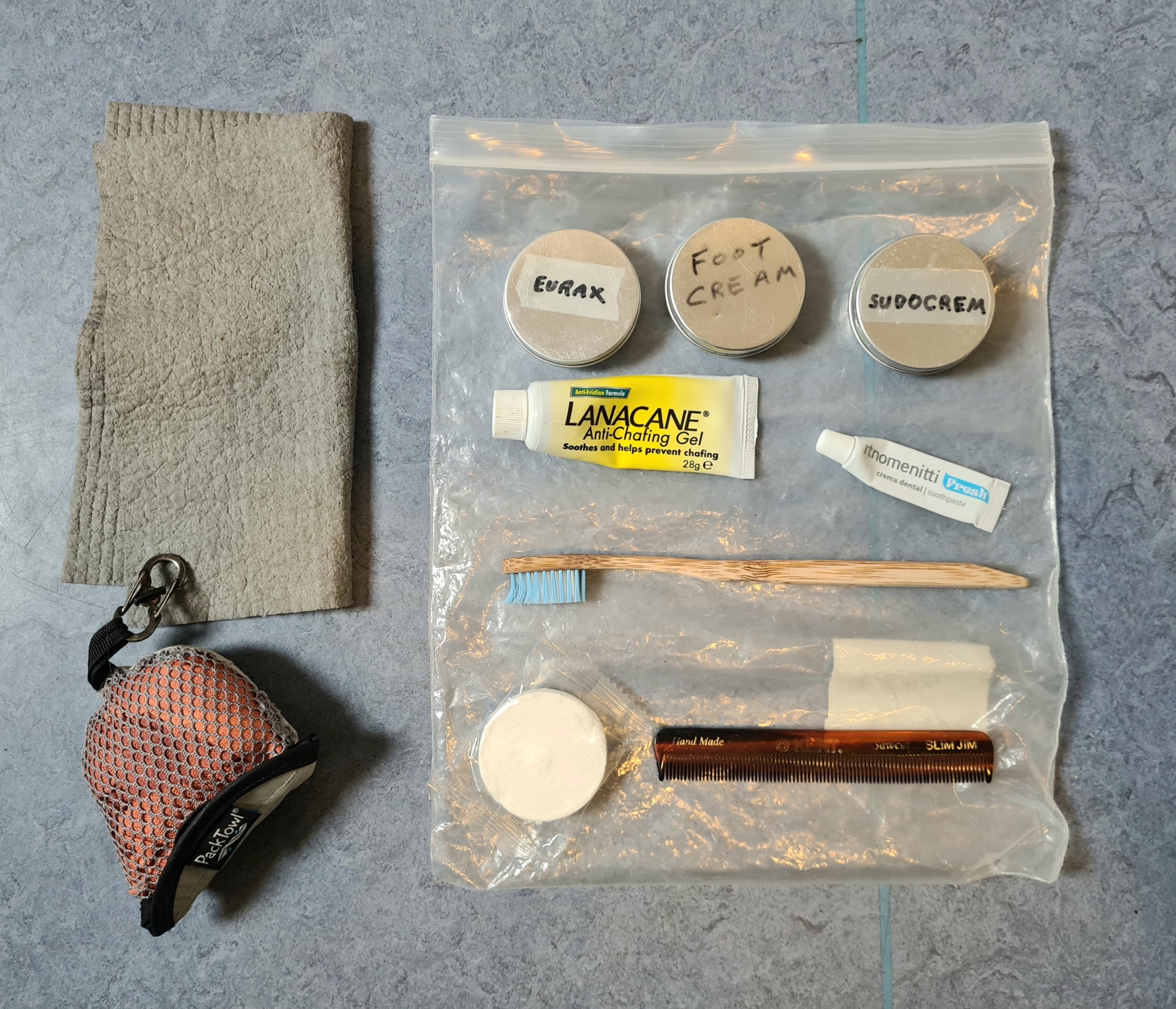
Some ultra-light hikers seem to embrace a grotty on-trail existence, eschewing even the simplest of body cleans. But even if unable to shower or bathe, a nightly body wash or wipe over, while cursory, is almost essential to remove body salts and grime that could result in skin issues or chaffing further down the line. It also means you sleep better. Any more severe grime was cleaned off with my all-purpose Swedish cloth, also used for condensation wipe downs on the tent. However I also had a handful of compressed ‘puck’ towlettes for ‘pits ‘n’ bits’. I had a nano microfibre towel, but that was more for use in town post-trail.
There are always a few other things to consider. I had a full roll of TP (with tube removed) in a ziplock and a small titanium trowel. Used TP has to be packed out and I moved this to the previous nights emptied dehydrated meal pouch. All eventually disposed of in Sisimiut. Far too many hikers simply litter the trail.
Ditty bag:
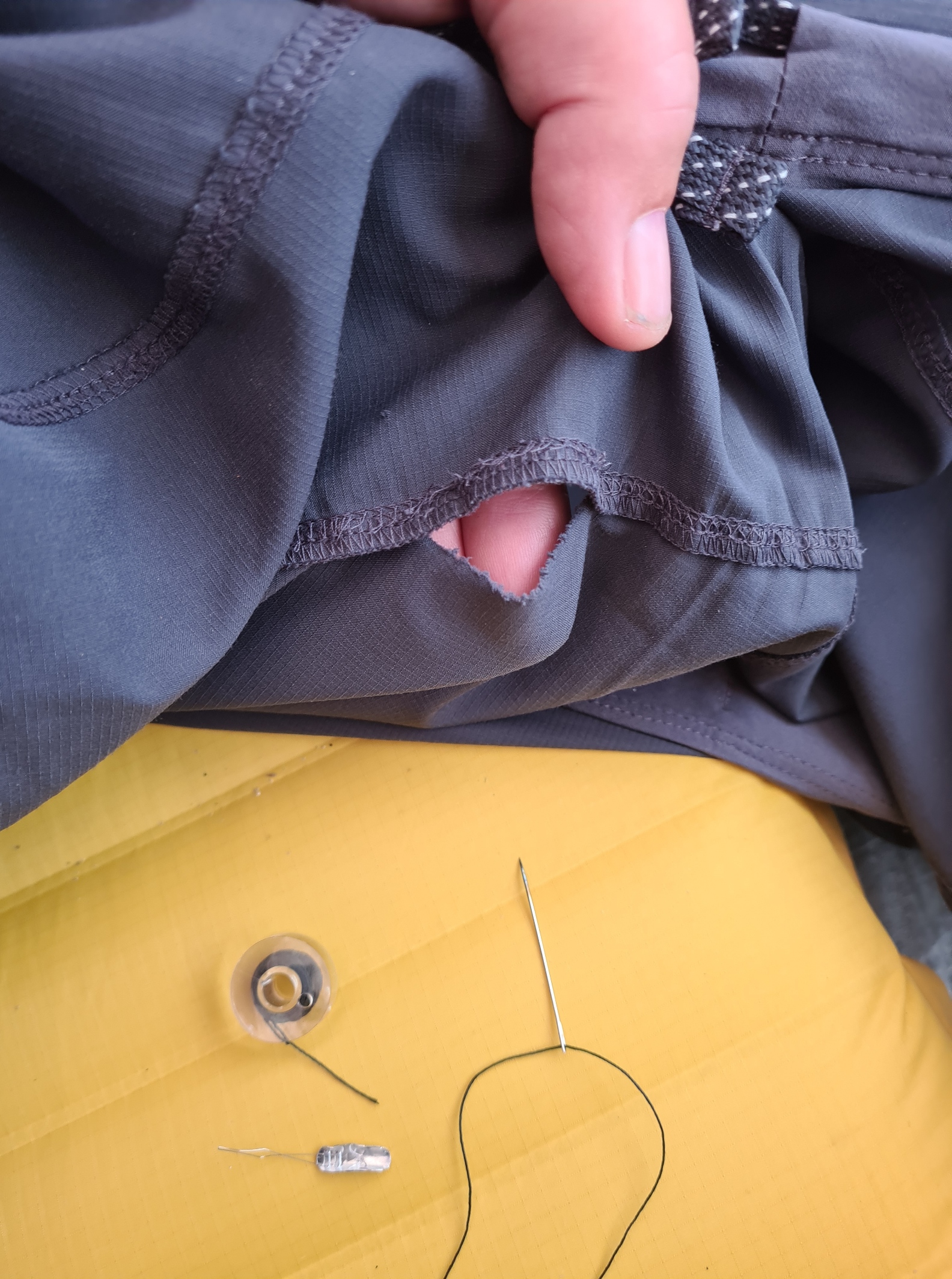
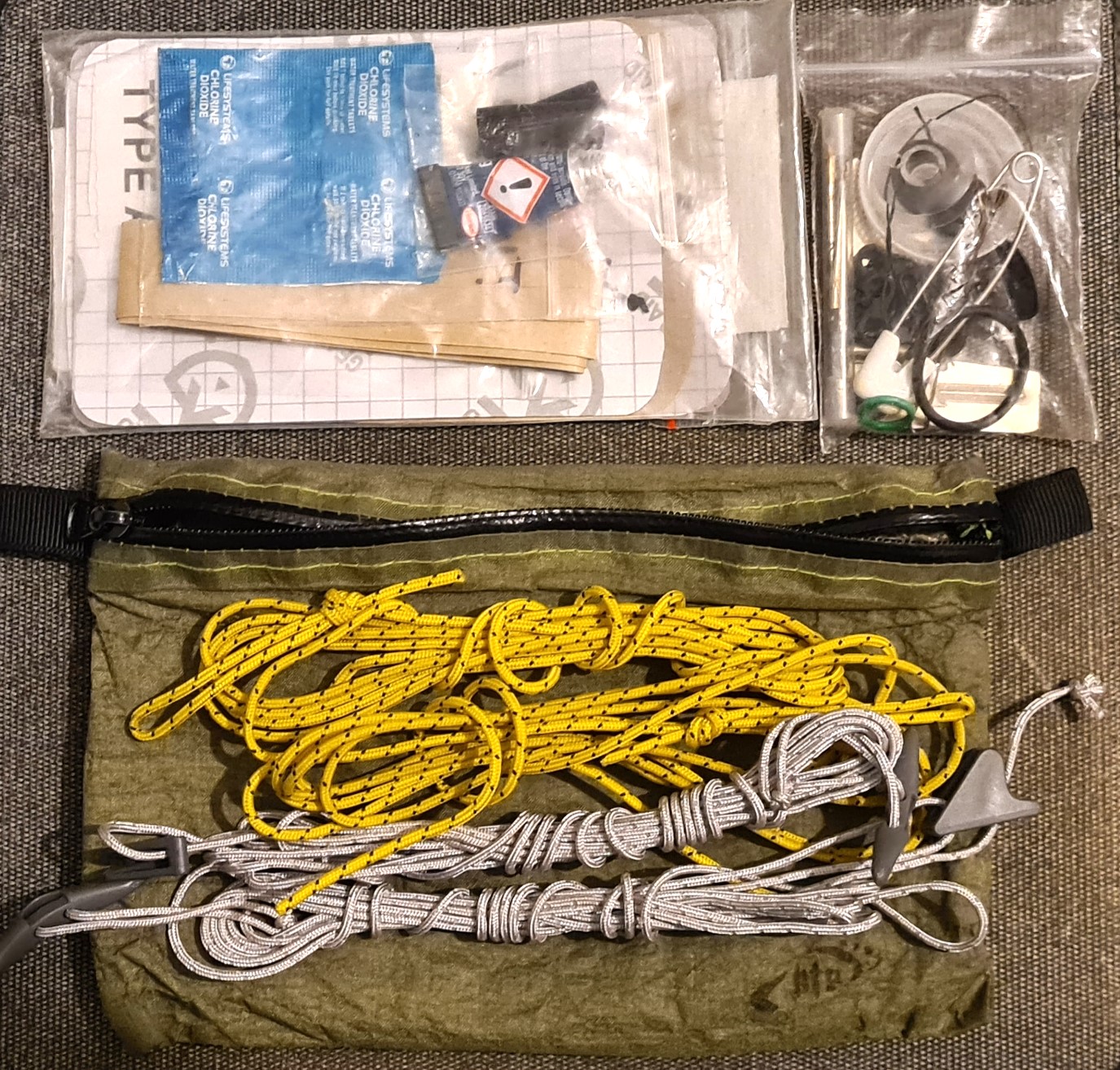
The ditty bag is where small ‘stuff’ resides. Those little items that either make life just a little more comfortable on trail, or more importantly, can help dig me out of a small hole. It is mostly tapes and repair items, plus a couple of extra guys for the tent in case of poor weather. I didn’t access the contents much on this trail, but did have to sew a rent in my trousers on one occasion.
Electronics:
I carried a Samsung Galaxy S20+ phone that was occasionally put inside a waterproof case from Lifeventure if it was wet. This was primarily used as my camera, though I also had the trail downloaded. I consulted this twice, but relied for the most part on hard copy paper maps.
While there is a single opportunity to charge electronics, at the canoe centre hut, there is nothing for the remainder of the trail and I carried a Nitecore Carbo 20k mAh powerbank, trickle charged from a Sunslice Fusion Flex 6W flexible solar panel. This worked fine until the rubbish charge lead I had was damaged near the end of trail. Lesson learned and it has subsequently been replaced by a better quality lead. I had plenty of power on trail and watched the occasional film of an evening on the phone.
The remainder of my electronics were kept in a little DCF zip pouch that has a Photon Freedom button light attached to the zip. Contents were a three-pin type G UK wall charger and two-pin type C Europlug, with one metre type C-to-C Anker cable, a spare ‘shortie’ C-to-C cable, Aurora A5 USB-C glow-in-the-dark third generation flashlight (never used), a little 3g LED that plugs into the powerbank (never used), also, a sub 10g electric inflator for my pad, the Pad-Pal v5.1. Finally, I had my Garmin Inreach Mini 2, that I used to check in each night and morning with a couple of emergency contacts back home.
Navigation etc:
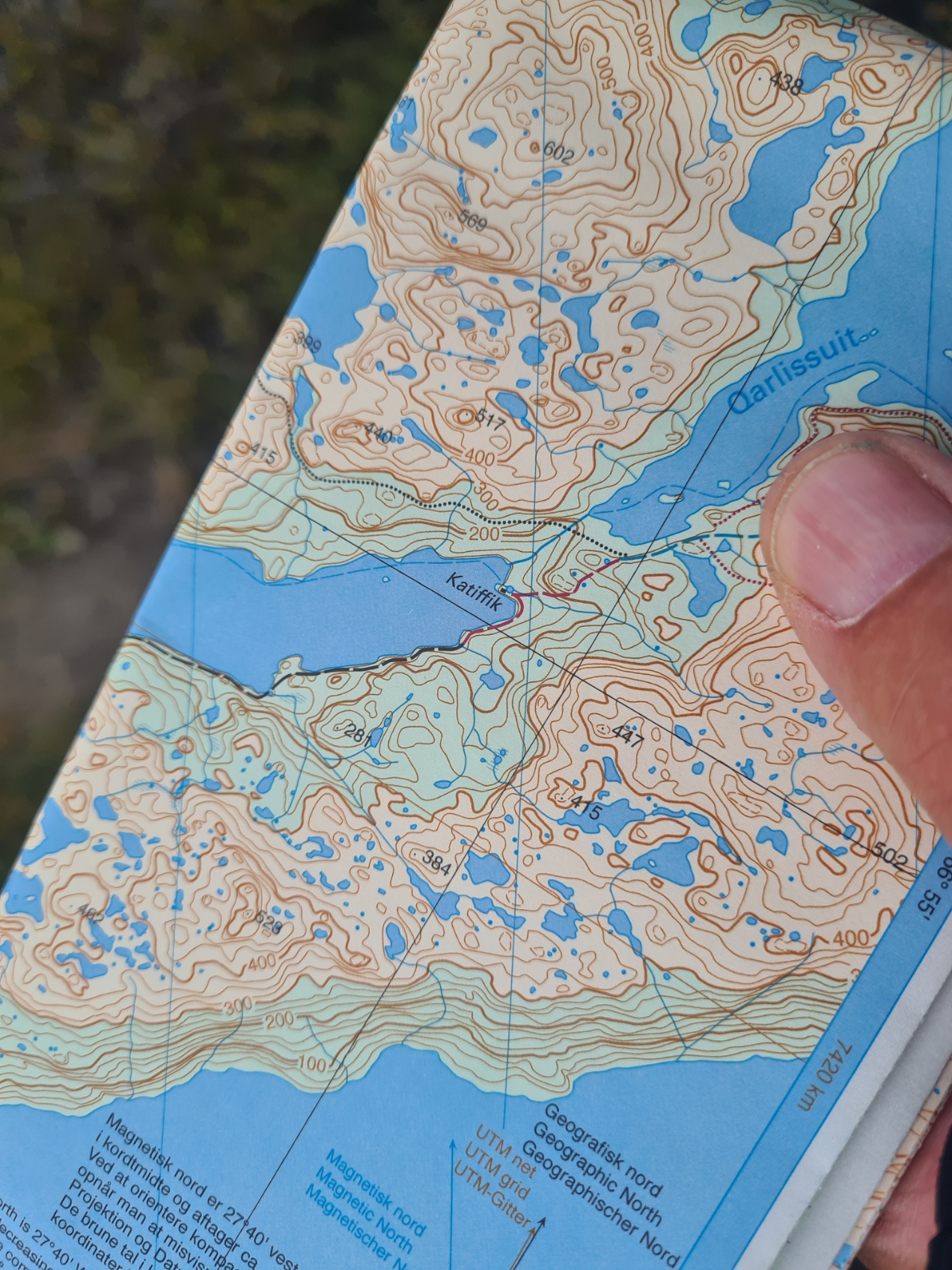
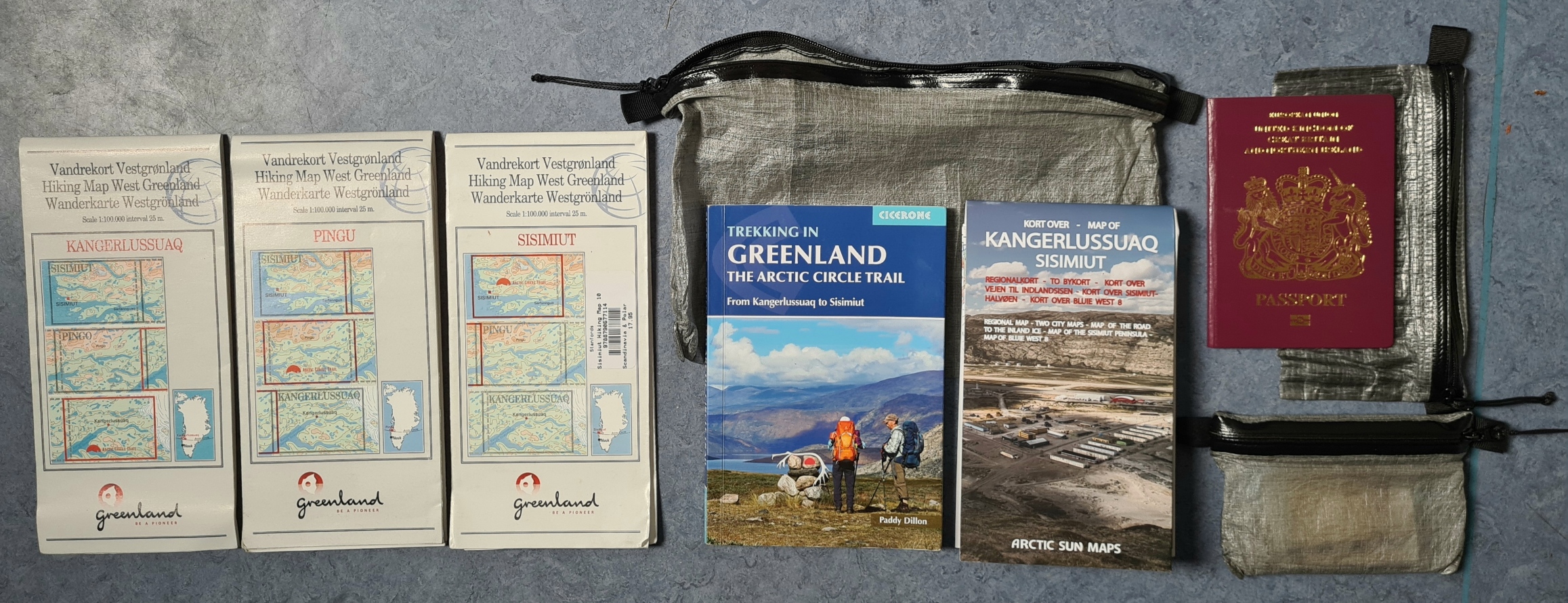
For navigation, I primarily used the three waterproof maps, published by Greenland Tourism, that cover the trail at 1:100 000 scale. While the 25m contours hid a lot of the ups and downs, these are printed by Harvey and were useful. As mentioned, I supplemented these with the entire trail down-loaded via the HiiKER app on my phone.
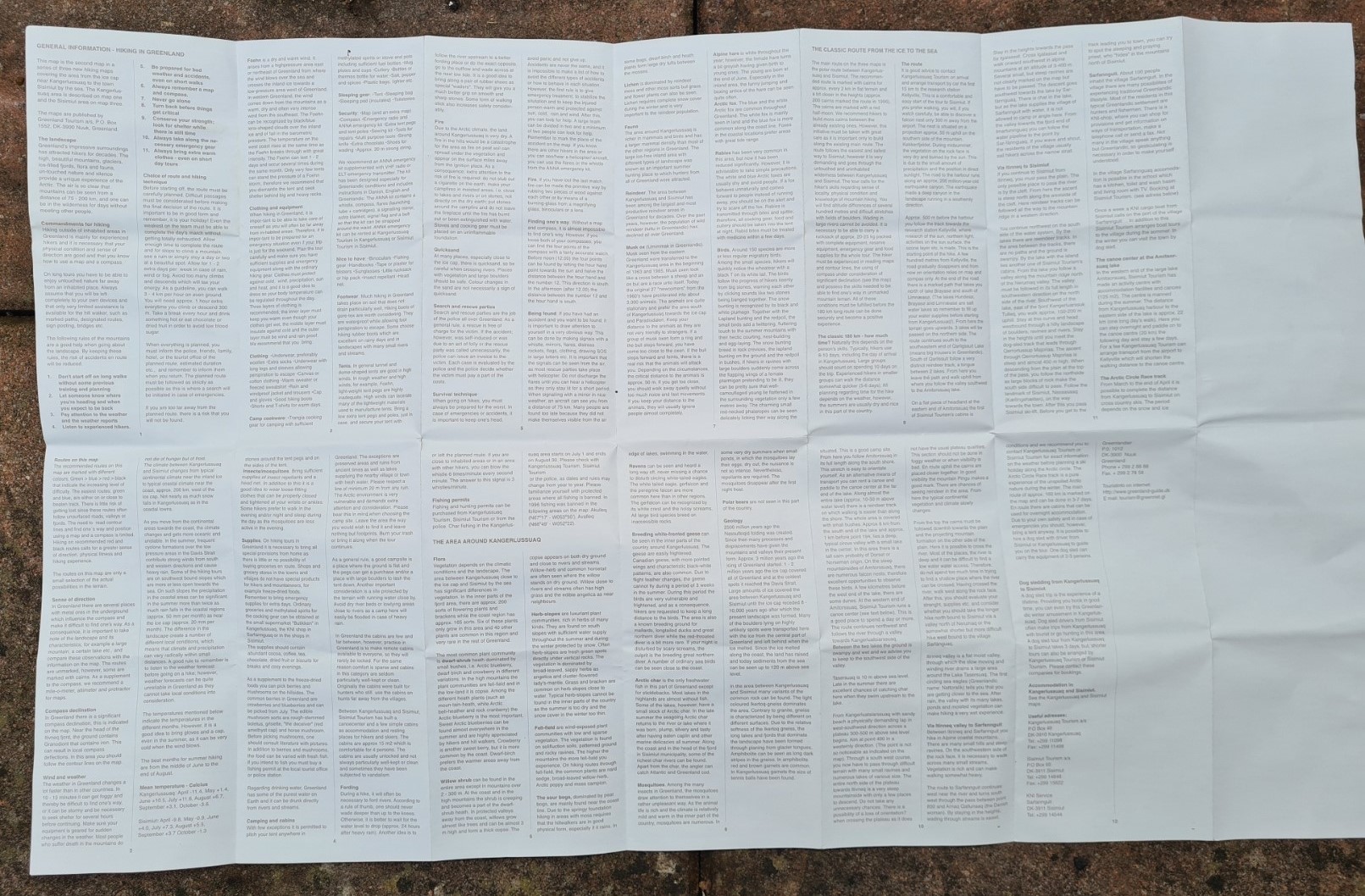
I carried the Cicerone guide book to the Arctic Circle Trail. This was written quite a few years ago but little appeared to have changed on the trail in the intervening years, other than the new southern route, that I didn’t use. I read this of an evening in my tent and valued the information. The two unused maps, guidebook, my passport and wallet (with house key and cash for town), were kept in a waterproof baggie, in my clothes bag, along with the 1:250 000 Kangerlussuaq-Sisimiut sheet from Arctic Sun Maps.
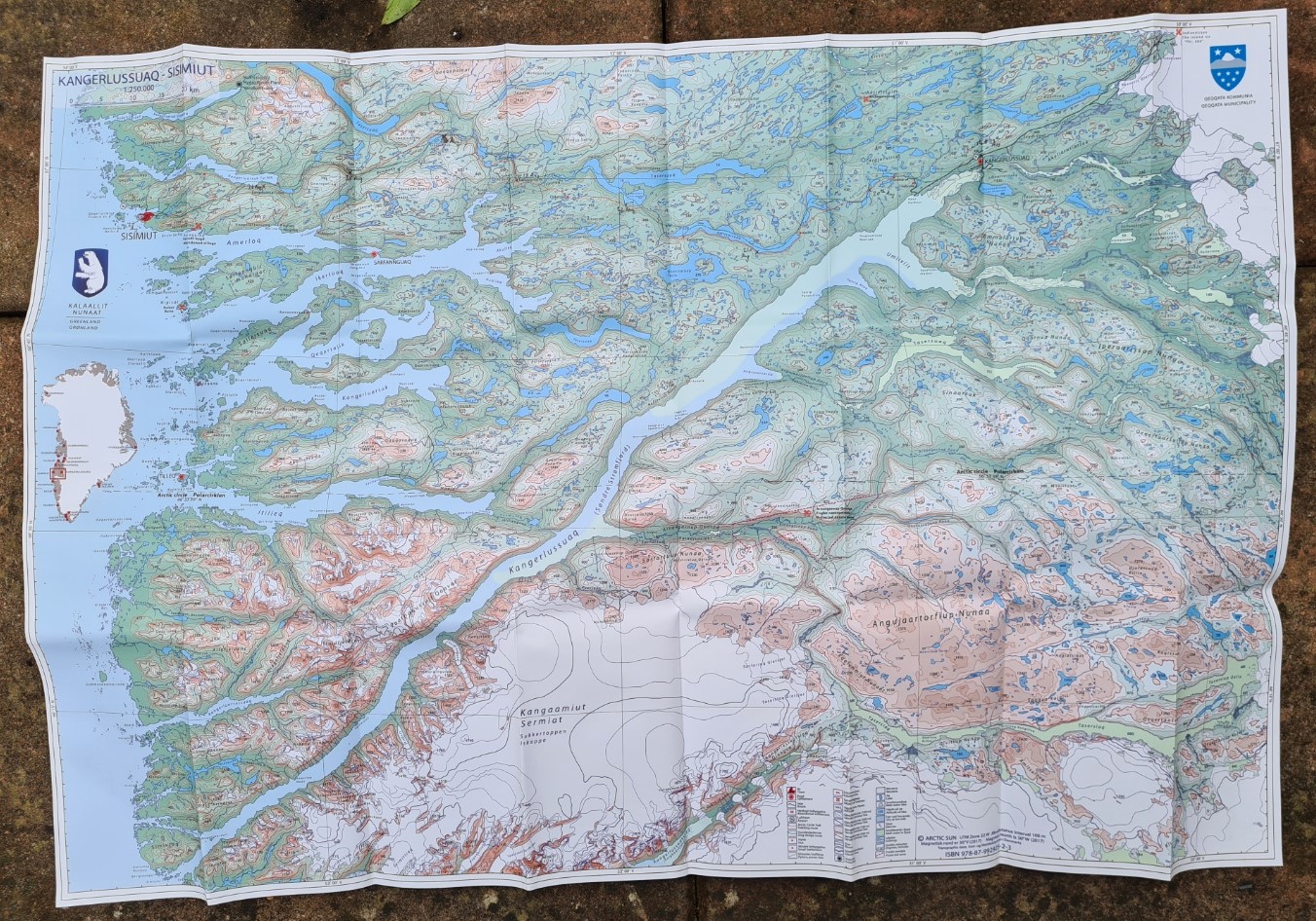
The Arctic Sun Map was an impulse buy at the airport, just before setting off, and I used this to keep an eye on overall progress each night, also marking my camp sites on it. It would have been insufficient for navigation purposes on its own.
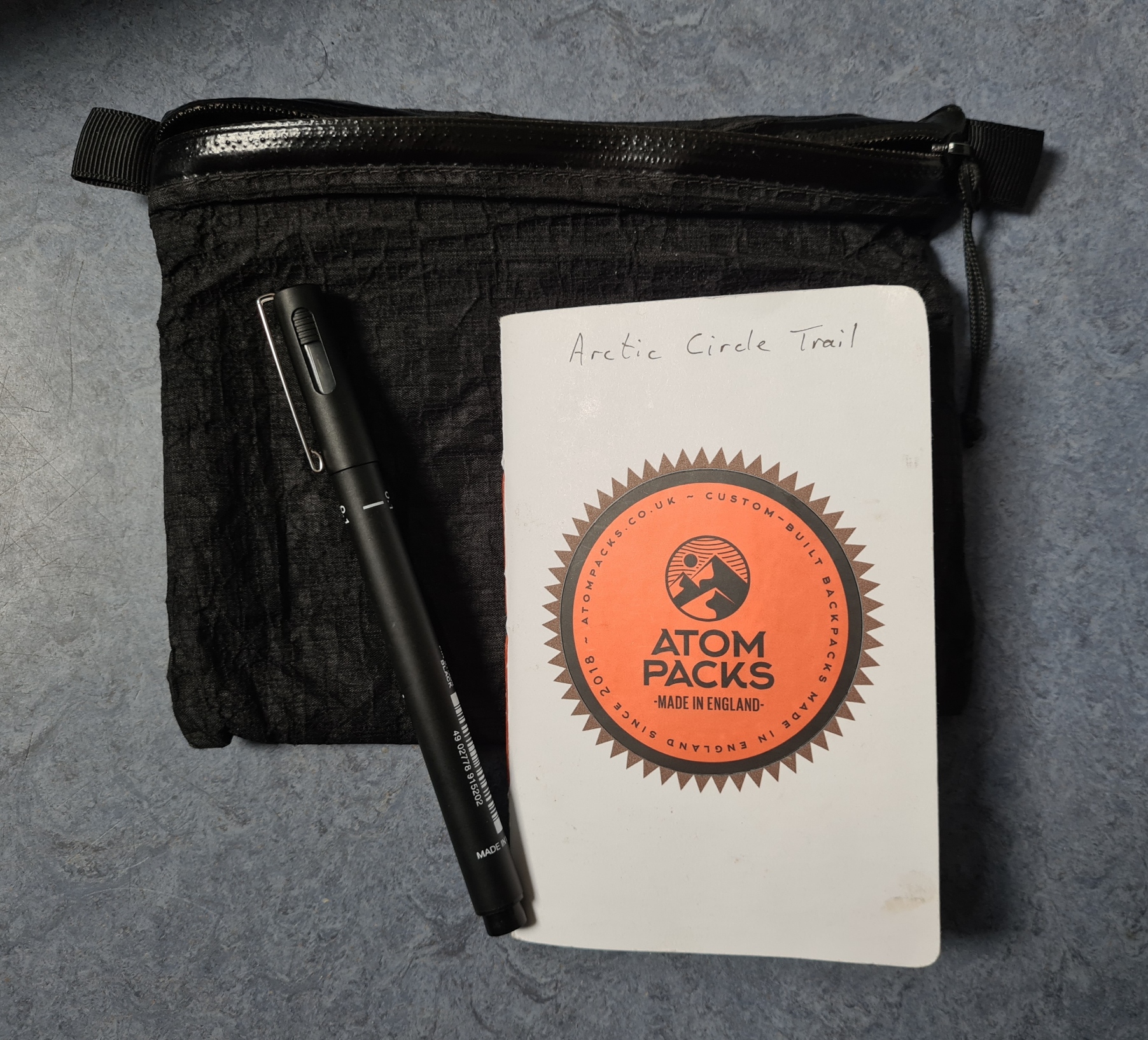
As normal, I carried a journal on this trail and wrote a few pages of notes each evening. Few seem to do such a thing these days. I have a stack of these on a bookshelf and I can see myself returning to them as the body ages, limbs become less capable and far fewer days are spent on trail.
Other stuff…:
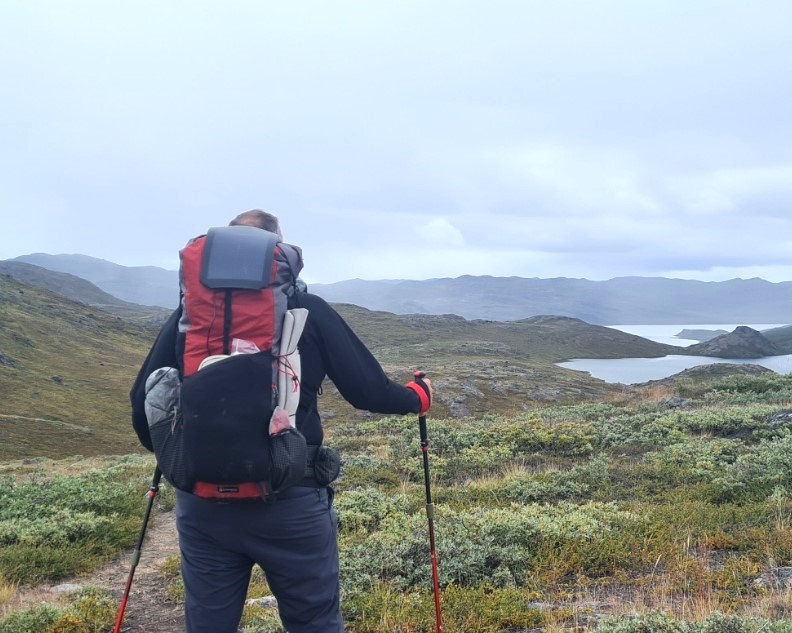
The left pouch on my packs hip belt held a small collection of gear. I kept my beenie and sun gloves in here if not wearing them. My Bug Head Net from Mountain Laurel Designs was necessary to retain any form of sanity at times. I also caried a small monocular with me, this is the excellent Leica 8×20 Monovid, and was a 100% luxury item. It was used occasionally but not as frequently as I thought or hoped it might. I take a lot of photos with my phone so carried a little Ultrapod tripod and Quadlock phone support, both frequently used.
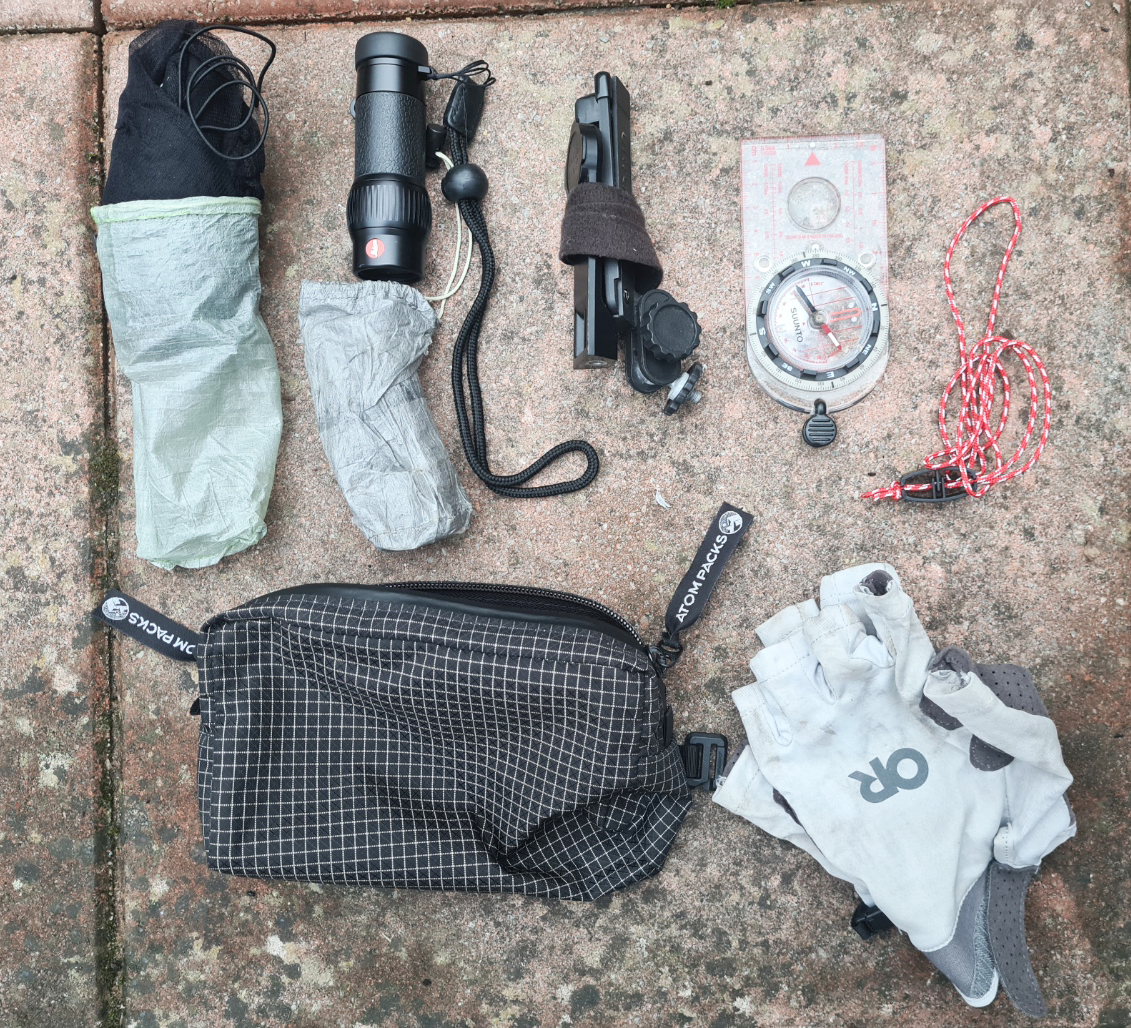
I carried a compass as an aid to navigation if the weather had been particularly bad, which it wasn’t. This is probably the best baseplate type compass currently available- the Suunto M-3 NH and lanyard. An important feature on the Suunto M-3 compass is it’s adjustable declination correction. Very necessary in a region that has huge magnetic declination. However hikers on the ACT should also be aware of the magnetism exhibited by some rocks on the trail, which can potentially upset navigation a great deal.
Few hikers seem to bother carrying whistles these days either. I really don’t know why, and the pathetic little things incorporated into many pack sternum straps simply isn’t up to the job of alerting people to problems. I carried, as usual, a Storm Whistle, which I think is still the loudest there is.
The ACT is not the place to go experimenting with new items of important gear. If you already have specific items of gear, then buying untried replacements can be an expensive process, and is also possibly unwise if it ends up not quite suiting you. The Arctic Circle Trail crosses lonely tundra, sometimes difficult terrain and mountainous areas and safety should not be compromised as it is the individual’s responsibility to safely complete the trail and not expect others to pick up any slack. Strength and fitness can be factors too. With careful forethought and planning I was able to keep my pack weight reduced and make my hike less demanding and more enjoyable as a result. The Arctic Circle Trail is an excellent trek, one of the best there is, but it deserves respect.
- Arctic Circle Trail: Kangerlussuaq to Eqalugaarniarfik
- Arctic Circle Trail: Eqalugaarniarfik to Sisimiut
- Arctic Circle Trail: Hunter cairns

 Three Points of the Compass
I have really enjoyed your posts about the ACT . You writings confirm an old saying I heard 50 years ago , that exuberance comes naturally but wisdom is ” paid for ” . I was taught by old school methods and older types of gear , and I notice that the old school methods are still in-practice . Thank you for ” taking me along ” .
LikeLike
You are, of course, very welcome. Thank you
LikeLiked by 1 person