
Three Points of the Compass takes a look at the base layers he uses as sleep clothes. There have been recent changes, not much, but at least these now lack the holes and rents of the old un’s.
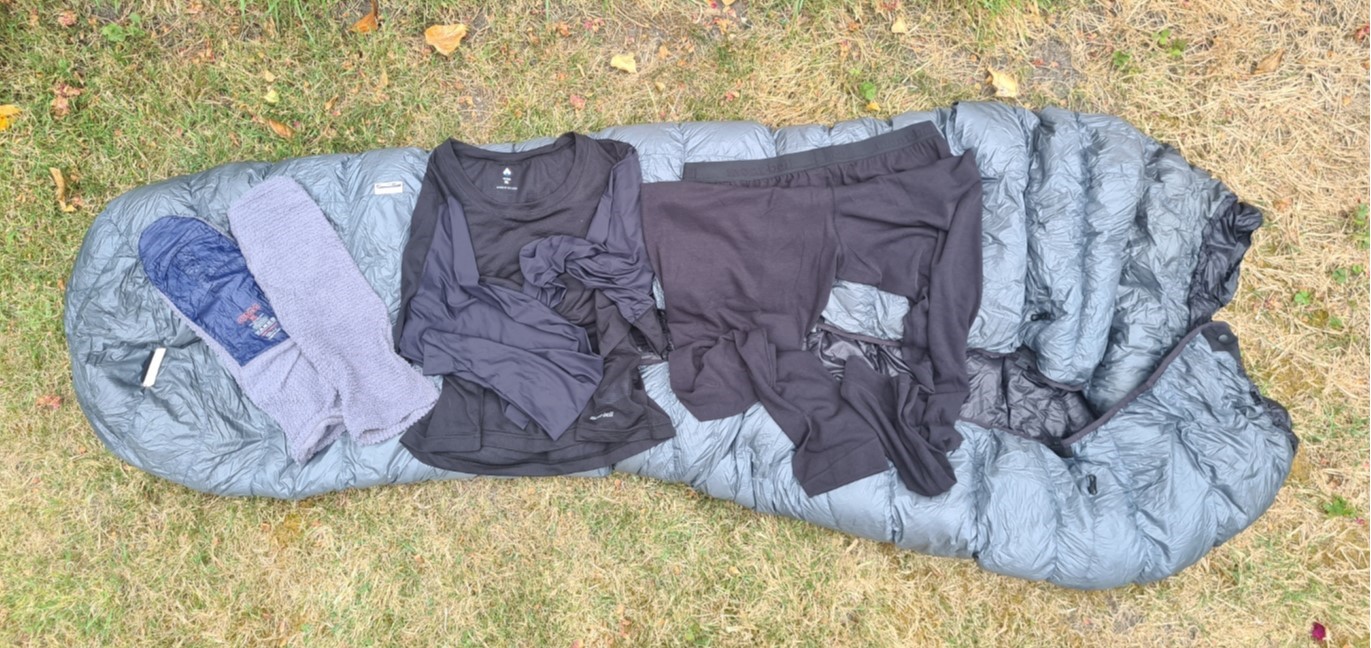
Life on trail is invariably dirty and smelly. Despite making an attempt to keep myself as clean as possible, I look on physically isolating myself from my quilt at night to keep grime, body oils and smell away from contaminating the Pertex inner lining and down insulation of my quilt. I am more comfortable and sleep better too. My sleep layers comprise of a long sleeve base-layer top, base-layer tights/leggings and a dedicated pair of sleep socks. These are always included in my backpacking gear, packed away with my quilt, kept dry, and never get worn for hiking or anything other than as night clothes, when pitched, or possibly when in a bothy or hostel.
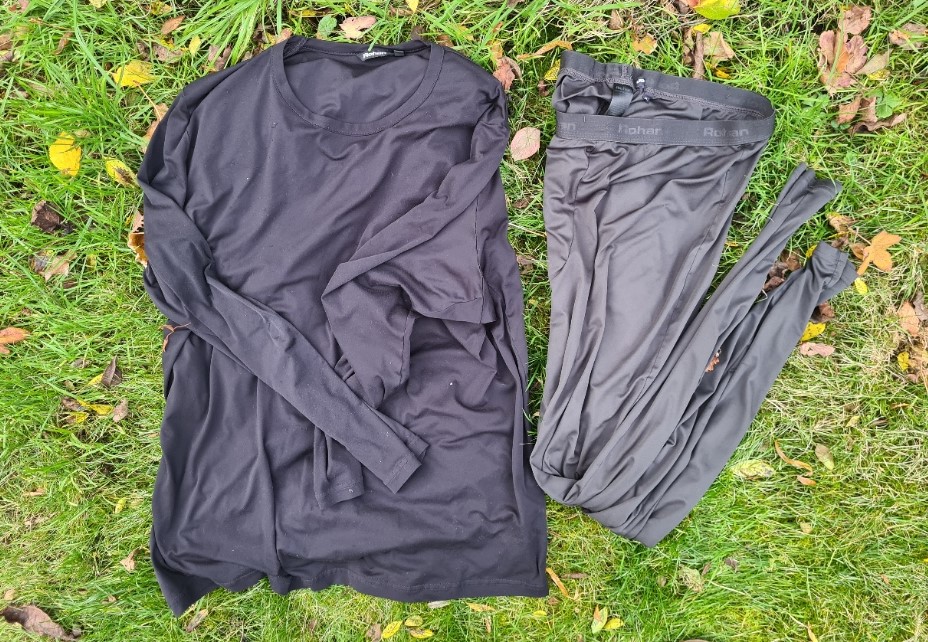
Around 2015 I purchased a top and bottoms from Rohan. These were their incredibly light and thin Ultra silver long sleeve T and Ultra silver Leggings. The long sleeve top, in size XL weighed 85g and bottoms another 109g for size XL. Less than 200g for the two items. That was my target weight. Because they were only worn as night wear, they lasted me well and were carried for thousands of miles of trail and slept in on hundreds of nights. But inevitably, they both eventually wore out. On my last backpacking trip the arse of the leggings ripped out entirely, and the long sleeve T has been getting ever tattier. Also inevitably, Rohan had discontinued this range and abandoned the lightweight material, probably because it wasn’t durable enough for people using it more aggressively than me.
I spent some time looking around for what the manufacturers were offering in their lightest weights. Most advertised weights were obviously going to prove a nonsense as these invariably refer to size Medium. I am a big chap, so was looking for XL, always a good few grams heavier. One of the issues is that really lightweight and very thin materials are simply not durable enough for long-term use. Most buyers will be buying them for daily wear and such material is going to easily snag, pull, wear through, hole and rip. I struggled to find what I was after.
I have worn merino wool sleep layers in the past. Merino has an excellent no-stink quality that most synthetics lack. However the lightest gsm merino materials lack durability and can be surprisingly heavy. I have also worn very light silk baselayers in the past which were good but have never found black, grey or ‘earth’ coloured silk layers and the usual lighter toned silk layers quickly look a bit grubby. I also found they lack long-term durability. I have used a silk liner to separate my body from my quilt in the past, but one of the reasons I use a quilt is for a less constricted freedom of movement, so a liner somewhat negated that advantage and was promptly rejected. Hence my settling on light synthetic sleeping clothes and accepting the need to wash them more frequently. That said, they are seldom washed on trail, possibly once if the walk is a fortnight’s duration, or more frequently if over a month.
In 2024 I experimented with a pair of leggings made from Polartec Alpha Direct. This material provides a high volume and an open structure while still remaining lightweight. Even when it gets wet, it retains its ability to insulate. The material the leggings were made from was 60gsm, the lightest weight option from FarPointe Outdoor Gear. Their size XL Alpha Direct Camp Pants were a scant 98g, but sadly didn’t work out for me, though they might for others. They are see through, which didn’t suit wearing around a hostel or bothy, too warm, and if I had any chaffing, they rubbed uncomfortably. A great lightweight insulation layer, but not for sleeping.
I searched through some of my older gear that hasn’t seen much use and found a pair of Arc’teryx Phase SL bottoms. These came in at 125g for size XL but I had worn these for hiking quite a few miles and they were holed pretty badly. After a couple more trips I knew I was going to again be on the search for a replacement. Typically, the model seems to be long-discontinued and current Arc’teryx baselayer tights and leggings are considerably heavier, over 200g. My search continued.
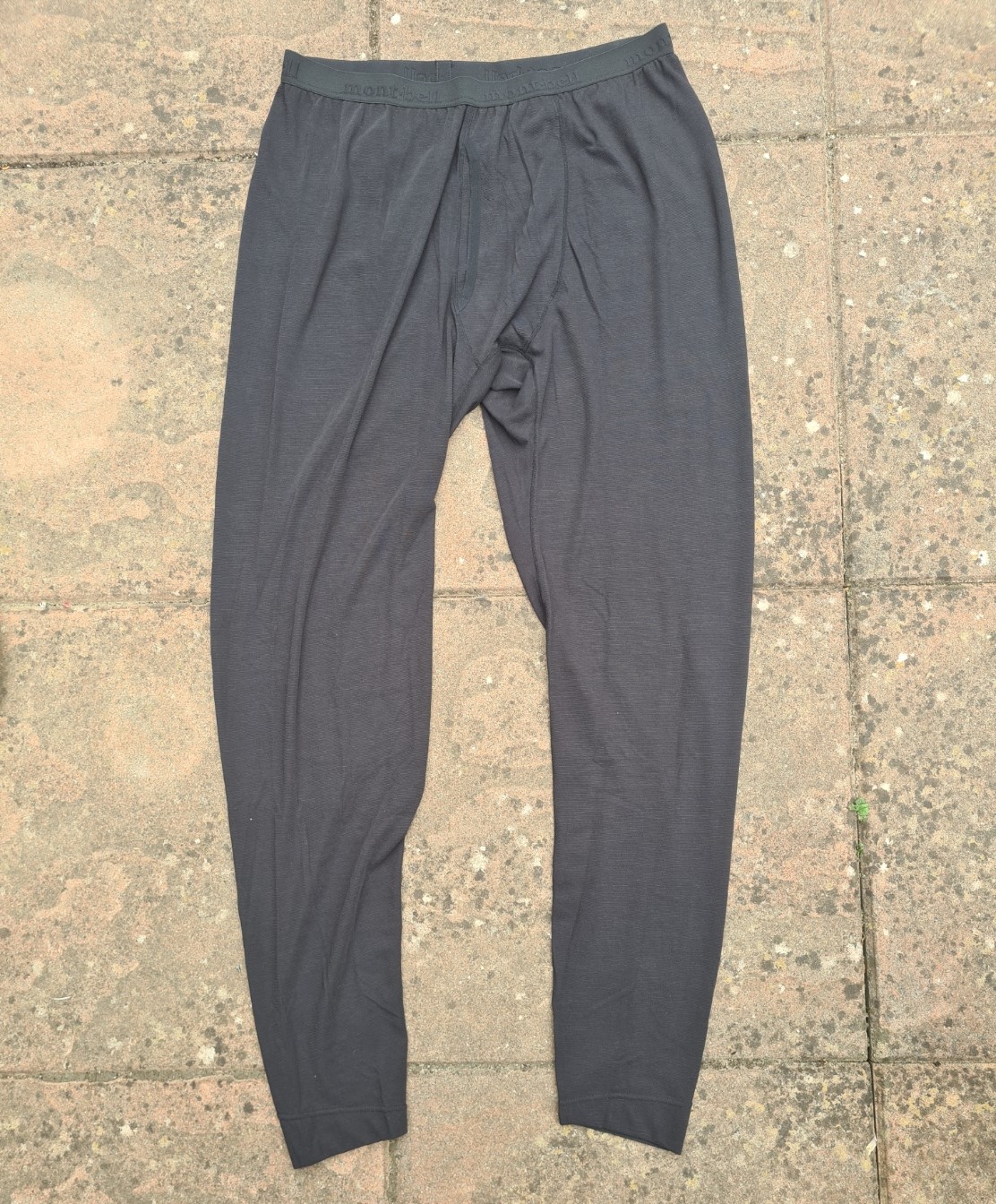
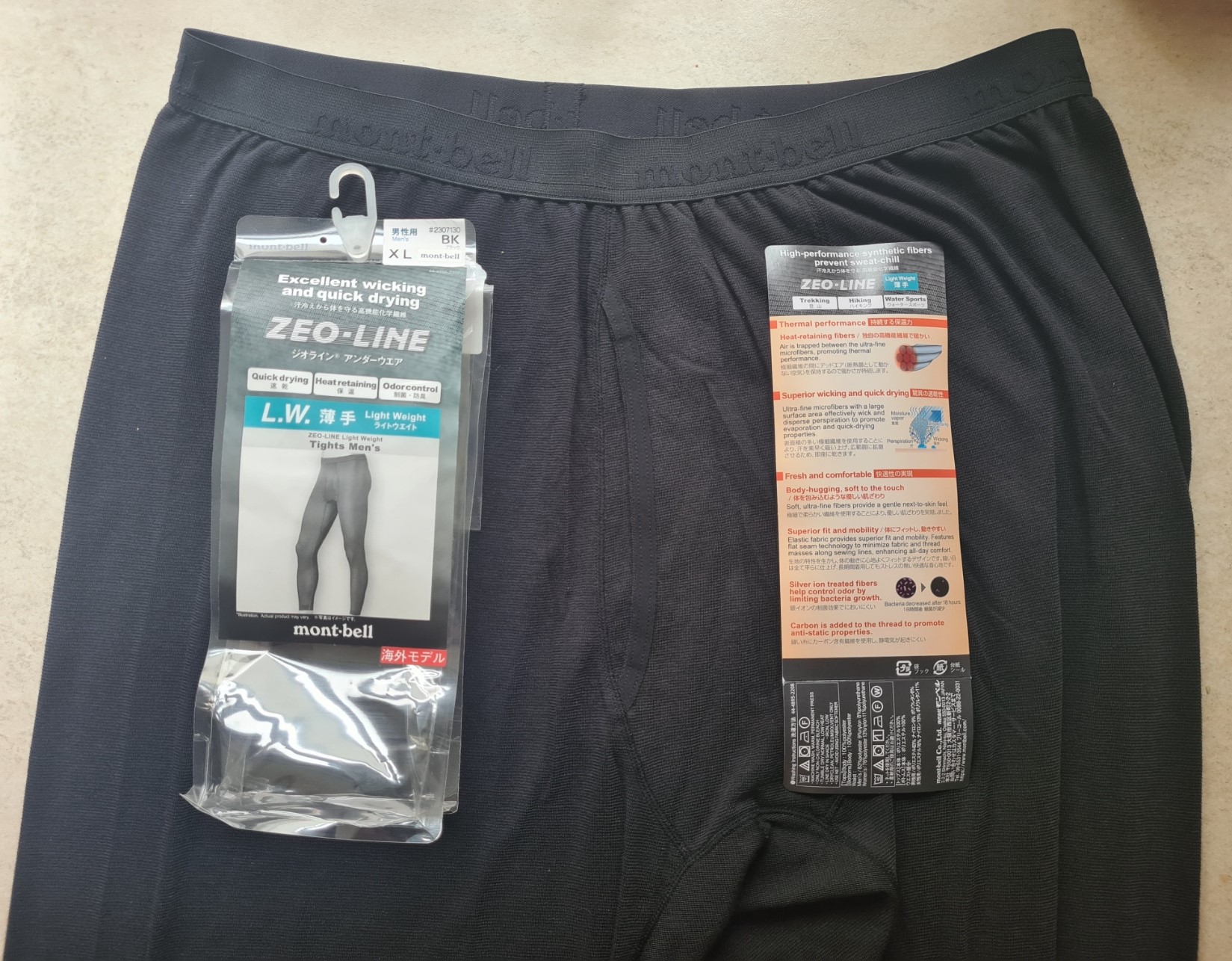
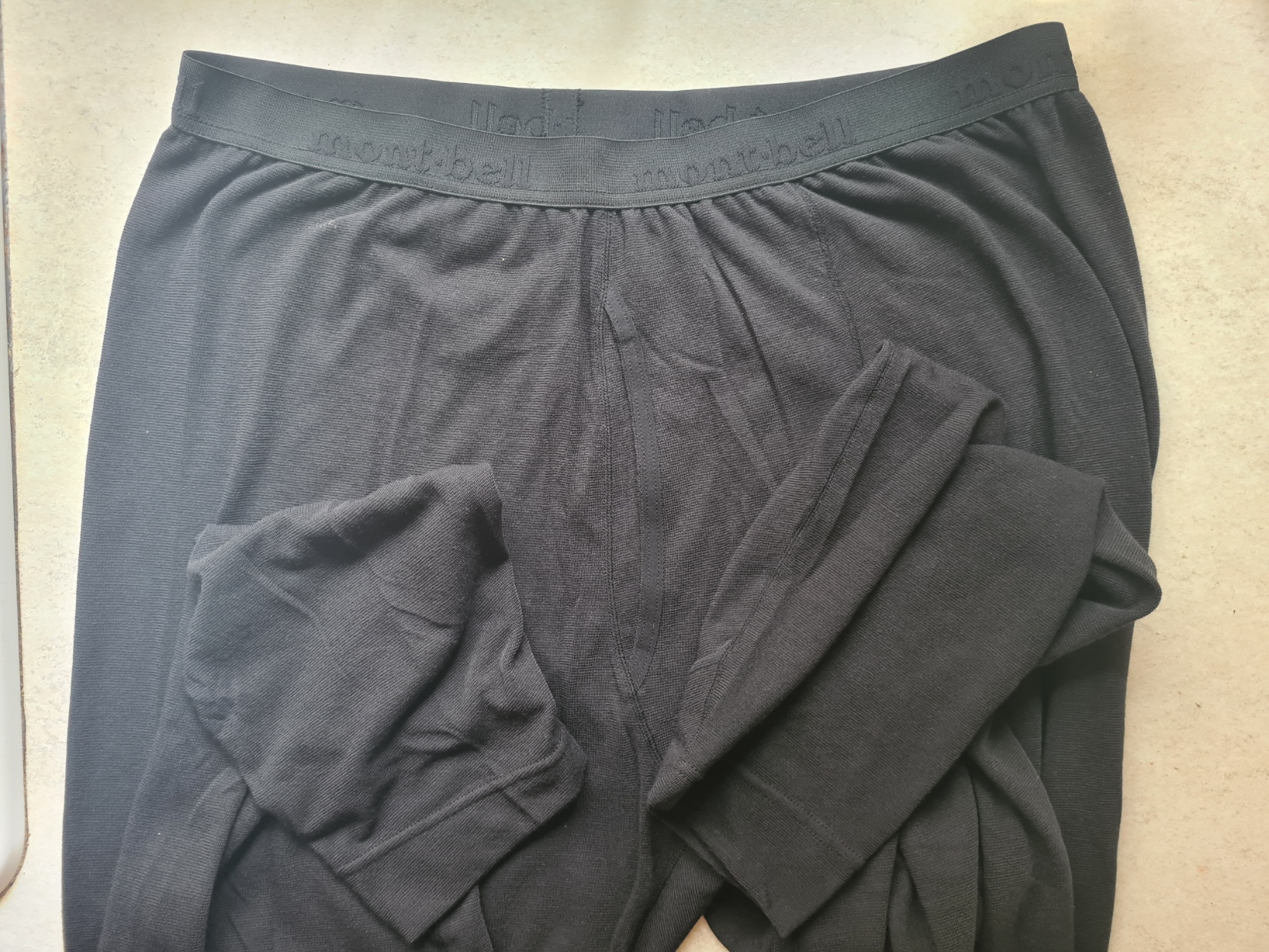
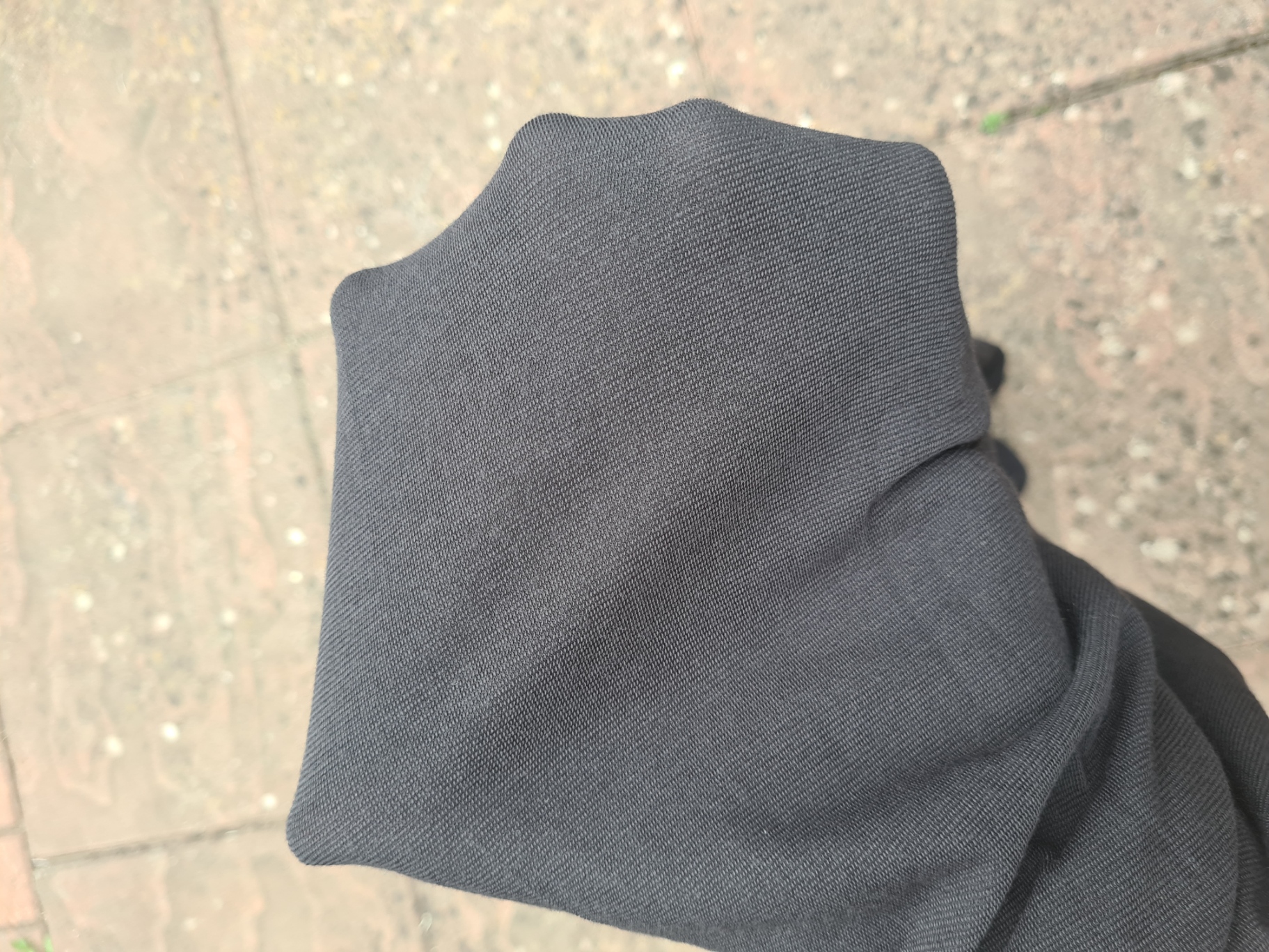
Then I found the Mont Bell Zeo-line light weight tights and ordered a pair. My men’s XL weigh 153g. Annoyingly they come with the usual fly, that I don’t need and adds weight. But they came in my preferred black colour, are stretchy and comfortable. The majority of the tights is polyester, with additional nylon and polyurethane in the waist band. They are tightly woven so are not see-through when worn.
In 2025, shipped from Switzerland, these cost me €38.00. They have silver-treated fibres that help reduce odour, but from experience, I know that this loses effectiveness after a few trips. I still think I can get something lighter than these, but until I do track something down, these are my sleeping bottoms.
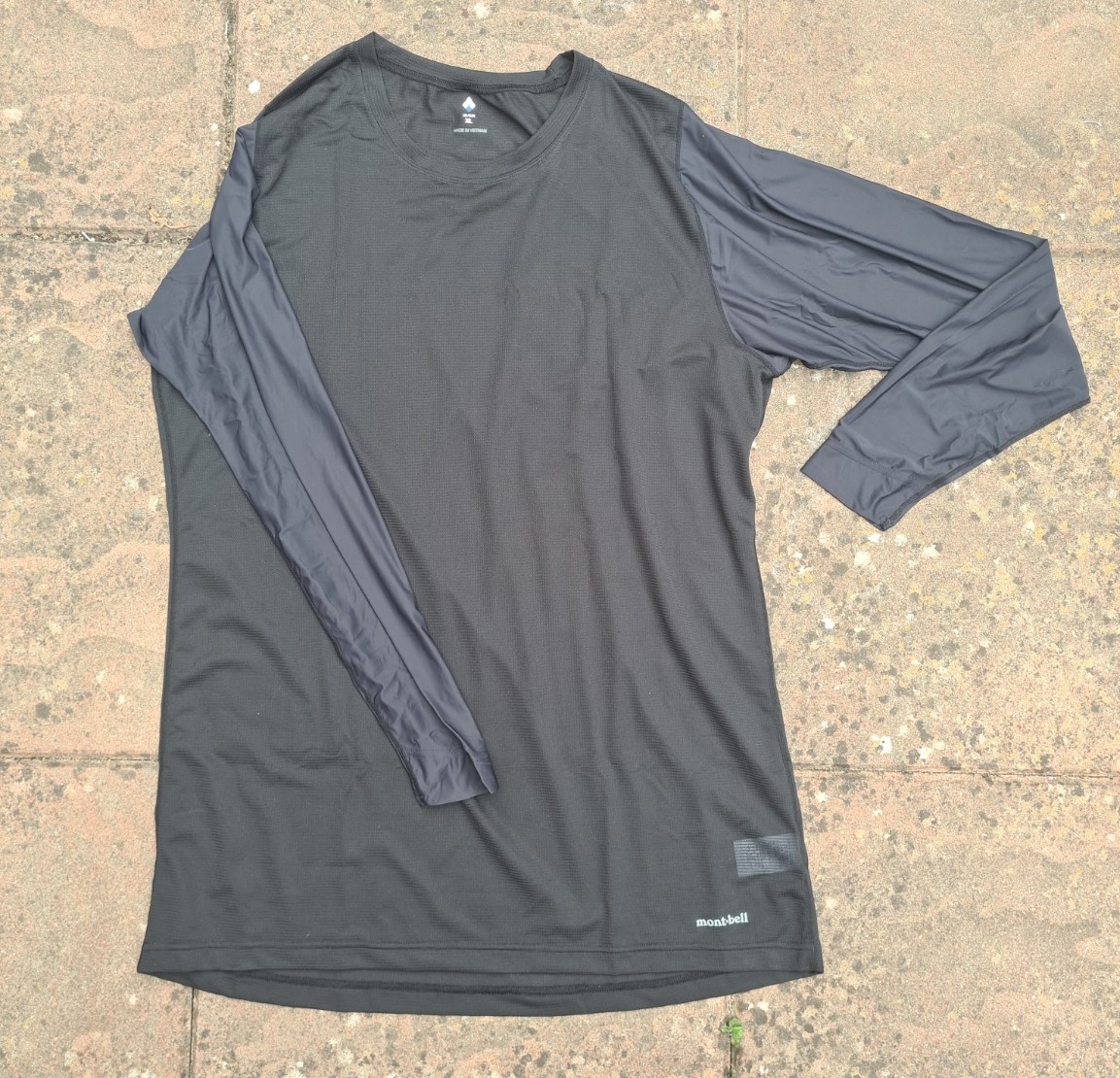
I also looked at the Mont-Bell Zeo line for a replacement sleeping top. This is their Zeo-line cool mesh ‘Slim Fit’ long sleeve. My size XL weighs a respectable and minimal 122g. This is due to an uncommon hybrid-construction. Again, the long sleeve top is almost entirely polyester, though the sleeves are a mix of 79% nylon and 21% polyurethane. From Switzerland, these cost me €57.00.
Despite being designed for layering under shirts while hiking, with UV protective long sleeves, there are features to this top that lend themselves to use as a sleeping layer. Silver impregnated fibres for odour control, long back to prevent draughts while sleeping, and a light and comfortable body that doesn’t cling.
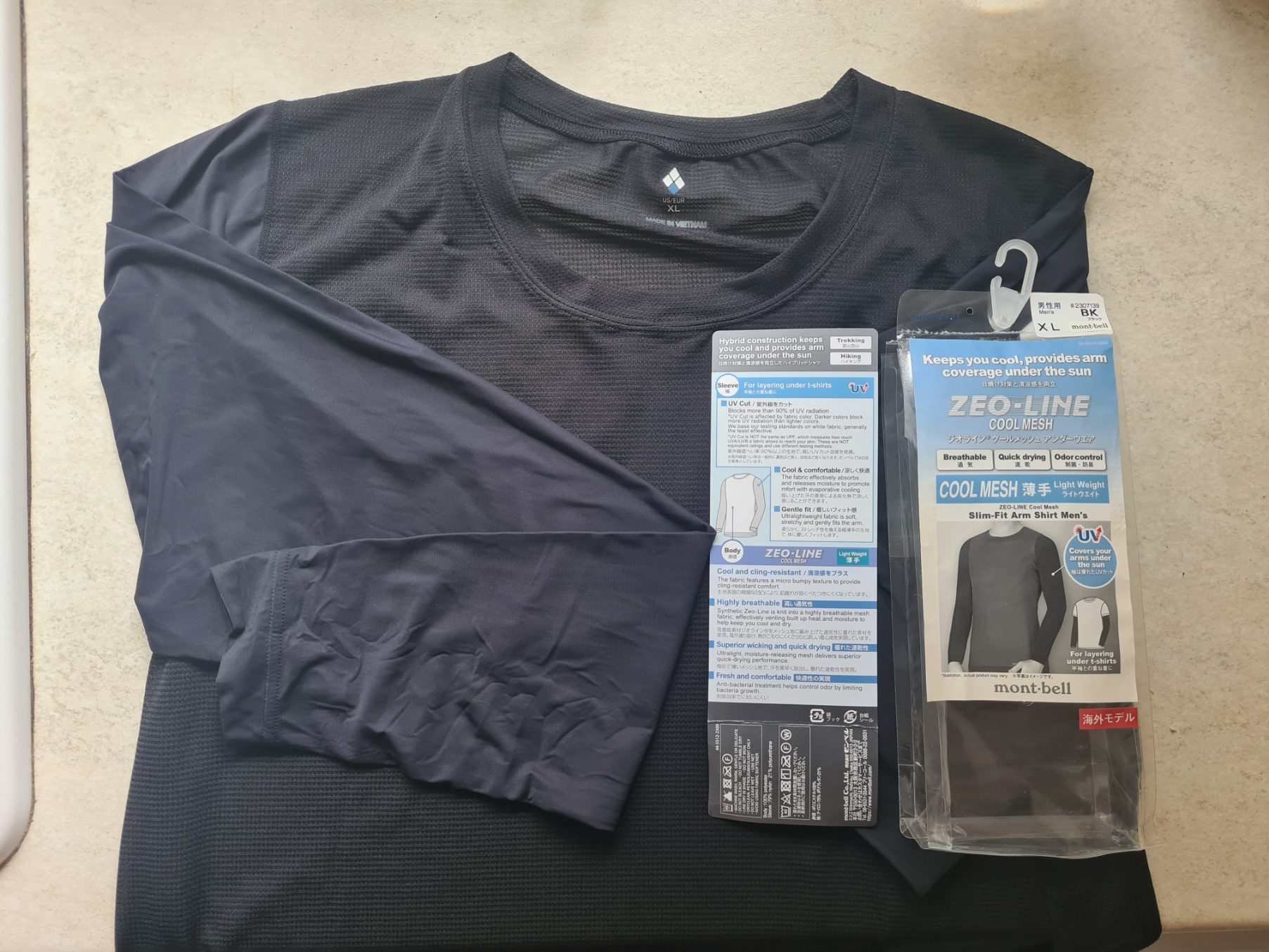
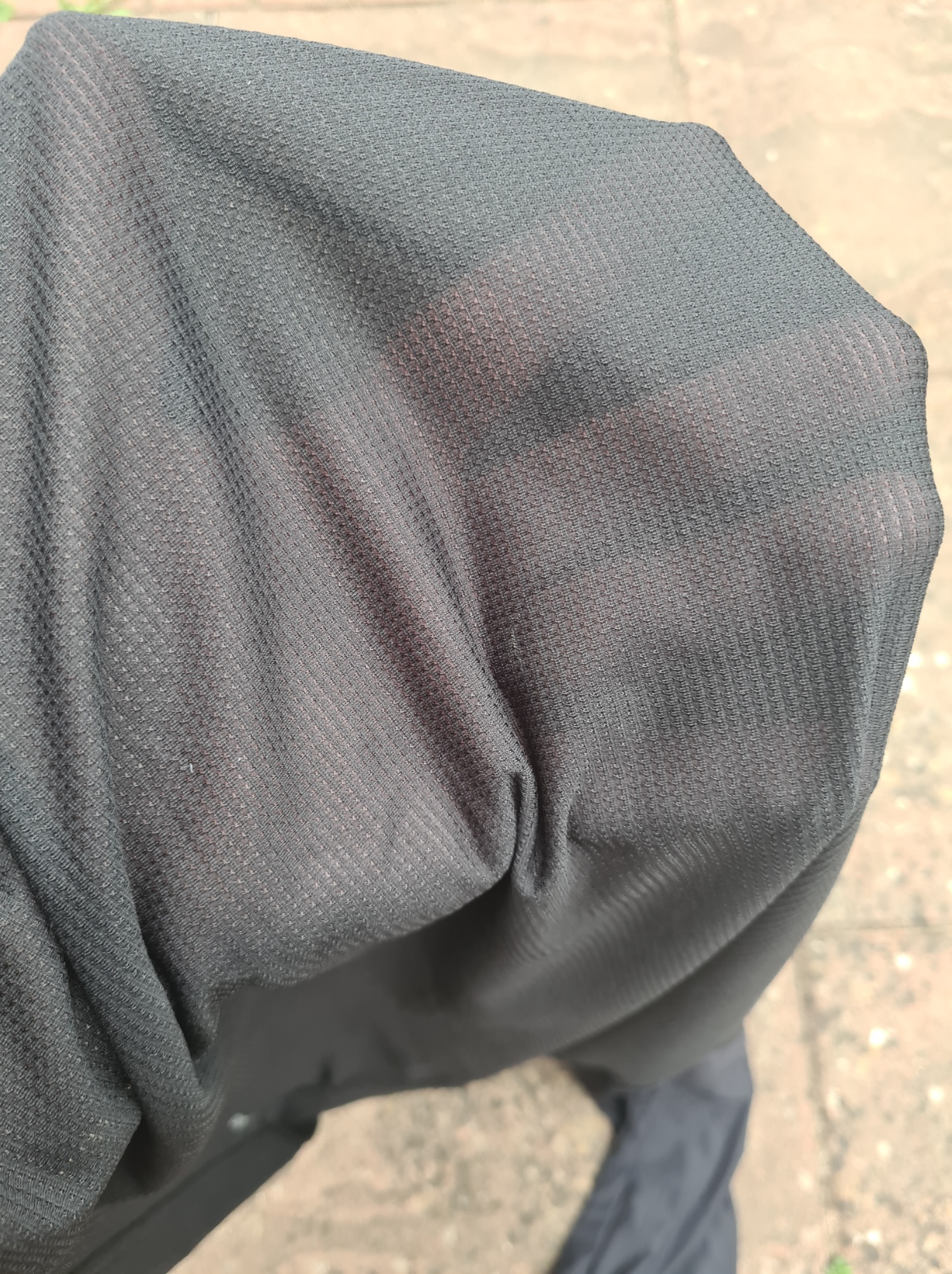
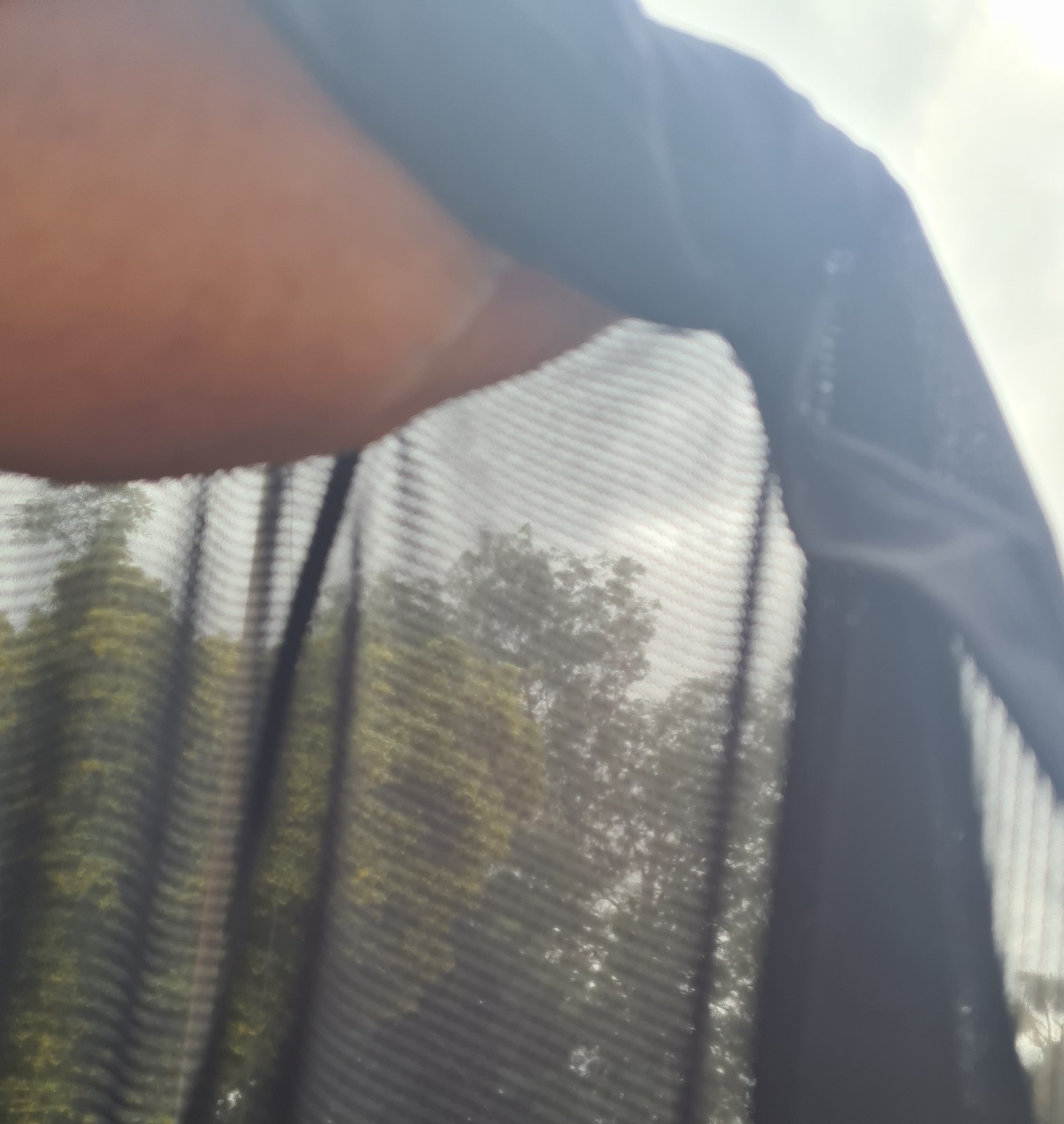
Both items came in quite a bit heavier than my old favourite Rohan sleep layers. I am 75g over my target weight of no more than 200g for the sleep top and bottoms. It seems as though the very lightweight tops of just a decade ago are no longer available, until a manufacturer starts realising there is an, admittedly small, market for such products. Or is this part of the general movement away from limited lifespan products, adopting more environmentally sensitive considerations over lighter materials that do not last so long?

As regards Sleeping Socks, I used to rely on a wonderfully comfy pair of Possum Down socks in colder weather, but not only did they begin to slowly shrink over the years but while the heavier weight is acceptable for winter use, they are far too warm in summer months. For warmer seasons I usually relied on a pair of very light, very thin merino wool socks. However, when Polartec Alpha came on the scene, I first experimented with a pair of second generation Polartec Alpha Direct Camp Socks from FarPointe Outdoor Gear. These came in at 24g for their size Large, but I often prefer a slightly heavier and looser pair from the OMM Core range that use Primaloft Active.


Primaloft Active is an insulating fabric comprised of a synthetic plume woven through a knitted mesh, usually available in three weights- 75gsm, 125gsm and 250gsm. My OMM Core Tent Socks are the mid-weight 125g material. All weights of Primaloft Active are extremely vulnerable to snagging so the OMM socks also have a simple ‘water resistant’ nylon sole. This also better protects the inside of my quilt from any oily foot balm on my feet. They are pretty much shapeless and despite the advertised weight of 38g referring to the Medium size, at 45g for my XL pair, though heavier than the FarPointe option, they are lighter than my merino summer sleep socks and almost half the weight of my earlier Possum Down cold-weather sleep socks. I have found the OMM Core Camp Socks fine for year round use.
I am sure there are many backpackers that don’t bother carrying a dedicated set of sleeping layers. However I value the opportunity to get out of my day wear, attempt even the most cursory of body cleans, then a change into ‘clean’ and dry clothes for my nights on trail. I feel better and sleep better.

 Three Points of the Compass
I am contemplating adding some sort of button set up for my sleeping bag and liner due to the issue you mentioned as I was trapped the last time in a rope of liner and sleeping bag. It is one of the reasons I have not gone quilt.
I am trying to find some bamboo sleep clothes as I try to go more light weight. The socks rock however they do seem to be not as sturdy as cotton or wool ones.
LikeLiked by 1 person
Yep, tried bamboo (BAM) and a bamboo composite, I found them too heavy
LikeLike
The composite was a pretty good MeCo top from Rab. Merino and Cocona polyester. A range that died the death for some reason. Still occasionally wear it on shorter walks
LikeLike