
Silva are one of the most respected manufacturers of compasses. Included on some of their baseplate models is a handy exchangeable map measuring scale.
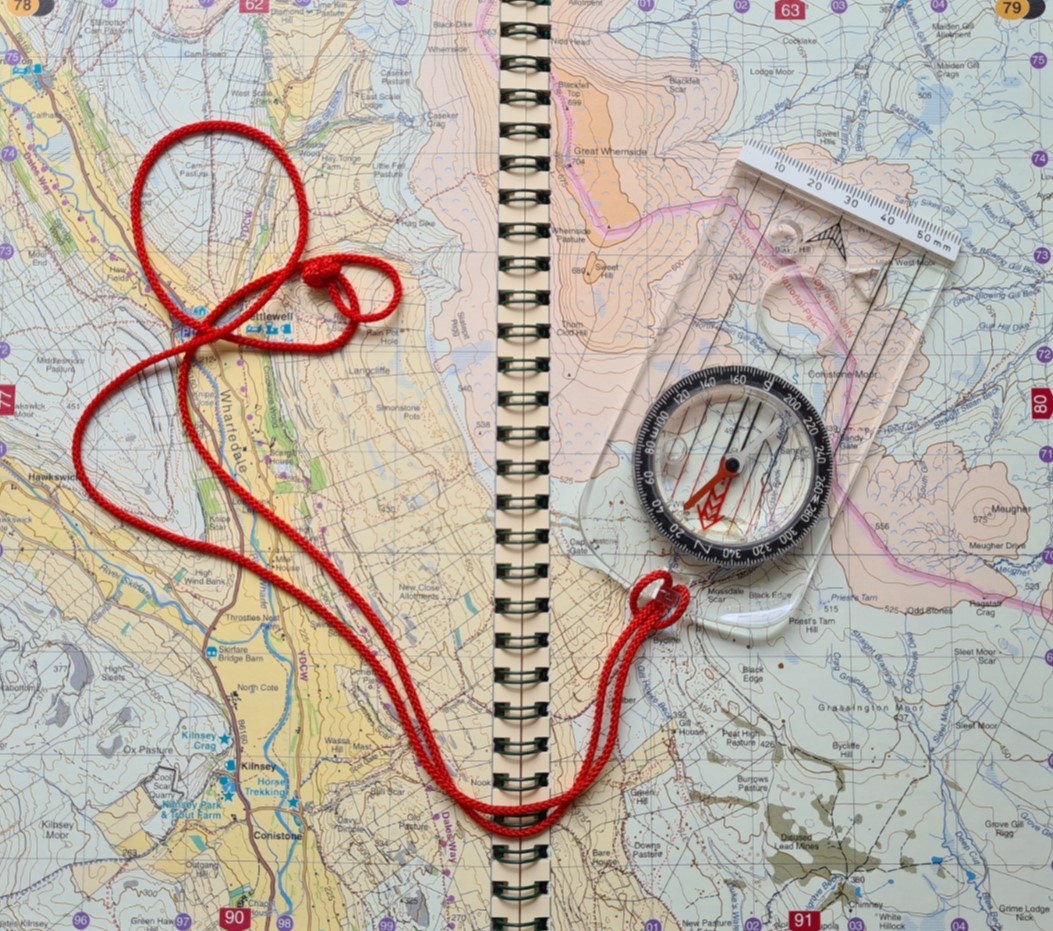
While Silva Sweden AB are perhaps best known for their wide range of compasses, they also produce an equally wide range of other ‘outdoor’ equipment. Gunnar Tillander invented the first orienteering compass, with a baseplate, in 1928. The company was founded in 1933 by Björn, Alvar and Arvid Kjellström, and Gunnar Tillander. They introduced the world to the first liquid-filled compass. The Silva brand has quite a complicated history, but compasses are now manufactured for the Silva Group by the HANZA Group in Suzhouin, China. In addition to their civilian models, Silva supplies compasses to various military forces. Their origins were in producing orienteering compasses and they still have models optimised for orienteering and adventure racing competitors.
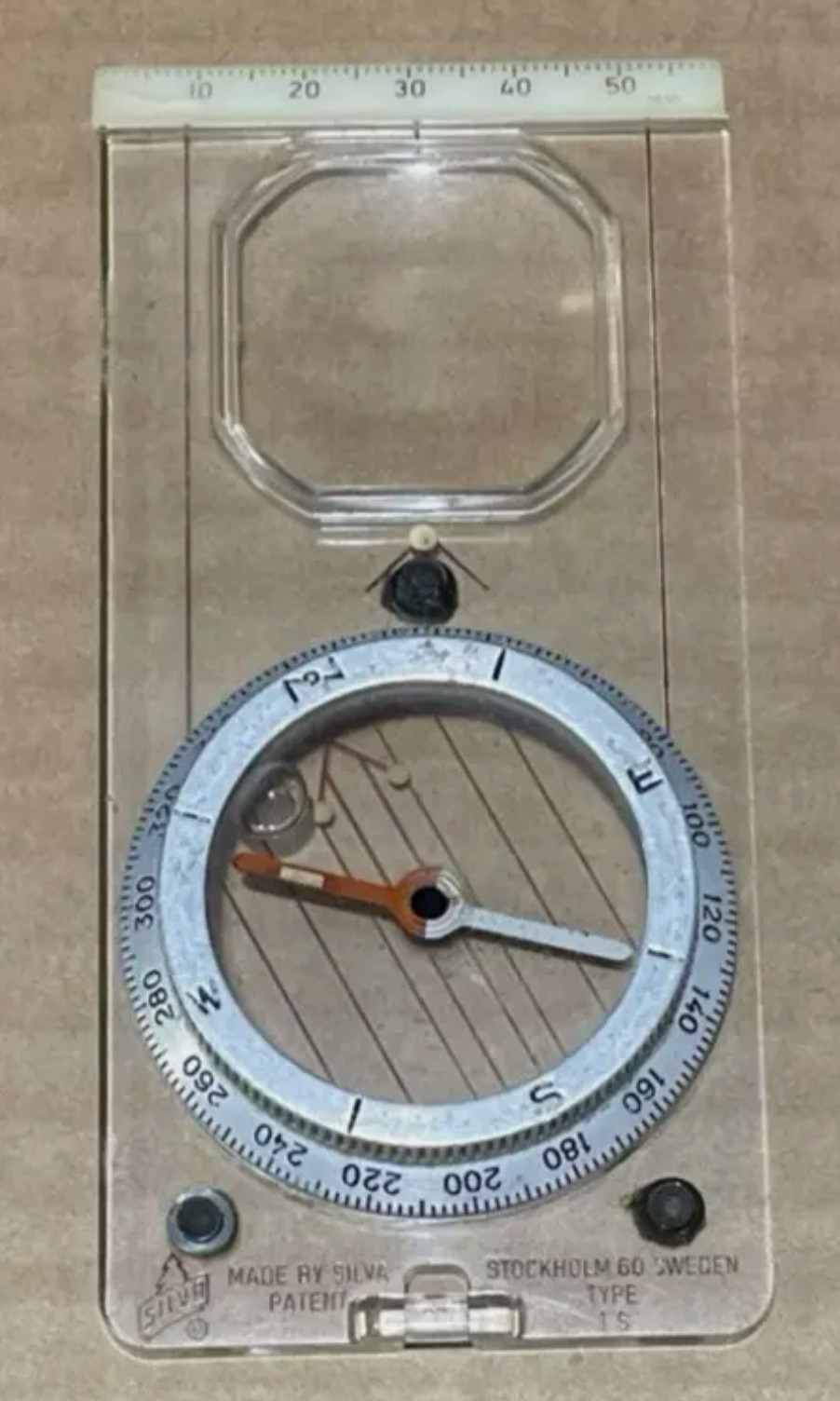
Included on some Silva compass models is a slide on/off scale measure. I do not know when it was first introduced. I am also unaware of how many compass models included this map measuring device. I am aware of Type 1S, Type 2, Type 4S. Spike Jet Classic and Spike Jet Zoom with this feature.
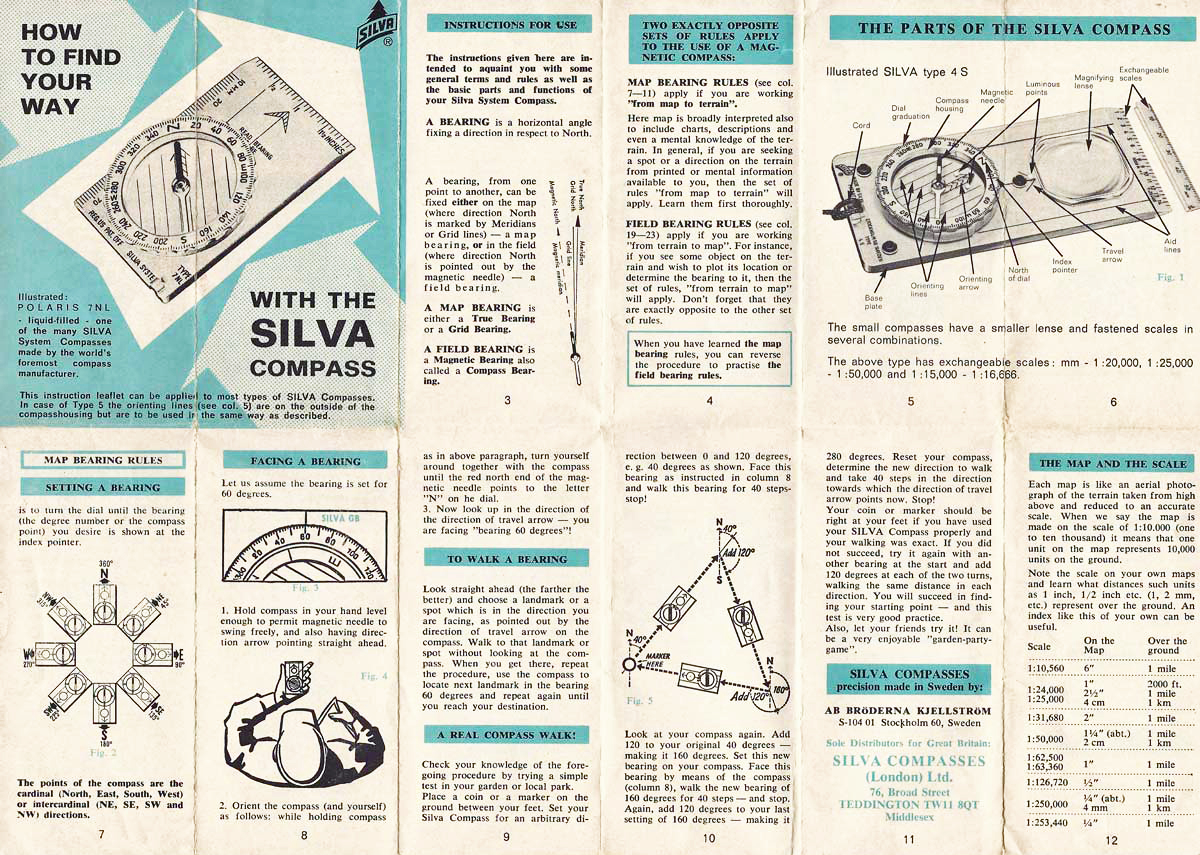
Silva’s compasses have changed a great deal over the decades. Changes in design and the addition or removal of features has created an often bewildering variety, with models with the same ‘Type’ number differing from others. I show three Type 2 compasses here, each with removable map measuring slide at the end of their baseplate. This model was also available without this feature. The earliest Type 2 shown here is quite a simple compass, but has the additional removable map measuring slide. In addition to other changes, such as the addition of a declination scale, the Type 2 3NL in the centre has had 1:25 000 and 1:50 000 measuring scales added to the sides of the baseplate. The Type 2 NL, on the right, with the same two scales on it’s baseplate, is the most feature rich of the three, with luminous paint for night time use and 6400 mils on its metal bezel in addition to the usual 360° increments.
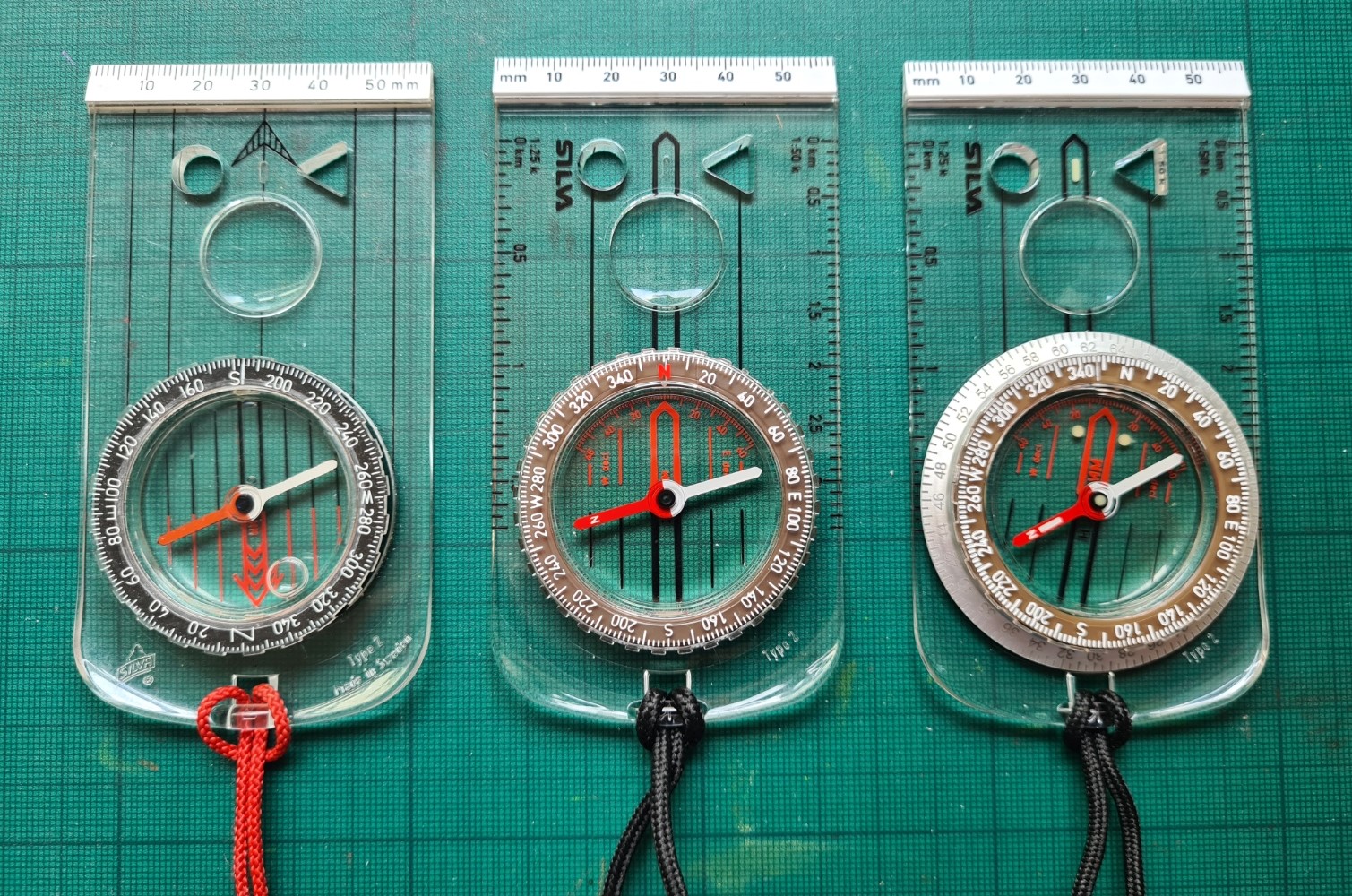
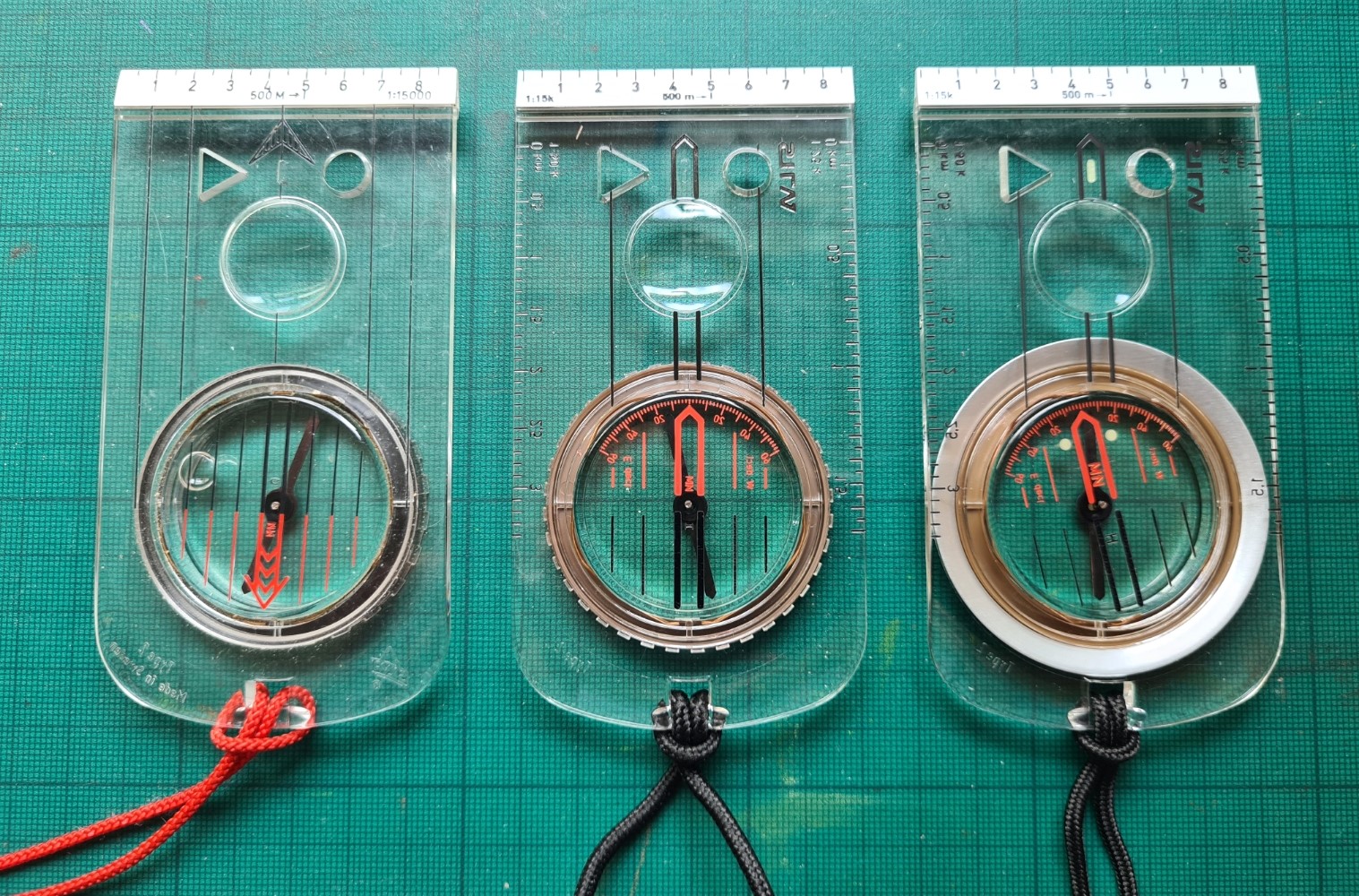
The white plastic slides have not changed much over the decades, other than changes in print design and font. They are a tight fit and are not easily lost, unless removed and mislaid.
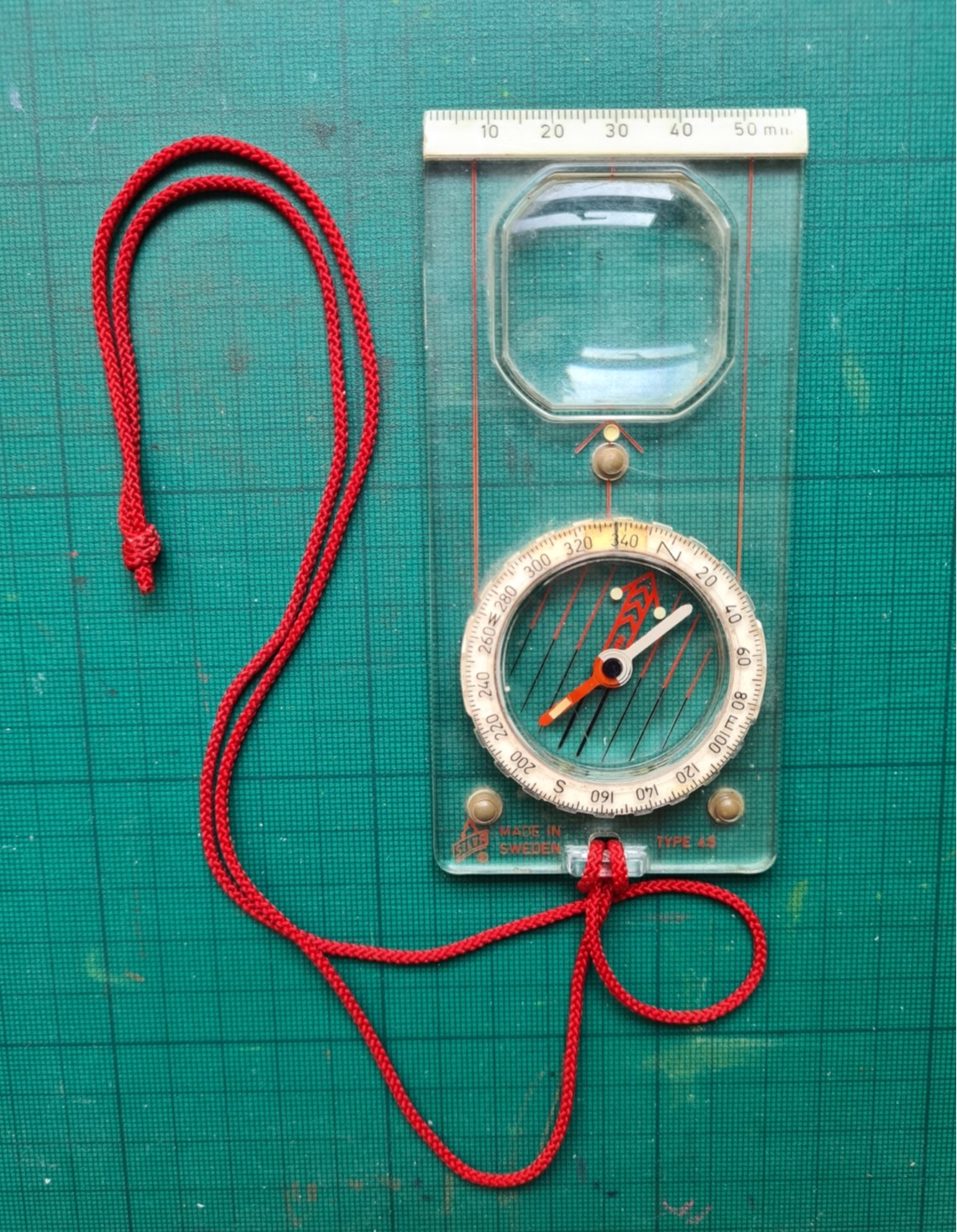
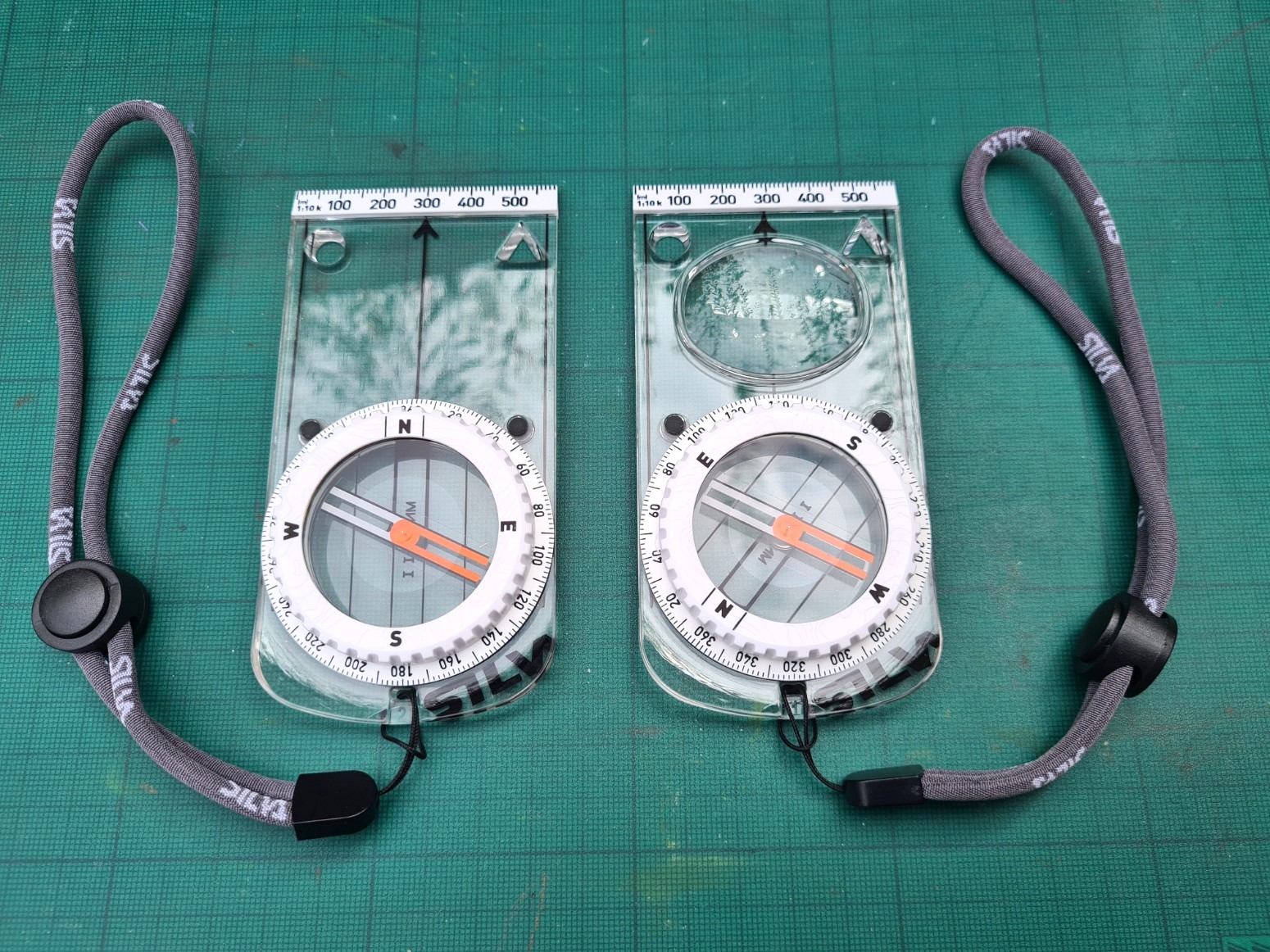
While simple to use, the short 60mm length of each measuring slide limits practicality. The chosen scales are also of less use to the majority of those simply walking in the countryside, as the majority of map scales used, at least in the UK, are 1:25 000 and 1: 50 000, as used on O.S. Explorer and Landranger sheets. Hence their inclusion as permanent features on more recent compass baseplates. Some compasses might also have a 1:40 000 scale included on the baseplate. This is the scale frequently used by Harvey Maps. However the Type 2 doesn’t have that, so the one 1:40 000 measuring slide with that scale does open it up for use with those maps. The chosen scales on these measuring slides are more designed for use by orienteers and adventure racers working off those specialised map scales.
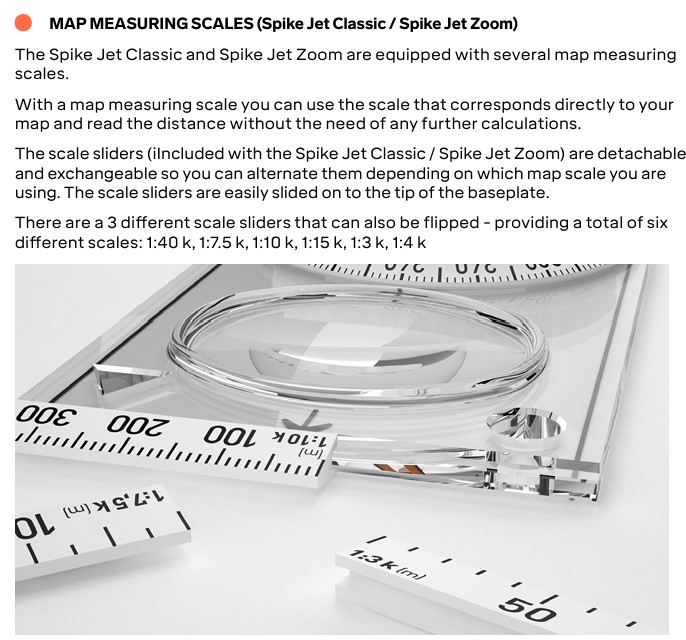
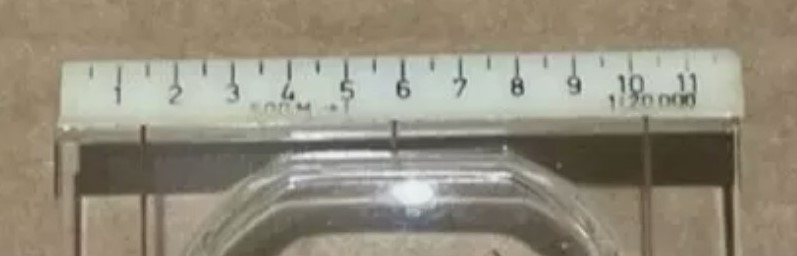
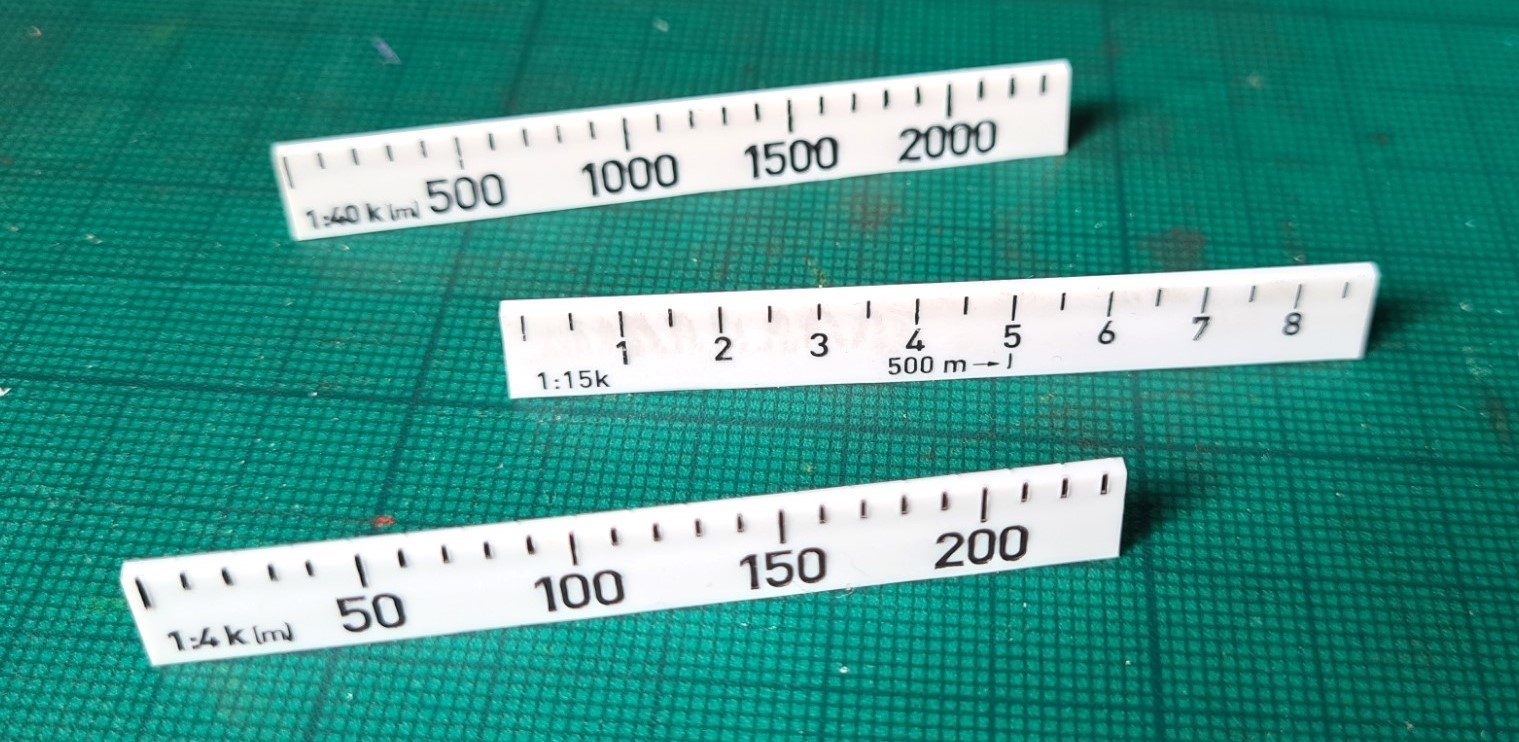
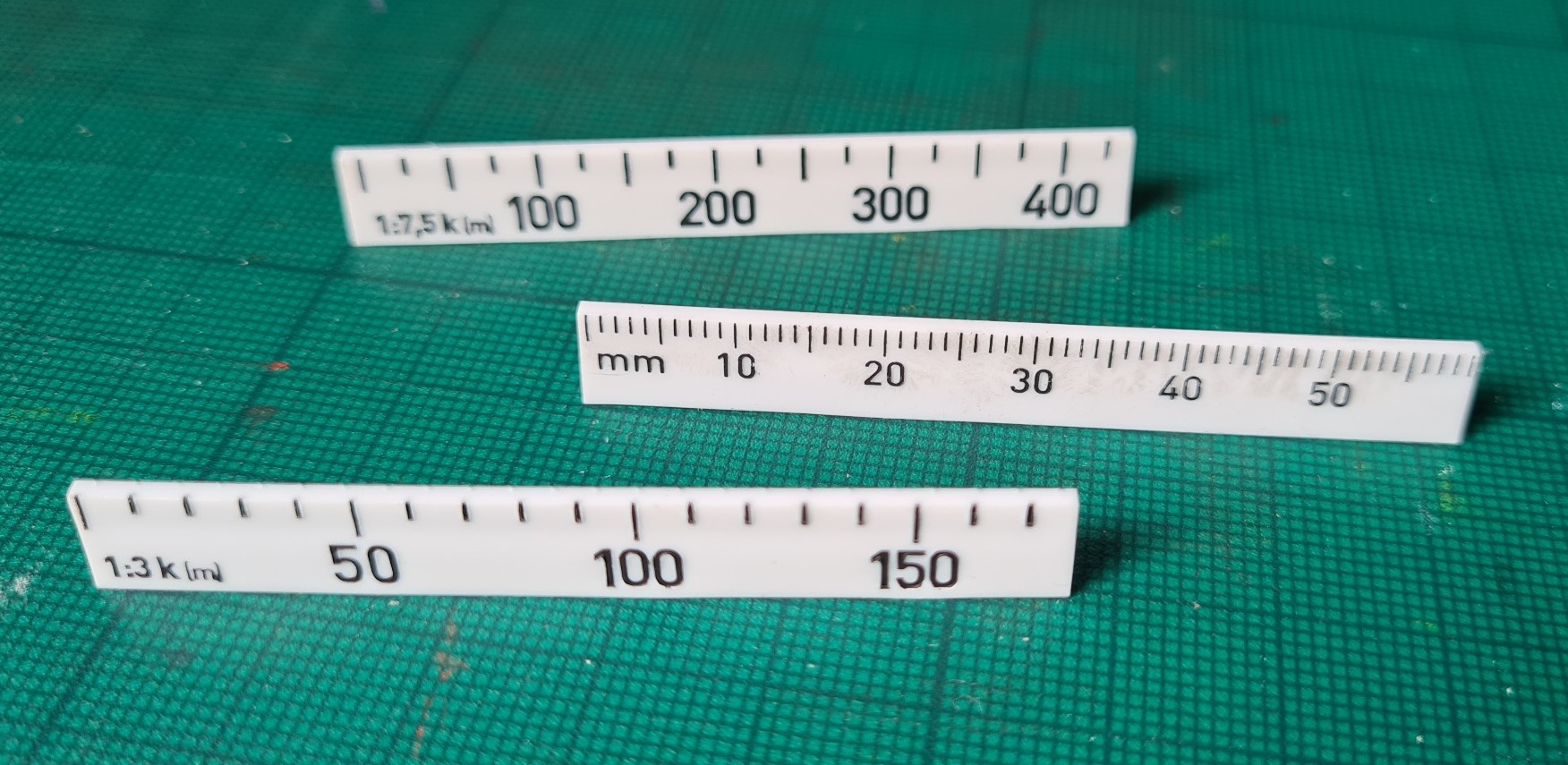
Replacement scale slides can be purchased from Silva. These come as a set of three, with six scales. 1:40 000 / 1:7.5 000, 1:15 000 / 60mm rule, 1:4 000 / 1:3 000. There isn’t much to these little plastic slides, but does possibly mean that a user can replace a lost slide or install a preferred or most used scale measure. The 1:20 000 scale on the Type 1S shown above appears to have been abandoned. I have also seen an inch scale on a removable slide.
Silva Type 2 3NL-360 retails for around £30, the Jet series are considerably more expensive. These compasses are widely available. However, the more specialised purpose of the quite short measuring strip might limit its attractiveness for many. Silva also produced a compass lanyard with map scales. That product was looked at here. Silva is not the only brand to have fitted a map measure to their compasses. Suunto also fitted one to the end of a baseplate compass. However, that worked in a very different manner. The Suunto A-40 was looked at in a separate post. Links to other, map measures that have previously featured can be found here.

with exchangeable ruler and map measure

 Three Points of the Compass