
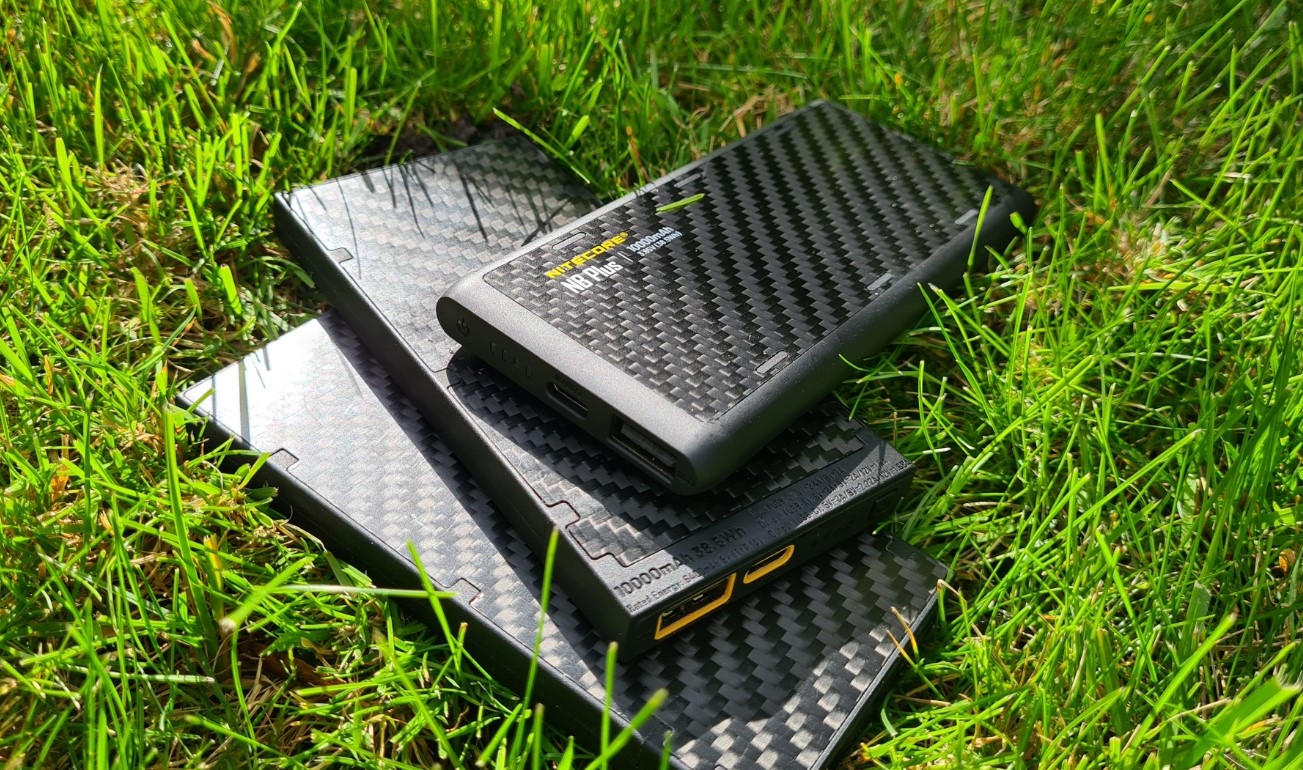
Three Points of the Compass has long been a fan of Nitecore Powerbanks, using them across many thousands of trail miles. Does the latest NB Plus 10k have anything new to offer?
I have used Nitecore lights, F1 and F2 battery chargers, MPB21 Magnetic Power Bank, F21i Fast Charging Power System, 18650 batteries and various capacity Nitecore powerbanks both for backpacking and general EDC for many years. I have found their products consistently both lightweight and well-constructed. On the rare occasion when I have had an issue, they have been quick to respond and have promptly replaced any damaged item. They aren’t amongst the cheapest, however I believe that in electronics, you get what you pay for.
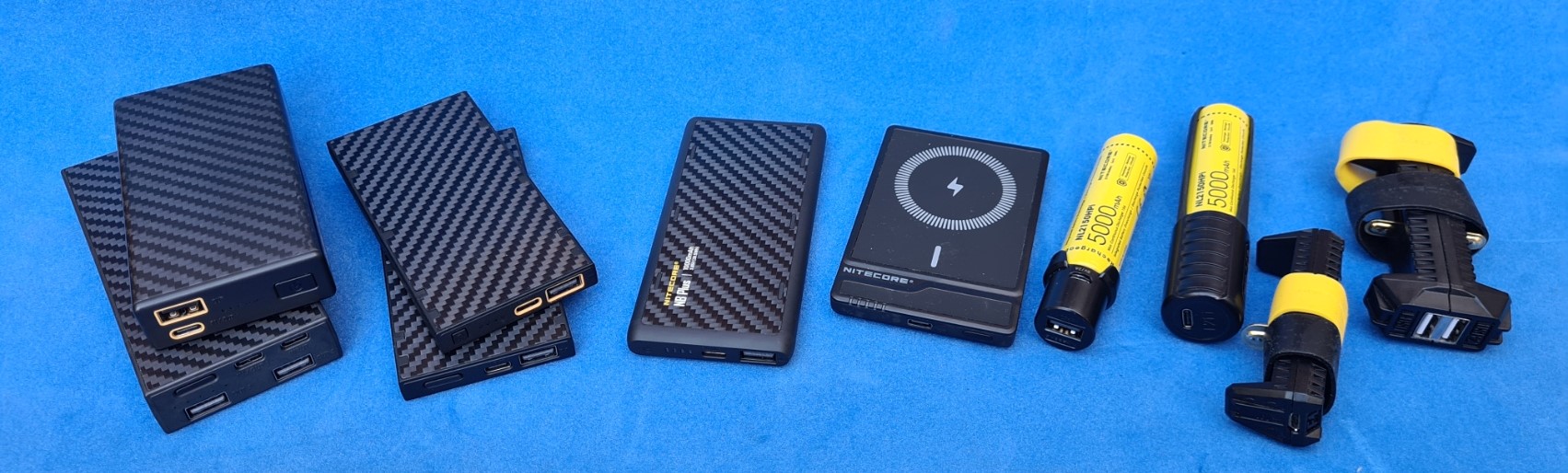
Nitecore products often have a lot going on under the surface that isn’t immediately obvious. Leading manufacturers of powerbanks will ensure that voltage, current, and temperature are constantly monitored during charging, with automatic adjustments to ensure safe and stable operation. All Nitecore powerbanks include overcurrent and overcharge protection, short circuit protection, over voltage and discharge protection. Dual NTC temperature sensors provide precise thermal monitoring, adding another layer of safety.
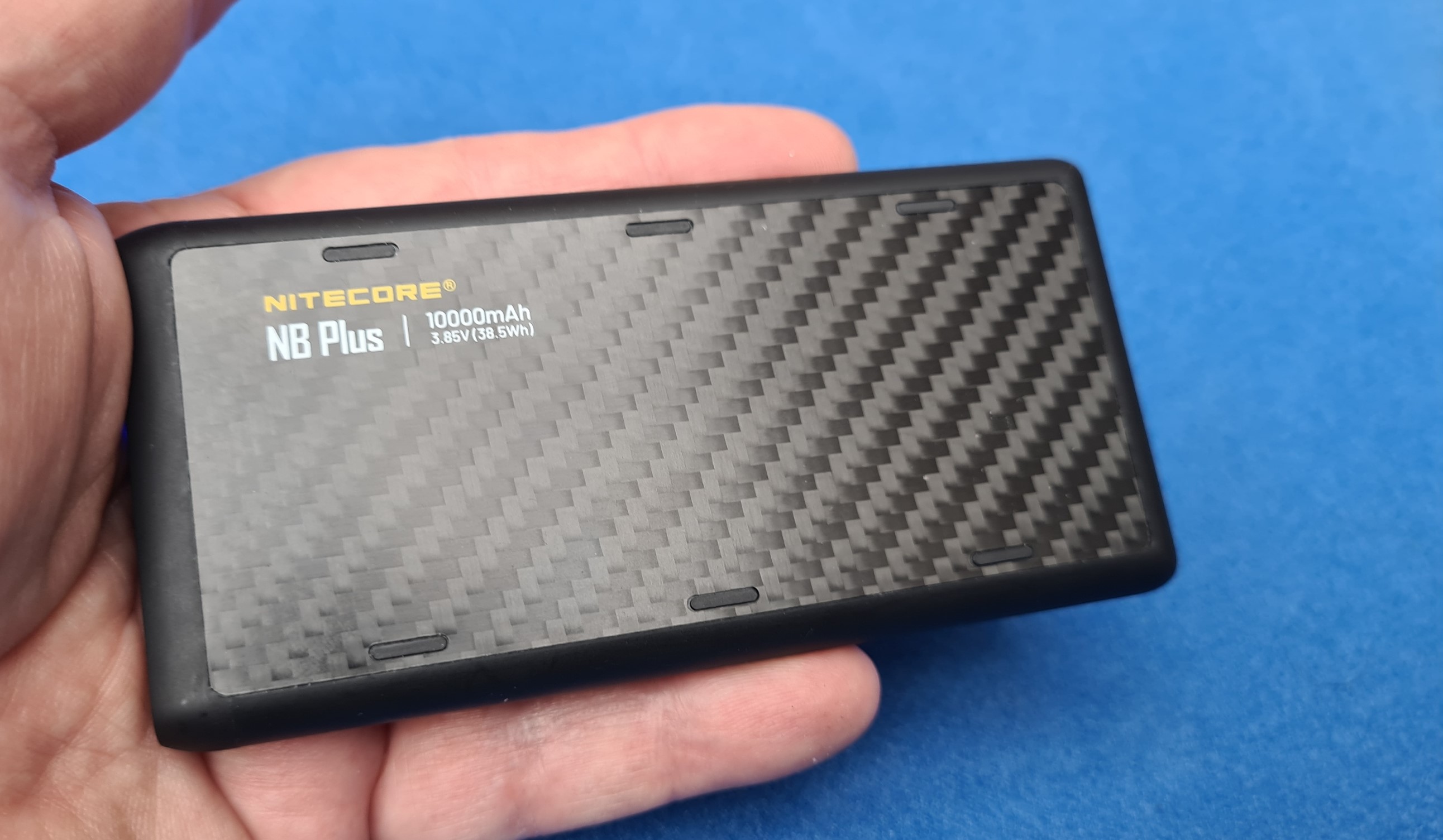
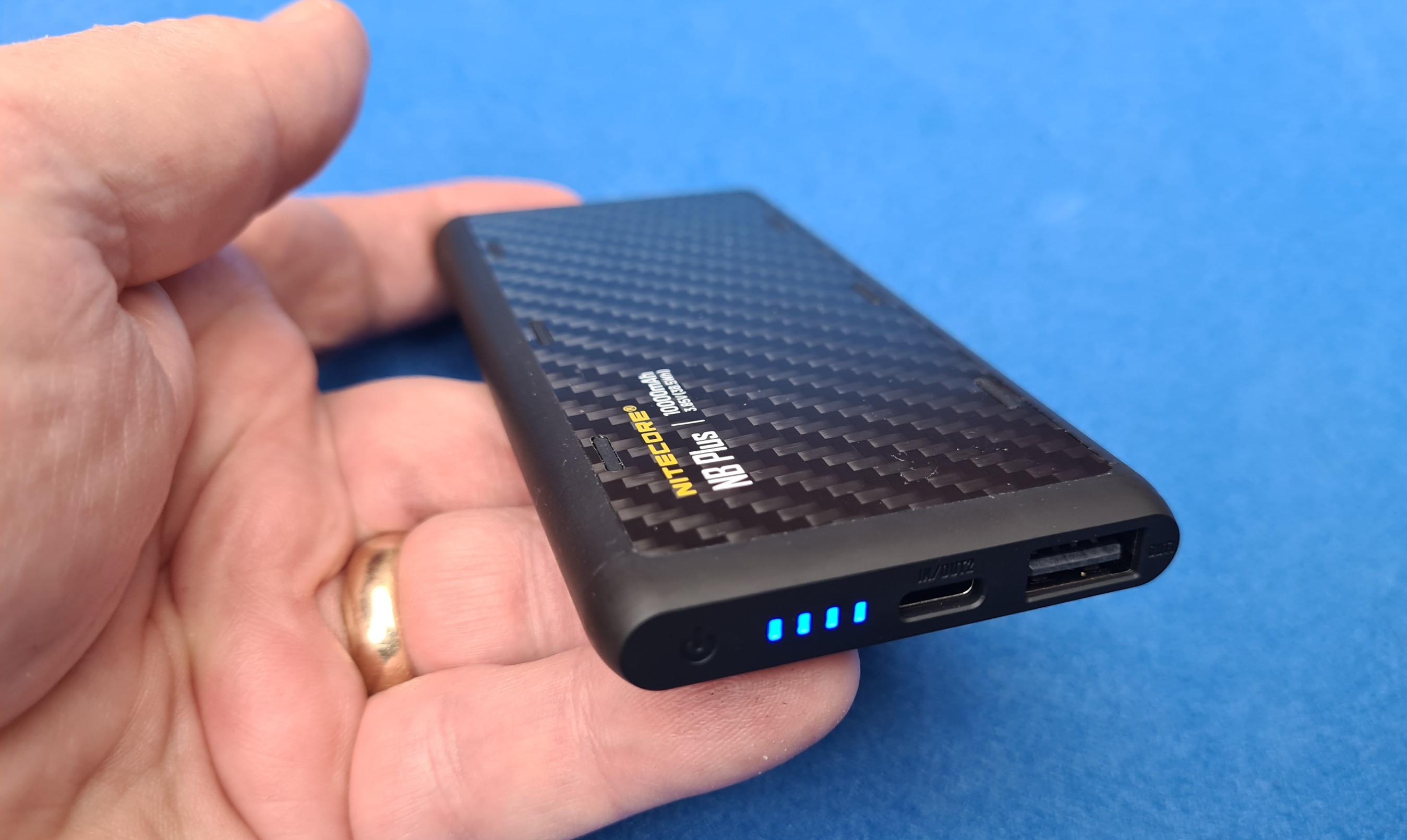
Whereas I have been happy to purchase my various Nitecore powerbanks and lights in the past, I was pleased when Nitecore reached out to offer me their latest product for review. The Nitecore NB Plus 10000mAh powerbank has been given the somewhat grandiose additional title: “waterproof competition-grade energy bar”, which does offer a clue to a welcome upgrade, the increase in weatherproofness. I am a UK backpacker and if there is one thing the UK has in profusion, it is rain. Whereas my Nitecore NB10000 was termed an ‘Energy Brick’. I can only presume that the advertising team at Nitecore have decided the term ‘brick‘ does a disservice to their product, hence a change to ‘bar‘, despite the former being pretty much a generic term amongst users of powerbanks. That said, the NB Plus is surprisingly small in the hand. It measures 122.4mm x 59.6mm x 11.7mm. Advertised as weighing 155g +/- 5g, mine tips the scales at 158g.
| Model | Advertised weight | Capacity | Rated energy | Ports | Input/output (dependant on port) | IP rating and additional features |
| NB 10000 Gen 2 | 150g +/- 3g | 10 000mAh | 6400mAh | USB A/USB C | Max input: 18W Max output: 20W | IPX5 |
| NB 10000 Gen 3 | 150g +/- 5g | 10 000mAh | 6200mAh | USB C (x 2) | Max input: 18W Max output: 22.5W | IPX5 |
| NB10000 Silver | 150g +/- 5g | 10 000mAh | 6400mAh | USB A/USB C | Max input: 18W Max output: 20W | IPX5 |
| Pocket 10000 | 160g +/- 5g | 10 000mAh | 6200mAh | USB C | Max input: 18W Max output: 22.5W | IP65 Integrated USB-C charge cable |
| Carbo 10000 | 157g +/- 5g | 10 000mAh | 6400mAh | USB A/USB C | Max input: 18W Max output: 20W | IPX5 |
| Carbo 10000 (Gen 2) | 170g | 10 000mAh | 7000mAh | USB C (x 2) | Max input: 30W Max output: 30W | IPX8 Magnesium alloy heat sinks |
| Summit 10000 | 172g +/- 5g | 10 000mAh | 6400mAh | USB A/USB C | Max input: 18W Max output: 20W | IPX5 Low temp Resistant. Operable down to -40°C/-40°F |
| NC 10000 | 168.5g +/- 3g | 10 000mAh | 6000mAh | USB C (x 1) | Max input: 18W Max output: 20W | IPX5 50 lumen dual LEDs |
| NPB2 | 215g | 10 000mAh | 6400mAh | Micro USB/USB A (x2) | Max input: 18W Max output: 18W | IP68 |
| SCL 10 | 222.5g | 10 000mAh | 6600mAh | USB A/USB C | Max input: 18W Max output: 18W | Unrated. 800 lumen Camera light In side. Hot show mount |
| NB Plus | 155g +/- 5g | 10 000mAh | 5600mAh | USB A/USB C | Max input: 18W Max output: 22.5W | IPX7 |
I had been considering the purchase of their companion Nitecore 89g NB Air for some time, thinking its 5000mAh capacity might have something to offer me, however their 120g 5000mAh NW 5000 wireless powerbank has been filling the niche of day excursions well and, while I have a couple of 20k powerbanks for particular requirements, I mostly stick to 10000mAh powerbanks, of which Nitecore has quite a few options. The NB Plus is the latest iteration of their streamlined base models.
The NB Plus offers a much higher water resistance for a 5g weight penalty over the Gen 3, i.e. an increase equivalent to the weight of a twenty pence coin. I can live with that!
The Nitecore NB Plus has a lithium-ion polymer (Li-Po) cell. This type of battery has a higher specific energy than other lithium battery types. Li-Po batteries are lighter, more robust, do not leak, charge quicker, heat less during charging and are more expensive to make than Li-Ion batteries. However, Li-Po batteries have a shorter life than Li-Ion.
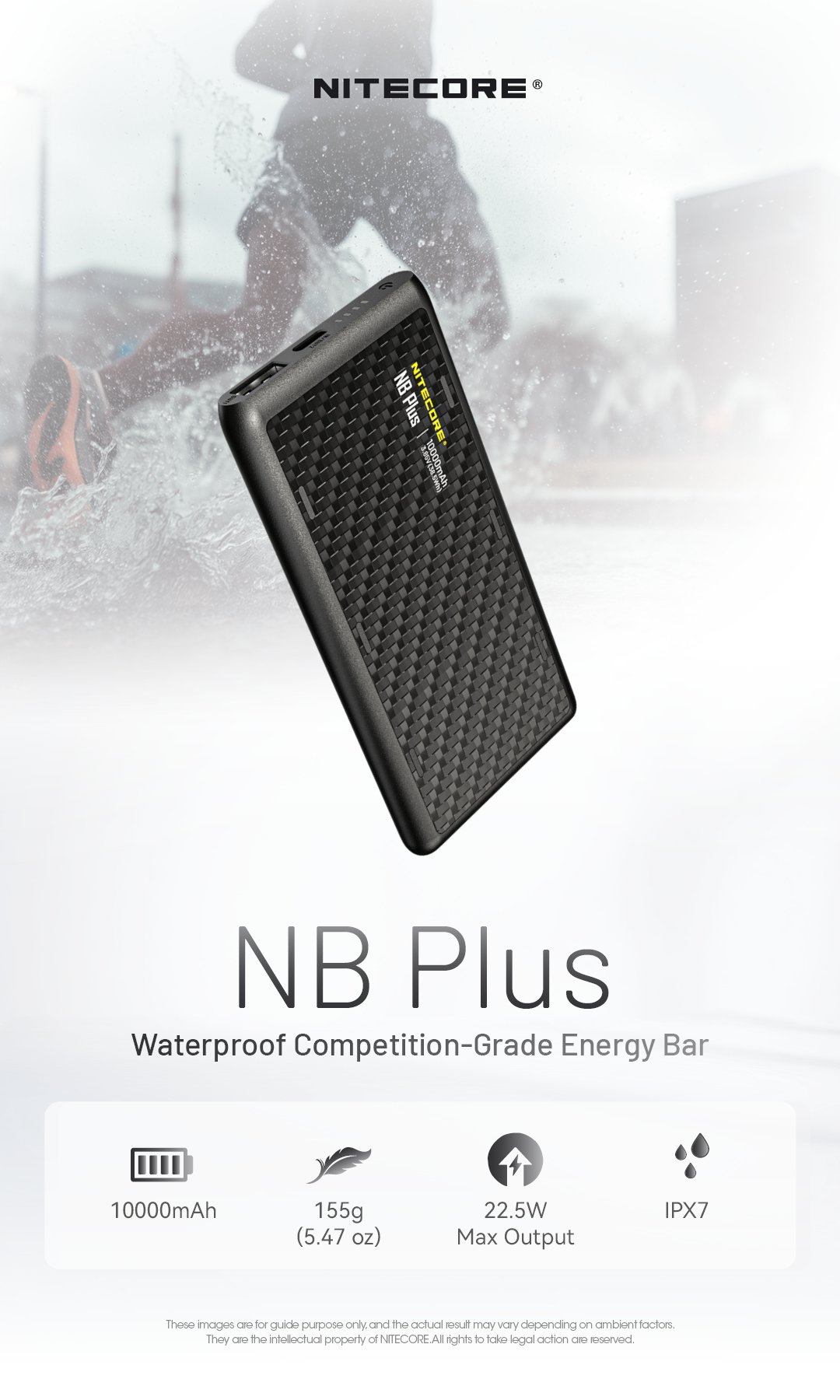
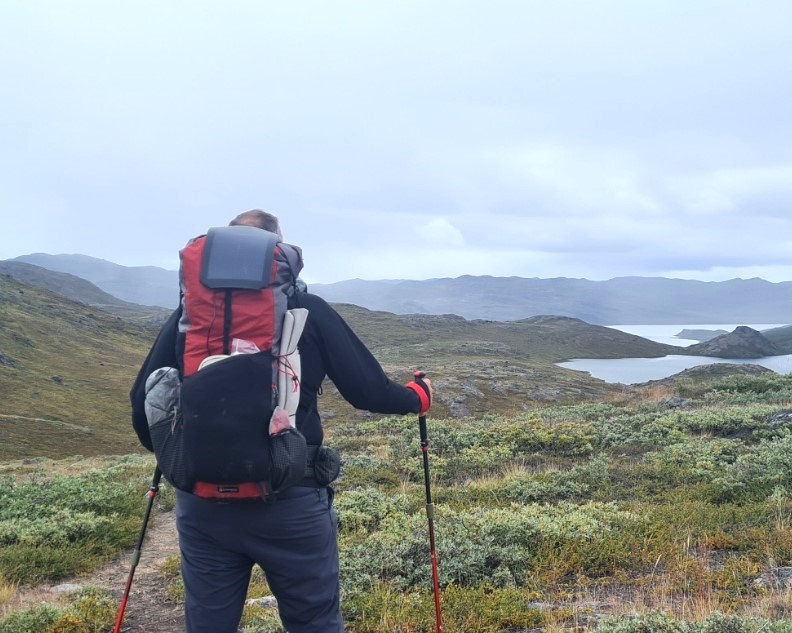
The NB Plus offers a much higher water resistance for a 5g weight penalty over the Gen 3, i.e. an increase equivalent to the weight of a twenty pence coin. I can live with that! I frequently use a solar charger plugged in to a powerbank when hiking, and it frequently rains. Even for those who don’t have a similar use, they should still be wary of water ingress damaging their powerbank and if new to the game and/or in the market for their first lightweight compact waterproof powerbank, can come straight in and purchase this latest offering. Nitecore have a policy of slowly introducing minor upgrades to their products, interspersed by infrequent headline making step-changes that have required longer testing and validation cycles. This can frustrate users, and there are various arguments for and against this form of marketing. Personally, I feel if Nitecore have tweaked and refined an element of their product as a result of feedback, why not release a next generation powerbank that incorporates it. Durston have been doing this with their tents for years to almost universal praise.
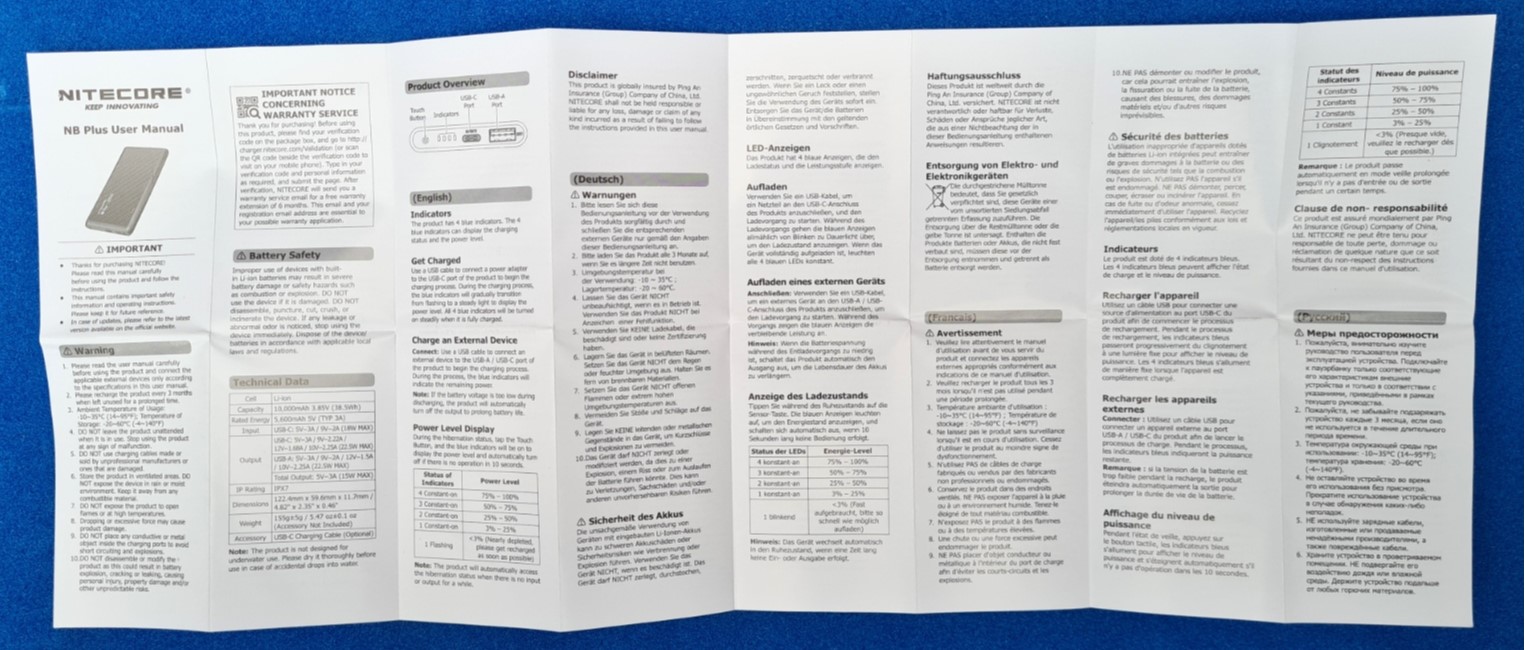
What exactly does IPX7 mean? IP stands for Ingress Protection. The X states no particular data criteria against particulate matter, dust etc. The final digit 7 is the degree of protection against water, in this case, protected when immersed in water up to 1 meter deep for up to 30 minutes. The next level of protection above this is for items intended for continuous use under water. So, in theory, if this powerbank is immersed in water, remove it, give it a good shake to clear of excess water, and it should be good to go. For those intending to take powerbanks out into wet conditions, the UK hiker especially, this is good news. Obviously you can simply slip any powerbank into a ziplock or drybag for protection from the elements. But even with the best of planning, there have been a few times when my phone has required a top up with power while it was raining and the powerbank has got damp, even wet, as a result. And as said, I often use a powerbank connected to a solar panel in what starts out as fine conditions, but then a shower develops during the day. How many times has that shower become a little more sustained or intense, too often! I appreciate the better protection from water ingress that the NB Plus provides. That said, drop this powerbank in dust, dirt and mud and the ports may get blocked or at least contaminated, and will require shaking clear and blowing or rinsing out, hence the X rating for solid matter.
Which brings us to the feature that will invite probably the most comment, the re-introduction of a USB-A outlet port. My Gen 2 also had USB-A/USB-C ports and was one of the reasons I never purchased the Gen-3 that has just two USB-C ports. While the world is gradually making the transition to universal C ports (until the introduction of yet another latest greatest form factor) the NB Plus is marketed by Nitecore as a streamlined base model targeted toward a wide and diverse user base, many of which still rely on devices with USB-A ports, so by including both USB-A and USB-C ports this model maximises compatibility and practicality, for now. I would like to see the NB Plus available in two formats, one with USB-A/USB-C, and a second with two USB-C ports. Nitecore inform me that future models with different positioning, will provide cable configurations that better fit their intended use. Both ports on the NB Plus are capable of up to 22.5W output and up to 18W input via the USB-C port.
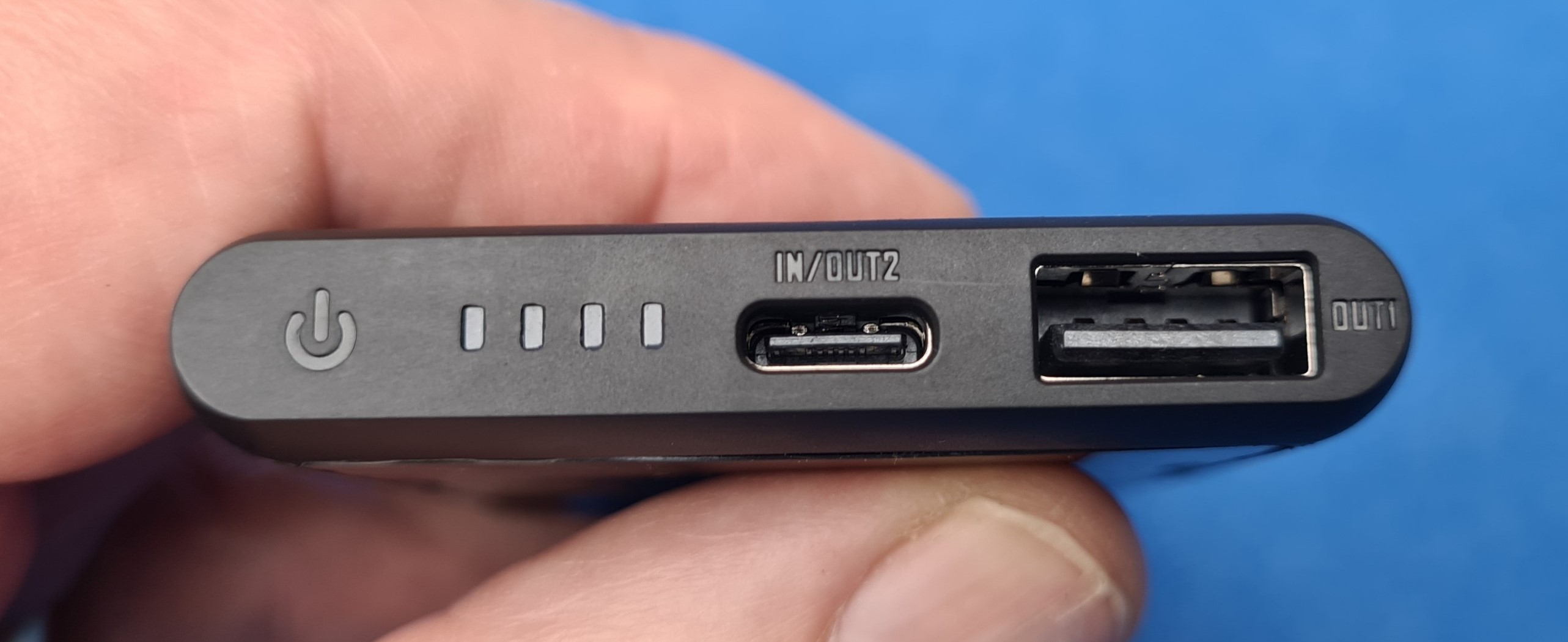
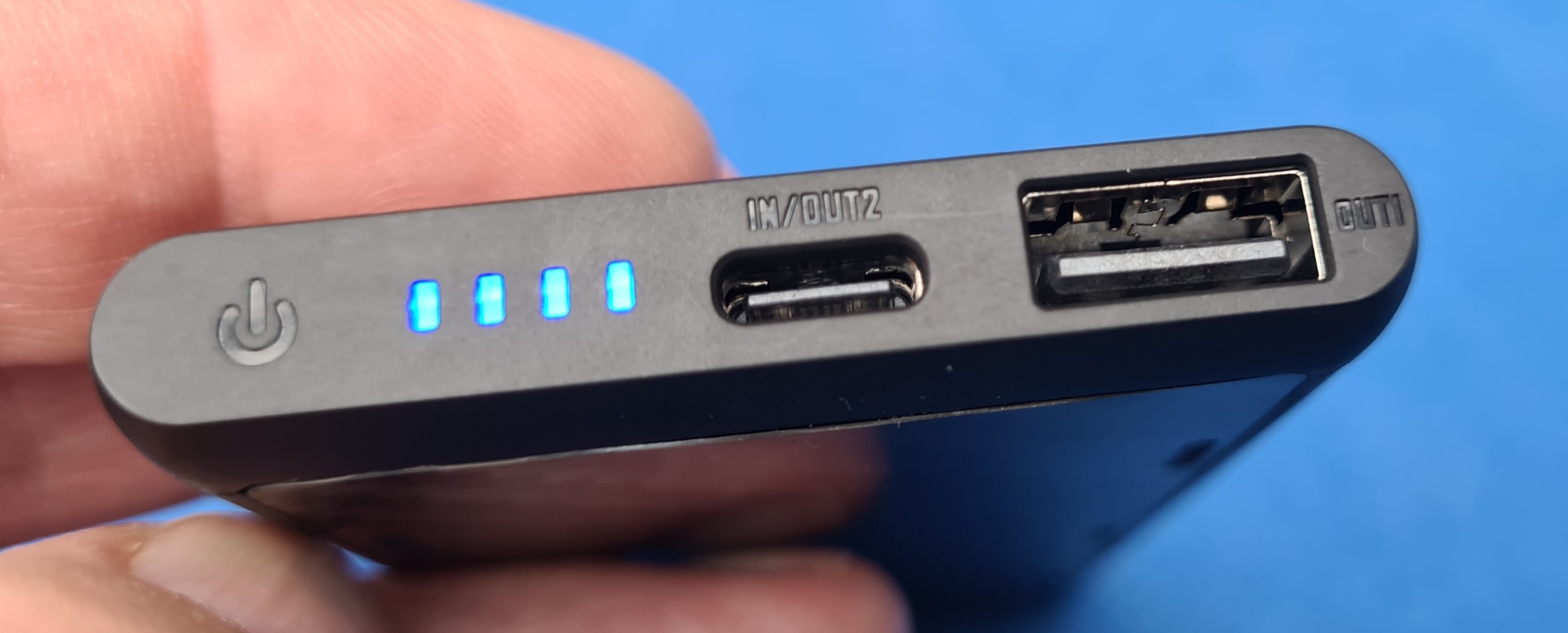
There is no on/off switch as such on the powerbank. Instead, it has a flush touch button, that requires the merest of presence for the powerbank to exit hibernation mode and indicate the power level via its four LEDs. Four lit LEDs indicate a 75%-100% power level, three LEDs indicate 50%-75% power, two indicates 25%-50%, one indicates 3%-25% while a single flashing LED indicates almost depleted. Charging will also illuminate the LEDs and if there has been no input or output activity for a while, the powerbank will again re-enter hibernation. Thereby saving even the slight power draw of the LEDs. The NB Plus has two-way PD+QC 3.0 output and short circuit protection, also supporting pass-through charging, which will suit those with limited time to charge both powerbank and a phone.
It is comfortable in the hand and is even, dare I say, as attractive as a powerbank can get…
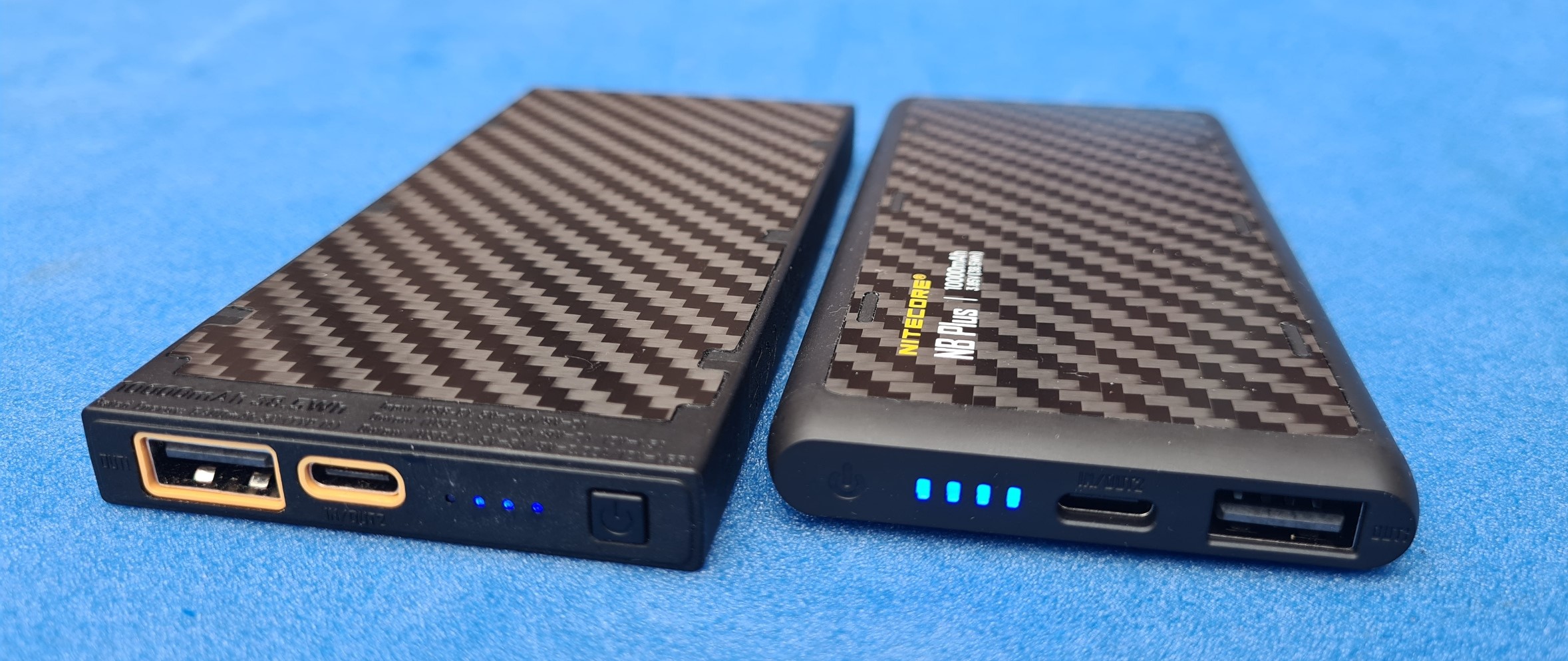
The NB Plus has the now standard Nitecore double sided carbon fibre sheets set within a lightweight composite frame. This has curved edges and rounded corners that are a great improvement over previous iterations. It is comfortable in the hand and even, dare I say, as attractive as a powerbank can get. I would have liked to see the bright yellow accents surrounding the charge ports retained on the NB Plus as these are useful for orientation in poorer light. I would guess that the omission of these, and the previous protruding power button, is required for that IP rating.
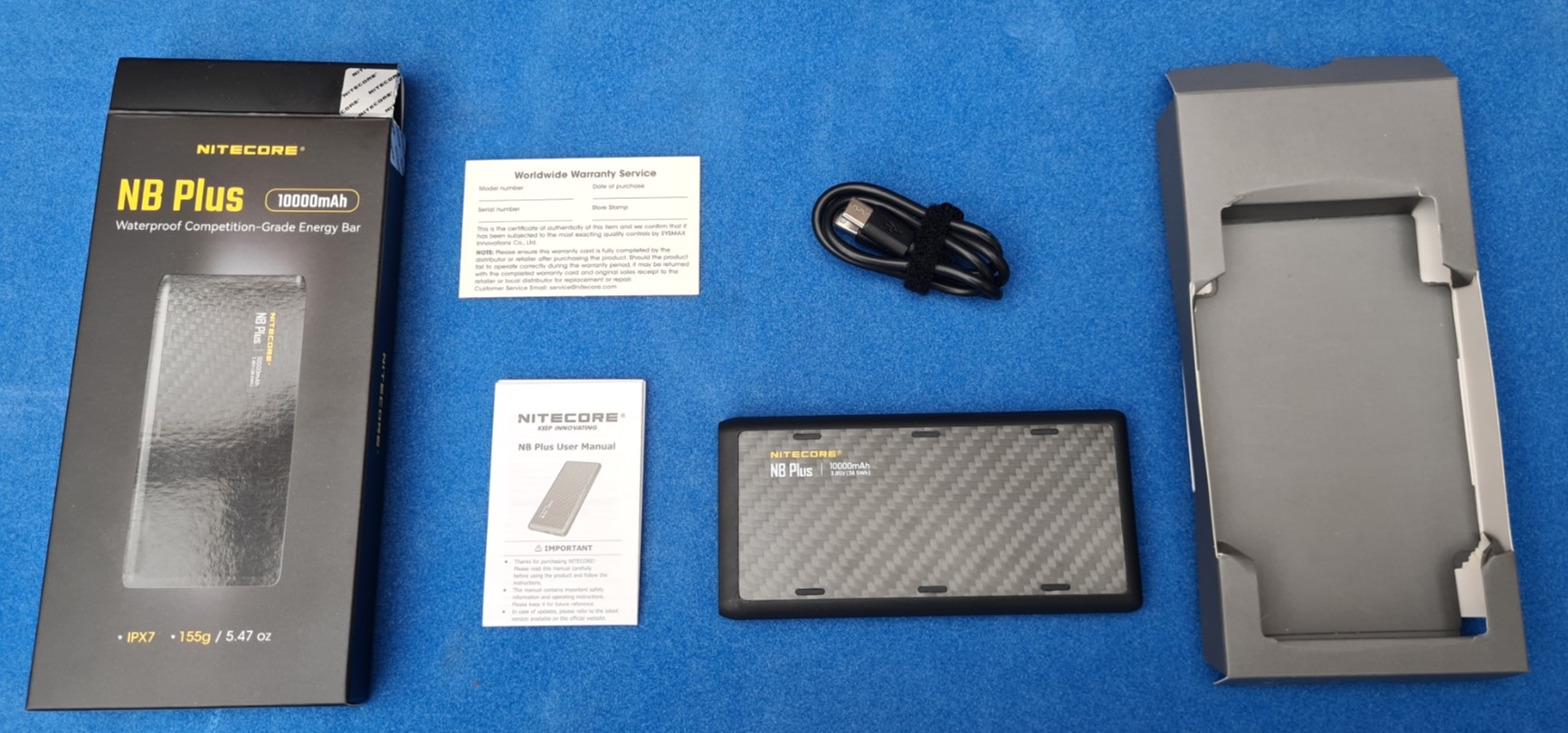
It is good to see that Nitecore have reduced the amount of plastic in their packaging. Previous iterations came in a plastic tray within a card sleeve/box. The NB Plus came in a card box, with a sliding card tray, that in truth, is a bit flimsy and the powerbank flops and slides around in this. But that is a minor point as once the power bank is removed, it is intended for use, not storage.
The NB Plus has taken it’s rightful place as my choice of powerbank for multi-day backpacking
The NB Plus is packaged with a 13.5g 500mm USB-A/USB-C charge cable, however I can find no information on it’s capability. Most of these supplied cables probably go straight into a drawer or are disposed of and it may help reduce waste if these were excluded moving forward. Surely everyone has their preferred charge cable(s). Many of us also upgrading cables as their capability increases. Nitecore also sent me their NLink10 which makes the perfect companion to the NB Plus, unless extra length is required. This little PD+QC charge cable has a USB-C/USB-C 60W Fast Charge capability with a maximum 3A current, though the NB Plus maxes out at 18W via its USB-C input. I understand not including a built in charge cable on the NB Plus, especially in an attempt to keep that IPX7 rating, but I would have like to have seen a wireless charge ring on the top. Not necessarily magnetic, which would add weight, but simply a ring. Many phones on trail will not support charging if damp has been detected in their charge port, but will still charge wirelessly.
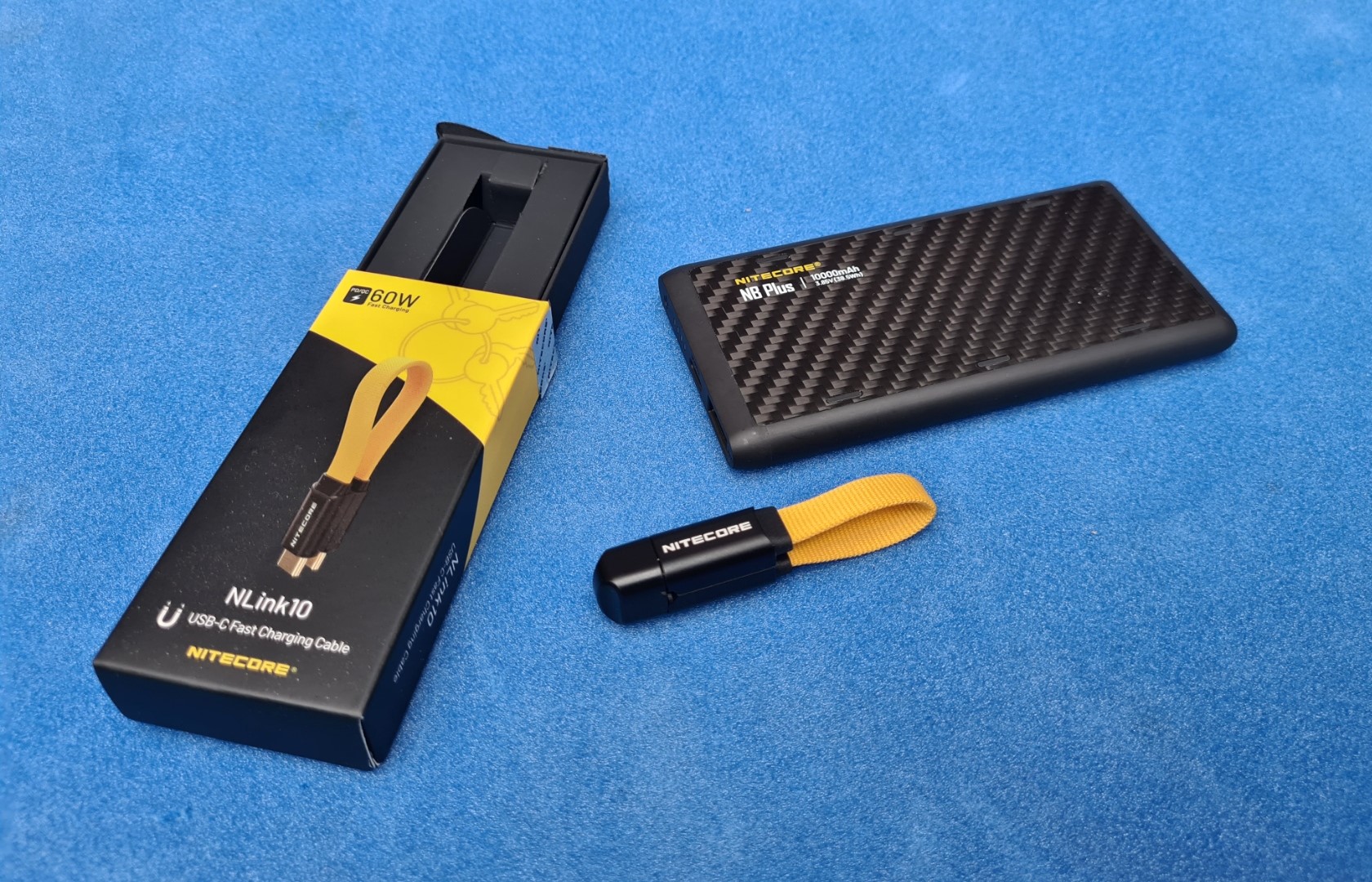
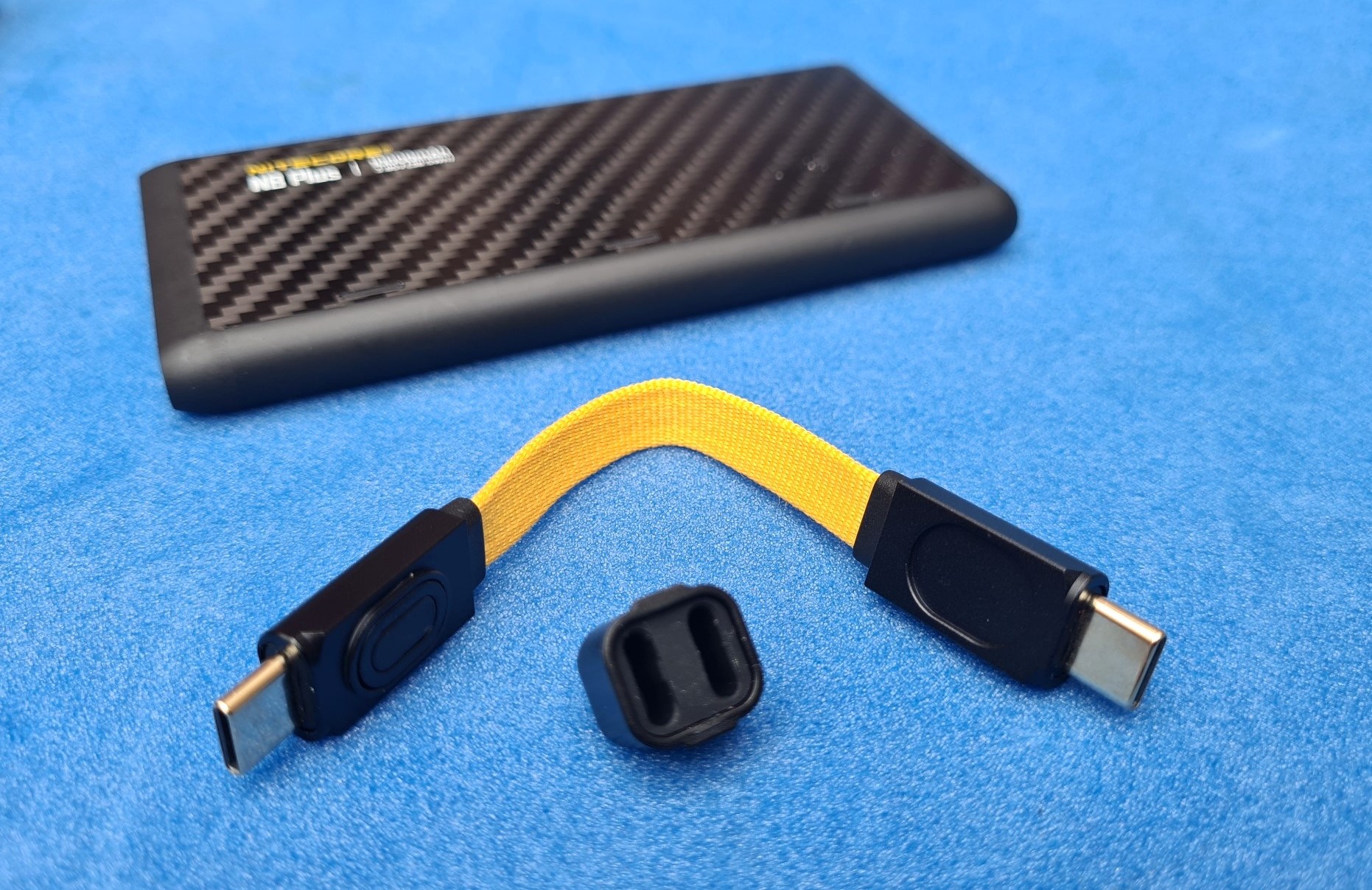
I like the tough braided polyester fabric covering the 67mm flattened NLink10 cable (115mm end to end of connectors). The gold-plated connectors incorporate magnets that clip together so can be hung from a key ring or similar. The joined connectors are also protected from dust and damp by a slip-on protective plastic cap. This cap will be easily lost as it is not tethered in any manner. Something that the EU will no doubt catch up with one day, just as they introduced legislation in 2024 to stipulate tethered bottle caps to lessen plastic waste. The ’10’ in it’s name refers to it’s weight. On my scales the NLink10 weighs 10.5g with the little protective cap, or 9.1g once this has been lost.
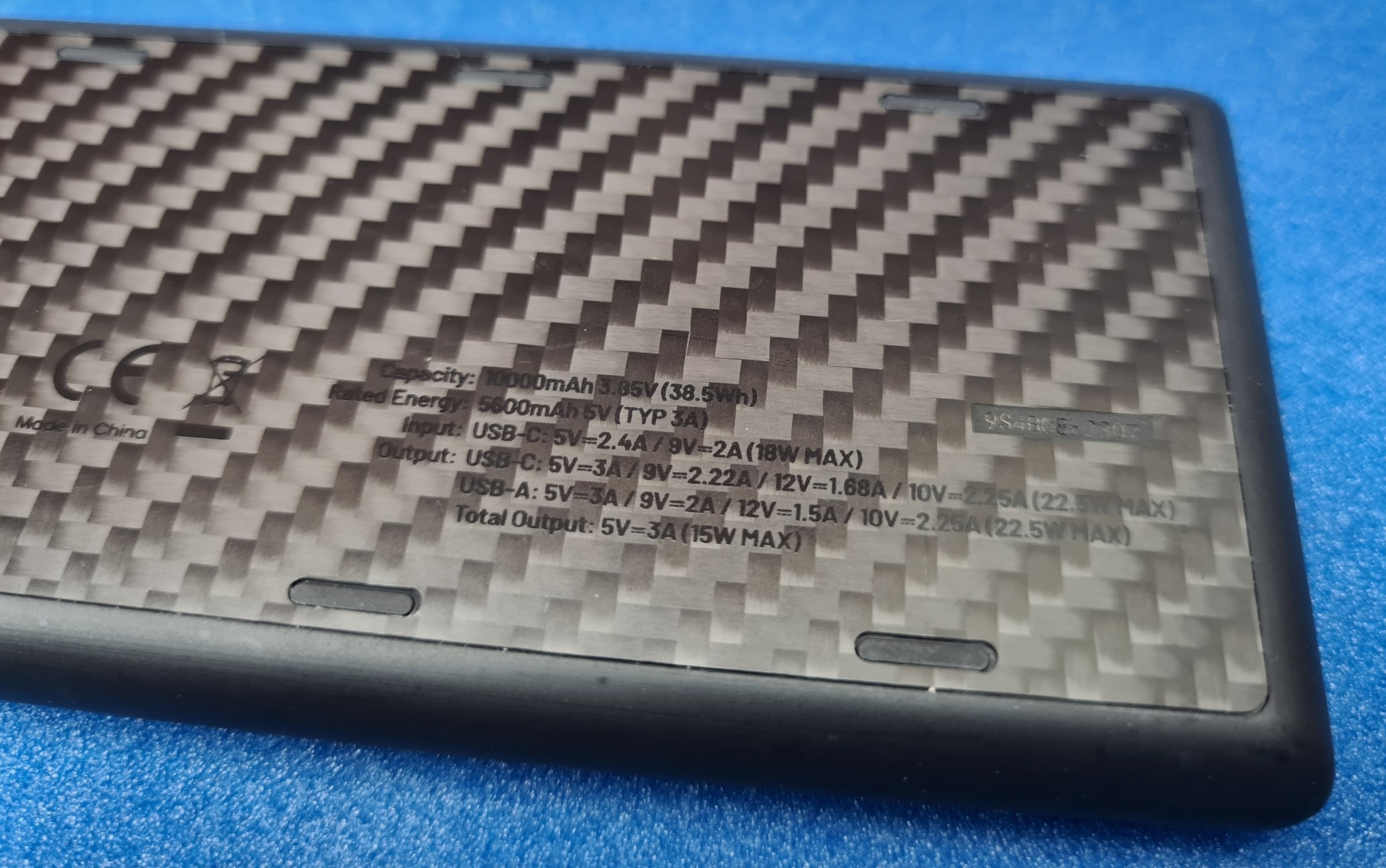
A 10000mAh powerbank hits the sweetspot for the majority of my multi-day hikes and the small size easily slips into an electronics bag and pack. No matter how small a 20000mAh powerbank is, they are always quite noticeable by their increased bulk and weight. The compact size of the Nitecore 10k powerbanks have consistently proved ideal for my purposes and the latest iteration doesn’t disappoint. I personally appreciate the two choices of port configuration combined with fast charge capability and especially the increased weatherproofness. The NB Plus has an operating range of -10 to 35⁰C so is suited to four-season use. As a result, the NB Plus has taken it’s rightful place as my choice of powerbank for multi-day backpacking, until, I am sure, Nitecore improve it yet again! The newer features on the NB Plus may be insufficient to persuade someone who already owns a Gen 3, but anyone with a previous generation powerbank with a slightly lower charge rate and a lesser degree of waterproofness might find themselves tempted. Many manufacturers in China are churning out powerbanks that cost a great deal less than the NB Plus, but few of those will be incorporating the careful build of Nitecore powerbanks. If your requirements are less, then fine, go for the cheaper product, but remember the adage pay once, cry once (says he, with a dozen Nitecore powerbanks!)
I asked Nitecore what their plans were for the future. In reply: “Looking ahead, we plan to further refine our power bank lineup with a stronger focus on different outdoor scenarios. Depending on user needs, this could include models that, for example, prioritize ultra-lightweight design, emphasize high-efficiency fast charging, support higher power output, or feature enhanced cold-resistance. Through this differentiated approach, we aim to give users the flexibility to select the product that best fits their specific situations.”
Thanks to Nitecore for providing me with the NB Plus powerbank for review, though if they hadn’t, I would have purchased one!
- Nitecore 21700 Intelligent Battery System
- Nitecore powerbanks- four lightweight options- 5k, 10k, 20k mAh (2021)
- Nitecore NB10000 Gen2 powerbank (2022)
- Nitecore Carbo 20000, the world’s lightest 20000mAh powerbank (2023)
- Power Adapters- a look at three UK options, each with USB-C (2021)
- Smaller power banks, plugs and leads (2020)
- Solar Panels

 Three Points of the Compass
Looks interesting and will have to give it a harder look as I might need an upgrade.
This is the second time I have seen you mention solar panels which I know previously you have found not worth the weight so really interested to know what has changed?
LikeLike
Not sure I have ever said they are not worth the weight. I first tried solar power while backpacking some fifteen years ago but the technology back then never really suited me. More recently I reckon realistic use lightweight panels have improved immensely. Five or so years ago I wrote “I am not completely convinced about solar panels quite yet, especially in the UK. But just occasionally, one of these panels will sneak its way into my gear list“. That has certainly been the case. I adopted the Sunslice Fusion Flex 6 (a supposed 6W panel) a couple of years back and have found it does me quite well. But it must supply a powerbank rather than phone directly. I feel the use of a 10000mAh bank coupled with a solar panel is often enough to replace a larger and heavier 20k brick. I am sure many could get away with a smaller lighter powerbank, around the 5000mAh capacity (such as the Nitecore NB Air), but I think the larger 10000mAh allows for a day or two of ‘unable to charge’ weather if need be
LikeLike
Cool, I have been wondering about them for a while.
LikeLike
To be honest, if you can do without, then do so. It is just something else to carry, something else to be aware of, more expense. I shall probably carry on using solar panels as I like the ‘off-grid’ element. Also, the increased waterproofness that the NB Plus has now provided, has removed, or at least reduced, a degree of the extreme care required
LikeLike
interested in the NB Plus 10k, how’s the weight compared to previous models? 🤔
LikeLike
I included (advertised) weights in the table
LikeLike