
What do heat exchanger pots have to offer the lightweight backpacker? Are they any more efficient, and if so, does this compensate for the increased weight, bulk and expense? Three Points of the Compass takes a glance at some of those available.
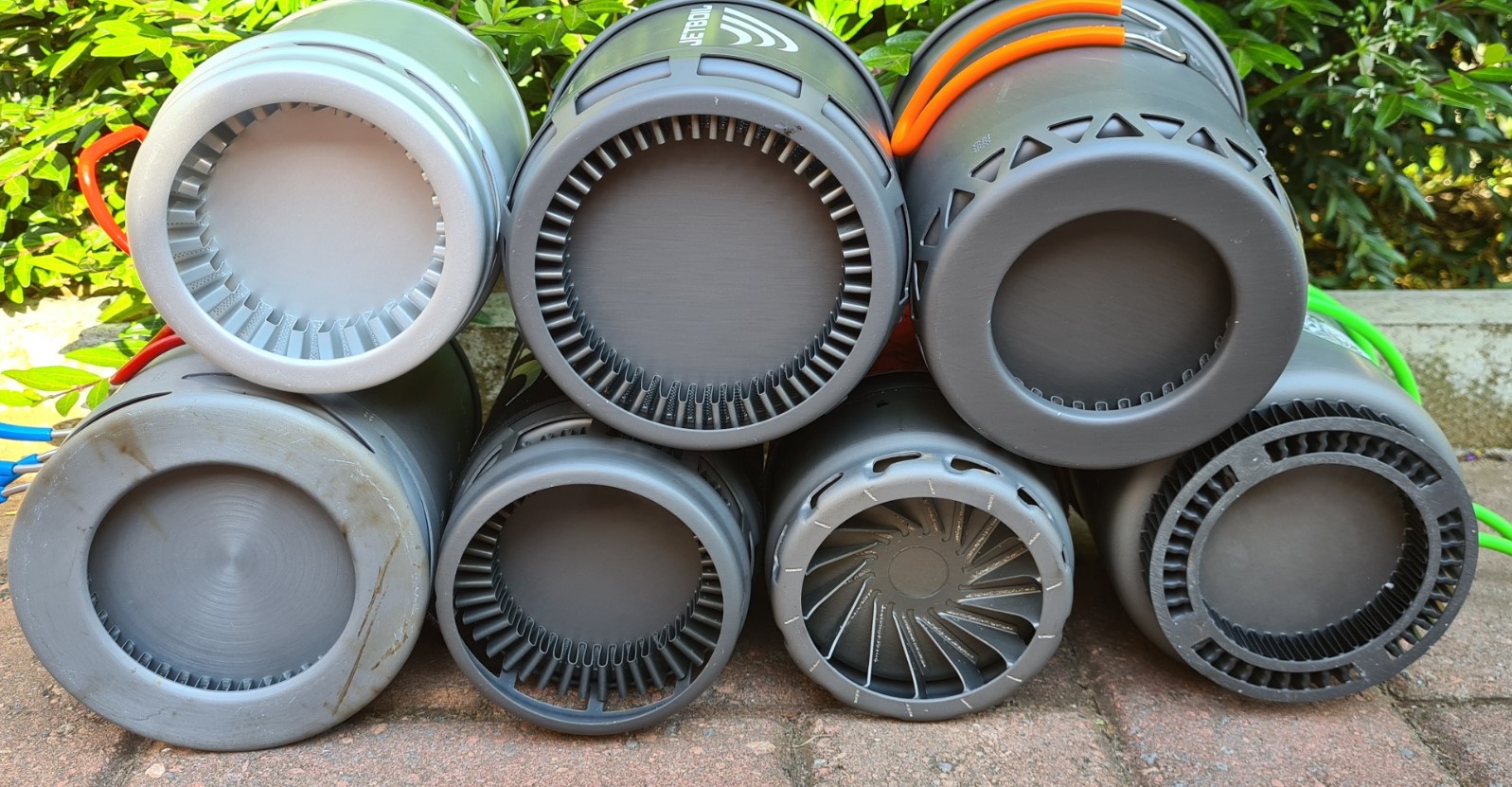
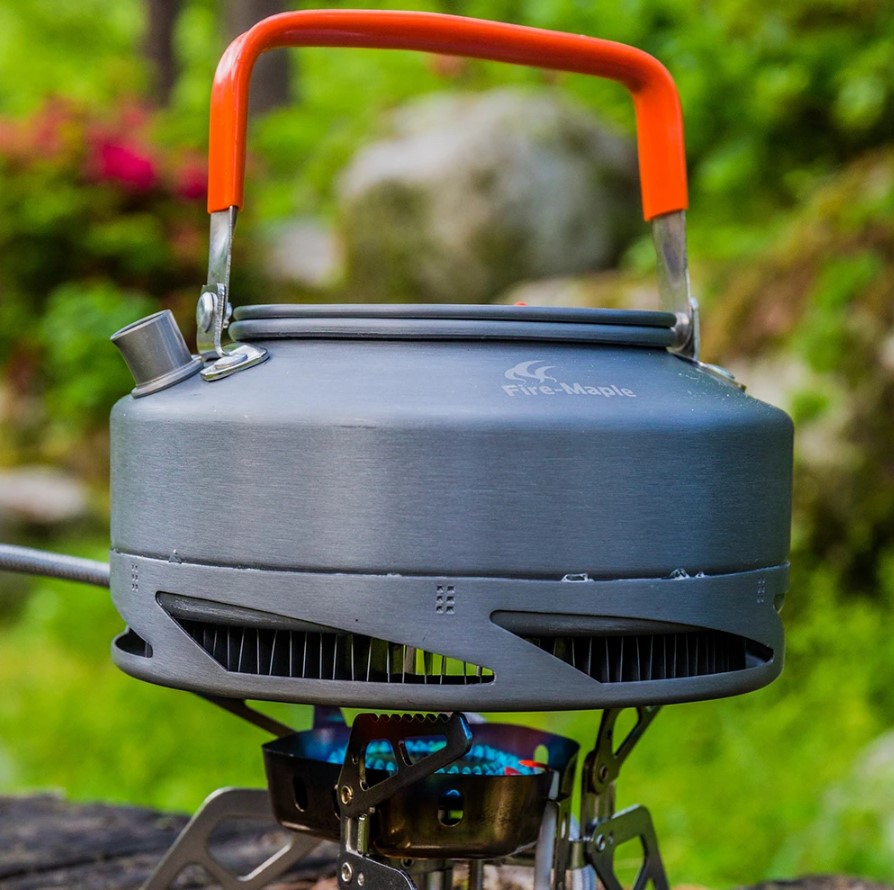
A heat exchanger pot is simply a standard pot with additional vanes or fins on it’s base and/or side that act to capture and transfer heat from a burner or stove, that would otherwise be lost, to the base/side of a pot.
While canister gas has a high calorific value, some other fuels such as a meths/alcohol deliver less and anything that can increase efficiency with such stoves and burners should be considered- a heat exchanger pot, with or without the aforementioned windshield, but also using a pot lid and wider pot base rather than a narrower option, any or all will make a positive difference. Various studies have been made of how much more efficient a heat exchanger pot is when compared to a standard pot without fins. 30% – 40% more efficient is the usually stated range, with some users experiencing results slightly below or above this range. Time taken to reach a boil is reduced, with a subsequent reduction in amount of fuel used. But there are other things to be considered, there is the increased outlay, combined with the increase in weight and bulk that a heat exchanger pot presents. It should also be remembered that by using a pot where the heat is transferred more efficiently to it, it can also make it less suited to cooking, rather than simply boiling water. Though that will depend on the simmer capability of the burner with which it is used. Another slight issue with heat exchangers is that they can increase the amount of CO being produced. This is not a problem in well ventilated spaces, but might be an issue if used for a long time in the confines of a sealed tent.
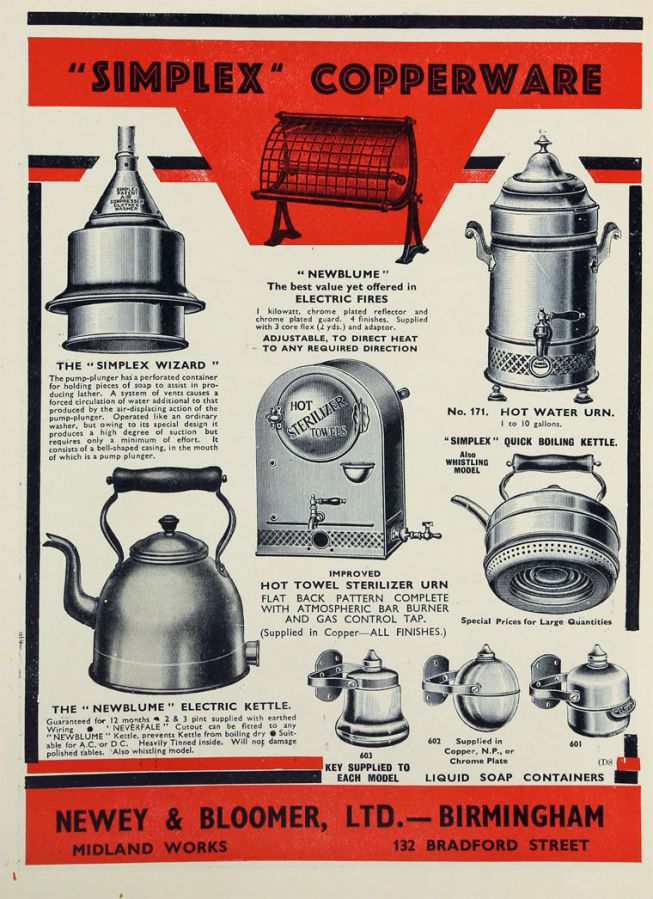
Heat exchangers on pots and kettles are nothing new. They have been made since at least the 1930s and probably a good deal longer than that. Despite innovative gear supplier MSR releasing an attachable heat exchanger for use with various pots, it was probably Jetboil that really bought this type of pot to the notice of the camping world. The MSR attachment was more for larger groups wanting to heat water as efficiently as possible in challenging conditions. Though this product did move over to some ‘in the know’ car campers who didn’t mind the extra weight and bulk.
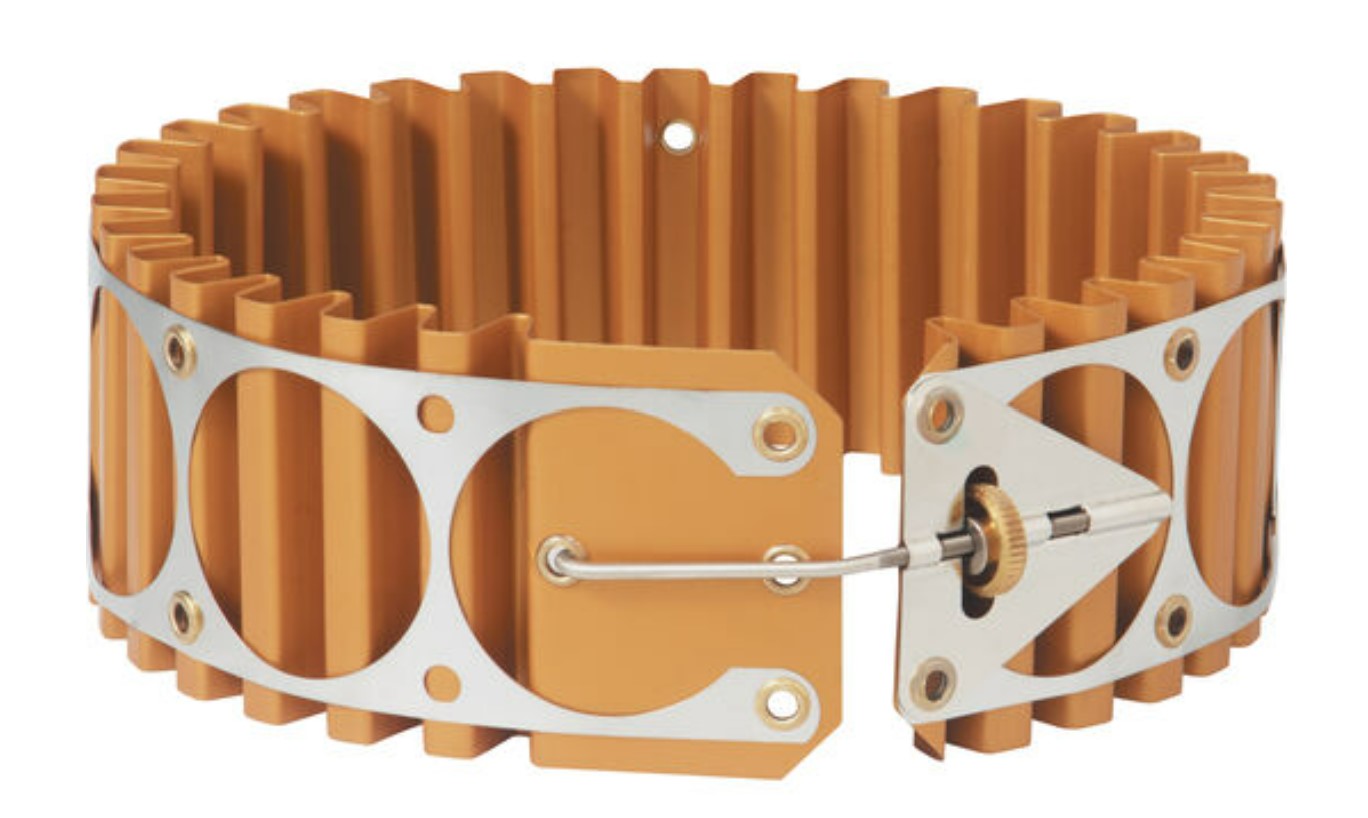
While the bolt on MSR heat exchanger is a fairly bulky item, with angular fins and easily damaged, Integrated Cooking Systems almost all pack into themselves to make fairly compact if quite heavy packages.
Jetboil changed the outdoor market forever with the introduction of their integrated cooking system. This was centred around a canister top stove tightly fitted to a heat exchanger pot. It was these stoves that bought this previously niche and little known product, the heat exchanger pot, to the wider attention of climbers, hikers, campers and backpackers. Heat Exchanger pots using, what Jetboil refer to as Flux Ring Technology, work by increasing the surface area at the base of the pot that is heated by the burner.
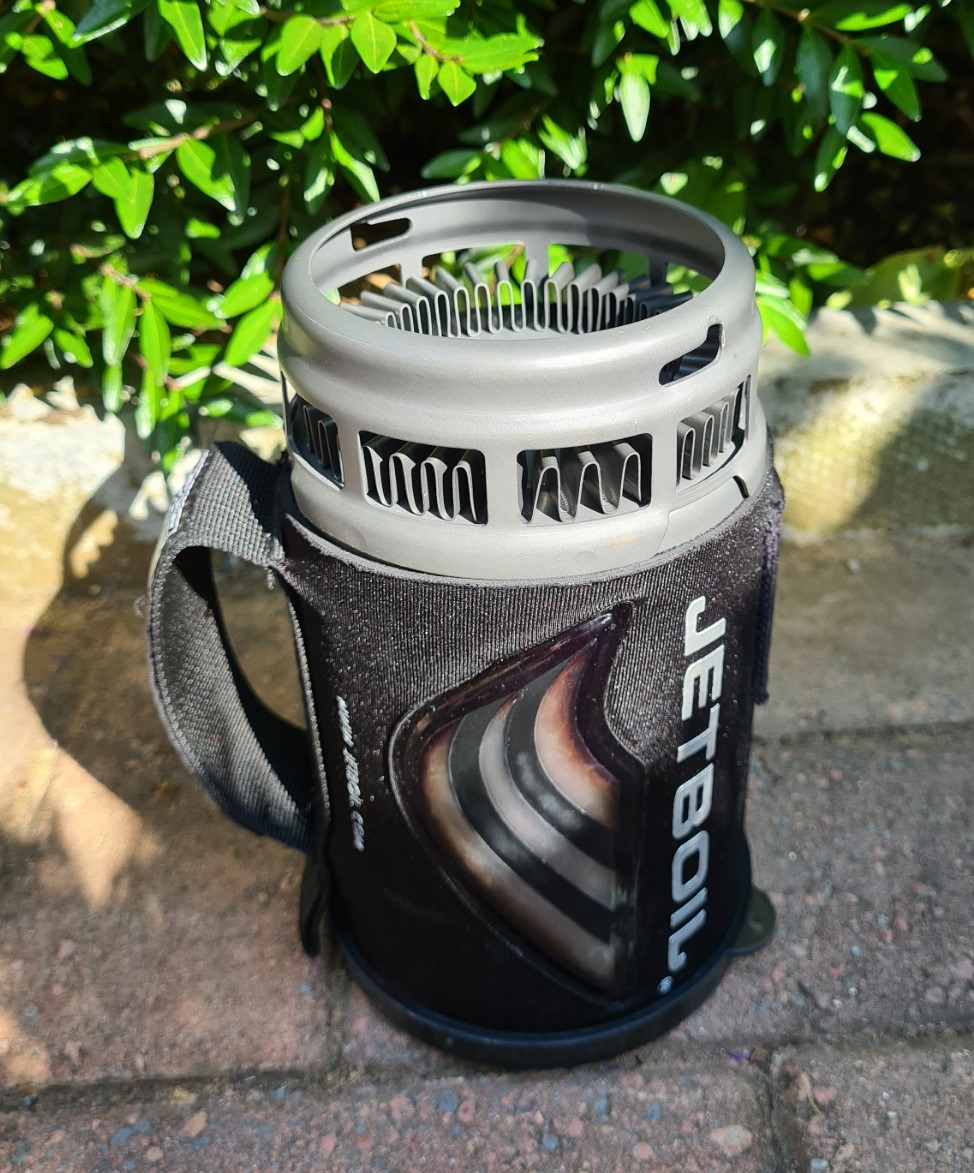
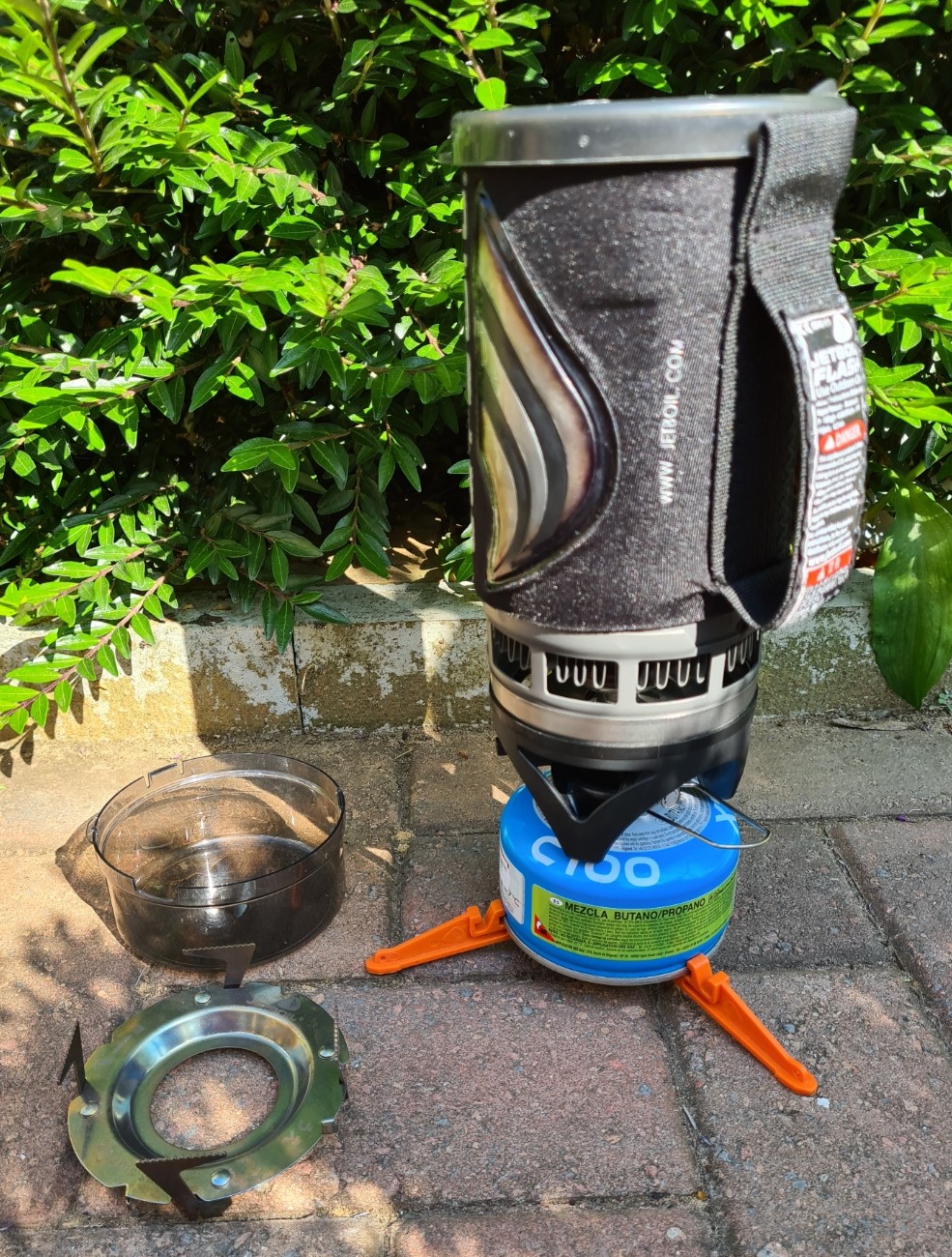
There are a great many fans of Jetboil cooking systems and the company has steadily expanded and refined their products, introducing small systems, large systems, pots, pans and other accessories. After I purchased my first Jetboil, very few of these extra products have been much of an attraction to me until their recent release of the small Jetboil Stash. Some heat exchanger pots also incorporate a ring of metal around the fins on the base, that acts both as a windshield and protection from damage.
Other brands also produced their own variants on a theme. Some, such as those from MSR and others were good, others less so. The integrated heat exchanger pot is almost always one of the most important parts of these systems, along with the burner of course. It was this feature that cut down boil time and reduced fuel use. Those that have the windshield included are invariably reliable performers in quite extreme conditions. The insulating sleeve on these pots also goes some way to retaining heat.
Three Points of the Compass purchased a Jetboil Flash over a decade ago. The entire integrated system, without gas canister, weighs 468g. The heat exchanger pot alone is 156g, or 197g with its insulating sleeve, plus a further 31g for its lid. I only took it on one longer trail. That was the Two Moors Way, and in frequent foul weather it was mostly used for on trail hot drinks for our small group of three. While it is still occasionally bought out for day hikes, I find it too heavy and bulky for backpacking and woeful in any sort of wind. The Flash doesn’t include a windshield and is not the best of performers in side breezes.
If coming to the integrated stove systems anew, there is a solution to any expected breezier conditions, buy the MSR Windburner. I purchased the astonishingly efficient MSR Windburner for those occasions when I wanted an integrated system as despite having just about no weight advantage over the Jetboil, the MSR will keep working efficiently when it is blowing a hoolie. The Windburner will bring half a litre of water to the boil on just 7-8g of fuel in just about any strength of wind. For that you need to actually get it lit first as, unlike the cranky item fitted to the Jetboil, the MSR has no piezo igniter.
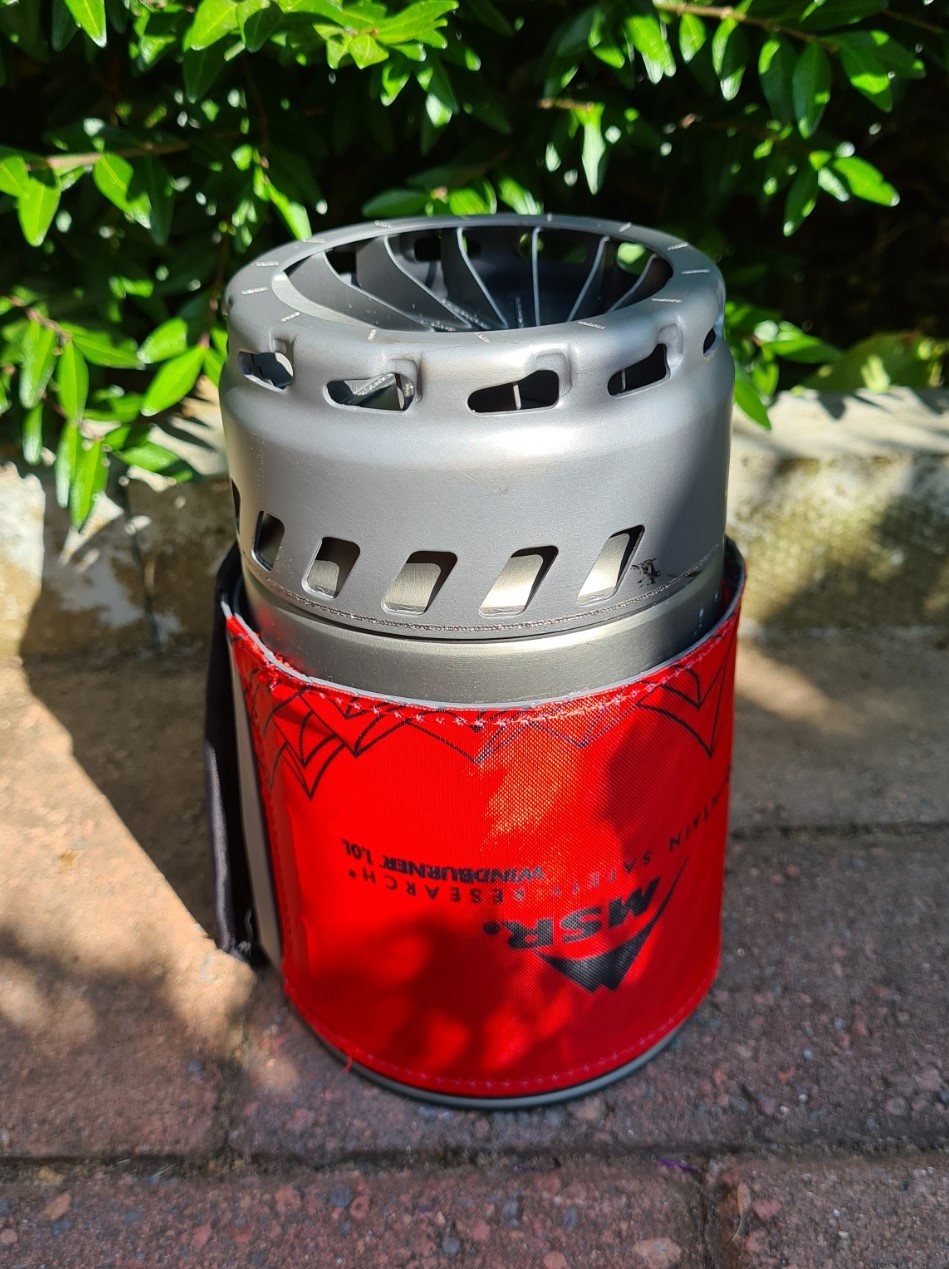
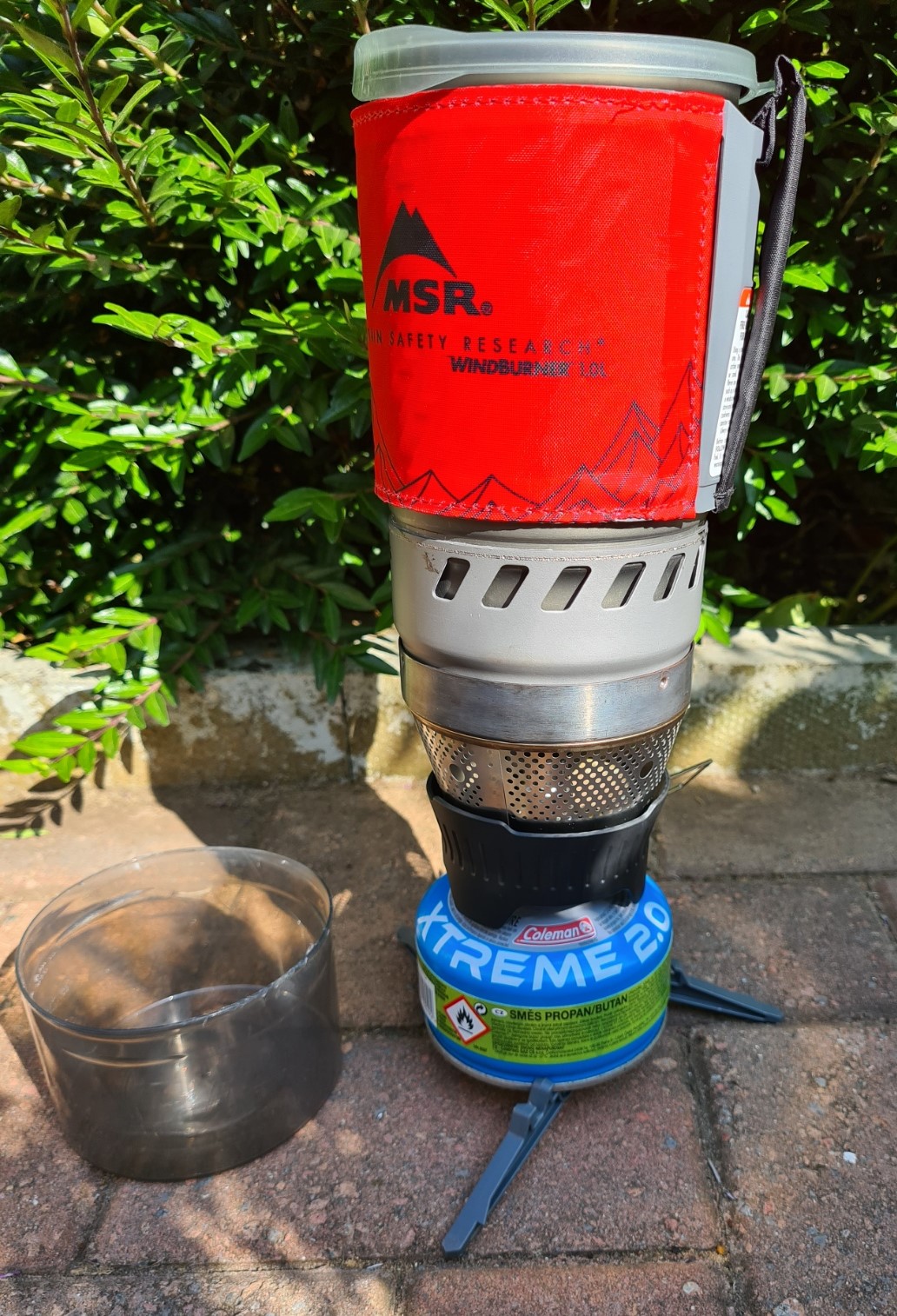
The MSR Windburner is almost certainly the best performing integrated stove system in breezier conditions. Perhaps needless to say, the carefully designed and tightly fitting heat exchanger pot is an important factor in this set-up. The Windburner is yet another heavyweight. The entire integrated system weighs 471g (without gas canister), the burner head of the Windburner alone weighs 200g and the one litre heat exchanger pot is 205g, or 158g without its insulated sleeve. The lid is another 15g. This may suit some hikers and backpackers but for someone who is usually looking to cut weight from the pack, not add it, it isn’t surprising that I have eschewed these integrated stove systems for so many years on longer trails.

As you can see, none of these integrated stove systems are light. The lightweight backpacker is rarely going to be giving any of these stoves a glance. They are bulky too. The gear manufacturers are well aware of this, they want our money, so have come up with a few alternatives over the years.
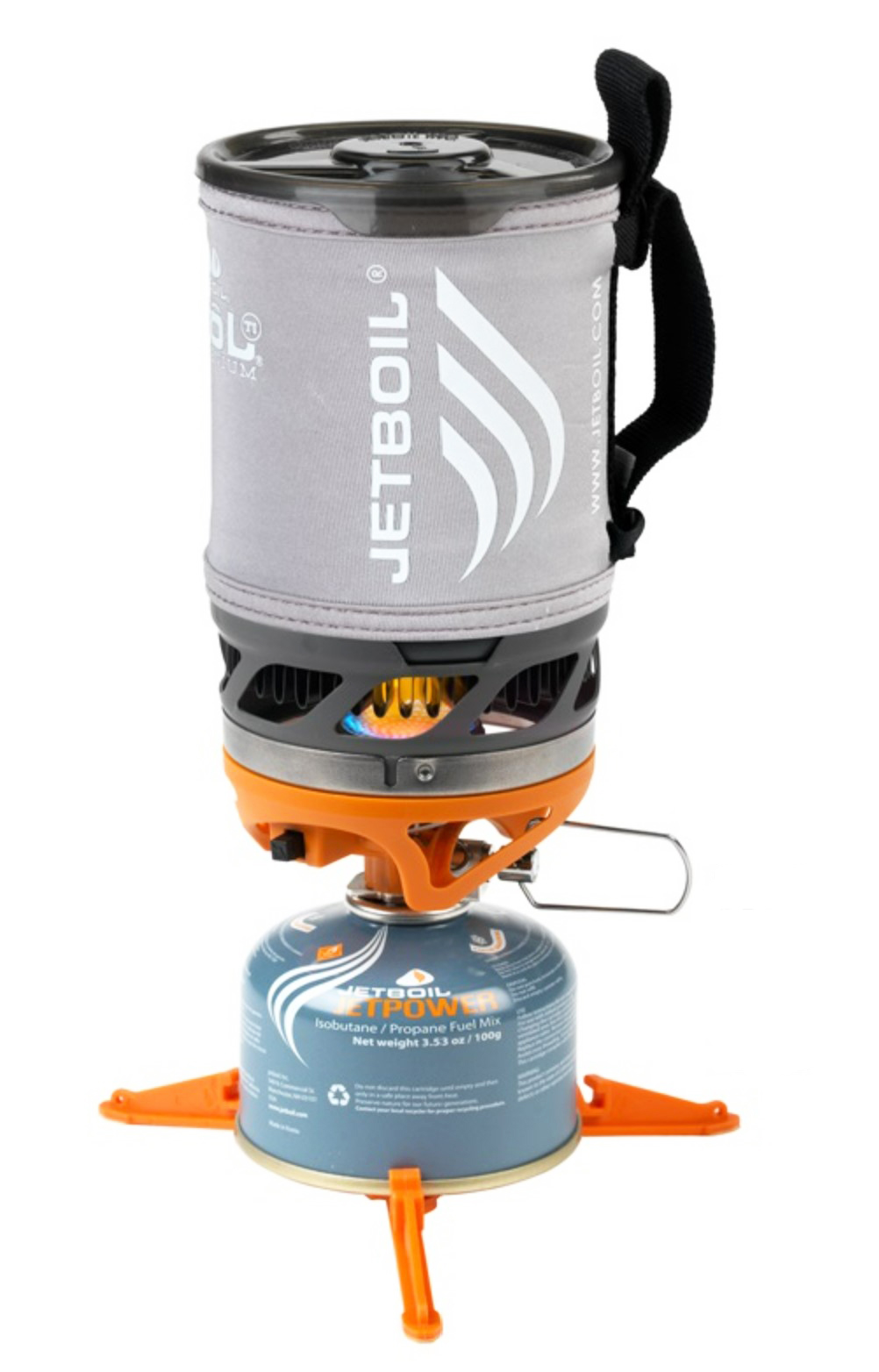
In 2011 Jetboil ambitiously attempted to create lightweight heat exchanger pots by including titanium on their 240g Sol Ti Cooking System and 345g Sumo Ti Group Cooking System. The Sol Ti set included an 800ml titanium pot and the Sumo Ti had a large 1800ml titanium pot, each with aluminium ‘flux ring’ fins welded to the base. It was almost a public relations disaster because a minority of users experienced melting or detachment of the heat exchanger fins due to heat build up in specific circumstances, the word went out and their reputation suffered, if only for a while. This is perhaps unfair, considering the majority of users had no issues. The titanium pot option was quietly discontinued.
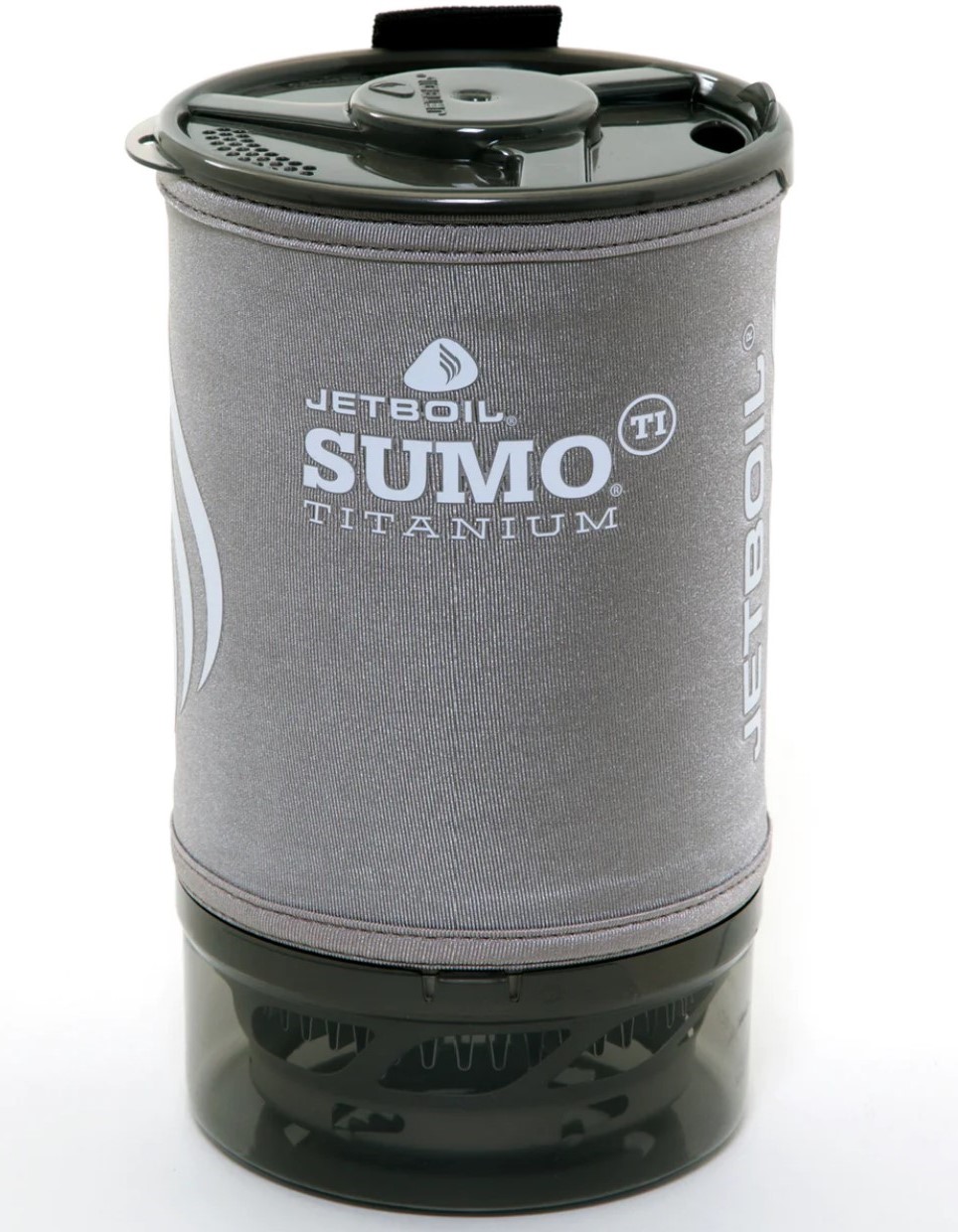
It will be interesting to see if any manufacturer decides to resurrect the use of titanium for these pots. I am unaware of any other titanium/aluminium heat exchanger pots still available. Titanium isn’t the best material for these pots anyway. Despite being incredibly strong and lightweight, it has a terrible heat transfer rate when compared to lighter, if more easily dented, aluminium, or heavier and cheaper, robust steel.
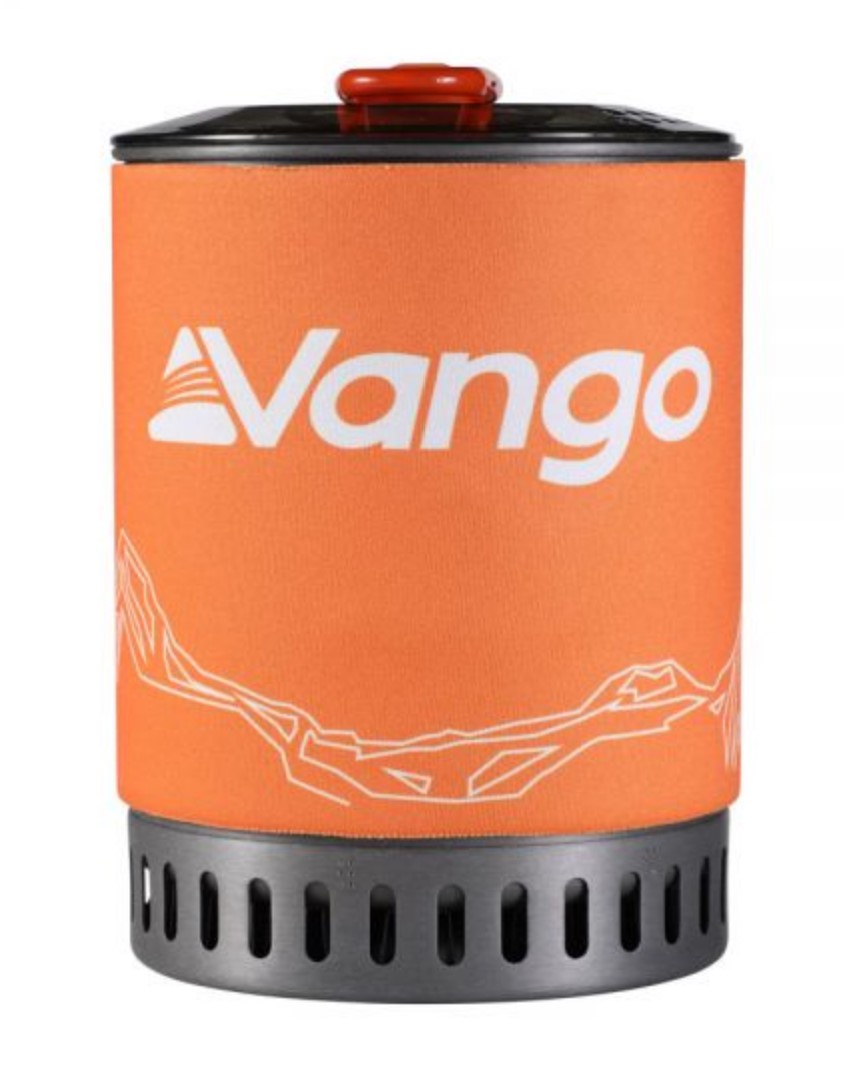
It is almost impossible to purchase just the heat exchanger pots that are included in integrated stove systems, the manufacturers of those want to sell us an expensive system, not just a pot. It is possible to buy a stove system and attempt to marry its pot with a lighter burner but that can be an expensive option.
Alternatively, beyond the integrated stove systems that the likes of Jetboil, MSR, Primus, OEX, Optimus, Vango, Wildsea, Fire Maple et al have produced, each with HE pot, some outdoor gear makers have recognised the gap in the market and do produce stand alone heat exchanger pots that can work with a variety of burners. Not every pot works with every burner, at the very least, a stove’s pot supports must be wide enough to support the pot.
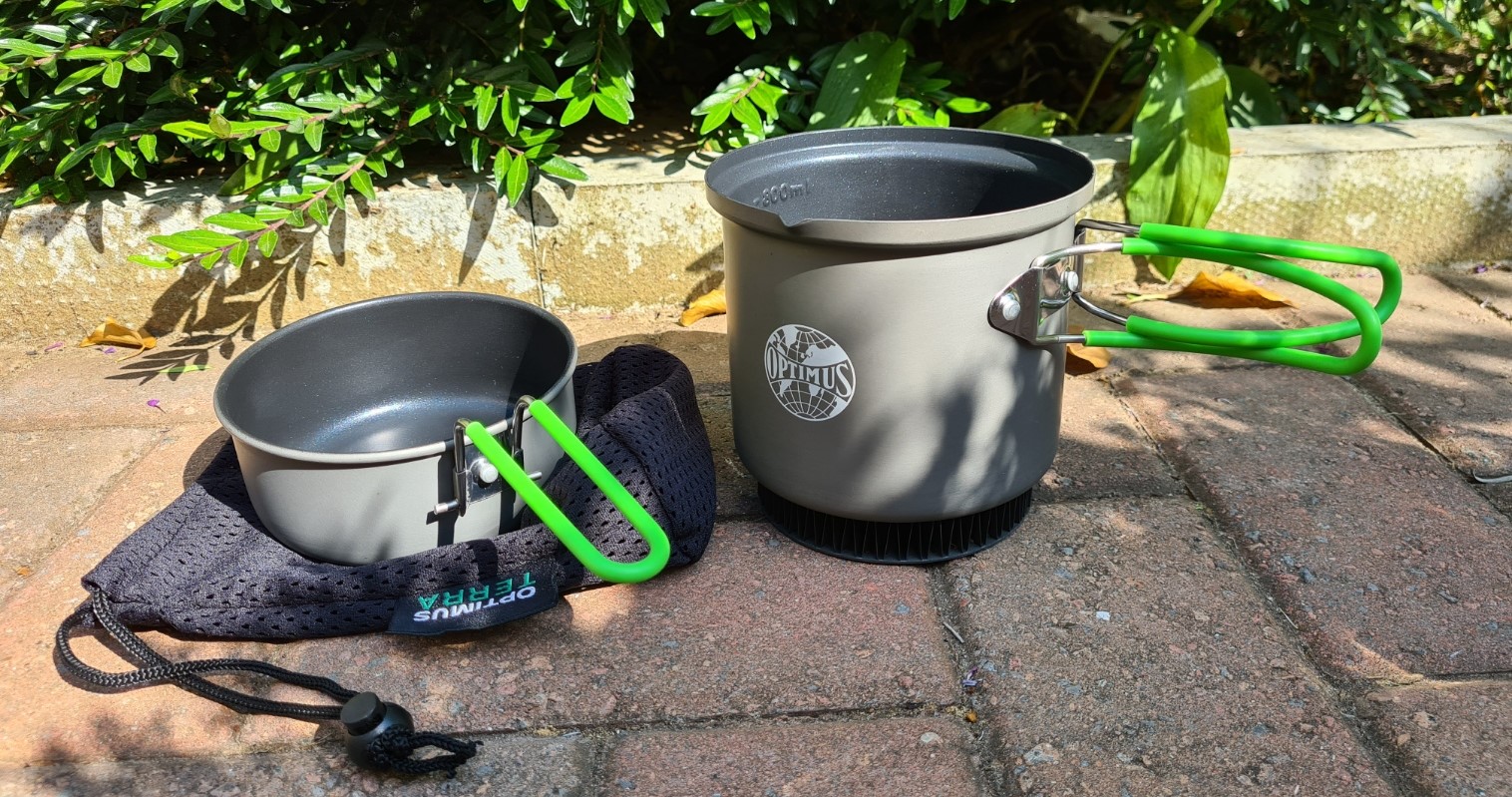
The heat exchanger pot included in the Optimus Terra Weekend Set has the advantage of being purchased with either just the 207g 950ml heat exchanger pot together with a 77g (very small) frypan/lid, or as a larger set that includes an Optimus Crux stove. This is a good stove, so it makes a decent set. Despite lacking a windshield around the heat exchanger fins, this Optimus pot does now come with a non-stick surface so is suited to cooking rather than simply boiling water. A 17g stuff sack is also included.
Heat exchanger pots are not confined to just canister top gas burners either. They can be used with remote gas canister burners/stoves, or with other burners, such as multi-fuel stoves, meths/alcohol, solid fuel and gel, even wood fires. However heat exchanger pots do work best with gas or meths/alcohol burners. They can be used with Esbit, but that gums up the fins badly, which reduces efficiency, and soot from open fires can have the same result.
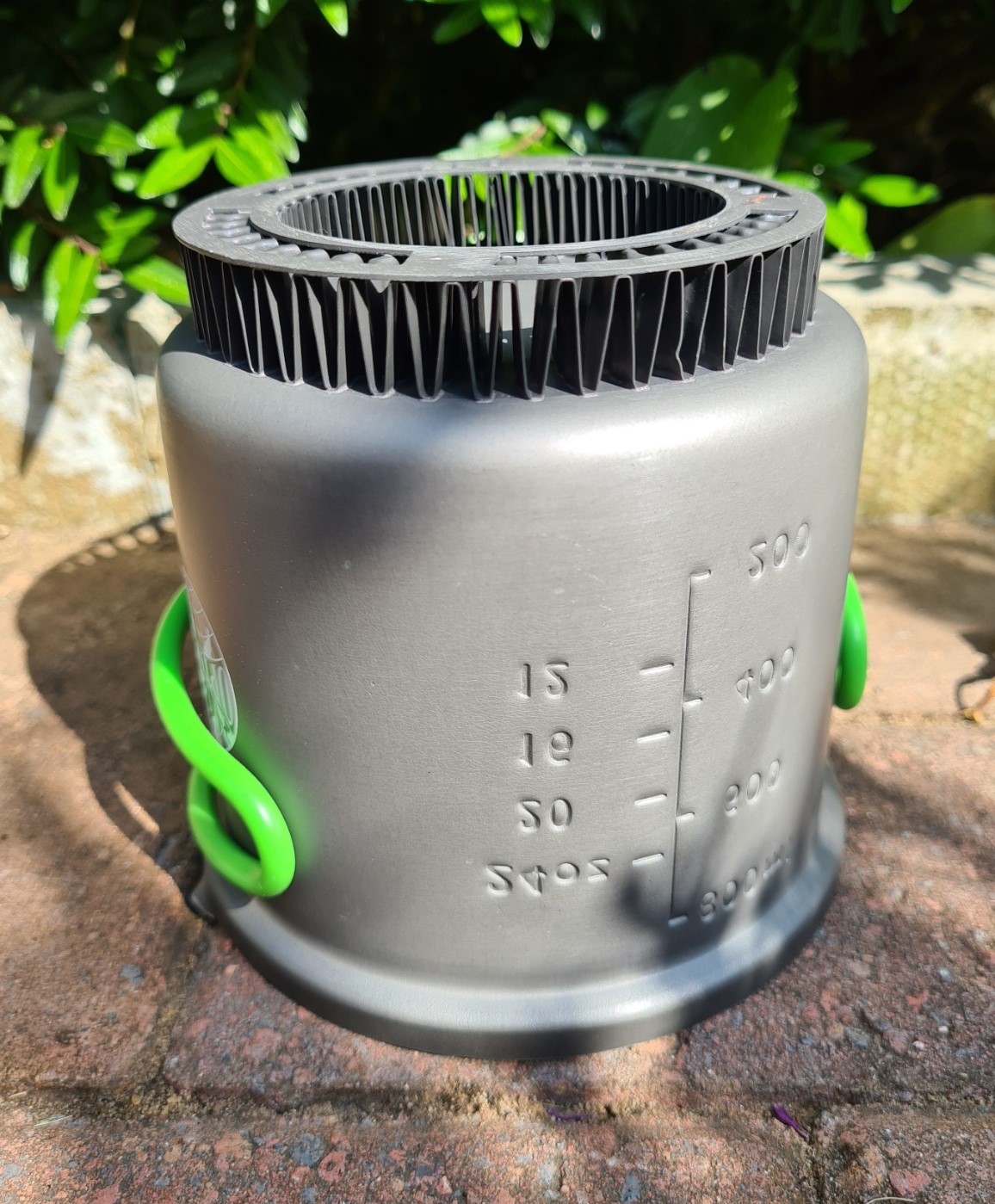
Heat Exchanger pots are all bulkier and heavier than their equivalent without this feature. In theory the extra weight of a heat exchanger is offset by increased efficiency and the weight savings in gas, potentially being able to use a smaller gas canister on a trip instead of a larger canister, thereby saving weight on the canister too. But consider the stats. Disregarding time taken to boil, if a volume of water takes 4g of gas to reach a boil with a heat exchanger pot, compared to 8g of fuel for a pot without, that is a saving of 4g per boil. If a heat exchanger pot weighs 100g more than a pot without heat exchanger, it will take 25 boils before recouping the increased weight of a heat exchanger pot. Rarely would the maths be as simple as this, but it provides something to consider. Or perhaps you simply wish to use less of a fossil fuel. Now there is an argument in their favour.
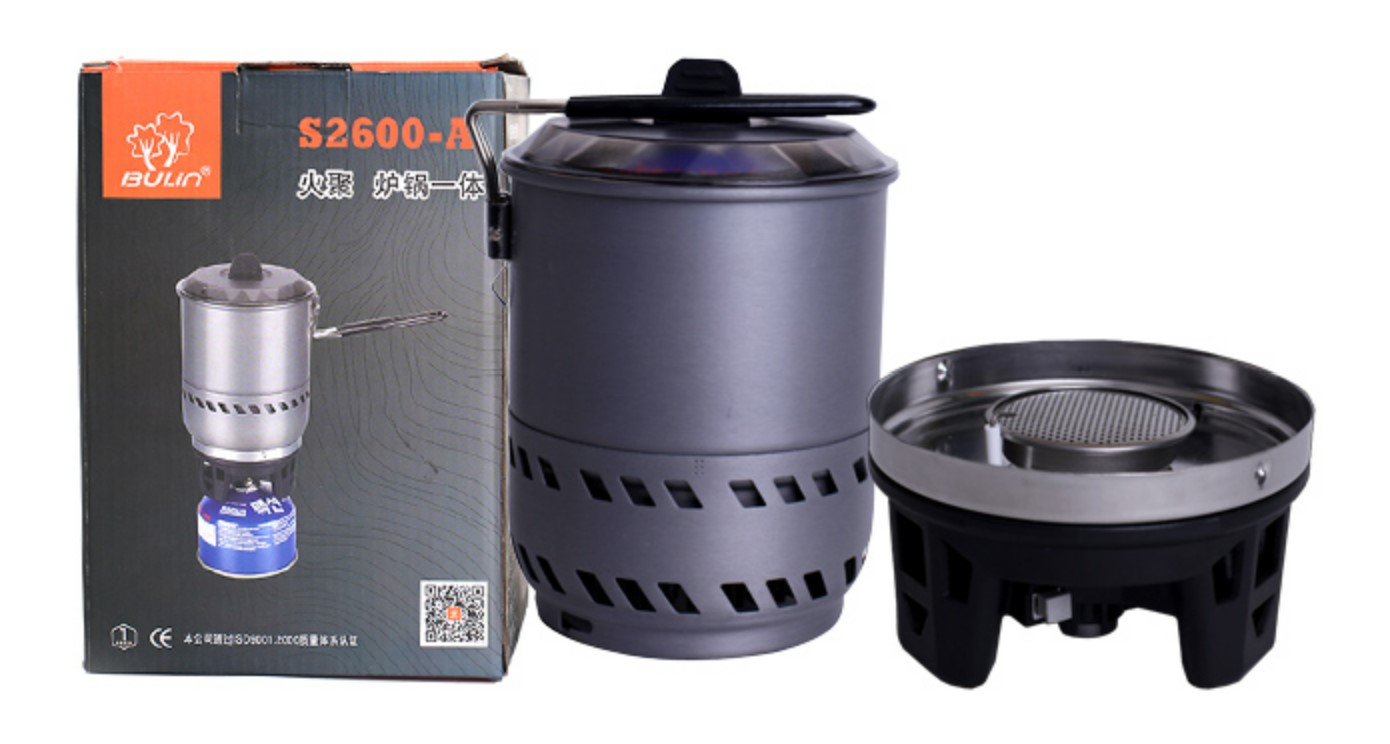
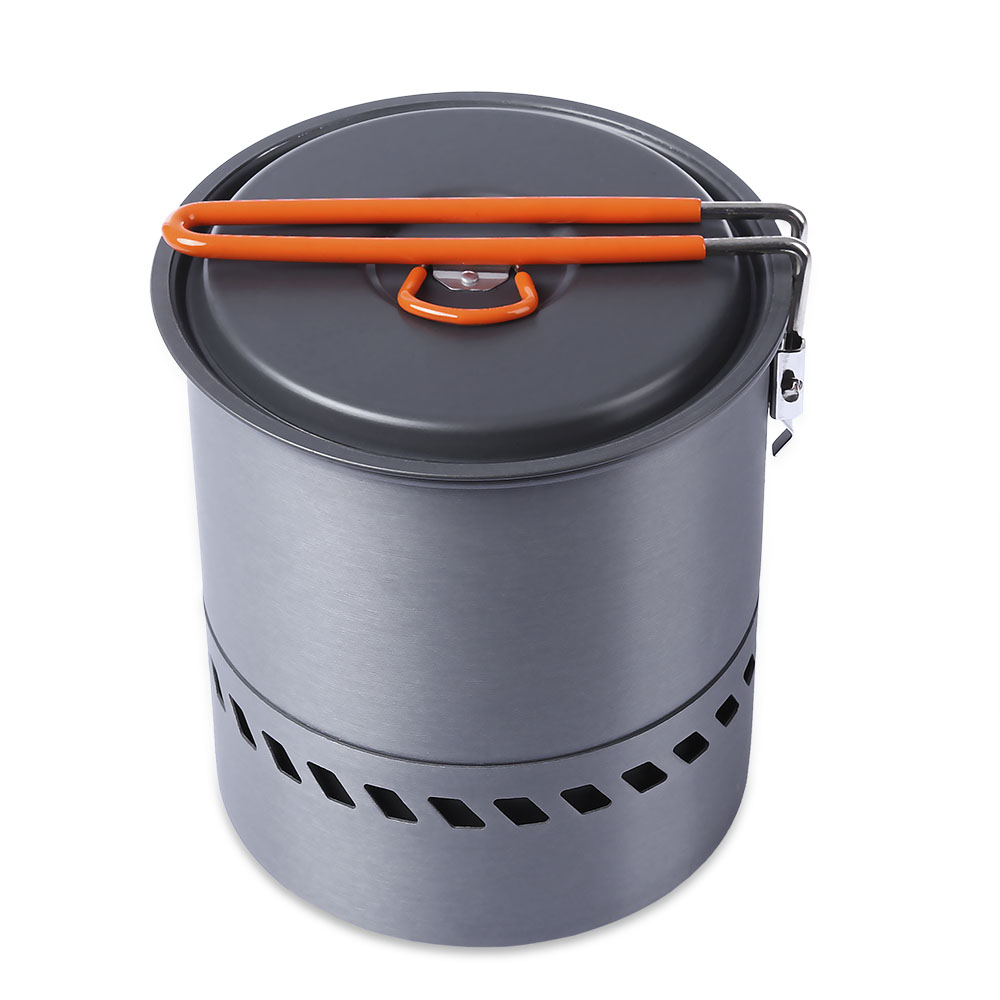
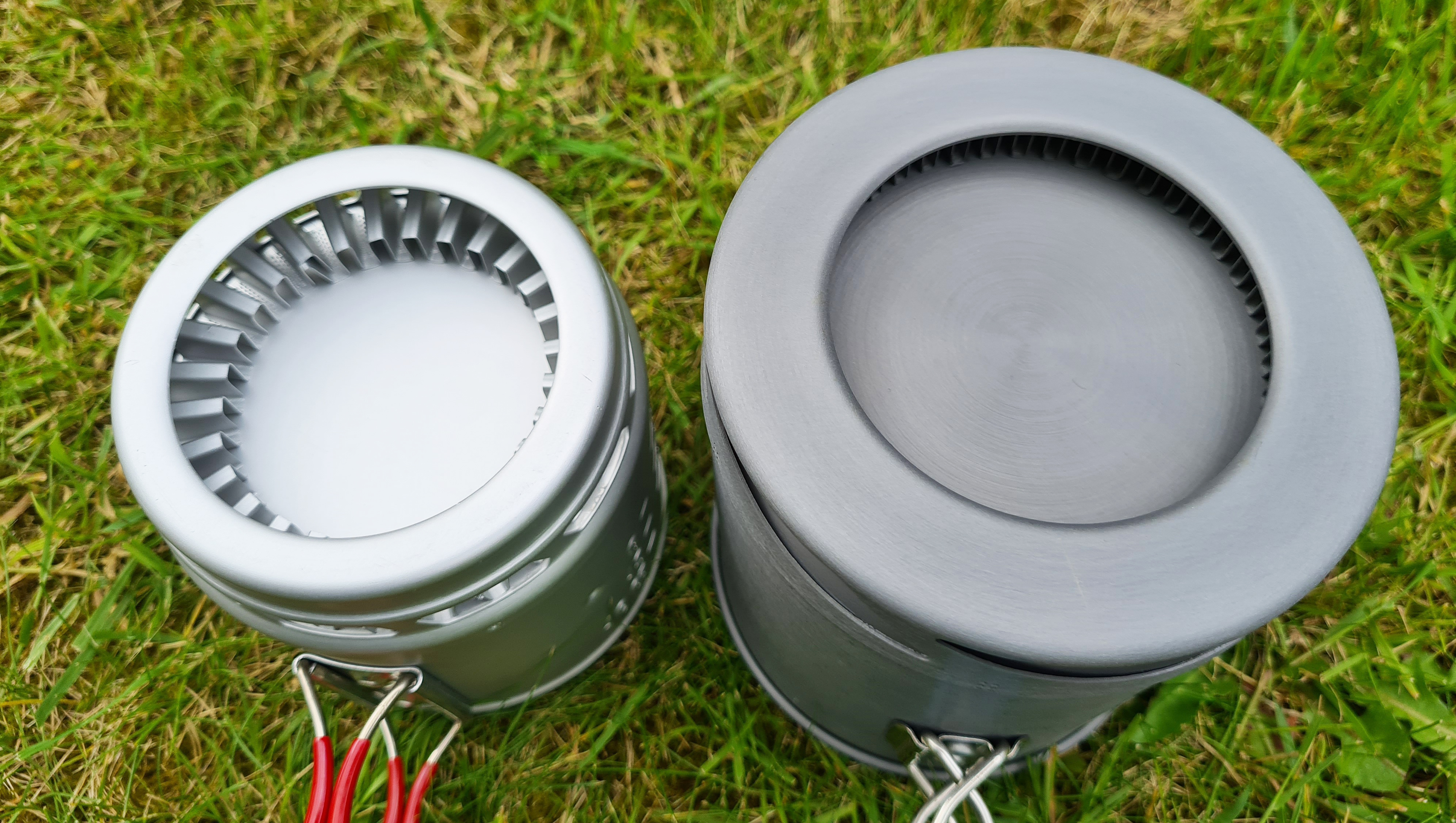
Not all heat exchange pots are created equal. Some will have spot welded fins while others have a decent longer weld, the latter will permit greater heat transfer to the pot and its contents. Some have exposed fins welded to the base, others encapsulate these fins. This windscreen covering can keep heat at the base, preventing it being whipped away in a breeze, it can also help prevent fins being damaged. Other designs of heat exchanger pot may direct hot gases slightly up the side of a pot before exiting, thereby encouraging still greater heat transfer. All of these additions add weight to the pot itself.
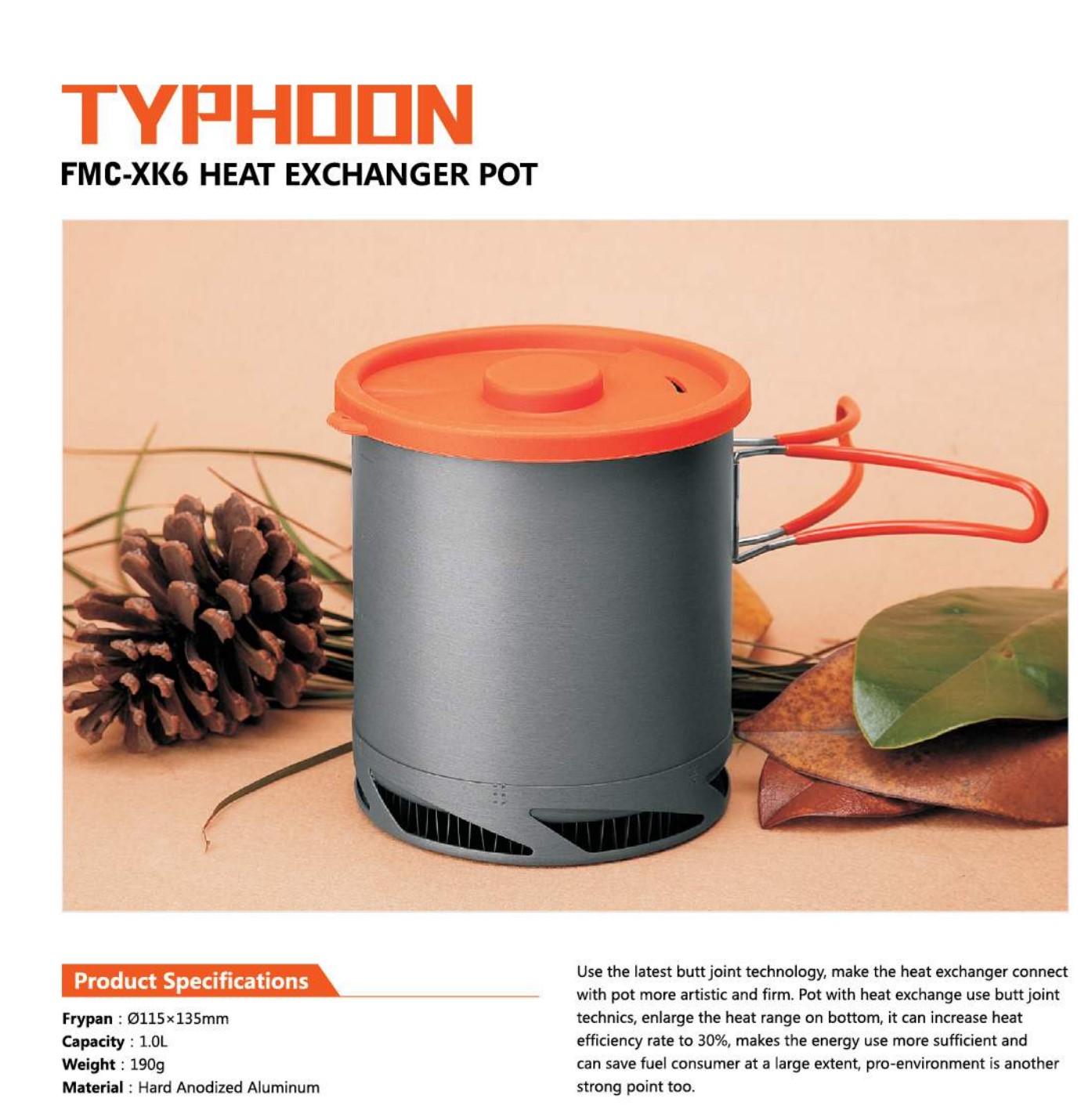
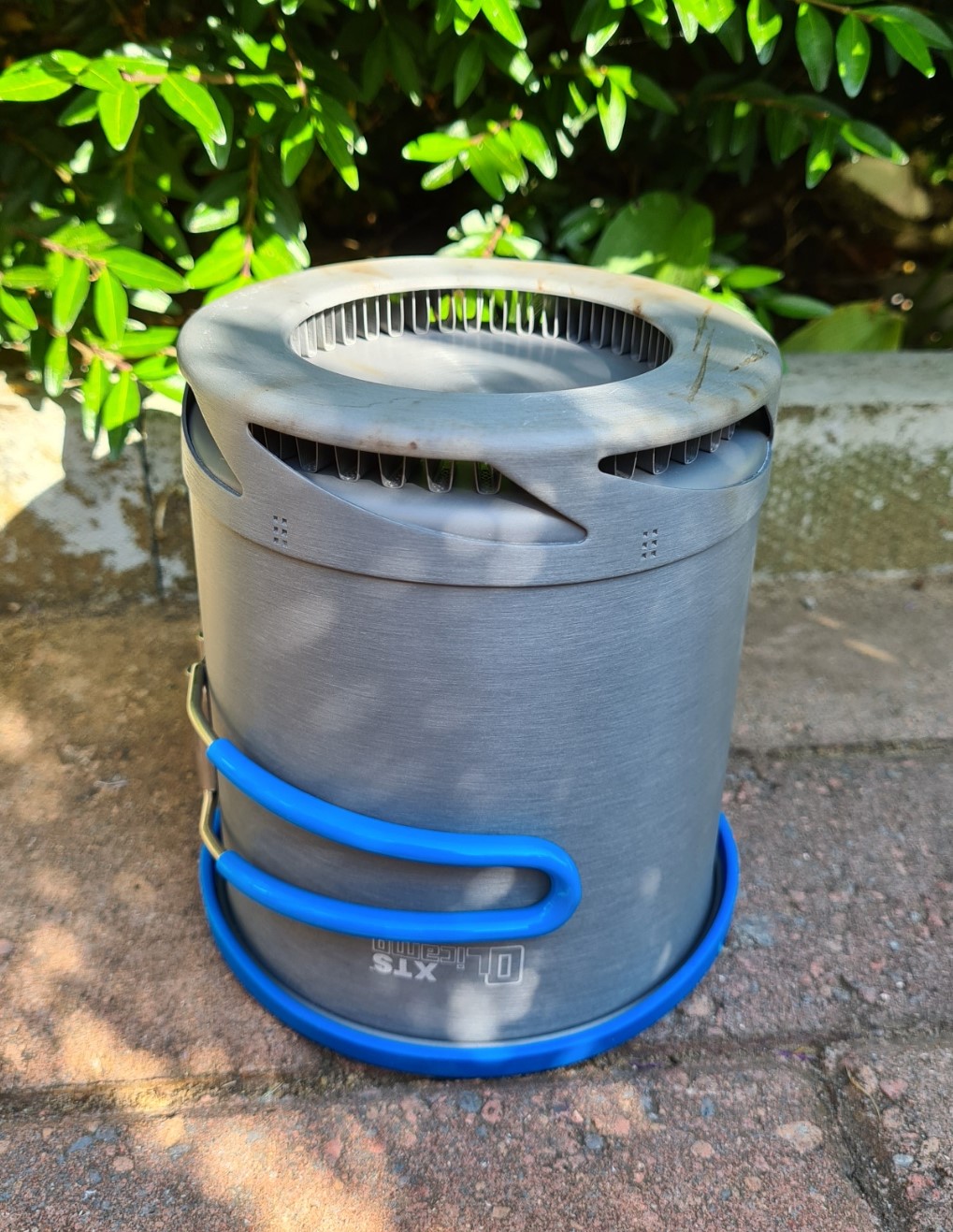
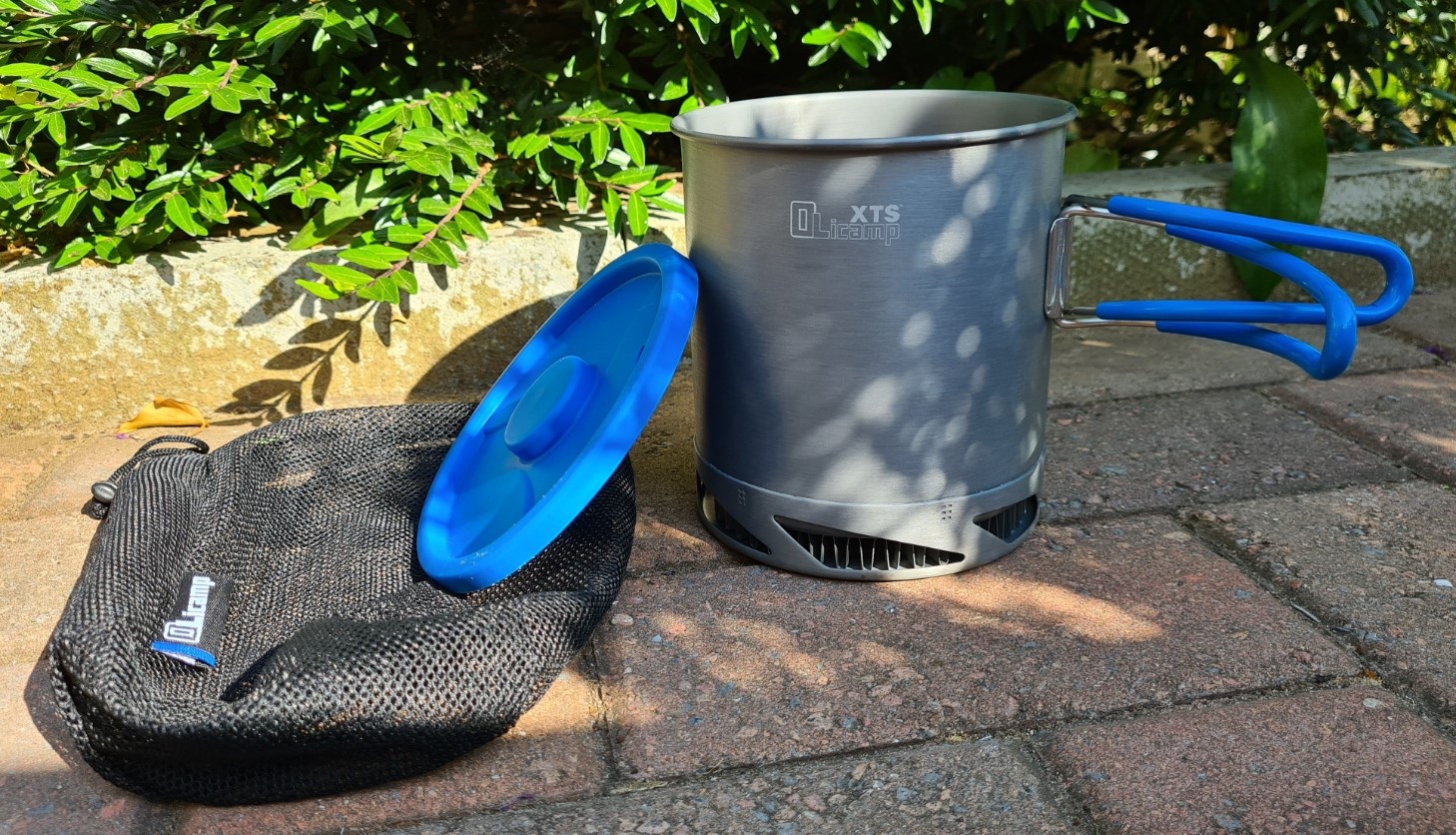
The Olicamp XTS (Xcelerator Transfer System) heat exchanger pot is a rebranded Fire Maple Typhoon FMC-XK6 pot and a popular choice for many but I find it’s capacity too large. It is designed for 1000ml, but will hold up to 1250ml brim full, but could not comfortably boil that amount. I have seen this pot under various guises, with blue, orange, clear and black handles and lids. Take your choice, they are the same product regardless of colour but the lid is a heavy piece of overkill and a circle of foil will lighten things considerably. The pot itself weighs 170g, plus another 34g for the lid, and if you want it, a further 13g for its mesh bag. Often over-priced, keep looking and you can often see a rebranded example going for a reasonable price. It is well made pot with good protection to the fins/vanes to stop them from being damaged.
Small heat exchanger pots
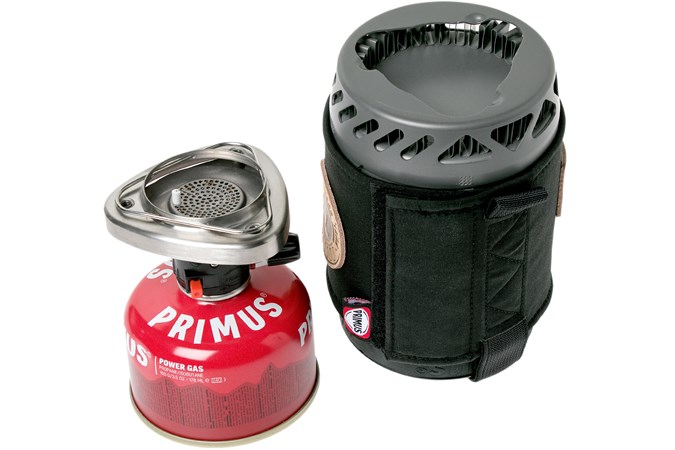
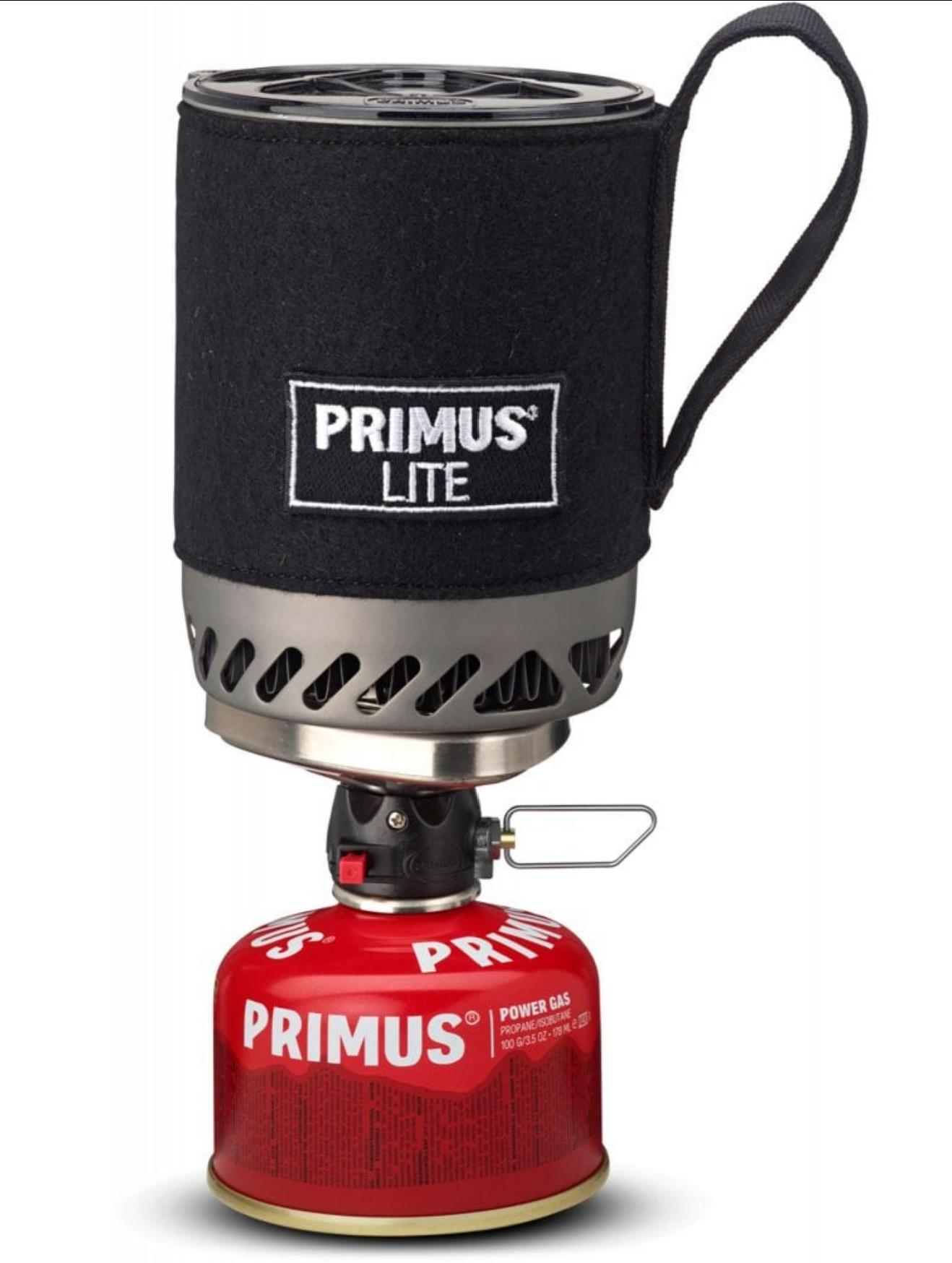
There have not been many small capacity heat exchanger pots commercially produced. Primus makes one of the smallest. There have been various iterations of their Primus Lite: Primus Eta Solo/Primus Lite/Primus Eta Lite/Primus Lite+, each variety on a theme getting ever heavier. Their early stoves had some design issues but those were mostly corrected. However the pot is now made with a peculiarly shaped base and only comfortably nests with the intended burner so may be difficult to combine with a favoured stove. While the pot capacity is rated as 500ml, it can squeeze in 750ml. But the whole burner/pot/stove combo comes in around 365g-400g depending on the model, so not exactly lightweight.

The stated capacity of a heat exchanger pot shouldn’t be ignored. Most pots will permit a greater volume of water to be added than their stated capacity. A heat exchanger pot can reduce the time taken to boil water quite a bit, enough that if it is left unattended, it could potentially have boiling water bubbling from the top. Either scalding the hand attempting to turn off the control valve, or splashing boiling water on to the gas canister itself, not what we want. While we shouldn’t be leaving any stove unattended, we all get momentarily distracted at times, it is doubly important not to leave a heat exchanger pot unattended.
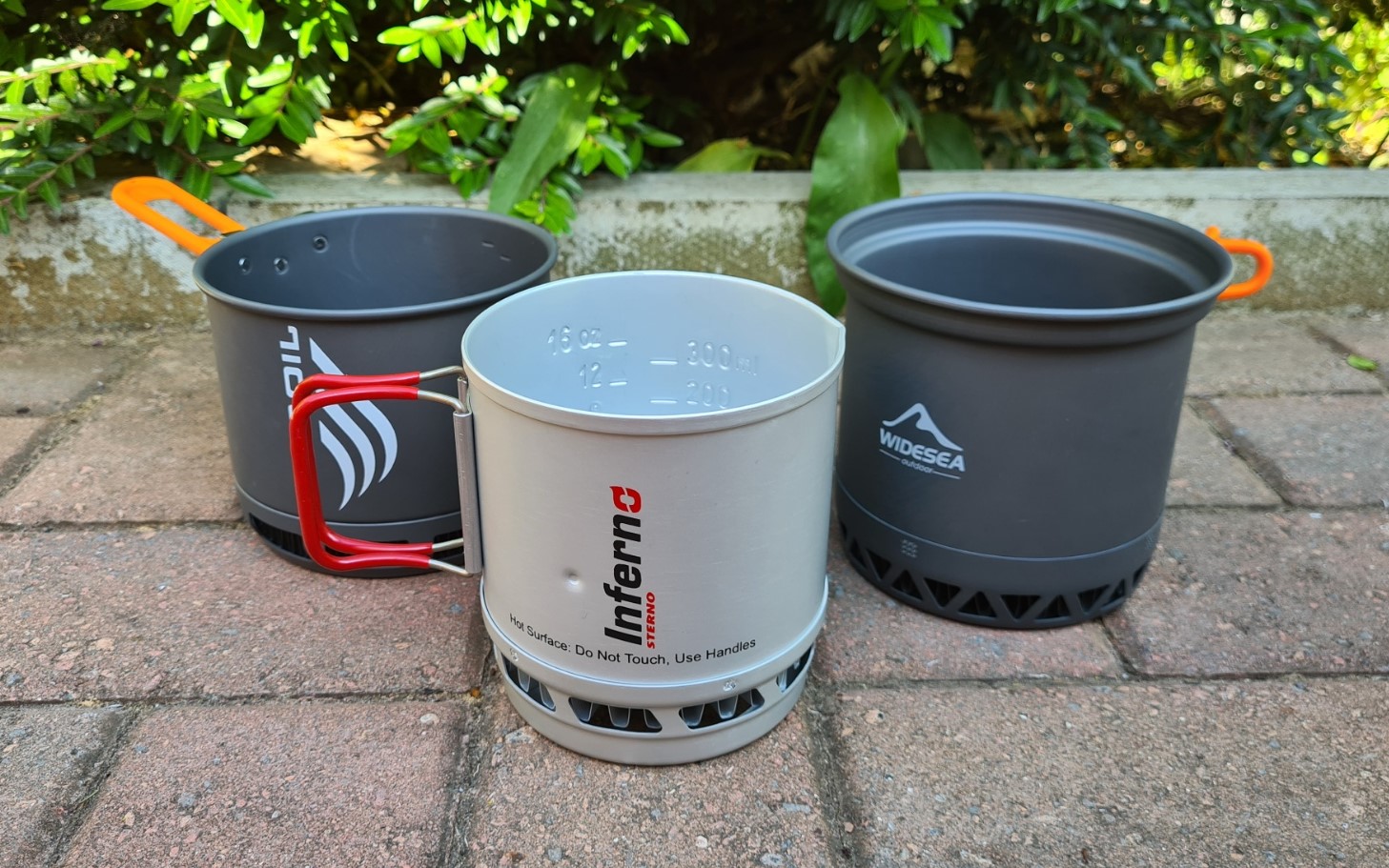
Looking for the very lightest and smallest of heat exchanger pot options, I was limited to just two commercial products below 130g and another just under 170g. One of those has been withdrawn from sale and is getting difficult to track down. Fortunately I had purchased one some years ago but for those seeking it out, don’t hang around! And if you do manage to find some old new stock somewhere, the price may now be unreasonable.
Sterno Inferno
The aluminium Sterno Inferno heat exchanger pot was made to be used in conjunction with an integrated stove base in which a can of Sterno fuel could be placed. As an alternative, a meths/alcohol burner could be used in this instead. However it best to simply ditch the associated stove, support feet and lid, and use it as a lightweight heat exchanger pot combined with a small gas stove. Sadly, the Inferno system and pot have been discontinued.
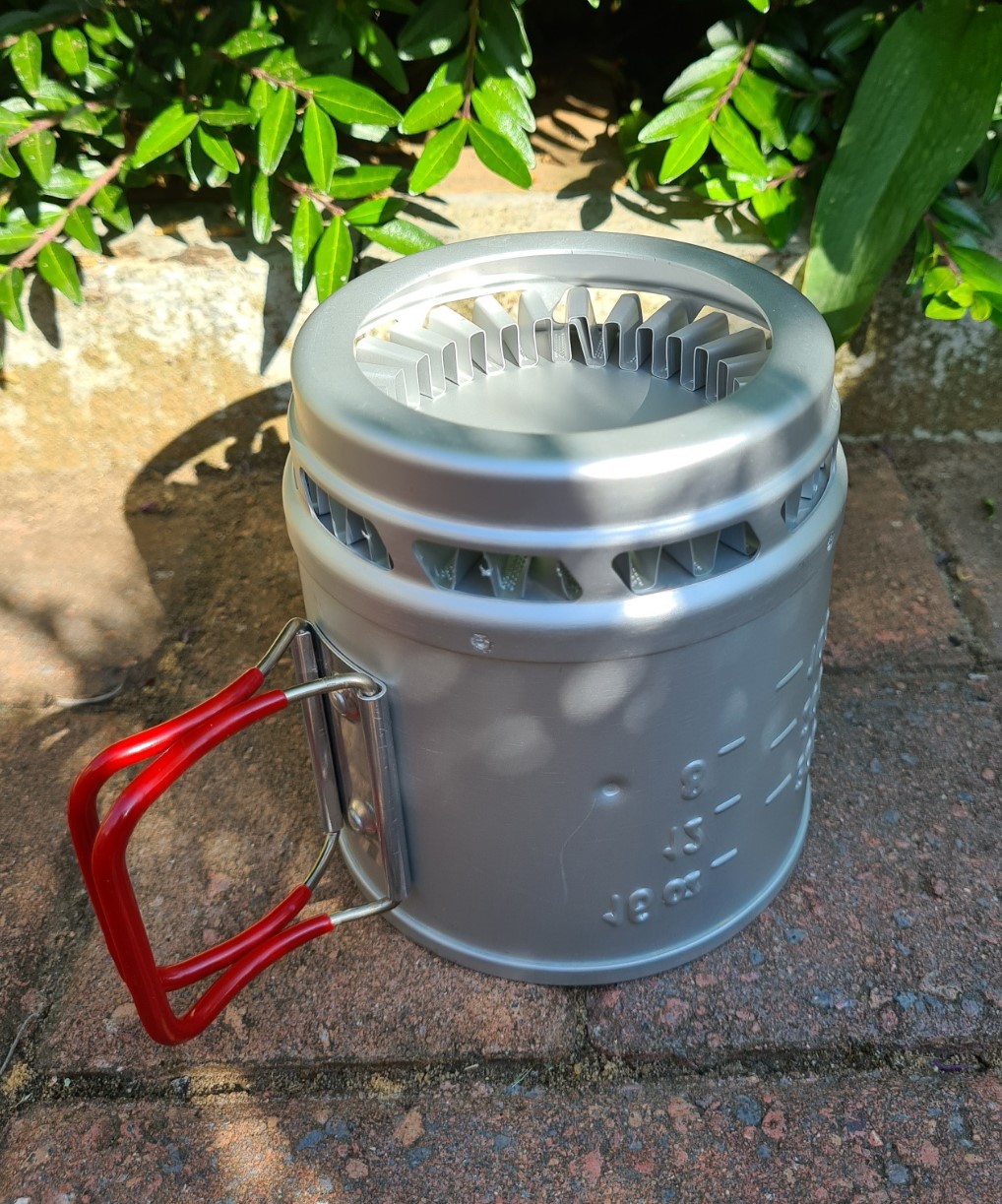
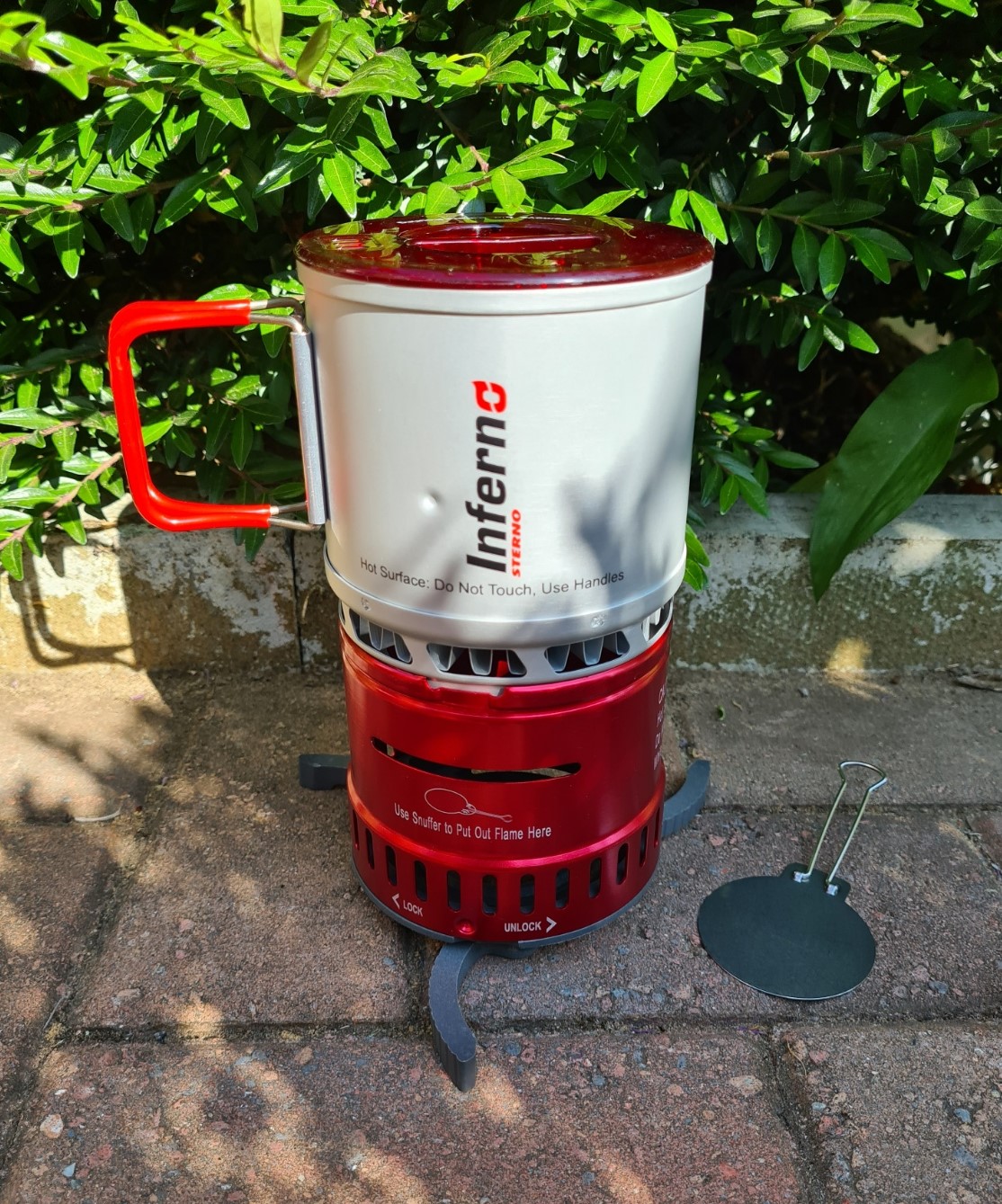
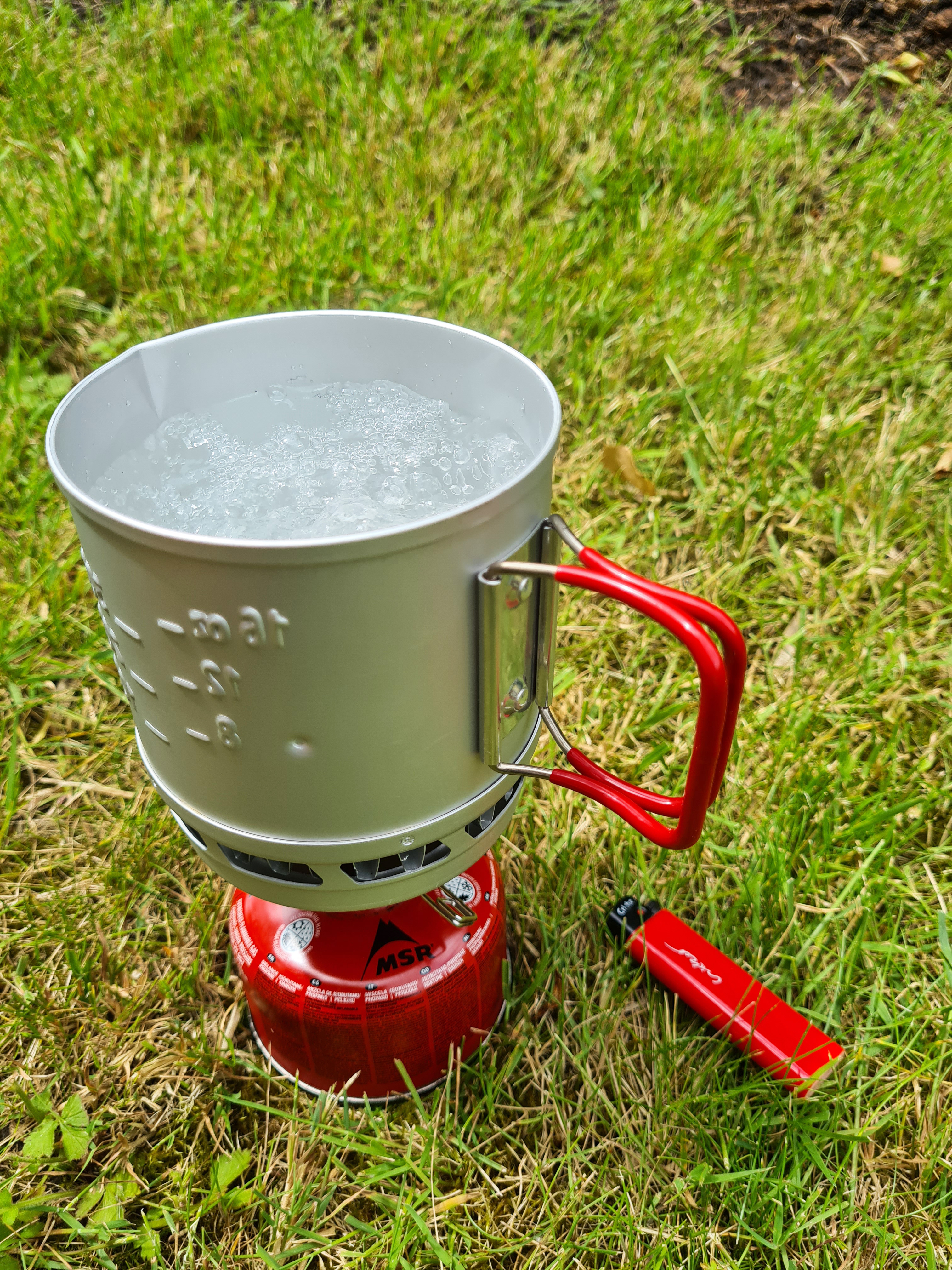
The 121g Sterno Inferno pot holds a maximum of 650ml, but is more comfortable with up to 550ml. Note that the measurement increments on the pot are woefully inaccurate. The lid is also poor- heavy, and it expands and jams on when heated. It is best to replace this with another lid, or simply a piece of foil. This is a really good pot and I am not aware of anything lighter on the market. This is especially efficient when combined with a small burner with the Flat Cat Gear modification. I showed this mod in another post.
Because it is such a lightweight construction, made to work with inefficient Sterno burners, the Inferno pot cannot handle the high output from some gas stoves when on full bore. That is another matter, gas stoves shouldn’t be run on full bore anyway as this is a less than efficient operation. Stoves should be run at a half to three-quarter burn for optimum efficiency. Hence my seldom including boil times with any stoves or pots I review. Such stats are largely irrelevant, varying by temperature, altitude and wind as a minimum.
Jetboil Stash
The 800ml Stash heat exchanger pot is a lovely piece of kit. The entire integrated system less so. The pot is well designed and well made and at 127g it is not overly heavy for a lightweight backpacker to seriously consider. The main problem is that it is not available as a stand alone product and has to be purchased as part of the complete, and expensive, Jetboil Stash Stove Kit. This wouldn’t be so much of an issue if it were not for the fact that the burner is not the greatest available and suffers badly in the wind. I review the complete system in a separate post. The lid is OK but can soften and come loose if tipped with a heavy load of boiling water behind it. Just put a finger against the lid when pouring hot water from the drain hole. This pot also has a good width to height ratio, proportionally wider at the bottom than many other pots, in order to capture more heat.
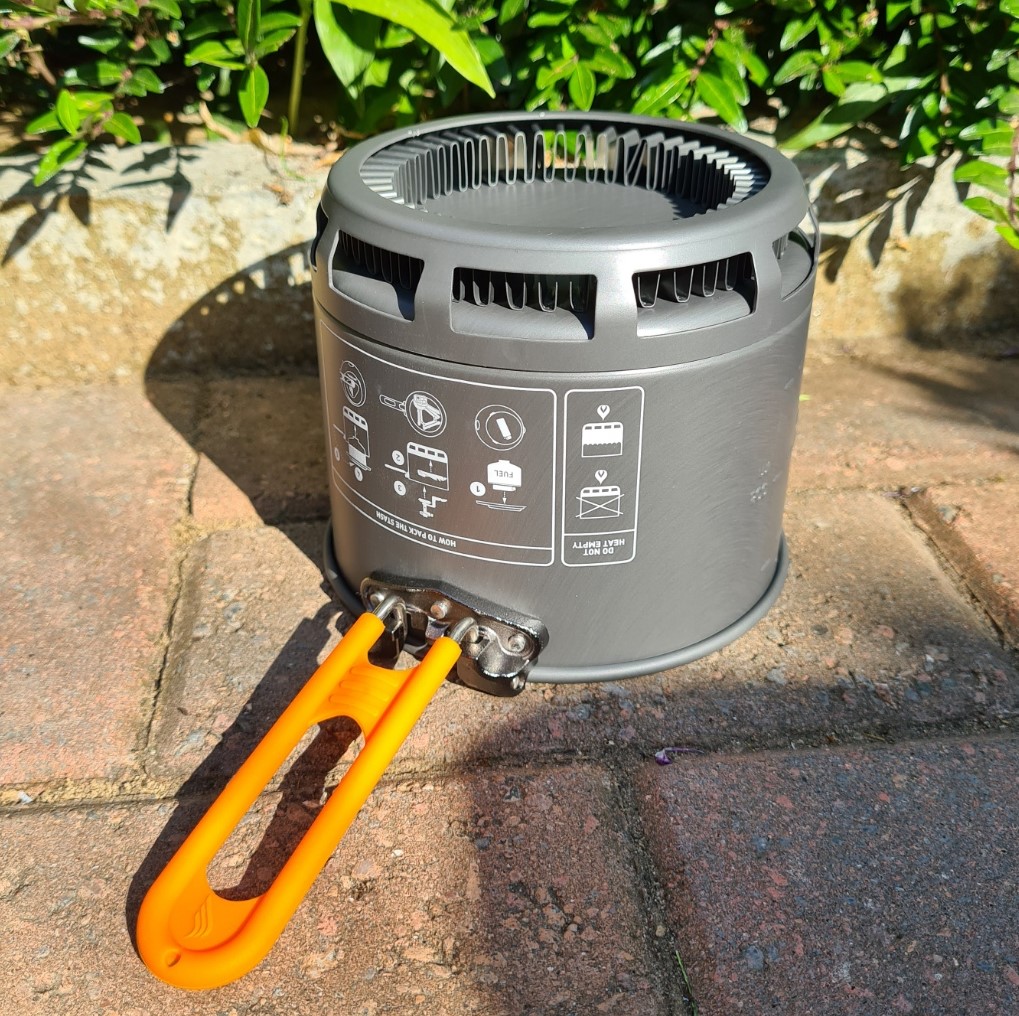
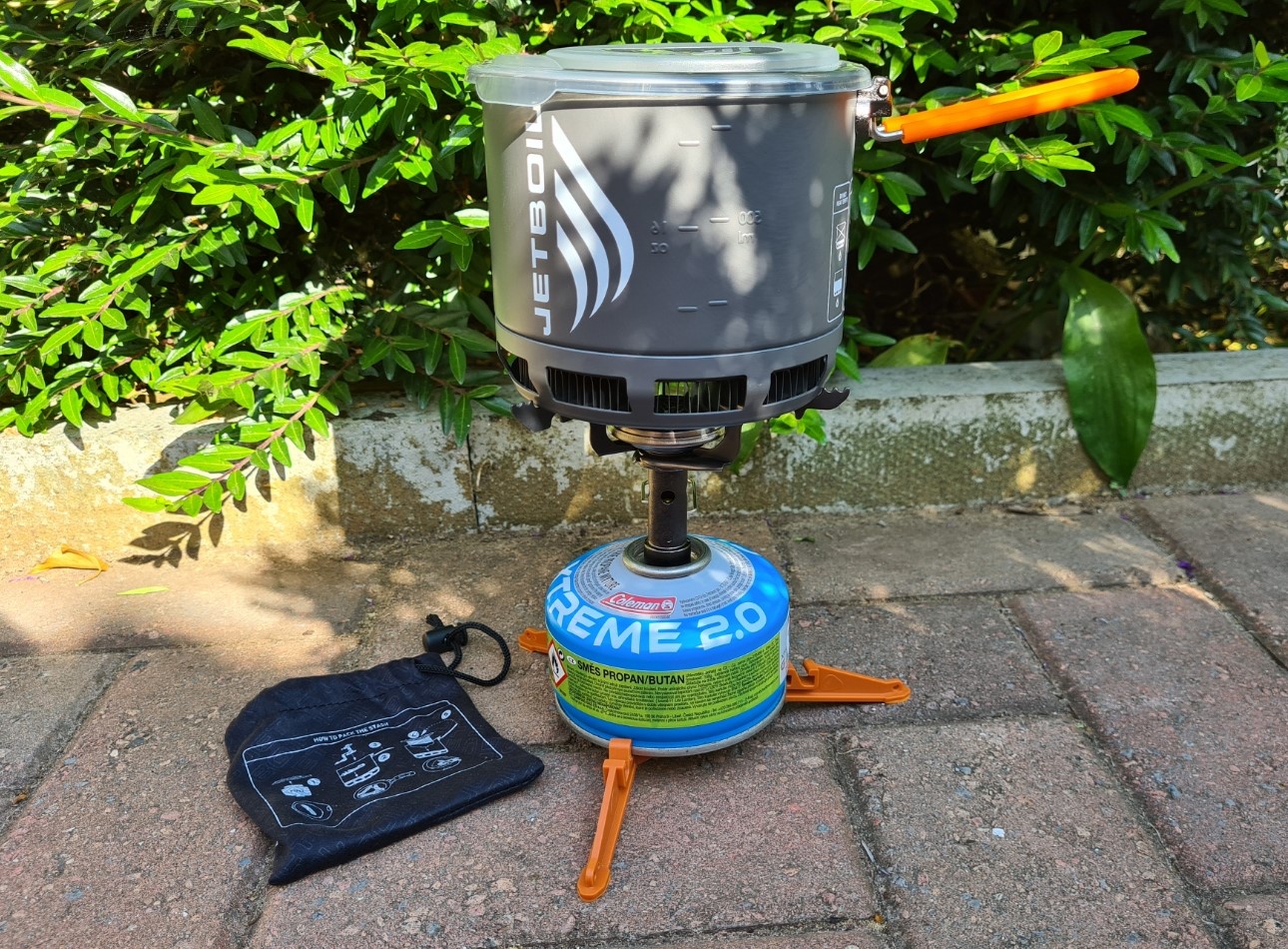
With their usual caution, Jetboil, in common with some other outdoor gear suppliers, warn about using their Stash heat exchanger pot on other makes of stove.
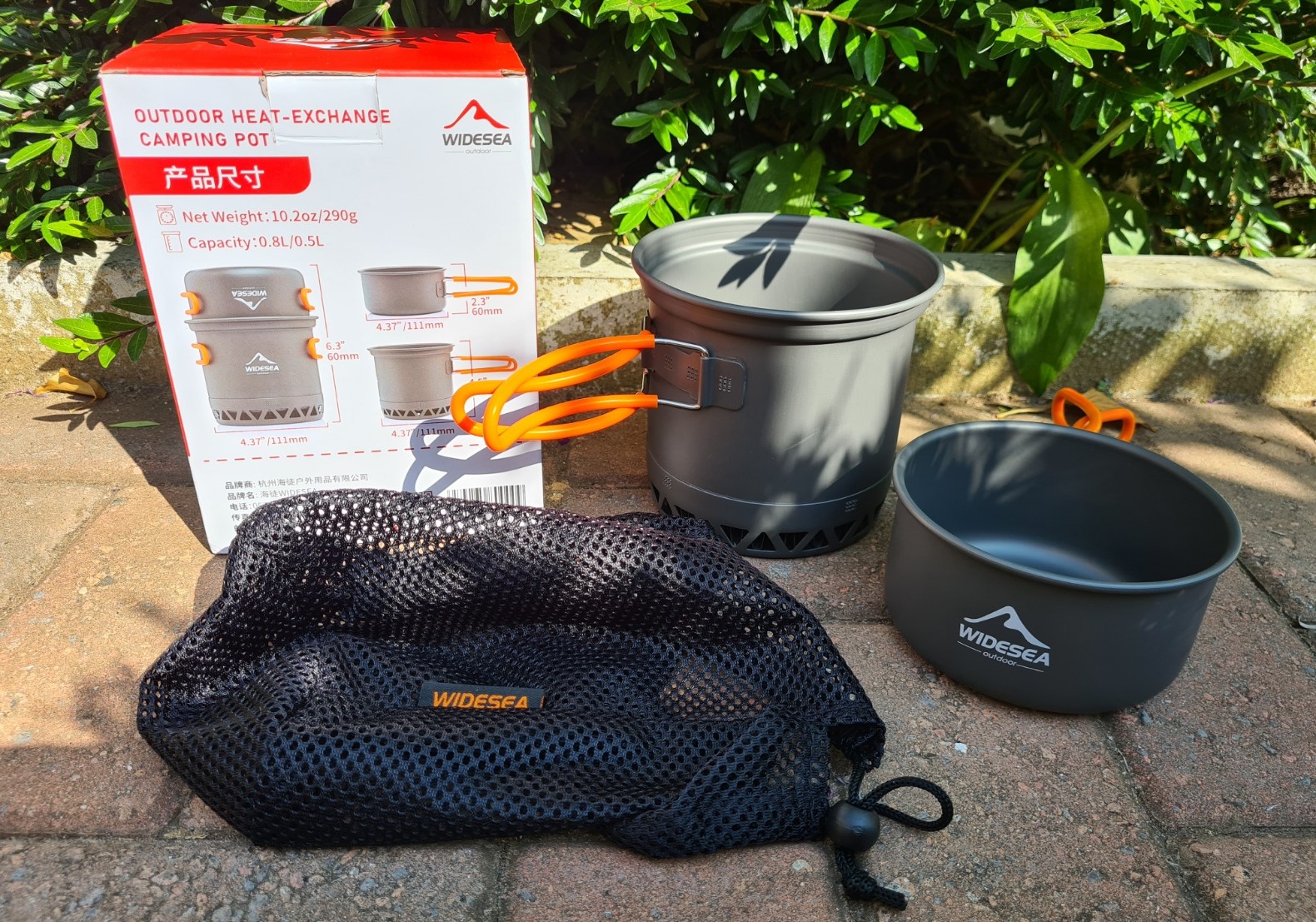
Wildsea Outdoor Heat Exchange Camping Pot, model WSC-105
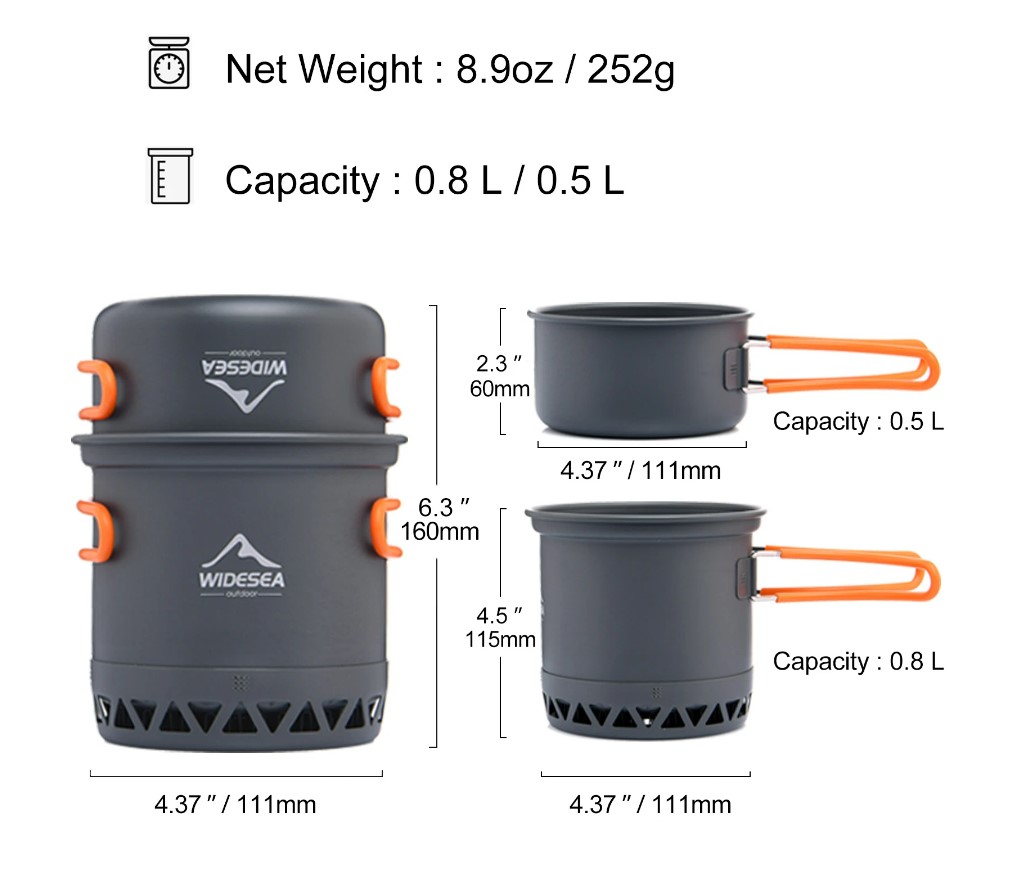
The increased cost of a heat exchanger pot may put off those interested in simply trying out the concept. But there is a fairly cheap entry route. While some of those pots shown here are expensive. There are some quite cheap ones available from China. I found a perfectly good heat exchanger pot for less than twenty quid. I purchased a Wildsea Heat Exchange pot, model WSC-105, via AliExpress. I waited for one of the frequent sales and this pot was reduced from £30.37 to £17.31. I found a coupon that reduced this by a further £1.96. Shipping to the UK from China was free but £3.07 tax was added. This gave a total of £18.41. Let no one say that all good lightweight backpacking gear is expensive. Made primarily of aluminium, with stainless steel handles, the 169g 800ml capacity heat exchanger pot came with 27g mesh carry bag and an additional 99g 500ml small pot that can also act as a lid to the larger pot, though a piece of foil is a lighter option. This is a good cheaper alternative to the Optimus Terra Weekend set. It is also smaller than the Olicamp XTS and Fire Maple Typhoon FMC-XK6 heat exchanger pots.

I have concentrated on smaller heat exchanger pots but there is a far wider range of large heat exchanger pots for group cooking, also heat exchanger frypans and heat exchanger kettles. With greater volumes of water or food, the fuel savings will be proportionally greater too and the increased weight penalty of a heat exchanger pot becomes easier to accept. But those utensils are mostly beyond the scope of my lightweight backpacking ethos.
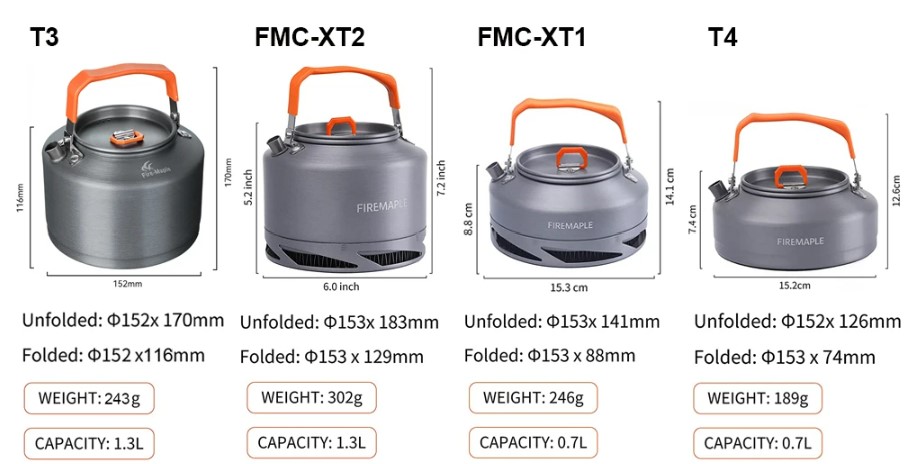
The weight of small kettles with heat exchanger however, will be unacceptable to almost all lightweight campers. If you want to take a kettle, there is the 850ml MSR titanium kettle or other sub-litre lightweight titanium kettles. Or a simple aluminium kettle from Trangia (127g 600ml or 175g 900ml) that lack any form of added heat exchanger, would probably be sufficient for most. There is a reason that the Trangia has been on sale for many decades after all.
So, after all of this discussion, does Three Points of the Compass actually use a heat exchanger pot when backpacking? To date, very infrequently, though I can see myself using them more in the future when the trail, situation or conditions are right, or rather, not right. If preserving gas is a consideration, I think a wide pot base, a windshield for protection from side breezes and using a lid are more important considerations that can be addressed regardless of the type of pot carried. The increased bulk and weight of a heat exchanger pot continue to be off-putting. That said, for larger groups or use in cold conditions, this is when a heat exchanger pot becomes a practical consideration, even for me.
For the very great majority of my backpacking, the extra weight, and especially the increased bulk of a heat exchange pot has so far discounted one from most lightweight gear lists on longer trips. I know I could speed up the time it takes to boil water, but a few seconds difference isn’t that important to me. The sheer efficiency and potential for more boils from a canister does attract me and I can also see myself using a heat exchanger pot more often with a meths/alcohol set-up as they do such a good job of snatching those extra BTUs from a relatively inefficient fuel.
The Flat Cat Gear Ocelot HX Mug Kit which incorporates my Sterno heat exchanger pot with the little Fire Maple FMS 300-T stove has proven ideal for day and overnight trips and I shall continue to use this. I am also going to be giving the rather good Jetboil Stash heat exchanger pot serious use over the next couple of years. If only to justify the cost of the entire stove system that I had to purchase to obtain it.
2024 update:
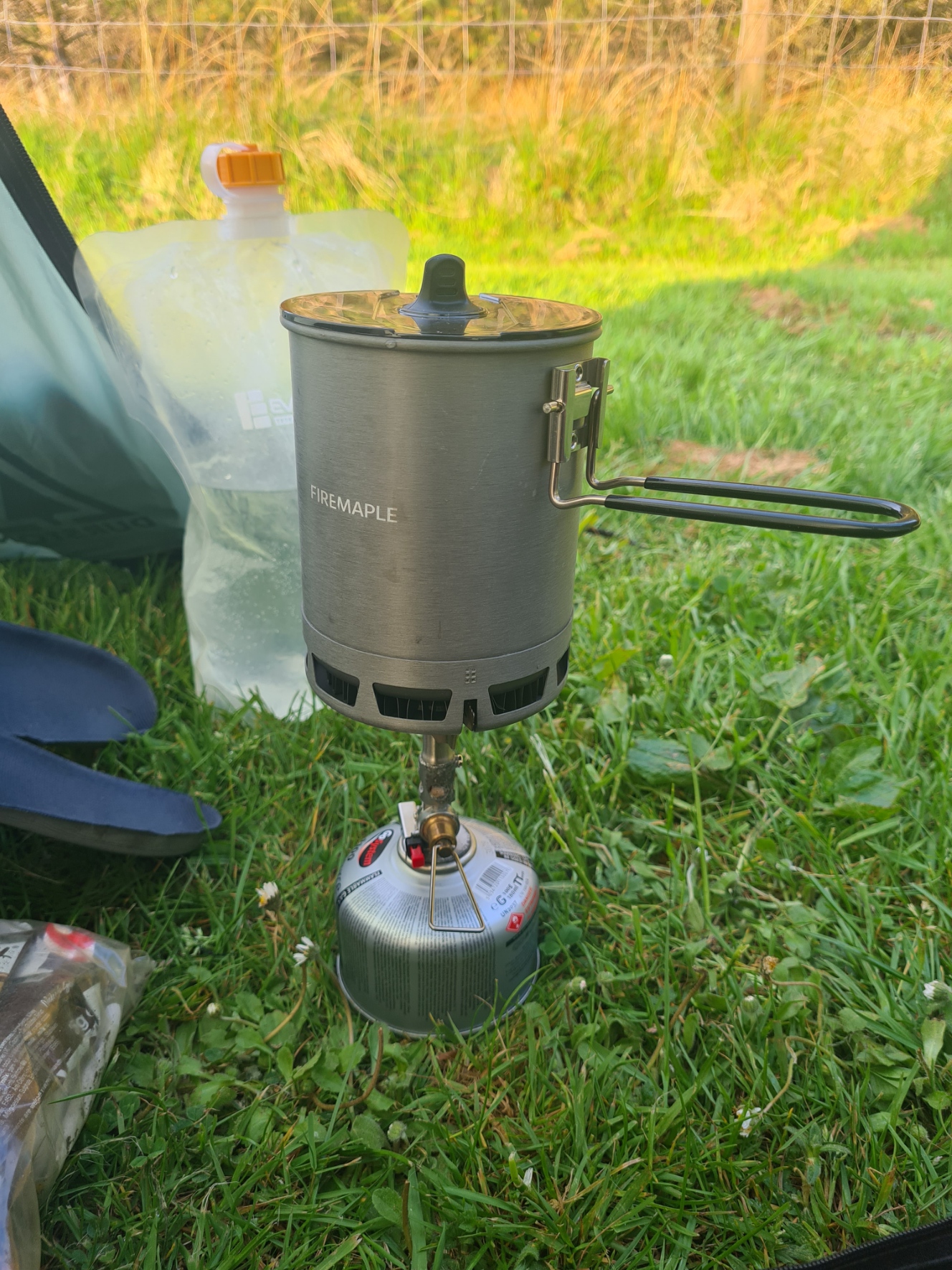
Fire Maple introduced a useful and well-priced cook pot. This is their 600ml Petrel that weighs 164g and has a unique feature. These are three slots cut in to its heat exchanger base that allow it to nest tight to a three support-arm stove. Intended to work with their Hornet II stove there are better options, not least their Polaris canister top stove, however many users prefer to combine the pot with the Soto Windmaster. I took a closer look at this pot and stove compatibility in a separate post, linked below.

 Three Points of the Compass
Really interesting as always.
I have been looking at the OEX Heiro Solo Stove and was surprised by how heavy it is.
LikeLike
Yep, the weights of the various integrated systems do need careful scrutiny. The advertised weight of that system is 370g. Does look a decent 600ml heat exchanger pot, one of the smaller available. Am I tempted….
LikeLike
The Sterno Inferno pot is really such a sweet spot for this… I wish some.cottage manufacturer would make a clone of it (maybe anodized?), as I’m afraid of losing or damaging mine and being unable to replace it :-)
LikeLiked by 1 person
I agree with you. Too many times, the best, nicest or most efficient piece of gear or clothing is the one that has been discontinued by the manufacturer.
LikeLike
Hi there!
Just came across your great post about OXO from a couple years backhttps://threepointsofthecompass.com/2021/09/04/trail-food-oxo-stock-cubes/
I was wondering if you remember where you’d sourced that OXO coronation map from? I’m trying to find out the credits/licensing for it for a research we’re putting together… Many thanks!
LikeLike
Lou, I’m away on hike for a good few days at the moment. I’ll try to remember to dig it out and have a look on my return.
LikeLike
Thanks so much, really appreciated – enjoy the hike!
LikeLike
Hello, hope you had a great hike! just wanted to check back in to see if you’d found any time to track the source down… Feel free to drop me an email if easier to communicate! Many thanks again
LikeLike
Your comment about the Olicamp taking 1500ml of water but ‘based on FMC-XK6’ got me checking…I have just got the FMC-XK6 and it’s definitely only 1L, just measured out some water and put it in.
LikeLiked by 1 person
Thanks Tim, looks like it’s back to the measuring jug…
LikeLike
Thanks for correcting me Tim. I have just checked and as you say, the Olicamp heat exchanger pot will NOT hold 1500ml. It will hold up to 1250ml but could never be used to comfortably boil that amount. It would be possible to use it with a tad over the specified litre but not by a lot. I have corrected my post
LikeLike
Have you seen the new FireMaple Petrel 600ml aluminium pot with heat exchanger? Works perfectly with three-armed stoves such as the FireMaple Polaris Pressure Regulator or the Soto Windmaster w/ 3Plex option. Devon at Backcountry Exposure recently did a test and those two stoves boiled 500ml of water in 1:44 and 1:43 respectively. I found a 20% off code for FireMaple’s website (AXENORTH20), so currently, I can get the Petrel 600ml pot + Polaris Pressure Regulator stove + their canister stand for $72.08 including $5 shipping. Add a $6 110g can of isobutane, and I have a complete [extremely efficient] cooking system that weighs less than 500g and costs less than $80 US!
LikeLiked by 1 person
Thanks for this Brian. I have purchased the Petrel HX pot and am taking it with the Soto stove on the Skye Trail next week. I’ll probably blog on how I get on with it afterward
LikeLike
I have one — it works well and will likely replace my Sterno Inferno pot. One gotcha is that the ‘notches’ are a bit narrow and so for stove like the Pocket Rocket Deluxe that have slightly angled supports, the fit can be pretty snug — I’ve seen reports of people that dremel’ed them a bit wider to make the fit more accommodating.
LikeLiked by 1 person
I suppose it might be possible to gently bend or tweak the pot supports on some ill-fitting stoves
LikeLike
I like the Pocket Rocket Deluxe a lot, but it’s $85 by itself. I know the FireMaple Polaris Pressure Regulator isn’t as good a stove, but it seems pretty effective, I believe partly because it fits the Petrel HX pot so well. Plus, I really like the idea of getting the whole cook system for less than the price of the just MSR stove! No piezo ignitor, but add a mini Bic lighter and I’m still right around $80 total.
LikeLiked by 1 person
I already have the PRD so it’s a sunk cost for me 🙂
LikeLiked by 1 person
I do agree Brian. There is some terrific, well made gear available these days, much of it lightweight. However the cost of much of it can be either daunting or simply out of reach for many. The availability of well made lightweight options, at a reasonable cost, from Fire Maple really democratises lightweight backpacking
LikeLike