
Three Points of the Compass recently travelled to Patagonia to hike a couple of trails. The journey there and back entailed seven flights and the backpack was protected in transit by a useful ‘travel protection bag’ from Bach.
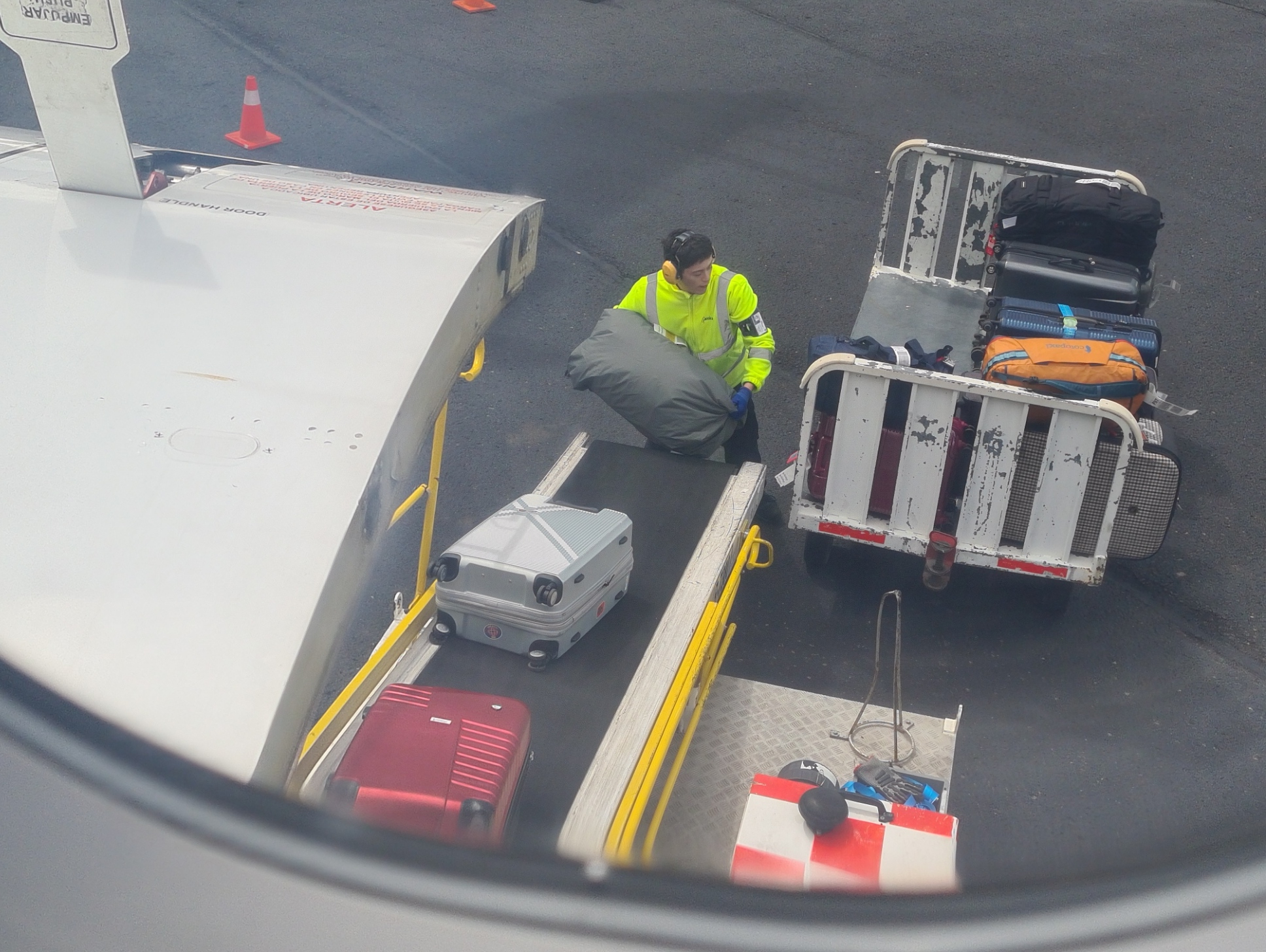
I have recently returned from backpacking in southern Patagonia, first on the Fjällräven Classic Chile and a few days later, completing the ‘O’ Circuit in the Torres del Paine National Park. My journey from the UK to Puerto Natales entailed three flights. The return journey was four. I wanted to provide an additional level of protection to my backpack in transit and looked for a solution.
A backpack can be an awkward object to carry when flying. If taken as carry-on, it is slightly less vulnerable. However most travellers will have to consign their backpack to the ‘care’ of baggage handlers as hold luggage due to issues such as size, weight, trekking poles, knife, scissors, pegs/stakes etc. There are straps, belt, buckles, and pockets that can be snagged or used as a haul handle by careless handlers and it can potentially be a badly damaged pack that arrives at a destination.
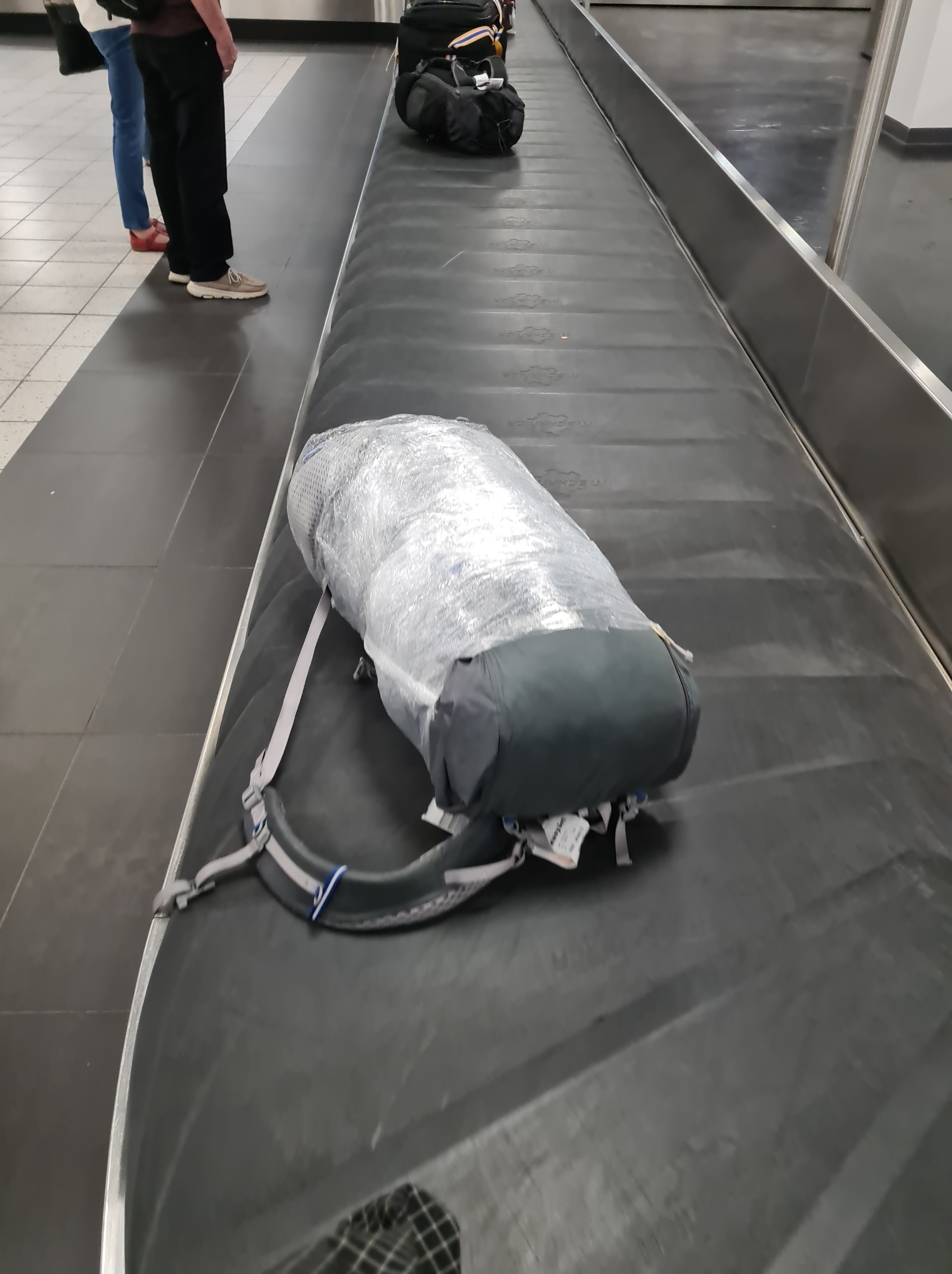
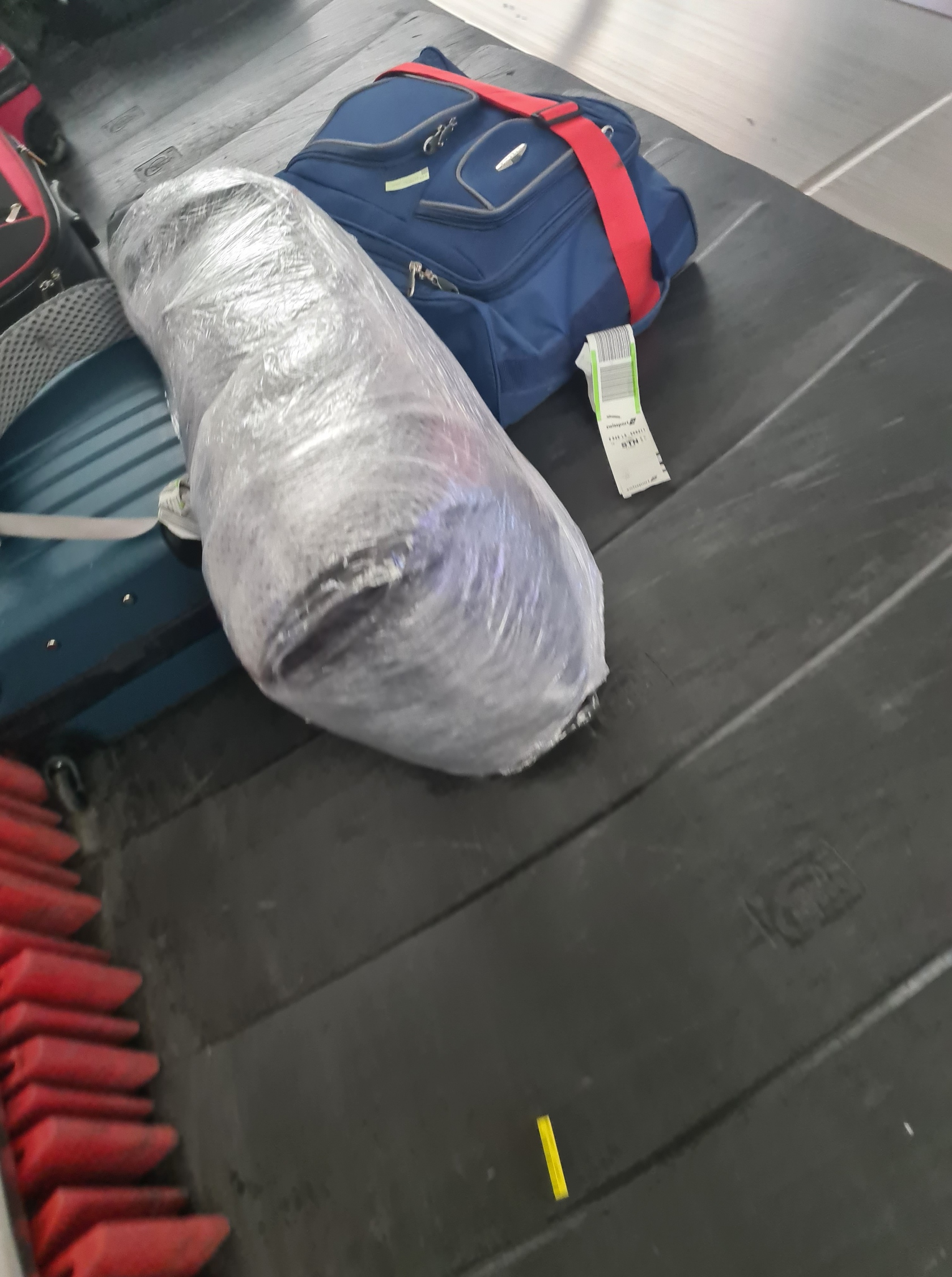
I have occasionally been able to remove a hipbelt and put it inside the pack, which reduces some snagging risk, but have often resorted to risking it, with an unprotected pack. Other times I have wrapped the whole thing in plastic clingfilm/food wrap. This has sufficed in the past but does result in a great deal of plastic waste over time, and is a surprising long term expense, adding up over the years. It is even more expensive if using an airport wrapping service.
I have tried putting a backpack inside a voluminous Sea to Summit dry bag, that then became my pack liner on trail, but that was quite a squeeze and that particular roll top dry bag was surprisingly heavy due to its size. I wanted a better long term solution to this particular problem and had a look around at what there was on the market. Various backpack manufacturers produce transit bags and covers, Osprey is one well known example. But I wanted something lighter than most available products, so settled on a lightweight protective cargo bag from Swiss brand Bach.
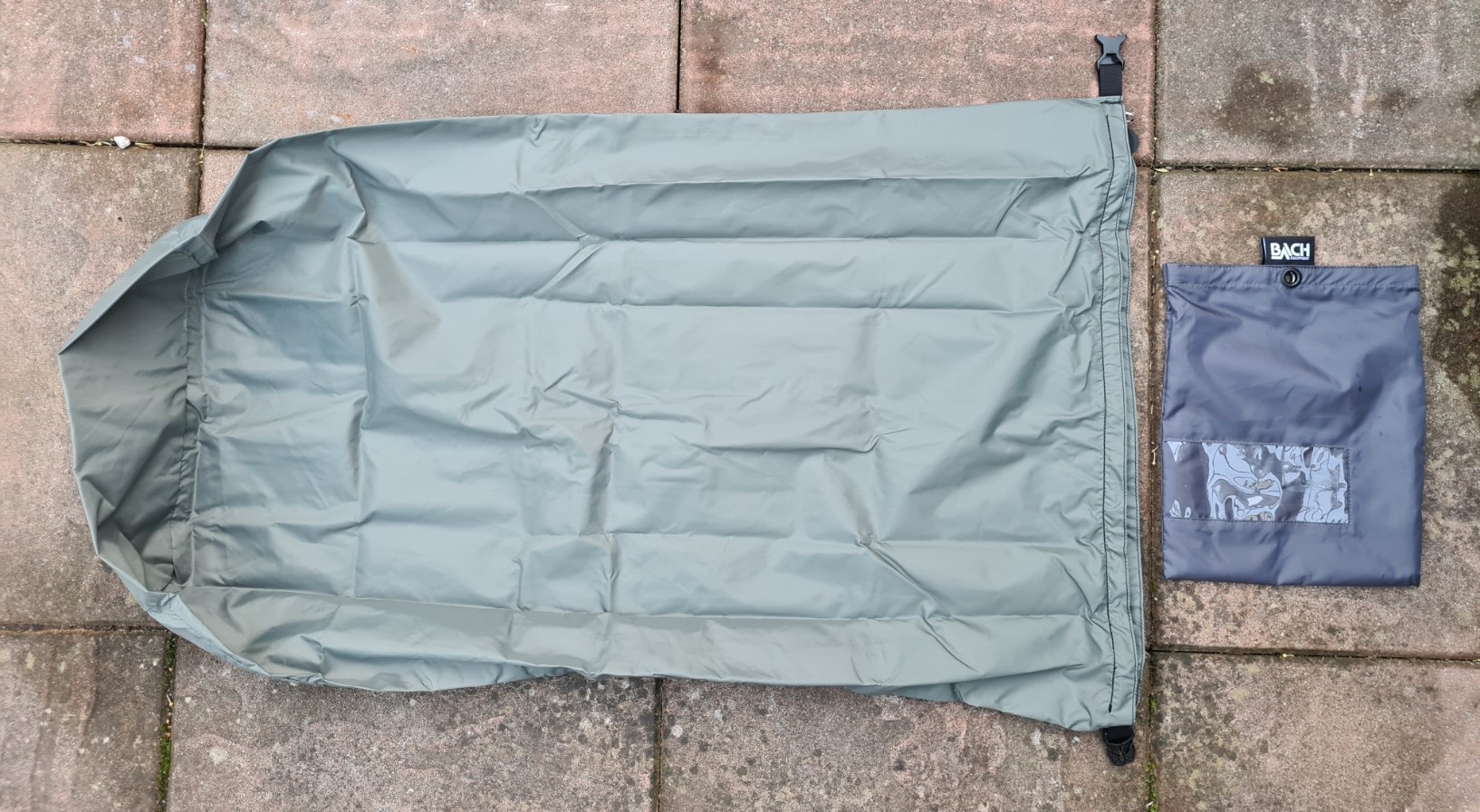
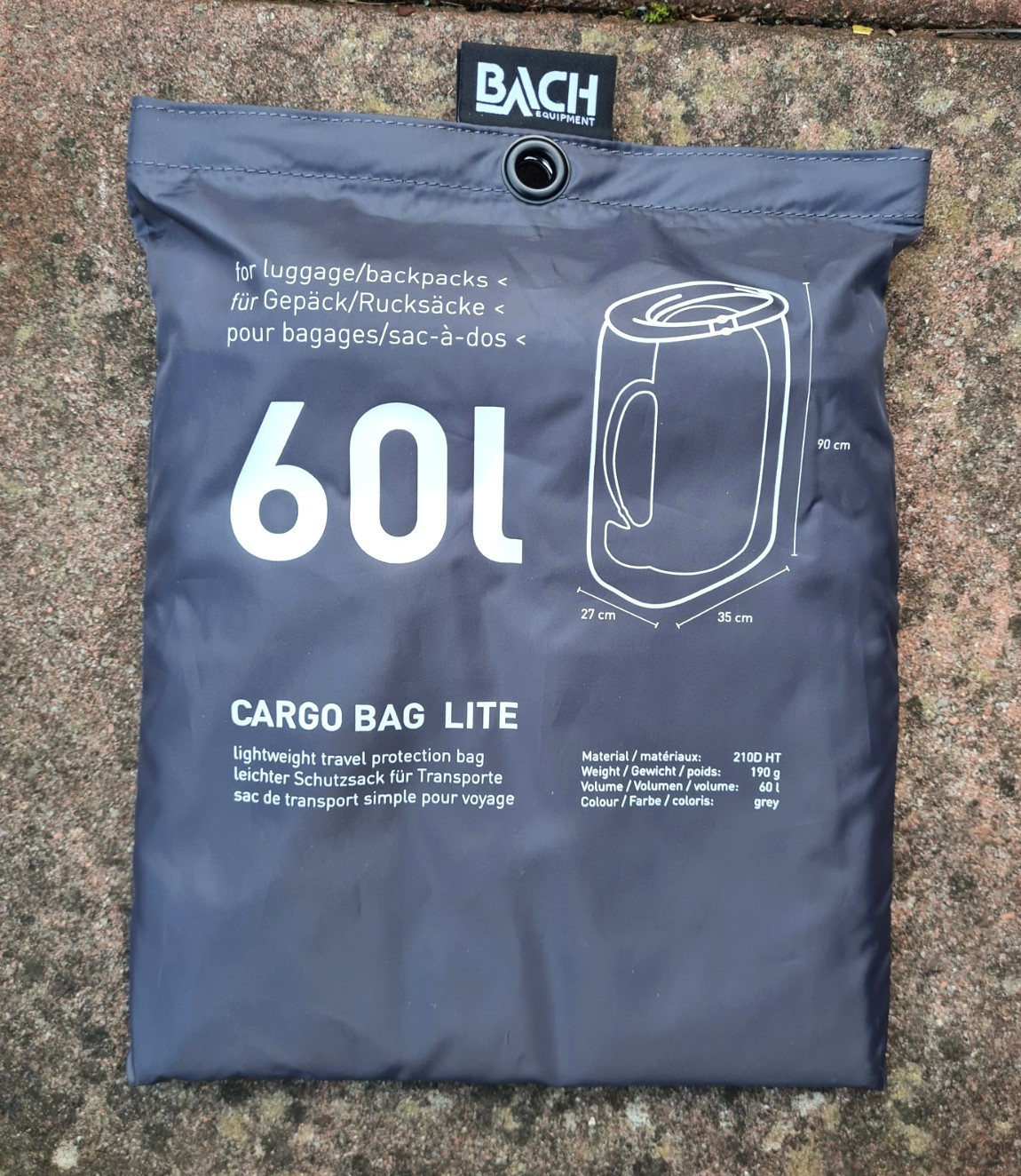
The 60 litre Cargo Bag Lite measures 900mm x 350mm x 270mm but the length/height is reduced in use due to the need to roll down the neck. It has a shaped profile to better fit the contents, with a rectangular base. It is purported to have a capacity of 60 litres and provides “lightweight travel protection” stopping straps, belt and buckles etc on a backpack from getting snagged while in transit. It easily holds my 60 litre Atom Pack with room to spare. There is no carry handle or similar on the protective bag itself however the buckled roll top closure makes for a haul handle. The pack cover by itself weighs 192g (advertised weight 190g), and when purchased has a separate nylon storage sleeve that weighs a further 27g, There is, of course, no need to take the storage bag on a trip.
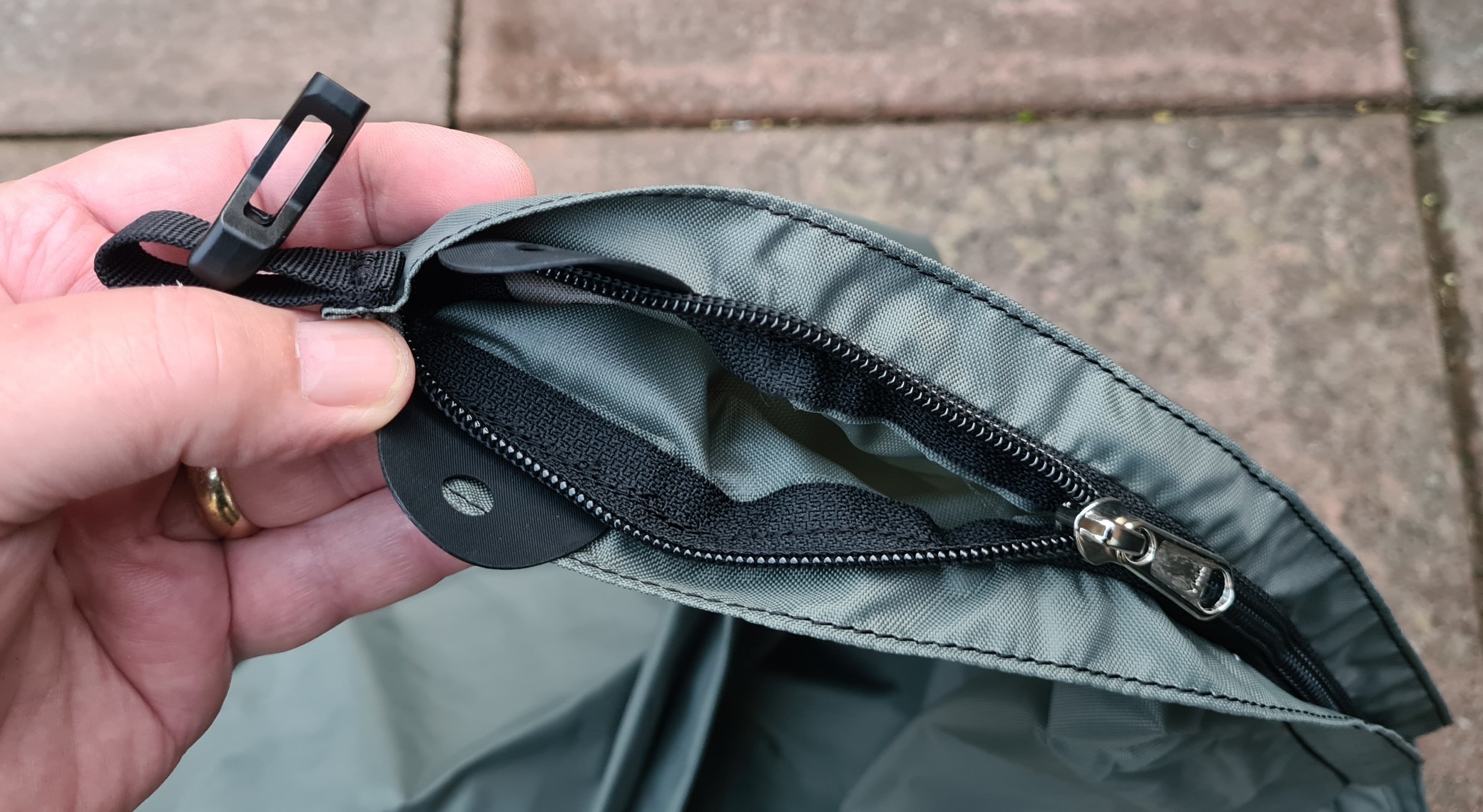
The transit cover, model number 275983, is made for Bach in Vietnam from nylon, specifically a 100% polyamide with a polyurethane coating. It has internal stitched seams, these are not taped. The 210D material is highly water-repellent but is not wholly waterproof. There is a single top opening. This is closed/opened via a non-waterproof nickel-plated YKK RC (Racquet Coil) zip. This type of zip was designed by YKK specifically for luggage applications where resistance to abrasion is a factor. It doesn’t really require a waterproof zip as it is then secured as a roll top, turning over a few times then clipping together the plastic YKK buckle closure. This two-step action therefore provides two levels of closure over the internal contents. Security of contents is obtained by padlocking the two sides of the zip closure together once zipped up. If the shackle is thin enough the padlock can also be passed through the metal zip. I have a small TSA approved padlock for this. A lighter option would be to use a cable tie instead of a padlock. To double up on security, a cable tie can also be used to secure the two halves of the roll top buckle ( but note comment on this practice, below). This will also help prevent it breaking if this ‘handle’ is violently pulled by a handler, It is never going to be the most secure of covers anyway, as anyone determined enough could simply cut through the fabric with a box cutter or knife. Once the Cargo Bag Lite has been used to cover the backpack en route to a destination it can then be switched to become an internal ‘dry’ bag inside the pack, but as mentioned, shouldn’t be regarded as necessarily being 100% waterproof.
The nylon holder for the cover measures 290mm x 230mm and has two holes through which a padlock could be used to fasten this closed once the cover is packed inside. Perhaps thereby keeping a padlock with the cover while stored at home, awaiting the next adventure. This holder/sleeve has a hook and loop closure and a plastic sleeve on one side in to which perhaps traveller details- “if found, please email/phone…” could be inserted but this would have been better positioned on the protective cover itself as it fulfils no useful function here. It is very well made but I leave this at home as it is of no obvious use while travelling to or when at my destination.
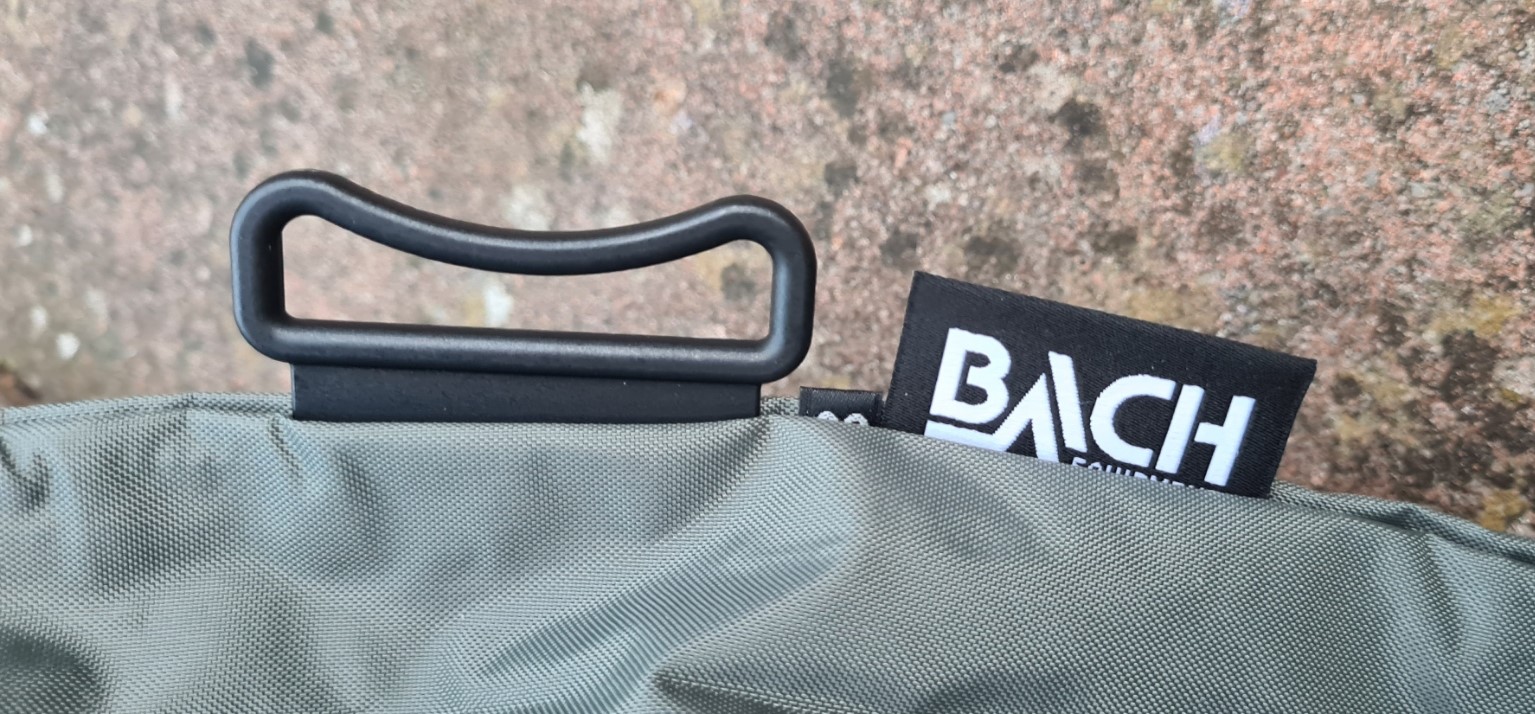
Unlike the storage holder, the Cargo Bag Lite itself has very little on it’s exterior. Quite rightly so as the whole idea is to have something that can’t get snagged or damaged in transit. This does very much limit how it can be carried. The haul loop formed by the clipped together opening is quite small and while it will sit on a shoulder, it isn’t terrifically comfortable and if that cable tie is fitted, any clipped end can really dig into the skin. The Cargo Lite does have what Bach call a latch. This is a useful wide and narrow plastic loop to which airline transit /barcode labels can be attached. Be aware, I have had baggage handlers use this to pull the cargo bag, and rip off the label as a result.
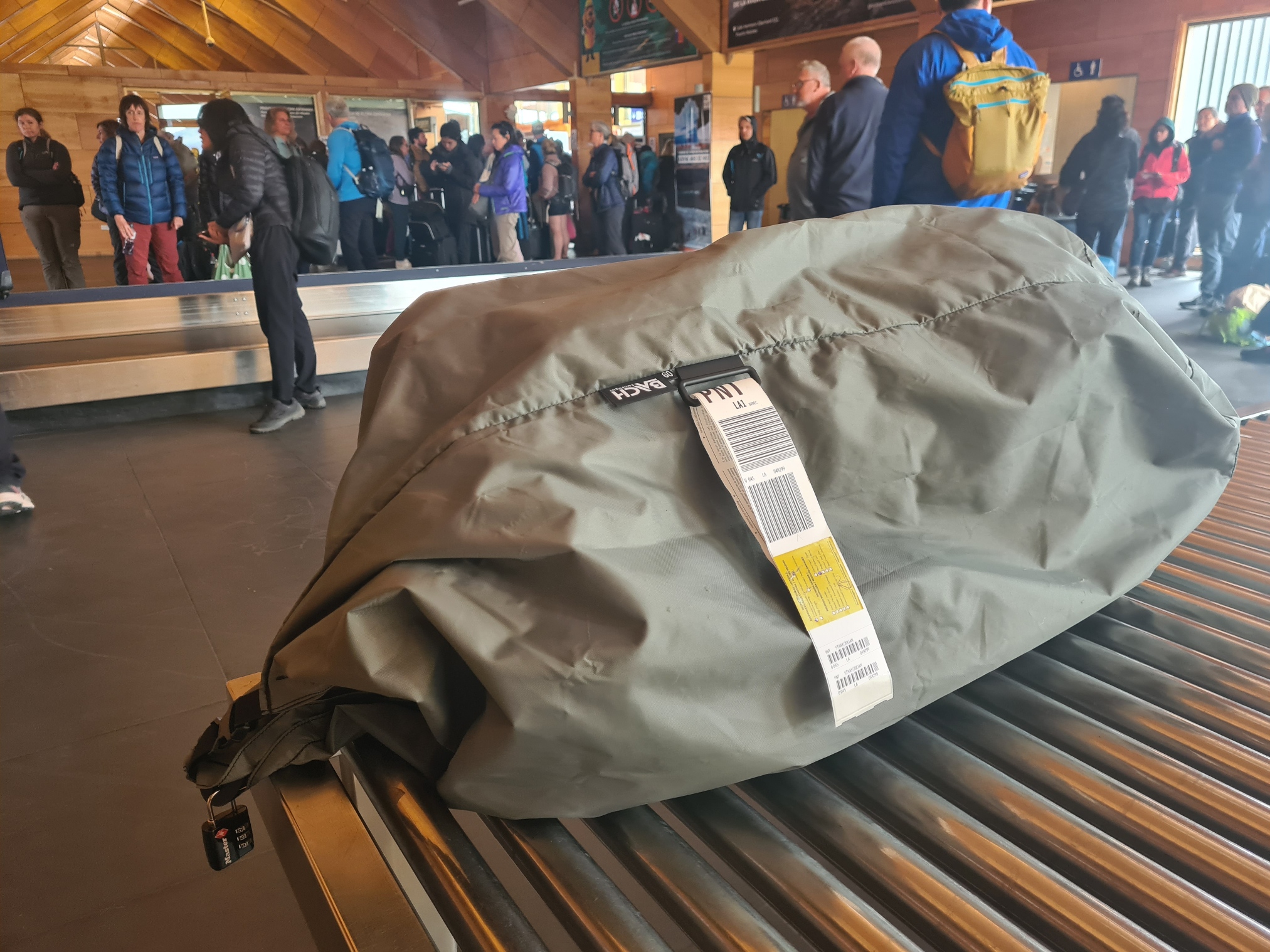
Beside flights, I can see me using this cover on train journeys too as my pack is forever getting caught up in luggage racks on UK trains. I have never been particularly enamoured by the potential for casual theft from zippered pockets on my pack on trains either. Putting a pack inside the travel bag makes it an anonymous lump and will not attract too much attention.
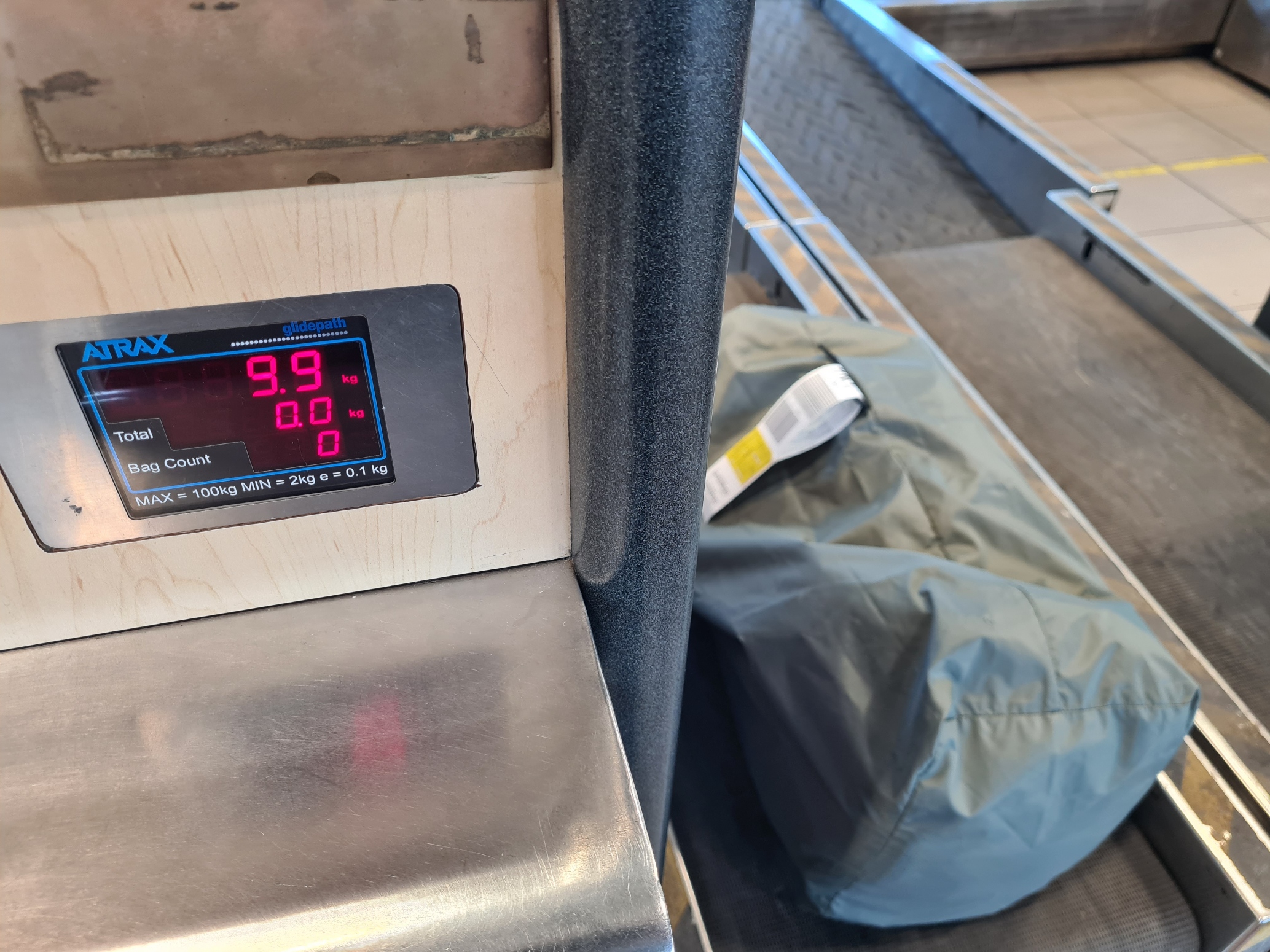
The Cargo Bag is light enough to be moved inside the pack as a dry bag for the contents, however on this recent trip I took a set of clean clothes for travelling out and back and for use around town between my two hikes. I packed these inside the Cargo Bag and left these at the hotel, having no need for them on trail and thereby reducing my packs weight a little.
Never one to trust a pack to keep contents dry by itself, I always further protect contents from getting wet by using a liner, as I loathe and mistrust external pack covers. I normally use a 45 litre capacity 48g waterproof roll top DCF pack liner from Wild Sky Gear for use on trail. This is not necessarily an option for most as it was an expensive purchase and a rubble sack/bin liner is a cheaper lightweight, if more vulnerable, alternative.
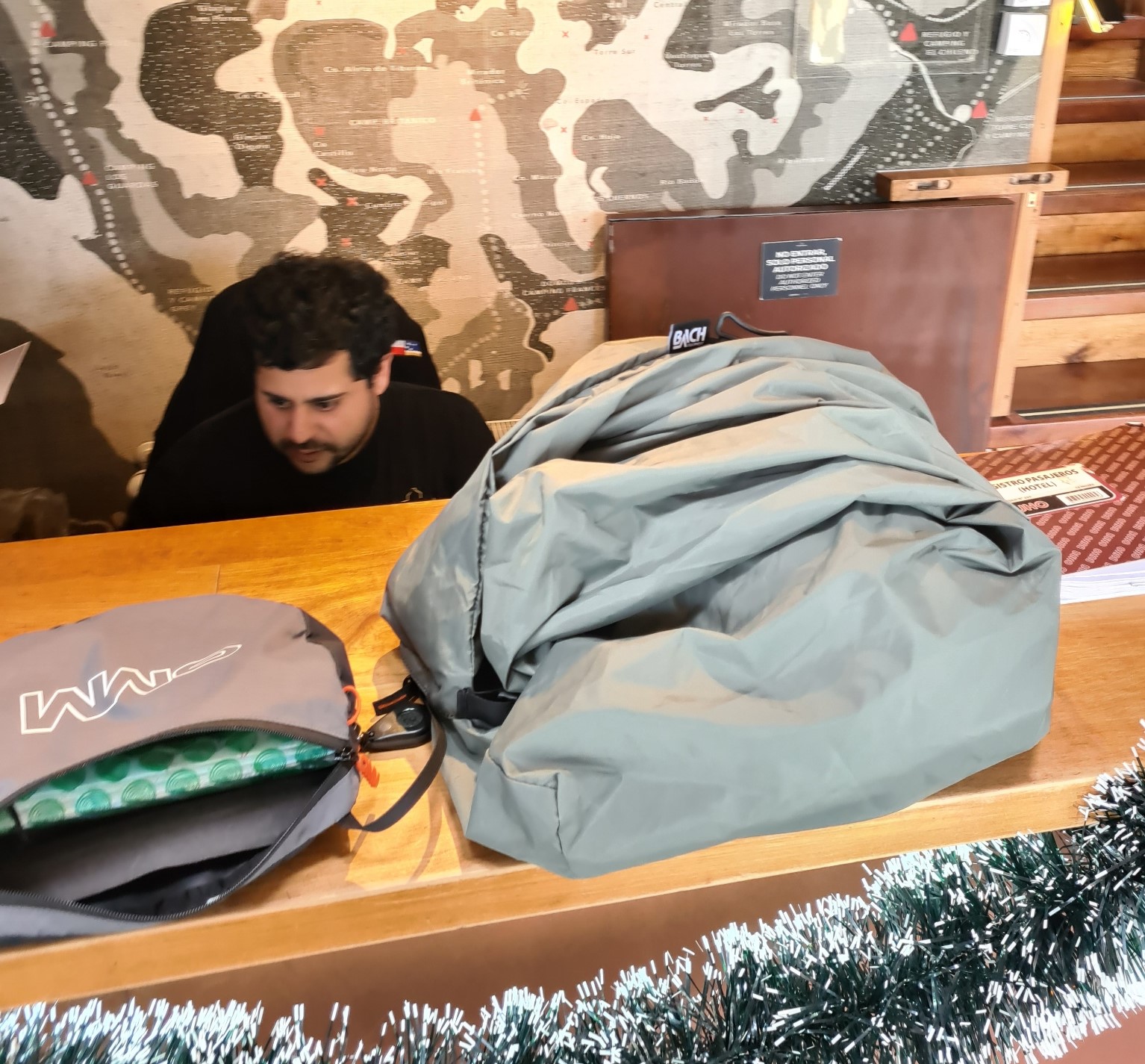
Ridiculous as it seems, while 192g is a hefty weight for a lightweight backpacker to be considering adding to what is being carried, not so much if it can double up in use, as a pack liner. ZPacks produce an ‘Extra Large Airline Case’ for packs up to 70 litre that effectively does the same job as the Bach Cargo Bag, but even that, made from DCF, weighs 106g. And DCF is not a suitable material for a cargo bag because despite being light and strong, it handles abrasion poorly. Though do note that Hybrid DCF, with a polyester outer face fabric, handles abrasion better than standard DCF. But both are expensive materials and the cheaper nylon Bach cover is much more suited to the handling and abrasion it will suffer whilst in transit.
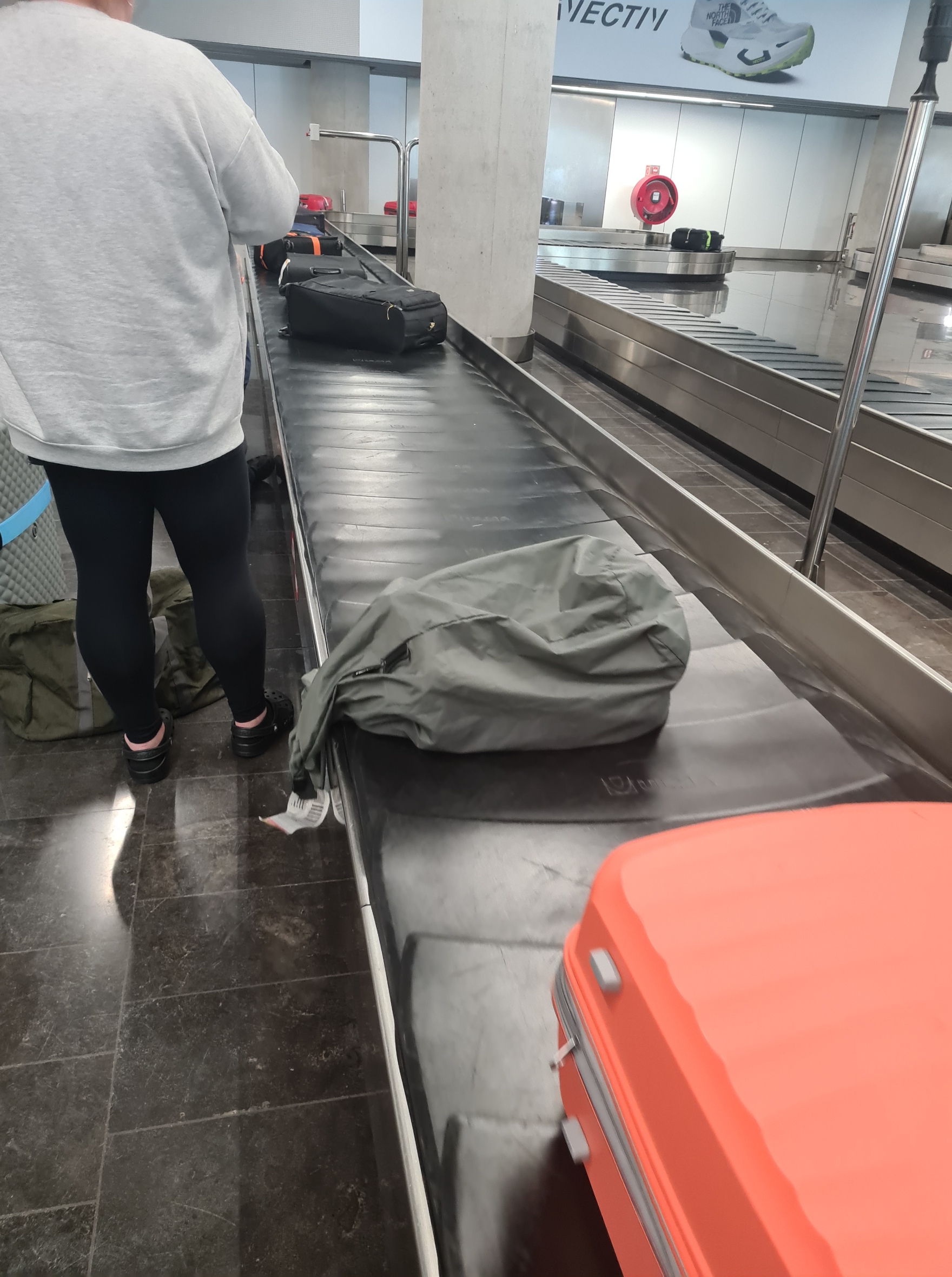
I also used the Bach Cargo Bag when travelling to/from the Canary islands when hiking the Camino de Santiago de Gran Canaria. I used a 35lt day pack on that three day walk and the Cargo Bag was then used as an internal pack liner following arrival. On that trip the rolled neck of the Cargo Bag came unrolled while in the charge of baggage handlers. However it was still securely locked closed.
My Cargo Bag Lite is in a fairly neutral grey that doesn’t easily show up scuffs and grime. It is available from various outlets. I purchased mine from Ultralight Outdoors for £32.99. I have the 60L capacity but it also comes in 80L and 100L capacities. I deliberately chose their lightest option but Bach also produce better appointed and heavier protective transit covers called the Cargo Bag Deluxe, in 60L and 90L capacities. These can be used as both transit protection bags or rain covers over the pack while hiking. These are made from the same material as the Lite version. The 60L version weighs 260g. Finally, they also produce a much tougher 420D Cargo Bag Expedition 80L cover weighing 530g.
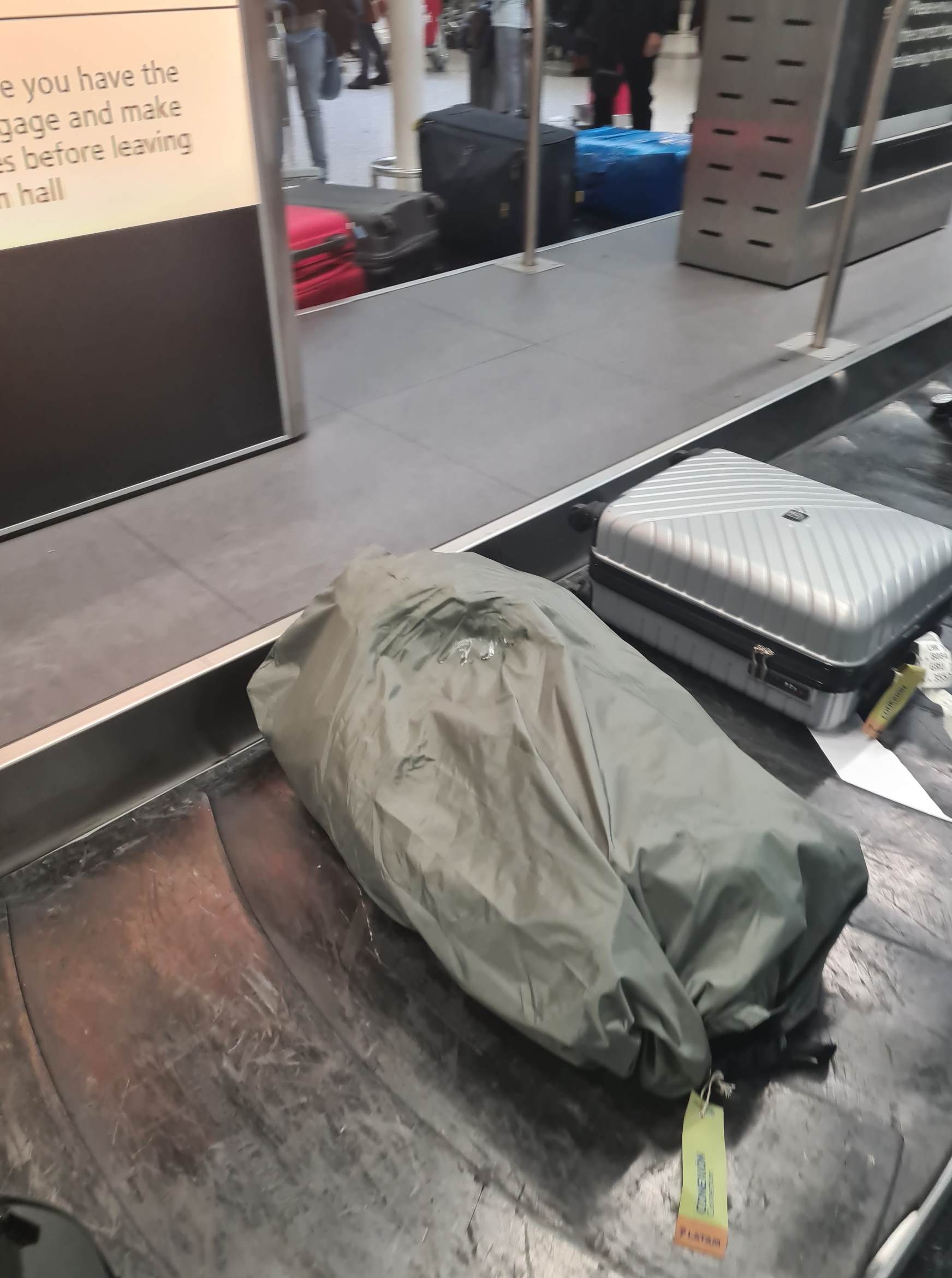


I have one that doubles as a pack rain cover – a rather heavy rain cover and I don’t usually use rain covers anyway. However, the benefits outweigh everything else.
LikeLiked by 1 person
I saw two blown off packs in Chile, and another snagged and dragged off. I much prefer a pack liner
LikeLiked by 1 person
Exactly why I don’t use rain covers usually. I prefer pack liners.
LikeLiked by 1 person